
Working with insurance water damage claims is defined as the process of notifying your insurer, documenting the loss, meeting mitigation duties, and coordinating with adjusters and restoration professionals to recover repair costs under your homeowner’s policy. The industry term for this process is “property damage claim management,” and understanding it separates homeowners who get fully paid from those who get shortchanged. Standard homeowner policies cover sudden, accidental water damage from burst pipes, appliance failures, and roof leaks, but the details of how you report and document the loss determine whether your claim succeeds. Thecleangenius has worked directly with insurers on hundreds of Chicagoland claims, and the patterns that lead to denials are almost always avoidable.
What does working with insurance water damage actually require from you?
Your first obligation after water damage is to report it promptly. Most policies require notification within 24–72 hours of discovery, and missing that window gives your insurer grounds to complicate or deny the claim. This is not a technicality. It is a contractual condition written into virtually every standard homeowner policy.
Your second obligation is mitigation. Homeowners have a contractual duty to stop the water source and begin drying immediately. Failing to do so lets the insurer classify secondary damage, such as mold growth, as preventable neglect and exclude it from coverage. Follow the emergency response steps the moment water intrusion occurs.
Your third obligation is documentation. Photos, videos, moisture readings, and thermal imaging taken before any cleanup begins are your primary evidence. Once you remove wet materials without recording them, that evidence is gone permanently.
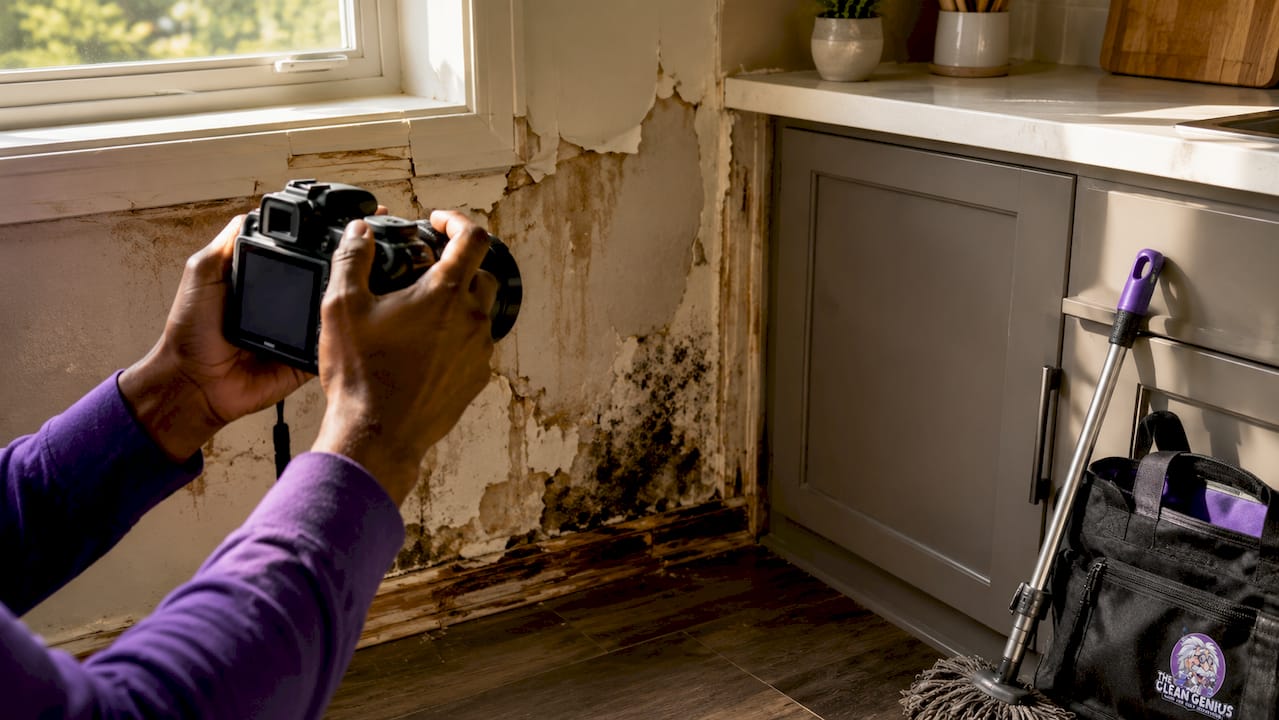
What you need ready before you call your insurer
| Document or item | Why it matters |
|---|---|
| Photos and video of all affected areas | Visual proof of damage scope before cleanup |
| Moisture meter readings by room | Quantifies saturation for adjuster review |
| List of damaged personal property | Supports contents claim alongside structural damage |
| Policy number and declarations page | Required to open the claim quickly |
| Receipts or estimates for emergency work | Documents mitigation costs for reimbursement |
Pro Tip: Contact an independent insurance agent before you call your insurer’s claims line. Independent agents provide personalized advice on whether filing is the right move and how to frame the loss, which can protect you from unnecessary claim complications.
How do you file and manage a water damage insurance claim?
Filing the claim is straightforward. Managing it well requires knowing who does what and when.
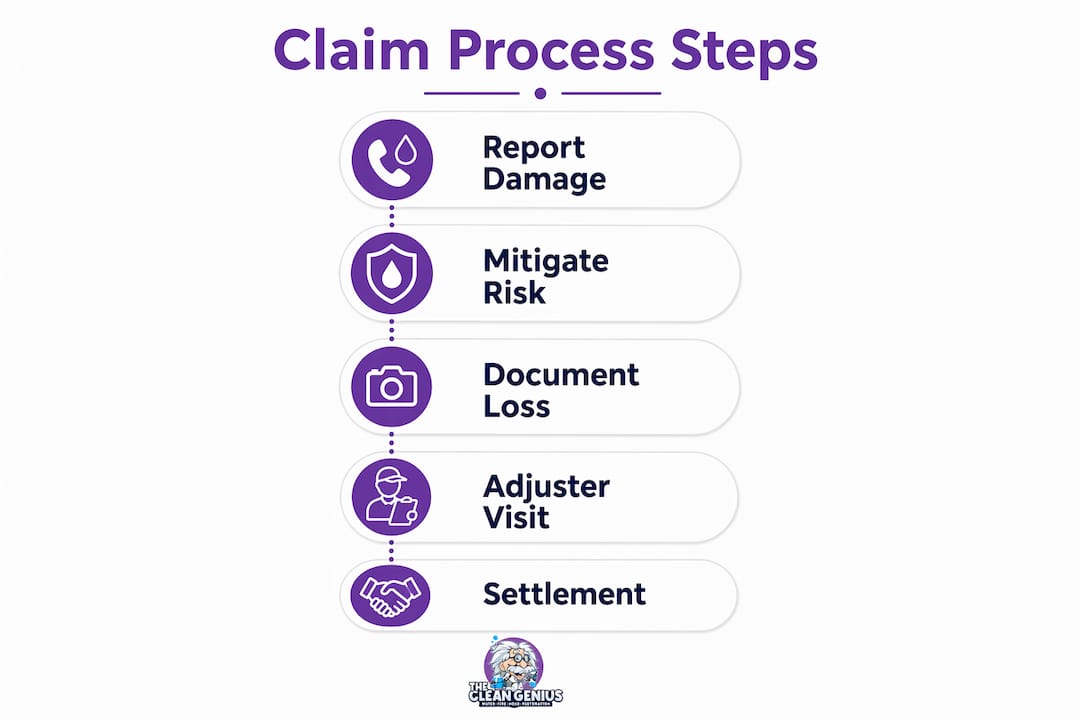
The step-by-step claim process
- Stop the water source and begin emergency drying immediately.
- Document all damage with photos, video, and moisture readings before touching anything.
- Call your insurer to report the loss and get a claim number. Note the adjuster’s name and contact information.
- Schedule the adjuster inspection as soon as possible. Do not begin major repairs before the adjuster visits.
- Walk the adjuster through every affected area, including hidden spaces like wall cavities, crawl spaces, and subfloors.
- Get an independent estimate from a licensed restoration contractor and compare it to the insurer’s scope.
- Submit supplemental claims if the restoration contractor identifies damage the adjuster missed.
- Complete repairs and submit proof to receive any depreciation holdback on replacement cost policies.
Adjuster vs. restoration contractor: who does what
| Role | Represents | Primary focus |
|---|---|---|
| Insurance adjuster | The insurer | Assessing coverage and limiting payout |
| Restoration contractor | The homeowner | Thorough repair and complete documentation |
Insurance adjusters represent the insurer’s interests, not yours. That is not a criticism. It is simply their job. Your restoration contractor, by contrast, focuses on finding every damaged area and documenting it fully. Understanding this distinction is the single most useful thing you can do before your adjuster arrives. Learn more about how restoration companies work with insurance before the inspection.
Pro Tip: Never give a recorded statement to your insurer before consulting with an independent agent. Recorded statements made without preparation can reduce your claim amount or trigger a denial if you inadvertently describe the damage in a way that suggests gradual neglect.
Delays in reporting or mitigation give insurers grounds to deny claims on neglect. Speed and documentation are your two strongest tools throughout the entire process.
What does homeowners insurance actually cover for water damage?
Standard homeowner policies cover sudden and accidental water damage. They do not cover everything, and the exclusions catch many homeowners off guard.
What is typically covered
- Burst pipes from freezing or pressure failure
- Appliance leaks, such as a washing machine or dishwasher overflow
- Roof leaks caused by a covered peril like wind or hail
- Accidental overflow from a bathtub or sink
What is typically excluded
Most policies exclude flooding, groundwater intrusion, and sewer backup unless you have added specific endorsements. Flood damage requires a separate National Flood Insurance Program policy or a private flood policy. Sewer backup coverage is an endorsement that many homeowners skip until they need it.
Gradual damage is also excluded. If a slow pipe leak has been dripping inside a wall for months, the insurer will classify it as a maintenance failure rather than a sudden loss. The distinction between “sudden” and “gradual” is where most claim disputes begin.
Mold coverage carries sub-limits in most policies, often capped well below the actual remediation cost. Prompt mitigation is the only way to keep mold from becoming a major out-of-pocket expense. If mold does develop, review mold removal safety practices before attempting any cleanup.
If your claim is denied or partially paid, request the denial in writing, review the specific policy language cited, and consider hiring a public adjuster or attorney who specializes in property claims. Partial denials are often negotiable when you have strong documentation.
Expert tips to maximize your insurance recovery
Getting the full value of your claim requires more than filing paperwork. It requires active management from day one.
Review every estimate line by line
Insurance estimates frequently omit hidden costs like crawl space drying, code-required upgrades, and mold treatment. Your restoration contractor’s estimate will almost always be more complete. When the two estimates differ, submit the contractor’s scope as a supplemental claim with supporting documentation. Insurers are required to respond to supplemental claims.
Choose your own restoration contractor
Homeowners are not obligated to use insurer-preferred vendors. You have the right to hire any licensed restoration company you trust. Insurer-recommended vendors work on volume contracts that can create pressure to close jobs quickly. An independent contractor works for you. Use the restoration company selection checklist to evaluate your options before committing.
Understand replacement cost vs. actual cash value
Replacement cost policies pay actual cash value first, then release the depreciation holdback after you submit proof of completed repairs. If you do not complete repairs and submit documentation, you forfeit the holdback. Standard deductibles for water damage typically range from $500 to $2,500, so factor that into your budget before work begins.
Keep daily drying logs
Daily moisture meter readings and thermal imaging data document that drying is progressing and that the work billed is necessary. IICRC S500 standards define the drying benchmarks restoration contractors must meet. These logs protect you if the insurer later questions whether the drying scope was justified. Learn how to document water damage thoroughly from the start.
Pro Tip: Ask your restoration contractor to provide a written drying report at the end of each day. This creates an undeniable paper trail that supports both the claim and any supplemental requests.
Key Takeaways
Successful water damage insurance claims depend on speed, documentation, and knowing the distinct roles of adjusters and restoration contractors from the moment damage occurs.
| Point | Details |
|---|---|
| Report within 24–72 hours | Late notification gives insurers grounds to deny or complicate your claim. |
| Document before you clean | Photos, moisture readings, and thermal imaging taken early are your strongest evidence. |
| Know who works for whom | Adjusters represent the insurer; your restoration contractor represents your interests. |
| Review every estimate | Insurance scopes often miss hidden costs; submit supplemental claims with contractor support. |
| Choose your own contractor | You are not required to use insurer-preferred vendors; hire a company you trust. |
What I’ve learned after years of water damage claims
Most homeowners walk into the claims process assuming the adjuster is there to help them get whole. That assumption costs money. Adjusters are professionals doing their job, which is to assess coverage accurately within the insurer’s guidelines. Your job is to make sure every damaged area is documented, every cost is justified, and every deadline is met.
The homeowners I’ve seen recover the most from their claims share three habits. They document obsessively before anything is touched. They hire an independent restoration contractor rather than defaulting to whoever the insurer suggests. And they stay involved throughout the process instead of handing everything off and hoping for the best.
The other thing I’d emphasize is timing. The 24–72 hour reporting window is real, and so is the duty to mitigate. I’ve seen claims denied not because the damage wasn’t covered, but because the homeowner waited a week to call and let wet drywall sit. That delay handed the insurer a legitimate reason to question the entire claim.
If you’re in Chicagoland and you’re not sure whether to call your insurer first or a restoration company first, call both on the same day. The two calls are not in conflict. Getting a restoration contractor on site quickly actually supports your claim by showing you took mitigation seriously.
— Jim
Thecleangenius is ready when water damage hits
When water damage strikes your Chicagoland home, the first hours matter most for both your property and your claim. Thecleangenius responds 24/7 to floods, burst pipes, sewage backups, and full property dry-outs, and works directly with your insurance company throughout the process.

With over 25 years of combined experience and more than 400 five-star reviews, the Thecleangenius team handles the documentation, drying logs, and adjuster coordination that protect your claim from start to finish. Start with the water damage insurance claim checklist to get organized immediately, then call for 24/7 emergency restoration across Arlington Heights, Naperville, Schaumburg, and the greater Chicagoland area.
FAQ
How quickly must I report water damage to my insurer?
Most policies require notification within 24–72 hours of discovering the damage. Reporting late gives the insurer grounds to deny or reduce your claim.
Does homeowners insurance cover flood damage?
Standard homeowners insurance does not cover flooding or groundwater intrusion. Flood coverage requires a separate policy, typically through the National Flood Insurance Program or a private flood insurer.
Can I choose my own water damage restoration company?
Yes. Homeowners are not required to use insurer-preferred vendors and can hire any licensed restoration company they trust to perform the work.
What is a depreciation holdback in a water damage claim?
A depreciation holdback is the difference between replacement cost and actual cash value. Insurers release this amount after you submit proof that repairs have been completed.
What should I do if my water damage claim is denied?
Request the denial in writing, review the exact policy language the insurer cited, and gather documentation that contradicts their reasoning. A public adjuster or property claims attorney can help you challenge a denial or negotiate a partial settlement.