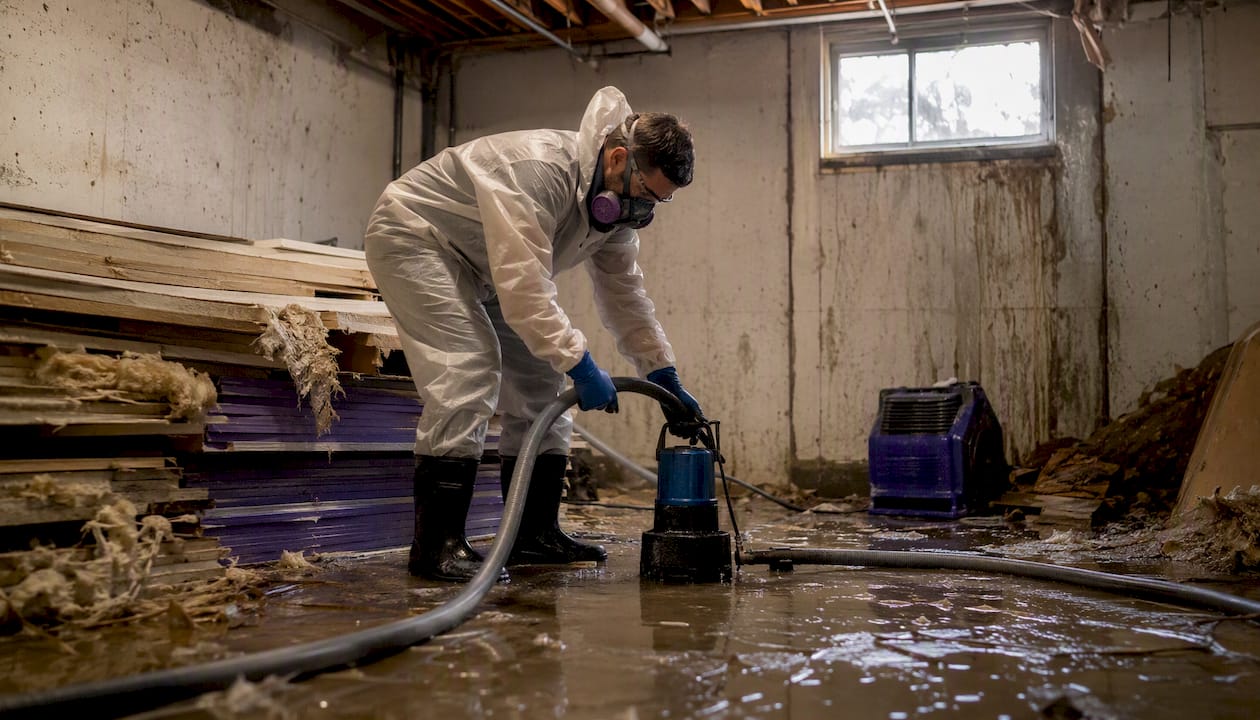

If you have sewage backing up in your Bartlett home right now, call Thecleangenius at their 24/7 emergency line and stop all water use immediately. Do not flush toilets, run the dishwasher, or turn on any faucet until a technician has assessed the line. Every gallon you add pushes more contaminated water into your living space.
- Keep everyone, including pets, out of the affected area
- Do not touch standing sewage water with bare hands or feet
- Open windows if you can do so safely, to ventilate the space
- Photograph and video the damage from a safe distance before anything is moved or cleaned
- Locate your homeowner’s insurance policy number so you have it ready when you call
Pro Tip: Document the overflow point, any visible cleanout caps, and the nearest street manhole before the crew arrives. That evidence can determine whether the backup originated on your private lateral or in the municipal main, which directly affects who pays.
Thecleangenius dispatches certified crews 24 hours a day, 7 days a week to Bartlett and surrounding Chicagoland towns including Barrington, Streamwood, Elgin, Schaumburg, Hoffman Estates, and Wheaton. If you prefer online dispatch, that option is available on their website as well.
Key Takeaways
Sewage backup in Bartlett requires immediate professional response: stop water use, keep people out, call Thecleangenius 24/7, and document everything for your insurance carrier before mitigation begins.
| Point | Details |
|---|---|
| Stop water use immediately | Every flush or faucet adds volume to a failing system and spreads contamination further. |
| Category 3 requires professional cleanup | Sewage is black water; porous materials must be removed per IICRC S500, not just disinfected. |
| Document before anything moves | Photos and video of the overflow point, affected rooms, and cleanouts are critical for insurance claims. |
| Call your carrier early | Most policies require prompt notification; delayed reporting can result in a denied claim. |
| Thecleangenius is available 24/7 | Certified crews serve Bartlett and Chicagoland with direct insurance coordination and clearance documentation. |
Table of Contents
- What does sewage backup cleanup in Bartlett actually include?
- Why do sewage backups happen so often in Bartlett?
- What should you do right after sewage appears in your home?
- What does the professional cleanup process look like, step by step?
- What are the real health risks from sewage exposure?
- How much does sewage cleanup cost, and how does insurance work?
- Why hire Thecleangenius for Bartlett sewage backup repair?
- What we see in Bartlett every season
- Thecleangenius is ready for your Bartlett emergency right now
- Sources
What does sewage backup cleanup in Bartlett actually include?
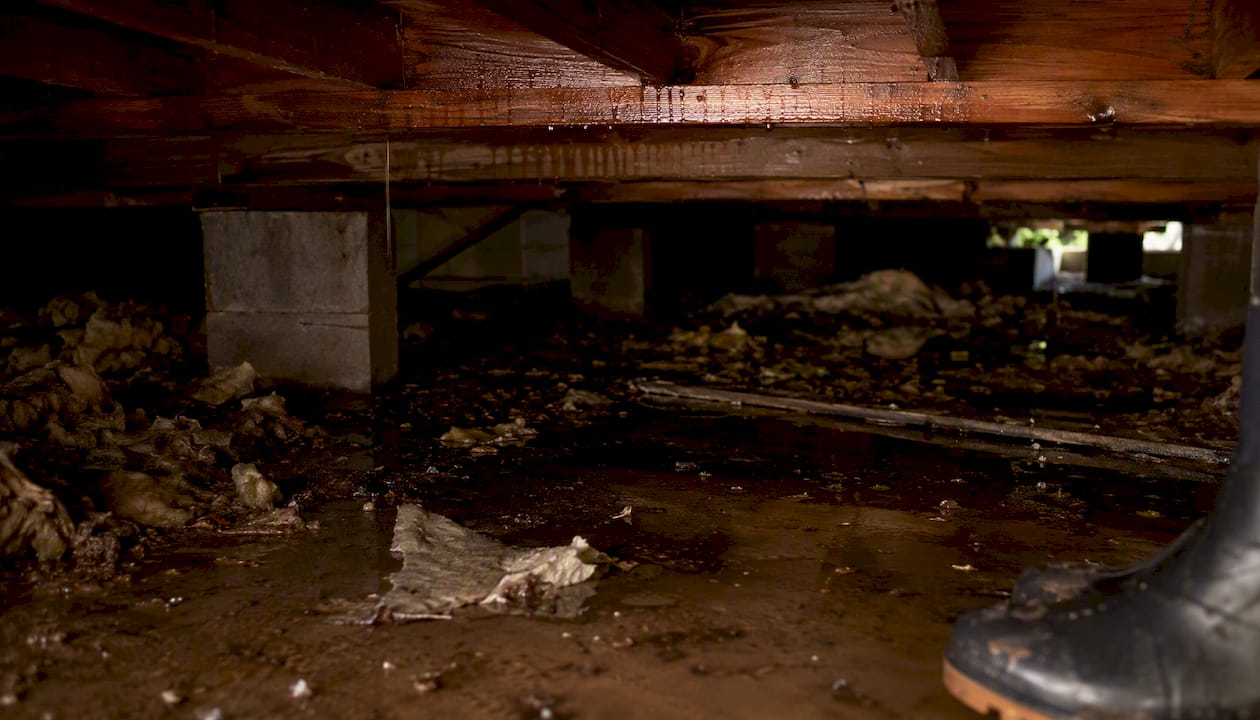
When Thecleangenius arrives at your Bartlett property, the scope goes well beyond mopping up visible water. Sewage backup is classified as Category 3 “black water”, meaning it contains human waste, bacteria, viruses, and parasites. This classification drives every decision about what gets cleaned versus what gets removed.
Here is what the emergency and restorative services typically cover:
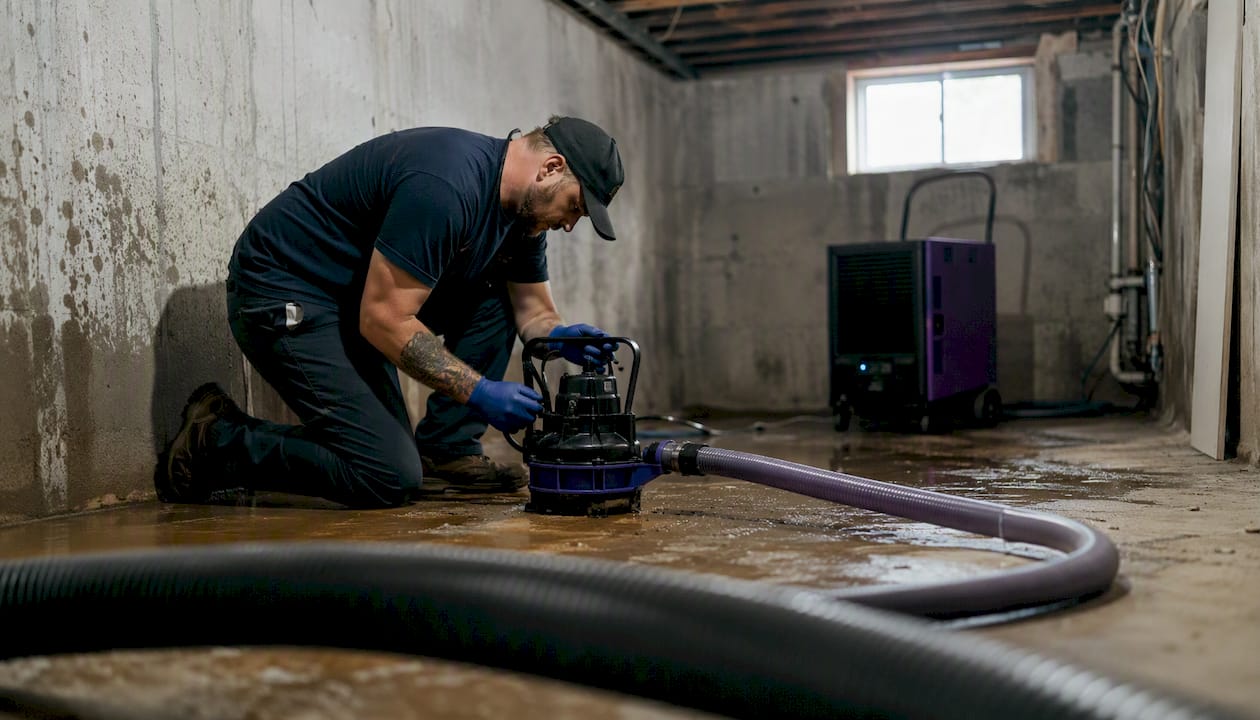
- Emergency extraction: Industrial wet-vacs and truck-mounted extractors pull standing sewage water out fast, minimizing spread
- Solids removal: Solid waste is bagged, labeled, and disposed of as regulated waste
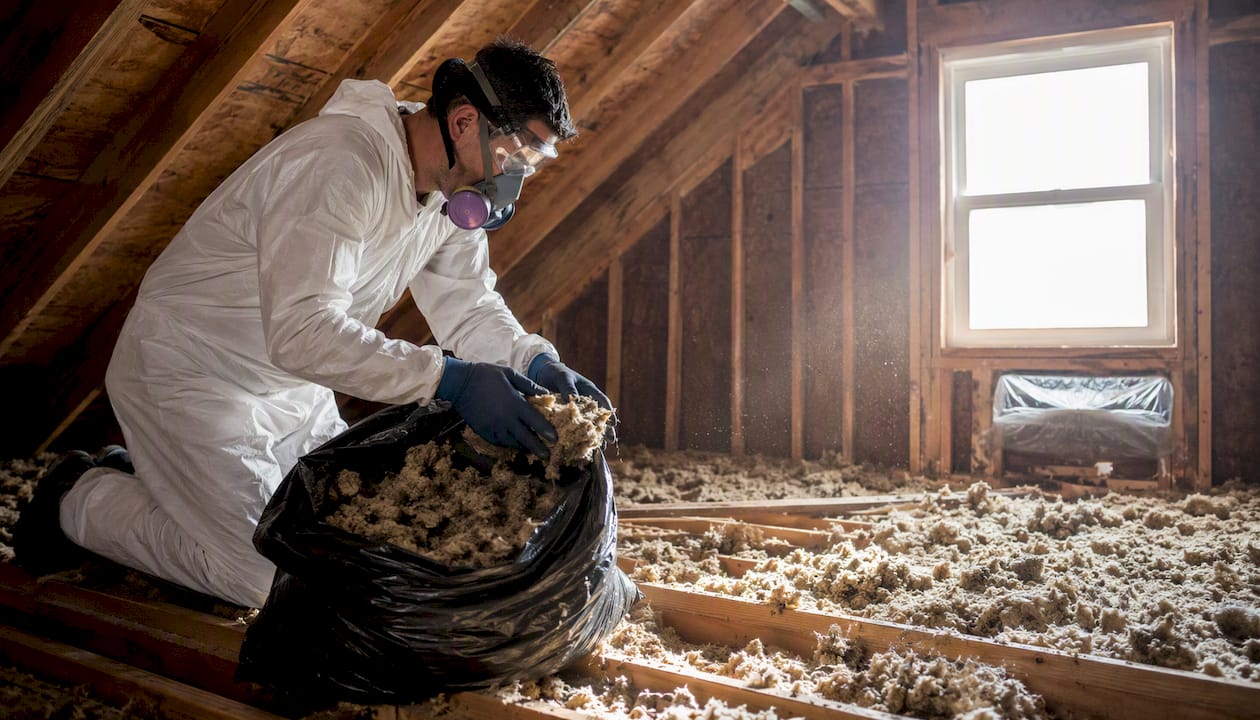
- Contaminated material removal: Porous materials, including drywall, insulation, carpet, and pad that contacted Category 3 water, are cut out and removed per IICRC S500 standards
- Antimicrobial application: EPA-registered disinfectants are applied to pre-cleaned hard surfaces; spraying biocides on dirty surfaces does not work
- Structural drying: Commercial dehumidifiers and air movers run until moisture readings return to baseline
- Odor control: Hydroxyl generators or other odor-neutralizing equipment address sewage gases in the structure
- Contents cleaning: Salvageable non-porous items are cleaned and documented
- Clearance coordination: Final moisture and sanitation readings are documented; independent clearance testing is coordinated when required by insurance
Crews typically arrive with a minimum of two technicians for residential jobs, carrying truck-mounted extraction equipment, moisture meters, thermal imaging cameras, and full PPE. Crew leads on Category 3 jobs follow HAZWOPER-informed protocols when required by the scope.
The initial scope covers mitigation: extraction, demolition of unsalvageable materials, cleaning, disinfection, and drying. Reconstruction, such as replacing drywall or flooring, is a separate phase and is billed accordingly, which matters when you are coordinating with your insurance carrier.
Why do sewage backups happen so often in Bartlett?
Bartlett sits on the heavy clay soils common across DuPage and Kane counties. That geology shapes nearly every plumbing problem homeowners face here.
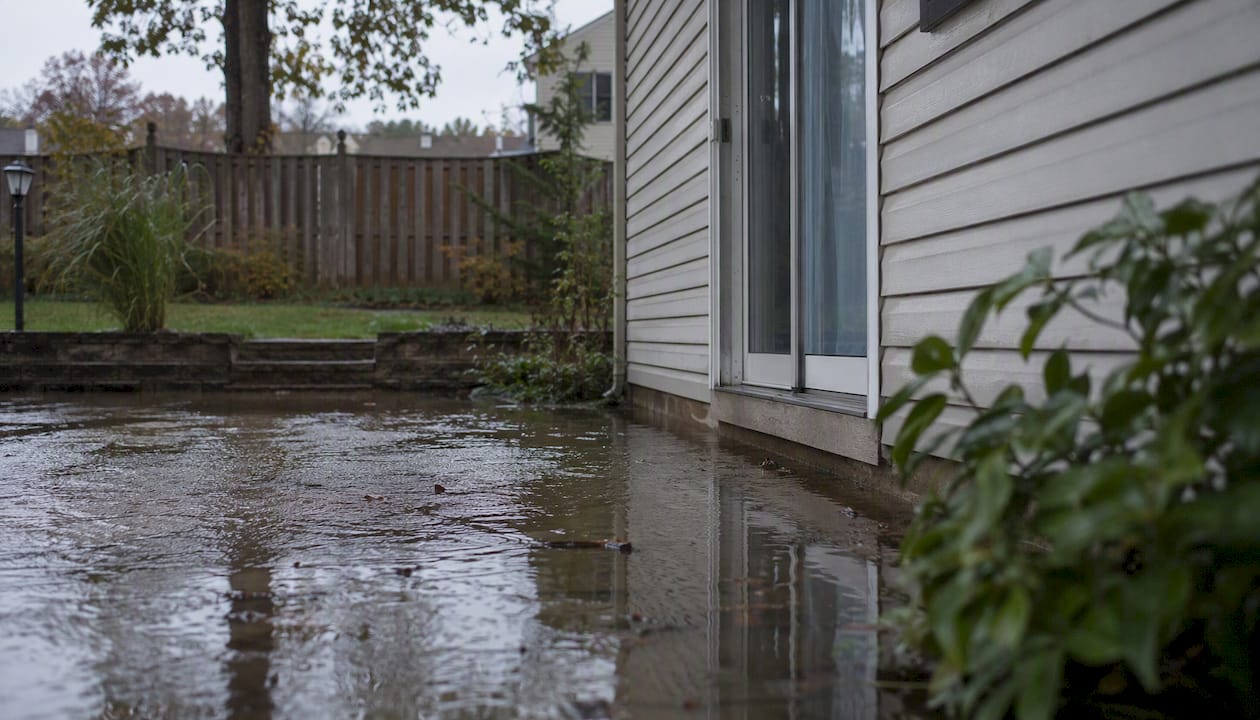
Clay soil does not drain well. During heavy rain, the ground saturates quickly, and municipal sewer systems that were designed for average flow get overwhelmed. When the main backs up, the path of least resistance is your floor drain or lowest toilet. That is a municipal-side event, and it looks identical to a private-line failure until a camera inspection tells you otherwise.
The other major culprits in this area:
- Tree roots: Mature oaks, maples, and silver maples are everywhere in Bartlett’s older neighborhoods. Their roots seek moisture and find it inside clay or cast-iron lateral lines, cracking joints and eventually blocking flow entirely
- Aging lateral lines: Homes built before the 1980s often have original clay tile or cast-iron sewer laterals. These corrode, crack, and offset over decades
- Freeze-thaw cycles: Illinois winters repeatedly freeze and thaw the ground, shifting pipe joints and accelerating cracks in older lines
- Septic system saturation: Properties on private septic in the Bartlett area face a specific risk after heavy rain. The EPA cautions against pumping septic tanks during saturated drainfield conditions, since pumping can float the tank and damage inlet/outlet pipes
A single backed-up fixture usually points to a blockage in your private lateral. Multiple fixtures backing up simultaneously, especially if neighbors report the same problem, points to the municipal main.
Pro Tip: If you see sewage coming out of a street manhole or a neighbor’s cleanout at the same time as yours, photograph it immediately. That is evidence of a municipal event and may shift liability to the utility.
What should you do right after sewage appears in your home?
Stop water use. That is the single most important step, and it needs to happen before anything else. Every flush, every load of laundry, every running faucet adds volume to a system that is already failing.
- Stop all water use in the home immediately, including toilets, sinks, washing machines, and dishwashers
- Keep occupants and pets out of any area with visible sewage or sewage odor
- Call Thecleangenius for 24/7 emergency sewage removal in Illinois, or your emergency restoration provider, before attempting any cleanup yourself
- Ventilate if safe: Open windows and exterior doors to reduce airborne pathogen concentration, a step backed by NIOSH workplace exposure guidance
- Document everything: Photograph the overflow point, affected rooms, and any visible damage before moving anything
- Contact your insurance carrier to open a claim. Do this before mitigation costs accumulate; many carriers require early notification
- Do not mix disinfectants: Bleach and ammonia-based cleaners together produce toxic chloramine gas. If you must handle any surface before the crew arrives, use one product at a time
- Do not pump a flooded septic tank without professional inspection first
One mistake that makes things significantly worse: trying to flush more water through the line to “clear the clog.” If the cause is a full septic tank, a root blockage, or a municipal backup, adding water increases contamination and can push sewage further into wall cavities and subfloor assemblies. For a full emergency response checklist, Thecleangenius has a homeowner guide that walks through each step.
Sewage contains bacteria, viruses, and parasites that cause gastrointestinal illness and skin infections. The EPA advises avoiding all contact with contaminated floodwater and discarding porous items that cannot be fully disinfected. That guidance applies to your home just as much as it does to post-hurricane cleanup.
What does the professional cleanup process look like, step by step?
The professional workflow follows a clear sequence: inspect, contain, remove, clean and disinfect, dry, verify, and hand off to reconstruction. Here is what that looks like in practice, with realistic time windows.
- Triage and inspection (30–60 minutes): The crew assesses the source, maps the contamination zone with moisture meters and thermal imaging, and documents conditions before touching anything
- Containment setup (30–60 minutes): Plastic sheeting and negative air pressure isolate the work zone to prevent cross-contamination to unaffected areas
- Extraction and solids removal (2–6 hours depending on volume): Truck-mounted extractors remove standing water; solids are bagged as regulated waste
- Demolition of contaminated porous materials (1–2 days for moderate jobs): Drywall, insulation, carpet, and subfloor sections that contacted Category 3 water are removed per IICRC S500 protocols. Porous materials cannot be reliably disinfected and must come out
- Cleaning and disinfection (same day as demolition): Hard, non-porous surfaces are cleaned first, then treated with EPA-registered antimicrobials. Antimicrobials only work on pre-cleaned surfaces
- Structural drying (2–7+ days): Commercial dehumidifiers and air movers run continuously. Technicians return daily to log moisture readings until the structure reaches dry standard
- Clearance documentation: Final readings are compiled into a written report. When insurance requires independent clearance testing, that is coordinated before reconstruction begins
- Handoff to reconstruction: Once clearance is confirmed, the scope for replacing drywall, flooring, and finishes is documented and passed to the rebuild phase
Pro Tip: Have your utility shutoff location, insurance policy number, and the photos you took before the crew arrived ready when they walk in. That cuts the triage phase by 15–20 minutes and gets extraction started faster.
What are the real health risks from sewage exposure?
Sewage is not just unpleasant. It carries a documented mix of pathogens that cause real illness, and the risk is highest in the first hours after a backup when contamination is at its most concentrated.
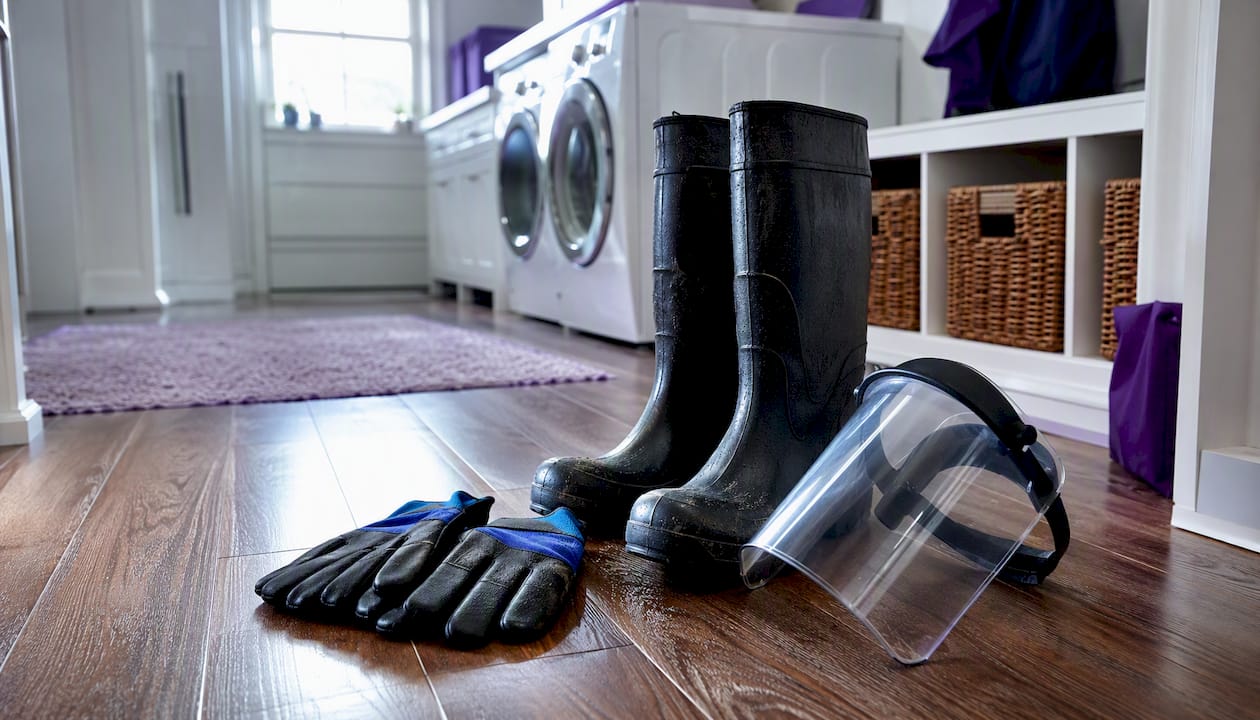
The CDC recommends that anyone handling human waste or sewage use waterproof gloves, waterproof boots, and face protection including splash shields. Tetanus vaccinations should be current. For situations where splashing is likely, an N95 or P100 respirator is appropriate.
For non-porous hard surfaces, the EPA recommends a diluted bleach solution applied after thorough cleaning, with adequate contact time before rinsing. Never mix bleach with ammonia or other household cleaners. Ventilating the space during and after disinfection reduces inhalation exposure, a point reinforced by NIOSH findings on wastewater worker exposures.
Porous materials, including drywall, insulation, carpet, and upholstered furniture, cannot be reliably disinfected once contaminated by Category 3 water. IICRC standards require their removal. Spraying antimicrobials on contaminated porous surfaces does not restore them to a sanitary condition; it only masks the problem temporarily.
How much does sewage cleanup cost, and how does insurance work?
Thecleangenius dispatches 24/7 and targets same-day arrival for emergency calls in Bartlett. For most residential jobs, a crew is on-site within hours of your call.
Cost depends on several variables:
- Square footage of the contaminated area
- Depth of contamination (surface-only vs. subfloor and wall cavity penetration)
- Demolition scope (how much drywall, flooring, and insulation must be removed)
- Contents restoration needs
- Whether independent clearance testing is required
- Reconstruction scope after mitigation is complete
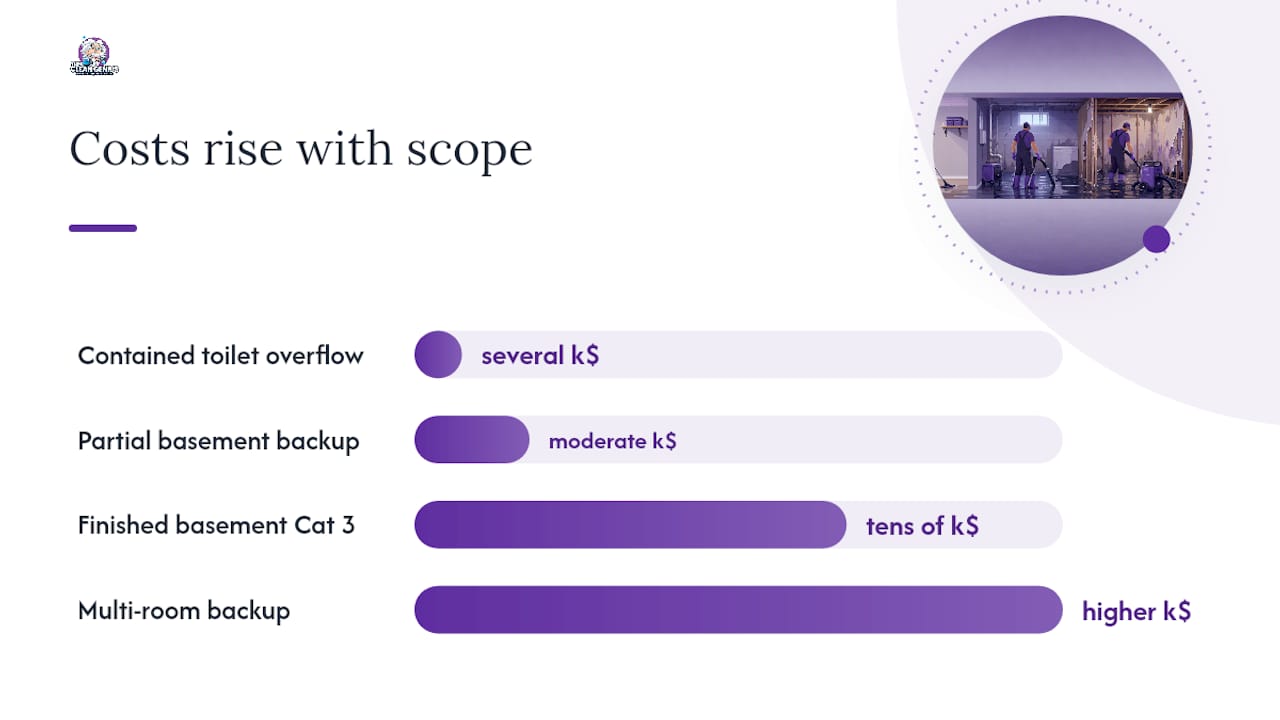
Industry cost baselines give a useful frame: a small, contained toilet overflow in a single bathroom may run several thousand dollars for mitigation. A full finished-basement Category 3 event with demolition, extended drying, and clearance testing can exceed tens of thousands of dollars, depending on the size of the space and reconstruction needed. These are examples, not guarantees, since every job is scoped on-site.
| Job Type | Typical Scope | Example Cost Range |
|---|---|---|
| Contained toilet overflow (1 bathroom) | Extraction, disinfection, limited drying | Small to moderate costs typical |
| Partial basement backup (unfinished) | Extraction, floor cleaning, drying | Moderate costs typical |
| Finished basement Cat 3 event | Full demo, drying, clearance testing | Larger jobs can be costly depending on scope |
| Multi-room backup with wall penetration | Demo, extended drying, reconstruction | Extensive jobs tend to have higher costs |
On insurance: most standard homeowner policies cover sudden and accidental sewage backups, but many require a specific sewer backup rider. Call your carrier to open a claim before mitigation costs accumulate. Carriers often require early notification and may deny claims when they learn about the event days later. Keep your water damage insurance documentation organized from the start.
Mitigation (extraction, demolition, drying) and reconstruction (replacing drywall, flooring) are billed as separate phases. Many carriers require a written clearance report before approving reconstruction payment, so that documentation from Thecleangenius matters beyond just peace of mind.
Why hire Thecleangenius for Bartlett sewage backup repair?
Thecleangenius offers 24/7 emergency sewage cleanup services in Bartlett with certified crews and direct insurance coordination. That combination, immediate availability plus documentation support, is what separates a smooth claim from a contested one.
Concrete reasons Bartlett homeowners and property managers call Thecleangenius:
- Extensive experience across water damage, sewage, mold, and fire restoration in Chicagoland
- Numerous strong five-star reviews from homeowners across the service area
- IICRC-aware protocols on every job, with HAZWOPER-trained crew leads when the scope requires it
- Direct insurance coordination: Thecleangenius works with your carrier from the first call, providing documentation, moisture logs, and clearance reports in the format adjusters need
- Independent clearance testing support: When your carrier requires a third-party clearance report before paying reconstruction, Thecleangenius coordinates that process
- Full-service scope: From emergency extraction through mold prevention, the same team handles the entire mitigation phase so nothing falls through the cracks
When you call, the dispatcher will ask for your address, the location and approximate size of the backup, whether the water is still rising, and your insurance carrier name. Having that information ready speeds dispatch.
Pro Tip: Ask the crew to explain the moisture log readings before they leave each visit. Understanding what “dry standard” means for your specific materials helps you know when drying is genuinely complete, not just visually dry.
What we see in Bartlett every season
Bartlett’s clay soils and aging lateral lines mean sewage backups here follow a predictable seasonal pattern. Spring thaw and heavy April rains are the peak period, when saturated ground overwhelms both private laterals and municipal mains simultaneously. Late fall freeze events are the second spike, when ground movement shifts pipe joints that were already stressed.
The homes that fare best are the ones where the homeowner called within the first hour. Sewage that sits overnight migrates into wall cavities, subfloor assemblies, and HVAC ductwork, turning a $5,000 mitigation job into a $25,000 one. Quick action also limits mold risk, since Category 3 moisture in a warm basement can support mold growth within 24–48 hours.
Thecleangenius coordinates directly with your insurance carrier and provides the independent clearance documentation your adjuster will ask for before approving reconstruction. That paperwork is not optional; it is what gets your home rebuilt.
Thecleangenius is ready for your Bartlett emergency right now
When sewage backs up, the clock starts immediately. Thecleangenius provides 24/7 emergency water damage response across Bartlett and the greater Chicagoland area, with same-day mitigation and direct insurance billing from the first visit.

Call the Thecleangenius emergency line now. Online scheduling is also available for non-critical situations. When you call, have your address, a brief description of the backup location, and your insurance carrier name ready. The dispatcher will confirm your arrival window and walk you through any immediate safety steps while the crew is en route.
While you wait for the crew:
- Shut off water at the main if the backup is still active and you can do so safely
- Keep all occupants and pets out of the contaminated area
- Leave windows open for ventilation
- Continue documenting with photos and video
Thecleangenius serves Bartlett, Barrington, Arlington Heights, Elgin, Schaumburg, Streamwood, Hoffman Estates, Wheaton, Naperville, and dozens of additional Chicagoland communities. If you are in the area and need certified local sewage cleanup experts, this is the team to call.
Sources
These are the primary authoritative references behind the guidance in this article.
- IICRC
- Cleaning Up After a Flood: FAQs
- Septic systems – What to do after the flood | US EPA
- Category 3 Sewage Cleanup Protocols (IICRC S500) | DRR Phoenix
- NIOSH HHE report (2023-0044-3418)
This article is general information, not a substitute for advice from a qualified doctor. Consult a qualified healthcare professional about your own circumstances before acting on anything here.