


24/7 Emergency Response
Roof Leak Water Damage Restoration by The Clean Genius
A leaking roof does more damage than most homeowners realize — and most of it happens out of sight. We find every drop, dry it completely, and stop mold before it starts.

The roof gets fixed. The water damage inside is a different problem entirely.
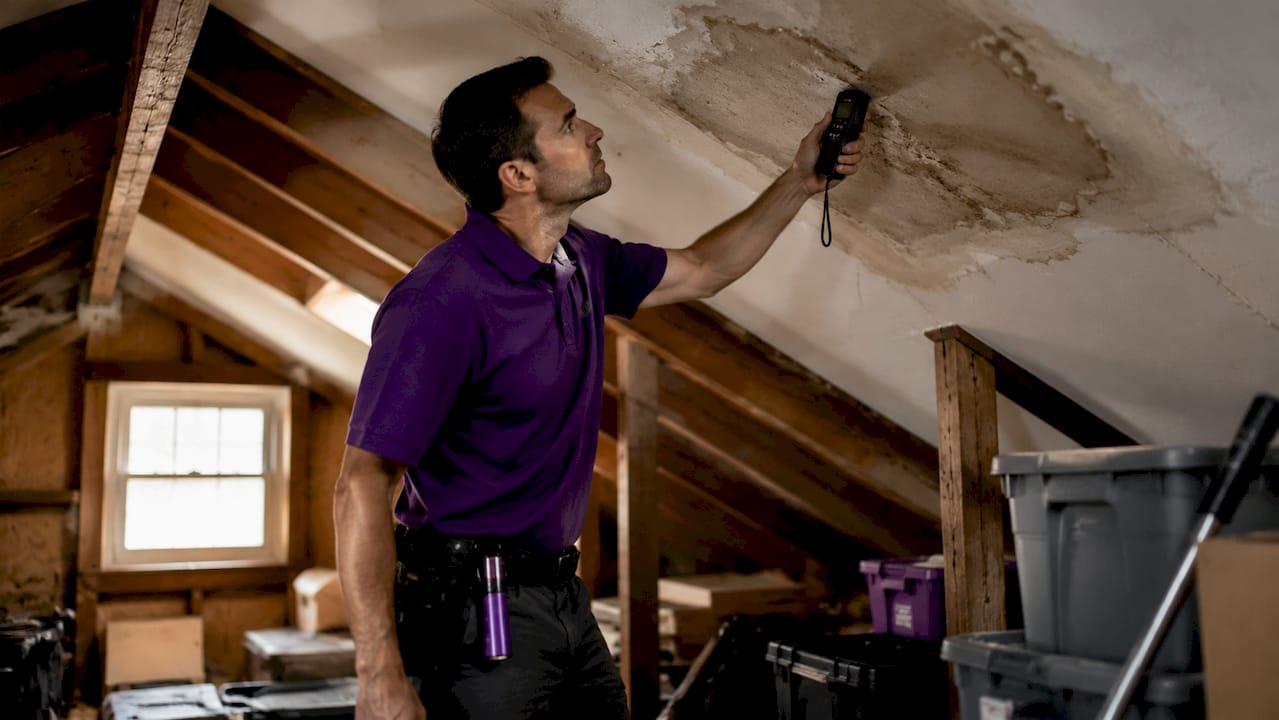
When a roof leaks, most homeowners call a roofer — and that's the right first call. But once the roof is patched, the water that already got in doesn't just disappear. It soaks into attic insulation, saturates ceiling joists, works its way down into wall cavities, and can sit undetected for weeks. That's exactly how mold gets started. The Clean Genius handles the interior side of roof leak damage. Our IICRC-certified technicians use thermal imaging to trace where water traveled, extract moisture from structural materials, and dry everything to a certified standard. With 25 years of combined experience and 400+ five-star reviews across the Chicago suburbs, we've cleaned up after everything from slow winter leaks to major storm damage.
Two Very Different Approaches to Roof Leak Damage
The Other Guys
- Dry the visible wet spot and call it done
- Miss moisture trapped in insulation and framing
- No mold prevention — you find it months later
- No documentation for your insurance claim
The Clean Genius
- Thermal imaging to trace water wherever it traveled
- Full drying of structural materials — not just surfaces
- Antimicrobial treatment to stop mold before it starts
- Complete documentation for a smooth insurance claim
Why Roof Leaks Are More Dangerous Than They Look
A water stain on the ceiling looks like a surface problem. It rarely is.
Water Travels — It Doesn't Stay Where It Enters
Water that comes in through a compromised roof doesn't fall straight down and stop. It follows framing members, runs along pipes and wires, pools in low spots, and saturates insulation — sometimes traveling several feet from the original entry point before you see any evidence of it.
Attic Insulation Holds Moisture Like a Sponge
Fiberglass and cellulose insulation can absorb significant amounts of water without looking obviously wet. Saturated insulation loses its effectiveness immediately and becomes a prime environment for mold growth if it isn't dried or replaced.
Ceiling Materials Hide the Worst of It
Drywall ceilings can absorb water and hold it long after the leak stops. By the time you see bubbling paint or a sagging ceiling, there's often substantial hidden moisture in the framing above it.
Mold Can Start in as Little as 24-48 Hours
Once moisture is in your structure, the clock is running. Mold doesn't need much — just warmth, organic material, and water — and your attic and wall cavities provide all three. Early intervention is the difference between a drying job and a full mold remediation.

What to Do When You Discover a Roof Leak
While you're waiting for our crew, here's how to limit the damage:
1
If it's actively leaking, place buckets and lay down towels — but don't climb on the roof yourself.
2
Move furniture, rugs, and valuables out of the affected area.
3
Take photos of everything — ceiling stains, wet materials, damaged belongings.
4
Call your roofer to patch or tarp the entry point so water stops coming in.
5
Call The Clean Genius so we can get the interior drying process started immediately.
Note: The Clean Genius handles interior water damage and drying. Roof repair or replacement is your roofer's job. We work alongside your roofer and insurance adjuster to make sure nothing falls through the cracks.

The Clean Genius Difference
Why Homeowners Call Us When a Pipe Bursts
24/7 Emergency Response
Roof leaks don't wait for business hours — and neither do we. Call any time and reach a real person who can get a crew moving.
IICRC-Certified Technicians
Every technician is IICRC-certified in water damage restoration. That certification matters — it's the difference between someone who dries until things feel dry and someone who dries to a documented standard.
Thermal Imaging & Moisture Mapping
We use thermal imaging cameras and professional moisture meters to trace exactly where water has traveled — including inside attic framing, wall cavities, and under flooring that looks completely normal on the surface.
Attic & Insulation Expertise
Roof leak damage often means compromised insulation. We assess what can be dried in place and what needs to come out, document everything for your claim, and make sure nothing gets left wet inside your structure.
400+ Five-Star Reviews
Hundreds of Chicago-area homeowners have trusted us with their worst moments. Our reputation is built on doing the job right — not just fast.
Insurance Claim Support
We provide detailed moisture reports, photo documentation, and a complete scope of work from day one. We work directly with your adjuster to make sure covered damage gets covered.
Our Proven Four-Step Process
Systematic, certified, and thorough — from first call to final dry reading.
1
Inspection & Moisture Mapping
We arrive and immediately get to work with thermal imaging cameras and moisture meters, tracing water from the entry point through your attic, ceilings, and walls. Nothing gets missed because we don't rely on what we can see with our eyes alone.
2
Water Extraction & Material Assessment
We extract standing water and assess all affected materials — insulation, drywall, framing, flooring. We determine what can be dried in place and what needs to be removed, and we document everything before we touch it.
3
Structural Drying & Mold Prevention
Commercial air movers and dehumidifiers run until every affected material reaches its certified dry standard. We monitor moisture levels daily and apply antimicrobial treatment throughout the affected area to prevent mold from getting a foothold.
4
Documentation & Insurance Support
You get a complete file — moisture logs, before-and-after photos, scope of work, and a final dry report. We coordinate with your roofer and insurance adjuster so the whole process moves smoothly from emergency response to full restoration.