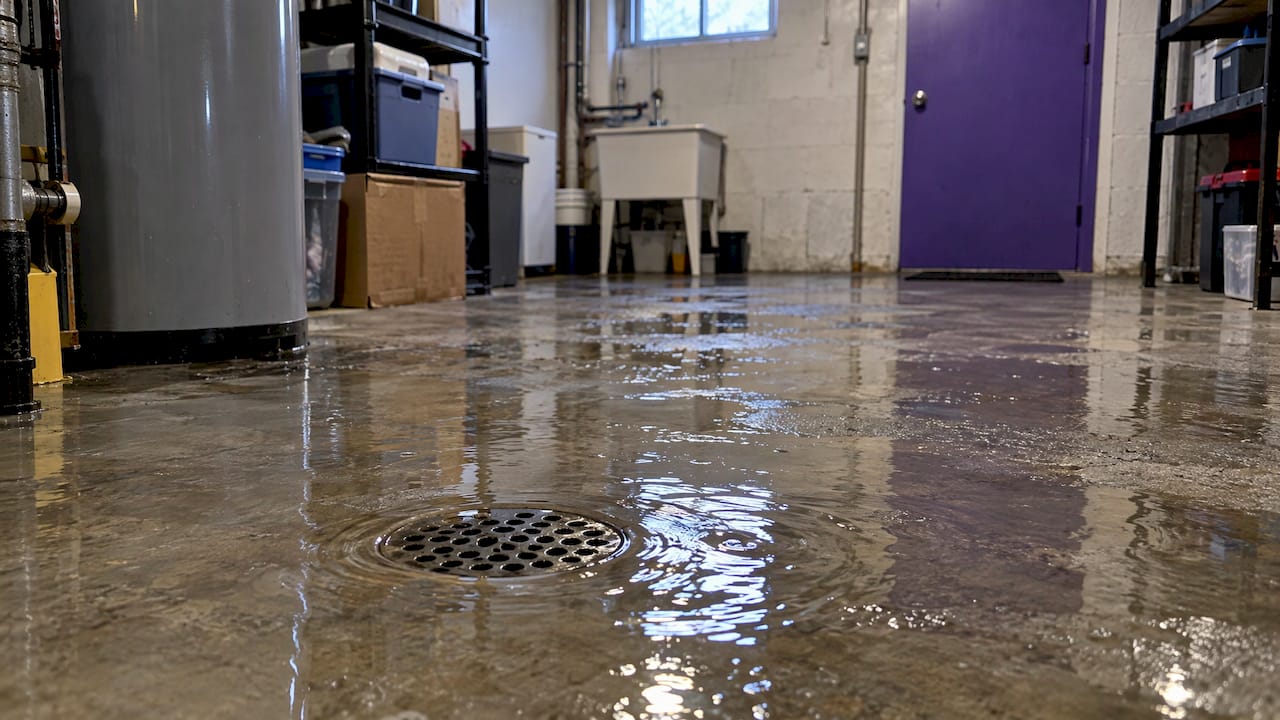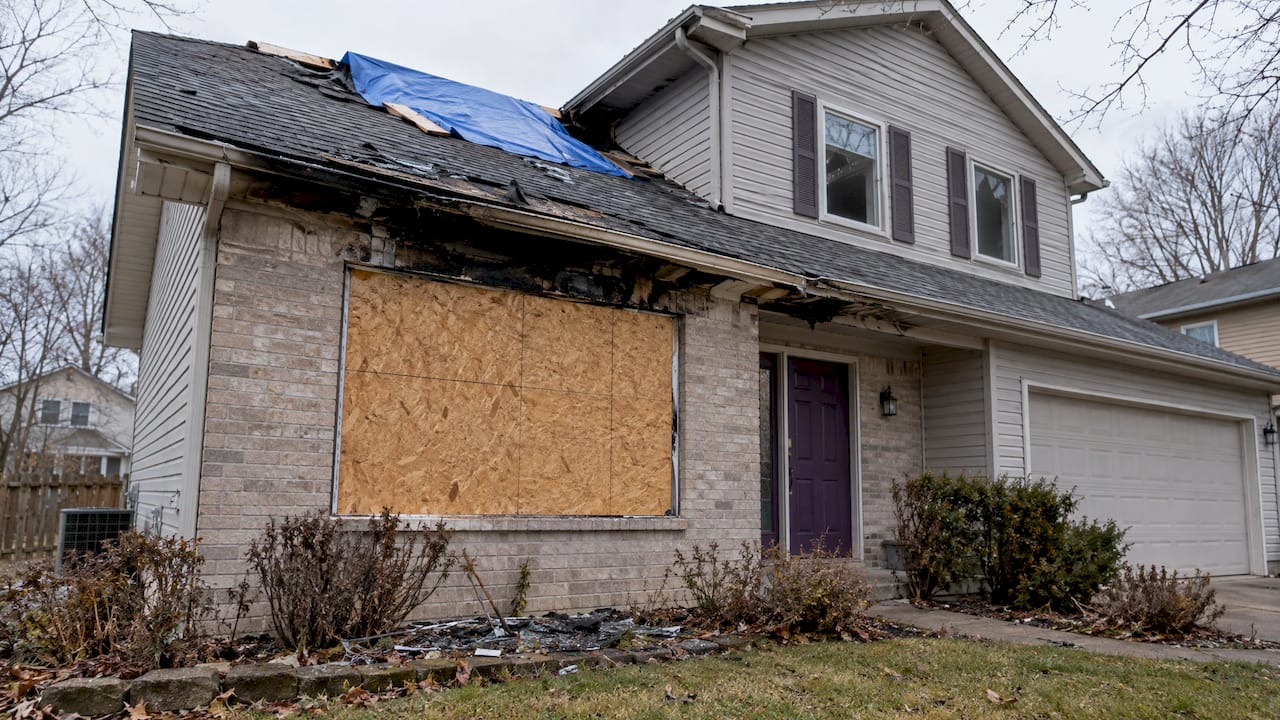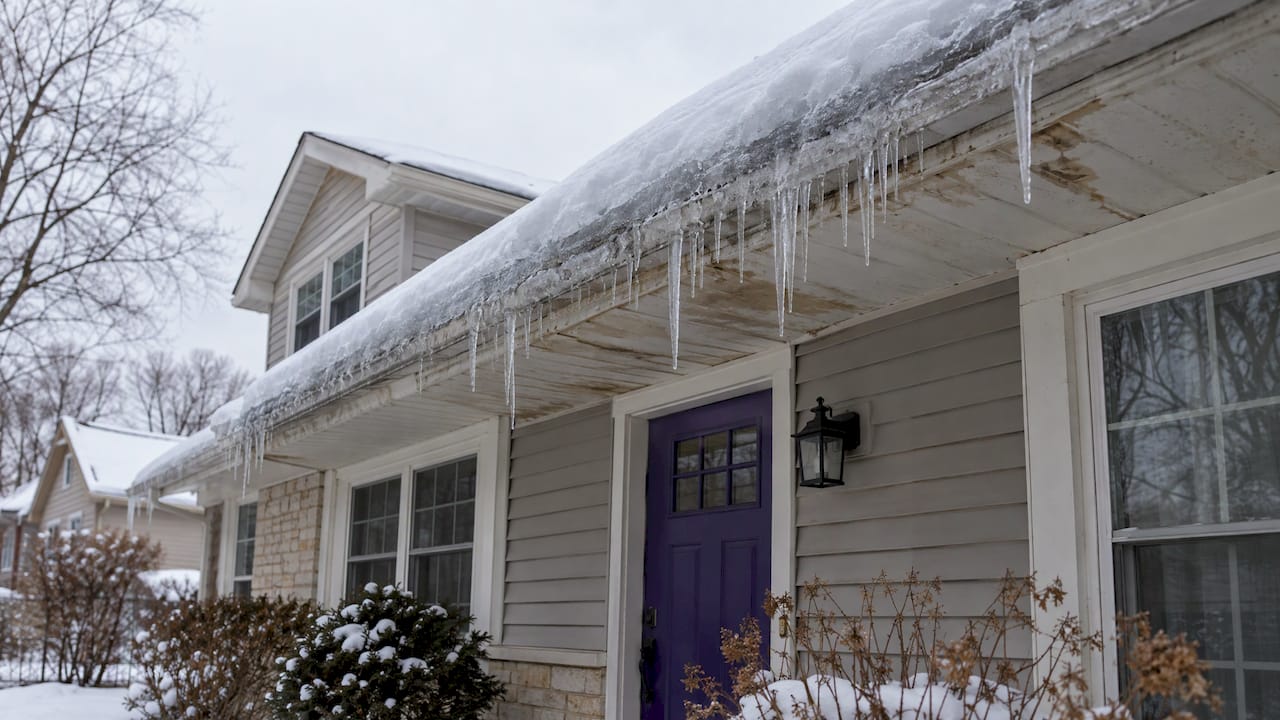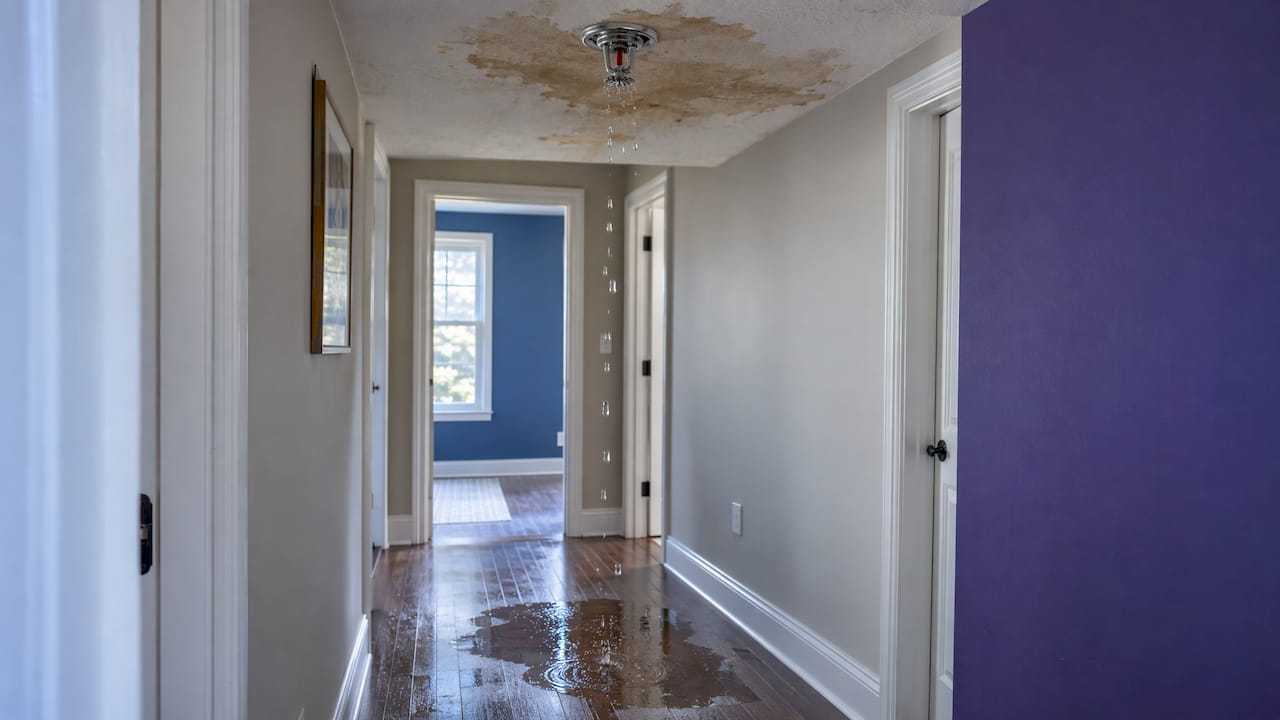

A sprinkler leak in your home, whether it comes from a fire sprinkler line in the ceiling or a lawn irrigation pipe near the foundation, is a clock problem. The water has to be stopped at the right valve, the loss has to be documented for your insurer, and wet building materials have to be dried within about 24 to 48 hours, which is the window the EPA gives for preventing mold growth. If you live in the Chicago suburbs and the water is already on your floor, this page walks you through the order of operations. When the water is stopped and you need the structure dried out and the claim supported, we are available 24/7 across Chicagoland.
What are the immediate steps to take for a sprinkler leak?
- Stop the water at the correct valve first. For a fire sprinkler, that is the sprinkler control valve on the riser, not the house main.
- Turn off power to the wet area before you walk in, and keep everyone away from wet outlets and ceiling fixtures.
- Photograph everything before cleanup, call your insurer, and keep receipts. Most standard homeowners forms include accidental discharge from a fire sprinkler system.
- Wet drywall, insulation and carpet pad need to be dried within 24 to 48 hours or they may have to come out.
- Call us once the water is off: we handle water damage restoration and work directly with your insurance.
Table of Contents
- Which Sprinkler Is Leaking?
- Stop the Water First
- Why Sprinkler Lines Leak in Chicago-Area Homes
- Document the Damage Before You Clean Up
- Dry the Structure Within 24 to 48 Hours
- Signs of Hidden Moisture and Mold
- A Realistic Timeline for the First Two Days
- Get Your Home Dried Out With Us
- FAQ
- Sources
Which Sprinkler Is Leaking?
The phrase “sprinkler leak” covers two very different systems, and the first step depends on which one you have.
A fire sprinkler system is a network of pipes, usually in ceilings, garages and attics, with heat-activated heads. It is pressurized all the time. Many newer homes in Naperville, Palatine, Schaumburg and the surrounding suburbs have them, and so do some townhomes and condos. A leak here can come from a head, a fitting or a split pipe.
A lawn irrigation system is buried outside, with valves in a box in the yard and often a connection and shutoff in the basement or garage. Leaks here usually soak the yard, but they can also send water into a foundation wall, a window well or a crawl space.
You can usually tell what is happening by where the water shows up. Maryland Fire Sprinklers, a sprinkler contractor, describes the pattern for a fire sprinkler line:
- A damp ring around the trim ring of a head, or a drop forming on the deflector, points to a weeping head.
- Water showing a foot or two away from any head points to a pipe fitting or a hole in the pipe, such as an uncemented plastic joint or a screw driven through the line.
- Water coming through a garage or attic ceiling during a thaw suggests a frozen run that split.
- Beads of moisture along a whole cold pipe in a damp basement are usually condensation, not a leak.
If the water is in the yard, the driveway edge or the basement wall nearest the irrigation connection, treat it as an irrigation leak.
Stop the Water First
Do this before anything else. Every minute of flow adds to the drying job, the claim and the mold risk.
If it is a fire sprinkler line
Before you touch anything, confirm that everyone is safe. Water can short-circuit or ignite electrical components, so shut off power to the affected area from the breaker panel if you can reach it without standing in water, and leave the house if you cannot.
Then find the sprinkler riser. In many homes it sits in the garage, a utility room or a basement, near where the water service enters. According to Maryland Fire Sprinklers, the step that stops a ceiling leak is closing the sprinkler control valve on the riser and opening the riser drain. A lever handle turned across the pipe usually means closed.
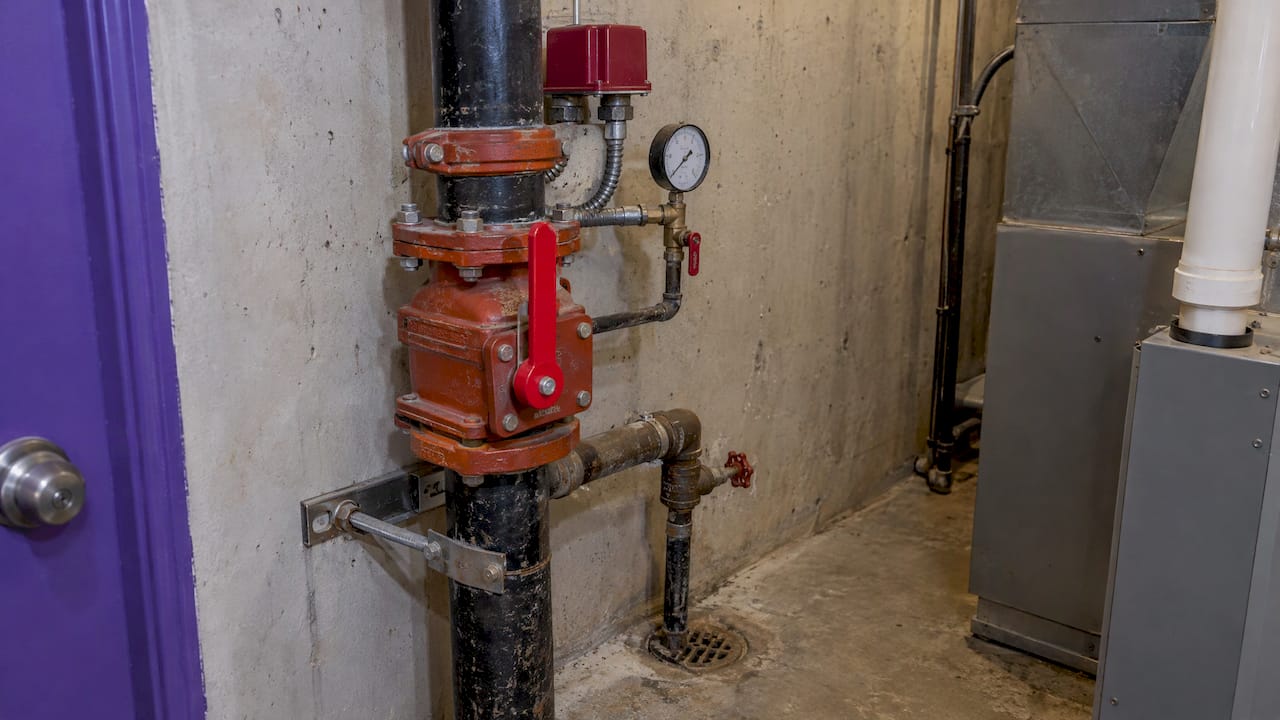
The same source explains why you should not close the house main instead. The sprinkler line branches off right after the meter, so shutting the main takes the whole house off water while the pressurized sprinkler line keeps draining through the leak. Closing the sprinkler valve stops the ceiling leak, and your kitchen and showers keep working.
A few more points matter here:
- Do not cap, plug or try to repair a leaking head yourself. A fire protection contractor’s guidance warns that improper handling can accidentally activate the sprinkler.
- Photograph the leak, the valve position and note the time you closed it. A sprinkler contractor’s triage guide recommends recording that time and checking that flow has actually stopped.
- Remember that your home may now have no fire protection on that line. Tell your insurer and arrange the repair quickly with a licensed fire sprinkler contractor. That repair is their work, not a restoration job.
If it is a lawn irrigation line
Shut off the irrigation supply at its dedicated valve, which is often near where the line leaves the house, and turn off the controller so zones do not cycle on again. If you cannot find an irrigation shutoff, the main shutoff works for this system, because the irrigation line has no pressurized fire function to worry about. Our guide to emergency water shutoff for homeowners covers locating the main in a typical Chicagoland house.
If you are trying to find where the underground leak actually is, this irrigation leak troubleshooting guide explains how to find the leak and which valve to close first. Once water has reached the house, the restoration clock below applies the same way it does for a fire sprinkler.
Why Sprinkler Lines Leak in Chicago-Area Homes
Knowing the cause matters for two reasons: it decides what the repair looks like, and it affects how your insurer reads the claim.
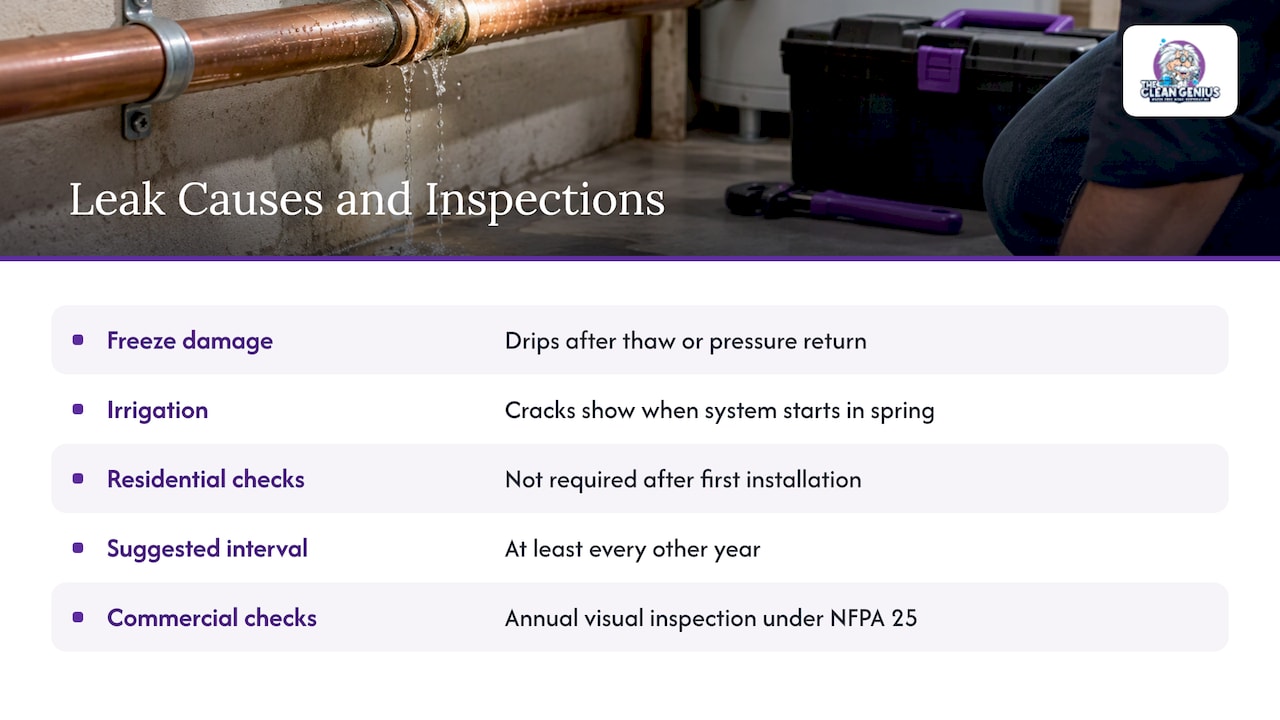
The usual suspects, according to sprinkler contractors, are corrosion, freezing, mechanical damage and failed fittings. Freeze damage often does not show up until the ice thaws or pressure returns, so a ceiling that was dry on a January night can drip on the first warm afternoon. That pattern is familiar in northern Illinois, where garages, attics and unheated corners of a house swing through repeated freeze and thaw cycles. If your leak followed a cold snap, our frozen pipe cleanup guide covers what to do in the first hour to protect the claim.
Irrigation systems add their own seasonal risk: water left in lines and valves over winter can freeze and crack fittings, and the damage usually shows up when the system is turned on in spring.
Residential fire sprinklers also get less routine attention than people assume. A May 2026 news report found that ongoing inspections are not required in residential homes after the first installation, and a fire official quoted there recommended having systems checked at least every other year. For commercial and larger systems, NFPA 25 calls for an annual visual inspection that looks for leakage, corrosion and physical damage, and a leaking or damaged head must be replaced rather than tested, because dissolved minerals can solidify and jam it. Even a slow drip counts.
Document the Damage Before You Clean Up
Your insurer will want to see the water as it was. Before you start moving things:
- Photograph and video every wet room, ceiling stain, wet wall, floor and damaged belonging, wide shots first, then close-ups.
- Photograph the shutoff valve, the leak source and the time you closed it.
- Notify your insurer promptly and write down the date, time, the person you spoke with and the claim number.
- Keep wet items you can safely hold until the insurer has said you may discard them, and keep every receipt for emergency work.
A sprinkler contractor’s insurance checklist adds that you should follow the insurer’s directions on emergency repairs and not discard damaged items without approval. Our water damage insurance claim checklist puts the same steps in a form you can print and work through.
What a homeowners policy typically covers
The Insurance Services Office (ISO) is the organization that writes the standard policy forms many U.S. insurers use. Its residential sprinkler fact sheet states that its standard homeowners forms include basic coverage for accidental discharge or overflow of water from within a fire protective sprinkler system at no extra charge. Your own policy language controls, so read the water damage section or ask your agent how your policy treats a sudden discharge versus long-term seepage. Policies commonly separate those two, and a fast, documented response helps show that your loss was sudden.
This is the part where we take work off your plate. We work directly with your insurance, so you are not carrying the drying records, photos and scope questions back and forth by yourself.
Dry the Structure Within 24 to 48 Hours
Once the water is off and the power situation is safe, drying is the job that decides whether you have a repair or a rebuild. The EPA’s guidance is to dry water-damaged areas and items within 24 to 48 hours, and to keep indoor humidity below 60 percent, ideally between 30 and 50 percent.
Sprinkler water has a particular problem: it often comes from above. It runs through ceiling drywall, down wall cavities and into insulation before you see a stain, so the damage is often larger than the visible spot. The Massachusetts state quick reference on water damage response, which draws on EPA guidance, lays out what happens to materials that stay wet:
- Porous materials should be dried with fans and heat within 24 to 48 hours.
- Wallboard that is not dried within 48 hours should be cut out and discarded.
- Wallboard showing mold should be removed along with at least one foot of additional material beyond the saturated area.
- Wet insulation in wall cavities should be discarded, and so should wet ceiling tiles and carpet that cannot be dried.
All of that is in the state’s water damage response reference. It also explains why the first two days matter so much to your wallet: dried drywall stays in the wall, and undried drywall becomes demolition and replacement.
If you want to see how a professional dry-out is measured and logged, our guide to moisture meters and drying logs for drywall explains the readings, and our water damage restoration equipment guide describes what each machine is for. If the water came through the ceiling, our ceiling leak page covers the first 24 to 48 hours in more detail.
Mitigation first, restoration after
There are two phases. Mitigation is removing water, drying and protecting what can be saved. Restoration is rebuilding what could not be saved. Doing the first quickly usually shrinks the second. We explain the difference in water mitigation vs. restoration.
Signs of Hidden Moisture and Mold
A ceiling that looks dry on the surface can still be wet above it. Watch for:
- A musty smell with no visible source.
- Stains that spread or return after they dry.
- Paint that bubbles, drywall that feels soft, or seams that open.
- Warped flooring or a damp carpet pad.
- Anyone in the household developing symptoms after the water event.
The EPA says to suspect hidden mold when a building smells moldy with no visible source, or when water damage is known and residents report health problems. It can sit behind drywall or wallpaper, above ceiling tiles, under carpet pads and inside walls around pipes.
If it does take hold, mold removal is a separate job from drying. Our mold removal and remediation service uses Pure Cloud dry-fog technology, and our guide on what mold remediation is explains the process. Our dedicated page on preventing mold in the 48 hours after sprinkler water damage goes into the timing in more depth. If water has also reached the attic, see roof leak mold in the attic.
A Realistic Timeline for the First Two Days
| When | What to do |
|---|---|
| First 10 minutes | Make sure everyone is safe, turn off power to the wet area if you can do it safely, close the correct valve |
| First hour | Photograph the damage and the valve, call your insurer, call us for emergency response |
| Hours 1 to 24 | Water extraction, remove soaked contents, start drying, keep air moving |
| Hours 24 to 48 | Check moisture readings in drywall and insulation, decide what must be removed, watch for odor |
| After 48 hours | Wet porous material becomes a mold risk and may need removal |
That sequence follows the EPA window above and the way sprinkler contractors describe the first response. The sooner the first row is done, the less the later rows cost.
What We Tell Chicagoland Homeowners
A sprinkler leak feels like a plumbing problem, so people wait for the plumber or the sprinkler contractor and leave the water where it is. We see it differently: the leak is one job and the wet house is another, and they should happen at the same time. Get the right valve closed, then get the structure dry.
We are a family-owned water restoration company with more than 25 years of combined experience and over 400 five-star reviews, and we work directly with your insurance. We handle floods, burst pipes, sewage backups and complete property dry-out, and our teams are certified and insured. If mold has started, our team removes it with Pure Cloud dry-fog technology, so the same company that dried your house can finish the job.
Call us once the water is off. We are available 24/7, and it is better to have us look at the ceiling on day one than to find the stain on day five.
Jim
Get Your Home Dried Out With Us
If a sprinkler leak has wet your ceilings, walls or floors, our water damage restoration team can come out any time of day or night. We serve Arlington Heights, Palatine, Naperville, Elgin, Wheaton, Schaumburg and the surrounding Chicagoland suburbs, handle burst pipes and plumbing emergencies, and coordinate directly with your insurer.

If you want to read before you call, start with our emergency water damage response steps for homeowners, and when you are ready, reach us through The Clean Genius.
FAQ
How can I tell if my sprinkler system is leaking?
For a fire sprinkler, look for a damp ring around a head, drips from the deflector, rust stains on the ceiling, or rusty water coming from a head. For irrigation, look for soggy ground, new puddles, low pressure at the heads or a water meter that keeps turning when nothing is running. Any drip from a fire sprinkler head deserves a call to a licensed fire sprinkler contractor, because NFPA guidance says a leaking head should be replaced, not tested.
Should I shut off the main water valve for a fire sprinkler leak?
Usually not. The sprinkler line is fed directly after the meter, so closing the house main can leave the sprinkler line draining through the leak. Close the sprinkler control valve on the riser and open the riser drain. If you cannot find or reach it, leave the house and call the fire department.
Does homeowners insurance cover sprinkler leak water damage?
Many standard policies do cover sudden, accidental discharge. The ISO standard homeowners forms include basic coverage for accidental discharge from a fire protective sprinkler system. Your policy wording controls, so call your insurer right away and ask how it treats your specific loss. We work directly with your insurance on the restoration side.
How fast does mold start after a sprinkler leak?
The EPA advises drying wet areas and items within 24 to 48 hours to prevent mold. Wet insulation and drywall are the materials most likely to hold moisture out of sight. If the area smells musty after drying, have it checked.
Is it safe to clean up the water myself?
Only after power to the area is off and you know the leak has stopped. Sprinkler water in ceilings can sit in light fixtures and wall cavities, so stay out of any room with wet electrical components. Wet drywall and insulation are usually the real job, and that is where we step in.
Sources
- A Brief Guide to Mold, Moisture and Your Home, US EPA
- Quick reference: water damage response in buildings, Mass.gov
- Visual Inspection of Sprinklers, NFPA
- Residential Sprinklers ISO Fact Sheet
- Fire Sprinkler Leak Repair in a Maryland Home
- What Should I Do If My Fire Sprinkler System is Leaking?
- Fire Sprinkler Leaking? What to Do Next
- Sprinkler Pipe Leak: What to Do First, Fix, and Comply
- What Causes Sprinkler Pipe Leaks in Buildings?
- Questions raised about fire suppression system inspections after pipe bursts in home
- Automatic Sprinkler System Malfunctions
- Irrigation Leak Troubleshooting: Find and Fix Leaks Fast