
An ice dam can lead to attic mold in as little as one to two days. Meltwater backs up under the shingles, soaks the roof deck and insulation, and mold starts to grow if the area is not dried in time. If you have a stain, damp insulation or a musty smell after a freeze-thaw cycle, act now. In Chicagoland, The Clean Genius handles water extraction, attic mold removal and insulation replacement, and works directly with your insurance company.
TL;DR
- Ice dams force water under shingles and into the attic. Mold can begin growing within 24 to 48 hours if the wet materials stay wet.
- Warm, moist air leaking from the living space into the attic is the root cause, and it also creates frost that melts into mold-feeding moisture.
- Wet insulation near the eaves, stained wood, a musty smell and bubbled paint at the soffits are the early warning signs.
- Dry the area fast, document the damage and call your insurer. Mold covering more than about 10 square feet calls for professional remediation.
- Air sealing and proper insulation fix the cause, so the dams and the mold do not return.
Table of Contents
- How an ice dam turns into attic mold
- Can attic insulation get moldy?
- Signs that an ice dam has caused attic moisture or mold
- What to do in the first 48 hours
- When the mold is already there
- Fixing the cause: air sealing, insulation and ventilation
- Our perspective
- Get your attic dried, cleaned and protected
- FAQ
- Sources
How an ice dam turns into attic mold
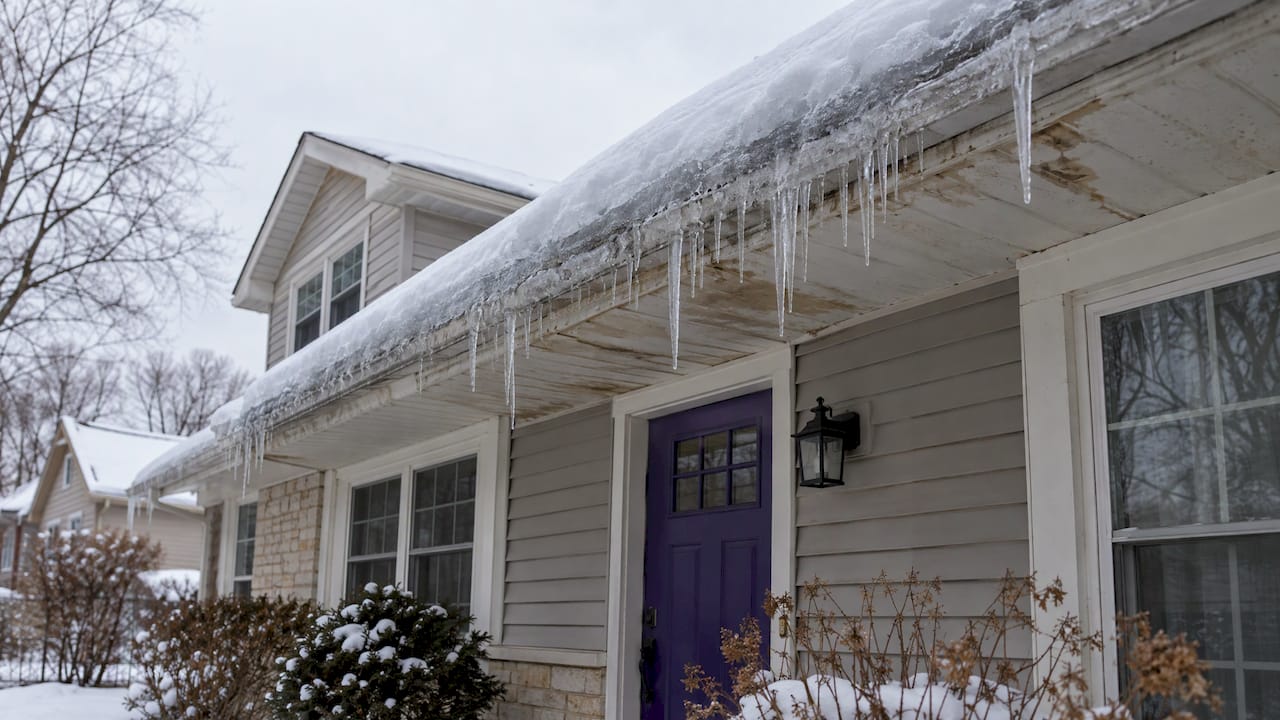
An ice dam is a ridge of ice at the edge of a roof that keeps melting snow from draining. UMN Extension explains that the water that backs up can leak into the home and damage walls, ceilings and insulation, and that moisture from ice dams can lead to mold and mildew.
The chain of events matters, because every link is a place to stop the damage.
- Heat escapes into the attic. MU Extension describes how warm indoor air leaks into the unheated attic and creates warm patches on the roof.
- Snow melts unevenly. The meltwater runs down the slope until it reaches the cold overhang.
- The water refreezes and forms a dam. More meltwater pools behind it and backs up under the shingles, sometimes into the ceiling or wall below.
- Materials stay wet. Roof sheathing, rafters and insulation absorb the water. According to MU Extension, this can decay framing, corrode metal fasteners and cause mold and mildew in attics and on walls.
- Mold takes hold. NC State Extension lists roof leakage, including ice dams, among the common water problems that lead to mold, and says mold starts forming when the moisture is not fixed within 24 to 48 hours.
The PNNL performance brief on preventing ice dams adds a sobering point: water that enters under the shingles can cause structural damage and mold, and heavy accumulations of water and ice can even collapse roofs.
The second moisture source: frost in the attic
Many homeowners think only of the water that leaks in from outside. A University of Minnesota research paper on ice dam symptoms points out that the moisture carried by heat leakage can be even more dangerous than the melted snow itself. Humid air from the living space condenses and freezes on cold attic surfaces when temperatures are below 32 degrees Fahrenheit. When that frost melts, mold forms.
This is why a house can grow attic mold in a winter with no visible roof leak. It is also why poor ventilation makes the problem worse: the same paper notes that inadequate ventilation fails to cool the roof deck and fails to vent moisture.
The U.S. Department of Energy’s Guide to Durable Attics lists ice dams, roof leaks, improperly installed flashing and water vapor entering without ventilation as the main ways moisture gets into an attic. In a Chicagoland winter, with repeated freezes and thaws, several of these can happen at once.
Can attic insulation get moldy?
Yes. The EPA’s mold course states that mold can grow on virtually any organic material when moisture and oxygen are present, and it names insulation among the materials affected. The CDC also lists insulation alongside drywall, paint and dust as places mold can grow wherever there is moisture, including around roof leaks.
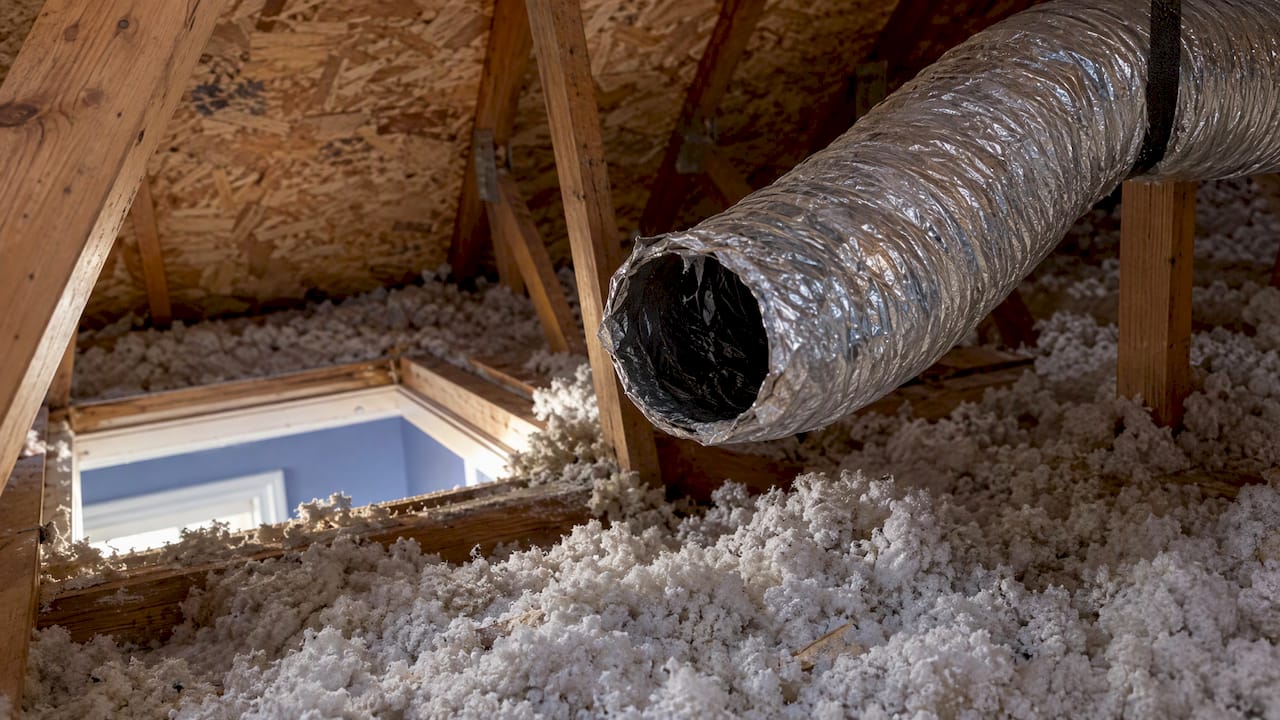
Insulation is often the first thing an ice dam soaks. It sits right at the eaves, exactly where meltwater backs up. Once it is wet, it holds moisture against the wood around it and dries slowly, because attic air does not move much in winter. Compressed, soaked insulation also loses much of its insulating value, which lets more heat escape and feeds the next round of ice dams.
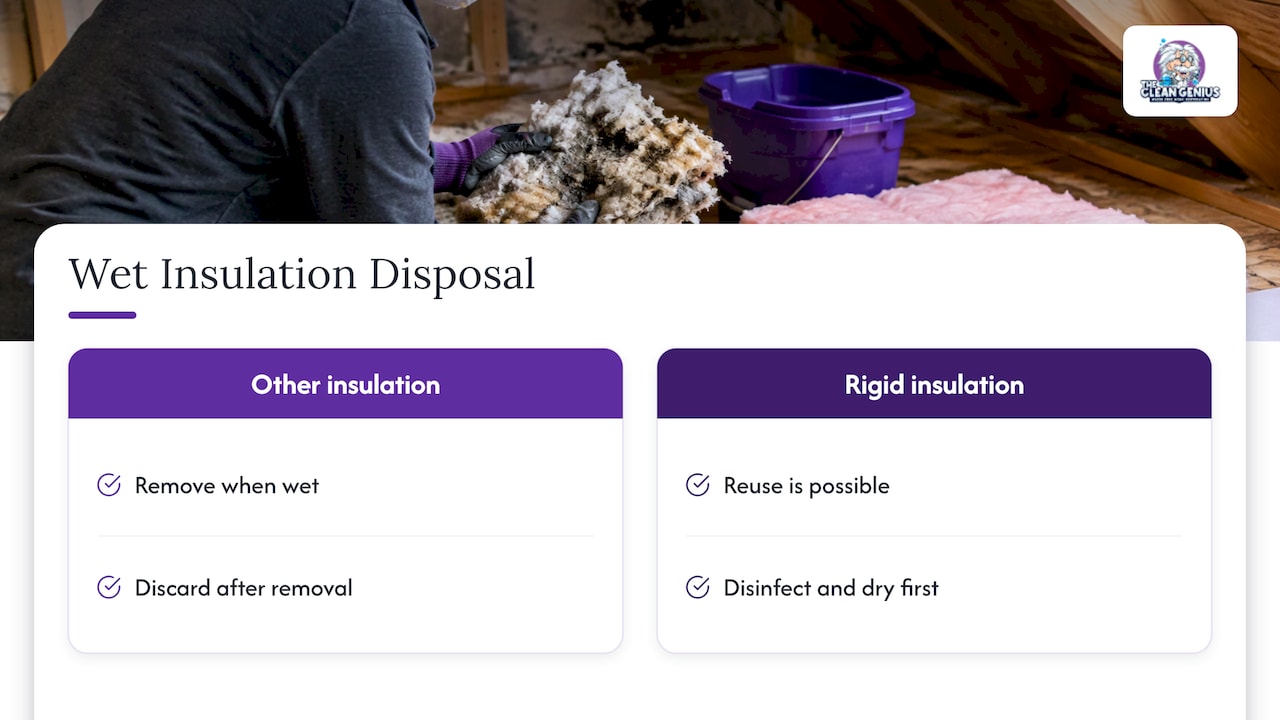
FEMA’s mold and mildew brochure advises removing all wet insulation and discarding it, except rigid insulation, which can be reused after disinfecting and drying. In practice, that means wet attic insulation usually has to come out. If you want to understand how the problem looks once it is in the insulation, our guide to mold on attic insulation and the EPA 10 square foot rule walks through it.
Signs that an ice dam has caused attic moisture or mold
You often cannot see the damage from inside the living space. Check the attic in daylight, with a flashlight, as soon as the thaw begins. The Department of Energy’s Guide to Durable Attics lists these signs of water intrusion:
- Wet attic insulation, especially near the eaves
- Mold or mildew on attic surfaces
- Warped or rotting attic wood
- Warped or rotted soffit panels
- Bubbled paint at the fascia boards or soffits
- Worn or warped shingles at the roof edges
HUD’s Moisture Resistant Homes guide adds a few things to look and smell for: stains on wood, which are a telltale sign of earlier leaks, damp or musty odors, and insulation that is no longer soft and fluffy but looks thin or flattened.
What mold looks like in this setting
Attic mold from ice dams tends to follow a pattern. It shows up first along the lower roof deck and rafters near the eaves, where the water entered. Frost-related mold can appear higher up, on the underside of the roof sheathing and around nail tips, where cold surfaces meet warm air. Dark spotting on the plywood, fuzzy patches on rafters and a musty smell that grows stronger on humid days all point to an active problem.
Our article on roof leak mold in the attic covers how to trace a leak to its source, and why attic moisture causes mold explains the science in more detail.
A note on health
UMN Extension states that mold and mildew from ice dam moisture can cause respiratory problems. If anyone in your home has asthma, allergies or a weakened immune system, or if you notice new coughing or congestion after a thaw, talk to your doctor and take the moisture problem seriously from day one. Attic air also travels into living areas, which we cover in why attic mold affects indoor air quality.
What to do in the first 48 hours
Time is the main variable. The EPA’s mold information slideshow says the key to mold control is moisture control, and that water-damaged areas and items should be dried within 24 to 48 hours. If wet materials dry in that window, the EPA says that in most cases mold will not grow.
Step 1: Stop the water coming in
If water is flowing into the house structure, UMN Extension says that cutting channels through the ice dam lets the trapped water drain off the roof, but only as a temporary fix. Staying off an icy roof is a safety decision in its own right. The Virginia Department of Health also notes that roof leaks that cannot be fixed right away should be covered with tarps.
This is where speed beats cost. A single wet attic can need extraction, drying and insulation removal, and each day of delay raises the chance that a water job becomes a mold job. Our roof leak water damage restoration team is available 24/7 for exactly this situation.
Step 2: Document everything before anything is removed
Photograph the stains, the wet insulation, the ceiling and any damaged belongings. Note the dates of the freeze and thaw. Good records make your claim easier to present, and we work directly with your insurance company on that paperwork.
Step 3: Call your insurance company
Coverage depends on your policy, so ask your insurance agent or company before you file. As two state regulators describe it, the Massachusetts Division of Insurance says damage from ice dams is generally covered under a homeowners policy, but only for the area damaged in the loss, and that further damage from wear and tear or neglect is not. The Oregon Division of Financial Regulation says sudden and accidental ice dam events may be covered and advises protecting your property from further damage.
The practical lesson from both: report promptly and keep the damage from spreading. Neither source is Illinois-specific, so confirm the terms of your own policy with your carrier.
Step 4: Dry the structure and remove wet materials
UMN Extension recommends drying wet or damp parts of the house immediately to prevent mold. The EPA adds that porous materials such as ceiling tiles and carpet may have to be thrown away if they become moldy, and FEMA advises keeping indoor humidity below 40 percent while drying out a water-damaged home.
Our water damage team handles extraction and complete property dry-out, and the principles are explained in our guide to the role of dehumidifiers in water restoration. For the first hours, our emergency water damage response steps show what to do while you wait for a crew.
Step 5: Do not paint over it
The EPA advises against painting or caulking moldy surfaces, because paint applied over mold is likely to peel. Covering a stain does not remove what is growing underneath it.
When the mold is already there
The Wisconsin Department of Health Services says that for areas of about 10 square feet or larger, homeowners should either follow a detailed cleanup process or contact a mold contractor. It also notes that affected building materials such as drywall may need to be replaced. In an attic, where the work involves crawling on joists, disturbing spores in a confined space and removing contaminated insulation, we recommend professional remediation well before that threshold.
Our attic mold removal uses Pure Cloud dry-fog technology, and our certified, insured technicians handle the work from containment through attic mold prevention. If you want to see the sequence, read how the attic mold removal process works. After the mold is removed, mold testing after water intrusion explains what testing can and cannot tell you. If you are wondering about price, attic mold remediation cost lays out what U.S. homeowners typically pay.
Why mold comes back if the cause stays
Removing mold without fixing the moisture source only resets the clock. The Wisconsin guidance notes that mold needs moisture, organic matter and a suitable temperature, and that spots with poor air movement and a moisture source are the likeliest to grow it. An attic with air leaks and weak ventilation provides all of that every winter. That is why the best remediation plan always includes the prevention work below. We go deeper in why mold remediation fails when the cause is ignored.
Fixing the cause: air sealing, insulation and ventilation
The good news is that the same fixes stop both ice dams and attic mold. The Building America Solution Center names three priorities: fully air seal the ceiling plane, thoroughly insulate the attic and ventilate the roof. It calls sealing every air leak from the living space into the attic the most important step, because it keeps warm air from entering the attic in the first place.
UMN Extension gives the same order: make the ceiling airtight first, then consider more ceiling or roof insulation to reduce heat loss by conduction. ENERGY STAR lists ice dams as a common sign that a home is a good candidate for attic air sealing, and says that combined with attic insulation it helps ease the formation of ice dams.
A practical checklist
The Department of Energy’s Guide to Durable Attics recommends these measures:
| Measure | Why it matters for ice dams and mold |
|---|---|
| Seal gaps around ductwork, wires, plumbing, light fixtures and the attic hatch | Stops warm, humid air from reaching the cold roof deck |
| Insulate properly, including at the eaves | Keeps the roof surface cold and even, so snow melts less |
| Ventilate with soffit and ridge vents | Carries away moisture and keeps the deck cold |
| Install baffles at the eaves | Keeps insulation away from the spot where water could soak it |
| Vent kitchen, bath and dryer exhaust outdoors | Prevents a major source of attic moisture |
The Department of Energy also warns that exhausting kitchen ranges, bathroom fans or dryers into the attic is a major moisture source and may violate local building codes. The EPA’s brief guide to mold adds that indoor humidity should stay below 60 percent, ideally between 30 and 50 percent, and that gutters should be cleaned and repaired regularly.
Replacing wet insulation the right way
If the insulation was soaked, replacing it is part of the cure. Our team removes the contaminated material, and we install new attic insulation. For choices and sequencing, see attic insulation types for homeowners who air seal first, what attic insulation replacement costs and signs of poor attic insulation. For the full picture of how insulation relates to dams, see ice dams and attic insulation: what actually stops them, and for a seasonal routine, our attic mold prevention guide.
Our perspective
Every winter, the pattern is the same. A homeowner sees a small ceiling stain after a thaw and waits to see if it goes away. The stain is the visible tip of what has happened above it: wet insulation, damp sheathing and a warm, humid attic that will not dry on its own in January.
We built The Clean Genius around handling the whole problem in one visit pattern: extraction and dry-out first, then mold removal with Pure Cloud dry-fog technology if it is needed, then insulation removal and replacement so the attic performs again. Because we work directly with your insurance company, you are not left coordinating paperwork while the clock runs on the damage.
We are a family-owned team with more than 25 years of combined experience, and we are available 24/7 because water does not wait for business hours. If you suspect an ice dam has let water into your attic, the best time to call us is before the mold appears.
Jim
Get your attic dried, cleaned and protected
If an ice dam has sent water into your attic, The Clean Genius offers mold removal and remediation, including attic mold removal, and water damage restoration for the dry-out. We serve homeowners across Chicagoland, including Arlington Heights, Palatine, Schaumburg, Naperville, Elgin and Wheaton, and we are on call around the clock for emergencies.

Tell us what you found, and we will schedule an on-site estimate. If you have a claim open, we will coordinate directly with your insurer.
FAQ
Can attic insulation get mold?
Yes. The EPA says mold can grow on virtually any organic material, including insulation, when moisture and oxygen are present. Insulation soaked by an ice dam is especially vulnerable because it sits at the eaves and dries slowly. Wet insulation generally needs to be removed and replaced.
How fast does mold grow after an ice dam leak?
FEMA and the EPA both say mold can begin growing on damp surfaces within 24 to 48 hours. If the wet materials are dried within that window, the EPA says mold will not grow in most cases. In a cold attic drying is slow, so professional extraction and drying are the safest route.
Does homeowners insurance cover ice dam leaks?
Often it can, depending on your policy. State regulators in Massachusetts and Oregon describe sudden ice dam damage as generally or potentially covered, with coverage limited to the damaged area and not to neglect. Call your agent before filing, and we will work directly with your insurance company on the restoration side.
Why do I have an ice dam on my roof?
Usually because heat is leaking into the attic. MU Extension explains that warm indoor air warms the roof, snow melts, and the water refreezes at the cold overhang. Air sealing and insulating the attic address the cause.
Can a leaky roof cause mold?
Yes. The CDC says mold will grow wherever there is moisture, including around roof leaks. The EPA adds that a roof left leaking long enough lets mold feed on wet wood and weaken floors and walls.
Sources
- Dealing with and preventing ice dams, UMN Extension
- Ice dams on the roof can damage your home, MU Extension
- Preventing Ice Dams, PNNL Performance Brief
- How Does Mold Form in a Home? NC State Extension
- Ice Dam Symptoms and Solutions for a Cold-Climate Roof, University of Minnesota
- Guide to Durable Attics, U.S. Department of Energy
- Mold Course Chapter 2, US EPA
- Mold, CDC
- Mold and Mildew, FEMA
- Moisture Resistant Homes, HUD
- Mold Information Slideshow, US EPA
- A Brief Guide to Mold, Moisture, and Your Home, US EPA
- Water Intrusion and Mold, Virginia Department of Health
- Cleaning Mold In Your Home, Wisconsin Department of Health Services
- Frequently Asked Questions about Homeowners Insurance, Mass.gov
- Storm damage, Oregon Division of Financial Regulation
- Attic Air Sealing Project, ENERGY STAR
- Construct Roofs and Attics for Ice Dam Prevention, Building America Solution Center