
Attic insulation can stop most ice dams, but only when it is installed after air sealing and as one complete layer. Adding more insulation on top of leaky ceilings usually fails, because warm indoor air keeps reaching the roof deck. Here is how the pieces fit together in a Chicagoland home, in the order the work should happen.
TL;DR
- Ice dams form when heat from your house warms the roof deck, melts the snow, and the meltwater refreezes at the cold eaves.
- The fix runs in order: air seal the attic floor, then insulate to at least current code, then confirm the attic is ventilated.
- Extra insulation on top of air leaks, or in just one patch, rarely works. The heat finds the next easy path.
- Sun-driven melting can still cause a small dam on a well-built roof, so a self-sealing membrane at the eaves is the last line of defense.
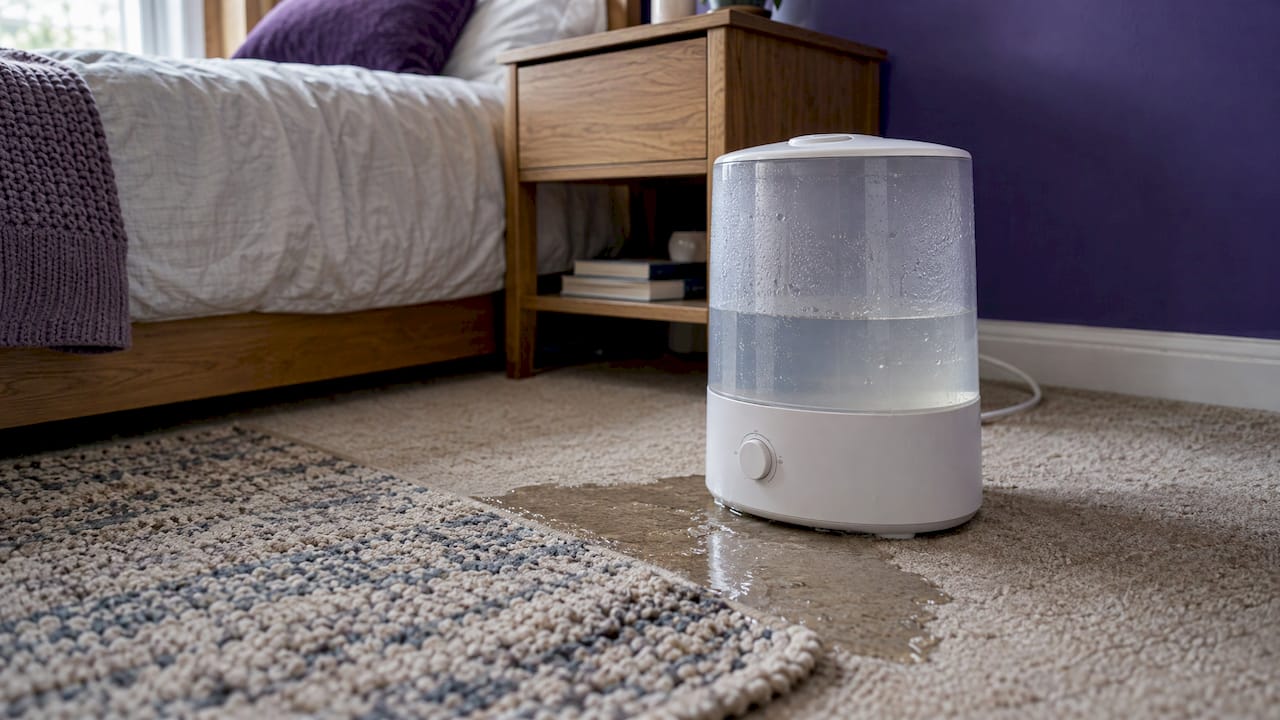
- If water has already stained a ceiling or wall, dry it out quickly before mold starts.
Table of Contents
- Why ice dams form in the first place
- Does attic insulation prevent ice dams?
- The eaves are where most jobs go wrong
- Ventilation: a secondary safeguard
- Safety first: combustion appliances
- Sealing ceiling-plane gaps before you insulate
- Which insulation works best?
- What snow on the roof does
- Why a perfect attic can still get a small dam
- Our perspective: fix the leak path, not the symptom
- When ice dam water has already gotten in
- A fall checklist for Chicagoland homeowners
- How we can help
- FAQ
- Sources
Why ice dams form in the first place
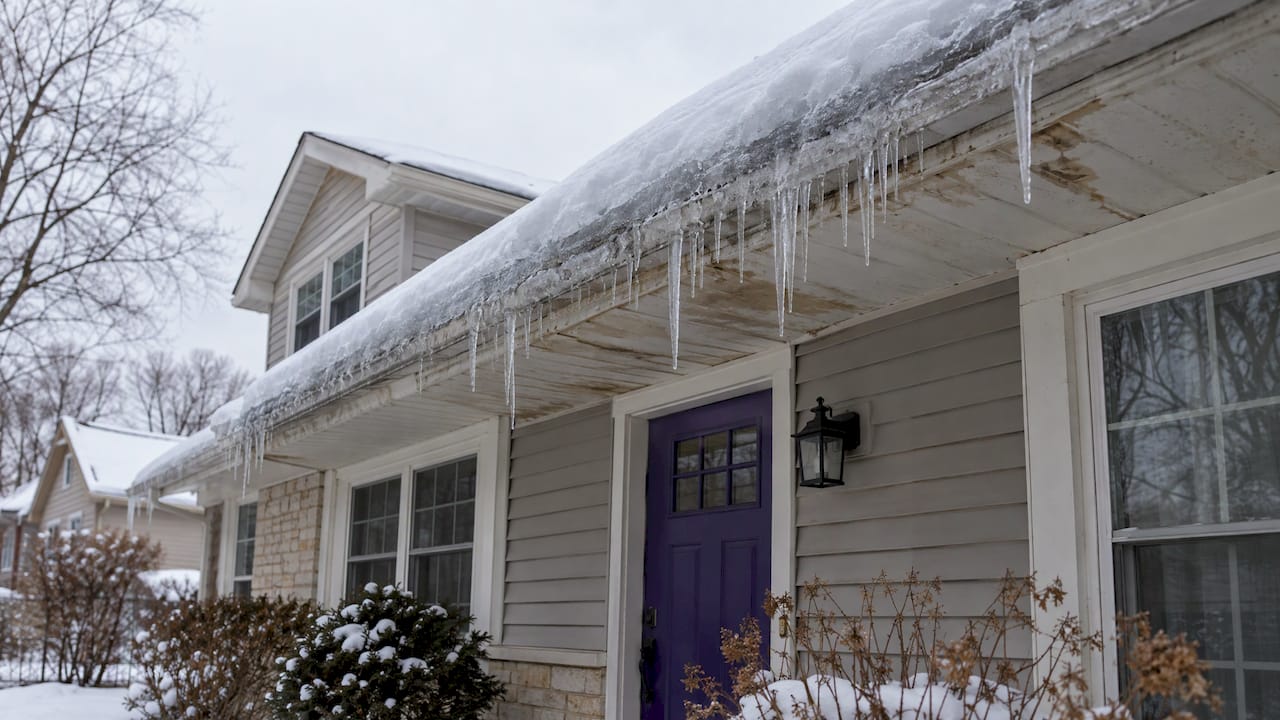
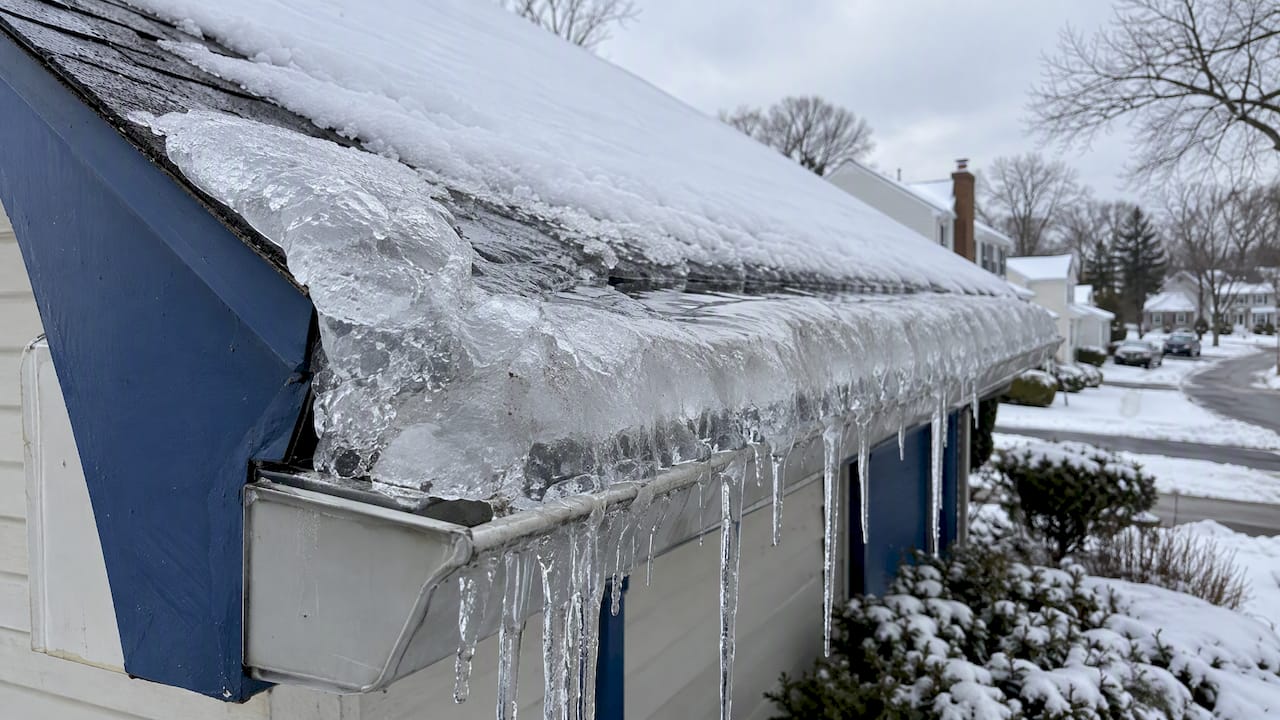
An ice dam is a ridge of ice at the roof edge that blocks melting snow from draining off the roof. The water backs up behind it and can leak into walls, ceilings and insulation.
The cause is uneven roof temperature. Heat leaks from the living space into the attic, warms the upper roof deck, and melts the snow above. The water runs down to the eaves, which sit over unheated overhangs and stay colder. There it freezes. In general, dams develop when the upper roof surface sits above 32°F while the eaves stay below it, according to University of Minnesota Extension.

That is why the conversation is about heat loss and not about the roof itself. Gutters, shingles and flashing are rarely the root problem. The ceiling below the attic is.
Does attic insulation prevent ice dams?
Yes, as part of a system. The goal is to shrink the temperature difference between the roof deck and the outdoors. The sequence that building scientists describe is simple:
- Air seal the ceiling plane so warm air cannot bypass the insulation.
- Add enough insulation to slow the heat that moves by conduction.
- Make sure the attic is ventilated so the roof deck stays close to outdoor temperature.
The order matters. The U.S. Department of Energy’s building science guidance says blown insulation in an existing attic is installed after air sealing the ceiling deck and should meet or exceed current code levels.
The ENERGY STAR assumptions document lists an upgrade level of R-49 for climate zones 4 through 8, based on the 2012 IECC. Chicagoland is in Climate Zone 5, so R-49 is the number you will hear from most installers. Check the current requirement with your village or city building department before a major project, because local amendments and code editions change.
Why “more insulation” alone often fails
The most common mistake is piling new insulation over an attic floor full of gaps. Warm, moist air from the house moves through the holes around light fixtures, plumbing stacks, chimneys and wall tops. The Department of Energy’s air sealing guide tells inspectors to look for gaps leading from the conditioned space into the attic, around plumbing, electrical, HVAC and chimneys.
A helpful field clue: dirty, gray or darkened insulation is a sign of air movement. Insulation acts like a filter, so dark streaks often mark the bypass. If you see them around a recessed light or a pipe, that spot is leaking heat to your roof deck.
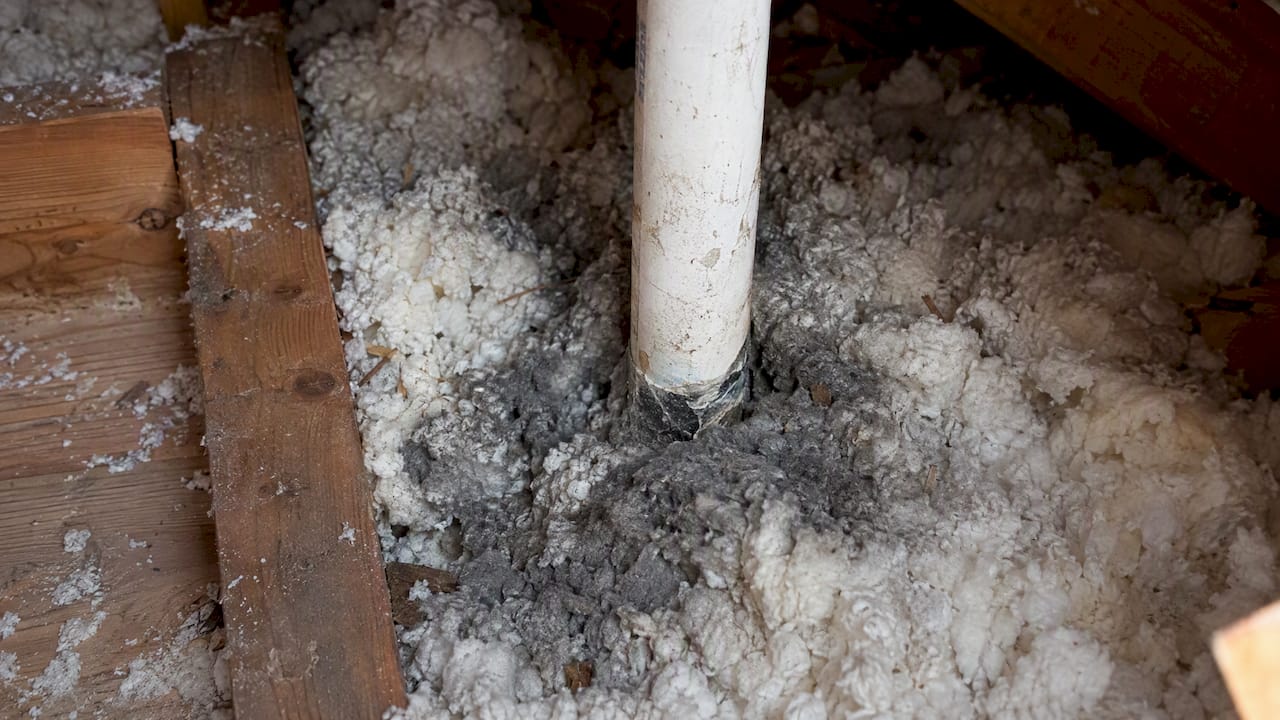
The same guidance makes a second point that homeowners miss. Insulation is part of a thermal boundary that has to be complete. Adding a thick layer in the middle of the attic while ignoring the perimeter, the knee walls and the hidden chases typically leaves the dam in place, because the heat just leaves through the easiest remaining path.
The eaves are where most jobs go wrong
In a typical Chicagoland house with a sloped roof, the toughest spot is where the attic floor meets the exterior wall. The roof gets low there, and insulation gets thin or compressed. That is exactly the area under the eaves where ice forms.
What a good job does there:
- Installs baffles at the soffit vents so insulation cannot block airflow from the eaves.
- Seals the top plate and the gap between the wall and the ceiling drywall before insulation goes down.
- Keeps the insulation depth continuous over the top of the exterior wall, not tapering to a few inches.
- In new construction, uses raised heel trusses so full depth fits above the wall.
The Department of Energy education site recommends sealing the eaves with a self-sealing bituminous membrane in Climate Zone 5 and colder, which includes the whole Chicago area.
Knee walls and finished attics
If your home has a Cape Cod or finished attic space, knee walls and sloped ceilings are classic ice dam trouble spots. They are often poorly sealed and thinly insulated. We cover that detail in our guide to attic knee wall insulation.
Ventilation: a secondary safeguard
Many homeowners are told to add roof vents as the cure. University of Minnesota Extension and the U.S. Forest Products Laboratory describe ventilation as a secondary measure. If heat loss from the house is not controlled first, ventilation is rarely enough to keep the roof surface uniformly cold. Extension guidance also advises against relying on powered attic fans for ice dams, since they can create negative pressure problems and often cool too little.
Passive soffit and ridge ventilation still earns its place. The Forest Products Laboratory notes that current codes call for attic ventilation mainly to limit condensation on the underside of the roof sheathing. So treat vents as moisture control and a helper for winter, not as the main ice dam fix.
Safety first: combustion appliances
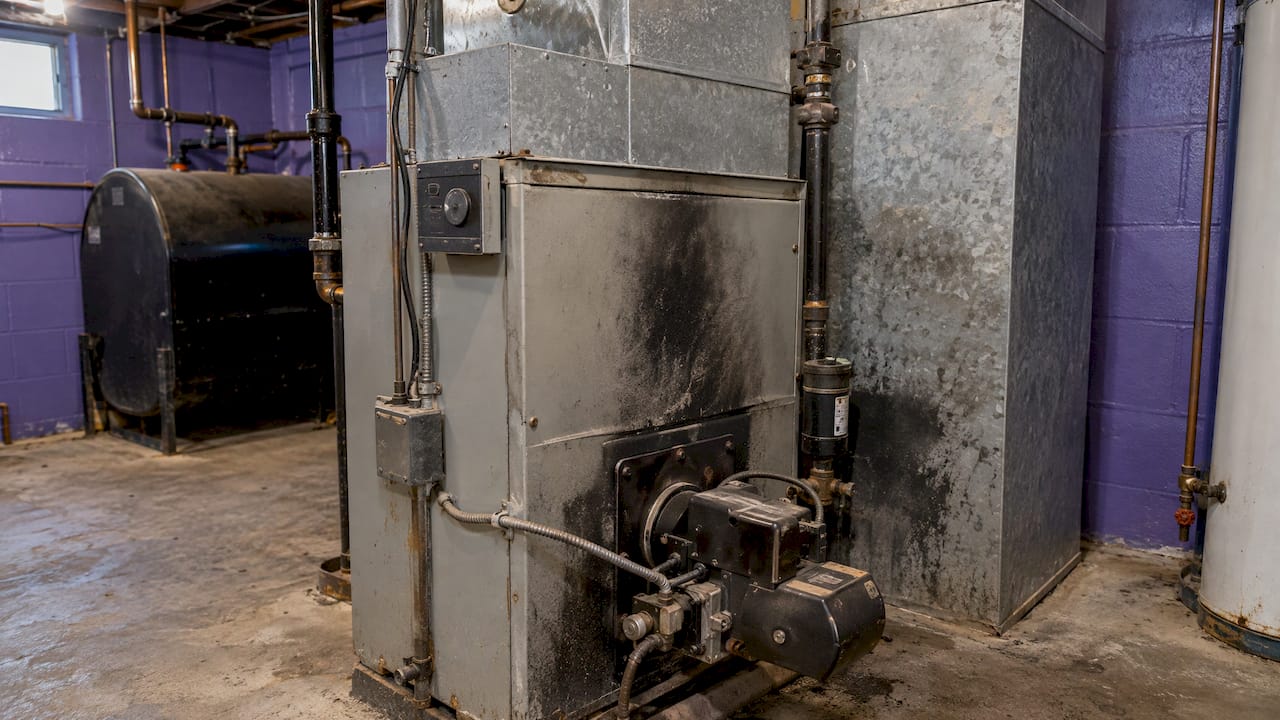
Before anyone seals your attic, check what is burning in your basement. If you have a gas or oil furnace or water heater with a natural draft chimney, tightening the house can change air pressure and pull exhaust, including carbon monoxide, back into the living space. The Department of Energy’s attic air sealing guide says that health, safety and durability must not be compromised for energy savings.
In practice, ask any contractor whether they test combustion appliances for backdrafting before and after air sealing, and keep working carbon monoxide alarms on every level. If an alarm sounds, leave the house and call 911 or your gas utility.
Sealing ceiling-plane gaps before you insulate
Air sealing is more than caulk. Plan on these targets, from most to least important:
- Open chases for plumbing stacks, wires and ducts.
- Recessed lights (use rated covers or sealed fixtures).
- Gaps around the chimney, using fire-rated materials and metal flashing.
- Attic hatch or pull-down stairs, which should be gasketed and insulated.
- Top plates and drywall edges at the perimeter.
If you want a plain-language look at why sealing and insulation work together, this piece on how insulation affects energy efficiency is a useful companion read. For insulation material choices after sealing, see our attic insulation types guide.
Which insulation works best?
There is no single winner. Each material suits a different situation:
| Situation | Common approach | What to watch |
|---|---|---|
| Open attic floor, accessible | Blown cellulose or fiberglass after air sealing | Keep depth even, keep baffles clear at the eaves |
| Wall-to-attic junction and rim areas | Spray foam or a sealed barrier | Must be applied by trained installers, ventilation and safety rules apply |
| Sloped or cathedral ceilings | Dense-pack cellulose or a designed unvented assembly | Moisture risk if built wrong |
| Old, wet, or moldy insulation | Remove and replace | Never blow new material over damp or moldy layers |
For cathedral ceilings, a U.S. Department of Energy case study notes that weatherization crews often retrofit compact roof and ceiling assemblies with blown-in dense pack cellulose, which avoids heavy demolition. Which method suits your house depends on the roof framing, so it needs an inspection.
If the existing insulation is wet, matted or discolored, replacing it is usually the right call. We explain how in removing old attic insulation safely and what to expect on cost in our attic insulation replacement cost guide.
What snow on the roof does
Snow itself is an insulator, which sounds helpful but isn’t. A snow blanket traps heat in the roof assembly, so the deck warms further and melts more snow from beneath. That feeds the dam. Roof raking after heavy snow can help in the short term, but do it from the ground with a long-handled rake. Never climb onto an icy roof, and don’t chip ice with a hammer or axe, since that damages shingles.
Why a perfect attic can still get a small dam
Here is the honest caveat. Building Science Corporation experts point out that even a well-sealed, well-insulated attic can see ice dams when the sun warms the roof surface while the air is freezing. You cannot insulate your way out of solar-driven melting. Be wary of anyone who offers a guaranteed cure.
The answer is resilience. A water-shedding, self-adhering membrane under the lower courses of shingles stops meltwater that gets under the shingles from reaching your sheathing and ceilings. The Department of Energy’s eave sealing guidance describes this as the final layer of protection in cold climates. Insulation and air sealing reduce how often and how big dams get, and the membrane limits the damage when one still forms.
Our perspective: fix the leak path, not the symptom
We are a family-owned restoration company, and we usually meet ice dams after the water has already come in. A stained ceiling in Palatine, a damp wall in Naperville, wet insulation in an attic in Arlington Heights: the pattern is familiar. In most of these homes, the roof was not the real problem. Warm air was moving through the attic floor for years.
That is why we push homeowners to think about the attic as a system. Air seal first, insulate to current code with a continuous layer at the perimeter, protect the eaves, and then watch moisture. If a roof or attic leak has already soaked insulation, adding more on top hides the problem and invites mold. Wet insulation should come out, the framing should be dried, and any mold should be handled properly before new material goes in.
We also think homeowners deserve straight talk. No one can promise that an ice dam will never form again. What you can do is lower the odds and make sure a dam does not turn into a ceiling collapse or a mold bill.
— Jim
When ice dam water has already gotten in
If you see a ceiling stain, dripping, bubbling paint or damp insulation after a thaw, act within the first day or two. Here is a sensible order:
- Stay safe. If water is near light fixtures or a ceiling is sagging, keep away and turn off power to that area at the breaker panel.
- Contain the water with buckets and move furniture. Puncturing a bulging ceiling to release water in a controlled spot can reduce collapse risk, but only if it is safe to stand beneath it.
- Photograph everything for your insurer before cleanup.
- Call a restoration company to dry the structure and remove wet insulation.
- Call your insurer. Our page on whether homeowners insurance covers ice dam damage explains how claims typically start.
Moisture trapped in an attic can feed mold. Read why attic moisture causes mold and, if you see growth, our guide to mold on attic insulation. For the full explanation of how dams form and what they cost homeowners, see Ice Dams 101.
A fall checklist for Chicagoland homeowners
It is mid-October, which is the best time to get ahead of January. Before the first heavy snow:
- Go into the attic on a dry day and look for dark insulation, daylight at the eaves, compressed insulation, and stains on the roof sheathing.
- Check that soffit vents are open and baffles hold insulation back from them.
- Look at the attic hatch for gaps and missing weatherstripping.
- Clean gutters so meltwater has a clear route.
- Note any past ceiling stains and ask a professional where the water came from.
- Read our winter preparation guide for Chicago homes for pipe protection too.
If you find wet or moldy material, don’t disturb it more than needed and don’t blow new insulation over it.
How we can help
We handle the restoration side of ice dam damage across Chicagoland: water damage restoration and dry-out, roof leak water damage, mold removal and attic mold removal, and attic insulation removal and replacement. We work directly with your insurance, and we are available 24/7 for emergencies. Start with our water damage restoration page, or see how we handle roof leak water damage. If you already see mold in the attic, our mold removal and remediation page explains the process.
FAQ
How do you prevent ice dams on your roof?
Stop heat from reaching the roof deck. Air seal the attic floor first, add insulation to at least current code (R-49 is the common target in Climate Zone 5), and keep soffit ventilation clear. Add a self-sealing membrane at the eaves when the roof is next replaced, since it protects the house even if a dam forms.
Will insulating the attic keep the house cooler?
It helps in summer too, because insulation slows heat moving between the attic and the living space. It works best alongside air sealing and ventilation. Insulation alone will not cool a house that has leaking ducts or hot, poorly vented attic air.
How do you dry out a damp attic?
Find the moisture source first: a roof leak, an ice dam, a bath fan venting into the attic, or air leaking up from the house. Remove wet insulation, dry the framing with professional equipment if it is soaked, and fix the source before replacing anything. Visible mold growth on insulation or sheathing calls for a remediation professional.
Does snow on a roof provide insulation?
Yes, but that works against you. The snow traps heat, which warms the roof surface and melts more snow from below, feeding ice dams. Raking the lower few feet of roof from the ground can help after a big storm.
Sources
- Dealing with and preventing ice dams, UMN Extension
- University of Minnesota Extension
- Blown Insulation in Existing Attics, Building Science Education
- Eaves Sealed in Cold Climates, Building Science Education
- ENERGY STAR Measure Upgrade Assumptions
- Measure Guideline: Air Sealing Attics in Multifamily Buildings
- Measure Guideline: Guide to Attic Air Sealing
- Venting of Attics and Cathedral Ceilings, Forest Products Laboratory
- Building America Case Study: Unvented Roof in a Cold Climate, Illinois