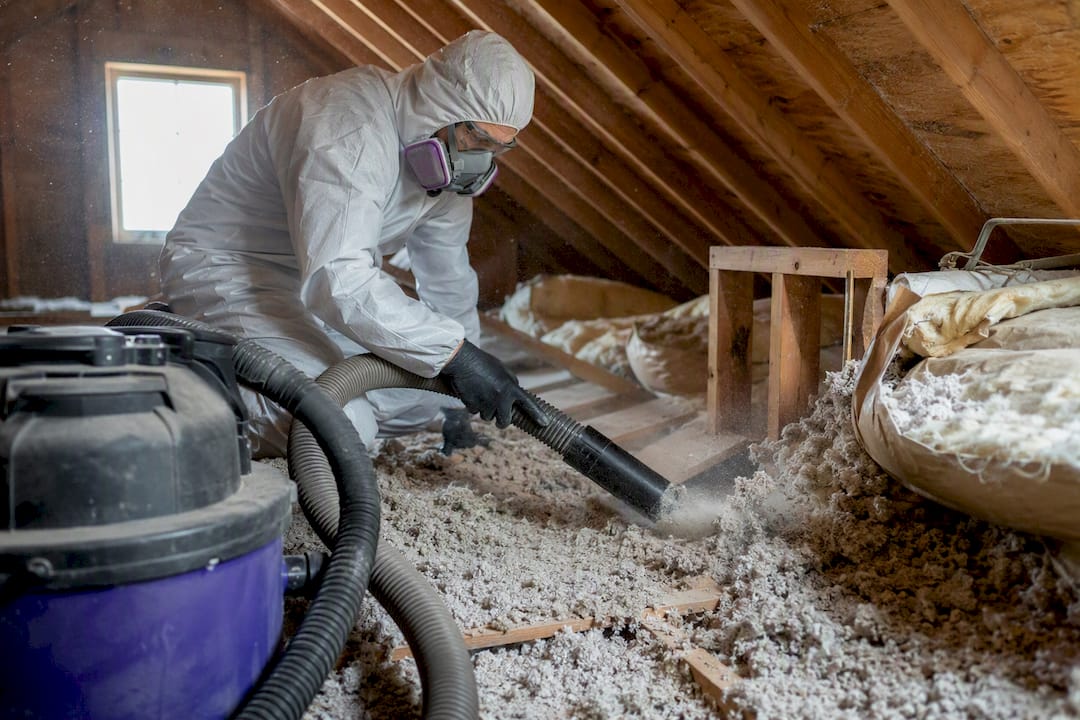

Attic insulation replacement typically runs $1 to $4 per square foot installed, putting most projects between $1,000 and $5,000 depending on attic size, material, and scope. That range gets pushed higher fast by two things: removing old, contaminated insulation and adding proper air sealing before the new material goes in.
- Average project total: $1,700–$2,500 for a standard blown-in job, per HomeAdvisor
- Removal add-on: roughly $1–$1.50 per sq ft when old insulation is contaminated
- Air sealing add-on: $250–$750 for typical penetration and gap sealing
- Spray foam premium: often $5,900–$12,000 for roofline applications, per Home Energy Decisions
The smartest move before you sign anything: get two or three itemized quotes that spell out material type, target R-value, and exactly how much air sealing is included. A quote missing any of those three items is a quote you can’t actually compare against another.
Key Takeaways
Attic insulation replacement costs scale with square footage, material choice, and whether contamination forces removal, but skipping air sealing is the single most common way homeowners waste money on the project.
| Point | Details |
|---|---|
| Budget by square foot | Plan on $1 to $4 per sq ft installed, with most projects totaling $1,000 to $5,000. |
| Air sealing is not optional | Budget $250 to $1,500 for sealing; ENERGY STAR ties it to 15% to 25% performance gains. |
| Removal changes the math | Contaminated insulation adds $1 to $1.50 per sq ft in removal costs before new material goes in. |
| Demand an itemized quote | A trustworthy bid lists square footage, R-value target, sealing scope, and verification photos. |
| Coordinate mold and moisture issues | Thecleangenius handles attic insulation removal and replacement alongside mold and water damage repair when contamination is found. |
Table of Contents
- Average Cost To Replace Attic Insulation By Square Foot
- What Affects Price: Key Cost Drivers Contractors Use
- Best Insulation For Attic: Comparing Installed Costs And R-Value
- Removal Versus Top-Off: When You Can Save And When You Can’t
- Air Sealing And Ventilation: The Add-On That Pays For Itself
- What A Trustworthy Attic Insulation Quote Should Include
- Quick Estimate Scenarios For Common Attic Projects
- Practitioner Notes On Attic Cleanup And Mold Concerns
- Why Most Cost Guides Get The Priorities Backward
- Get An Attic Assessment That Covers The Whole Problem, Not Just The Insulation
- Sources
Average Cost To Replace Attic Insulation By Square Foot
Per-square-foot pricing shifts a lot depending on what’s going in your attic. Blown-in fiberglass or cellulose runs cheapest, batts sit in the middle, and spray foam sits well above both.
| Attic Size | Blown-In (Low/Median/High) | Batts (Low/Median/High) | Spray Foam Roofline (Low/Median/High) |
|---|---|---|---|
| 1,000 sq ft | $1,000 / $1,800 / $2,700 | $1,000 / $1,700 / $2,700 | $5,900 / — / $12,000 |
| 1,500 sq ft | $1,500 / $1,800 / — | $1,800 / — / — | — / — / — |
| 2,000 sq ft | $2,000 / — / — | $2,400 / — / — | $11,800 / — / $20,000 |
These figures assume clean, accessible attics with no removal needed. Once you add removal or air sealing, totals climb:
- Removal adds roughly $1 to $1.50 per sq ft, so a 1,500 sq ft attic could add $1,500–$2,250 to the job.
- Air sealing typically adds $250 to $750 flat, regardless of attic size, since it’s priced by the number of penetrations sealed, not square footage.
- Full replace-and-remove jobs, according to HomeGuide, commonly land at $2 to $6 per sq ft total.
What Affects Price: Key Cost Drivers Contractors Use
Two quotes for the same attic can differ by thousands of dollars, and it’s rarely because one contractor is padding the bill. Here’s what actually moves the number:
- Access and layout complexity. A cramped attic with a small hatch, low clearance, or lots of framing costs more labor time than an open, walkable space.
- Condition of existing insulation. Mold, rodent droppings, water stains, or vermiculite (a mineral that can contain asbestos) force removal before anything new goes in.
- Target R-value and material. Chasing R-49 in a cold climate takes more material and thicker coverage than a milder R-38 target.
- Air sealing scope. Sealing recessed lights, plumbing chases, and the attic hatch itself adds line items, and sometimes requires an electrician if wiring is old or improperly rated for insulation contact.
- Regional labor and disposal costs. Labor rates vary by market, and Bureau of Labor Statistics data shows construction trade wages swing significantly by region, which shows up directly in your quote.
Pro Tip: Ask every contractor to break out air sealing as its own line item. If they can’t tell you what they’re sealing and for how much, they probably aren’t planning to do it thoroughly.
Best Insulation For Attic: Comparing Installed Costs And R-Value
Material choice drives both your upfront cost and your long-term energy performance. Here’s how the main options stack up:
- Blown-in fiberglass or cellulose: The most common choice for open attic floors. Cellulose runs slightly cheaper per inch and offers good coverage in irregular spaces, but it settles over time and loses some R-value if not installed to the right initial depth.
- Batts (fiberglass or mineral wool): Cheapest material cost, but installation quality matters enormously. Gaps around joists and compressed batts near the eaves are the most common mistakes, and both tank real-world performance even when the R-value label looks fine.
- Spray foam (open or closed cell): The premium option, usually applied directly to the roof deck to create a sealed, conditioned attic rather than insulating the floor. This is a fundamentally different scope than blown-in work, which is why it costs multiple times more.
- R-value targets: Energy.gov and ENERGY STAR both point to R-38 as a common target for many U.S. climates, with colder regions often pushing toward R-49. The Department of Energy’s insulation guide breaks down exact recommendations by zone.
Removal Versus Top-Off: When You Can Save And When You Can’t
Not every attic needs a full tear-out. If your existing insulation is dry, clean, and evenly distributed, adding new material directly on top is often perfectly fine and saves you the removal fee entirely.
Removal becomes necessary, not optional, when:
- Insulation is water damaged, moldy, or has a musty smell
- Rodent droppings or nesting material are visible
- The attic contains vermiculite insulation, which may contain asbestos and requires specialized handling
- Previous insulation has degraded to the point where it’s no longer providing meaningful R-value
Removal cost, at $1 to $1.50 per sq ft, can quickly exceed the price of simply adding fresh material over stable insulation. That’s exactly why a contractor should physically inspect before quoting a removal job rather than assuming it’s needed. If you’re unsure whether your situation calls for removal, this guide on removing old attic insulation safely walks through the warning signs in more detail.
Air Sealing And Ventilation: The Add-On That Pays For Itself
Air sealing is the step homeowners cut first to save money, and it’s usually the one they regret cutting. Professional sealing covers recessed light penetrations, plumbing and wiring chases, the attic hatch, and duct transitions where conditioned air leaks straight into the attic.
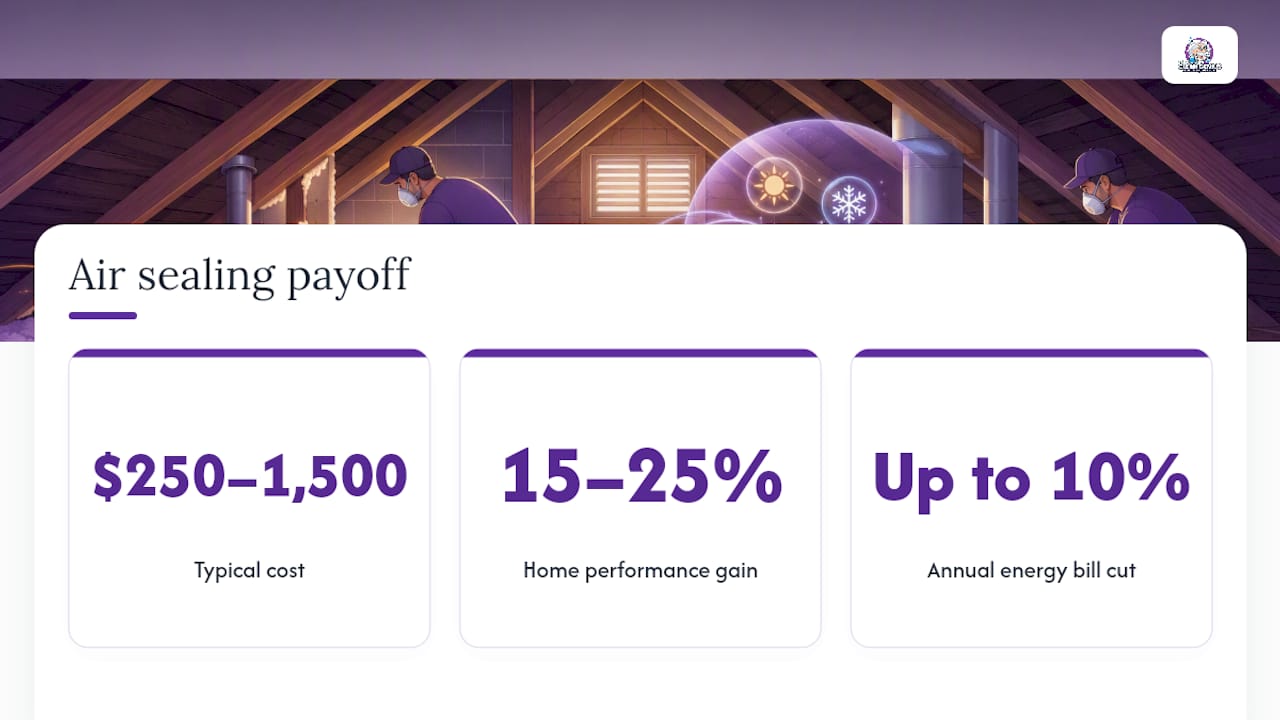
Expect to pay $250 to $1,500 for thorough sealing, depending on how many penetrations your attic has. ENERGY STAR’s guidance is blunt about the payoff: sealing air leaks before insulating can improve home performance by roughly 15% to 25%, and combined sealing-and-insulation projects can cut annual energy bills by up to about 10%.
Pro Tip: Have your contractor seal first, insulate second, and photograph the sealed areas before the blown-in material covers them. That photo record is your proof if a dispute ever comes up over what was actually done.
What A Trustworthy Attic Insulation Quote Should Include
A vague one-page estimate is a red flag. A real quote should read almost like a work order.
Every solid quote needs:
- Measured square footage of the attic floor (not a guess)
- Material type and target R-value, stated explicitly
- Removal and disposal plan, if applicable, with its own price
- Air sealing scope, listed as its own line item
- Ventilation baffle plan to keep soffit vents clear once new insulation goes in
- Verification method, such as depth markers or before/after photos, plus any warranty terms
Before signing, ask about licensing, insurance, and whether the crew has handled suspected asbestos or mold before. Verify insurance directly with the provider rather than taking a contractor’s word for it, and be wary of any bid dramatically lower than the others; it usually means air sealing or proper disposal got quietly dropped. Understanding how attic ventilation with soffit and ridge vents works helps you spot whether the baffle plan in your quote actually makes sense.
Quick Estimate Scenarios For Common Attic Projects
- 1,000 sq ft blown-in top-off, no removal needed: Expect $1,000 low, $1,800 median, $2,700 high, assuming clean existing insulation and no air sealing add-on.
- 1,500 sq ft full replacement with removal and air sealing: Budget $2,500 low, $3,700 median, $5,200 high once removal ($1,500–$2,250) and sealing ($250–$750) are layered onto the base install.
- 2,000 sq ft spray foam roofline conversion: Plan for $11,800 to $20,000 and a longer timeline, often two to three days versus a single day for blown-in work, since the crew is sealing the entire roof deck rather than laying material on the floor.
Practitioner Notes On Attic Cleanup And Mold Concerns
Insulation problems and moisture problems almost always show up together. Wet, stained, or moldy insulation isn’t just an efficiency issue; it’s a sign something upstream, a roof leak, poor ventilation, or a plumbing vent, has been feeding moisture into the attic for a while.
When we find contaminated insulation during a job, the insulation itself is rarely the real story. It’s usually a symptom of a leak or ventilation problem that needs to be fixed first, or the new insulation just gets ruined the same way the old material did.
That’s why insulation replacement often needs to be coordinated with mold remediation or water damage repair rather than treated as a separate job. If you’re seeing staining or smell mustiness, our guide to attic mold prevention covers the early warning signs worth checking before you call anyone out.
Why Most Cost Guides Get The Priorities Backward
Most attic insulation content ranks materials and R-values like they’re the whole story. They’re not. The research backs a different order of priority: air sealing first, contamination assessment second, material choice third.
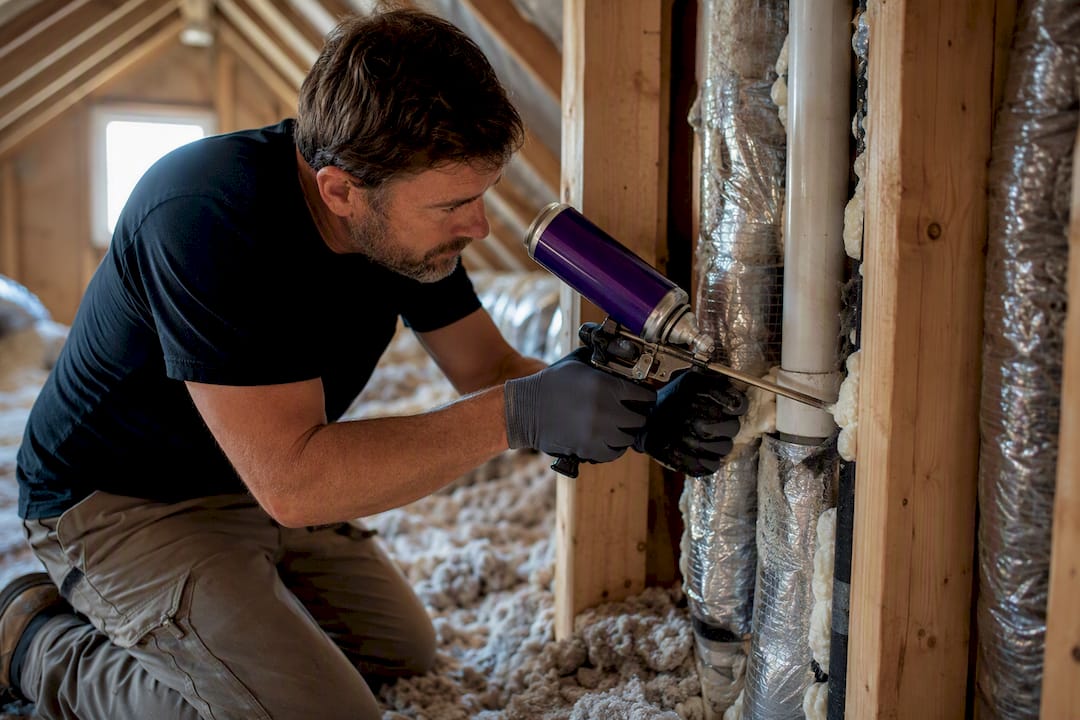
Homeowners fixate on R-value because it’s the number printed on the bag, but ENERGY STAR’s own findings show sealing delivers 15% to 25% of the performance gain almost by itself, before a single inch of new insulation goes down. Skip it, and you’ve bought expensive material to sit on top of leaks that are still bleeding conditioned air into the attic.
The contamination question gets treated as an afterthought too, usually buried after pricing tables in most guides. It should come first. If there’s mold, water staining, or vermiculite up there, the insulation project is secondary to a moisture or safety problem that needs solving. Quoting removal and replacement before addressing why the old insulation failed just guarantees you’ll be back in the attic in a few years.
If you take one thing from this guide, make it this: don’t let a contractor quote insulation alone. Make them quote sealing, inspection, and material together, or get a second bid from someone who will.
— Jim
Get An Attic Assessment That Covers The Whole Problem, Not Just The Insulation
Most insulation contractors quote what’s on the surface. Thecleangenius looks at what’s underneath it, because Chicagoland attics that need insulation replacement usually have a moisture, mold, or roof leak story behind them that a straight insulation bid won’t catch. We handle attic insulation removal and replacement alongside mold remediation and water damage repair, so you’re not hiring three different companies to solve one connected problem.

If your attic insulation is stained, damp, or smells musty, that’s not a job for an insulation only crew. Our certified teams inspect for the underlying cause, document everything for your insurance, and use Pure Cloud dry-fog technology when mold is present before any new insulation goes in. Serving Arlington Heights, Naperville, Schaumburg, and the rest of Chicagoland 24/7, we’re built for exactly this kind of layered attic problem.
Start with a water damage restoration assessment if you suspect moisture is behind your insulation issue, and get a plan that treats the cause, not just the symptom.
Sources
- Guide to Home Insulation — U.S. Department of Energy
- How Much Does It Cost to Insulate an Attic? — HomeAdvisor
- Attic insulation cost — Home Energy Decisions