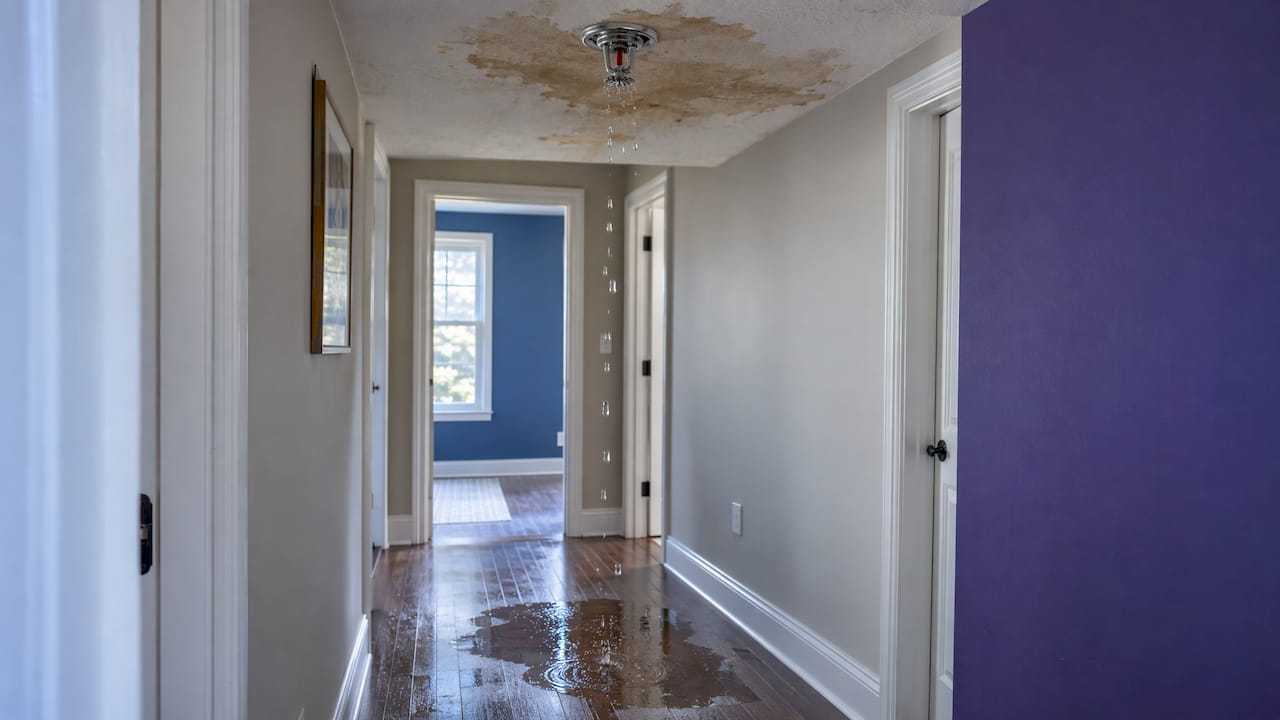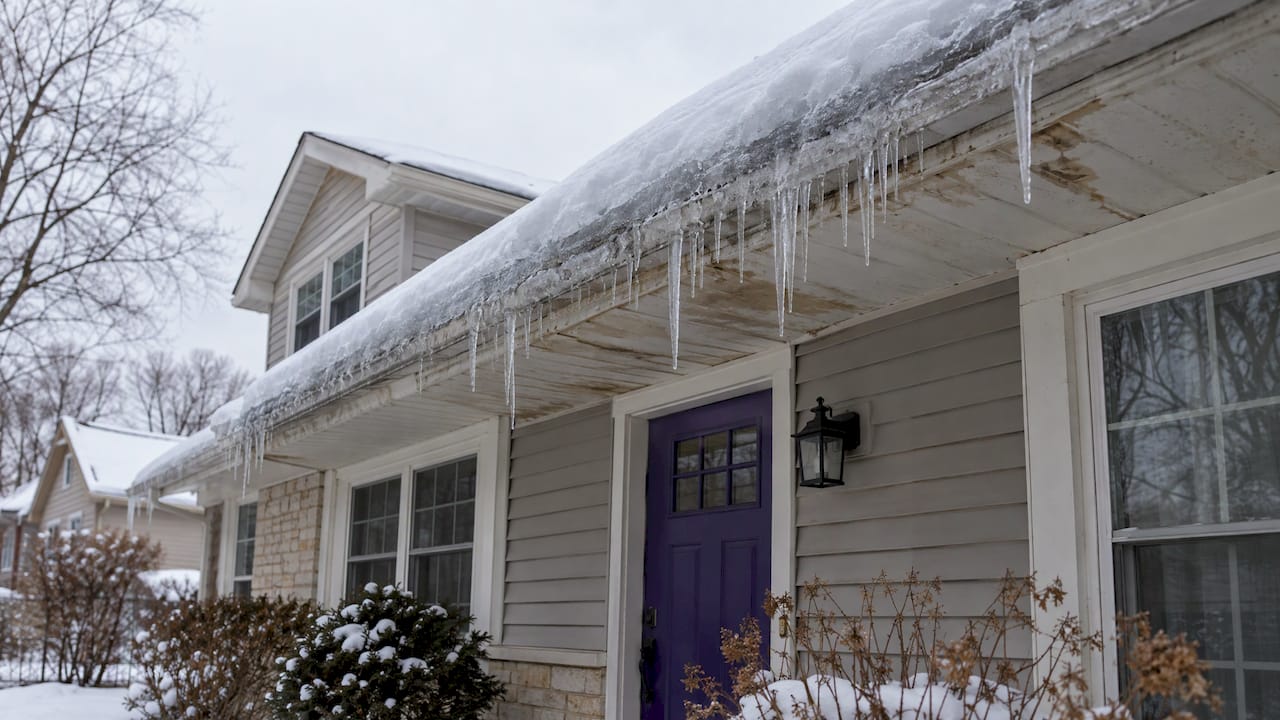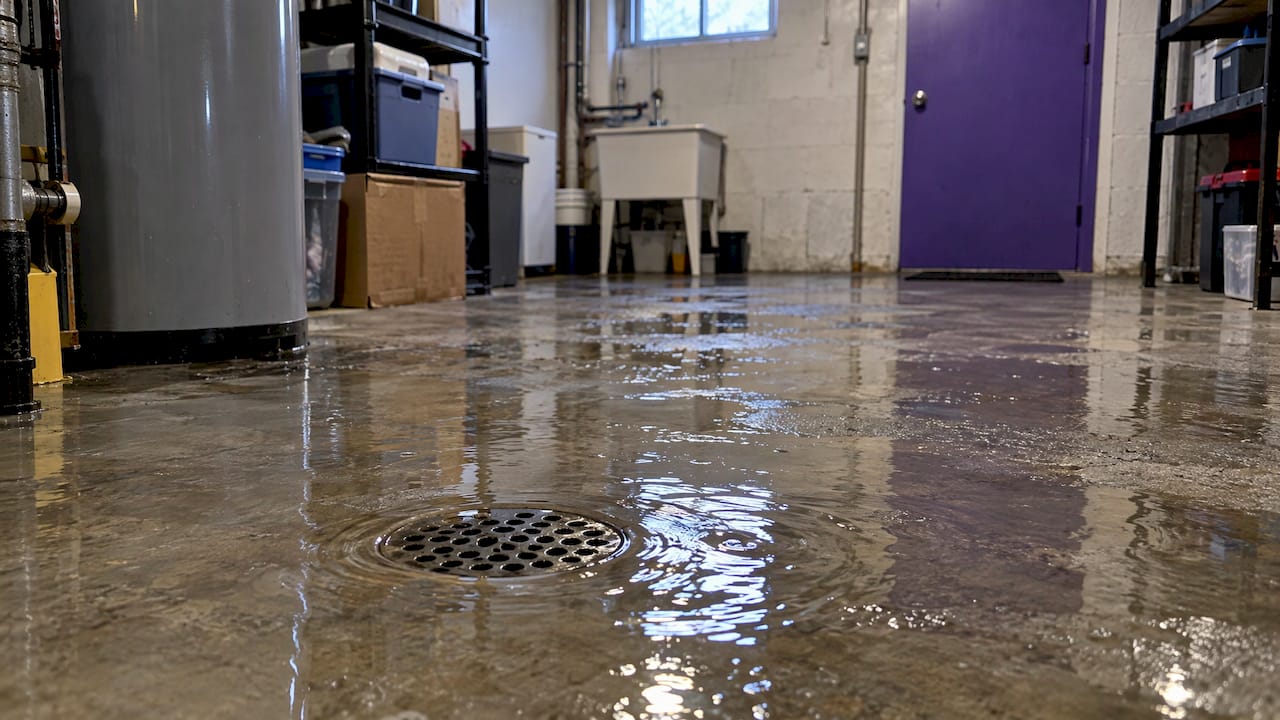

Basements in Schaumburg and the northwest suburbs flood after heavy rain for two main reasons. Either saturated ground pushes water through the foundation, or the sewer system fills faster than it can drain and sends water back up through your floor drain. The first is a groundwater problem. The second can carry sewage and calls for a different, more careful cleanup. Work out which one you have, make the space safe, and get the water out and the structure dried within about 24 to 48 hours. We handle that dry-out, sewage backups included, and we work directly with your insurance company, around the clock.
TL;DR
- Clear water through wall cracks, the floor edge or a window well usually means groundwater or stormwater. Water rising from a floor drain, toilet or tub usually means a sewer backup, which may contain sewage.
- Do not enter if water may touch outlets, cords or the panel, if you smell gas, or if the water may be sewage. Shut off power only from a dry spot.
- Never drain a flooded basement fast. Pumping too quickly can crack walls and floors.
- Prevention starts outside: downspouts, grading and sewer protection. Schaumburg runs a cost share program for overhead sewers.
- Photograph everything before anything is moved, and call your insurer and a restoration crew the same day.
Table of Contents
- Why basements flood after rain here
- Seepage or sewer backup: how to tell
- When it is not safe to go downstairs
- What to do in the first 24 hours
- Why you should not drain the basement fast
- Drying and cleanup: what the job actually takes
- Preventing the next rain flood
- Why a restoration crew beats a do-it-yourself dry-out
- Get help with a flooded basement
- Our perspective
- FAQ
- Sources
Why basements flood after rain here
The Chicago area has flat terrain, clay-heavy soil and older sewer networks. Heavy rain tests all three at once. The Metropolitan Water Reclamation District (MWRD), which treats wastewater and manages stormwater in Cook County, explains that basement backups and street flooding often happen when rainwater enters neighborhood sewers faster than they can carry it. That can happen even when the district’s larger systems still have room, because the limit is the local pipe, which may be clogged, damaged or simply full.
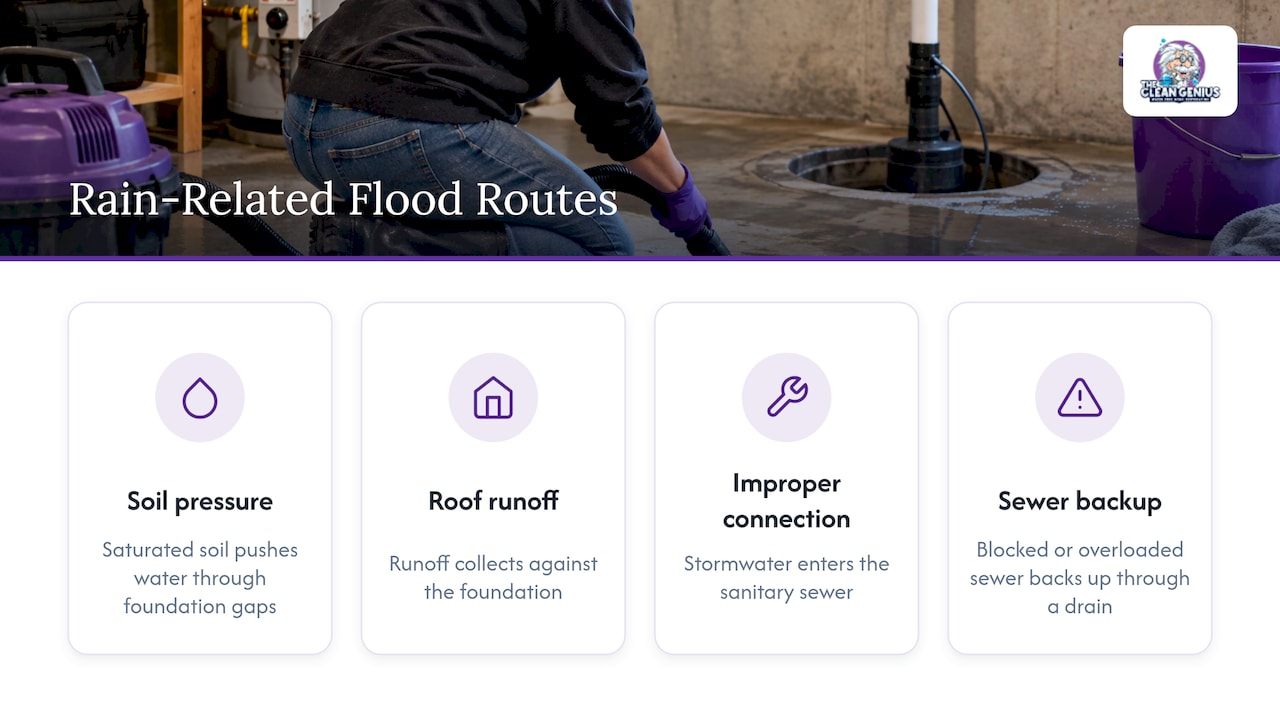
There are four common routes for the water.
Saturated soil and hydrostatic pressure
When a lot of rain falls in a short time, the soil around your foundation fills with water. Illinois Extension describes how saturated soil forces water through small cracks and gaps, a force called hydrostatic pressure. That is why a basement that stayed dry through a dozen ordinary storms can leak in the thirteenth, after a wet week.
Water collecting at the foundation
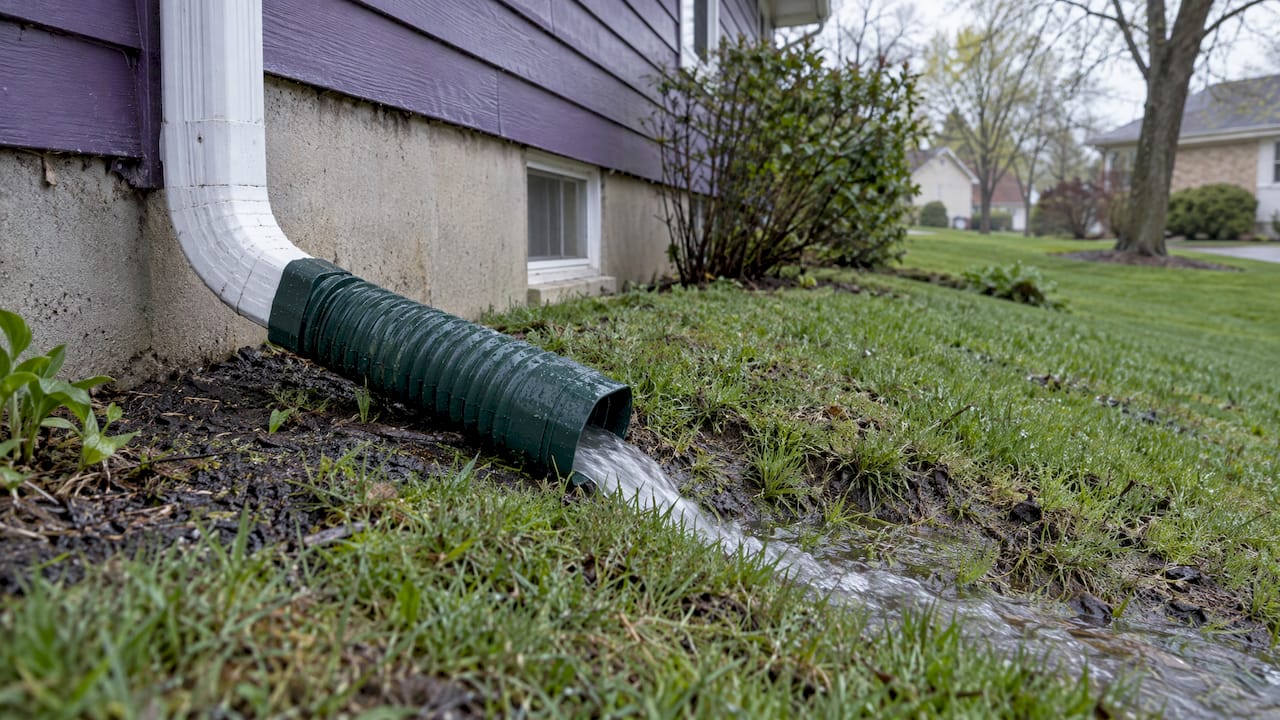
Gutters, downspouts and the slope of the yard decide where roof water goes. Illinois Extension notes that the ground should slope away from the house at about 5 to 10 percent, and that many homes need regrading after years of settling or erosion. The Illinois Department of Natural Resources puts the principle simply: keep water from getting up against the house, because water that reaches the wall runs down the gap beside it and greatly increases the pressure on it.
Stormwater connected to the sanitary sewer
In many older homes, downspouts, footing drains or sump pumps were tied into the sanitary sewer. The state’s floodproofing guide notes that this lets stormwater flood the sanitary system in heavy rain, which then backs up into homes. Your own connection can add to the problem, and your neighbors’ can add to yours.
A blocked or overloaded sewer line
If water comes up through a floor drain or an overflowing fixture, the sanitary line is blocked or full. This is the case most likely to involve sewage, and it changes how you clean up.
Seepage or sewer backup: how to tell
The answer decides your safety precautions, your cleanup method and often your insurance conversation. Use these clues.
| What you see | Likely source | What it means |
|---|---|---|
| Water through wall cracks, the floor-wall joint, a window well or the sump pit | Groundwater or stormwater | Usually clear, with no strong odor |
| Water from a floor drain, toilet or tub, especially when no one is using water | Sanitary sewer backup | Treat as contaminated |
| Water in the sump pit that is not leaving, or seepage with an empty pit | Pump or foundation drain problem | Pump failure or clogged drains |
A public utility guide on residential flooding says that water coming through a toilet or interior drain when no water is in use points to a sanitary sewer backup. Water arriving through cracks, sumps or window wells is probably stormwater or groundwater, generally clear and without a noticeable odor.
One more test uses your neighbors. The Milwaukee Metropolitan Sewerage District advises that if a floor drain backs up while it is raining and neighbors are also backing up, the public sewer is likely full, and you should call your village. If neighbors are dry, your own lateral, the pipe from your house to the main, is more likely blocked, and a plumber should look at it.
When in doubt, treat the water as contaminated. Gray, cloudy or smelly water is not a case for a mop.
When it is not safe to go downstairs
Check this before you do anything else. The CDC’s guidance on reentering a flooded home is the standard to follow.
- Electricity. If standing water is present, turn off the main power, and only from a dry location. Do not step into water to reach the panel. If the panel is in the flooded basement, do not go in; call an electrician or your utility. Have an electrician check the system before you restore power.
- Gas. If you smell gas, leave immediately and call the gas company from outside.
- Engines. Never run a gasoline-powered pump or generator inside a home or basement, or within 20 feet of any door, window or vent. Carbon monoxide is the risk.
- Structure. Do not go in if the walls, floor or stairs look damaged.
- Sewage. The Illinois Department of Public Health says flood and sewer water can contain bacteria, fecal material and viruses. Anyone who does have to handle it needs rubber boots, gloves and an N95 or HEPA respirator, and exposed food should be thrown out.
Children, pregnant family members, older adults and anyone with a weakened immune system should stay out of contaminated areas altogether. If someone develops symptoms after contact with floodwater, call a doctor.
What to do in the first 24 hours
- Make the space safe. Follow the list above. Power off from a dry spot, no gas smell, no sewage exposure without protection.
- Find where it is coming from. Walk the outside of the house if you can do so safely. MMSD’s guidance says the best time to troubleshoot is while it is still raining, watching where water pools and runs. Look for grading that slopes toward the wall and for broken or clogged gutters and downspouts without extensions.
- Document before you move anything. Take wide photos and video of the water line, the walls, the floor and each damaged item. Our guide on how to document water damage for insurance claims lists what adjusters look for. The MWRD guide also tells residents to document damage and notify their municipality.
- Call your insurer and a restoration crew. Do both on day one. Coverage for sewer backup and for seepage often differs from standard coverage, so read your policy and our explainer on what flood and basement coverage pays for.
- Get the water out slowly. This is the step people get wrong, and it gets its own section below.
- Remove soaked materials and start drying. Carpet, padding, insulation and drywall that stayed wet hold moisture and feed mold. Our first 24 hours checklist walks through it in order.
Why you should not drain the basement fast
It feels backward, but a full basement is helping hold up the walls. Missouri Extension warns that water inside the basement braces the walls against soil pressure outside, so pumping it out too quickly can crack or rupture the foundation, walls or floor. Its advice is to pump in stages, about a foot at a time, and check the level overnight.
University of Nebraska Extension gives a similar rule: no more than 2 to 3 feet per day, and do not start until the soil around the building is no longer saturated. The pumped water must be discharged well away from the foundation, or it returns.
This is one of the clearest reasons to bring in professionals. Our crews do the removal and the dry-out, so you are not guessing at water levels in the dark with a rented pump.
Drying and cleanup: what the job actually takes
Once the water is out, the clock shifts to moisture. State Farm’s basement flood guidance says to remove water and dry the area within 24 to 48 hours if possible. The CDC advises assuming mold if a flooded home was closed up for several days.
University of Nebraska Extension recommends keeping humidity below 60 percent while drying, using fans and dehumidifiers, and drying wood to 15 percent moisture or less before covering it again. Those numbers matter because a floor that feels dry can still hold moisture in the subfloor, the bottom of the walls and the framing.
For sewage backups, the Illinois Department of Public Health’s cleanup guidance for flood and sewer overflows says to clean hard surfaces with no more than one cup of bleach per gallon of water, and to clean and dry paneling and wallboard right away, replacing them if the damage is severe. Porous materials soaked by sewage are generally not worth saving.
What small spills can and cannot handle
Towels and a mop are reasonable for a small amount of known clean water, such as a few ounces from a leaking window well, after the electrical system is confirmed safe. They are not enough once water has reached the walls, carpet padding or the floor edge, or whenever the source might be a drain. Moisture hidden in those places is what turns a one-day problem into a mold problem. If you see musty spots in the following days, our step-by-step guide to mold removal after a basement flood explains what remediation involves.
Preventing the next rain flood
The MWRD, the Illinois Department of Natural Resources and MMSD agree on the order of work: fix what happens outside the house first, then deal with the plumbing.
Start with the roof water and the yard
- Keep gutters clear and make sure every downspout discharges well away from the foundation.
- Check the slope. Soil should fall away from the house, and settled or eroded areas may need to be rebuilt.
- Look at window wells for debris and standing water.
The MWRD, as reported by WBEZ, estimates that a house with an 800-square-foot roof can send about 500 gallons to the sewer in a one-inch storm. That is why disconnecting downspouts from the sanitary sewer matters so much.
Know Schaumburg’s rules and programs
The Village of Schaumburg works under an MWRD program that targets stormwater improperly connected to the sanitary sewer. A 2017 village report describes the effort and says that village code prohibits sending stormwater or unpolluted drainage to the sanitary sewer. Low-cost fixes such as disconnecting a downspout had to be completed within a year of identification, and the work required a village permit and inspection. If you live outside Schaumburg, in Palatine, Elk Grove Village or Naperville for example, ask your own village’s public works department which rules and programs apply.
For homes with repeated sewer backups, the village’s overhead sewer program offers reimbursement of 50 percent of the installation cost, up to $10,000, for eligible detached single-family homes. Check the village page for current eligibility before you hire anyone, since programs and limits change.
Check the sump pump and drains
If you have a sump pump and see seepage, water should be entering the pump pit. MMSD says that if it is not, you may have clogged foundation drains that need a plumber. A pump that has a working battery backup matters most during storms, when power often fails.
Fix the outside before patching the inside
MMSD warns that waterproofing or crack repair done only on the interior can trap water in the foundation wall and cause serious damage over time. Find the source and redirect it away from the house first.
Why a restoration crew beats a do-it-yourself dry-out
A wet basement forces several decisions at once: is the water safe, how fast to pump, what to remove, when the structure is dry, and what the insurer needs to see. Getting one wrong costs money. Pump too fast and you risk the foundation. Keep soaked drywall and you may be dealing with mold a few weeks later. Skip photos and the claim gets harder.
The Clean Genius is a family-owned water restoration company serving Chicagoland, with over 25 years of combined experience. Our certified, insured technicians handle floods, burst pipes, sewage backups and complete property dry-out, and we work directly with your insurance company. If mold develops, we remove it using Pure Cloud dry-fog technology. You can read how that process works in our guide to how a restoration company works with insurance.
Get help with a flooded basement
If your basement took on water after rain, we are available 24/7 for emergencies across the northwest and western suburbs, including Schaumburg, Arlington Heights, Palatine, Elgin, Naperville and Wheaton. Our water damage restoration service covers extraction, dry-out and insurance coordination, and we can also help after storms, burst pipes and roof leaks.

For an emergency, call us or start at thecleangenius.com. Read our Chicagoland flood cleanup guide first if you want to know what a response looks like.
Our perspective
Most of the basement floods we hear about in the northwest suburbs follow the same pattern. A storm drops a lot of water, the ground and the sewers fill, and by morning a family is standing at the top of the stairs wondering whether it is safe to go down.
The first thing we tell people is to stop and check the hazards: power, gas, sewage. The second is to resist the urge to drain it all at once. The third is to take photos before anything is moved. None of these needs special equipment, but they are the steps that decide how the rest of the job goes.
What we care most about is the dry-out. A basement that looks fine can still hold moisture in the walls and framing, and that is where mold starts. That is why we pair extraction with proper drying, and why we deal with your insurance company directly, so you are not trying to coordinate a claim in the middle of a crisis.
If the water was sewage, or if you are not sure, call us. We are family-owned, available around the clock, and we have done this across Chicagoland for years.
Jim
FAQ
Why does my basement floor leak after heavy rain?
Usually because the soil around your foundation is saturated and water is being pushed through cracks and the floor-wall joint. Clogged gutters, downspouts that empty beside the house and ground that slopes toward the wall make it worse. If the water comes up through a drain instead, the sewer is the likely cause.
Is it dangerous to clean up basement water myself?
It can be. Electrical hazards, gas and sewage contamination are all possible, and the CDC and Illinois Department of Public Health both set out protective steps. If water may contain sewage or touches outlets, do not go in. Call a professional restoration crew.
How long do I have before mold starts?
Plan to remove water and dry the space within 24 to 48 hours. Wet carpet, padding and drywall can develop mold quickly after that. If you have musty smells or visible growth days later, call us for an assessment.
Should I call my insurance company or a restoration company first?
Do both on the same day. Document the damage with photos and video, notify your insurer, and call us so drying can start. We work directly with your insurance company on the claim.
What can I do to keep it from happening again?
Start outside: clean gutters, extend downspouts, correct the slope and confirm none are tied to the sanitary sewer. Then look at your sump pump and, if you have sewer backups, at an overhead sewer. Schaumburg offers a cost share for those.
Sources
- MWRD Flood Response Resource Guide
- Illinois DNR Guide to Floodproofing
- MMSD: Why is There Water in My Basement?
- Illinois Extension: Flooding, Facts, and Misconceptions
- Residential flooding brochure
- CDC: Reentering Your Flooded Home
- Illinois DPH: Flood and Sewer Cleanup factsheet
- Illinois DPH: Cleaning Up After Flood and Sewer Overflows
- Missouri Extension: Removing water from flooded basements
- University of Nebraska Extension G2108
- State Farm: What To Do When Your Basement Floods
- WBEZ: How to prevent basement flooding and sewer backups
- Village of Schaumburg engineering and public works report
- Village of Schaumburg Overhead Sewer Cost Share Program