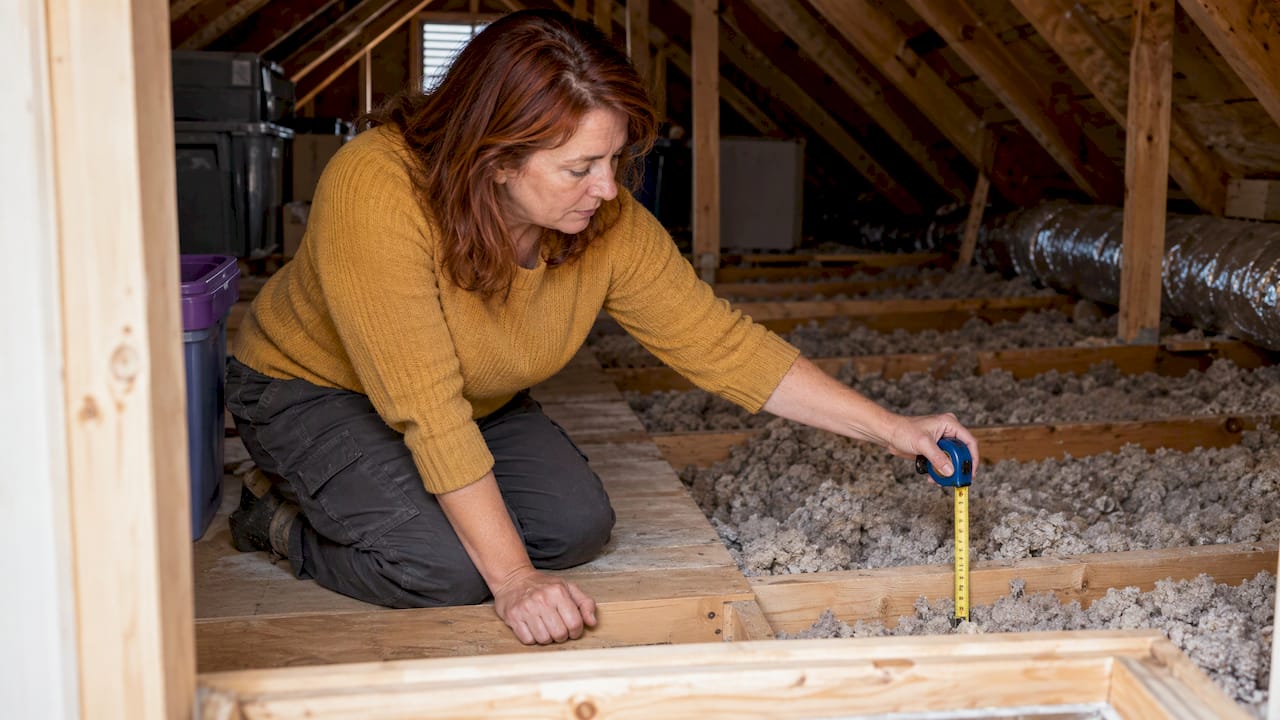

The clearest signs of poor attic insulation are insulation that sits level with or below your floor joists, energy bills that climb while your thermostat settings stay the same, rooms that never match the rest of the house, and ice dams or damp spots up in the attic. Some of these you can spot from the living room. Others take a flashlight, a tape measure and a careful trip up the attic hatch. This guide walks through both, explains which symptoms point to insulation and which point to ventilation or a roof leak, and tells you when it is time to call a professional.
TL;DR
- If your attic insulation is level with or below the tops of the floor joists, you probably need more. If it sits well above them, you likely have enough.
- Higher heating and cooling bills, drafts, and hot or cold rooms are the most common indoor clues.
- Dirty, matted, wet or moldy insulation points to air leaks or moisture, not just a lack of material.
- Ice dams, musty smells and condensation can come from insulation, air sealing, ventilation or the roof, so find the cause before adding material.
- Check for vermiculite insulation and old wiring before you disturb anything, and only step on joists.
Table of Contents
- Start with the quickest test: how deep is the insulation?
- Signs you can notice from inside the house
- Signs you will see once you are in the attic
- Ice dams, condensation and moisture: insulation, ventilation or roof?
- Safety first: what to check before you disturb anything
- A simple attic checklist
- When to call a professional
- Get the attic fixed in the right order
- FAQ
- Sources
Start with the quickest test: how deep is the insulation?
The fastest way to tell whether your attic is under-insulated is to look across the floor from the hatch. According to ENERGY STAR’s DIY inspection guidance, if the insulation is level with or below the floor joists, you should probably add more. If it is well above the joists, you probably have enough.
For a more accurate read, measure the depth with a tape measure in several spots. Look for evenness too. Insulation that is thick near the hatch and thin in the corners, or bare patches where someone ran a cable or moved a box, leaves gaps that let heat through. Uneven coverage is one of the most overlooked signs of a poor job.
This matters more than most homeowners expect. The U.S. EPA and ENERGY STAR report that 9 out of 10 homes in the country are under-insulated. If your house was built decades ago and nobody has touched the attic since, the odds are not in your favor.
What the right depth is for your home
Recommended insulation levels depend on your climate zone and on the type of material, so a single number for every house would mislead you. Chicagoland sits in a cold-winter climate where heat loss matters a great deal, which is one more reason to treat “level with the joists” as a minimum warning line rather than a goal. An on-site assessment will tell you what your particular attic needs.
Signs you can notice from inside the house
You do not have to go into the attic to suspect a problem. These are the symptoms homeowners usually notice first.
Energy bills that keep rising
Low attic insulation and air leaks force your furnace and air conditioner to work harder to keep the house comfortable. The EPA’s ENERGY STAR program says this wastes energy and raises heating and cooling bills. Compare this year’s winter and summer bills with previous years, adjusting for rate changes and unusually harsh weather. If usage is up and your habits have not changed, the attic is a prime suspect.
The U.S. Department of Energy makes the same point about winter specifically: inadequate attic insulation lets heat escape in cold months, which increases heating bills and can undermine the attic itself.
Rooms that are too hot, too cold or drafty
A bedroom under the roof that is stuffy in July and chilly in January is a classic sign. So are cold spots along upstairs ceilings and drafts near ceiling fixtures, attic hatches and the tops of interior walls. Uneven temperatures usually mean heat is moving through thin or missing insulation, or through gaps where air leaks between the living space and the attic.
An air conditioner that never catches up
If your AC runs nearly nonstop on warm days and still struggles, do not assume the unit is failing. ENERGY STAR notes that low attic insulation and air leaks make air-conditioning systems work harder in summer. A technician can check the equipment, but it is worth looking at the attic at the same time.
Signs you will see once you are in the attic
A short, careful visit tells you much more than the symptoms downstairs. Bring a flashlight, a tape measure, a dust mask and long sleeves, and read the safety section below before you climb.
Insulation that is thin, patchy or compressed
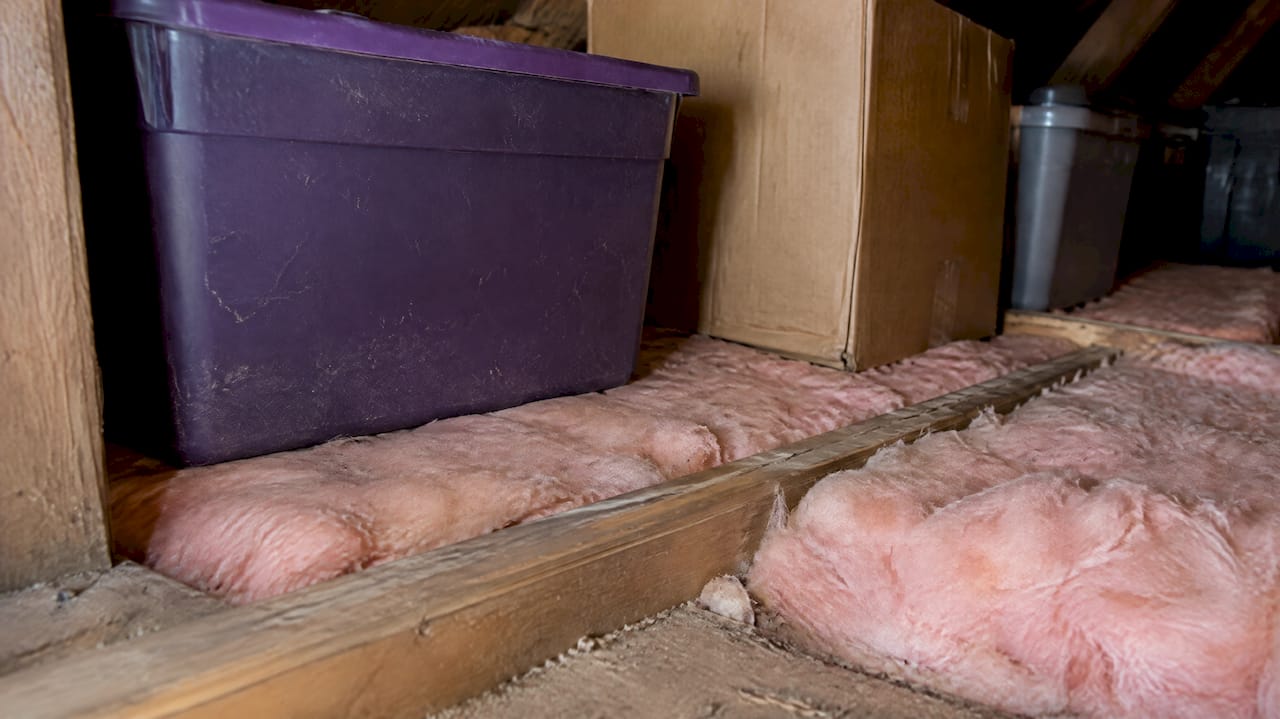
Besides depth, look at the condition of the material. Batts that have been flattened by stored boxes, loose-fill that has shifted away from the eaves, and gaps around pipes, chimneys and recessed lights all reduce performance. Insulation that has been matted down can no longer trap air the way it should.
Dirty or darkened insulation
Gray or black streaks in otherwise clean insulation are a useful clue. ENERGY STAR explains that dirty insulation shows air has been moving through it, which is evidence that air is leaking from the living space into the attic. Dark patches often trace the outline of a leaky joint, a wire hole or the top of an interior wall.
This is why air sealing comes first. ENERGY STAR says you do not need to find every small hole, but the biggest savings come from plugging large leakage sites, such as where walls meet the attic floor and behind knee walls. If you have finished attic spaces with short side walls, our guide to attic knee wall insulation explains why those areas deserve attention. Adding insulation on top of unsealed leaks is a common way to pay for material that underperforms, and we cover the order of work in our piece on attic insulation types for homeowners who air seal first.
Wet, stained or heavy insulation
Roof leaks commonly soak attic insulation, and even small unnoticed leaks can saturate a large area over time. Wet insulation clumps, sags and loses most of its value. The Department of Energy lists wet insulation, especially near the eaves, among the possible signs of water intrusion, alongside warped or rotted wood, bubbled paint on soffits or fascia, and worn or warped shingles at the roof edge.
If you find soaked material, the insulation is the symptom, not the cause. The water source needs to be fixed first, and the wet material often has to come out. Our roof leak water damage restoration service handles exactly that situation.
Mold, mildew and a musty smell
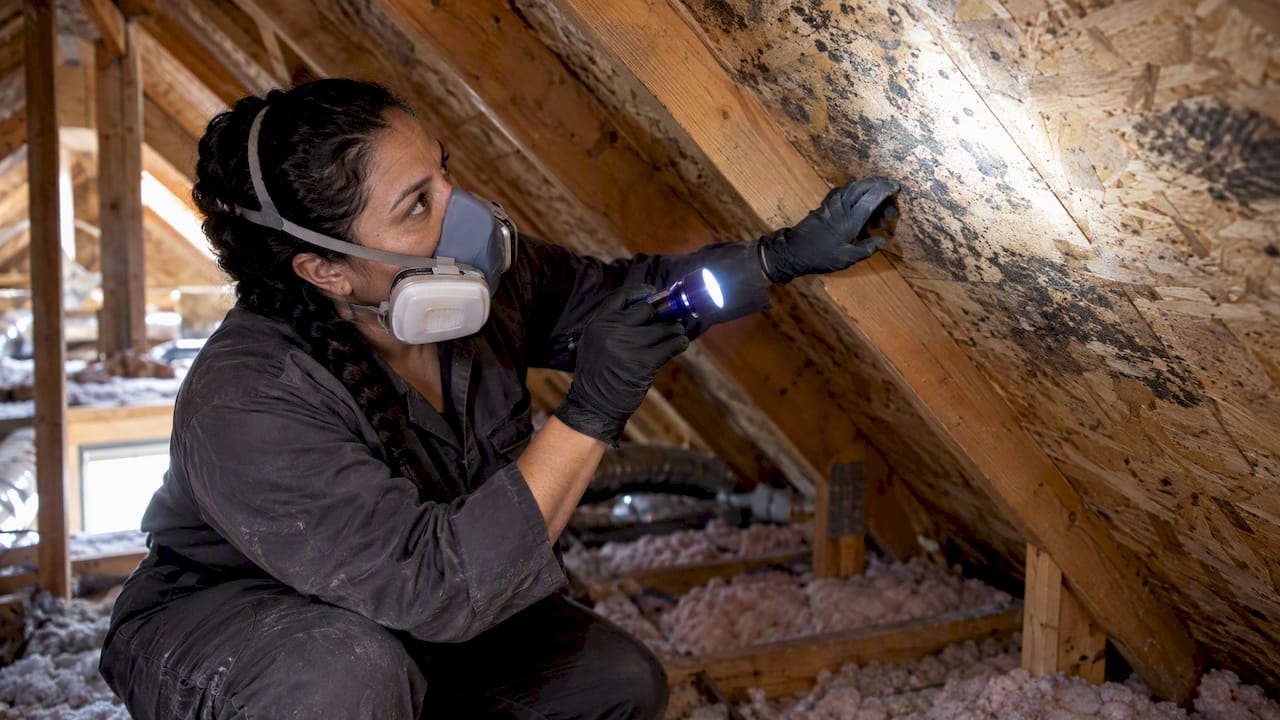
Discolored patches on rafters, roof sheathing or insulation, in colors from white to dark green or black, mean moisture has been present for a while. A musty odor that drifts into upstairs rooms points the same way. The DOE guide names mold or mildew on surfaces as a sign of possible water intrusion. Read our explanation of why attic moisture causes mold and how mold can affect indoor air quality. If the growth covers a notable area, see our article on mold on attic insulation and the EPA 10 square foot rule before deciding what to do.
Signs of pests
Scratching or scurrying in the ceiling, droppings, and tunnels or nests in the insulation mean animals have moved in. Pests disturb and contaminate insulation, and the openings they use can let in outside air and moisture. Treat the entry points and the damaged material together.
Ice dams, condensation and moisture: insulation, ventilation or roof?
This is where many homeowners get stuck. The warning signs for poor insulation overlap heavily with signs of poor ventilation and roof problems, and the fixes differ.
| Symptom | Possible insulation or air-sealing cause | Other possible causes |
|---|---|---|
| Ice dams and long icicles | Heat leaking into the attic warms the roof deck | Poor ventilation, blocked soffits |
| Frost or condensation on the underside of the roof | Warm, moist house air escaping into the attic | Bath, kitchen or dryer vents ending in the attic |
| Wet insulation near the eaves | Compressed or displaced material | Roof leak, ice dam backup |
| Musty odor | Moisture trapped in matted insulation | Mold from a roof leak or poor airflow |
| Very hot attic in summer | Insulation too thin to slow heat into rooms | Too little exhaust or intake ventilation |
Ice dams
Ice dams form when snow melts off a roof that is too warm and refreezes at the gutters. ENERGY STAR says that in winter, natural outdoor airflow, proper insulation and air sealing help keep the attic cold and reduce the chance of ice dams. Chicagoland winters make this a real concern, so if you see heavy icicles or ice building at the eaves, our pages on what actually stops ice dams and why they form explain the connection in more detail.
Ventilation matters too
For effective natural ventilation, outside air should enter low at the eaves, for example through soffit vents, and leave high near the ridge, for example through ridge vents, according to a Department of Energy measure guideline citing Building Science Corporation. The same guideline notes that ventilation’s main job is controlling moisture, and in some climates ice dams. Insulation stuffed into the eaves can block that airflow, so a proper installation keeps the vent channels open. For the basics, see what attic ventilation with soffit and ridge vents does.

Vents that dump moist air into the attic
Kitchen, bathroom and clothes dryer vents should exhaust outdoors. ENERGY STAR calls venting them directly into the attic a major source of moisture that can lead to mold and moisture damage. If you find a flexible duct that ends in the insulation, or one that has come loose, reconnect it to an exterior termination. For a broader look at what moisture around vents does to a home, see this explanation of mold around air vents.
Safety first: what to check before you disturb anything
Attic insulation is not something to poke at casually. Run through these points before you open the hatch.
- Walk only on joists. ENERGY STAR warns that you should step on joists or truss chords, not on exposed drywall or insulation, to avoid falling through the ceiling. Lay a plank across the joists if you need to stand for a while.
- Look for vermiculite. Vermiculite is a pebble-like, gray-brown loose-fill material. The EPA says it may be contaminated with asbestos, and that you should leave it undisturbed. If it has to be removed, hire a trained and accredited asbestos abatement contractor. The agency also advises that there is no known safe level of asbestos exposure, so assume it is present rather than testing by touch.
- Identify old wiring. Knob and tube wiring, found in many homes built before 1930, is a fire hazard when it contacts insulation. ENERGY STAR says it should be identified before any material is added. Have a licensed electrician evaluate it.
- Respect combustion appliances. Furnaces and other fuel-burning appliances need adequate combustion air so that gases like carbon monoxide do not spill into the home, according to the Minnesota Department of Commerce. Keep insulation clear of flues and vents, and have a pro handle work near them.
- Do not touch suspected mold. If you see growth, photograph it from a distance and leave it alone until you know the extent. Our mold removal safety practices explain what protection is involved.
A simple attic checklist
- From the hatch, look across the floor. Is the insulation level with or below the joists?
- Measure depth in at least five spots, including the corners and eaves.
- Note gaps, bare spots and compressed areas.
- Look for dark, dirty streaks that show air movement.
- Check for stains, damp or clumped material, and any smell of mildew.
- Trace every exhaust duct to make sure it leaves the house.
- Photograph everything. The pictures help any contractor or insurance adjuster later.
If you tick more than two of these, the attic is almost certainly costing you comfort and money.
Our take on attic insulation
In our work across Chicagoland, we rarely see an attic problem that is only about insulation. A homeowner calls about a damp spot or a musty smell, and we find thin insulation, a leaky ceiling plane and a bathroom fan that ends in the attic, all at once. That is why we treat the attic as a system: air sealing, the right insulation, working ventilation and a dry roof deck.
We are a family-owned team with more than 25 years of combined experience, and we handle both sides of the problem. We can remove wet or contaminated insulation, address attic mold with our Pure Cloud dry-fog technology, and install new insulation once the space is clean and dry. Doing the work in the right order means you do not pay twice.
Our advice: if you see wet insulation, mold or ice dams, do not just add a fresh layer on top. Fix the moisture, clean up what is damaged, and then insulate.
Jim
When to call a professional
A depth check and a visual scan are reasonable homeowner tasks. The following situations call for experienced help:
- Wet, stained or moldy insulation or sheathing
- Recurring ice dams despite clear gutters
- Vermiculite insulation or suspected asbestos-containing material
- Old knob and tube wiring in the attic
- Evidence of rodents or other pests in the insulation
- Existing insulation that must be removed and replaced
The Department of Energy recommends that a home-performance contractor visit to determine whether moisture is entering the attic and from where. A good assessment identifies the source of the moisture, not only the symptom. For prevention after repairs, our attic mold prevention guide lays out the ongoing habits that keep the space dry.
Get the attic fixed in the right order
If your attic shows damp insulation, mold, roof leak damage or insulation that needs to come out, we can inspect it, explain what we find and coordinate directly with your insurance when the damage is covered. We serve homeowners across Chicagoland, including Arlington Heights, Naperville, Palatine, Schaumburg, Elgin and many other towns, and we are available 24/7 for emergencies. Start with our attic mold removal and remediation service or visit The Clean Genius to request an on-site estimate.

If the trouble began with a leak, our water damage restoration service covers dry-out of the affected areas, and the water damage insurance claim checklist helps you document what happened.
FAQ
How do I tell if my attic needs insulation?
Look across the attic floor from the hatch. If the insulation is level with or below the floor joists, you probably need more, and a tape measure gives you a more accurate depth. Also look for gaps, uneven coverage and dirty streaks that show air is leaking through.
Will poor attic insulation affect my AC in summer?
Yes. According to ENERGY STAR, low attic insulation and air leaks make air-conditioning systems work harder to keep a home comfortable, which wastes energy and raises cooling bills. If your AC runs constantly yet some rooms stay warm, check the attic along with the equipment.
Is attic insulation harmful to health?
Most modern insulation is safe when handled with a mask, gloves and long sleeves, but older vermiculite insulation may contain asbestos, and the EPA says to leave it undisturbed and use an accredited abatement contractor if it must be removed. Wet or moldy insulation is a separate concern and should be assessed before you touch it.
Can ice dams mean my insulation is the problem?
They can. Ice dams form when heat escapes into the attic and warms the roof, so thin insulation and air leaks are common causes. Poor ventilation and blocked soffits contribute too, so an inspection should look at all three.
Sources
- What to Look For: DIY Checks and Inspections, ENERGY STAR
- U.S. EPA Consumer Messaging Guide for ENERGY STAR Certified Insulation, 2023
- Guide to Durable Attics, U.S. Department of Energy
- A Do-It-Yourself Guide to Sealing and Insulating with ENERGY STAR, 2016
- Measure Guideline: Guide to Attic Air Sealing, U.S. Department of Energy
- Asbestos Frequently Asked Questions, U.S. EPA
- Protect Your Family from Asbestos-Contaminated Vermiculite Insulation, U.S. EPA
- Insulation guide, Minnesota Department of Commerce