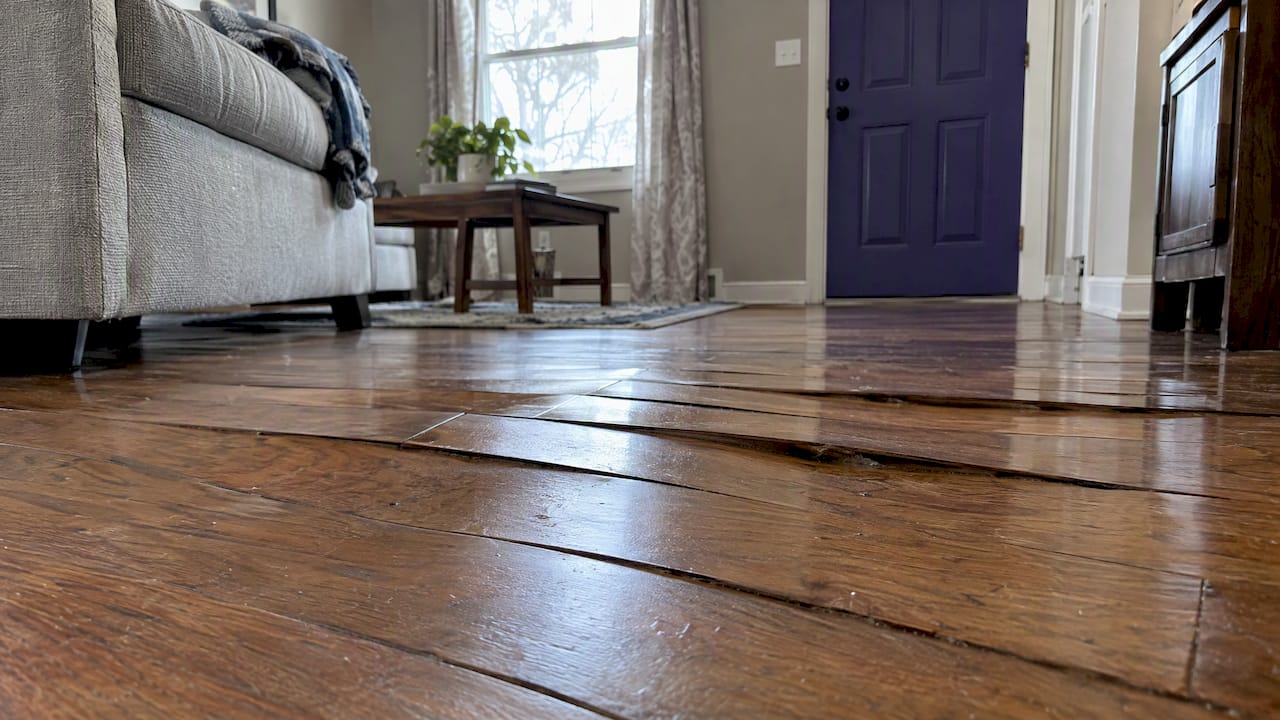

If your hardwood floor has lifted, peaked or curled after a leak or flood, act on the moisture first and the boards second. Stop the water, dry the area fast, and have the floor and subfloor measured with a moisture meter before anyone sands, nails or replaces anything. Boards that are cupped (edges high, center low) often settle back once they dry. Boards that have truly buckled (lifted off the subfloor) usually have to be replaced where the lifting happened.
What are the key takeaways for buckled and cupped hardwood floors?
- Cupping and buckling are different: cupped boards curl at the edges, buckled boards pull away from the subfloor.
- Remove moisture right away and aim to finish drying within 24 to 48 hours to help avoid mold.
- Cupped floors can flatten after drying. Buckled floors generally need replacement in the affected area.
- Never sand or repair until every moisture source is fixed and a meter confirms the subfloor is dry.
- Sewage or storm water changes everything: treat it as contaminated and call a professional.
Table of Contents
- Buckling and cupping: how to tell what you have
- The first 48 hours
- How drying actually works, and how long it takes
- Can buckled hardwood be repaired?
- When replacement is the right call
- Our perspective
- Get a moisture reading before you decide
- Preventing the next round of cupping
- FAQ
- Sources
Buckling and cupping: how to tell what you have
People use the two words loosely, but they describe different failures, and the difference decides your repair.
Cupping is when the edges of each board sit higher than the center. Cupping usually comes from excess moisture on the underside of the board, so the bottom swells more than the finished top and the edges rise. Wood is hygroscopic, meaning it takes on and gives off moisture with its surroundings, which is why the condition of the subfloor matters as much as how the surface looks.
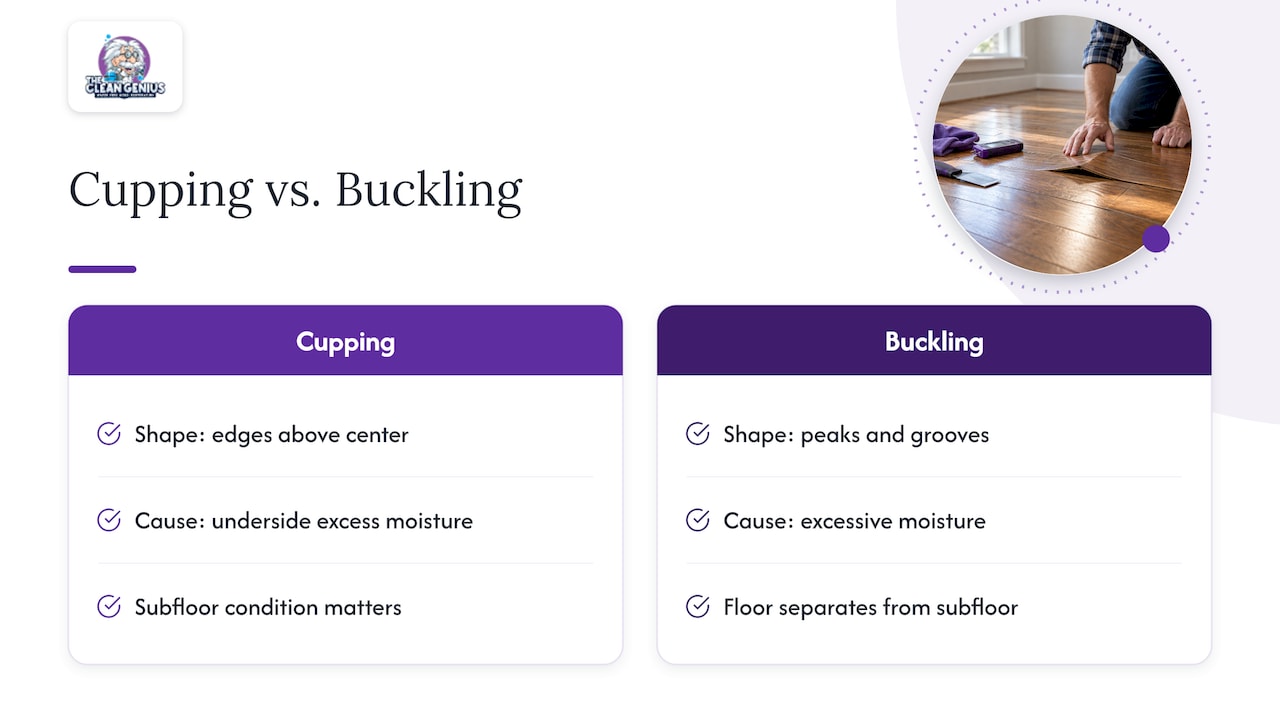
Buckling is the more severe case. Buckling is the opposite shape of cupping: boards lift off the subfloor and form peaks and grooves. The National Wood Flooring Association (NWFA) describes it as flooring separating from the subfloor, with excessive moisture as its main cause. The same document lists the usual sources: a vacant house without ventilation, grade conditions, pipe leaks and a wet slab.
How can you quickly identify if your hardwood floor is cupped or buckled?
| What you see | Likely condition | Typical outlook |
|---|---|---|
| Edges raised, centers dipped, floor still tight to the subfloor | Cupping | May flatten once moisture is removed |
| Boards pushed up into a hump or ridge, gaps underneath | Buckling | Usually replace the affected boards or section |
| Boards loose across the whole room | Buckling throughout | Reinstall or replace |
| Dark staining, musty smell, soft spots | Mold or rot risk | Professional assessment before any repair |
A slow leak under a dishwasher, a failed supply line or an ice pack left to melt can cause cupping over weeks. A burst pipe, a sump failure or a flooded basement ceiling coming down is what typically causes buckling in a day or two.
The first 48 hours
Speed matters more than anything else you will do. The EPA’s remediation guidance says water-damaged materials should be dried within 24 to 48 hours to help avoid mold. That is a guideline, not a guarantee, but it is the window to work toward. Stanford’s environmental health office gives the same order of operations: fix the moisture source, inspect how far the water went, and finish cleanup within 48 hours.
- Stop the water. Shut off the main or the supply line to the leaking fixture. Nothing else helps while water keeps arriving.
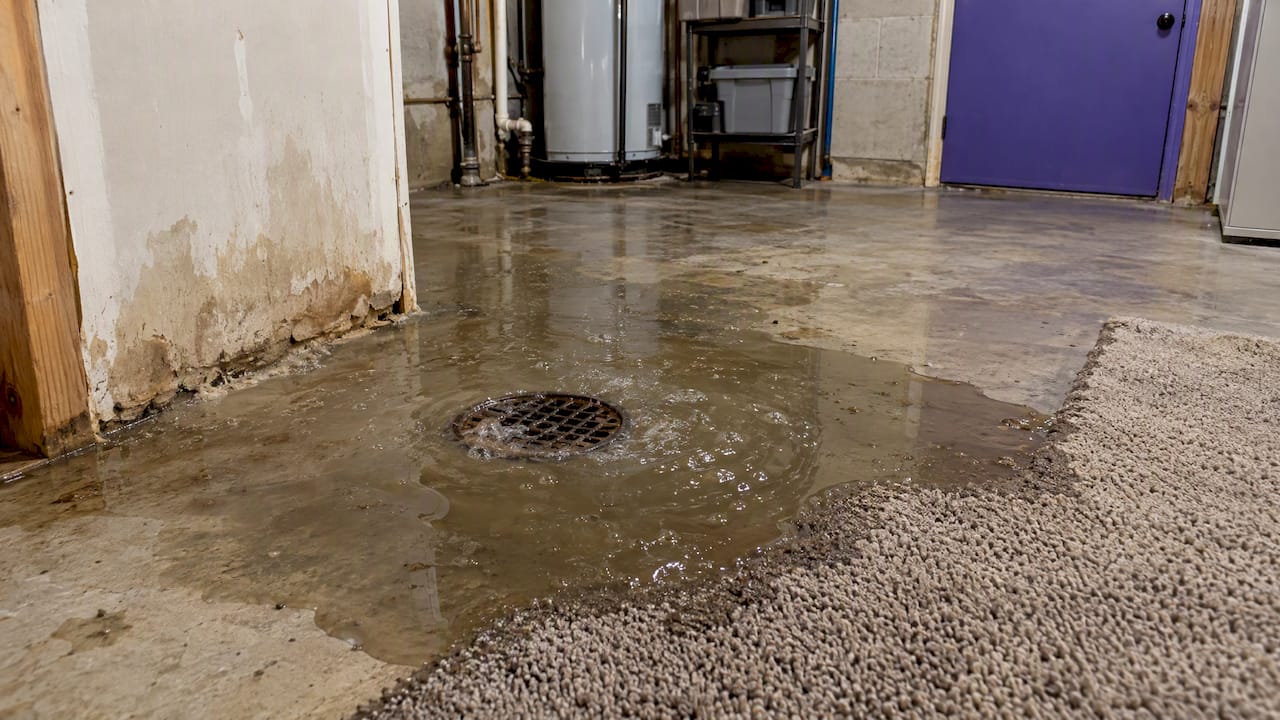
- Decide what kind of water it is. Clean water from a supply line is a different job than a sewage backup or floodwater. The EPA says to use caution with drying only after determining the water is clean. For suspected contaminated water, it calls for protective equipment, containment and an experienced professional.
- Remove moisture from the surface. Mop, blot and vacuum standing water off the wood right away.
- Start air movement and dehumidification. The EPA’s approach for wood surfaces is dehumidifiers, gentle heat and fans, with caution on hardwood. Aggressive heat can make wood dry unevenly and split.
- Document the damage. Take photos and video before anything is moved. You will want them for your insurance claim, and the NWFA stresses that written records of inspection and progress matter because verbal accounts are often misremembered.
- Call a restoration pro if the area is large or the water was not clean.
Our emergency water damage response steps walk through the whole sequence if you want a checklist to keep on your phone.
How drying actually works, and how long it takes
A floor that looks dry is not necessarily dry. Pulling up standing water is the start, not the finish. Hidden moisture can stay in the boards and the subfloor, which is why a flooring professional should measure it. The same guide says a flooded wood floor can take weeks or more to dry fully, with a target moisture content generally in the 5 to 10 percent range depending on climate.
That is why professional drying is built around measurement rather than guesswork:
- Moisture readings of the boards and the subfloor on day one, then daily, to see whether numbers are falling.
- Dehumidifiers and air movers sized to the room. See how this works in our piece on the role of dehumidifiers in water restoration and our guide to restoration equipment.
- A drying log so you and your insurer can see the readings reach a stable level. Our page on moisture meters and drying logs explains what those numbers mean, even though it is written around drywall.
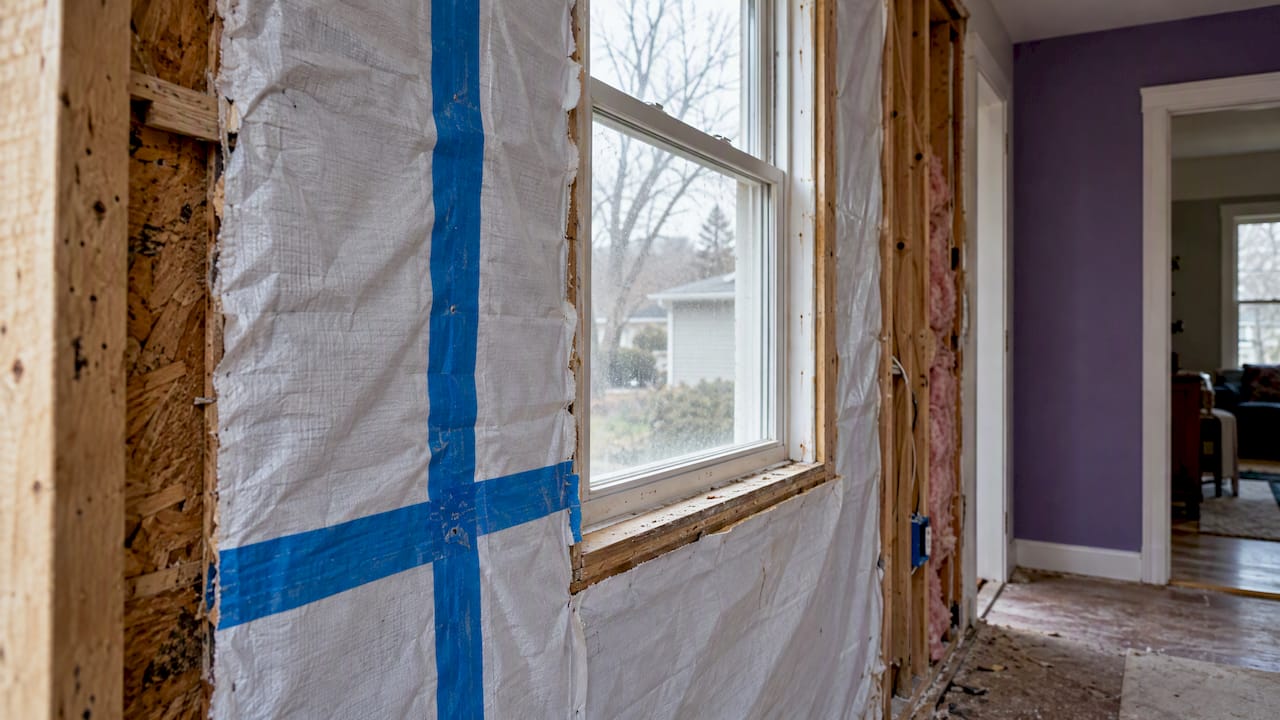
- Sometimes removing boards. Especially over a wood subfloor, taking up some of the flooring may be necessary to dry the subfloor completely.
In the Chicago suburbs, there is one more factor. Winter heating dries indoor air, and summer brings heavy humidity. The NWFA recommends keeping homes between 60 and 80°F and 30 to 50 percent humidity year-round. A drying job in a damp July basement is a different project than one in a January furnace-dry house.
Can buckled hardwood be repaired?
It depends on whether you have cupping or true buckling, and on how long the wood stayed wet.
Cupped floors
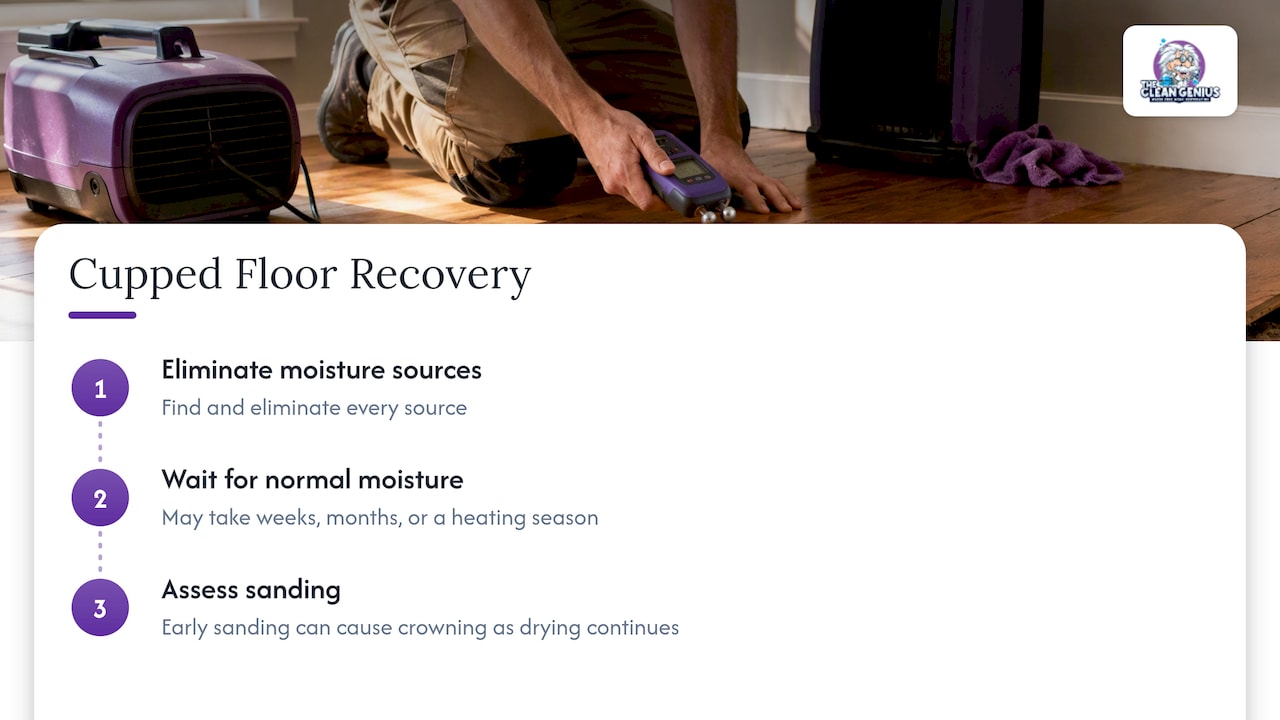
The NWFA says cupped flooring may return to its original shape once excess moisture is removed, provided it is not permanently deformed or damaged. The catch is patience. The association’s guidance is to never repair a cupped floor until every moisture source is found and eliminated, and to hold off on sanding until moisture levels are back to normal. That can take weeks, months or an entire heating season. Sand too early and the floor can crown as it keeps drying, leaving the edges lower than the centers.
Buckled floors
Once boards have lifted, the nails or adhesive have usually lost their grip. The NWFA says buckled flooring may need spot repair or replacement, reinstallation, renailing or refinishing. If the installation has loosened throughout, reinstalling or replacing is necessary. The association’s wider guidance states that a buckled floor generally needs replacement wherever the buckling occurred.
Slightly warped floors
For mild warping, the Alabama Cooperative Extension System says to clean and dry the floor completely first, which may take weeks or months. Only then consider techniques such as removing strips next to bulges, planing edges, nailing bulges down or sanding. That is skilled work. A planed or over-sanded board cannot be undone.
When replacement is the right call
Replacement makes sense when the system has lost its structural integrity, or when mold, rot or high moisture content makes restoration unsafe or cost-prohibitive. Specifically, plan on it when:
- Boards have lifted off the subfloor and will not lie flat after drying.
- The wood is stained black, soft or smells musty.
- The water was contaminated (sewage, floodwater).
- The wood subfloor stays wet beneath the floor.
The Alabama extension service notes that badly warped hardwood usually cannot be repaired and should be removed, and that the subfloor should dry for several months before new flooring goes down. Bona’s professional guidance agrees on the principle: find the moisture cause and correct the subfloor’s moisture content before installing, using a meter on both flooring and subfloor.
That last step is where repairs most often go wrong. New boards laid over a damp subfloor will cup or buckle again. If the damage reached the structure below, read our guide to subfloor water damage before you spend money on new flooring.
What is The Clean Genius's perspective on buckled and cupped hardwood floor restoration?
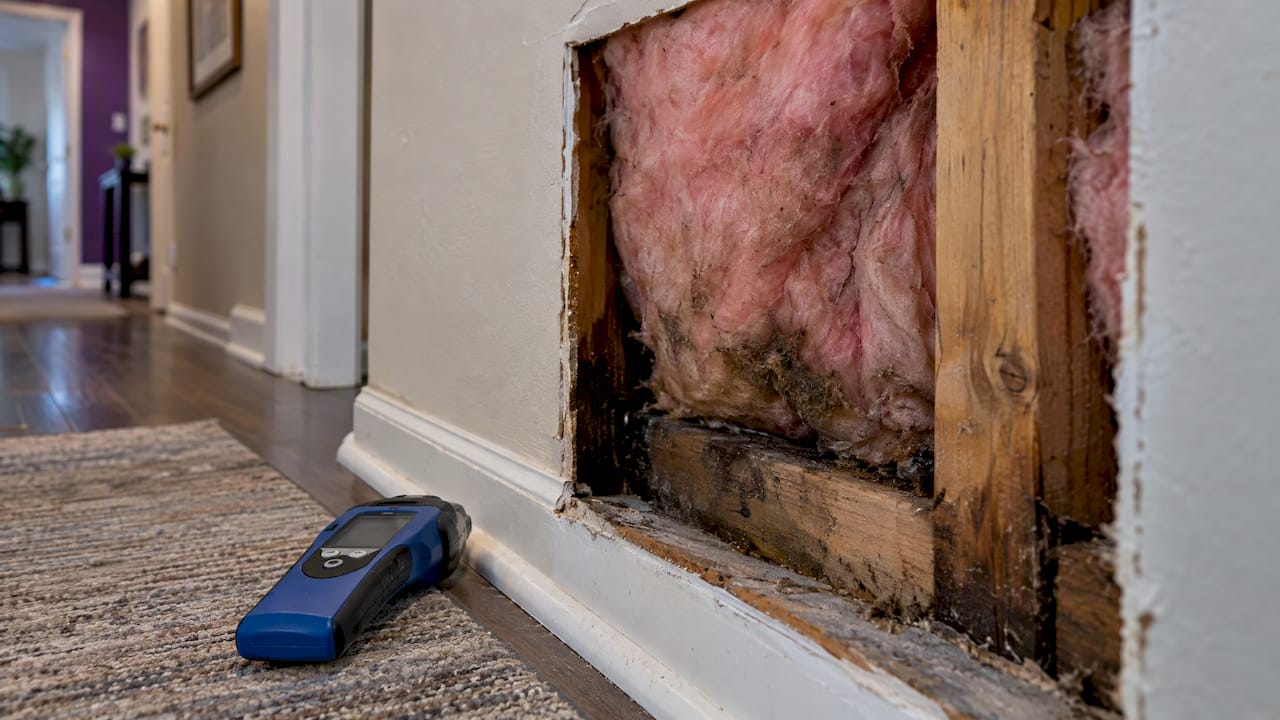
We see the same pattern in Chicagoland homes: the floor is not the first problem, the water is. A homeowner calls because the boards are humped up, but the real question is how wet the subfloor, the wall bottoms and the insulation below are. If we only fix what is visible, the damage comes back in a few months, often with mold.
Our advice is simple. Call early, even if you are not sure it is serious. Let us measure before anyone pulls up a board, because plenty of cupped floors do not need to be torn out. And if the boards have truly buckled, replacing the affected section after a proper dry-out costs less than redoing the whole job a second time. We work directly with your insurance company, and we keep readings and photos so your claim has a record to stand on.
— Jim
Get a moisture reading before you decide
The Clean Genius is a family-owned water restoration company serving Chicagoland, available 24/7 for emergencies. We handle burst pipes, floods, sewage backups and full dry-out, and we coordinate with your insurance. If your floor has cupped or buckled, our water damage restoration team can assess the floor and subfloor and tell you what can be saved.

For a closer look at how we approach wood floors, see our guide to water damaged hardwood floors. If the same leak hit laminate, our page on whether water-damaged laminate can be saved covers that material.
Preventing the next round of cupping
Most repeat damage comes from moisture that was never fully controlled. The practical measures are the same ones flooring professionals give:
- Keep humidity steady. The NWFA’s target is 30 to 50 percent humidity and 60 to 80°F all year. A humidifier in winter and a dehumidifier or air conditioning in summer help.
- Fix leaks quickly. Check under sinks, dishwashers, refrigerator ice-maker lines and washing machine hoses. Slow leaks cause cupping long before you see a puddle.
- Watch what is under the floor. Monitoring moisture beneath the floor, ventilating crawlspaces and keeping humidity stable are the core prevention steps.
- Don’t leave a house closed up and unventilated. The NWFA lists a vacant house without ventilation as a classic cause of buckling, which matters if you travel or own a seasonal property.
- Check basements and grade conditions. Gutters that dump water by the foundation can send moisture up through a slab.
FAQ
Will buckled hardwood go back down on its own?
Sometimes cupped boards will, once the floor is fully dry. True buckling, where boards have lifted off the subfloor, rarely does, because the fasteners or adhesive have failed. Expect to replace or reinstall the affected area, and have a professional confirm with a moisture meter.
How long should I wait before sanding a cupped floor?
Wait until the moisture source is fixed and the subfloor reads normal on a meter. The NWFA says that can take weeks, months or a full heating season. Sanding sooner can cause crowning as the wood keeps drying.
What pulls moisture out of wood floors?
Dehumidifiers, air movement and, with caution, gentle heat, applied after you remove surface water and confirm the water was clean. Professionals track progress with moisture readings rather than by feel. Wet floors can take weeks to reach a stable level.
Can I fix buckled hardwood myself?
You can handle the first steps: stopping the water, blotting up moisture and running fans. Cutting out boards, planing or sanding are better left to a flooring professional, and contaminated water or visible mold calls for a restoration company right away.
Does insurance cover water-damaged hardwood?
That depends on your policy and on how the water got there, so read yours or ask your agent. Photos taken before cleanup and a written drying record make a claim easier to support, and we work directly with your insurer on the restoration side.
Sources
- NWFA, Problems, Causes and Cures (2002 edition)
- NWFA, Problems, Causes and Cures (2018 edition)
- NWFA, Moisture and Wood
- NWFA, Problem Prevention
- EPA, Mold Remediation Guide, Chapter 4
- Stanford EHS, Mold Prevention and Water Damage Response
- Alabama Cooperative Extension, Floor Cleanup and Renovation
- Bona, Repair Buckled Hardwood Floors
- RW Supply + Design, Water Damaged Floors Guide
- National Floors, Why Hardwood Floors Cup
- BuildDirect, Peaking, Buckling and Cupping