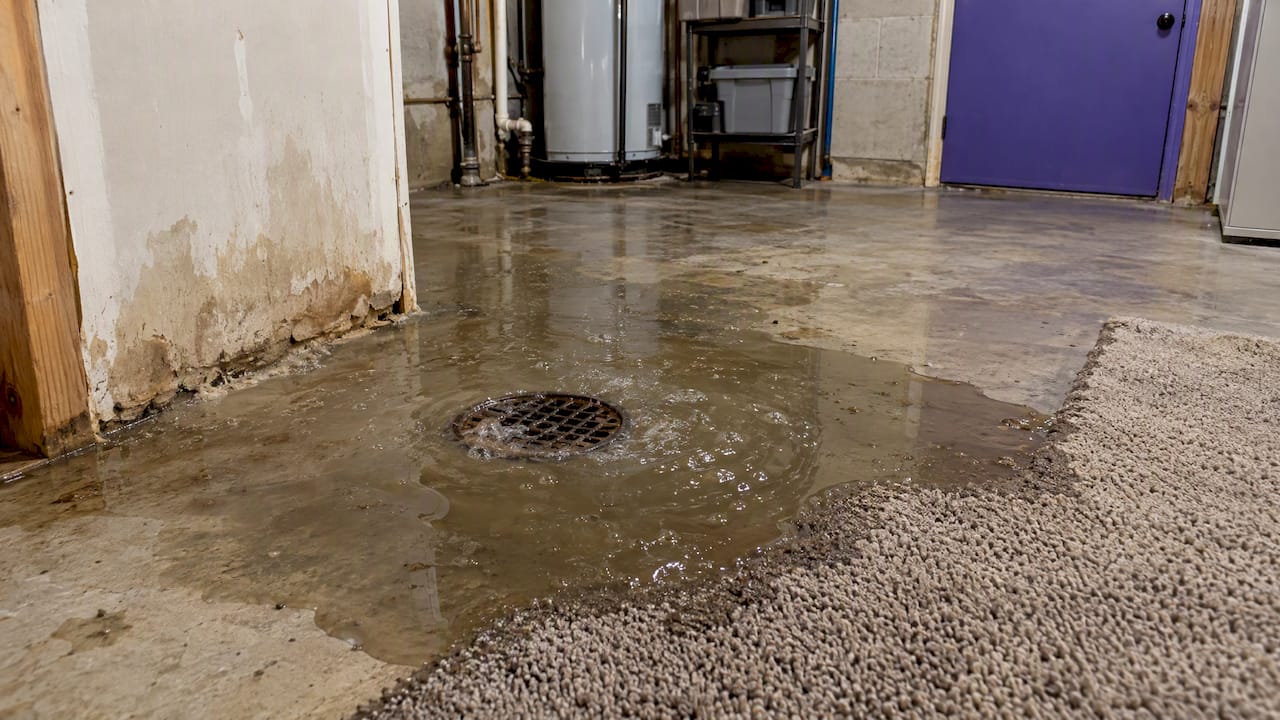

Sewage that backs up into your home is dangerous. It can carry bacteria, viruses, parasites and mold that make people sick through contact, swallowing or breathing. Children, older adults and anyone with a weakened immune system are most at risk. The safest response is to keep people and pets out of the affected area, shut off what you can safely shut off, and bring in a trained crew. Below we explain what is in the water, which symptoms to watch for, what you can safely do yourself, and when the job is not yours to do.
TL;DR
- Treat all sewage backup water as contaminated. It can contain bacteria, viruses, parasites and fungi, and exposure can happen through skin, mouth or air.
- Stomach cramps, watery diarrhea and vomiting are the classic signs. They can show up after a delay, so tell your doctor about any exposure.
- Keep children, older adults, pregnant family members, pets and anyone with a weak immune system out of the area. Throw away exposed food.
- Porous materials such as carpet, drywall and insulation stay a problem for months if left wet. Fast drying and removal matter.
- Call your insurer early, because many policies exclude sewage backup unless you added coverage.
Table of Contents
- Why sewage backup water is dangerous
- How exposure makes people sick
- Symptoms of sewage exposure and when to see a doctor
- What to do in the first hours
- Cleaning up safely, and what not to do yourself
- When sewage becomes a mold problem
- Our perspective
- When to call a professional
- Sewage backup help in Chicagoland
- Preventing the next backup
- FAQ
- Sources
Why sewage backup water is dangerous
The U.S. Environmental Protection Agency describes raw sewage as carrying bacteria, viruses, protozoa, helminths (parasitic worms), molds and fungi. The illnesses linked to it range from mild gastroenteritis to severe conditions such as cholera, dysentery and infectious hepatitis. The EPA lists several routes of exposure: drinking contaminated water, direct contact, contaminated shellfish, inhalation and absorption through the skin.
The Illinois Department of Public Health says the same thing in plainer terms for homeowners: flood waters and sewer overflows can contain bacteria, fecal material, viruses and other organisms that may cause disease.
Two things make a backup in a house worse than a spill outdoors. First, the water soaks into drywall, subfloors, carpet, furniture and stored belongings, where it sits in a closed space. Second, you live in that space. The EPA’s 2006 enforcement alert notes that exposure to disease-causing organisms can persist for months after a backup, because saturated walls, floors and furniture become places where toxic molds and organisms such as the bacterium that causes tetanus can thrive.
Who is most at risk
The same EPA alert warns that sensitive groups, including children, the elderly and people with weakened immune systems, face a higher risk of sewage-related illness. In practice, that means:
- Infants and toddlers who crawl on floors and put hands in their mouths.
- Older adults, especially those with chronic conditions.
- Anyone on chemotherapy, immune-suppressing drugs or living with an immune disorder.
- People with asthma or other lung conditions, who react to airborne particles and mold.
- Pets, which walk through the water and lick their paws.
If someone in your home is in one of these groups, move them out of the house, or at least well away from the affected rooms, until the cleanup is finished.
How exposure makes people sick
There are four common routes in a home setting.
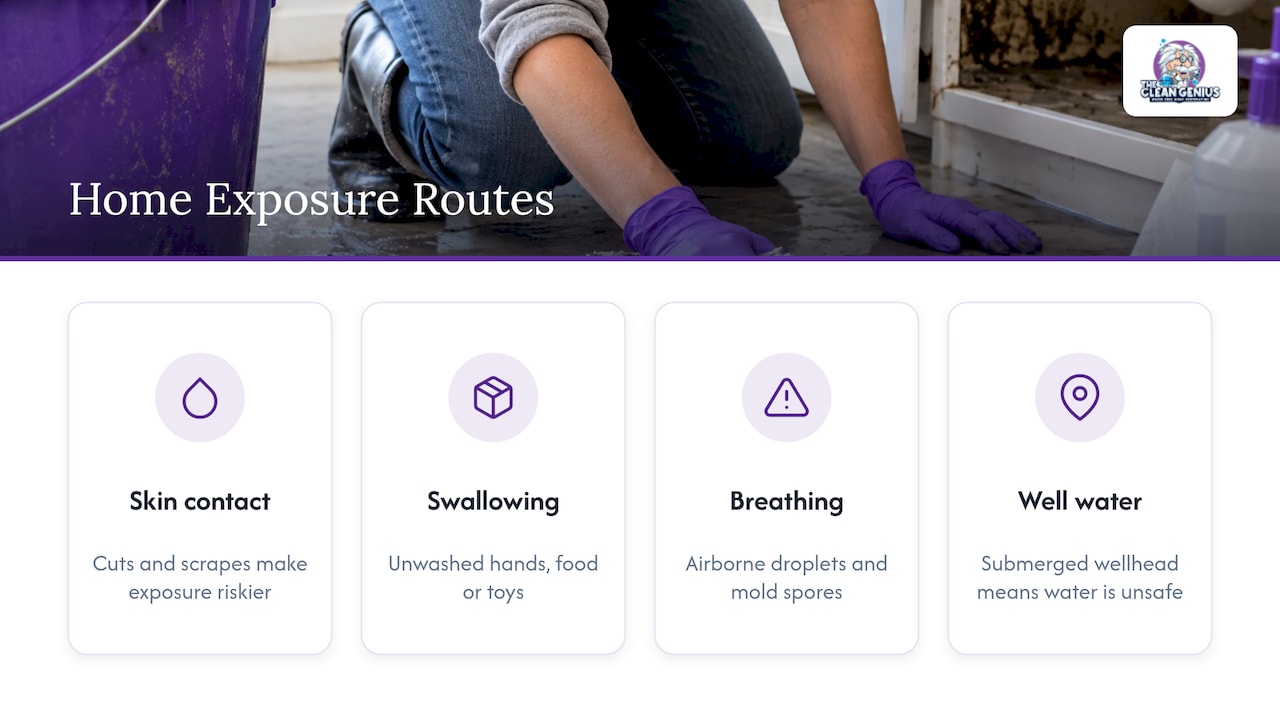
Skin contact. Wading through a flooded basement, handling wet belongings or touching a contaminated surface and then your face or food. Cuts and scrapes make this riskier.
Swallowing. Usually indirect: unwashed hands, a snack eaten during cleanup, a child’s toy that sat in the water, or food that was exposed. The Illinois health department says to discard food exposed to contaminated water, along with partially thawed foods unless they are prepared immediately, and to throw out bulging or leaking cans and food stored in jars.
Breathing. Splashing, scrubbing and pressure-washing throw droplets into the air, and mold spores follow once materials stay wet. This is why respiratory protection matters during cleanup.
Well water. If you are on a private well and the wellhead was submerged, Illinois guidance says to assume the water is unsafe until it is tested, and to contact your local health department about a testing kit.
Symptoms of sewage exposure and when to see a doctor
The most common symptoms are stomach-related. Indiana’s health department lists abdominal cramps, watery diarrhea and vomiting among the symptoms of sewage-related diseases. The EPA’s enforcement alert says symptoms can last from one to ten days, depending on severity.
What to watch for in the days after a backup:
| What you notice | What it can point to | What to do |
|---|---|---|
| Cramps, nausea, vomiting, loose or watery stools | Gastrointestinal infection from swallowing contaminated material | Rest, keep fluids up, and call your doctor, especially for children and older adults |
| Fever along with stomach symptoms | A more significant infection | Call your doctor the same day |
| Cough, wheezing, tight chest, stuffy nose or irritated eyes | Reaction to airborne particles or mold | Leave the area and contact your doctor, particularly if you have asthma |
| Red, swollen or draining skin around a cut or scrape | Infection of a wound that touched contaminated water | Get it looked at promptly |
| Symptoms that are severe, such as signs of dehydration, or last longer than expected | Illness that needs treatment | Seek medical care |
Tell the clinician you were exposed to sewage. It changes what they look for. If a symptom is severe or you are worried about a child, an older adult or someone with a weak immune system, call your doctor or seek urgent care rather than waiting it out. Do not guess from a list like this one.
What to do in the first hours
The order matters more than speed. Here is a sequence that keeps you safe.
- Check for electrical and gas hazards first. Do not step into standing water if outlets, appliances or the panel could be in it. A flooded basement can hide live current. If you are unsure, stay out and call your utility or an electrician. Do not light matches or flames if you smell gas.
- Get people and pets out of the area. Especially the groups listed above.
- Stop adding water. Do not run toilets, sinks, showers, washers or dishwashers. In a septic home, Illinois guidance says not to use toilets and drains until floodwaters drop below the level of the septic field.
- Find the cause, or ask who can. Sewers can back up when rain gets into leaky pipes, when capacity cannot keep up with new development, or when pipes are blocked, broken or poorly installed. If the problem might be in the street main, the EPA says to contact your municipality so it can look into the sewer system. A clog in your own lateral is a plumber’s job.
- Photograph everything before anything moves. Walls, floors, belongings, the water line. You will want this for your claim.
- Call your insurer. The EPA notes that many homeowner and renter policies do not cover sewage backups and that special coverage, usually a rider, may be needed. Our page on sewage backup coverage and cleanup speed explains how timing can affect a claim.
- Call a restoration professional. Water that has sat is already spreading into materials. Our emergency water damage response steps walk through what a crew does on arrival.
Can you stay in the house?
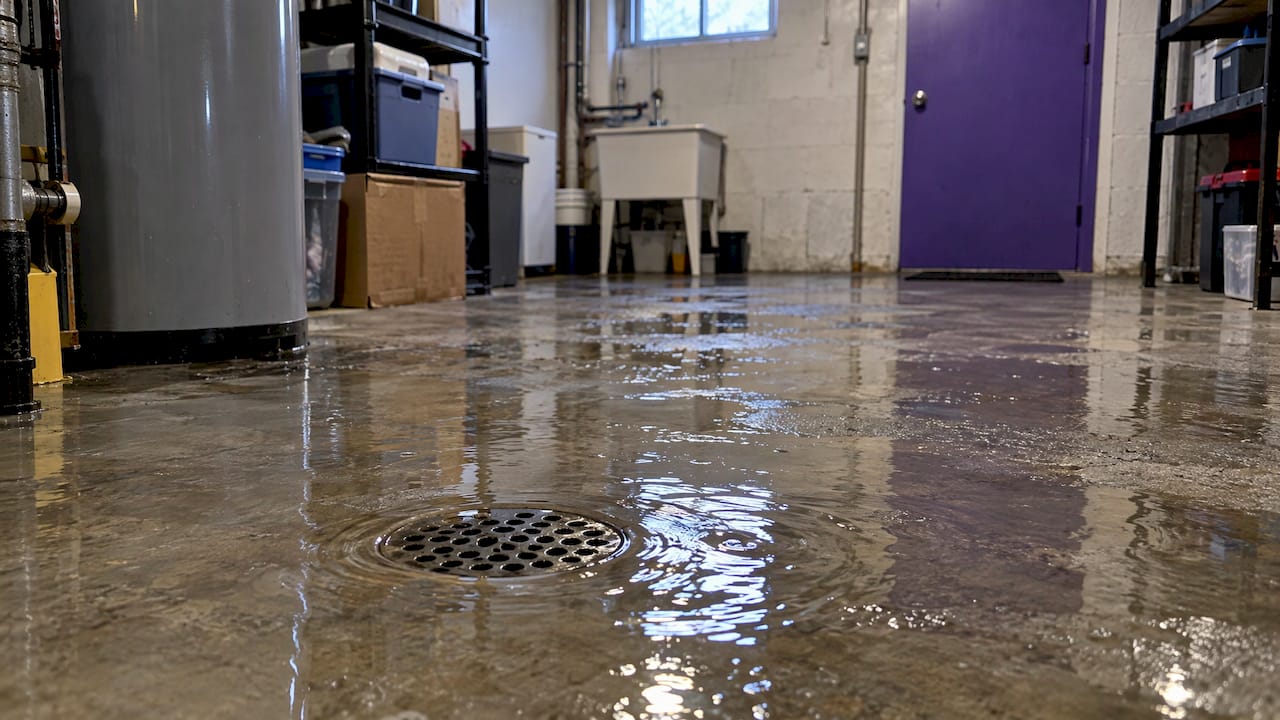
It depends on how far the water spread. A small backup confined to a basement floor drain area, with the rest of the house separated and the HVAC kept off in that area, is a different situation from water that reached living space, the furnace or ductwork, or that came from a toilet upstairs. If sewage reached rooms where you sleep or eat, or if anyone in the home is in a higher-risk group, leave until the area is cleaned and dried. If you are unsure, ask the crew that does the inspection or your local health department.
Cleaning up safely, and what not to do yourself
Small, contained spills on hard surfaces are one thing. A real backup through a floor drain or toilet that soaked carpet and drywall is another. Here is what public health guidance says about both.
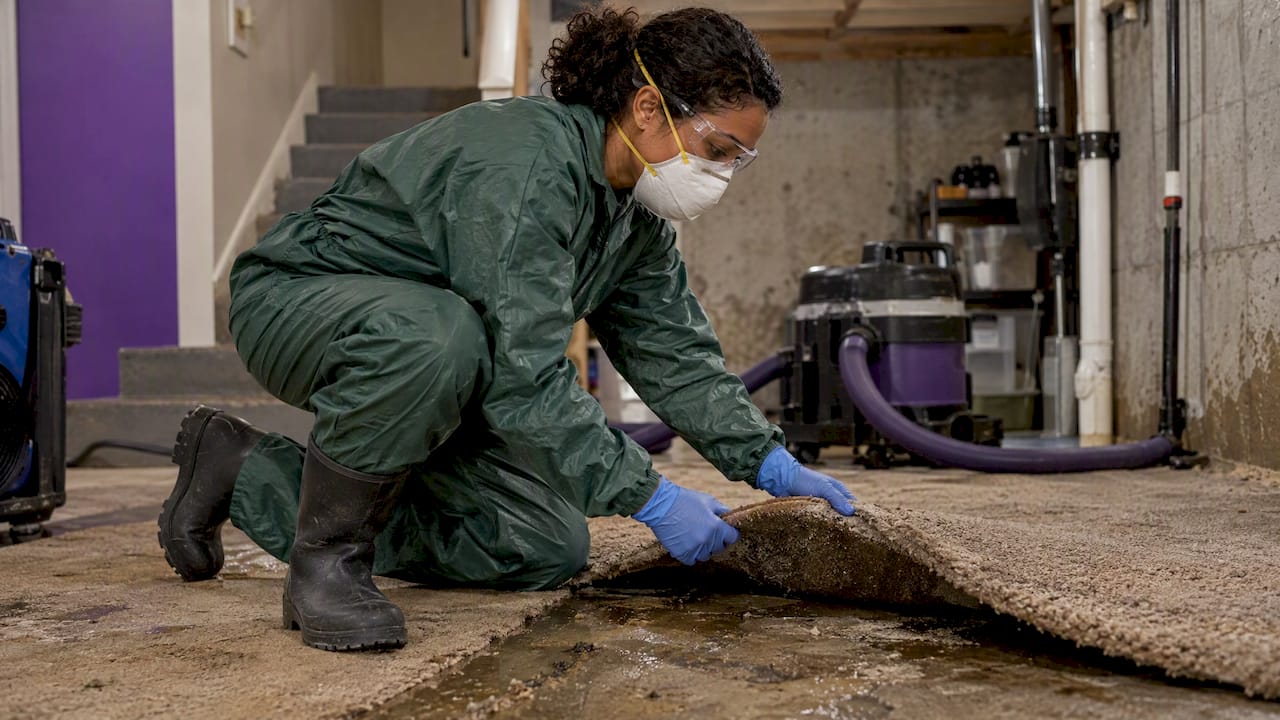
Protective gear. CDC’s NIOSH advises cleanup workers to wear rubber boots, nitrile gloves, goggles and NIOSH-approved respirators, such as N95s. The same guidance says surgical or medical masks are not an adequate substitute, and that respirators should be used within a proper respiratory protection program. That last part is why a crew’s setup differs from a homeowner with a dust mask from the garage.
Cleaning hard surfaces. Illinois public health guidance calls for washing sewage-contaminated surfaces and objects with warm, soapy water, then disinfecting with a solution of no more than 1 cup of bleach per 1 gallon of water. The same page warns never to mix ammonia and bleach, because the vapors are hazardous.
What does not come clean. Carpet, padding, insulation, upholstered furniture, particleboard and soaked drywall hold contamination deep inside. Cleaning the surface does not reach it. These materials are normally cut out, bagged and removed, not scrubbed. This is the point where most homeowners should stop and call for help.
What not to do.
- Do not use a household vacuum on wet sewage. It can spray contaminated particles.
- Do not run fans that blow air from the wet area through the house.
- Do not mix cleaning chemicals.
- Do not keep wet materials for “later.” Every day they sit raises the odds of mold.
How long germs and mold last
There is no single number for how long bacteria survive on a surface, because it depends on temperature, moisture, the material and the organism. The useful fact from the EPA is that wet, saturated materials keep the problem alive for months, while dry, cleaned surfaces do not. That is why drying and removal are the center of the job, and why our guide on water mitigation versus restoration stresses the first 48 hours.
When sewage becomes a mold problem
Sewage water and mold often arrive together. Once drywall, baseboards and subfloors stay damp, mold can start to grow, which adds a respiratory hazard on top of the bacterial one. If you see or smell mold after a backup, do not wait. Read our guides on mold removal after a basement flood and mold removal safety for homeowners, and see how HEPA filtration keeps cleanup from spreading spores. If your sump pump failed and the backup came with groundwater, mold remediation after sump failure covers that case.
If you own a property outside our area, for example in Florida, and the damage is so extensive that repairs no longer make sense, some owners look at selling a damaged house without repairs. For homes in Chicagoland, the better first move is almost always a proper dry-out and cleanup.
Our perspective
We are a family-owned restoration company serving Chicagoland, and sewage backups are some of the calls where we see people make the most costly mistakes. The most common one is treating it like a regular water spill. A clean-water leak and a sewage backup can look the same on the floor, but they are not the same job. With sewage, the goal is to get contaminated material out of the house, not to dry it in place and hope.
The second mistake is waiting. People mop up what they can, run a fan, and plan to deal with the rest on the weekend. By then drywall has wicked the water up the wall and the smell tells you it is getting worse. Early action is the cheapest action, and it is also the one most likely to keep your family healthy.
Third, many homeowners find out about their coverage only after the water is in. We work directly with your insurance, and we would rather you call your carrier the same day you call us. Our technicians are certified and insured, and for the mold that often follows, we use Pure Cloud dry-fog technology, a non-toxic approach. We are available 24/7, because sewage does not wait for business hours.
— Jim
When to call a professional
Call a professional, and do not tackle the job yourself, when any of these are true:
- The water came from a toilet, a floor drain or a main sewer line and reached more than a small hard-floor area.
- Carpet, drywall, insulation or furniture got wet.
- Anyone in the home is an infant, an older adult, pregnant, or has a weakened immune system or a lung condition.
- The water reached your furnace, ductwork, electrical panel or appliances.
- You see or smell mold, or the smell is not going away.
- You plan to file an insurance claim and want the work documented.
A professional crew can extract the water, remove materials that cannot be saved, clean and disinfect, dry the structure with controlled equipment and check that moisture levels are back to normal. If you want to know what the equipment does, see our guide to restoration equipment and how dehumidifiers fit in.
Sewage backup help in Chicagoland
If you are dealing with sewage in your basement or bathroom right now, our team handles floods, burst pipes, sewage backups and complete dry-out, and we work directly with your insurance. We serve homeowners in Arlington Heights, Palatine, Schaumburg, Naperville, Elgin, Wheaton and many other Chicagoland towns. Start with our water damage restoration services or reach us through our home page any hour of the day.
Preventing the next backup
You cannot control the municipal system, but you can reduce your own risk. Keep grease, wipes and other items that do not break down out of drains. Have your sewer lateral inspected if you have large trees nearby or recurring slow drains. Make sure your sump pump works and has a battery backup. Ask a licensed plumber whether a backwater valve makes sense for your house. And check your policy now: ask your agent whether it covers sewer or water backup, and what the limit is. Finding out before a loss is much cheaper than finding out after.
FAQ
Is sewage water dangerous to touch?
Yes. Raw sewage can contain bacteria, viruses, parasites and fungi, and skin contact, especially through cuts, is one way they can reach you. Wear waterproof gloves and boots if you must enter, wash with soap and clean water afterward, and keep children and pets out.
What are the symptoms of sewage exposure?
The most common are abdominal cramps, watery diarrhea and vomiting, which can last from one to ten days. Breathing problems, eye or skin irritation and infected cuts are also possible. Call your doctor if symptoms are severe or if the person is a child, an older adult or has a weak immune system, and mention the exposure.
Can you stay in a house with a sewage backup?
Often not until it is cleaned. If sewage reached living areas, ductwork or bedrooms, or if anyone in the home is at higher risk, stay elsewhere until a professional has removed contaminated materials and dried the space. A small, well-contained backup in one basement area is lower risk, but keep everyone out of that area.
Does homeowners insurance cover sewage backup?
Often it does not by default. The EPA notes that many homeowner and renter policies exclude it and that you may need a rider. Read your policy, call your carrier right away after a loss and keep photos and records.
Why does a sewer back up in the first place?
Common causes include rain getting into leaky pipes, a system with too little capacity, and pipes that are blocked, broken or badly installed. If you suspect the street main, contact your municipality. If the clog is in your own line, call a plumber.
Sources
- Sanitary Sewer Overflow (SSO) Frequent Questions, US EPA
- Cleaning Up After Flood and Sewer Overflows, Illinois Department of Public Health
- Enforcement Alert, September 2006, US EPA
- Environmental Public Health: Diseases Involving Sewage, Indiana Department of Health
- Illinois Post-Flood Quick Guide, June 2026
- Cleaning Up After Residential Sanitary Sewer Backups, Indiana Department of Health
- Hurricane Key Messages for Employers, Workers and Volunteers, CDC/NIOSH