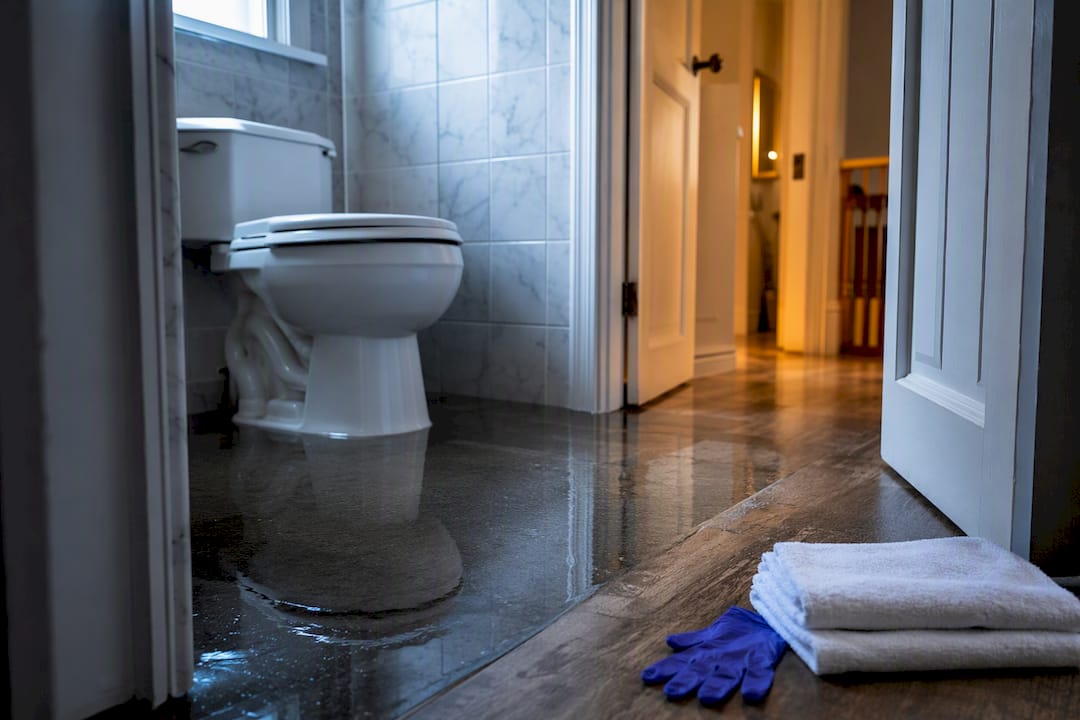

Turn off the water at the toilet’s shutoff valve immediately, keep kids and pets out of the room, and put on gloves before touching anything. Sewage carries bacteria, viruses, and parasites, so treat every wet surface as contaminated until you’ve cleaned and disinfected it. Remove standing water and solids first, then disinfect and dry the area within 24 to 48 hours to keep mold from taking hold, following CDC and EPA guidance. If the water soaked carpet padding, drywall, or reached the wall cavity, that’s a job for a restoration crew like Thecleangenius, not a mop.
TL;DR:
- Shutting off the toilet’s shutoff valve prevents further water flow, but if stuck, the main water supply must be shut off instead.
- Removing and disinfecting all contaminated water and materials within 24 to 48 hours is essential to prevent mold growth and health risks.
- Porous items like carpet padding, drywall, and insulation exposed to sewage water should be discarded instead of dried or cleaned.
- Use a bleach solution with proper dilution and contact time for cleaning hard surfaces, and never mix bleach with ammonia or household cleaners.
- Call a professional restoration service for large-scale flooding, sewage reaching wall cavities, or if vulnerable individuals are in the home.
Table of Contents
- Step 1: Stop the Overflow and Secure the Area
- Step 2: Remove Standing Water Safely
- Step 3: Remove Solids and Contaminated Porous Items
- How Do You Clean and Disinfect After a Toilet Overflow?
- How Long Does It Take for a Flooded Bathroom to Dry?
- What PPE and Tools Do You Need for Sewage Cleanup?
- When Should You Call a Professional Restoration Company?
- What Should You Throw Away After a Toilet Overflow?
- Health Risks and Aftercare After Sewage Exposure
- The Clean Genius: When We Can Help and What to Expect
- A Homeowner’s Priority List After a Toilet Overflow
- Get Help From The Clean Genius
- Where to Find Official Cleanup Guidance
- Sources
Step 1: Stop the Overflow and Secure the Area
Reach behind the toilet and find the shutoff valve, usually a small oval knob on the wall or floor near the base. Turn it clockwise until it stops. If it’s stuck, rusted, or missing, shut off your home’s main water supply instead.
Water and electricity don’t mix, and a flooded bathroom floor often sits close to outlets, space heaters, or hair dryer cords.
- Cut power to the room at the breaker if water has reached any outlet or plugged-in device.
- Never step into standing water to reach a light switch or outlet.
- Keep children, pets, and anyone with a compromised immune system out of the room entirely.
- Prop the door open for ventilation, but block foot traffic with a towel or sign.
Once the flow stops and the room is safe, you can start clearing water.
Step 2: Remove Standing Water Safely
Work from the outer edges of the puddle toward the drain so you’re not spreading contaminated water into dry areas. For small amounts, towels, a mop, and a squeegee handle it fine. For anything deeper than an inch or so, a wet/dry vacuum rated for sewage works faster, but only if it’s unplugged from a dry, elevated outlet, never one near the wet floor.
- Extract the bulk of the water with a wet/dry vac or by soaking it up with old towels you’re prepared to throw away.
- Mop using the two-bucket method: one bucket holds disinfectant solution, the other holds rinse water, which keeps you from re-spreading contamination across the floor.
- Pour contaminated rinse water down the toilet or a sanitary sewer drain, never into a sink used for dishes or a storm drain outside.
Pro Tip: If water keeps backing up from the drain no matter how much you remove, stop extracting and call a plumber or restoration company. A running sewer backup means the problem is upstream of your bathroom, not in it.
Step 3: Remove Solids and Contaminated Porous Items
Scoop solid waste with a shovel, dustpan, or anything you’re willing to bag and discard afterward. Double-bag it in heavy plastic contractor bags, seal tightly, and dispose of it according to your local trash rules. Do not flush solids back down the toilet if the line is still backed up.
Some porous materials soak up contamination faster than you can clean it out:
- Carpet padding and unsealed carpet that sat in overflow water.
- Mattresses, upholstered furniture, and stuffed toys.
- Wet insulation, drywall, or particle board furniture.
These trap bacteria deep in their fibers, and drying them doesn’t kill what’s already inside. If you’re unsure whether something is salvageable, photograph it, set it aside in a sealed bag, and let a professional restoration crew make the call before you toss or keep it.
How Do You Clean and Disinfect After a Toilet Overflow?
Clean before you disinfect. Wipe every hard surface with soap or detergent and warm water first to lift away organic material, since leftover grime blocks disinfectants from working properly, according to remediation guidance from North Dakota State University.
Once surfaces are physically clean, apply a bleach solution:
- General surfaces (floor, tile, toilet exterior): up to 1 cup of household bleach per 1 gallon of water.
- Surfaces kids might touch (low walls, cabinet doors): 1 tablespoon of bleach per 1 gallon of water.
- Let the solution sit on the surface for at least one minute before wiping or rinsing.
The CDC’s bleach guidance is specific for a reason: too little bleach won’t kill what’s on the surface, and too much just wastes product and irritates your lungs.
Open a window or run a fan while you work, and never combine bleach with ammonia or other household cleaners. Mixing the two produces toxic chloramine gas, which can cause serious respiratory harm in an enclosed bathroom.
How Long Does It Take for a Flooded Bathroom to Dry?
Aim to dry the area completely within 24 to 48 hours. Beyond that window, mold spores start colonizing damp material, and once that happens, cleaning surface mold doesn’t solve the underlying moisture problem.
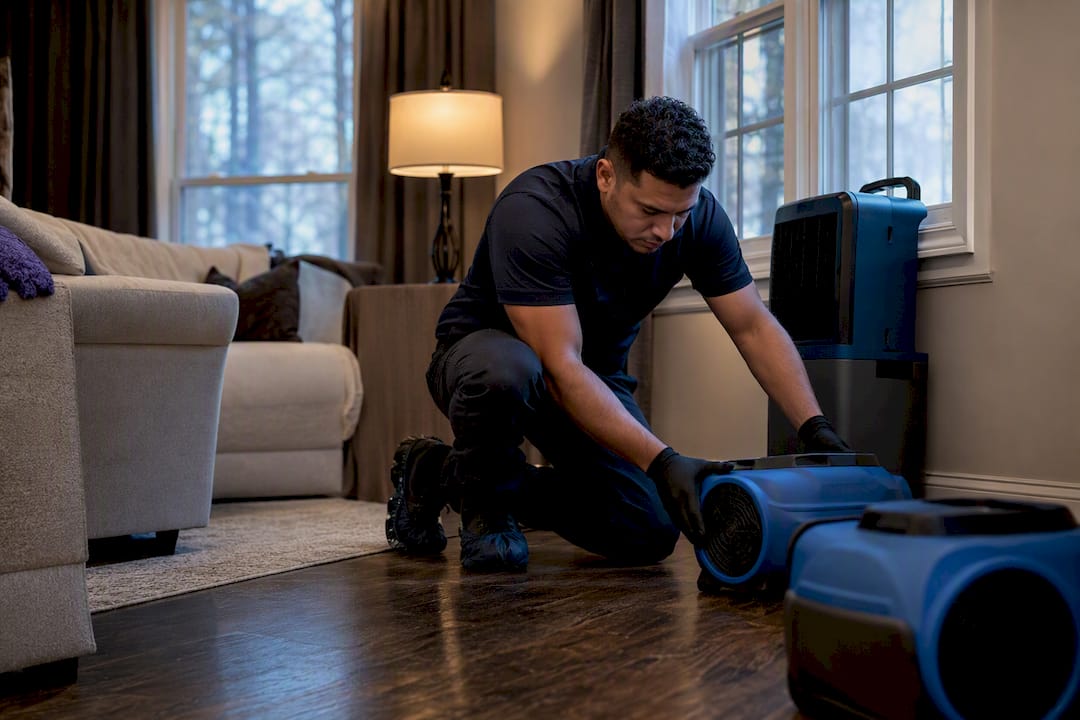
Run a dehumidifier, point box fans at the wet floor and baseboards, and crack a window if outdoor humidity is low. Tile, sealed grout, and finished wood floors can usually be salvaged once fully dry and disinfected.
- Unsealed grout, laminate flooring, and drywall that stayed wet more than 48 hours often need to come out.
- Check baseboards and the base of cabinets for softness or swelling, both signs water got underneath.
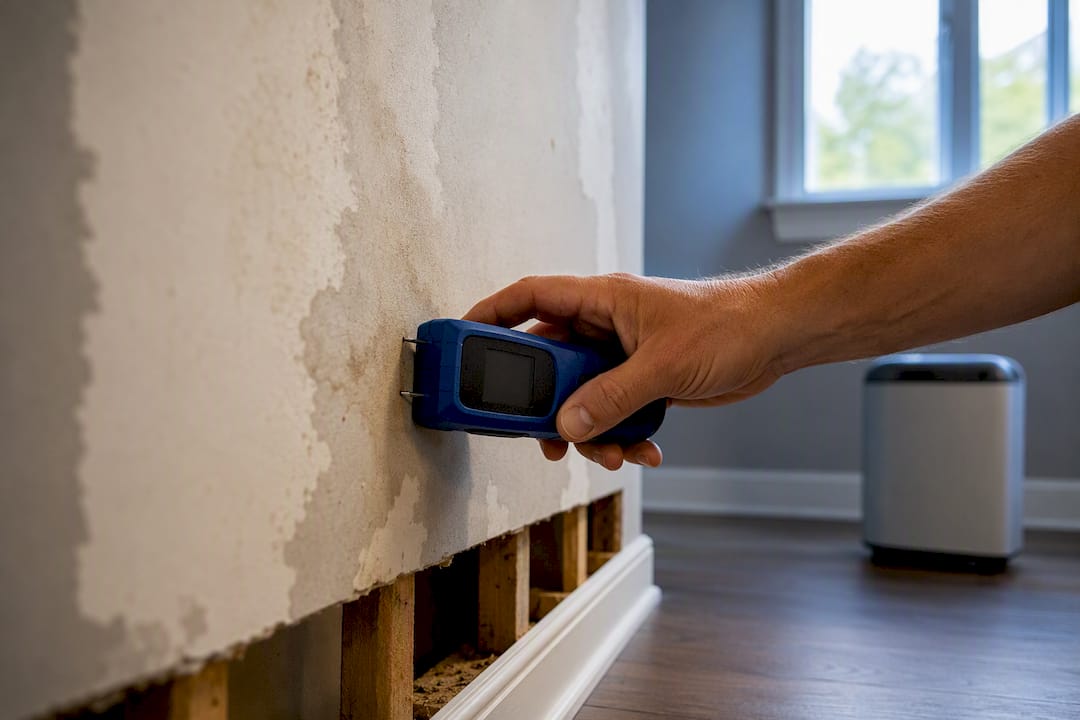
- A musty smell that lingers after drying means moisture is trapped somewhere you can’t see, and that calls for a moisture meter or a professional inspection.
What PPE and Tools Do You Need for Sewage Cleanup?
Treat this like the biohazard job it is. Public health guidance recommends waterproof gloves, rubber boots, and eye protection at minimum, plus an N95 or HEPA respirator if you expect splashing or aerosolized particles from a vacuum or sprayer.
Your tool list is short but specific:
- A wet/dry vacuum rated for sewage or liquid pickup.
- Mop, squeegee, and two separate buckets.
- Heavy-duty contractor bags and plastic sheeting to isolate the work area.
- Household bleach and a basic detergent.
Pro Tip: After the job, run gloves and boots through a bleach rinse before storing them, and wash any clothing you wore in a separate hot-water load with detergent, adding bleach if the fabric allows it.
When Should You Call a Professional Restoration Company?
Call a professional when the water volume was large, when sewage reached wall cavities, subfloors, or HVAC ducts, or when someone in the home is elderly, very young, pregnant, or immunocompromised.
- Standing water covered more than a small area or sat for several hours before you caught it.
- You can see or smell contamination inside walls, under flooring, or in ductwork.
- The backup keeps recurring, suggesting a sewer line issue beyond your bathroom.
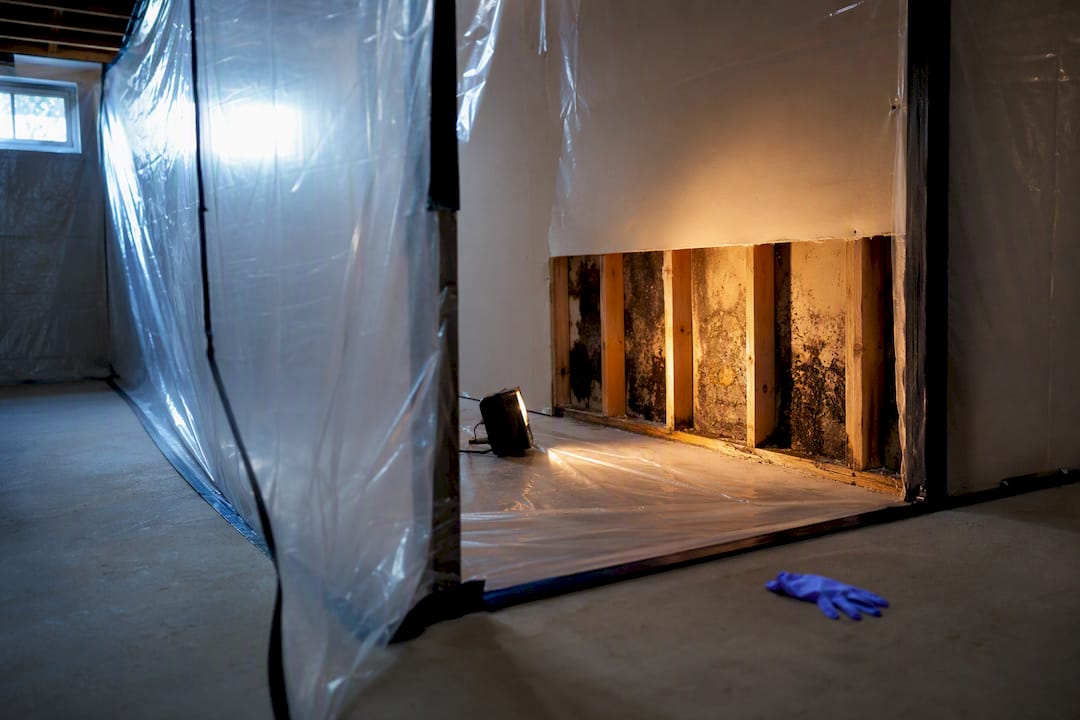
Restoration crews bring industrial extraction equipment, air scrubbers, and moisture meters to verify a space is truly dry, not just dry to the touch. They also handle controlled demolition of contaminated drywall or subfloor when needed, and they document the whole process for insurance. Before anyone arrives, take photos of the damage, note when the overflow happened, and save any related receipts.
What Should You Throw Away After a Toilet Overflow?
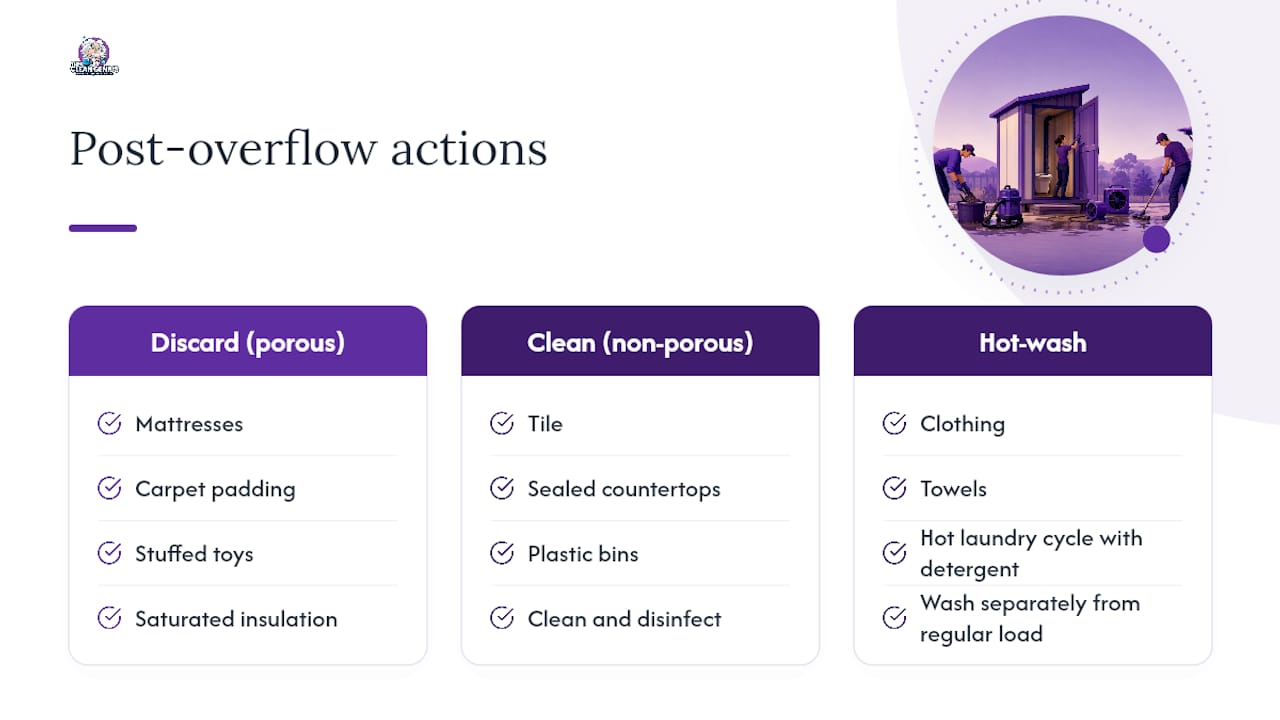
Some items simply aren’t worth trying to save. Mattresses, carpet padding, stuffed toys, and any insulation that got saturated should go straight into sealed contractor bags and out to the curb.
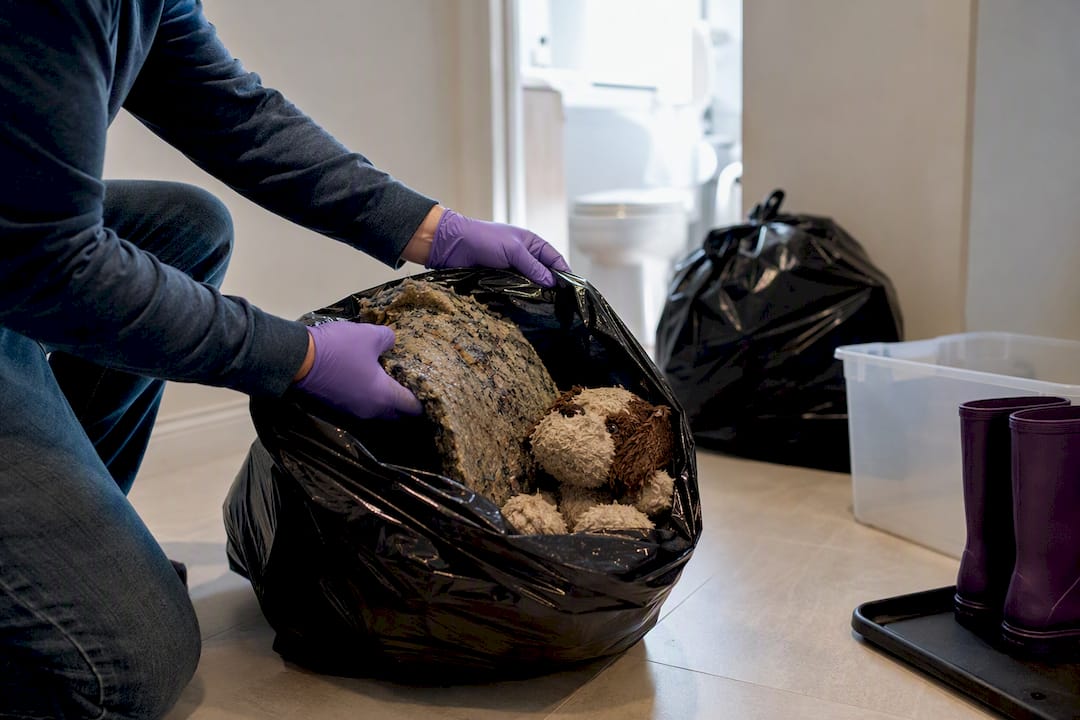
Hard, non-porous items like tile, sealed countertops, and plastic bins can be cleaned and disinfected instead of discarded. Clothing and towels exposed to overflow water should run through a hot laundry cycle with detergent, separate from your regular wash. Label bagged discards clearly so anyone handling trash pickup knows to keep their distance.
Health Risks and Aftercare After Sewage Exposure
Sewage water can carry bacteria, viruses, and parasites capable of causing gastrointestinal illness or skin infections, so wash your hands thoroughly with soap after every stage of cleanup, and never touch your face or eat while working.
Common symptoms of exposure include nausea, diarrhea, and vomiting. Seek medical attention if any of these develop in the days following cleanup.
If you had a cut or scrape exposed to contaminated water, wash it immediately with soap and water, apply antibiotic ointment, and watch for fever, spreading redness, or swelling, all signs of infection that need a doctor’s attention. Young children, older adults, and anyone with a weakened immune system should skip the DIY cleanup entirely and let someone else handle it, then check in with a doctor if they were exposed at all.
The Clean Genius: When We Can Help and What to Expect
Professional restoration companies bring over 25 years of combined restoration experience to Chicagoland homes, often providing 24/7 emergency response for this kind of situation. Our teams handle extraction, mold remediation, and drying validation, and we coordinate directly with your insurance company. When you call, have photos of the damage and a rough timeline of what happened ready to go.
A Homeowner’s Priority List After a Toilet Overflow
Safety beats salvage every time. I’d rather see a homeowner toss a soaked mattress than spend a week fighting a mold problem that started because someone tried to save it. Dry what you can within that first 48 hours, and if sewage reached anything porous, stop second-guessing and call a restoration pro.
Acting fast in the first few hours is what keeps a bad afternoon from turning into a five-figure repair bill.
— Jim
Get Help From The Clean Genius
Thecleangenius is the option for Chicagoland homeowners who’d rather have a certified crew handle contamination than spend a weekend guessing whether their subfloor is actually dry. Some restoration companies offer 24/7 emergency response for sewage backups, floods, and burst pipes, with drying validation and mold remediation built into jobs, and may coordinate directly with insurance to assist clients during claims.

Typically, restoration teams perform a full assessment including containment of the affected area, water extraction, a drying plan, and documented moisture readings for insurance purposes. If your overflow reached carpet, subfloor, or drywall, get a water damage restoration estimate started now rather than waiting to see if the smell goes away on its own.
Where to Find Official Cleanup Guidance
For technical detail beyond this checklist, a few government sources cover the specifics in full.
- NYC311 flood and sewer overflow guidance: PPE recommendations and household safety steps.
- CDC flood safety resources: broader guidance on drying, ventilation, and post-flood health risks.
This article is general information, not a substitute for advice from a qualified doctor. Consult a qualified healthcare professional about your own circumstances before acting on anything here.