
A water damage deductible is the dollar amount subtracted from your approved claim before your insurer cuts a check, and homeowners typically pay it directly to whoever does the repair work. Sudden, accidental water losses inside your home, like a burst pipe, usually fall under your standard homeowners deductible. Flood damage from rising water is a different animal entirely, requiring separate flood coverage. Deductibles come flat or as a percentage, and which one applies to your loss changes the math a lot.
TL;DR:
- Water damage deductibles are subtracted from your insurance payout before you pay your contractor, with amounts varying from flat fees to percentages.
- Sudden, accidental water losses like burst pipes are typically covered, but gradual leaks and floodwaters from storms or rising groundwater are usually excluded.
- Choosing a higher deductible can lower premiums and improve your financial readiness, but it increases out-of-pocket costs during claims.
- Multiple storm-related deductibles can trigger for a single event, including wind, flood, and sewer backup, and they are calculated based on different policies and coverage limits.
- Proper documentation of water damage, including moisture readings and timestamped photos, is critical for smooth claim processing and should be prioritized immediately after a loss.
Table of Contents
- How a Water Damage Deductible Actually Works
- Which Water Losses Are Covered, and Which Aren’t
- Deductible Types and What They Actually Cost You
- Should You Even File the Claim?
- How the Deductible Gets Paid Once Work Starts
- Cutting Your Out-of-Pocket Exposure
- When One Storm Triggers Three Different Deductibles
- Why the Contractor You Hire Affects Your Claim Outcome
- The Gap Between Insurance Math and What Actually Happens on Site
- Get Help With Your Water Damage Claim Right Now
- Where This Information Comes From
- Sources
How a Water Damage Deductible Actually Works
Your insurer calculates the approved repair cost, then subtracts your deductible before issuing payment. That’s the whole mechanic, but the details around it trip people up.
Deductibles apply per claim, not once a year. File for a dishwasher leak in March and a burst pipe in October, and you’re covering two separate deductibles, not one, according to Rocket Mortgage’s breakdown of how deductibles work.
The check you get might be smaller than “settlement minus deductible” suggests. Depreciation on older materials, coverage sublimits on things like fine art or jewelry, and recoverable depreciation holdbacks (money released only after repairs are done) all chip away at the payout. As for who actually writes a check to whom: the insurer doesn’t collect your deductible directly. It just subtracts that amount from what it pays, and you settle the difference with your contractor, Rocket Mortgage notes.
Which Water Losses Are Covered, and Which Aren’t
Standard homeowners policies were never built to cover every kind of water event, and that distinction is where most claim denials come from.
Typically covered:
- Burst or frozen pipes that fail suddenly
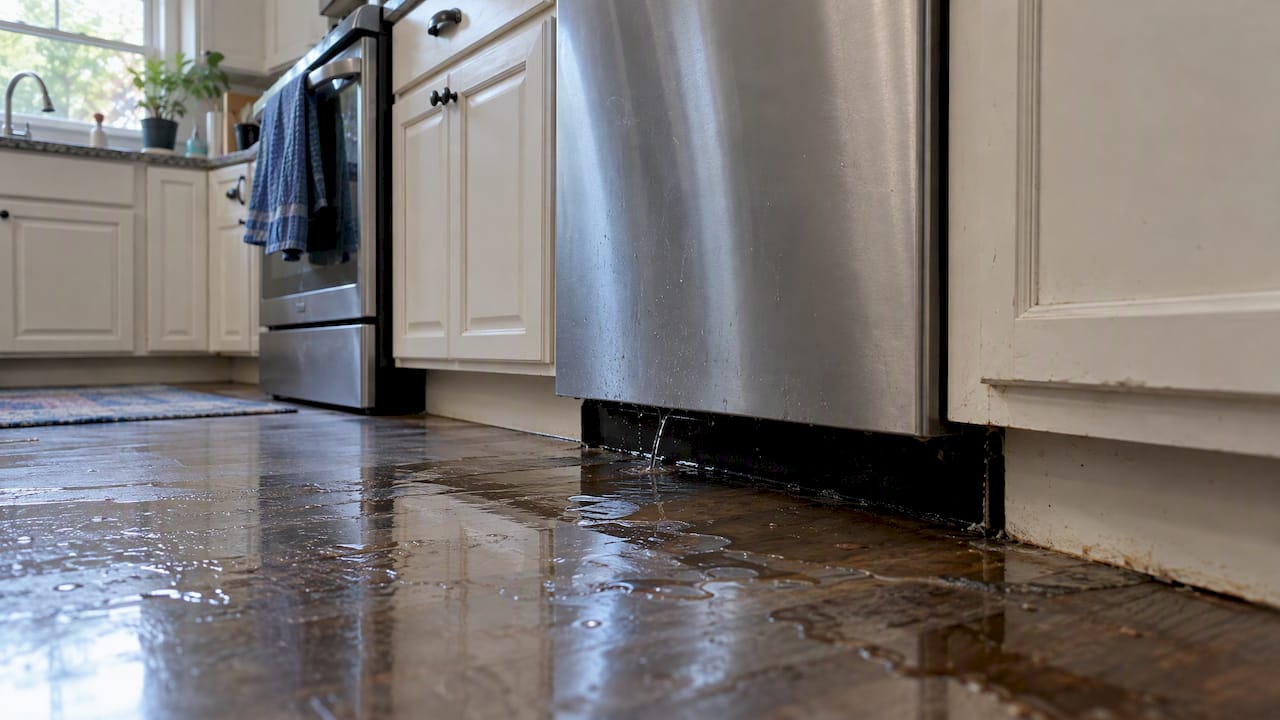
- Washing machine or dishwasher overflow
- Water heater rupture
- Rain entering through a roof damaged by wind or hail (a covered peril)
Typically excluded:
- Flooding from rising groundwater, storm surge, or overflowing rivers
- Gradual leaks or seepage you should have caught and fixed
- Damage from wear, rust, or deferred maintenance
- Sewer or drain backup, unless you’ve added that endorsement
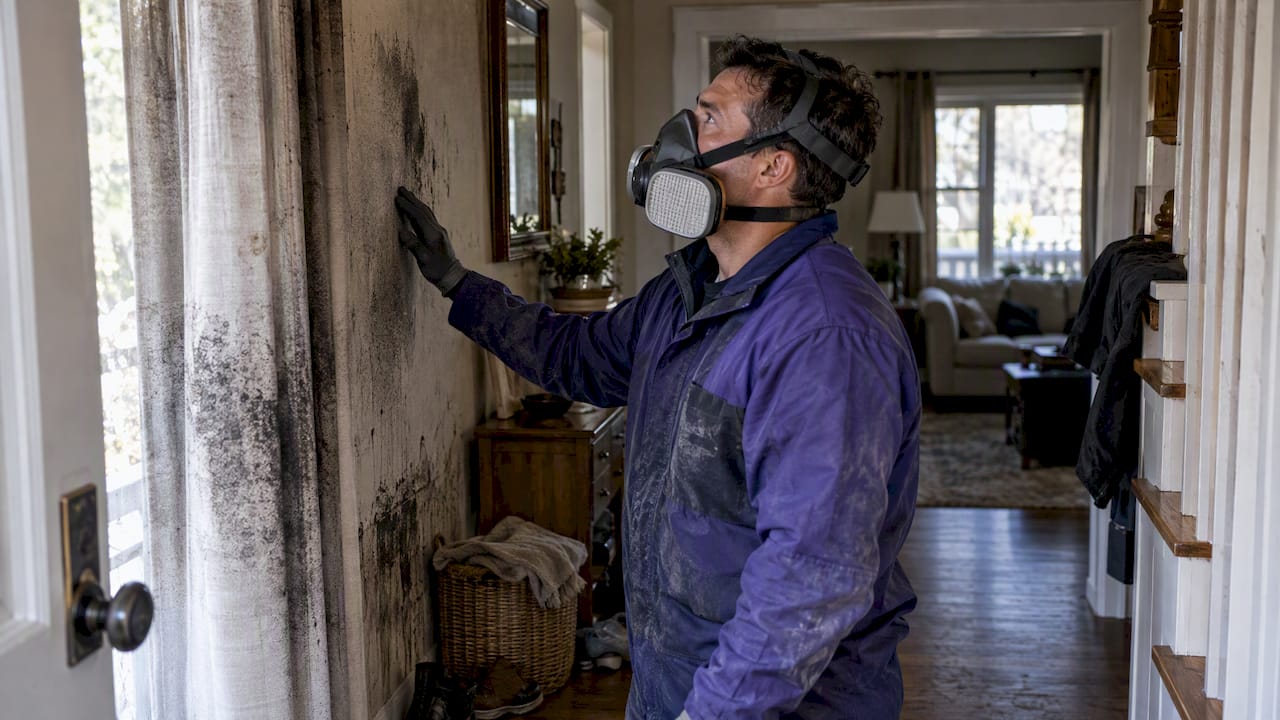
Standard consumer guidance confirms this split: homeowners insurance generally covers sudden, accidental water damage but excludes neglect, wear and tear, and flooding. Mold falls into a gray zone. It’s usually covered only when it results directly from a covered peril, like mold growing after a burst pipe you reported quickly, not mold from a slow leak you ignored for months. Before assuming anything, pull out your declarations page and read the actual peril language. It’s more specific than the marketing summary your agent gave you.
Deductible Types and What They Actually Cost You
Not all deductibles are created equal, and the format matters as much as the amount.
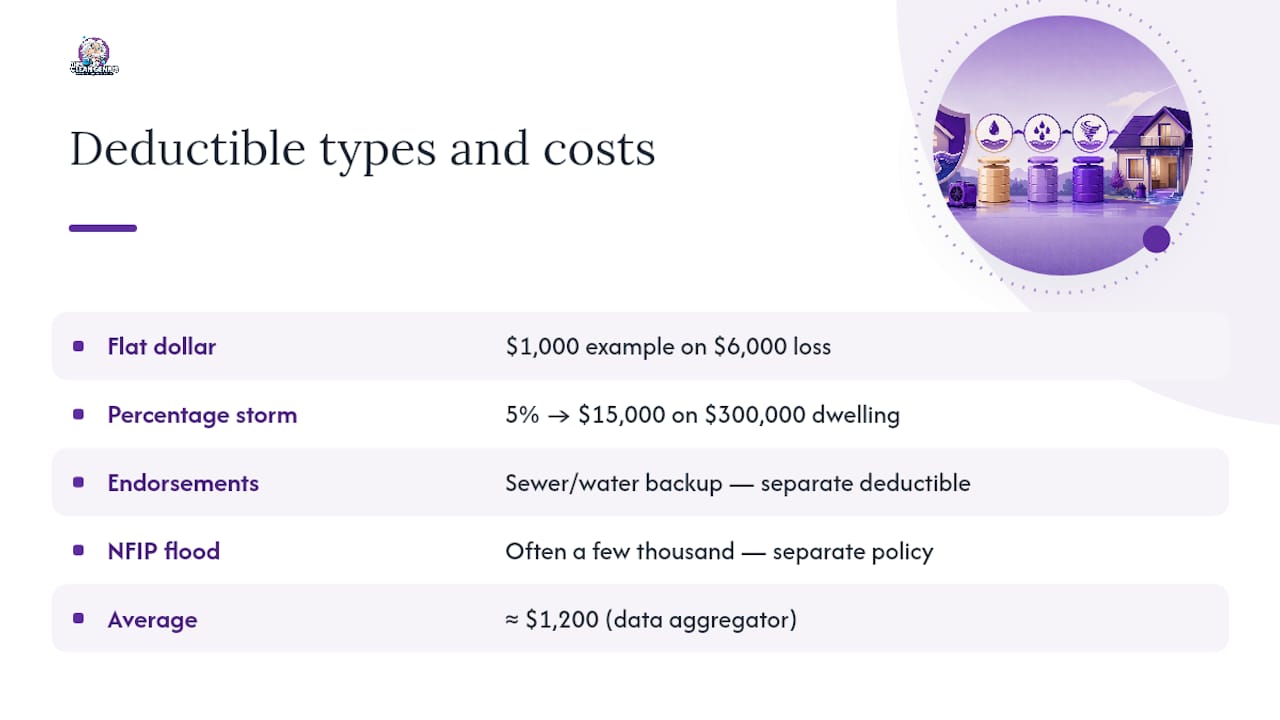
Flat-dollar deductibles are the most common structure, typically ranging from moderate to higher amounts. Say your policy has a $1,000 flat deductible and a burst pipe causes $6,000 in damage. Your insurer approves the claim, subtracts $1,000, and you’re left paying that $1,000 to your restoration contractor while the insurer covers the rest.
Percentage or named-storm deductibles work differently and can catch homeowners off guard. On a $300,000 dwelling with a 5% named-storm deductible, that’s $15,000 out of pocket before insurance pays a dime, according to industry guidance on water damage deductible structures.
Endorsements like sewer backup or water backup coverage often carry their own separate deductible, distinct from your base policy. Flood insurance through the NFIP typically uses a standard deductible often set at a few thousand dollars, which is entirely separate math from your homeowners policy, per the same industry breakdown. One data aggregator pegs the average water damage deductible around $1,200, but your actual number depends entirely on what’s printed on your declarations page.
Should You Even File the Claim?
Not every leak justifies opening a claim, and filing too casually can cost you more than the repair itself.
- Run the ratio. If estimated damage is roughly 2.5 times your deductible or higher, filing usually makes financial sense.
- Check your claims history. A second or third claim in a few years raises nonrenewal risk, even when each individual claim was legitimate.
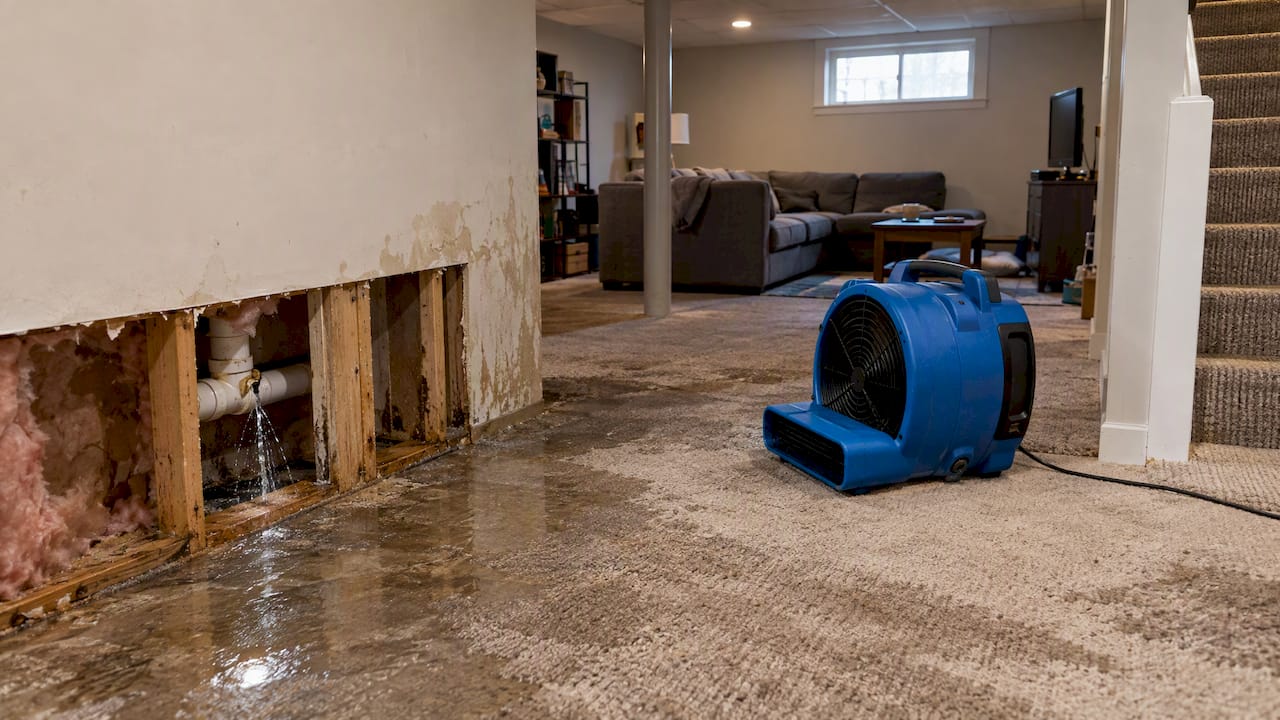
- Document before you clean anything up. Photos and video of the damage in place, before mitigation starts, help prove the loss was sudden and accidental rather than gradual neglect, a point emphasized in guidance on working with claims adjusters.
- Weigh borderline cases carefully. If your loss is only a few hundred dollars over your deductible, paying out of pocket sometimes beats the long-term premium hit from filing.
Pro Tip: Take timestamped photos of standing water, damaged drywall, and the source of the leak before any cleanup crew touches the scene. Insurers weigh this evidence heavily when the cause of loss is disputed.
Our guide to documenting water damage for insurance claims walks through exactly what adjusters look for.
How the Deductible Gets Paid Once Work Starts
Once your claim is approved, the insurer sends a settlement that already has your deductible subtracted. You then pay that deductible amount to your restoration contractor, either as a separate invoice or folded into your final bill.
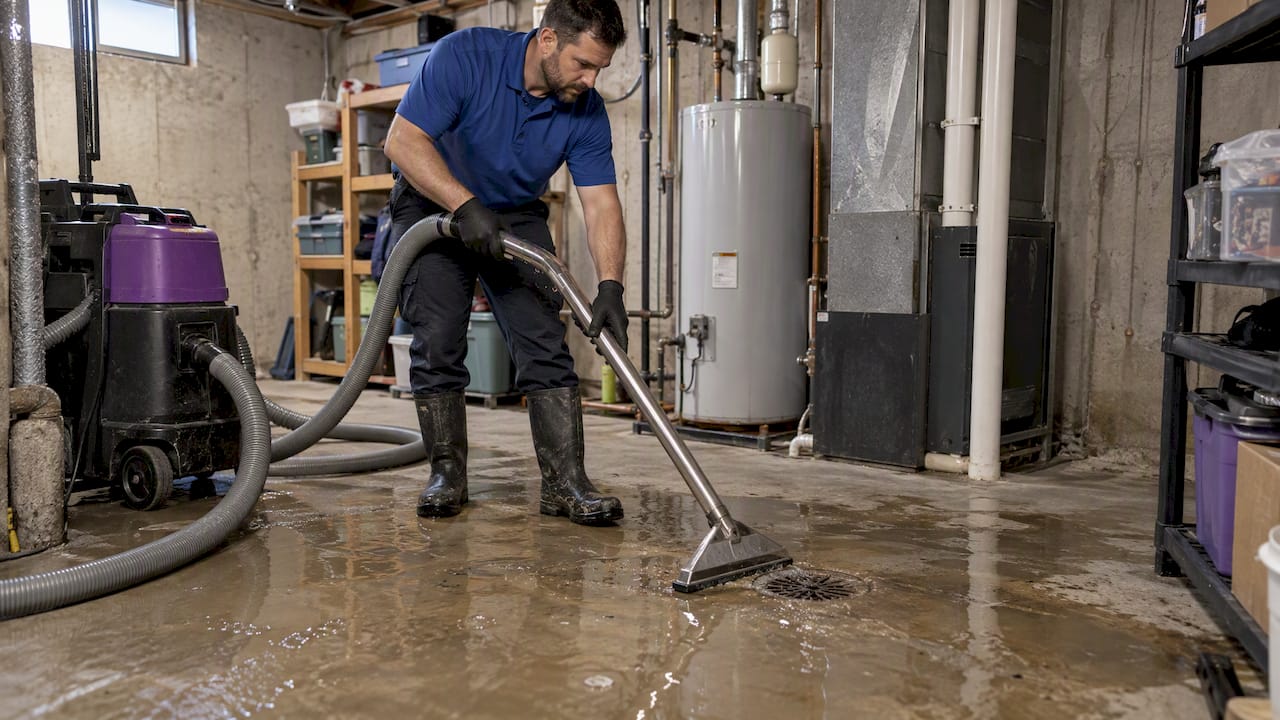
Emergency mitigation, like extracting standing water or setting up drying equipment, often happens before a full damage estimate exists. Keep every invoice and drying log from that phase; you’ll need it when the claim is formally processed. Some contractors offer direct billing or an assignment of benefits, where the insurer pays the contractor directly. That can simplify things, but read the assignment language carefully. Signing away control of your claim negotiation isn’t always in your favor.
Cutting Your Out-of-Pocket Exposure
Raising your deductible is the simplest lever you have. Moving from a $500 to a $2,000 deductible typically lowers your annual premium, though State Farm advises picking an amount you could actually access within 24 to 48 hours of a real emergency. A cheaper premium doesn’t help if you can’t cover the deductible when your basement floods on a Tuesday night.
Beyond deductible level, three moves matter: add a sewer backup or service line endorsement if your home has older plumbing or is on a shared line; carry separate flood insurance if you’re anywhere near a floodplain; and keep a dedicated emergency fund sized to match your deductible. Getting a contractor estimate before you file also tells you fast whether the payout will even clear your deductible.
When One Storm Triggers Three Different Deductibles
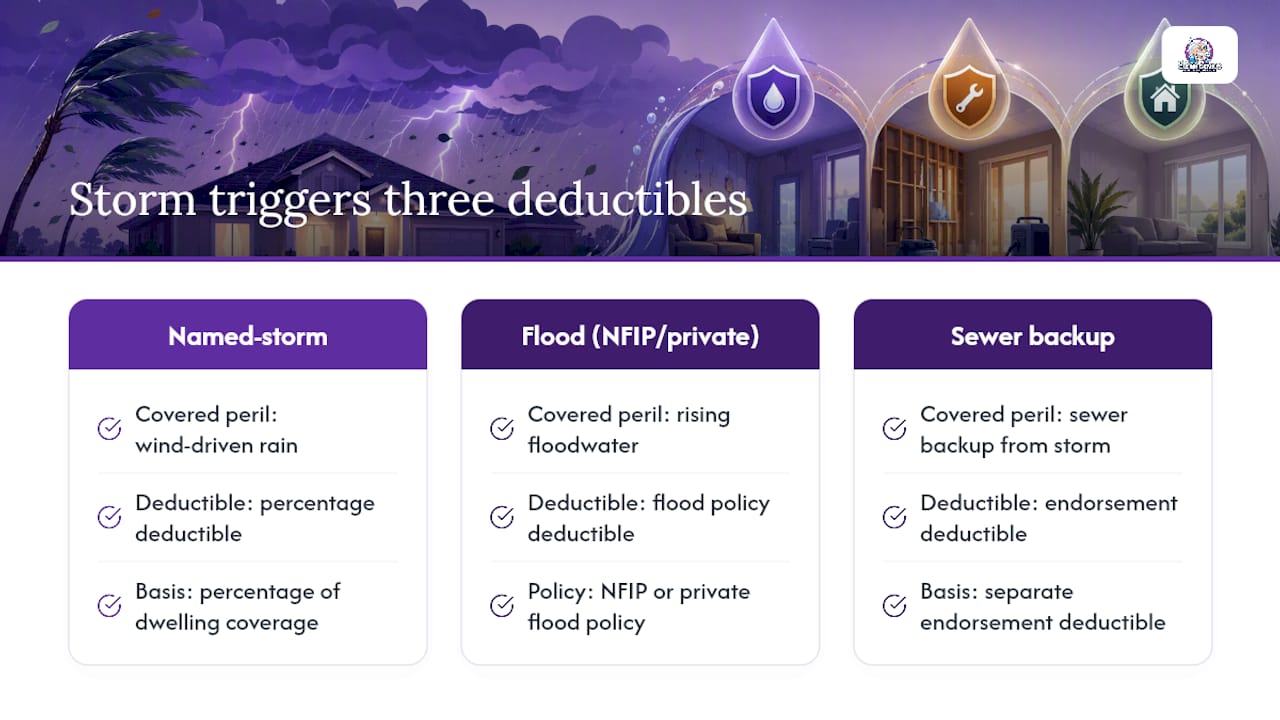
A single hurricane or major storm can trigger multiple deductibles on the same event, and this is where homeowners get blindsided. Wind-driven rain might fall under a named-storm percentage deductible, rising floodwater falls under your separate NFIP or private flood policy, and sewer backup from the storm falls under yet another endorsement deductible, according to the industry water damage deductible guide.
Remember that percentage deductibles calculate off your dwelling coverage amount, not the size of your claim. Read our comparison of flood damage versus water damage before assuming one policy covers both.
Why the Contractor You Hire Affects Your Claim Outcome
The restoration company you call in the first hours after a loss shapes how your claim gets processed, not just how fast your basement dries out. Adjusters look for documented moisture readings and drying logs that prove the water intrusion was sudden, not a slow leak that had been running for weeks.
Contractors who work directly with insurers typically handle scope-of-work documentation and invoicing in a way that lines up with what the adjuster needs to approve payment quickly. When vetting anyone for this job, ask for proof of insurance, active licensing, and a written outline of their drying and restoration process. Some restoration companies have handled Chicagoland water losses for decades, backed by many positive reviews, with 24/7 emergency response built around exactly this kind of insurer coordination.
The Gap Between Insurance Math and What Actually Happens on Site
Most articles on this topic stop at the insurance math: here’s your deductible, here’s what’s covered, good luck. That’s half the picture. The other half is what happens in the first six hours after a pipe bursts, and that part gets almost no attention despite deciding whether your claim gets approved cleanly or turns into a fight.
Insurers don’t just want a repair estimate. They want proof the loss was sudden and accidental, not the tail end of a leak you’d been ignoring since last spring. That proof comes from moisture readings, drying logs, and timestamped documentation collected on site, not from anything you write in a claim form later. Homeowners who call a restoration company first and their insurer second, in that order, tend to end up with cleaner claims. The conventional advice to “call your insurance company immediately” isn’t wrong, but it skips the part where getting water out of your home fast matters just as much for your claim file as it does for your drywall.
If there’s one thing to prioritize, it’s this: know your deductible type before disaster strikes, not after. A flat $1,000 deductible and a 5% named-storm deductible on the same $300,000 home are worlds apart in financial exposure, and that’s information sitting on your declarations page right now, free for the reading.
— Jim
Get Help With Your Water Damage Claim Right Now
Thecleangenius handles the part of a water damage deductible that most guides skip entirely: getting the moisture readings, drying logs, and documentation your insurer actually needs to approve your claim without a fight. Our teams provide emergency water extraction, structural drying, and direct insurance coordination, so you’re not translating adjuster jargon while your basement floods.

Whether you’re dealing with a burst pipe at 2 AM or a slow leak you just discovered behind the drywall, certified restoration crews are often available 24/7 across Arlington Heights, Naperville, Schaumburg, and the rest of Chicagoland. Some restoration services also handle mold remediation when water damage has lingered long enough to cause a secondary problem. If you’re preparing for an adjuster visit, our water damage insurance claim checklist walks through exactly what to document first.
Contact a restoration company for emergency response, or request an on-site estimate for water damage restoration before your deductible decision costs you more than it needs to.
Where This Information Comes From
- State Farm’s explainer on homeowners deductibles covers premium tradeoffs and emergency-fund planning.
- MoneyGeek’s guide to average home insurance deductibles breaks down standard HO-3 coverage versus flood exclusions.
- Rocket Mortgage’s deductible explainer details per-claim application and payment flow.
- This deductible breakdown lays out flat, percentage, and NFIP deductible ranges with examples.
- U.S. News’s coverage guide confirms what standard policies cover and exclude.
- The Insurance Information Institute’s water damage prevention guidance outlines maintenance steps insurers expect homeowners to take.
- Nationwide Maintenance’s facility manager guide covers practical cleanup and documentation steps for water emergencies.
This article is general information, not a substitute for advice from a qualified financial advisor. Consult a qualified financial professional about your own circumstances before acting on anything here.
Sources
- Average home insurance deductible: what’s standard and how to choose | MoneyGeek
- Homeowners insurance deductible explained | Rocket Mortgage
- Water damage insurance deductible explained (2026 guide)
- Does homeowners insurance cover water damage? | U.S. News