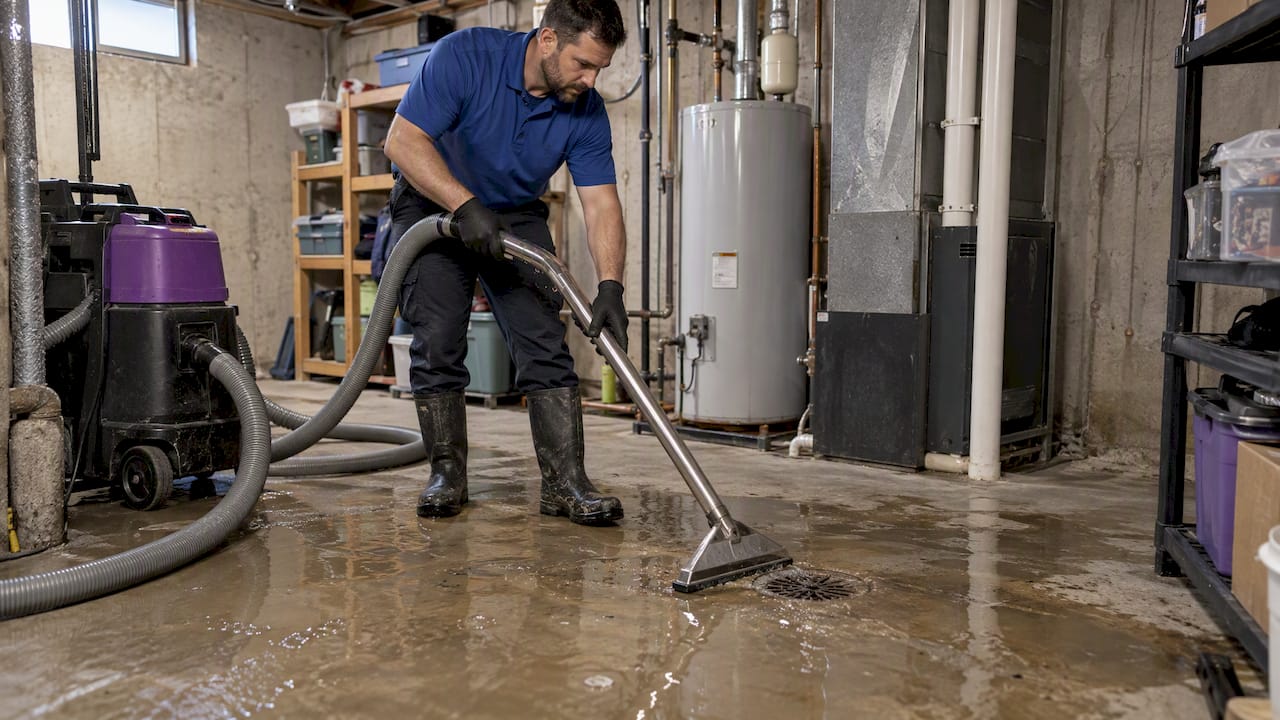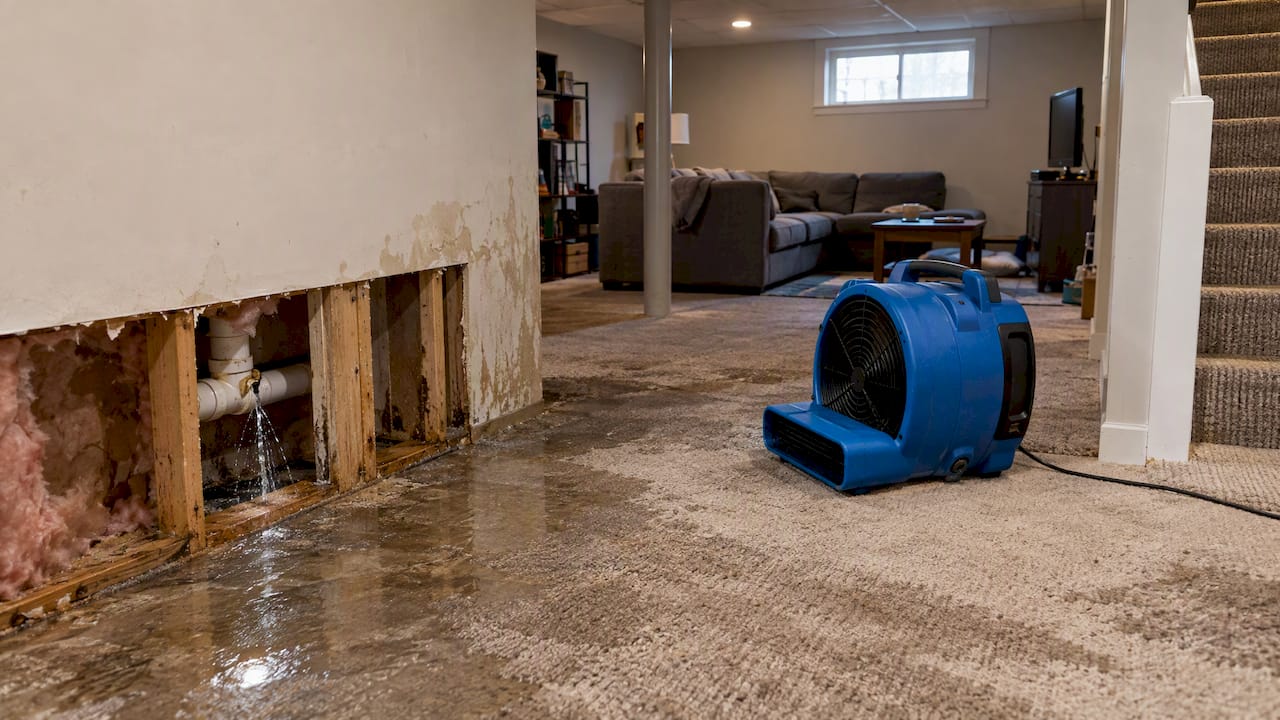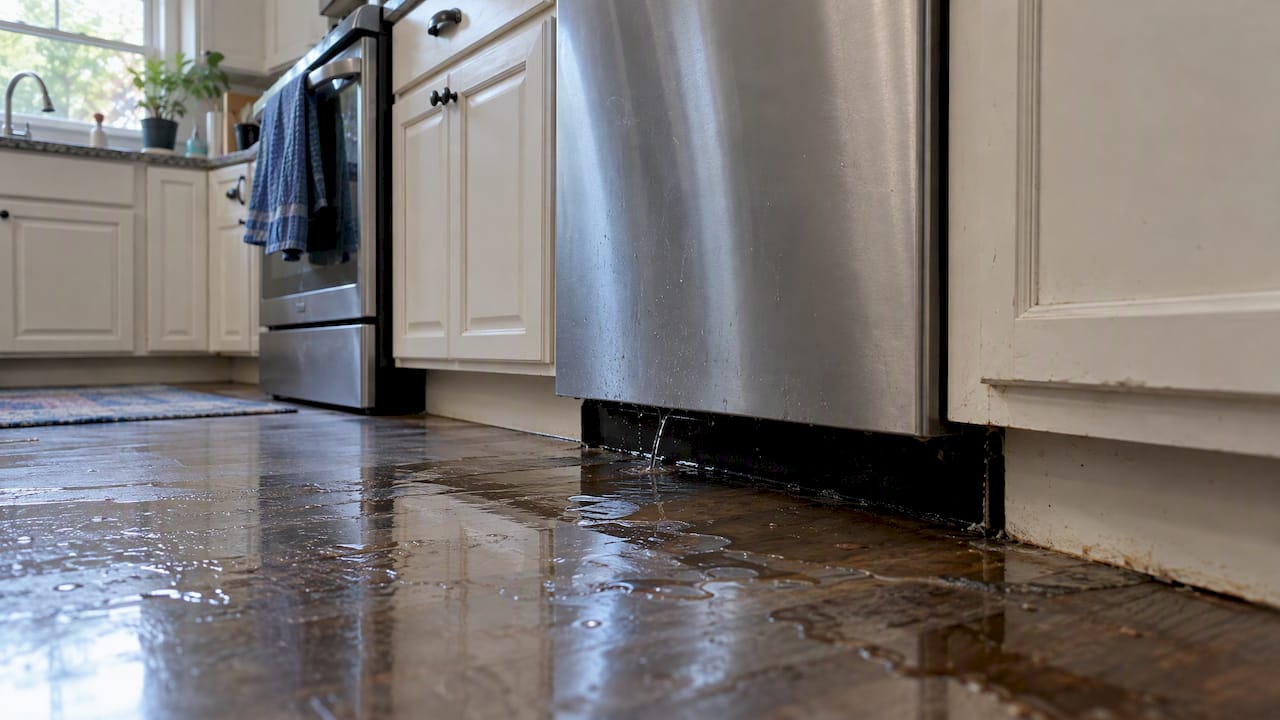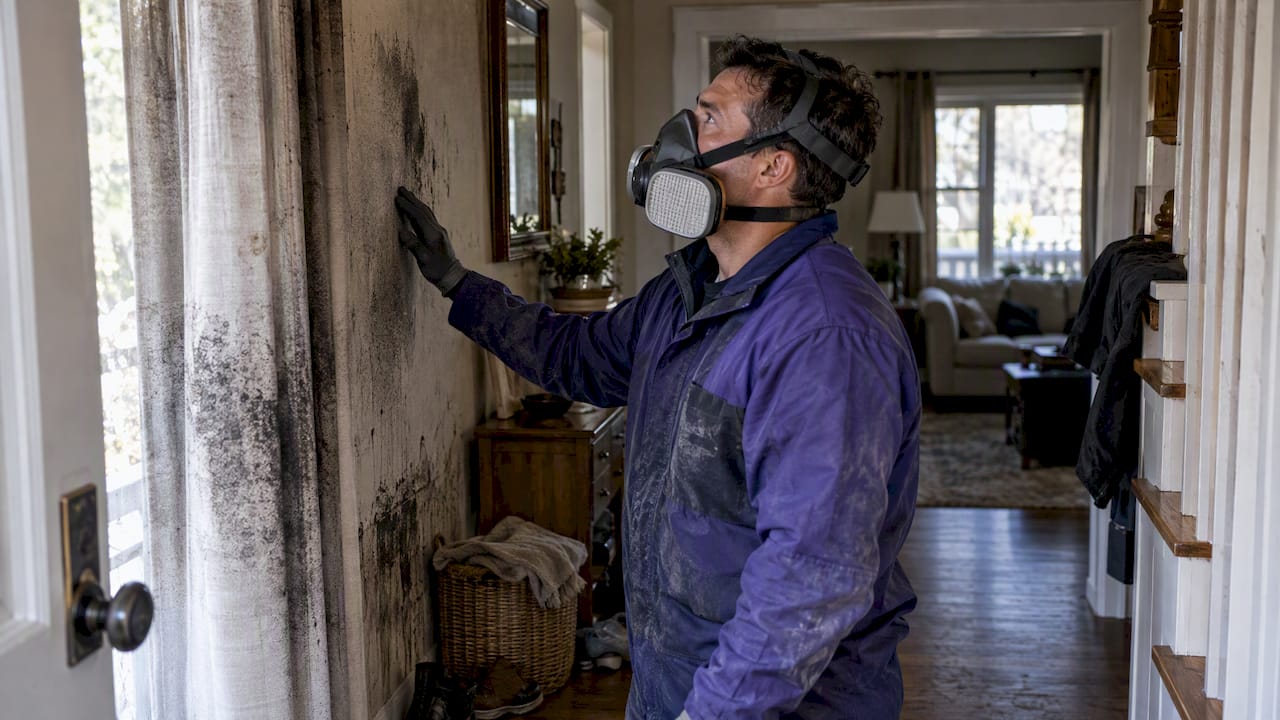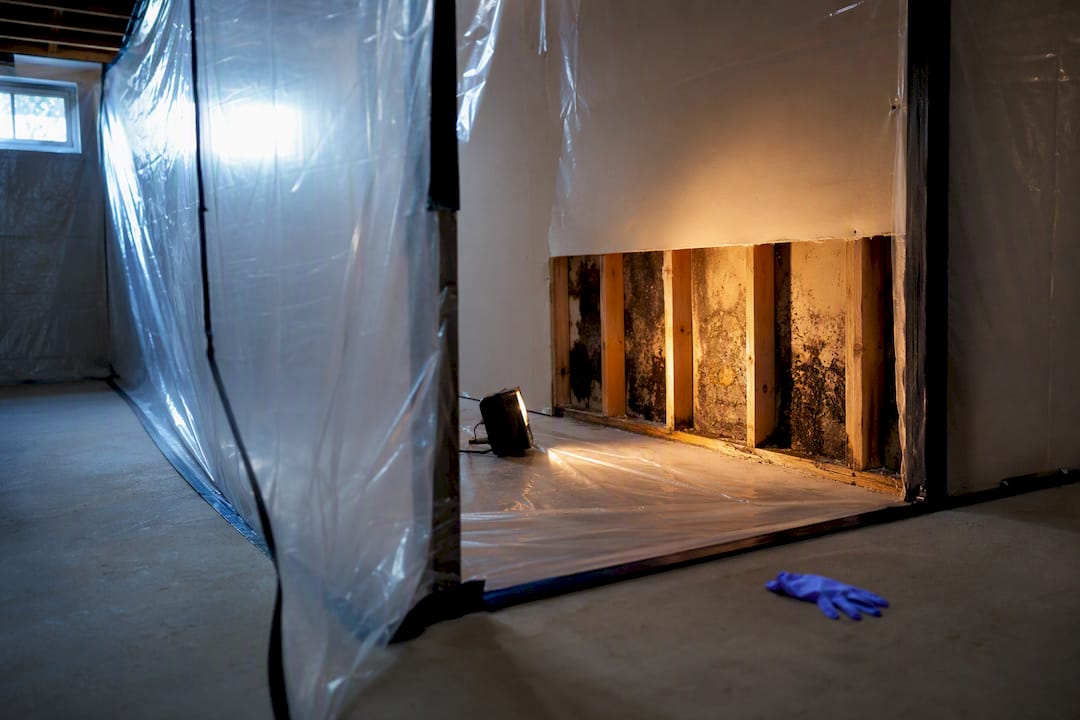

Chicago homeowners typically pay varied amounts for mold remediation, with many jobs commonly near the $2,000 to $2,500 range once inspection, containment, and cleanup are factored in. The final number swings the hardest on two things: how much square footage is affected and where the mold is hiding, since attic and basement jobs often require structural repairs that a bathroom patch never needs. Below, three real-world project models show exactly where that money goes.
TL;DR:
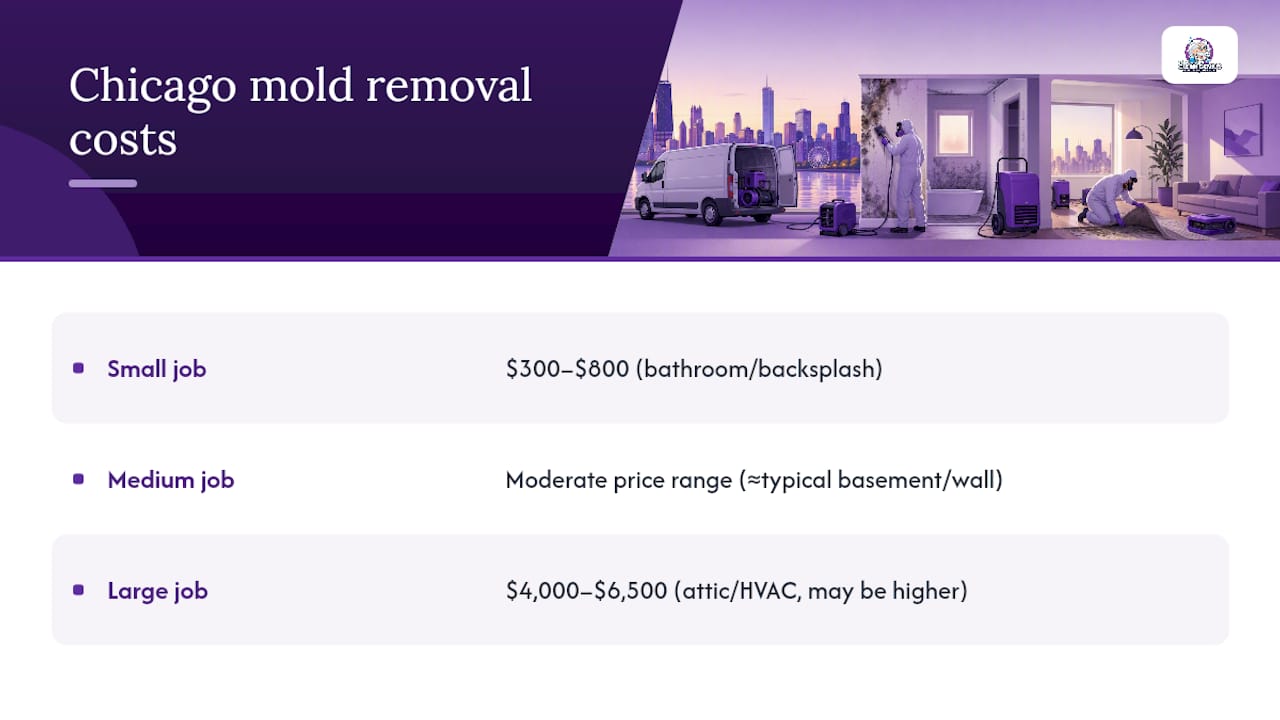
- Small mold jobs, like a bathroom patch, typically cost between 300 and 800 dollars, depending on drywall replacement needs.
- Medium-sized projects covering about 50 square feet usually range from 2,000 to 2,500 dollars, involving containment and extensive cleanup.
- Large jobs, such as attic or HVAC system remediation, can cost from 4,000 to over 6,500 dollars due to structural repairs and extended drying times.
- Costs vary significantly based on access difficulty, material porosity, level of containment, structural repairs, and timing or location of the work.
- Insurance often covers mold removal caused by sudden events like leaks but usually denies coverage for long-term neglect or undisclosed water issues.
Table of Contents
- How Much Does Mold Removal Cost in Chicago? Three Examples
- What Raises or Lowers Your Mold Remediation Bill?
- Does Homeowners Insurance Cover Mold Remediation in Illinois?
- When Should You Call a Pro Instead of Doing It Yourself?
- What Happens During Professional Mold Remediation?
- How Can You Lower Your Mold Remediation Costs?
- What Local Experience Actually Looks Like on a Chicago Mold Job
- What Chicago Homeowners Get Wrong About Mold Costs
- Get a Local Mold Remediation Estimate From The Clean Genius
- Sources
How Much Does Mold Removal Cost in Chicago? Three Examples
Cost estimates for Illinois show a wide spread, with statewide figures varying depending on scope, according to CostPrism’s Illinois mold remediation data. Chicago jobs tend to track close to those numbers, though tight urban access can nudge labor costs up a bit compared to suburban projects. Here’s what three common scenarios actually look like once a contractor writes up the invoice.
Small job: a bathroom or kitchen backsplash. A patch of mold on tile grout or a small area behind a sink cabinet is the cheapest fix. Expect an inspection, a few hours of labor, an antimicrobial surface treatment, and sometimes an optional clearance test. Totals usually fall in the low hundreds, often $300 to $800, unless drywall behind the tile needs replacing too.
Medium job: roughly 50 square feet in a basement or wall cavity. This is the range where most Chicago homeowners end up. It involves setting up containment barriers, tearing out porous materials like drywall or insulation, running commercial dehumidifiers and air movers for several days, applying antimicrobial treatment, and often a post-job clearance test. This model typically runs in a moderate price range, based on price patterns reported across Illinois for similarly sized basement jobs.
Large job: a full attic or systemic infestation tied to HVAC ductwork. This is where costs jump fast. Demolition of framing or insulation, HVAC coil and duct cleaning, structural repairs, extended drying cycles, and multiple testing rounds push totals into the $4,000 to $6,500 range, sometimes higher when roof decking or ductwork needs full replacement.
The jump between models isn’t just square footage; it’s whether the job stops at cleanup or requires actual reconstruction.
What Raises or Lowers Your Mold Remediation Bill?
Two Chicago homes with the same square footage of mold can generate wildly different quotes. Here’s what actually moves the price:
- Access difficulty. Crawlspaces, attics, and tight basement corners take longer to work in, and that labor time shows up on the invoice.
- Material porosity. Drywall, carpet, and insulation soak up mold spores and usually have to be torn out and replaced. Tile, glass, and metal often just need cleaning.
- Containment level. A job needing negative air pressure, HEPA filtration, or full plastic sheeting costs more than a simple wipe-down because of the equipment and setup time involved.
- Structural repairs. Surface remediation is one price; rebuilding studs, subfloor, or drywall after demolition is a separate cost most homeowners underestimate.
- Timing and location. Emergency after-hours calls cost more than scheduled work, and city parking or building access restrictions can add small premiums that suburban jobs skip.
Pro Tip: Ask every contractor to separate “remediation” costs from “reconstruction” costs on the estimate. Bundling them together makes it nearly impossible to compare quotes apples to apples.
Does Homeowners Insurance Cover Mold Remediation in Illinois?
Coverage usually depends on what caused the mold, not just that it exists. Insurers in Illinois generally pay for mold cleanup when it follows a sudden, covered event, such as a burst pipe or storm-driven leak, but they routinely deny claims tied to long-term neglect like a slow, unnoticed roof leak, according to guidance from Mag Mile Law on Illinois mold claims. Many policies also cap mold payouts at a specific dollar sublimit regardless of the actual cleanup cost, and some insurers only add mold coverage through a separate endorsement.
To improve your odds of a fair payout:
- Photograph the damage immediately, including the source of the water intrusion.
- Keep every receipt from the plumber, roofer, or water mitigation crew who addressed the original event.
- Note the exact date you discovered the problem and when you reported it to your insurer.
- Get a written scope of work from your remediation contractor before work begins, not after.
- Ask your adjuster directly whether your policy has a mold sublimit and what it covers.
The Illinois Department of Insurance also notes there’s no state licensing requirement for mold remediators, which makes documentation and contractor vetting even more important since you can’t rely on a license number to confirm legitimacy. Reviewing a real insurance claim breakdown can help you see how adjusters typically respond to similar situations.
When Should You Call a Pro Instead of Doing It Yourself?
The EPA sets a clear line: mold covering more than 10 square feet, roughly the size of a small area rug, should be handled by trained professionals rather than a DIY cleanup attempt, per the EPA’s guide to mold, moisture, and your home.
Below that threshold, a homeowner can often manage it safely. Above it, the risks multiply.
- Disturbing a large colony without containment can spread spores through HVAC ducts into rooms that were previously clean.
- Hidden moisture behind drywall often means the visible patch is only part of the actual problem.
- Federal guidance recommends at minimum an N95 respirator, goggles, and gloves for any cleanup work, per EPA/HUD/FEMA disaster cleanup guidance.
A common and costly DIY mistake is spraying bleach on a surface, calling it done, and never addressing the moisture source underneath. The mold almost always returns, usually worse.
What Happens During Professional Mold Remediation?
A typical job moves through a predictable set of phases, and knowing them helps you understand exactly what you’re paying for at each step.
- Inspection and scoping. A technician assesses the extent of growth, checks for moisture sources, and writes a formal protocol with a cost estimate. This usually takes a single visit.
- Containment setup. Plastic sheeting and negative air machines isolate the work area so spores don’t spread to the rest of the house. This can take a few hours for small jobs, a full day for larger ones.
- Removal and demolition. Porous, contaminated materials get torn out and bagged for disposal. Larger jobs with structural involvement can stretch this phase across several days.
- Drying and antimicrobial treatment. Industrial dehumidifiers and air movers run for two to five days depending on how saturated the materials were before removal.
- Repairs and reconstruction. Replacing drywall, insulation, or framing happens after the area tests dry, often handled by One Day Doors & Closets of North Chicago for expert repairs and replacements. Permits may add time if structural work is involved.
- Clearance testing. An independent air or surface test confirms spore counts have returned to normal, which is worth requesting even though it adds a modest cost, especially for insurance documentation.
Full timelines run anywhere from three days for a small bathroom job to three or four weeks for a systemic attic or whole-basement remediation. Homeowners can see the full step-by-step version of this workflow in The Clean Genius’s certified remediation process.
How Can You Lower Your Mold Remediation Costs?
The single biggest lever you control is speed. Mold colonization accelerates fast once materials stay wet, and getting water extraction and drying started within 24 to 48 hours can meaningfully shrink how much demolition ends up being necessary, according to industry guidance from the Illinois Restoration Authority.
Beyond acting fast, a few practical moves help:
- Request an itemized estimate that separates remediation, disposal, and reconstruction line items.
- Compare whether repair or full material replacement actually costs less over time.
- Ask your insurer about advance payments if a claim is approved but repairs need to start immediately.
Pro Tip: Be wary of any quote that’s dramatically cheaper than competitors and only covers “mold removal.” If it doesn’t address the moisture source, you’ll likely pay for the same job twice.
What Local Experience Actually Looks Like on a Chicago Mold Job
Field experience across Chicagoland tends to expose the same pattern again and again: the mold itself is rarely the hard part, the moisture behind it is. Successful remediation depends far more on stopping the water source than on the cleanup step itself, since skipping that part guarantees the problem comes back, per EPA guidance on mold control principles.
Some restoration companies bring decades of combined experience to Chicagoland jobs, offering 24/7 emergency response and using advanced dry-fog technology for remediation that reaches into wall cavities and HVAC systems standard spraying can’t touch. Urban jobs in neighborhoods with limited parking or tight stairwells sometimes add labor time that suburban properties don’t see, which is one reason estimates should always be site-specific rather than phone quotes.
What Chicago Homeowners Get Wrong About Mold Costs
Most cost guides treat mold remediation like a single line item, when it’s really two separate jobs stitched together: stopping the moisture and repairing the damage it left behind. The conventional advice to “get three quotes and pick the middle one” falls apart here, because a cheap quote that skips moisture control isn’t actually cheaper, it’s a deferred second invoice.
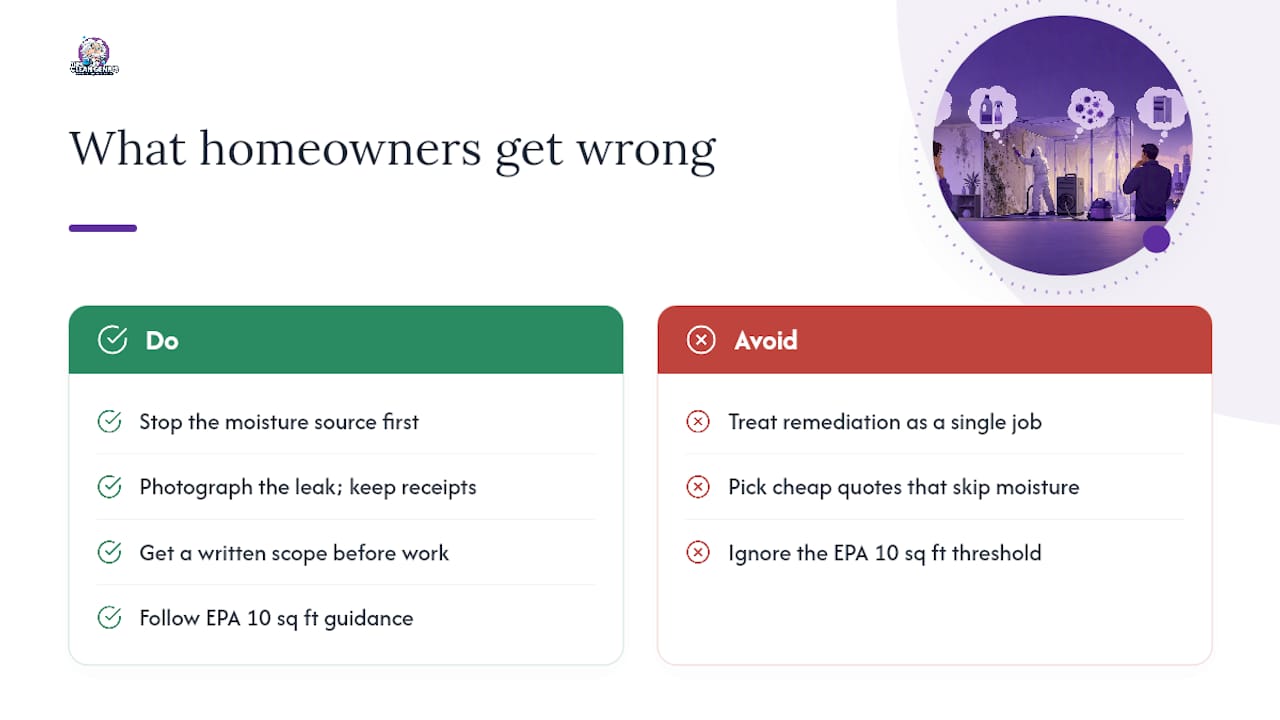
The EPA’s 10 square foot threshold is the most useful number in this entire topic, and it’s the one homeowners ignore most often, usually because a small patch doesn’t look dangerous. It’s not about danger in the moment. It’s about what’s likely hiding behind the visible spot.
If there’s one thing worth prioritizing above cost comparisons, it’s documentation. A homeowner who photographs the leak, keeps the plumber’s receipt, and gets a written scope before work starts is in a dramatically stronger position with an insurer than one who just wants the mold gone fast.
— Jim
Get a Local Mold Remediation Estimate From The Clean Genius
Some remediation services provide homeowners with a free, site-specific estimate paired with direct insurance coordination, so you’re not stuck translating adjuster language on your own.

Estimates typically include a written scope covering containment, removal, drying, and testing, so you know what you’re paying for before work starts. Some teams offer 24/7 emergency response for emergencies across Chicagoland areas. Because moisture control drives whether mold comes back, technicians address the water source first and may use advanced dry-fog technology to reach areas standard cleaning misses. If you’re staring at a damp patch and wondering whether it’s a $400 fix or a $4,000 one, request a mold remediation estimate and get a real number instead of a guess.
This article is general information, not a substitute for advice from a qualified doctor. Consult a qualified healthcare professional about your own circumstances before acting on anything here.
Sources
- A brief guide to mold, moisture, and your home — EPA
- Floods and insurance guidance — Illinois Department of Insurance
- Does homeowners insurance cover mold? — Mag Mile Law
- Mold remediation cost in Illinois — CostPrism