The most severe water damage causes in any U.S. home, ranked by risk, are washing machine supply line failures, water heater tank ruptures, HVAC condensate drain overflows, basement flooding from sump pump failure, and sewage backups. Below those sit toilet supply line leaks, plumbing pipe failures, roof intrusion, and appliance leaks. The ANSI/IICRC S500 standard gives the industry its classification framework: three contamination categories (1 through 3) and four severity classes (1 through 4) that together determine how dangerous a loss is, how much demolition it requires, and what your insurer will pay.
Here is what that ranking means in practice:
- Washing machine supply lines — highest risk score of any home zone, with catastrophic flood potential if undetected during work hours
- Water heaters — second highest, with maximum detection delay and immediate tank dump of 40–80 gallons
- HVAC condensate drains — third, with the same maximum detection delay; damage accumulates for days before any visible sign appears
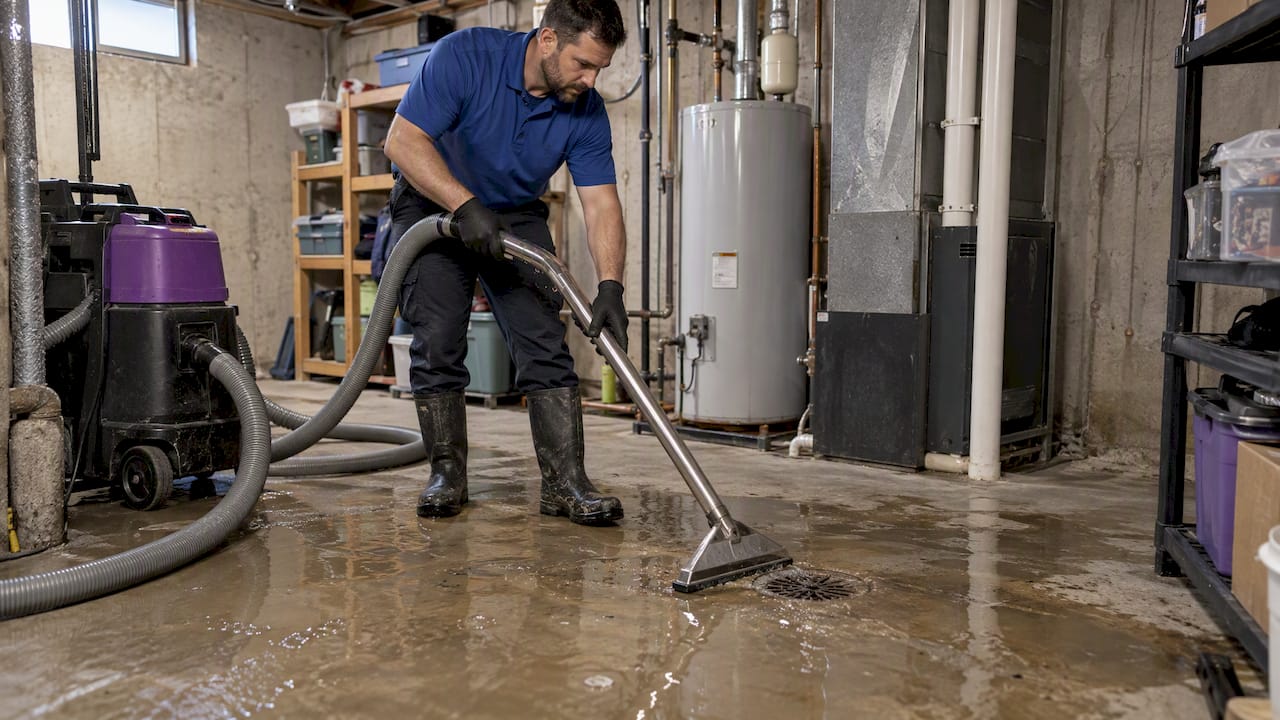
- Basement/sump pump failures — fourth, typically Category 1 or 2 water but large volume during storms
- Sewage backups — automatically Category 3 (black water), the most hazardous contamination level regardless of volume
- Toilet supply lines and plumbing pipe failures — frequent, moderate-to-high severity depending on detection speed
- Roof leaks and foundation intrusion — lower frequency but capable of escalating to Category 2 or 3 when left undetected
Speed of detection is the variable that changes everything. A clean-water supply line break caught in two hours stays Category 1. The same break left for 48 hours becomes Category 2 by default under the IICRC S500 timeline.
What do water damage categories tell you about contamination and health risk?
The IICRC S500 standard sorts every water loss into one of three categories based on what is in the water, not how much of it there is. A few gallons of sewage outranks hundreds of gallons from a clean supply line. That distinction drives demolition scope, PPE requirements, and insurance documentation.
Category 1: Clean water
Category 1 originates from a sanitary source and poses no substantial risk to humans when addressed quickly. Typical sources include broken supply lines under sinks, burst copper or PEX pipes, refrigerator icemaker lines, and clean tub overflows. Restoration crews can often dry Category 1 losses in place, saving drywall and flooring, provided they respond within the first 24 hours.
Category 2: Gray water
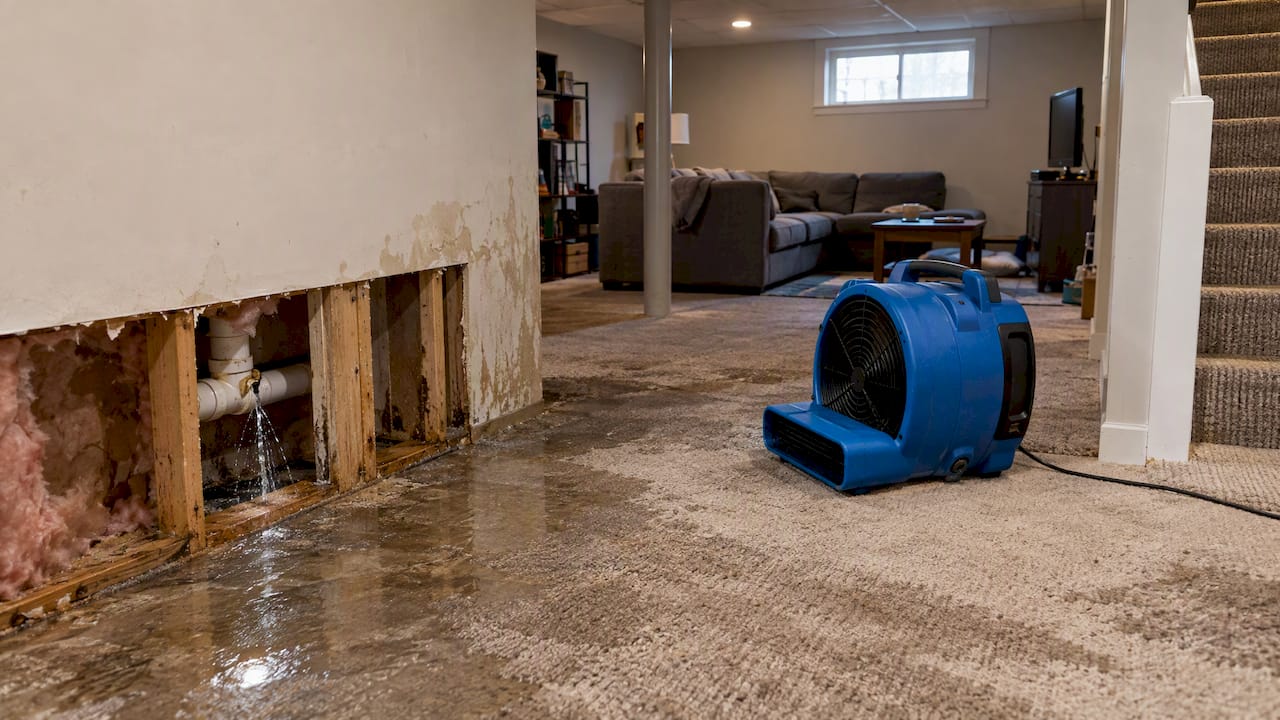
Category 2 water carries significant chemical, biological, or physical contamination and can cause illness on contact or ingestion. Sources include washing machine and dishwasher discharge, toilet overflows with urine only, aquarium leaks, and hydrostatic seepage through a slab. Carpet pad almost always comes out. Drywall that has wicked gray water typically gets a flood cut at 12–24 inches above the waterline, followed by antimicrobial treatment.
Category 3: Black water
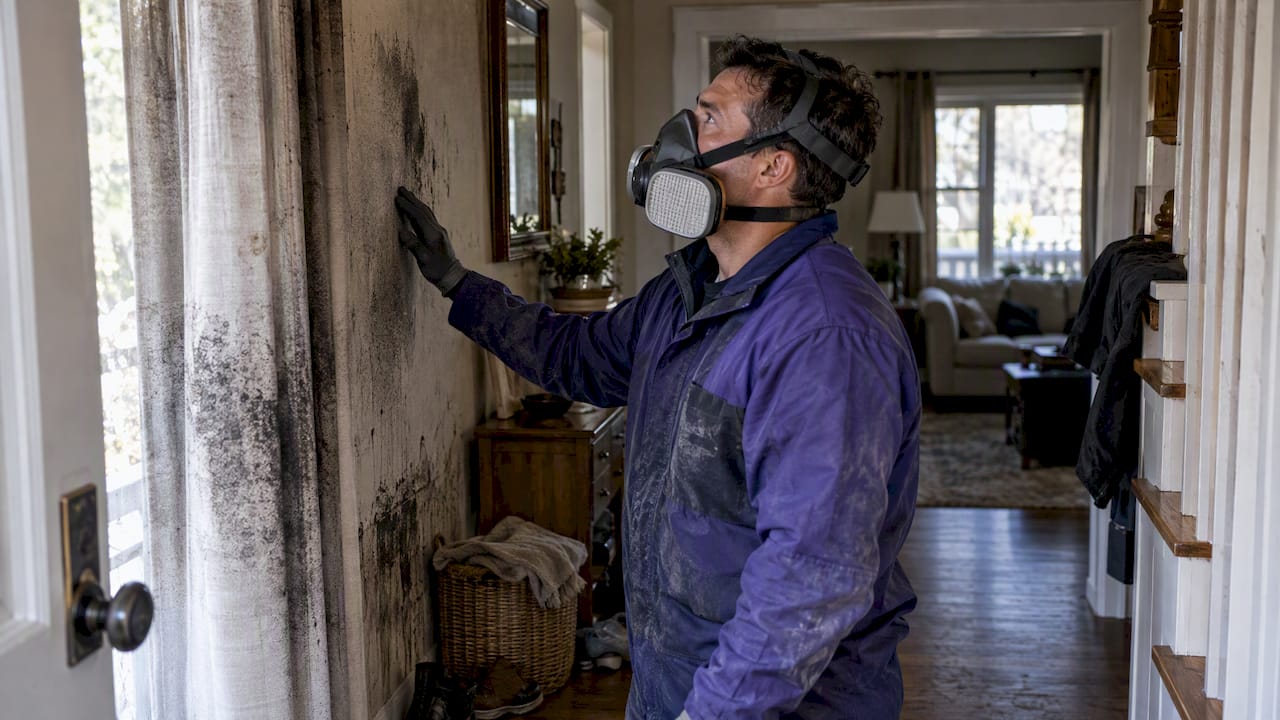
Category 3 is grossly contaminated and can cause serious illness or death. Sources include sewage backflow, toilet overflow with feces, rising floodwater from rivers or storm surge, and any standing water that has supported microbial growth. Restoration requires HAZWOPER-certified crews, full PPE, removal of all porous materials including drywall and insulation, and post-remediation clearance testing. No porous material that contacts Category 3 water gets dried in place.
- Category 1: Sanitary source, no substantial health risk, drying in place often possible
- Category 2: Significant contamination, illness risk on contact, porous materials typically removed
- Category 3: Grossly contaminated, serious illness or death risk, full demolition of affected porous materials required
The contamination clock never stops. Category 1 water degrades to Category 2 within 24–48 hours by default under IICRC S500 guidelines, regardless of the original source. Category 2 transitions to Category 3 within 48–72 hours of stagnation. Every hour of delayed response moves the loss into a more expensive, more hazardous classification.
Pro Tip: If you cannot identify the water source, treat it as Category 2 until a certified technician confirms otherwise. If sewage is involved at all, treat it as Category 3, leave the area, and call a professional immediately.
How do water damage classes measure saturation and drying difficulty?
Where categories describe contamination, classes describe how deeply water has penetrated building materials and how hard it will be to dry. The ANSI/IICRC S500 classification system defines four classes based on evaporation rate and the volume of water absorbed into structural materials.
| Class | Description | Materials Affected | Drying Approach |
|---|---|---|---|
| Class 1 | Minimal absorption | Portion of one room, low-porosity materials | Standard air movers and dehumidifiers |
| Class 2 | Significant absorption | Entire room, carpet, cushion, walls to 24 inches | Increased equipment, moisture monitoring |
| Class 3 | Greatest evaporation load | Ceilings, walls, insulation, subfloor saturated | High-volume equipment, extended drying time |
| Class 4 | Specialty drying required | Hardwood, concrete, plaster, crawlspace materials | Low-grain dehumidifiers, desiccant systems |
Class 1 losses are the easiest and cheapest to resolve. Class 4 is the opposite: water has saturated dense, low-porosity materials like hardwood floors, concrete slabs, or thick plaster walls, and standard drying equipment cannot pull moisture out fast enough. Specialty techniques including desiccant dehumidification and in-place drying systems are required, and drying timelines stretch from days to weeks.
Insurance adjusters use class and category together to approve equipment, demolition scope, and drying targets. Misclassifying the damage class is one of the primary reasons restoration claims get reduced or denied. A Class 3 loss documented as Class 1 will not get approval for the equipment actually needed to dry it. For a deeper look at how these levels affect your home, Thecleangenius has a detailed breakdown of water damage class levels worth reading before you file anything.
1. Washing machine supply lines: the highest-risk zone in any home
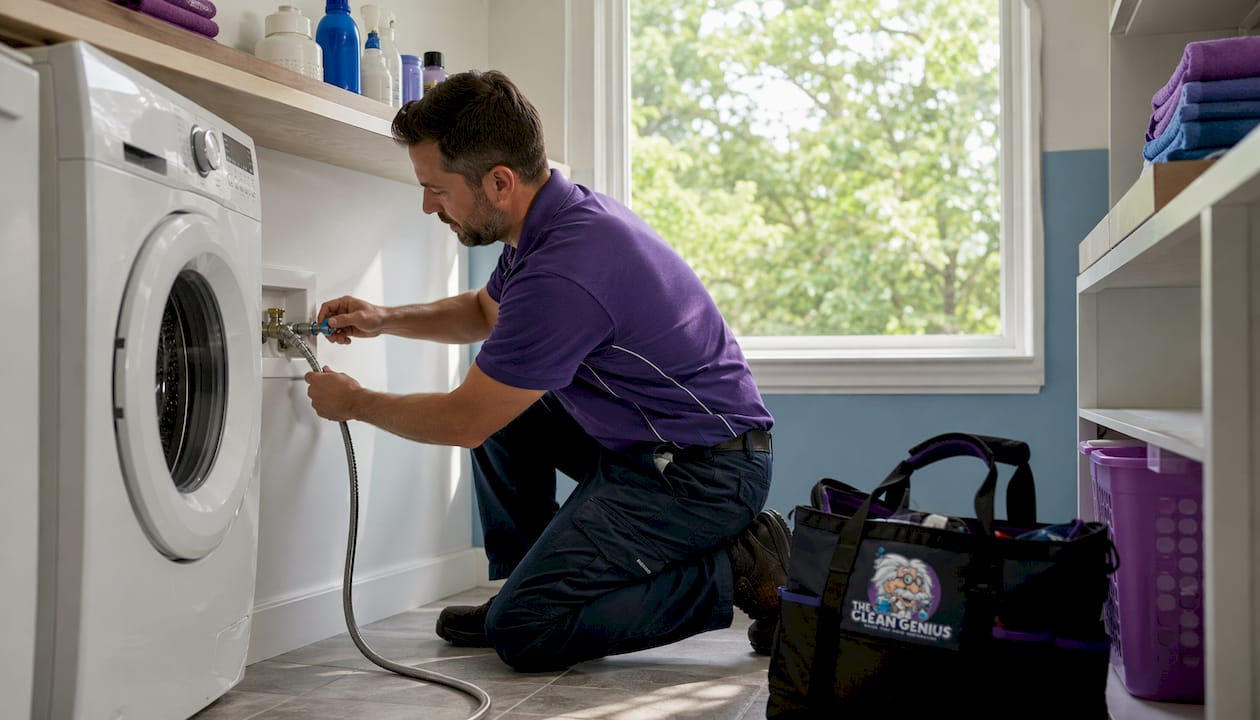
Washing machine supply lines score the highest SHE Leak Risk Score of any residential zone, notably exceeding the score for water heaters. Rubber hoses degrade and crack after 3 to 5 years, and hot water accelerates that deterioration. A burst hose can release a significant amount of water per hour, leading to potential flooding. If it fails while you are at work, that is potentially thousands of gallons before anyone notices.
Detection delay is the real danger. Laundry rooms get visited daily, but supply hoses hide behind the machine. A slow drip runs for days before the puddle spreads far enough to see. The average washing machine claim tends to be costly due to extensive damage potential.
Early signs: Discoloration or rust on the hose connections, a musty smell in the laundry room, or a small puddle that appears and disappears.
Prevention: Replace rubber hoses with braided stainless steel every five years. Install a water leak sensor directly behind the machine.
2. Water heater failures: maximum detection delay, immediate volume
Water heaters rank second in SHE Leak Risk Score among home water damage zones. When a tank fails, it can release a large volume of water immediately, followed by continuous flow until shut off. Claims involving water heaters are often expensive due to the volume and damage caused. Detection delay scores the maximum 5 out of 5 because water heaters hide in basements, garages, and utility closets that most homeowners rarely inspect between scheduled maintenance visits. A slow tank seep can run for weeks.
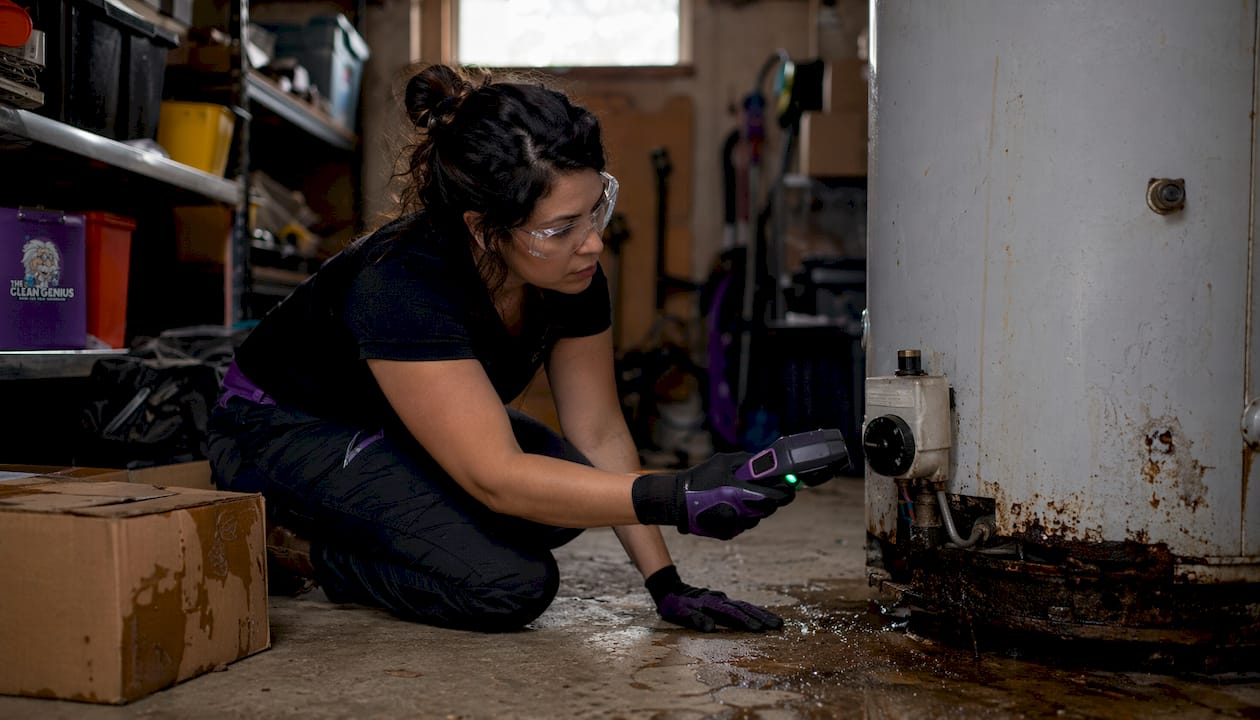
Early signs: Rust-colored water at hot taps, a puddle under the unit, or a popping or rumbling sound during heating cycles.
Prevention: Inspect the unit annually. Replace tanks older than 10 years proactively. A freeze-and-water sensor in the utility closet catches both leak and pipe-burst risk.
3. HVAC condensate drain failures: hidden damage with no early warning
HVAC condensate drain lines clog with algae, mold, and mineral deposits. When the drain pan overflows, water drips through the ceiling into rooms below. The SHE Leak Risk Score is among the highest, with a significant detection delay. The first sign of trouble is often a water stain on a bedroom ceiling, meaning the damage has been accumulating for days. Claims for HVAC condensate drain failures can be costly due to hidden damage and delayed detection.
Early signs: Water stains on ceilings below the air handler, a musty smell from vents, or the system shutting off unexpectedly (many units have a float switch that cuts power when the pan fills).
Prevention: Flush the condensate line with diluted bleach at the start of each cooling season. Schedule annual HVAC service that includes drain line inspection.
Pro Tip: If your HVAC unit sits in the attic, the ceiling below it is your early warning system. Any new stain near a vent or in a room directly below the unit warrants immediate investigation, not a wait-and-see approach.
4. Basement flooding and sump pump failure
Sump pump failures during heavy rain have a notable SHE Leak Risk Score among water damage zones. Pumps fail from mechanical wear, power outages, float switch jams, or being overwhelmed by volume during major storms. The water is typically Category 1 or 2 at entry, but it escalates quickly if the basement stays wet. Claims related to sump pump failures can involve substantial costs.
Early signs: The pump runs continuously or cycles on and off rapidly, the pit has standing water above normal levels, or you hear grinding from the motor.
Prevention: Test the pump quarterly by pouring water into the pit. Install a battery backup system for power outage scenarios. A humidity-monitoring sensor catches rising moisture from partial pump failures before full flooding occurs.
5. Sewage backups: automatic Category 3, highest health hazard
Sewage backups are automatically classified as Category 3 regardless of volume. Sources include sewer line blockages, municipal system overflows during heavy rain, and tree root intrusion into lateral lines. The health risk is immediate: Category 3 water contains pathogens regulated under OSHA 1910.1030 and requires licensed remediation crews, full PPE, controlled demolition of all porous materials, and post-remediation clearance testing. No amount of DIY cleanup makes a sewage-affected space safe.
Early signs: Multiple drains backing up simultaneously, gurgling sounds from toilets when other fixtures run, or sewage odor from floor drains.
Prevention: Have your sewer lateral scoped every 5–7 years, especially in homes older than 30 years. Install a backwater valve on the main sewer line.
6. Toilet supply line and wax ring failures
Toilet supply lines have a moderate-to-high SHE Leak Risk Score and a considerable detection delay. Wax ring failures are particularly insidious: sewage water seeps into the subfloor with every flush, accumulating invisibly for weeks before the floor feels spongy. Supply line compression fittings corrode and weep slowly, often dripping into the ceiling below on second-floor bathrooms. Claims involving toilet supply line or wax ring failures typically involve moderate costs.
Early signs: A soft or springy feel to the floor around the toilet base, discoloration at the base, or a persistent sewage odor despite a clean bowl.
Prevention: Replace plastic supply line fittings with braided stainless steel. Inspect the toilet base annually for any movement or staining.
7. Plumbing pipe failures: frequent and often abrupt
Plumbing failures, including pipe leaks and bursts, are the leading cause of water damage claims by frequency in U.S. homes. Supply line breaks and fitting failures account for the largest share of incidents. The severity ranges widely: a pinhole leak in a wall cavity can run for months at Class 4 saturation depth before discovery, while a burst pipe in a finished basement can flood the space in minutes. Hidden moisture behind walls rapidly escalates damage complexity and cost, often turning a manageable Class 1 loss into a Class 3 or 4 situation.
Early signs: Unexplained increases in your water bill, water stains on walls or ceilings, or a musty smell in rooms with no obvious source.
Prevention: Know where your main shutoff valve is and confirm it works. Install a whole-home water flow monitor if your home has older galvanized or polybutylene pipes.
8. Roof leaks and wind-driven rain intrusion
Roof leaks rank lower in frequency than plumbing failures but carry serious escalation risk when undetected. Flashing failures at chimneys, skylights, and roof valleys are the most common entry points. Wind-driven rain during storms can force water through gaps that would never leak under normal rainfall. If the water picks up contaminants crossing exterior surfaces before entering the home, it may enter as Category 2 rather than Category 1. Clogged gutters compound the problem by forcing water against the fascia and into the attic.
Early signs: Water stains on attic sheathing, granules from shingles accumulating in gutters, or daylight visible through the roof deck during attic inspection.
Prevention: Inspect the roof and flashing after every major storm. Clean gutters at least twice a year. Attic moisture issues that go unaddressed often lead to mold, which Thecleangenius covers in detail for structural water damage types.
9. Foundation and basement water intrusion
Hydrostatic pressure from saturated soil pushes water through foundation cracks, block walls, and floor-wall joints. This water typically enters as Category 2 because it has traveled through soil and picked up biological and chemical contamination. Homes in low-lying areas of Chicagoland face this risk acutely during spring thaw and heavy summer rain events. Left unaddressed, foundation intrusion leads to chronic moisture, efflorescence on walls, and eventually mold growth in the lower structure.
Early signs: White mineral deposits (efflorescence) on basement walls, a damp or musty smell after rain, or visible cracks in the foundation wall that widen over time.
Prevention: Grade soil away from the foundation, extend downspouts at least six feet from the house, and seal visible cracks with hydraulic cement as a temporary measure pending professional waterproofing.
10. Kitchen and dishwasher leaks
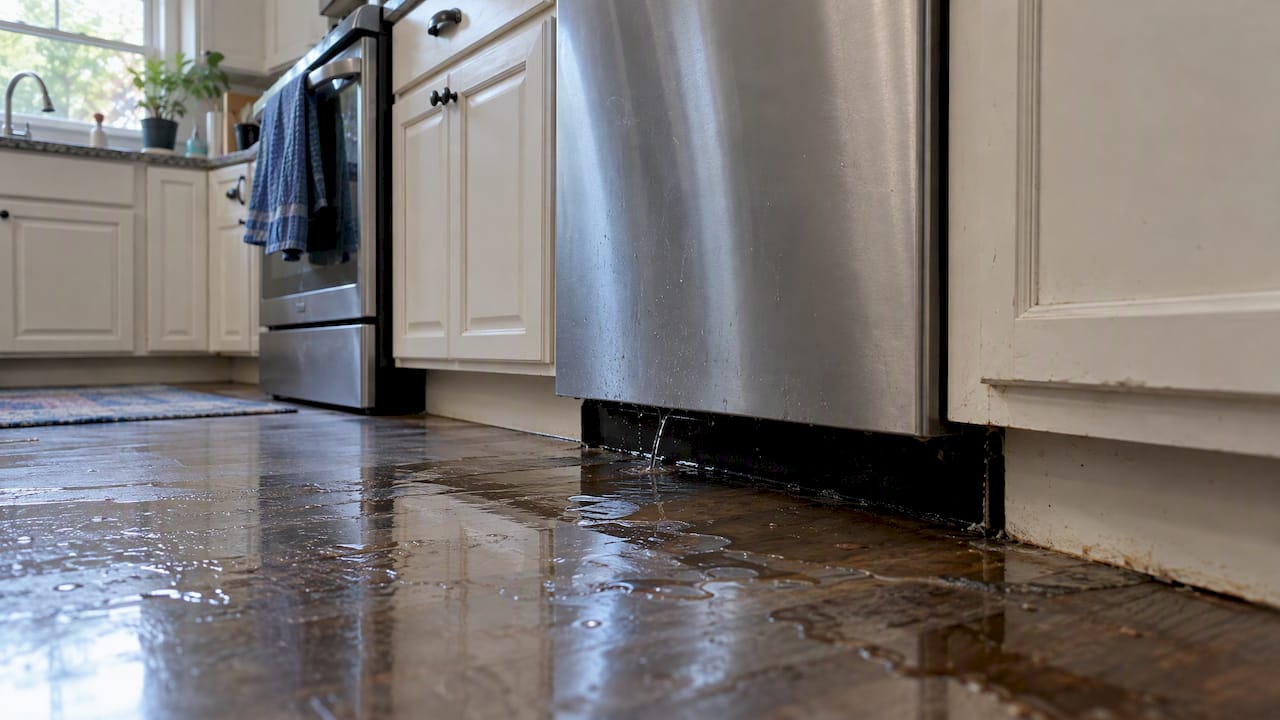
Kitchen sinks score a SHE Leak Risk Score of 63.0 and dishwashers score 42.0, the two lowest zones. Detection delay is low for kitchen sinks (2 out of 5) because the cabinet opens daily and puddles spread onto the floor quickly. Dishwasher leaks are slightly harder to catch because the supply connection hides behind the kick plate. Neither zone produces catastrophic losses on the scale of washing machines or water heaters, but both are worth monitoring given the convergence of supply lines, drain fittings, and appliance connections in a small space.
Early signs: Warped cabinet flooring under the sink, a musty smell inside the cabinet, or floor discoloration near the dishwasher.
Prevention: Check under the sink monthly. Replace dishwasher supply hoses proactively after 8–10 years of use.
How does water damage severity affect your home’s value and insurance claim?
Unresolved water damage, particularly at Category 2 or 3 and Class 3 or 4 severity, has a direct and lasting effect on property value. Buyers and inspectors look for staining, warped floors, and mold, and any evidence of prior water damage that was not professionally remediated can reduce offers or kill a sale entirely. For a full breakdown of how this plays out financially, Thecleangenius has a dedicated guide on why water damage lowers home value.
On the insurance side, category and class drive the entire claim scope:
- Category 1, Class 1: Minimal demolition, standard drying equipment, lowest claim cost
- Category 2, Class 2–3: Flood cuts, antimicrobial treatment, carpet and pad removal, moderate claim cost
- Category 3, any class: Full porous material demolition, licensed remediation crew, clearance testing, highest claim cost
- Misclassified losses: Adjusters rely on accurate class and category documentation to approve equipment and demolition scope; a misclassified loss often results in a reduced payout or denied line items
Proper classification is not a technicality. A Category 3 scope requires more demolition, more decontamination labor, more PPE, and more disposal fees than a Category 1 scope. Adjusters expect the numbers to reflect the category. If your documentation does not match the actual contamination level, the claim gets cut.
Homeowners who document water damage thoroughly from the first hour, including photos, moisture readings, and a written timeline, consistently have smoother claim outcomes than those who call the insurer after cleanup has already started.
What Thecleangenius sees on the ground in Chicagoland
Thecleangenius has handled water damage restoration across the greater Chicagoland area for over 25 years, responding to everything from burst pipes in Naperville basements to sewage backups in Schaumburg multi-units. The pattern that shows up repeatedly: homeowners underestimate how fast a Category 1 loss becomes a Category 2 problem.
The 24-hour window is real. Clean water from a supply line break that sits overnight while a homeowner waits to call is no longer clean water by morning. By the time a crew arrives the next day, the drywall paper is contaminated, the carpet pad is saturated, and what could have been a straightforward dry-out has become a flood cut and antimicrobial job. Calling within the first few hours is not overcautious. It is the difference between drying in place and tearing out walls.
Thecleangenius teams are IICRC-certified and available 24/7 for emergency response. Every job starts with a proper category and class assessment, which protects both the restoration outcome and the insurance claim. For homeowners who want to understand what to look for before a professional arrives, the guide on fast response to water damage covers the first critical steps by severity level.
Pro Tip: Install at least one water leak sensor in your three highest-risk zones: behind the washing machine, near the water heater, and under the HVAC air handler. These three zones alone account for the majority of computed residential leak risk, and sensors cost less than $60 combined.
When you are dealing with water damage in Chicagoland and need a certified team on-site fast, Thecleangenius responds 24/7 and works directly with your insurance company from the first call.

Get 24/7 emergency water damage restoration from Thecleangenius, serving Arlington Heights, Naperville, Schaumburg, Wheaton, and the entire greater Chicagoland area.
Key Takeaways
Washing machine supply lines, water heaters, and HVAC condensate drains carry the highest combined risk scores in any U.S. home. Washing machine supply lines show a SHE Leak Risk Score notably exceeding water heaters by 41%, followed by HVAC condensate drains, which ranks among the highest. (This aligns with documented risk scores and reported claim frequency.)
| Contamination escalation | Category 1 water becomes Category 2 within 24–48 hours by default under IICRC S500 guidelines. |
| Sewage is always Category 3 | Sewage backups require licensed remediation, full PPE, and demolition of all porous materials regardless of volume. |
| Class drives insurance scope | Misclassifying damage class leads to reduced or denied insurance claims; accurate documentation protects your payout. |
| Detection delay multiplies cost | The longer water goes undetected, the higher the category, the deeper the saturation class, and the larger the restoration bill. |