
A musty smell with no visible mold almost always points to moisture you can’t see. Sometimes that means mold growing behind a wall, under flooring or inside a duct. Sometimes it means damp materials that haven’t grown mold yet. Either way, the smell is a signal to find the water, not to cover the odor.
This guide walks through the usual hiding places in Chicagoland homes, a simple way to narrow down the source, what you can safely do yourself, and the point where it makes sense to bring in a professional.
TL;DR
- A moldy odor suggests mold may be growing somewhere in the building, even when you can’t see it, and it should be investigated.
- The fix starts with the moisture source. Air fresheners, candles and deodorizers only mask the smell.
- Check basements, crawlspaces, attics, under sinks, around pipes, behind furniture and inside ducts, and keep indoor humidity between 30% and 50%.
- For an affected area larger than about 10 square feet, health concerns or hidden growth behind walls, call a professional before you open anything up.
- We handle moisture sources, dry-out and mold remediation across Chicagoland, 24/7 for emergencies.
Table of Contents
- Is a musty smell the same as mold?
- Why you can smell it but not see it
- The most common hiding spots in Chicagoland homes
- How to track down the source
- Do you need an air test?
- What you can do yourself
- When to call a professional
- Our perspective
- If you want it checked, we can help
- After the smell is gone: keeping it away
- FAQ
- Sources
Is a musty smell the same as mold?
Not exactly, but they are closely linked. The US EPA says the distinct musty smell is often produced by microbial volatile organic compounds (mVOCs) that molds give off as they grow. The agency also notes that the exact health effects of breathing these compounds in homes are still being researched, so you shouldn’t treat the smell as harmless just because nobody in the house feels sick.
There are two honest readings of a musty smell with nothing visible:
- Mold is growing out of sight. The EPA lists places hidden mold can sit: behind drywall, wallpaper or paneling, above ceiling tiles, under carpets, around pipes, inside ductwork or in roof materials.
- Materials are damp or old enough to smell, but growth hasn’t taken hold. Wet cardboard, a damp rug pad or a soaked insulation batt can smell musty before any colony is visible.
You can’t tell these apart by nose. In both cases the question is the same: where is the moisture coming from?
Why you can smell it but not see it
Mold doesn’t need to sit on a visible surface. It grows wherever there is moisture and something to feed on, and houses are full of both in places you rarely look. The Massachusetts Department of Public Health guidance puts it plainly: mold grows wherever there is moisture.
The smell travels farther than the growth does. Air moves through wall cavities, floor joists, return ducts and attic hatches. A small damp patch in a basement wall can scent a first-floor living room, especially when the furnace or air conditioner is running and pulling air from below.
That is also why the smell often seems to come from everywhere, or from a room that has nothing wrong with it. Chasing the smell by nose alone can send you to the wrong room.
The most common hiding spots in Chicagoland homes
Our region has freeze-thaw cycles, heavy spring rain, humid summers and many older basements and attics. These are the places we would check first.
Basements and crawlspaces
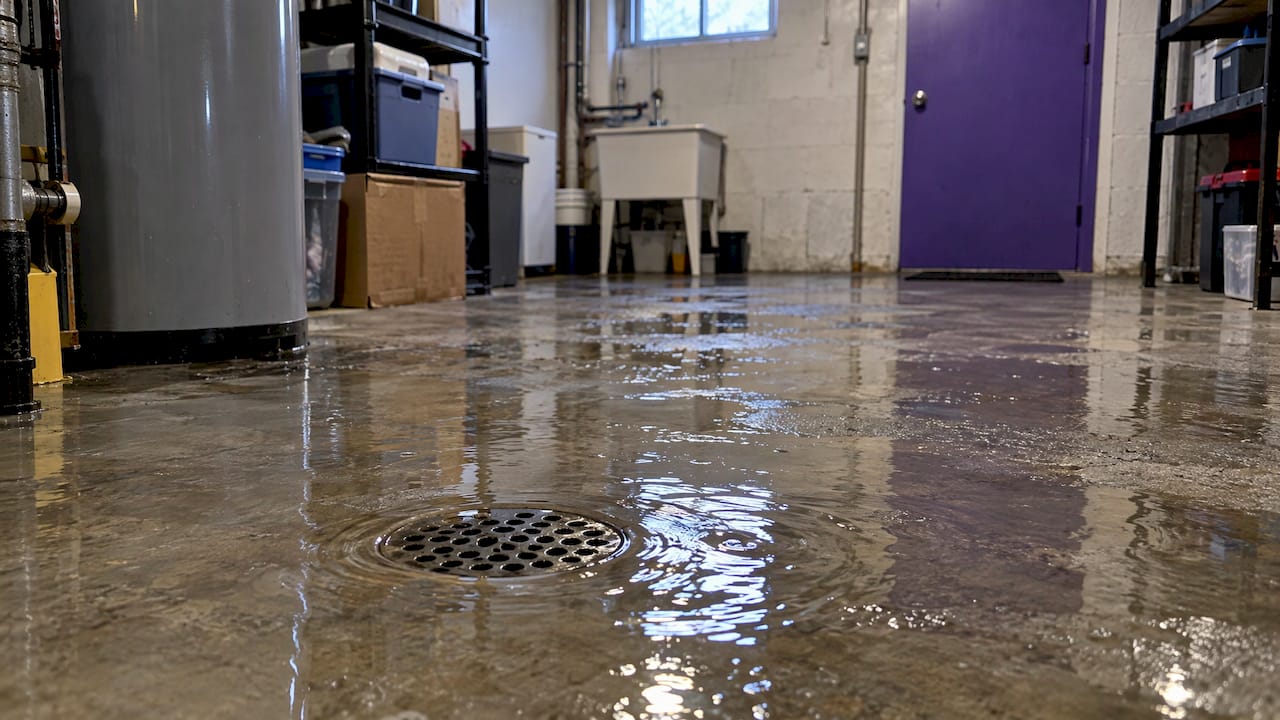
Basements are the usual suspect. Look for efflorescence (a white, chalky crust) on concrete, a tide line on stored boxes, rust at the base of the water heater, and a floor drain or sump pit that smells sour. Carpet over a slab, or finished walls with insulation behind them, can hold moisture for months after a seepage event or a minor flood.
If the smell gets stronger after rain, the source is probably groundwater or a gutter and grading problem. If it is steady all year, think plumbing or a condensation issue.
Behind walls and under floors
A slow supply-line leak, a failed shower pan or a leaking toilet seal can soak drywall and subfloor for a long time without a stain on the surface. Check the wall on the other side of bathrooms and laundry rooms, the cabinet under every sink, and the floor around the dishwasher and refrigerator ice line. A soft spot, bubbling paint or a baseboard that has started to separate all point to moisture inside.
Attics
Attic moisture comes from roof leaks, bathroom fans that vent into the attic instead of outside, and warm indoor air leaking up into a cold space and condensing on the roof deck. Matted, discolored or damp insulation holds odor. We cover this in more depth in our guide to mold on attic insulation and the 10 sq ft rule, and in our attic mold prevention guide.
HVAC systems and ducts
A musty smell that appears only when the system kicks on suggests the air handler, the evaporator coil, the condensate drain pan or the ductwork. The EPA’s list of hidden spots includes inside ductwork, and a clogged condensate line is a very ordinary reason for standing water there. Heavy dust at the registers is a related clue that air is moving through dirty or leaky ducts. Dusty air vents are worth understanding before you decide whether the problem is the ducts or something else.
Behind furniture and in closets
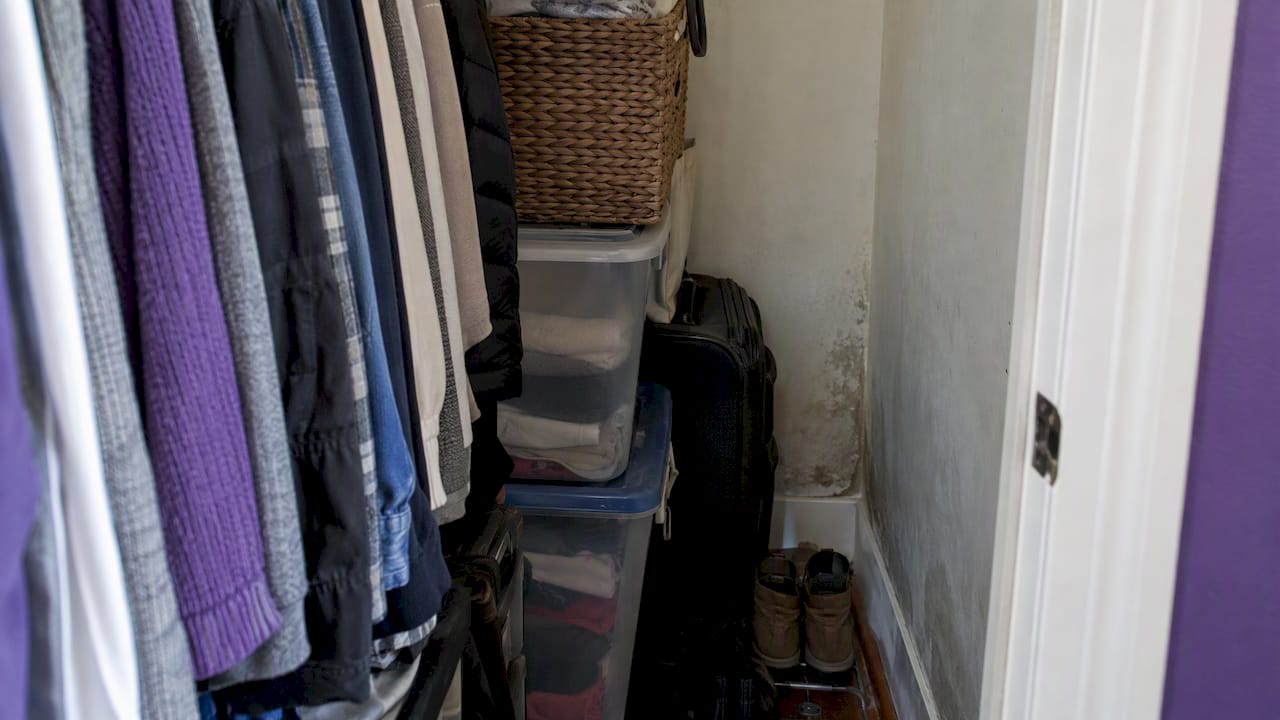
A sofa pushed against an exterior wall, a bed against a cold corner or a closet packed to the walls can trap humid air. These spots often smell musty with nothing visible, because the mold, if any, is on the back of the furniture or the lower wall. Pull things away from the wall and look, and feel for coolness or dampness.
Pipes and condensation
The EPA specifically mentions leaking or condensing pipes. Cold water lines in a humid summer basement can sweat enough to wet insulation and framing below them. Wrapped or insulated pipes that are dripping are a common find.
Past water damage
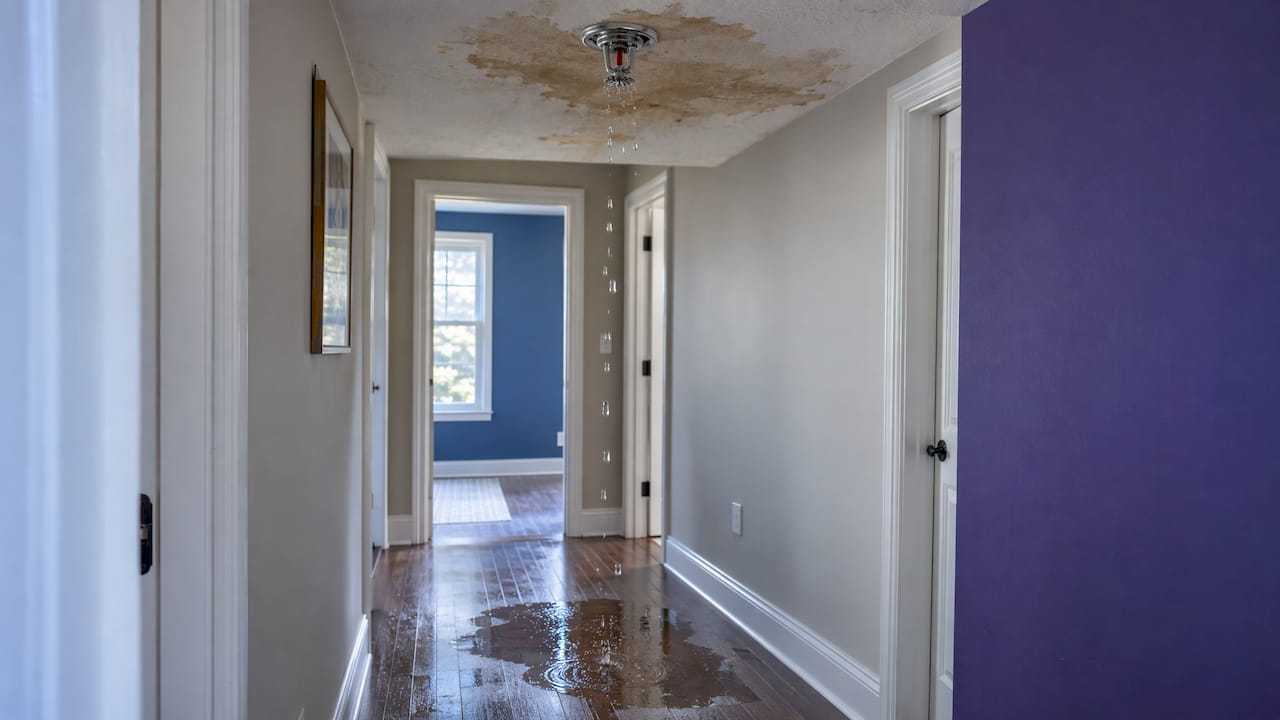
Think back. Did the house have a flood, a burst pipe, a roof leak or a sprinkler or appliance failure that was “dried out” quickly? The EPA tells homeowners to consider any history of water damage when investigating an odor. Water-damaged areas and items need to be dried completely within 24 to 48 hours to prevent mold, and anything that stayed wet longer is a candidate. Our guide to mold growth signs after flooding explains what the first two days look like.
How to track down the source
Work through the house in a set order, so you don’t miss a spot or spread spores unnecessarily.
- Note when the smell is strongest. After rain, when the heat or AC runs, after showers, or all the time. Each pattern points to a different source.
- Check humidity. A cheap hygrometer tells you a lot. The EPA says indoor humidity should be below 60%, ideally between 30% and 50%. Readings above that in a basement or bedroom explain a lot.
- Look for water history. Stains, warped trim, peeling paint, rust, or a ceiling spot that has been painted over.
- Follow the water lines. Inspect under sinks, behind the toilet, around the water heater, the washer hoses and the furnace condensate line.
- Go up and down. Open the attic hatch and look at the insulation and roof deck. Check the crawlspace or the lowest corner of the basement.
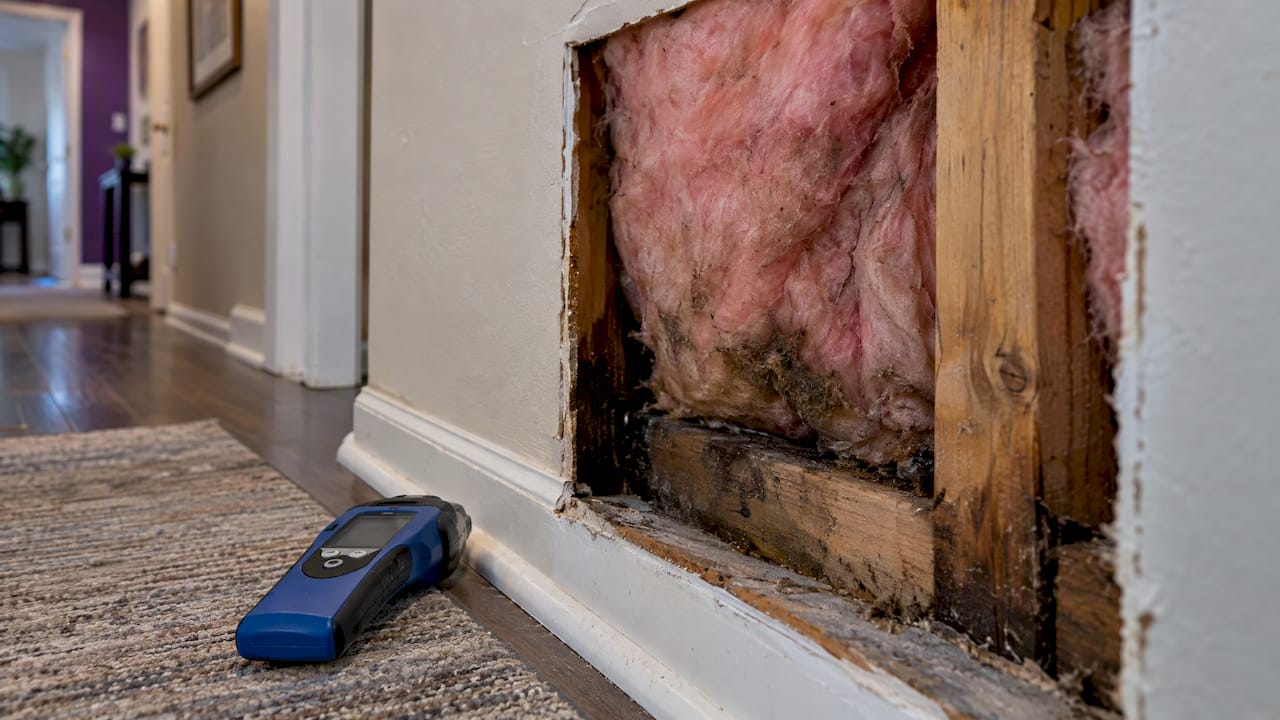
- Smell close to surfaces, not just at the room’s center. Try outlet covers, baseboard gaps, and the inside of closets and cabinets. A moisture meter, which many hardware stores rent or sell, can confirm what your nose suggests.
The EPA also warns that disturbing hidden material can release large numbers of spores, and recommends considering an experienced professional for large or complex jobs. So looking is fine. Tearing open a wall to see what’s there is where you should stop and call someone.
Do you need an air test?
Many homeowners ask whether they should pay for air sampling first. Connecticut’s Department of Public Health makes a useful point here: the results will not change the abatement strategy, which is to eliminate the moisture source and clean or remove the moldy material.
That doesn’t make an inspection pointless. A good inspection is less about a lab number and more about finding the moisture path, mapping how far it spread and deciding what has to come out. If you can’t find the source yourself, a visual and moisture-meter inspection is the useful part. Our page on the benefits of a professional mold inspection explains what that visit covers.
What you can do yourself
If you find a small, accessible problem, you can handle some of it. The Massachusetts guidance gives the logic: fix the moisture source, then clean or remove the moldy material.
- Fix the water first. Repair the leak, clear the gutter, redirect the downspout, fix the dryer or fan vent. Cleaning without fixing the source means the smell returns.
- Ventilate and dehumidify. The same guidance recommends more ventilation and a dehumidifier to control moisture. In a basement, a dehumidifier sized for the space and emptied or drained regularly helps. See why in our piece on the role of dehumidifiers in water restoration.
- Clean hard surfaces. Soap or detergent and water works. The Massachusetts guidance says harsh chemicals like bleach are not generally recommended, and that bleach must never be mixed with ammonia.
- Throw out what can’t dry. Carpet, ceiling tiles and other absorbent materials that stay damp or smell after drying should be discarded.
- Protect yourself. Wear gloves, eye protection and a respirator, and keep the work area ventilated. A renovation safety checklist is helpful for thinking about dust and air quality while work is underway in your home. Our own mold removal safety best practices go through the details.
What doesn’t work
Air fresheners, scented candles, fogging with fragrances and ozone gadgets bought online don’t remove a moisture source. At best they hide the odor for a few days. If the smell is gone only while something scented is running, the problem is still there. For odor problems where a treatment is appropriate, see our overview of ozone treatment for odor removal and what it can and can’t do.
When to call a professional
The Massachusetts guidance suggests hiring a professional for areas larger than 10 square feet, for health concerns, or for work beyond your skills or tools. In practice, we’d add a few situations specific to a musty smell with nothing visible:
- The smell is strong and you can’t find any source after a careful search.
- You have had a flood, sewage backup, burst pipe or roof leak in the past year or two.
- The smell comes from the HVAC system or the ducts.
- Someone in the home has asthma, allergies, a weakened immune system or breathing problems that seem to get worse indoors. Talk to their doctor about symptoms, and have the house checked at the same time.
- Finding the source would mean opening a wall, ceiling or floor.
Our guides on professional vs DIY mold removal and when mold gets serious help you decide where your situation falls.
Our perspective
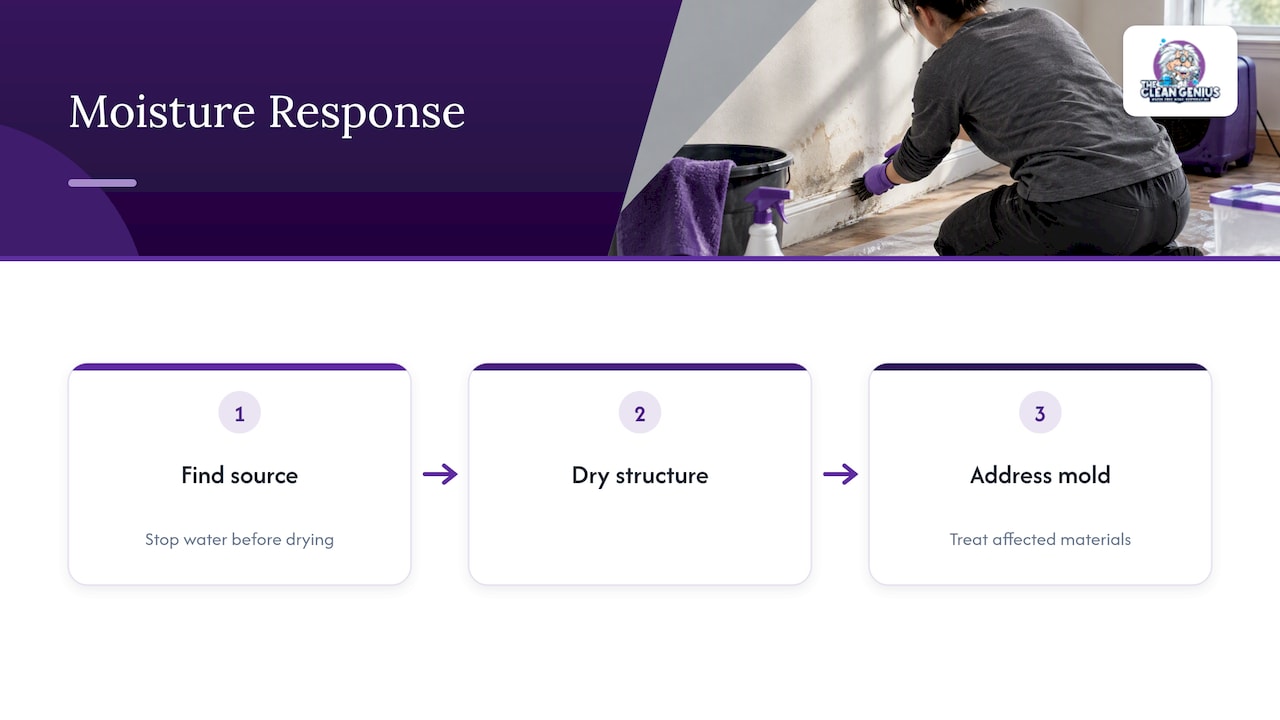
Most of the calls we get about a smell with no visible mold turn out to involve a moisture problem that has been quietly active for a while: a wet wall cavity after an old leak, saturated attic insulation, or a basement that was cleaned but never fully dried. In our experience the nose is a good alarm and a poor map. That is why we start with finding and stopping the water, then dry the structure, and only then deal with the mold or materials that have been affected.
We are a family-owned company with more than 25 years of combined experience serving Chicagoland, and we work directly with your insurance when the cause is a covered water loss. When mold is part of the picture, our teams use Pure Cloud dry-fog technology as part of remediation, and we care about containing the work so that spores aren’t carried into clean rooms. Read more about how HEPA filtration makes mold cleanup safer and the role of negative air pressure in mold removal.
One piece of advice we repeat: don’t wait for the stain. If a house smells musty and you know there was ever water in it, treat the smell as information, and get someone to look.
— Jim
If you want it checked, we can help
If you’ve followed the steps above and the smell is still there, or you’ve found damp materials that need to come out, we can inspect, dry and remediate. We serve homeowners across the northwest and western suburbs, including Arlington Heights, Palatine, Schaumburg, Elgin, Naperville and Wheaton, and we answer emergency calls 24/7.

If the source turns out to be a leak or past flood, see our water damage restoration services. If mold is involved, including in the attic, see our mold removal and remediation page. Both start with an on-site estimate, so you know what you’re dealing with before you commit to anything.
After the smell is gone: keeping it away
Once the source is fixed, a few habits keep the odor from coming back.
- Hold humidity at 30% to 50%. Use a hygrometer, run a dehumidifier in the basement during humid months and use exhaust fans in bathrooms and kitchens, vented outdoors.
- Dry anything wet within 24 to 48 hours. That includes towels, rugs, carpet and the area under an appliance leak. Our property dry-out guide and emergency water damage response steps walk through the first hours.
- Manage water outside. Clean gutters, extend downspouts away from the foundation and keep soil sloping away from the house.
- Don’t pack storage against walls. Leave a few inches of space and avoid cardboard on basement floors.
- Check twice a year. A quick look in the attic, under sinks and at the sump pit each spring and fall takes ten minutes.
- Maintain the HVAC system. Keep the condensate line clear, change filters and have the system serviced.
FAQ
What happens if you smell mold but don’t see it?
It suggests mold may be growing somewhere hidden, such as behind drywall, under carpet, around pipes or in ductwork. The EPA says a moldy odor should be investigated. Look for moisture first, and call a professional before opening walls or ceilings.
How do I stop a room from smelling musty?
Find and fix whatever is making it damp, then increase ventilation and run a dehumidifier. Clean hard surfaces with detergent and water, and discard absorbent materials that can’t be dried. Fragrance products only hide the smell for a short time.
Is a musty smell the same as mold?
Not always. Mold produces compounds that give the typical musty odor, but damp materials can smell musty before mold is visible or even established. Either way the smell points to moisture that needs attention.
How do I get rid of a mold smell in a basement?
Repair the moisture source first, such as a leak, seepage or poor drainage. Then clean hard surfaces with soap and water, throw out carpet or other materials that stay wet, ventilate and wear protective gear. If the affected area is bigger than about 10 square feet, hire a professional.
Sources
- A Brief Guide to Mold, Moisture and Your Home, US EPA
- What does mold smell like?, US EPA
- Mold Cleanup, Repairs, and Excessive Moisture Control, Massachusetts
- Helpful Tips for Homeowners and Tenants, Connecticut DPH, January 2024