
If your humidifier is leaking, cut the power, shut off the water, and start drying everything it touched. Do it right away. The EPA says wet areas should be completely dried within 48 hours to keep mold from growing. A small puddle under a portable unit is a quick cleanup. Water that has run into carpet, a subfloor, drywall or a furnace cabinet is a different problem, and it is easy to underestimate.
This guide covers what to do in the first minutes, why humidifiers leak, how to dry each surface, what hidden damage looks like, and when a leak is more than a DIY job.
What are the immediate steps to take for a humidifier leak?
- For a humidifier leak, the immediate steps are to unplug a portable unit or switch off the furnace and humidifier at the breaker, then close the water supply before touching anything wet. It's crucial to dry carpet and backing within 24 to 48 hours, as anything still wet after 48 hours poses a mold risk. Signs like musty smells, rippling wall coverings, peeling paint, and cracked drywall tape indicate hidden moisture. Professional help is needed if mold covers more than 10 square feet, water is in the furnace or ductwork, or the leak's source is untraceable. Always fix the leak's cause to prevent recurrence.
Table of Contents
- What to Do in the First Minutes
- Why Humidifiers Leak
- Drying Out the Area: A Surface-by-Surface Guide
- Signs of Hidden Water Damage and Mold
- When a Humidifier Leak Needs a Professional
- Our Perspective
- Need Help With Water From a Humidifier Leak?
- Preventing the Next Leak
- FAQ
- Sources
What to Do in the First Minutes
The order matters because water and electricity share the same space around a humidifier.
If it is a portable humidifier
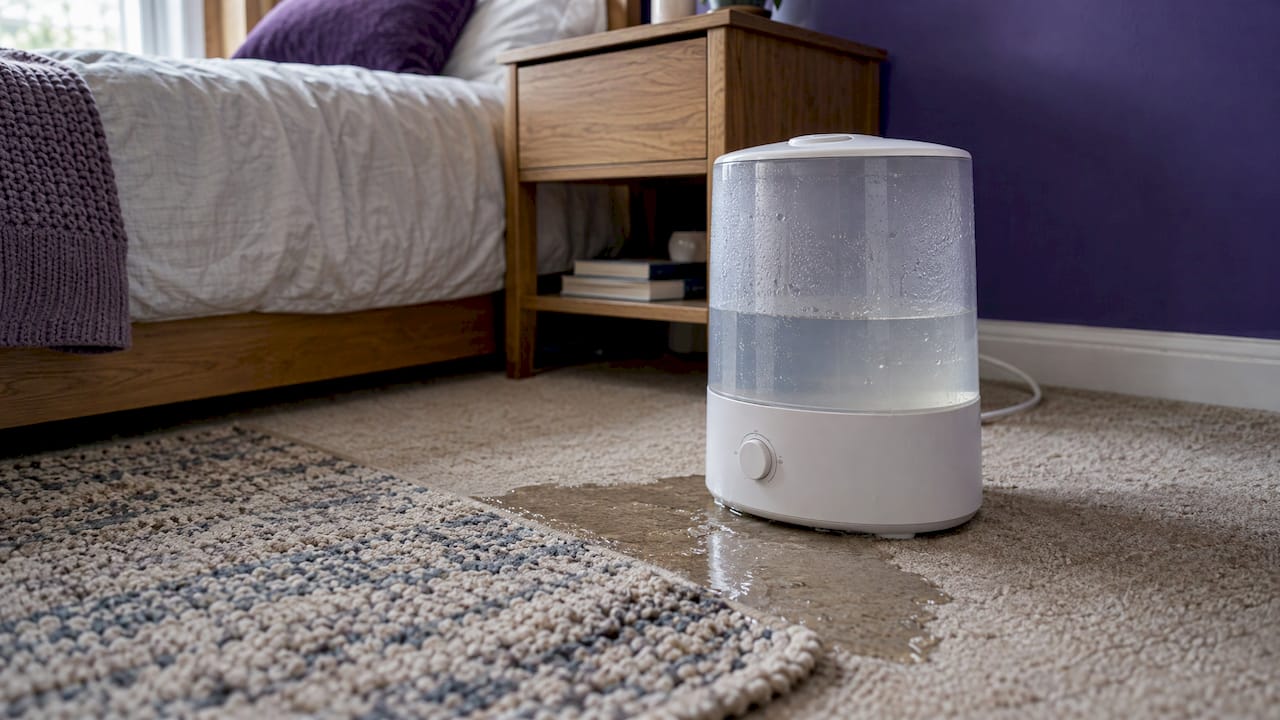
Unplug the unit and move it away from electronics and carpet. Then empty the tank and wipe up the spill, which also reduces mold risk and slip hazards. Check the base and reservoir area for cracks, displaced gaskets or mineral buildup, as AFM Plumbing Heating’s guide describes.
Lift the unit off the floor if you can. Wipe the surface it sat on, and check under it for water that has wicked into a rug or a wooden shelf.
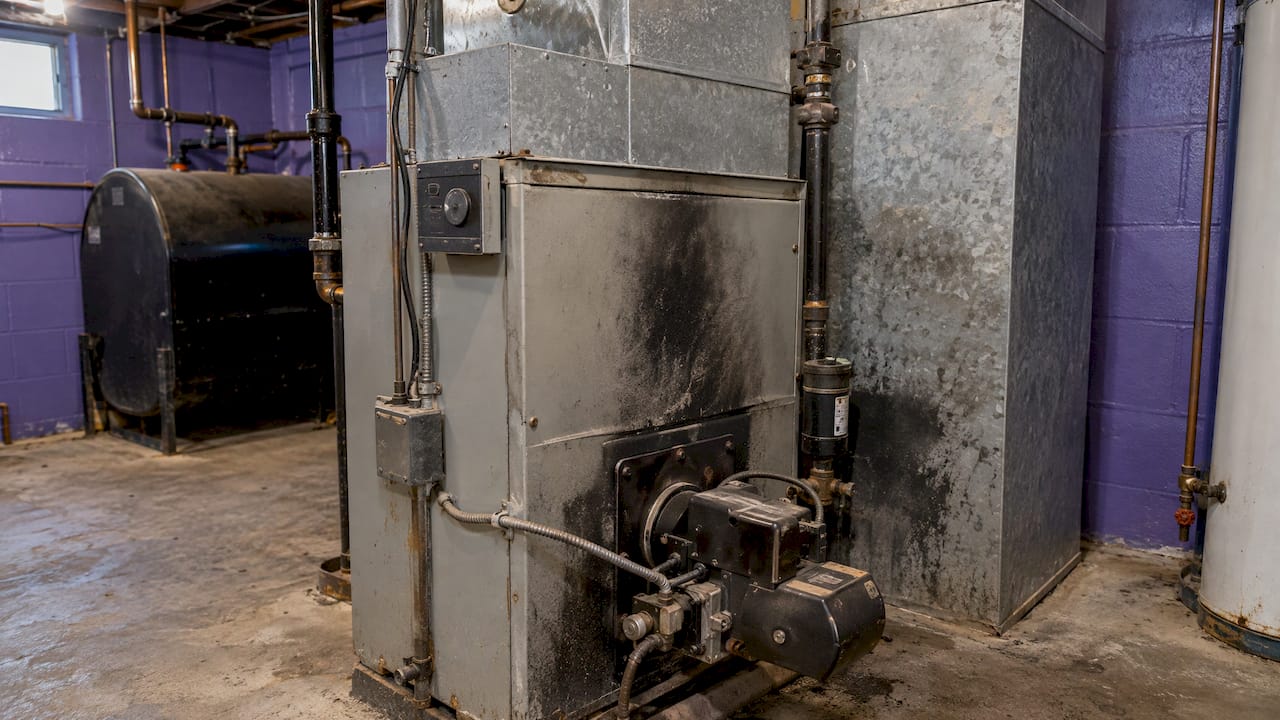
If it is a whole-house humidifier on your furnace
A furnace-mounted humidifier ties water to the heating system, so the sequence is stricter:
- Turn off the furnace and humidifier power at the breaker. Trane advises turning the system off at the thermostat or breaker box if you see water pooling near the furnace.
- Set the humidistat to off and disable any remote controls so the unit can’t restart. A shutdown guide from Storm Ready also says not to touch wet flooring or metal until you are sure the power is dead.
- Close the water supply valve feeding the small line to the humidifier. The same guide describes turning it clockwise on a 1/4-inch line.
- Mop up standing water with towels or a sponge, and run a fan to dry the area. The longer water stays, the higher the risk of mold, according to Trane.
If the floor around the furnace is wet and you can’t reach the breaker without stepping through water, stop. Call an electrician or an emergency service rather than wading in.
Why Humidifiers Leak
Knowing the cause tells you whether you can fix it yourself and whether the leak will repeat.
Portable units. Carrier says a leak is generally caused by a cracked water tank, an improperly seated reservoir, or a blocked drain tube on whole-house models. Its troubleshooting steps include inspecting the tank for hairline cracks, checking that the reservoir cap is threaded correctly and the O-ring is intact, and clearing the drain line of kinks or clogs.
Whole-home units. Bryant says leaks usually come from a blocked drain line, restricted water flow, loose tubing or connections, or mineral buildup on the water distribution parts. It also says visible water around the humidifier is a reason to shut off the water supply and investigate before running it again.
Common patterns by type:
| Type | Typical leak sources | Where the water usually ends up |
|---|---|---|
| Portable (cool or warm mist) | Cracked tank, loose cap, worn seal, tipped unit | Floor, rug, nightstand, nearby electronics |
| Bypass or fan-powered whole-home | Blocked drain line, loose tubing, mineral buildup | Furnace cabinet, floor around the furnace, plenum |
| Steam whole-home | Drain or fill issues, electrical or control faults | Furnace area, nearby flooring and walls |
In Chicagoland, hard water makes mineral buildup a regular culprit. That is general experience rather than a published statistic, but it fits the pattern of scaled-up drain lines and water panels.
Drying Out the Area: A Surface-by-Surface Guide
The EPA’s guidance on drying wet materials sets the clock. Its Table 1 says carpet and backing should be dried within 24 to 48 hours by extracting water, lowering humidity with a dehumidifier, and speeding drying with fans. Wood surfaces need moisture removed immediately, with dehumidifiers, gentle heat and fans. Hard-surface porous flooring can be vacuumed or damp wiped with water and mild detergent, left to dry, and the underflooring checked for dryness.
| Surface | What to do | Time frame |
|---|---|---|
| Carpet and pad | Extract water, run fans and a dehumidifier | Dry within 24 to 48 hours |
| Hardwood and wood furniture | Remove moisture right away, use fans, a dehumidifier and gentle heat | Immediately |
| Hard porous flooring | Damp wipe with mild detergent, let dry, confirm the underfloor is dry | As soon as possible |
| Drywall and ceilings | Dry fast and check behind the surface | Within 48 hours |
| Furnace cabinet and ducts | Have an HVAC technician check for water in the furnace or filter areas | Right after the leak is stopped |
Carpet and padding
Carpet is where most humidifier water ends up. Blot first, then extract if you can, then run air movement across the surface and a dehumidifier in the room. If the pad stays damp, odors follow. If you notice a sour smell weeks later, this guide on mildew smell in carpet explains the causes and fixes. Carpet that was soaked for days, or water that came from a dirty source, is a different story: our article on why carpet must be replaced after flooding explains when drying is not enough.

Hardwood floors
Wood absorbs slowly and shows damage late. Cupping and dark staining can appear days after a leak. If boards feel damp or begin to lift, read our guide to water damaged hardwood floors for what is safe to do yourself and where it stops.
Drywall and the wall behind the humidifier
A leak running down a wall may look dry on the surface while the board behind it is wet. Moisture meters tell you what your eyes can’t. We explain how professionals track readings in moisture meters and drying logs for drywall.
Using a dehumidifier the right way
A dehumidifier is the workhorse of drying, but it only works in a closed room with the air moving. Our piece on the role of dehumidifiers in water restoration explains why, and our equipment guide covers air movers and other tools used on bigger jobs.

Signs of Hidden Water Damage and Mold
A humidifier leak is often slow and out of sight, so the first evidence may be a smell. The EPA lists rippling wall coverings, cracked drywall tape and peeling paint as signs of water damage to investigate quickly, and says to check any area that smells moldy or musty.
Where to look after a humidifier leak:
- The wall and baseboard behind and beside the unit
- The floor under the furnace or the humidifier’s water line
- The ceiling below, if the humidifier sits on an upper floor
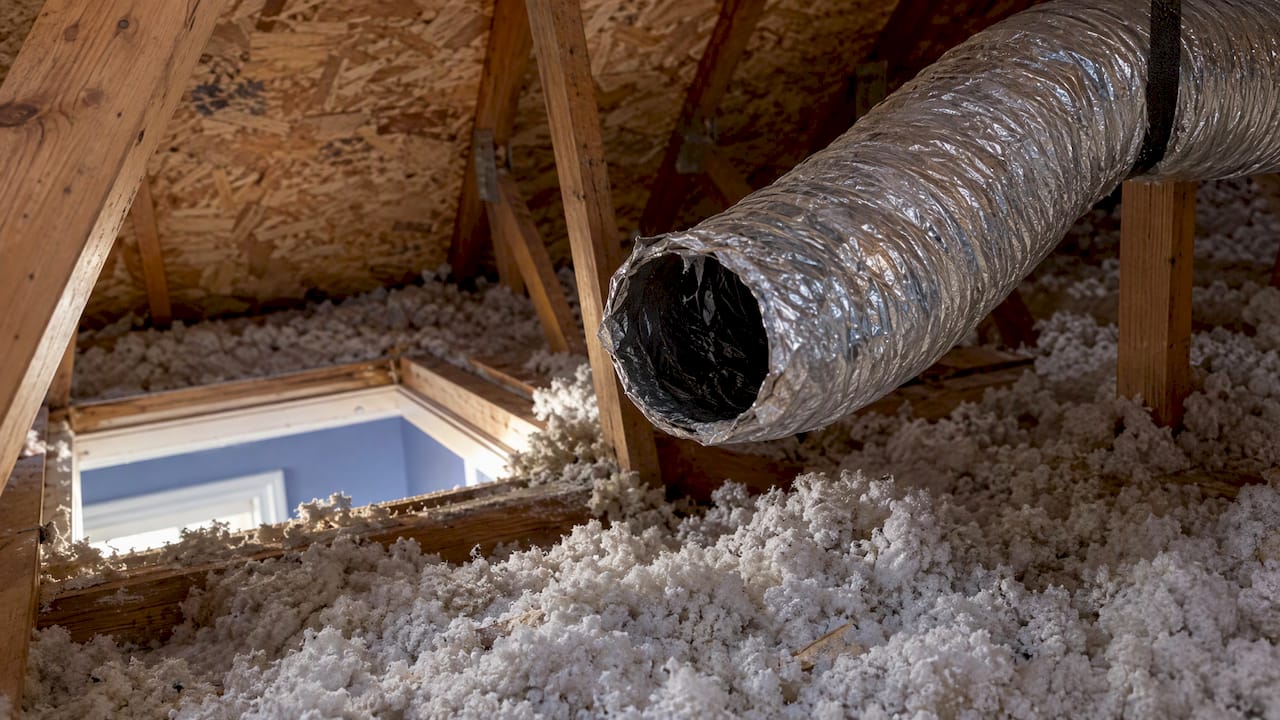
- The inside of the furnace cabinet and the filter area. The EPA says to check that water has not leaked into the furnace or filter areas
- Carpet and drapes near a portable unit, which the EPA says should not be allowed to become damp
If you see signs several days after the leak, read our guide to mold growth signs after flooding. The timeline applies to any clean or gray water event, not just floods. Water from a leaking ceiling is covered in our ceiling leak guide, which is useful if the humidifier was upstairs.
The EPA also notes that mold may have grown even if materials are dried within 48 hours, so a smell that lingers after drying deserves attention.
When a Humidifier Leak Needs a Professional
Some jobs are a towel and a fan. Others need trained people. These are the lines to watch.
Call an HVAC technician when
Carrier says to call a professional for complex electrical issues, a malfunctioning solenoid valve, or suspected mold in ductwork. Bryant says the same when basic troubleshooting fails or leaks keep returning. A furnace that has been wet inside should not be switched back on until a technician has checked it.
Call a water and mold restoration company when
- More than 10 square feet of mold. The American Lung Association says the EPA recommends professional help for mold covering more than 10 square feet, roughly 3 feet by 3 feet. The Illinois Department of Public Health gives the same threshold.
- Materials wet for more than 48 hours. The EPA’s guidance says to move to its remediation guidelines when mold has grown or materials stayed wet beyond that window.
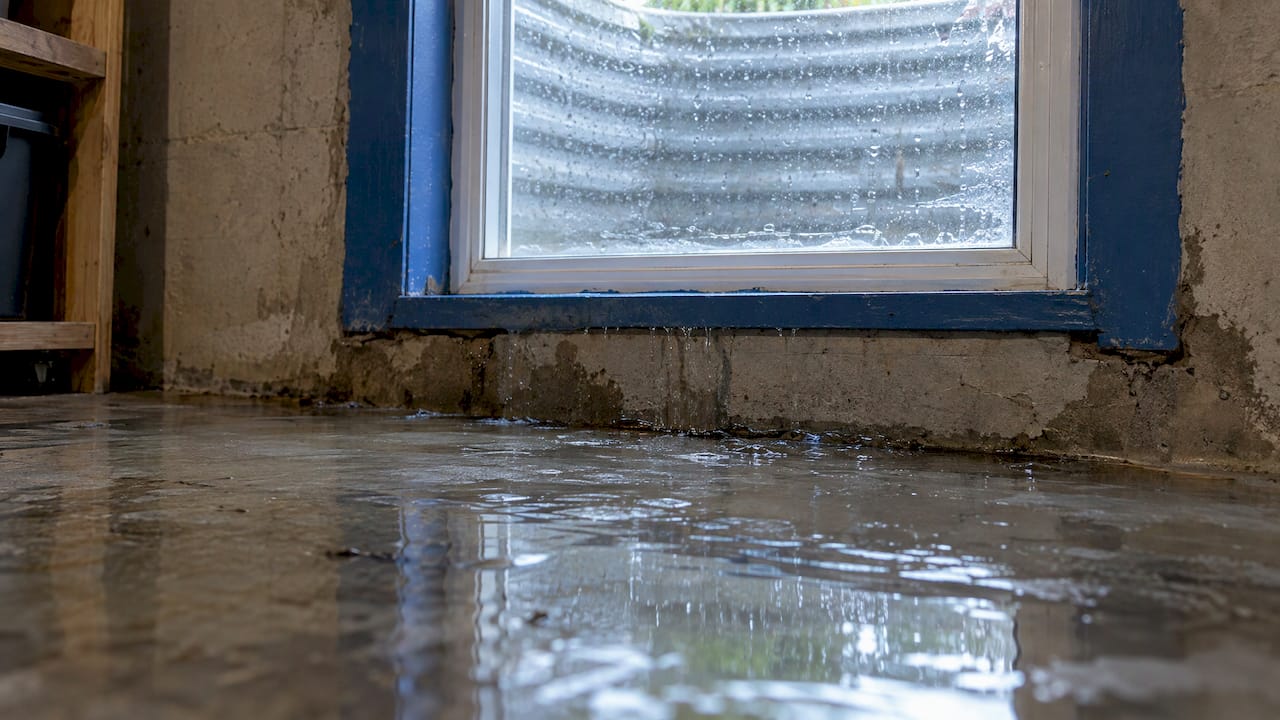
- Water inside walls, under flooring or in the subfloor. Our subfloor water damage guide explains why these hidden layers matter.
- A moisture source you haven’t found. The American Lung Association calls identifying and eliminating the water source the most critical step, and says you may need a plumber or contractor to work out what to fix. The Illinois health department adds that if the moisture source isn’t fixed, mold will grow again.
For smaller patches, the American Lung Association says homeowners can use mild detergent and warm water on areas under 10 square feet, wearing at least an N-95 mask, disposable gloves and goggles. Porous materials such as ceiling tiles likely can’t be cleaned thoroughly and must be discarded.
One more point from Illinois health officials: if you can see or smell mold, testing is usually not necessary, because you probably have a moisture problem to fix. The department does not recommend testing in most cases. Put your money toward finding the water and drying it.
Unsure where your situation falls? Our comparison of professional and DIY mold removal walks through the decision, and mold removal safety practices covers protective gear.
Our Perspective
We get calls about humidifier leaks that started as a small thing. A tank cracked, a drain line clogged, and nobody noticed until a baseboard swelled or a closet smelled musty a week later. By then the water is rarely on the surface anymore.
Here is what we tell homeowners across Chicagoland. Stop the water, then get everything dry quickly, and don’t stop at what you can see. Drywall, carpet pad and the cavity behind a baseboard hold moisture long after the top looks fine. That is why we measure moisture instead of guessing, and why we keep going until the readings say the materials are dry.
If mold has started, we remove it with our Pure Cloud dry-fog technology, which is non-toxic, and we deal with the moisture source so the problem doesn’t return. We are a family-owned company with more than 25 years of combined experience, and our teams are certified and insured. If the leak is covered by your homeowner’s policy, we work directly with your insurance company, so you aren’t stuck sorting out paperwork while your floors are wet.
A humidifier leak is a good reason to call early. A quick assessment costs you far less worry than discovering hidden damage in the spring.
Jim
Need Help With Water From a Humidifier Leak?
If the water has gone beyond a towel’s reach, our team can help. The Clean Genius provides water damage restoration for leaks, burst pipes and full property dry-out, and mold removal and remediation when moisture has already caused growth. We are available 24/7 for emergencies and serve Arlington Heights, Naperville, Palatine, Schaumburg, Elgin and many other Chicagoland communities.

Before you call, take photos of the leak, the humidifier and the damage, and keep any receipts. Our water damage insurance claim checklist shows what to document, and our emergency water damage response steps cover the first hours in more detail. You can also see examples of successful water damage restoration from our past work.
Preventing the Next Leak
Most humidifier leaks are preventable with routine care.
- Clean on a schedule. For portable units, the EPA advises emptying the tank, wiping all surfaces dry and refilling with fresh water daily. Without manufacturer directions, it says to clean them every third day with a 3% hydrogen peroxide solution. Follow your manual first.
- Service whole-home units each season. Bryant recommends cleaning the humidifier and replacing the water panel at least once per heating season.
- Keep humidity moderate. The EPA says not to humidify above 50 percent indoor relative humidity, because higher levels may encourage biological growth. It also says the area around the humidifier should not become damp or wet. If dampness appears, turn the output down.
- Watch for condensation. The EPA’s mold course says relative humidity above 60 percent is likely to cause condensation that can lead to mold. Windows fogging in winter is a cue to lower the setting.
- Place portable units wisely. Put them on a hard, waterproof surface away from carpet, drapes and electronics.
- Check connections each fall. Look at tubing, fittings and the drain line before the heating season, and again after a few weeks of use.
These habits take minutes. The cleanup they prevent can take days.
FAQ
Can a humidifier leak cause serious water damage?
Yes, if the water goes unnoticed. A steady drip into carpet, a subfloor or a furnace cabinet can soak materials that need drying within 48 hours to avoid mold. Damage tends to be greatest when the leak is slow and hidden, such as behind a baseboard or under a whole-house unit.
Should the water valve on my humidifier be on or off when it leaks?
Off. Shut the supply valve as soon as you see water around a whole-home unit, after switching off power at the breaker. Bryant says visible water is a reason to shut off the water supply and investigate before you keep operating it. Leave it off until the cause is fixed.
How long does it take for mold to grow after a humidifier leak?
Mold can begin when materials stay wet beyond about 48 hours, which is why the EPA sets that target for drying. Growth can still occur even when you dry within that window, so keep checking for a musty smell or stains over the following weeks.
Does homeowner’s insurance cover humidifier leak damage?
It depends on your policy and on how the water escaped, so read your policy or ask your agent. Document the damage with photos before cleanup. We work directly with insurance companies on the restoration side and can walk you through what to record.
Can I run my furnace after the humidifier leaked?
Not until you’ve confirmed the power is safe and water hasn’t reached the furnace or filter areas. Carrier and Bryant both point to a professional for electrical faults and persistent leaks. Have an HVAC technician look at it before you restart it.
Sources
- U.S. EPA, Mold Course Chapter 9
- U.S. EPA, Table 1: water damage cleanup and mold prevention guidance
- U.S. EPA, Use and Care of Home Humidifiers
- U.S. EPA, Indoor Air Facts No. 8
- Trane, Furnace Leaking Water
- Carrier, Humidifier Repair Guide
- Bryant, Whole-Home Humidifier Troubleshooting
- Illinois Department of Public Health, Reducing Your Exposure to Mold
- American Lung Association, Mold
- Storm Ready, Humidifier Emergency Shutdown Steps
- AFM Plumbing Heating, Humidifier Leaking From Bottom
- EPA mold remediation guidance, Table 1 and Table 2 summary