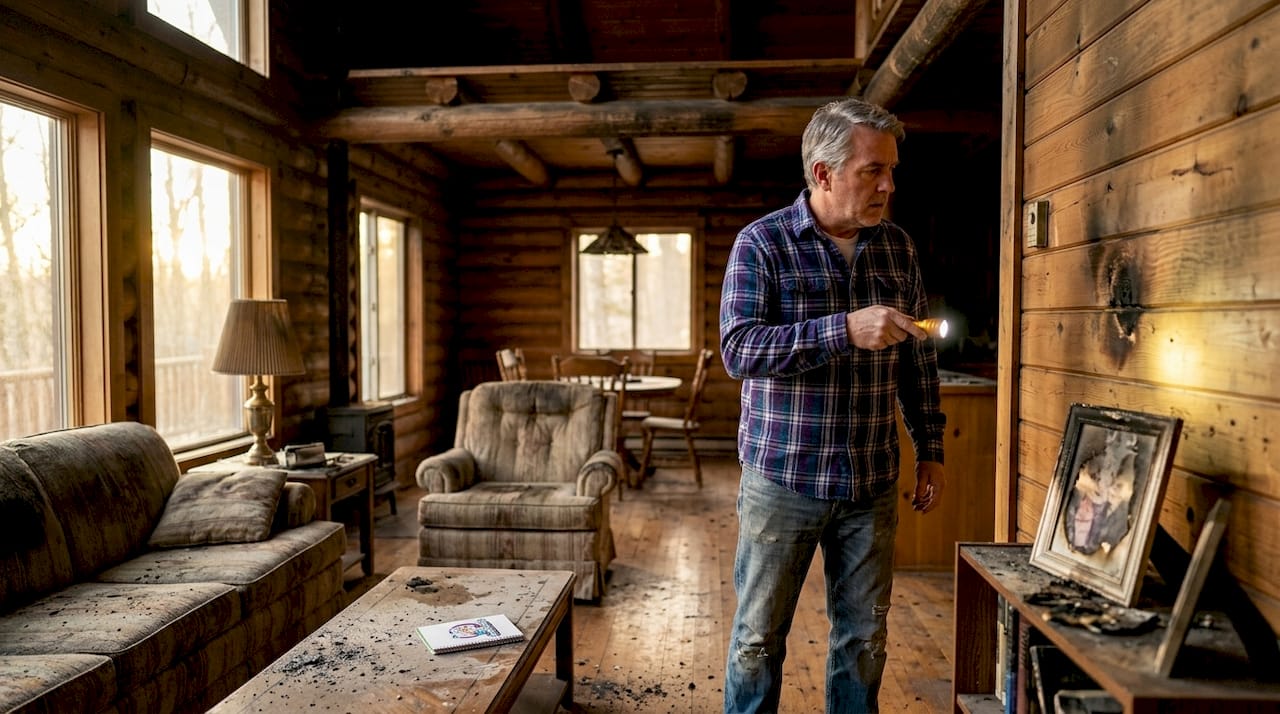
Fire smoke damages home materials through acidic soot and volatile chemical compounds that begin degrading surfaces within hours of exposure. The industry term for this process is “smoke and soot contamination,” and it covers far more than visible staining. Metal corrodes, plastic yellows, drywall absorbs odor deep into its core, and fabrics trap combustion byproducts that standard cleaning cannot reach. What makes fire smoke uniquely destructive is its chemistry: soot acidity ranges from pH 4 to 6, placing it in the same corrosive range as vinegar. Without professional intervention, that damage becomes permanent within 48 to 72 hours.
How fire smoke damages home materials: the chemistry behind it
Fire smoke is not a single substance. It is a mixture of gases, aerosols, and solid particles whose exact composition depends on what burned and at what temperature. That chemical “DNA” varies dramatically from fire to fire, and it determines which materials suffer the most and which cleaning methods will work.
Soot particles carry acidic compounds that bond to surfaces on contact. On painted walls, this creates discoloration that deepens over time as the acid continues reacting with the paint binder. On metal fixtures, the same acidity triggers oxidation within hours. On porous materials like drywall and wood, the particles migrate inward, making surface cleaning alone ineffective.
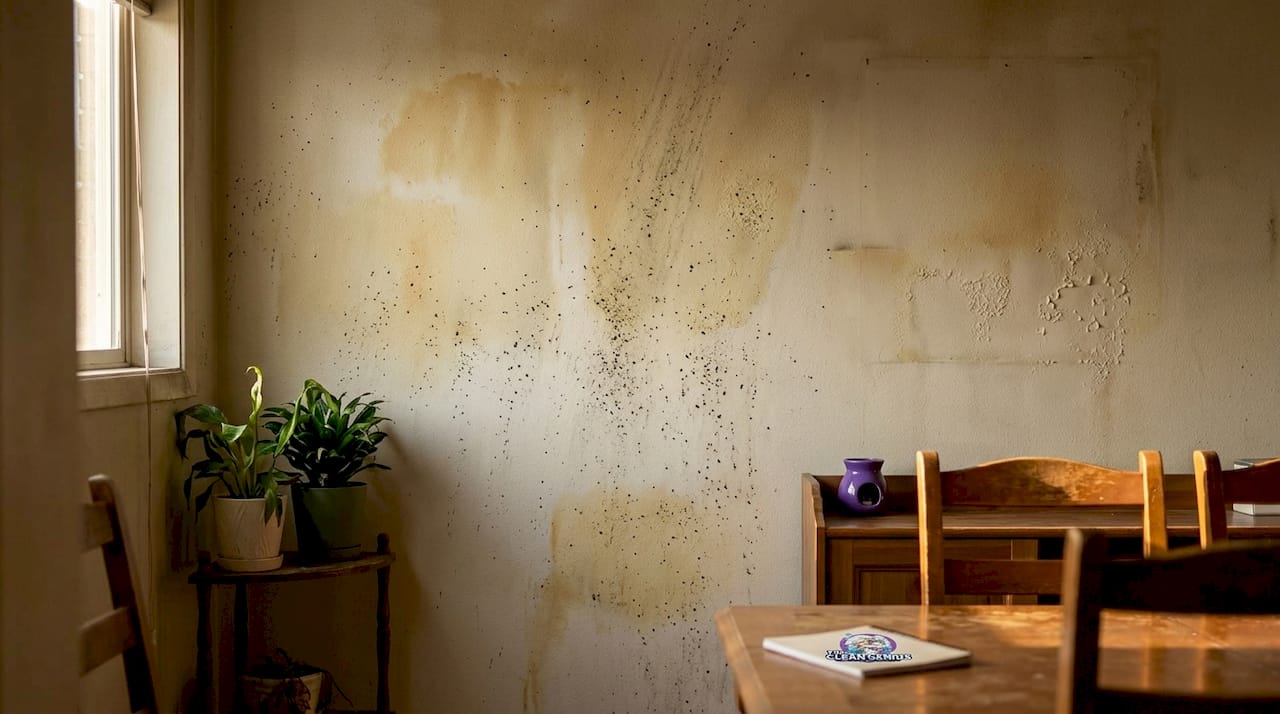
Volatile organic compounds (VOCs) travel with smoke and absorb into soft furnishings, carpets, and wall cavities. These are the compounds responsible for persistent smoke odor. They do not evaporate on their own. They require active treatment to neutralize, and the longer they sit, the deeper they penetrate.
Understanding this chemistry is the first step toward realistic expectations. Not all smoke damage looks the same, and not all of it responds to the same treatment.
What types of smoke residues affect home materials?
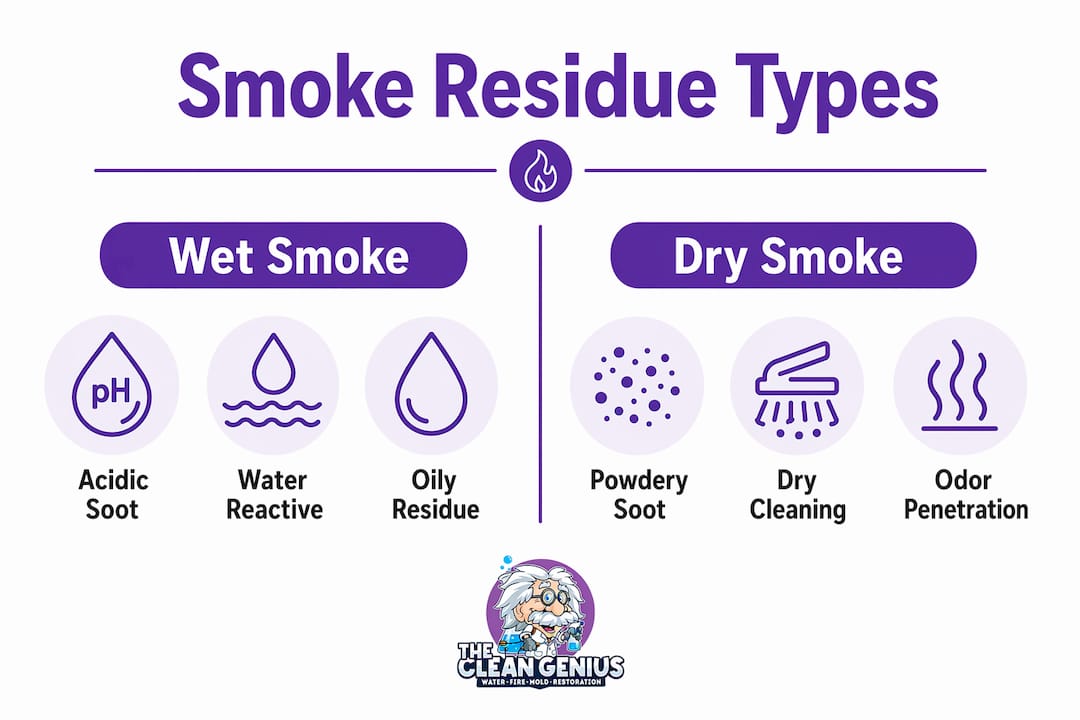
Different smoke types require specific cleaning methods, and using the wrong approach can permanently worsen the damage. Restoration professionals recognize four primary residue categories:
- Dry smoke: Produced by fast-burning, high-temperature fires fueled by paper or wood. The residue is powdery and relatively easy to remove with dry cleaning methods. It does not smear as badly as other types.
- Wet smoke: Produced by slow-burning, low-temperature fires involving rubber, plastic, or synthetic materials. The residue is sticky, oily, and has a strong odor. Wet smoke cleanup costs 30%–50% more than dry smoke cleanup due to the extra labor and specialized degreasers required.
- Protein smoke: Produced by kitchen fires involving meat or organic material. The residue is nearly invisible but leaves a strong, persistent odor and a greasy film that discolors painted surfaces over time.
- Fuel oil soot: Produced by furnace puffbacks or oil-burning equipment malfunctions. The residue is dense, oily, and coats every surface it contacts, including inside HVAC ductwork.
Each type reacts differently to water, solvents, and mechanical cleaning. Applying water to wet smoke or fuel oil soot, for example, can permanently lock the stain into the surface.
Pro Tip: If you are unsure what type of fire caused the damage, do not attempt cleaning. Applying the wrong product first can make professional restoration significantly harder and more expensive.
How does smoke affect specific home materials?
The effects of fire smoke vary by material. Some surfaces corrode within hours. Others absorb odor so deeply that replacement becomes the only practical option. The table below summarizes the key vulnerabilities.
| Material | Primary damage mechanism | Time to permanent damage |
|---|---|---|
| Metal (fixtures, appliances) | Acidic soot causes corrosion and pitting | Hours |
| Plastic (outlets, trim, devices) | Yellowing and staining from chemical bonding | 24–72 hours |
| Drywall | Smoke absorbs into gypsum and paper facing | 48–72 hours |
| Wood (finished and unfinished) | Soot penetrates grain; finish condition affects depth | 48–72 hours |
| Fabrics and carpets | VOCs and particles absorb deeply into fibers | Ongoing while exposed |
| Painted walls | Acid discolors and degrades paint binder | 24–48 hours |
Metal surfaces corrode within hours of smoke exposure, and plastic discoloration often becomes irreversible without quick cleaning. That speed surprises most homeowners who assume they have days to act.
Drywall presents a particular challenge. Smoke particles penetrate both the gypsum core and the paper facing, embedding odor compounds that surface cleaning cannot reach. In severe cases, affected drywall sections require full replacement rather than cleaning.
Porous materials like upholstery and carpeting absorb smoke particles continuously while exposed, meaning every hour of delay increases the depth of contamination. Removing textiles from the affected area quickly is one of the most effective steps a homeowner can take immediately after a fire.
Wood behaves differently depending on its finish. Sealed or painted wood resists initial penetration better than bare or weathered wood. However, once soot works into cracks or grain, the damage is difficult to reverse without stripping the finish entirely.
Why is timing critical when dealing with smoke damage?
Smoke and soot damage becomes permanent within 48 to 72 hours, after which materials like metal, plastic, and painted walls often require replacement rather than cleaning. That window is the single most important fact a homeowner can know after a fire.
Soot acidity does not stop working once the fire is out. It continues reacting with surfaces for days, deepening corrosion on metal, locking stains into plastic, and driving odor compounds further into porous materials. Every hour without professional intervention narrows the window for salvage and raises the final restoration cost.
Moisture from firefighting adds a second threat. Wet surfaces combined with smoke residue create ideal conditions for mold growth, which can begin within 24 to 48 hours. A fire event can therefore trigger both smoke damage and a mold problem simultaneously. Homeowners dealing with both issues should understand the risks of mold remediation as a parallel concern.
DIY cleaning often causes smearing that embeds soot deeper into surfaces, requiring more extensive professional restoration later. Standard household vacuums lack HEPA filtration and spread soot particles rather than capturing them. A well-intentioned cleanup attempt can turn a restorable surface into one that needs replacement.
Pro Tip: Before touching anything, photograph every affected room thoroughly. Detailed documentation supports your insurance claim and helps restoration professionals assess the full scope of damage accurately.
The fire damage cleanup timeline for Chicagoland homeowners shows that professional assessment within the first 24 hours consistently produces better salvage outcomes and lower total costs.
What are the best professional restoration practices?
Effective smoke damage restoration follows a defined sequence. Skipping steps or changing the order produces incomplete results, which is why professional certification and experience matter.
- Residue identification. Technicians assess which smoke type is present before selecting any cleaning product. Chemical identification of smoke residue is the critical first step because the wrong solvent can permanently set a stain.
- Dry cleaning for dry smoke residues. Chemical sponges and dry cleaning compounds lift powdery soot from walls and ceilings without smearing. This step always precedes wet cleaning.
- Degreasing for wet smoke and fuel oil soot. Specialized alkaline degreasers break down oily residues on hard surfaces. Water-based cleaners are avoided on oily residues.
- HEPA vacuuming. Professional smoke removal includes HEPA vacuuming to capture fine soot particles from surfaces, upholstery, and HVAC registers without spreading contamination.
- HVAC system cleaning. HVAC systems distribute smoke particles throughout the home if left uncleaned. Ductwork, blower assemblies, and evaporator coils all require professional remediation to prevent recontamination.
- Odor treatment. Thermal fogging, ozone treatment, and hydroxyl generators each address VOCs differently. Odor removal techniques reduce but may not fully eliminate deeply embedded VOCs in severe cases. Honest restorers communicate this limitation upfront.
- Replacement assessment. Heavily contaminated porous materials, including sections of drywall, insulation, and saturated carpeting, are evaluated for replacement when cleaning cannot achieve acceptable results.
The full fire damage restoration process covers each of these stages in detail, including what homeowners should expect at each phase.
How can homeowners prevent or minimize smoke damage?
The actions taken in the first hour after a fire determine how much of your home is salvageable. Speed and restraint both matter.
- Evacuate and stay out until fire officials and restoration professionals confirm the structure is safe. Re-entering too early exposes you to toxic residues and risks spreading contamination.
- Shut off the HVAC system immediately. Running the system after a fire circulates smoke particles into every room, including those unaffected by the fire itself.
- Remove salvageable textiles quickly. Clothing, curtains, and area rugs that are not directly contaminated should be removed and stored away from the affected area to limit ongoing absorption.
- Do not use household vacuums or wipe surfaces. Both actions spread soot and embed it deeper. Leave surfaces untouched until a professional assesses the residue type.
- Call for professional assessment within 24 hours. Meeting the critical 48 to 72 hour window requires starting the process immediately, not after the insurance adjuster visits.
- Document everything before any cleaning begins. Photos and video of every room, surface, and affected item support your insurance claim and establish the baseline for restoration.
Regular home maintenance also reduces fire risk and improves material resilience. Keeping dryer vents clear, maintaining heating equipment, and replacing aging electrical wiring all lower the probability of a fire starting in the first place.
Key takeaways
Fire smoke causes permanent material damage within 48 to 72 hours through acidic soot and VOC absorption, making professional assessment within 24 hours the single most effective action a homeowner can take.
| Point | Details |
|---|---|
| Damage timeline is tight | Soot acidity causes permanent staining and corrosion within 48–72 hours of exposure. |
| Smoke type determines method | Dry, wet, protein, and fuel oil residues each require different cleaning approaches. |
| DIY cleaning worsens damage | Household vacuums spread soot; wiping smears it deeper into surfaces. |
| HVAC spreads contamination | Shut off the system immediately to prevent smoke particles from reaching unaffected rooms. |
| Odor may not fully resolve | Deeply embedded VOCs in porous materials can persist even after professional treatment. |
What I’ve learned after years of smoke damage calls
The homeowners who call us in the best position are not the ones with the smallest fires. They are the ones who called fastest and touched the least.
The most common mistake I see is the well-meaning homeowner who grabs paper towels and starts wiping walls within the first hour. That action takes a cleanable surface and turns it into a replacement job. Wet smoke and protein residues in particular smear on contact with dry cloth, bonding the oily compounds permanently into the paint or drywall facing.
The second mistake is assuming that if you cannot see damage, there is none. Protein smoke from a kitchen fire leaves almost no visible residue. But the greasy film it deposits on every surface in the room will discolor paint within weeks and hold odor for months. Treating all smoke as standard soot leads to costly restoration errors. Identification comes before cleaning, every time.
I also want to be honest about odor. Smoke odors can return even after thorough professional treatment, particularly in homes with heavily contaminated drywall or subfloor. Modern building materials create complex chemical smoke signatures that no single treatment fully neutralizes in every case. A restoration company that promises complete odor elimination in every scenario is overselling. The realistic goal is a dramatic reduction, with replacement of the most saturated materials when needed.
The homeowners who get the best outcomes are the ones who call early, document thoroughly, and trust the process. The fire restoration timeline is not flexible. The chemistry does not wait.
— Jim
Thecleangenius is ready when smoke damage strikes
Smoke damage does not slow down while you figure out your next step. Thecleangenius responds 24/7 to fire and smoke emergencies across Chicagoland, from Arlington Heights to Naperville and everywhere in between.

Our certified technicians identify residue type before touching a surface, then apply the correct cleaning method for each material in your home. We handle soot removal, odor treatment with advanced deodorization technology, HVAC cleaning, and full reconstruction when replacement is necessary. We also work directly with your insurance company to document damage and support your claim from the first call. With over 25 years of combined experience and more than 400 five-star reviews, Thecleangenius delivers the professional fire damage restoration that protects your home and your investment. Call us now for an immediate assessment.
FAQ
How quickly does smoke damage become permanent?
Smoke and soot damage becomes permanent within 48 to 72 hours on most surfaces, including metal, plastic, and painted walls. Professional intervention within 24 hours produces the best salvage outcomes.
Can I clean smoke damage myself?
DIY cleaning is not recommended because standard vacuums spread soot and wiping smears oily residues deeper into surfaces. Both actions can turn a restorable surface into one that requires full replacement.
Why does smoke odor come back after cleaning?
Smoke odors return when VOCs are deeply embedded in porous materials like drywall, carpeting, or wood. Even professional treatment reduces rather than guarantees complete elimination in severe cases.
Does smoke damage affect rooms away from the fire?
Yes. HVAC systems circulate smoke particles throughout the entire home, depositing residue on ductwork, coils, and surfaces in unaffected rooms. Shutting off the system immediately after a fire limits this spread.
What materials are most vulnerable to fire smoke?
Metal corrodes within hours, plastic yellows within 24–72 hours, and porous materials like drywall, carpeting, and upholstery absorb odor compounds continuously while exposed, making them the most difficult to restore without prompt professional treatment.