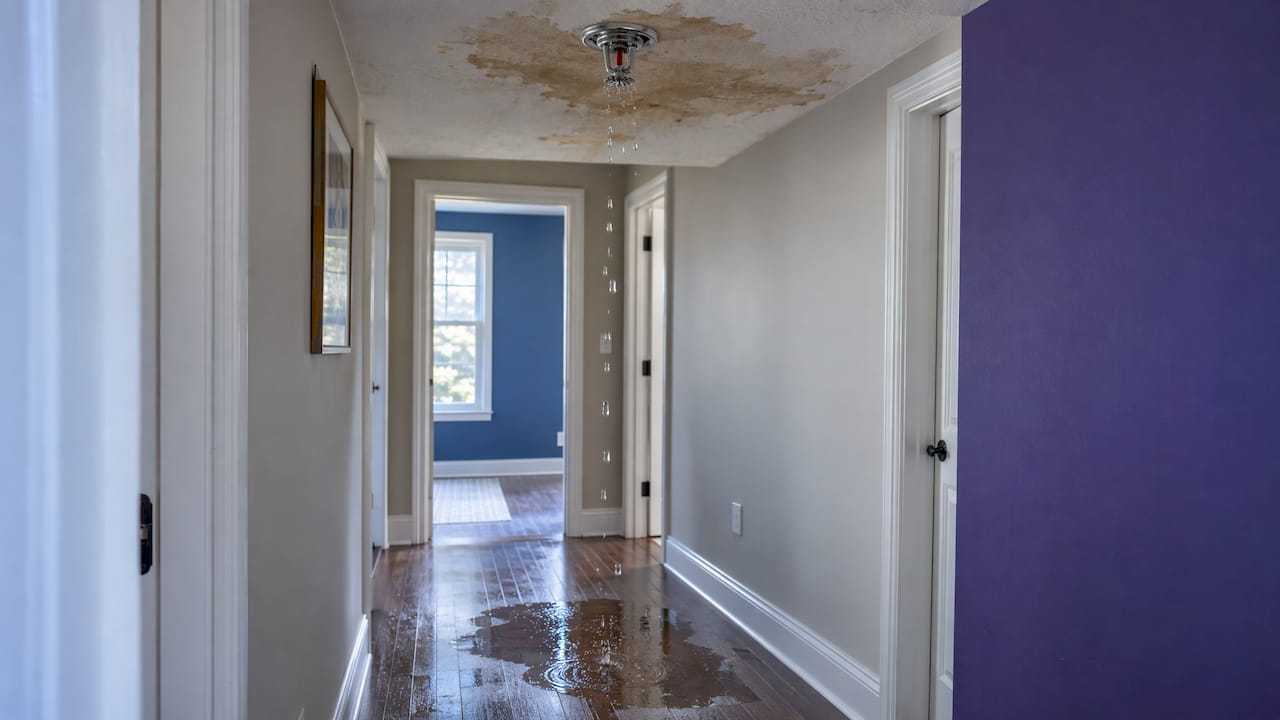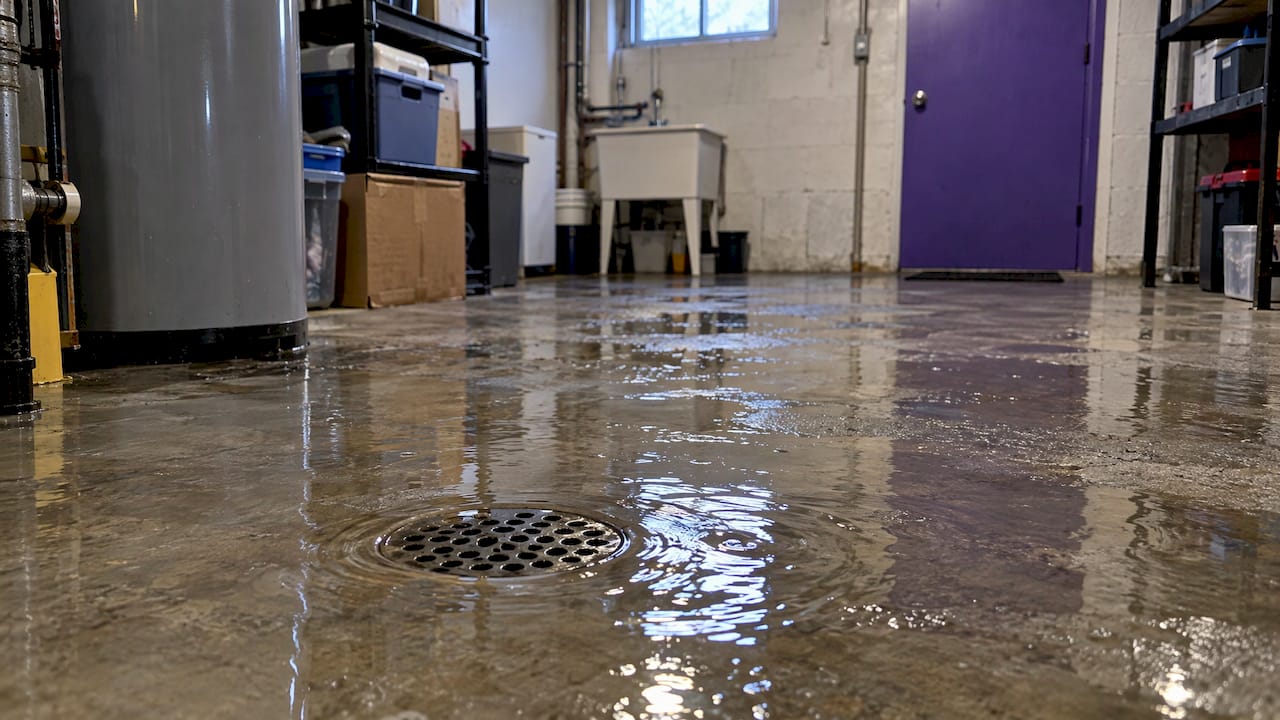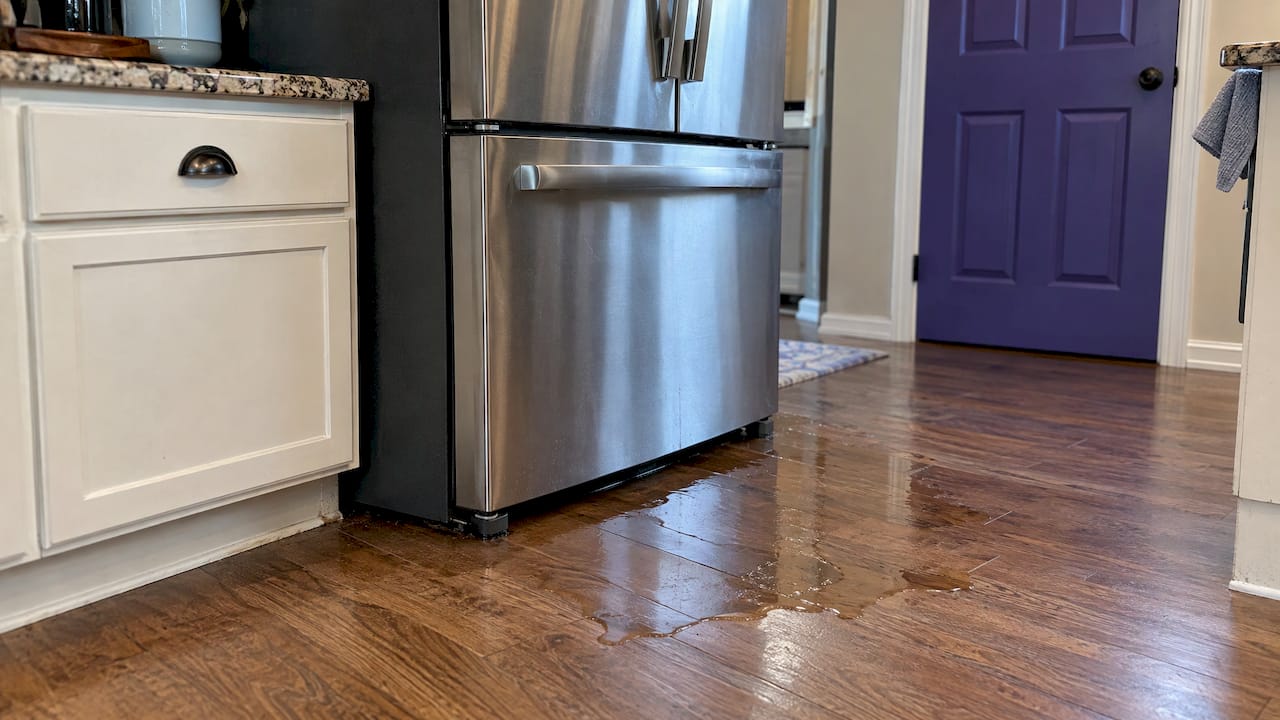

A leaking fridge is a small appliance problem until the water gets under the flooring and into the cabinet bases and drywall, where it can sit unseen. The fix is two jobs: find and stop the source, then dry the structure before it stays wet past the point where mold can start. If the water has spread beyond a spill you can wipe up, or you can’t tell how far it went, we can come out and assess it. The Clean Genius handles water damage restoration across Chicagoland and works directly with your insurance.
What are the immediate steps for a refrigerator leak?
- Shut off the fridge’s water supply and unplug it if water is near the outlet. Then photograph everything before you clean.
- Most leaks come from the defrost drain, the water line, the inlet valve or the filter. The spot where water appears tells you which.
- The EPA says materials dried within 24 to 48 hours usually will not grow mold, so speed matters more than the repair.
- Homeowners insurance typically pays for the resulting water damage, not the refrigerator itself, so document before you repair.
- Water under flooring, inside cabinets or behind walls is a job for professional drying equipment.
Table of Contents
- First 30 minutes: stop the water and protect yourself
- Where the water is coming from
- Why the water matters more than the fridge
- Drying the area and spotting hidden moisture
- Document it for your insurance claim
- When to call a professional
- What we do about it
- Get the kitchen dried and the claim started
- FAQ
- Sources
First 30 minutes: stop the water and protect yourself
Start with the order that protects people first, then the house.
- Cut power if water is near outlets or the panel. Unplug the fridge only if you can reach the plug without standing in water. If you can’t, switch off the breaker for that area. Insurers list this among the urgent steps, along with shutting off the nearby water valve and moving furniture to a dry spot.
- Close the water supply to the fridge. That is usually a small valve behind or beside the unit, or under the nearby sink. Closing it also tells you something: if the leak stops, the source is the ice maker or dispenser line rather than the defrost system, according to iFixit’s troubleshooting guide.
- Photograph and video before you touch anything. Get the puddle, the wet floor, the fridge’s back and base, and the surrounding cabinets. Your insurer will want this, and it is hard to recreate after cleanup.
- Start removing standing water. Towels and a wet/dry vacuum work for a small puddle. Pull rugs and anything absorbent off the floor.
- Move food and items out of the way so you can see the floor and the wall behind the unit.
If water is spreading into other rooms, coming through a ceiling below, or has been running for hours, skip ahead to the section on when to call a professional. Our emergency water damage response steps cover the same first hours in more detail.
Where the water is coming from
A refrigerator leaks from three basic places: the defrost system, the ice maker and the water dispensing system, as iFixit’s guide lays out. Where the puddle appears narrows it down fast.
| Where you see water | Likely source |
|---|---|
| Under the crisper drawers or inside the bottom of the fridge | Clogged or frozen defrost drain |
| Ice sheet on the freezer floor | Frozen defrost drain or an overfilling ice maker |
| Small puddle at the front | Cracked or overflowing drain pan, or dispenser drip |
| Behind or under the unit | Supply line, inlet valve or filter housing |
| Bottom center | Cracked or misplaced drain pan, or heavy humidity |
The first four rows follow ABC Denver Appliance Repair’s leak-location guide. The last follows GE Appliances’ service FAQ, which also says water at the back usually means a damaged water valve or supply connection, and that a drain pan problem is often best left to professionals.
The defrost drain
Every frost-free fridge melts frost off its evaporator coil several times a day. The meltwater runs down a drain to a pan. When food debris clogs the drain or it freezes solid, water overflows and pools under the crisper drawers. The ABC Denver team calls this the most common refrigerator leak they see, and notes that if the drain refreezes within a few weeks, the underlying defrost problem hasn’t been fixed. A door left open for a long time can also ice up the evaporator and send water out the bottom, per Frigidaire’s owner support.
The water line, valve and filter
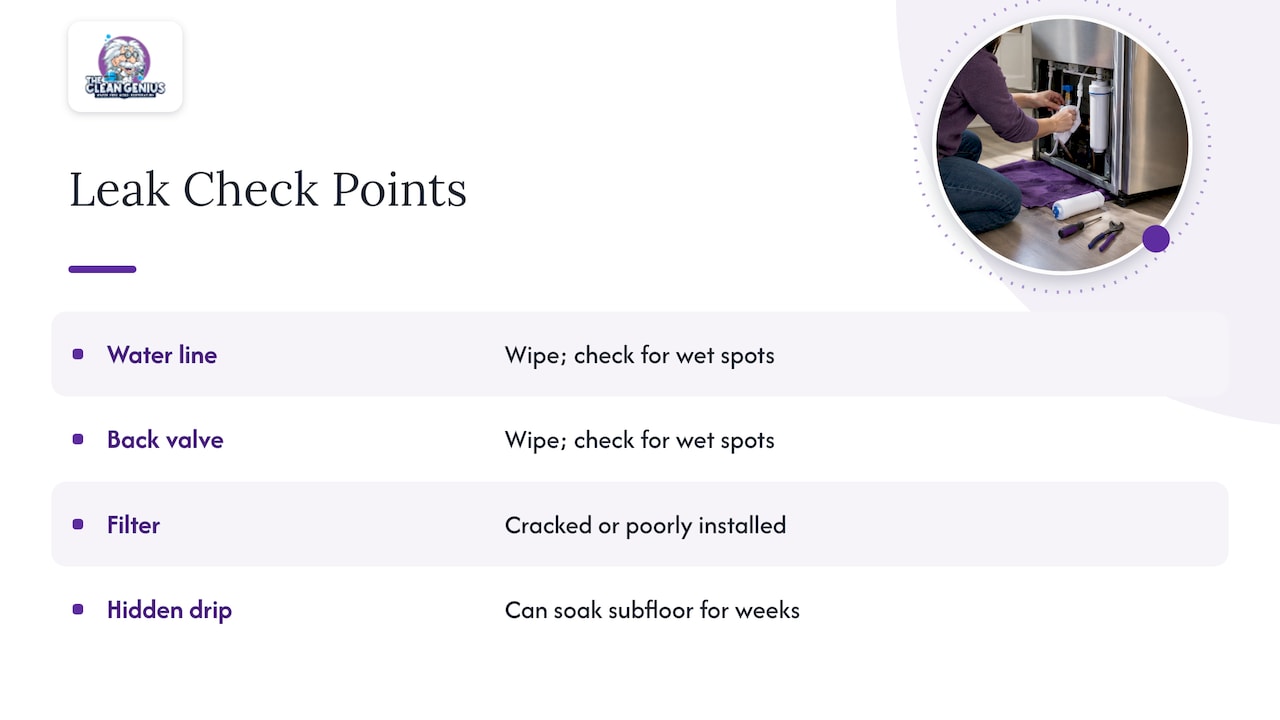
These are the leaks that do the most damage, because they run under pressure and often out of sight. Frigidaire suggests wiping the lines and the back valve with a dry paper towel to find wet spots, and notes that a cracked or poorly installed filter can leak inside the cabinet. A slow drip behind the unit can soak the subfloor for weeks before a stain shows up in the room.
Once you know the source, repair the appliance or have it serviced. Keep the failed part, because your insurer may ask for it, as The Hartford’s guidance points out.
Why the water matters more than the fridge
The appliance repair is usually a modest job. The damage underneath is the expensive one. Refrigerator water travels along the floor and wicks into:
- Flooring: laminate and engineered wood swell and cup at the seams; vinyl can trap water underneath.
- Cabinet bases and toe kicks: particleboard soaks up water and does not recover.
- Drywall and baseboards: water wicks upward behind the paint, so the visible wet line understates what is wet.
- Subfloor: the layer you can’t see, and the slowest to dry.
In a Chicagoland kitchen, that often means a fridge sitting on a slab-adjacent or finished floor next to an exterior wall, where cool surfaces and trapped moisture make drying harder. The EPA’s rule of thumb is that wet or damp materials dried within 24 to 48 hours after a leak will, in most cases, not grow mold. The same page says porous materials such as carpet and ceiling tiles may have to be thrown away if they become moldy, because mold fills their crevices and is difficult or impossible to remove completely.
That 24 to 48 hour window is why a leak that “seems small” deserves a closer look the same day.
Drying the area and spotting hidden moisture
For a small, clean-water spill on a hard surface that you caught within minutes, towels, a wet/dry vacuum, fans and a dehumidifier are the standard response. Move air across the area and keep the dehumidifier running; dehumidifiers play a central role in restoration drying because they pull moisture out of the air and the materials.
Signs that water went further than you can see:
- Flooring that feels soft, looks cupped, or has gaps opening at the seams.
- Baseboards that have swelled, or paint that bubbles or peels above them.
- Cabinet doors or bases that feel damp, smell musty, or show staining along the bottom edge.
- A musty odor near the fridge that lingers after the floor looks dry.
- Dark spots or fuzzy growth on the wall behind the unit or on the underside of the cabinets.
- Water stains on a ceiling or wall in the room below, if the kitchen is on an upper floor.
A floor can look dry on the surface while the subfloor and the wall cavity are still wet. Surface dryness is not the finish line; dry materials are. Our guide to restoration drying equipment explains what professional crews use to reach water that household fans can’t.
If you see growth, the EPA’s advice is to clean up the mold and fix the water problem together; cleaning alone won’t hold if the moisture is still there. For anything beyond a small, surface-level spot, see why mold remediation differs from cleaning your home.
Document it for your insurance claim
Document before you repair. The Hartford’s water-damage guidance, written by Debra Kleesattel, Ph.D., advises photos and video of the leak source, all visible damage and any cleanup, plus saved receipts. It also says to call your insurer right away and to hold off on repairs until an adjuster has inspected.
A practical record includes:
- Wide shots of the room, then close-ups of the wet floor, wall base and cabinets.
- The fridge’s make, model and age, plus a photo of the failed part before you discard or replace it.
- A short log: when you found the leak, when you shut off the water, what you did next and when.
- Receipts for towels, rentals, plumber or appliance service and any food or items you lose.
Tracing water to its source and recording it is the same discipline whatever the leak; finding the cause of leaking windows follows the same logic of source first, then damage. We cover the full routine in our guides on how to document water damage for insurance claims and the water damage insurance claim checklist.
What a policy usually covers
Travelers says homeowners insurance may cover damage resulting from a refrigerator leak, subject to your deductible and limits, but typically not the repair or replacement of the refrigerator itself. Damage from regular wear and tear or lack of maintenance is typically excluded.
One point worth knowing: sudden versus slow matters. An analysis of the standard 1999 ISO HO-3 sample policy form describes the covered peril as accidental discharge or overflow of water from a plumbing system or household appliance, and explains that a denial for a slow leak is argued from wear, corrosion and neglect language. Neglect is about what you did once you knew. If you see water and wait a week, an insurer may raise it. Acting the same day, with dated photos, is the simplest way to show you did. Your own policy wording governs, so read your declarations page or call your agent.
When to call a professional
We’d treat a fridge leak as a professional job when any of these are true:
- The leak ran for hours, overnight or while you were away.
- Water reached the subfloor, cabinet bases or the wall, or went into the room below.
- The flooring is cupping, soft or lifting.
- You smell mustiness or see growth.
- You can’t get things dry within a day or two.
- You plan to file a claim and want the drying documented.
Some refrigerator leaks, like a supply line failure, involve a steady flow of clean water at first, but the longer water sits, the more the situation changes. Our piece on water mitigation versus restoration explains why the first 48 hours decide how much needs to be rebuilt. If standing water is the issue, see emergency water extraction.
What we do about it
Our view from the kitchen floor
The fridge is rarely the expensive part of a fridge leak. What costs money is water that nobody dried properly. We are a family-owned restoration company with over 25 years of combined experience, and our approach is simple: get the water out, get the structure dry, and keep the paperwork clean so your claim moves.
We’d rather you call us on a leak that turns out to be small than discover it three weeks later behind the cabinets. Our teams are certified and insured, and we’re available 24/7 because water doesn’t wait for business hours. If mold has already started, we handle full removal with Pure Cloud dry-fog technology.
The best result comes from acting inside that first couple of days, with your insurer informed and the damage photographed.
Jim
Get the kitchen dried and the claim started
If your fridge leak reached the floor, cabinets or walls, our water damage restoration team covers floods, burst pipes and plumbing emergencies and complete property dry-out, and we work directly with your insurance. We serve Arlington Heights, Palatine, Schaumburg, Elgin, Naperville, Wheaton and many other Chicagoland communities, with emergency response around the clock.

If there is already a musty smell or visible growth near the fridge, our mold removal and remediation service covers that too.
FAQ
Does homeowners insurance cover water damage from a leaking refrigerator?
Travelers says it may cover the water damage the leak causes, subject to your deductible and policy limits. The refrigerator itself is typically not covered, and damage from wear and tear or lack of maintenance is typically excluded. Check your own policy and report the loss promptly.
How fast do I need to dry up a fridge leak?
The EPA says that if wet materials are dried within 24 to 48 hours, mold will in most cases not grow. Start removing water and running fans and a dehumidifier immediately, and have wet cabinets, walls or subfloor checked the same day.
Why is water pooling under my crisper drawers or on the freezer floor?
That pattern usually points to a clogged or frozen defrost drain, according to ABC Denver Appliance Repair. Water from the back of the unit more often means a water valve or supply connection, per GE Appliances. Shut off the water supply: if the leak stops, the ice maker or dispenser line is involved.
Should I fix the fridge before calling my insurer?
Call your insurer first. The Hartford advises reporting the loss right away, documenting the damage and avoiding repairs until an adjuster has inspected. Keep the failed part and your receipts.
Sources
- What to Do When You Have a Water Loss, Indiana Farmers Insurance
- Refrigerator Leaking Water, iFixit Troubleshooting
- Why is my refrigerator leaking? GE Appliances
- Refrigerator Water Leaks, Frigidaire
- Refrigerator Leaking Water? Where It Comes From, ABC Denver Appliance Repair
- A Brief Guide to Mold, Moisture and Your Home, EPA
- Home Water Damage Prevention, The Hartford
- Does Home Insurance Cover A Damaged Refrigerator? Travelers
- Burst pipe vs slow leak: water claims, ClearCoverCost