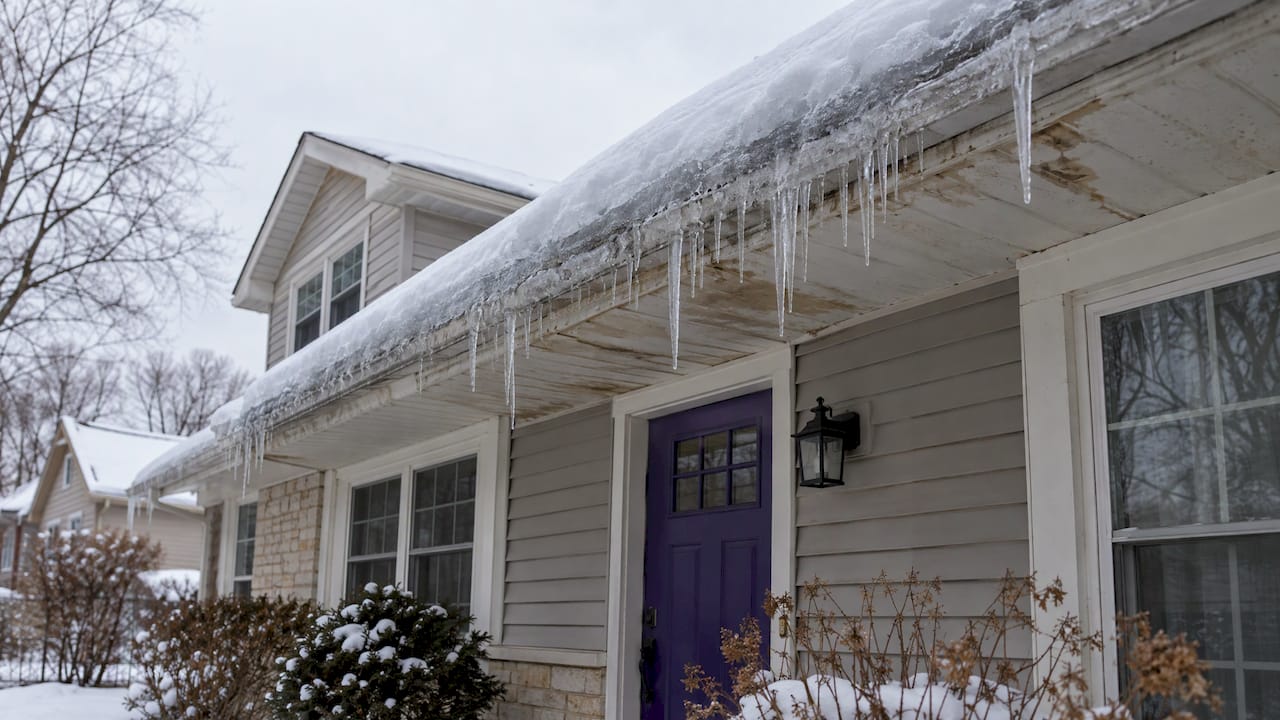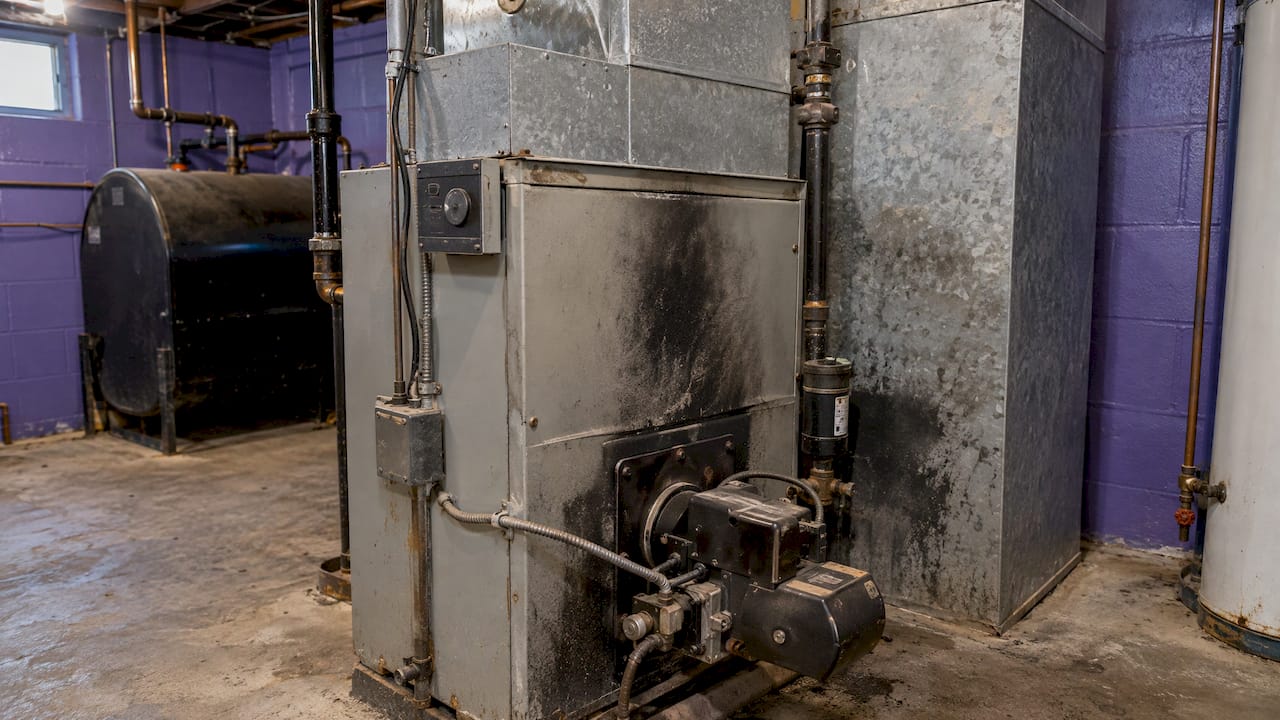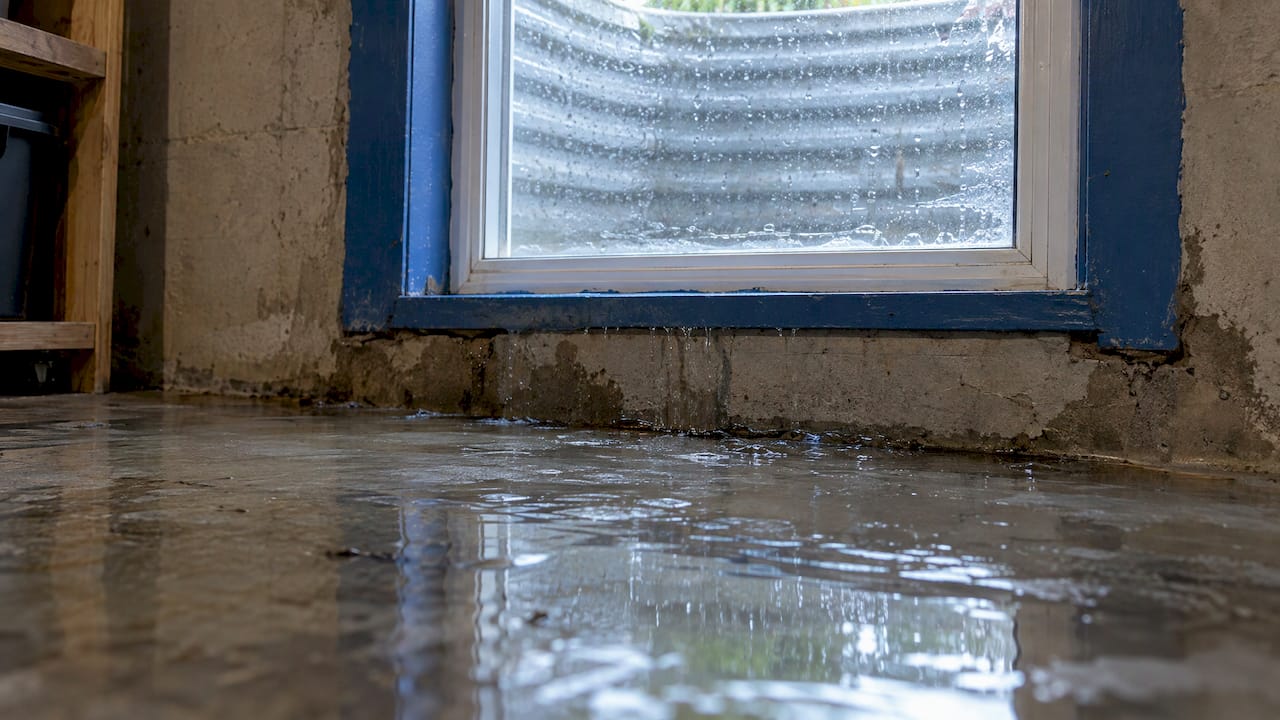

Water backup is water or waterborne material that comes up through a sewer, a drain or a sump pump. A flood is rising water from outside, such as overflowing rivers, heavy surface runoff or mudflow. Standard homeowners policies generally cover neither one. Backup is usually added by a low-cost endorsement, and flood is bought as a separate policy. If you own a home in Chicagoland, you may need both, because they respond to different events.
TL;DR
- Water backup means sewage or water pushed back up through a sewer, drain or sump pump. It is usually covered only if you add a backup endorsement to your homeowners policy.
- Flood means rising water from outside the home. It is covered by a separate flood policy, not by standard homeowners insurance.
- A flood policy generally does not pay for a backup caused by a plumbing or drain problem. A backup endorsement does not pay for floodwater.
- All of Cook County takes part in the National Flood Insurance Program (NFIP), so you can buy flood insurance whatever your flood zone.
- After either event, speed matters. Call your insurer and a restoration company the same day, and document everything before cleanup.
Table of Contents
- The difference in plain terms
- What a standard homeowners policy covers
- What water backup coverage pays for
- What flood insurance pays for
- Do you need both?
- What to do after water comes in
- Why mold follows both
- Perspective: what we see after the claim call
- How The Clean Genius helps
- FAQ
- Sources
The difference in plain terms
Both events put water in your basement, so they look alike. Insurers treat them as different events with different causes, and that decides who pays.
The Illinois Department of Insurance describes water backup as water or waterborne material that backs up through a sewer or drain, or discharges or overflows from a sump pump. It treats this as optional coverage you add to a homeowners policy. The same page describes flood insurance as separate, additional-premium coverage for property damaged by rising water.
FEMA’s definition of a flood is narrower than most people expect. Under the NFIP, a flood is a general and temporary inundation of at least two acres or two properties. It comes from overflowing inland or tidal waters, unusual and rapid runoff or accumulation of surface water, mudflow, or certain shoreline erosion collapse. A single toilet or a single failed sump pump in one house is not a flood in this sense.
Here is how common situations usually sort out:
| What happened | Usually called | Typically paid by |
|---|---|---|
| Storm sewer or sanitary line pushes sewage up through the basement floor drain | Water backup | Backup endorsement on your homeowners policy |
| Sump pump fails or overflows during a storm and the basement takes on water | Water backup (sump overflow) | Backup or sump endorsement |
| A river or creek overflows and water enters the home | Flood | Flood insurance (NFIP or private) |
| Heavy rain runs across the yard and enters through basement windows or doors | Flood (surface water) | Flood insurance |
| A supply line or water heater bursts inside the house | Sudden discharge from plumbing | Standard homeowners policy, subject to its terms |
| Slow seepage through foundation walls | Seepage | Generally not covered by either |
The last row matters. The Illinois Department of Insurance says seepage is not covered under the backup endorsement it describes. If water slowly weeps through a foundation wall, you may have a maintenance problem rather than an insured loss.
What a standard homeowners policy covers
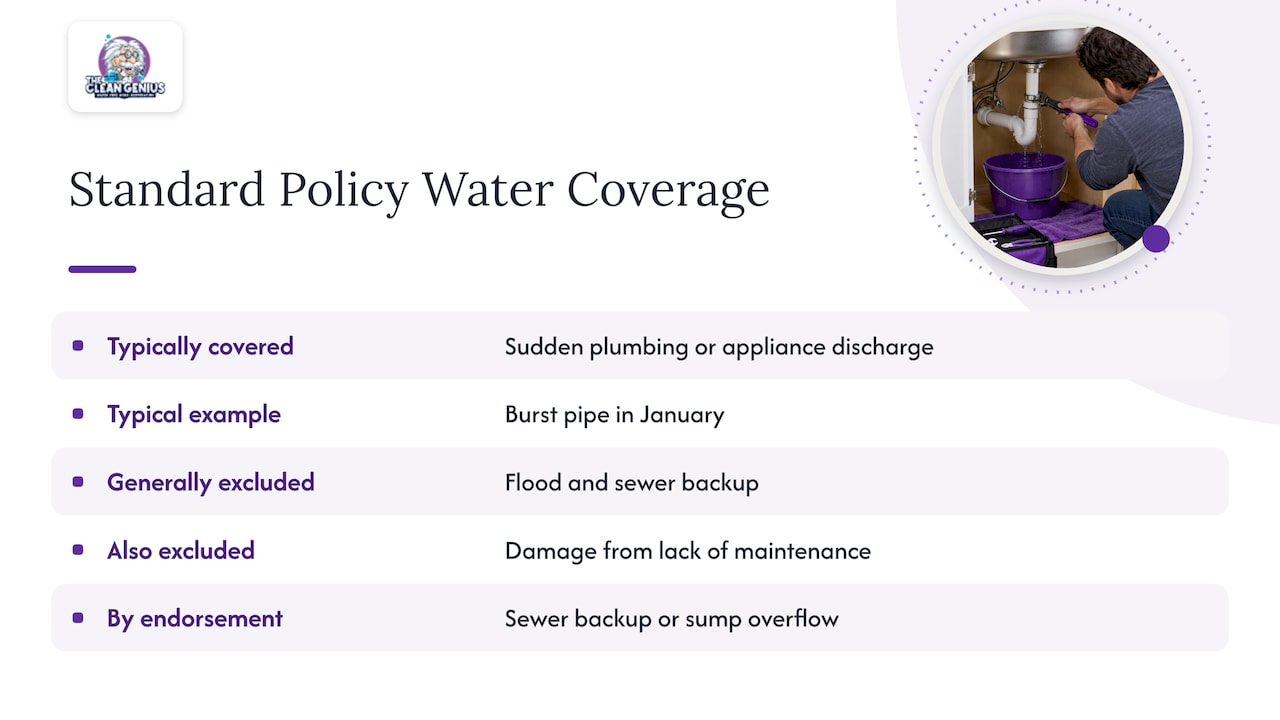
Standard homeowners insurance does respond to some water events. The Insurance Information Institute says it commonly covers accidental discharge or overflow of water or steam from plumbing, heating, air-conditioning, sprinkler systems or appliances, subject to your policy terms. A burst pipe in January is the classic example in our part of the country.
The same source says these policies generally exclude flood and sewer backup, and that damage from lack of maintenance is also not covered. The National Association of Insurance Commissioners explains the logic: the popular Special Form policy covers all perils except those it names, and flood and earthquake are commonly among the exclusions. It adds that sewer or drain backup and sump-pump overflow may be available by endorsement.
The Illinois Department of Insurance lists the same typical exclusions: earthquake, sewer backup or sump-pump failure, ordinance-or-law losses and intentional loss. So in Illinois, “my homeowners policy covers water damage” is only half true. It covers water that comes from a sudden failure inside your plumbing. It usually does not cover water that comes up from the sewer or in from outside.
FEMA’s guidance for Cook County homeowners and renters says the same thing: most homeowners policies cover wind, storms or broken water pipes but may not cover sewer backup or surface flooding. It recommends reviewing your policy or calling your agent about sewer-backup and water-damage coverage.
What water backup coverage pays for
Water backup coverage is an endorsement, sometimes called a rider. It is attached to a homeowners, renters or condominium policy. Terms differ by carrier, so read yours rather than assuming.
The Illinois Department of Insurance says an Illinois endorsement can pay for covered damage to a finished basement from water or waterborne material backing up through a sewer or drain, or from sump-pump overflow. The Illinois Insurance Association adds that the coverage comes with a stated limit and a separate deductible. That separate deductible surprises people at claim time, so find out what yours is before you need it.
On price, the Illinois Department of Natural Resources reports that communities across the state commonly use sewer-backup or sump-pump riders. Its floodproofing guide says the cost of a rider can range from nothing to about $75, with limits, exclusions and deductibles varying by carrier. Treat that as a general range. Your own quote is the number that counts.
Questions to ask your agent:
- What is the backup limit, and is it per claim or per year?
- What is the separate deductible for backup?
- Does the limit cover both the structure and personal belongings, or only one?
- Does the endorsement include sump-pump overflow and failure, or only drain and sewer backup?
- Does it cover cleanup and sanitizing, not only replacement of damaged items?
If you have a sump pump, our guide to sump pump backup insurance and a contractor claims checklist walks through what to document. Sewage backup coverage and why cleanup speed can affect your claim covers the timing side.
What flood insurance pays for
Flood insurance comes from the NFIP or from private insurers. FEMA says an NFIP policy generally covers direct physical damage caused by flood. It also says a sewer backup is covered only when the flood directly caused it.

The NFIP has limits worth knowing. FEMA’s 2022 guides list maximum coverage for other residential buildings of $500,000 for the building and $100,000 for contents, with deductible options up to $50,000. For a residential condominium unit, the maximums are $250,000 for the building and $100,000 for contents, with minimum deductibles of $1,000 to $2,000 depending on coverage and circumstances.
Three details trip up Chicagoland homeowners:
- Contents are separate. FEMA says NFIP contents coverage is not automatic. A building-only policy does not cover flood-damaged belongings.
- Basements are limited. FEMA’s 2022 basement fact sheet says coverage is limited to specifically listed items and cleanup. Examples include furnaces, water heaters, sump pumps, electrical outlets and unfinished drywall. Finished walls, finished flooring, couches, computers and televisions are examples of what is excluded. Our breakdown of the basement items NFIP actually pays for goes item by item.
- There is a waiting period. The Illinois DNR says NFIP flood insurance generally has a 30-day waiting period before it takes effect. It also does not cover outside property such as driveways and landscaping. You cannot buy it when the storm is already in the forecast.
Where flood policies stop and backup begins
This is the gap people miss. FEMA’s training materials say NFIP policies exclude sewer or drain backup, sump-pump discharge or overflow, and seepage unless a flood in the area is the proximate cause. FEMA’s policy materials also say flood coverage does not insure water damage primarily caused by conditions confined to the building or within the policyholder’s control, including failures of water or sewer lines, drains and pumps.
The Illinois Insurance Association puts it in one line: flood insurance does not cover sewer-backup or sump-pump-overflow damage. So if your sump pump quits during a thunderstorm and the basement floods, a flood policy alone will probably not respond. If a creek overtops its banks and the municipal sewer surcharges as a direct result, the flood policy may.
Do you need both?
For many Chicagoland homeowners, yes, at least worth pricing both. Here is why.
Urban flooding in Cook County does not follow the maps the way river flooding does. FEMA’s Cook County guidance says that all of Cook County and its incorporated communities participate in the NFIP, so owners can buy flood insurance regardless of flood zone. In other words, you do not have to sit in a mapped high-risk area to be eligible. Lenders may require flood insurance when a property is on a flood plain, according to the Illinois Department of Insurance. If you are outside one, the choice is yours.
A practical way to decide:
- Finished basement, sump pump or older sewer line: a backup endorsement is the first thing to look at. It is usually the cheaper of the two and covers the most frequent basement event.
- Low-lying lot, near a creek or retention pond, or a history of surface water in the neighborhood: price a flood policy as well.
- Storage or valuables below grade: make sure the contents side of whichever policy you choose is actually included.
- Condo owner: ask both your association and your agent who insures what, since the building and your unit are often insured separately.
This is general information. Your agent can tell you what your specific policy covers and what a quote looks like for your address.
What to do after water comes in
The steps are the same whether the insurer eventually calls it backup, flood or a burst pipe. Coverage is decided later. Your job in the first hours is to stay safe, limit damage and keep proof.
- Stay out if the water may touch electrical panels or outlets. Do not wade into a flooded basement with power on.
- Assume sewage is contaminated. Backup water carries bacteria. Keep children and pets away and wear protective gear if you must enter.
- Photograph and video everything before you move or throw anything away: water lines on the walls, damaged items, the drain or pump involved.
- Call your insurer or agent and ask which coverage applies. Ask what they require before cleanup starts.
- Call a restoration company to extract water and start drying. Mold can begin growing within a day or two on wet materials, so waiting for the claim decision is rarely a good plan.
- Keep receipts for emergency services, hotel stays and anything you buy to limit the damage.
If the source is a sewer line problem, a guide to dealing with sewage backup in the basement explains how the line itself gets assessed and repaired, which is a separate job from cleanup. For the first day, our basement flood cleanup guide for the first 24 hours and our emergency water damage response steps give a more detailed order of work. If the toilet is the source, see what to do within 24 to 48 hours of a toilet overflow.
Watch for warning signs before the storm
Most backup claims start with a pump or drain that was already struggling. Know the warning signs of sump pump failure before the next heavy rain. Test the pump, check the discharge line and ask whether a battery backup makes sense for your home. Damage from lack of maintenance is not covered, as the Insurance Information Institute notes, so upkeep also protects your claim.
Why mold follows both
Whether the water was a backup or a flood, wet drywall, carpet pad and framing stay damp long after the visible water is gone. That is when mold takes hold. Drying fast and verifying the structure is dry is what prevents it. If it has already started, our guides on mold removal after a basement flood and mold remediation after a sump failure explain the process from containment to cleanup.
Ask your insurer how it treats mold on your specific policy. Many policies limit or condition mold coverage, and quick drying is the best protection whatever the policy says.
Perspective: what we see after the claim call
We are a family-owned restoration company, and we spend our days in basements after the storm has passed. The first question homeowners ask is almost always “Is this covered?” The honest answer is that it depends on how the water got in, and that is exactly why the distinction between backup and flood matters before anything happens.
What we see most often in Chicagoland is a homeowner who assumed their policy covered “water damage” and learned otherwise at the worst moment. That is a hard conversation, and it is avoidable. A short call to your agent this month can save you from it.
Our advice from more than 25 years of combined experience is to treat the first 24 hours as the part you control. Whatever the insurer decides later, standing water, wet materials and sewage exposure get worse by the hour. We are available 24/7, we coordinate directly with your insurance company, and we document the loss as we work so your claim has a clear record. The sooner drying starts, the less there is to repair and the less there is to argue about.
Jim
How The Clean Genius helps
If water has already come into your home, we can start right away. The Clean Genius handles floods, burst pipes, sewage backups and complete property dry-out across Chicagoland, and we work directly with your insurance company.

Tell us what happened and we will send a certified team for an on-site estimate. See our water damage restoration services or our mold removal and remediation if growth has started. You can also reach us from thecleangenius.com.
FAQ
Is water backup the same as flood damage?
No. Water backup comes up through a sewer, drain or sump pump. Flood damage comes from rising water outside, such as overflowing waterways or surface runoff. Insurers treat them as separate causes, so they fall under different coverages.
Does homeowners insurance cover sewer backup?
Usually not by default. The Illinois Department of Insurance lists sewer backup and sump-pump failure as typical exclusions. It is generally available as an endorsement, so check your declarations page or ask your agent whether you have it.
Does flood insurance cover a sewer or sump pump backup?
Only in a narrow case. FEMA says an NFIP policy covers sewer backup when the backup is directly caused by flooding. A backup caused by a clogged line, a failed pump or another problem inside your control is not covered.
Is water backup coverage worth it?
For homes with a finished basement, a sump pump or a floor drain, many homeowners find it worth pricing. The Illinois DNR says riders can cost anywhere from nothing to about $75, though limits and deductibles vary by carrier. Compare the cost with what finishing your basement would cost to replace.
How soon should I call a restoration company?
The same day. Water and sewage damage spread quickly, and mold can follow within a day or two on wet materials. Call your insurer too, but do not wait for a final coverage decision before drying starts.
Sources
- Illinois Department of Insurance: Homeowners & Renters Definitions
- FEMA: NFIP Residential Condominium Building Association Policy
- Insurance Information Institute: Which disasters are covered by homeowners insurance?
- NAIC: A Consumer’s Guide to Home Insurance
- FEMA: Urban Flooding Guidance for Homeowners and Renters (Cook County)
- Illinois DNR: Guide to Floodproofing
- FEMA: National Flood Insurance Program Fact Sheet
- FEMA: NFIP training materials, exclusions
- FEMA: NFIP contents coverage
- FEMA: What Does Flood Insurance Cover in a Basement?
- FEMA: Simple Guide for Other Residential Buildings
- FEMA: Simple Guide for Residential Units