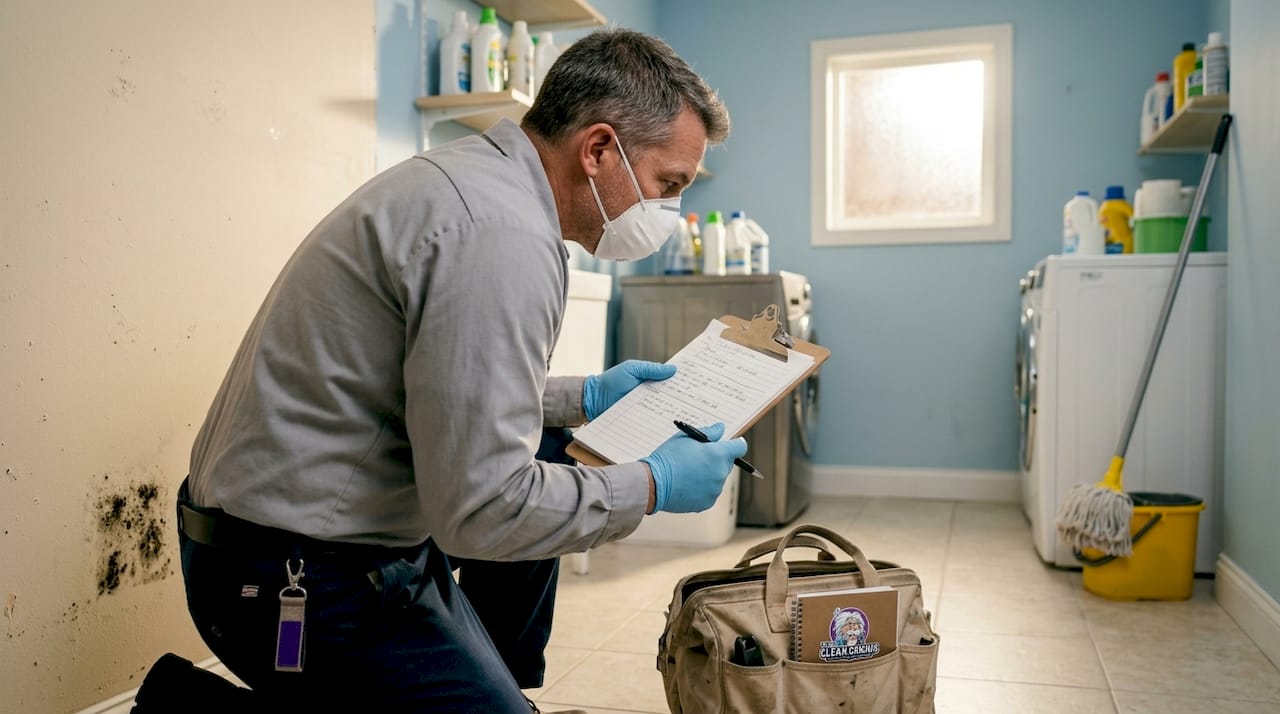

Professional vs DIY mold removal is defined by three factors: the size of the affected area, the type of material involved, and whether the moisture source has been fixed. The industry term for expert cleanup is mold remediation, a structured process that goes far beyond wiping down a surface. The EPA sets the threshold clearly: mold covering less than 10 square feet on a non-porous surface is generally safe for a homeowner to handle. Anything beyond that scope, or involving porous materials like drywall or insulation, requires a certified remediation team. Getting this decision right protects your health, your home, and your wallet.
When is DIY mold removal safe and effective?
DIY mold cleanup applies in a narrow set of conditions. The 10-square-foot threshold is the universal benchmark: roughly a 3×3-foot patch on a hard, non-porous surface like tile, glass, or sealed concrete. That benchmark exists because small surface mold on non-porous materials can be fully removed without specialized containment equipment. The moisture source must also be fixed before you start. Cleaning mold while the leak continues is pointless.
Gear and supplies you need
Safe DIY mold cleanup requires the right protective equipment before you touch anything. The EPA recommends an N95 mask, rubber gloves, and safety goggles at minimum. Cleaning agents include diluted bleach at 1/4 to 1/2 cup per gallon of water, or a standard household detergent. Never mix bleach with ammonia-based cleaners.
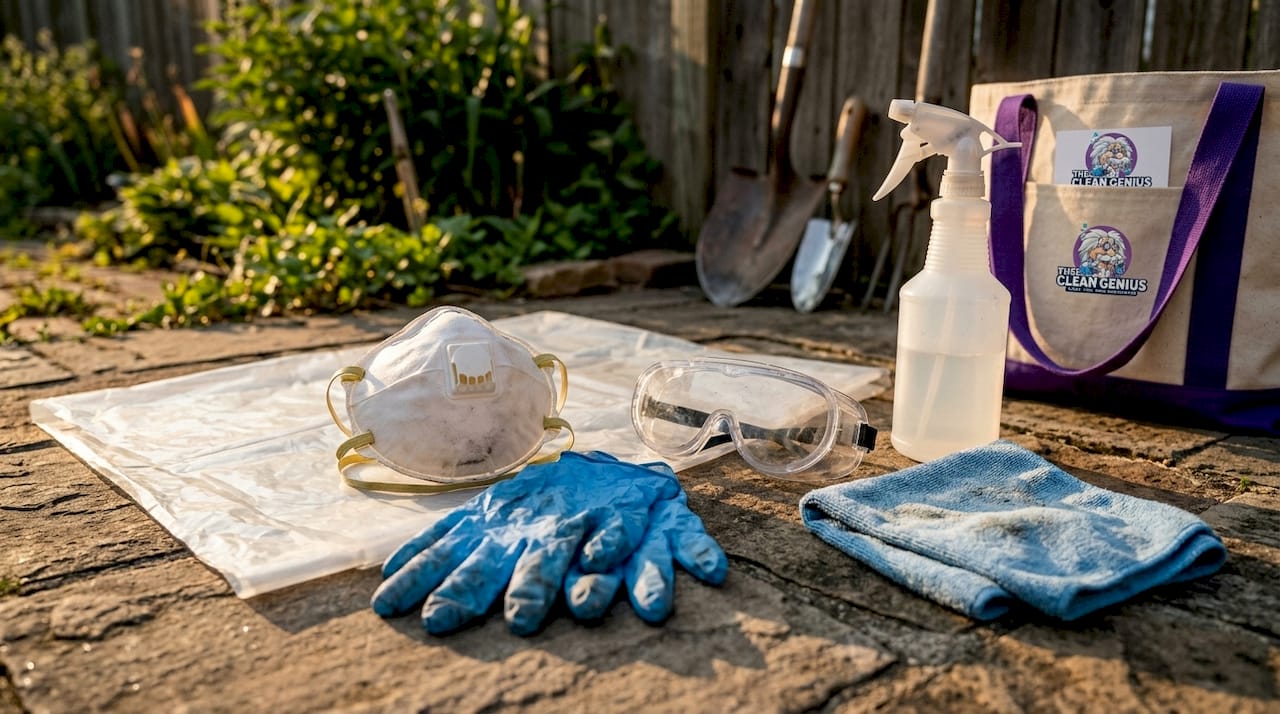
| Supply | Purpose |
|---|---|
| N95 respirator mask | Blocks mold spores from entering lungs |
| Rubber or nitrile gloves | Prevents skin contact with mold and chemicals |
| Safety goggles | Protects eyes from spores and cleaning agents |
| Diluted bleach solution | Kills surface mold on non-porous materials |
| Stiff-bristle scrub brush | Physically removes mold from the surface |
| Heavy-duty plastic bags | Seals and disposes of contaminated materials |
| Box fan or dehumidifier | Dries the area after cleaning |
Step-by-step DIY mold removal
Follow these steps in order. Skipping any step, especially drying, causes mold to return within days.
- Fix the moisture source first. No cleanup works if water keeps feeding the mold.
- Seal off the work area with plastic sheeting to limit spore spread.
- Put on all protective gear before disturbing any mold.
- Apply your diluted bleach solution and let it sit for 5–30 minutes.
- Scrub the surface thoroughly with a stiff brush.
- Wipe away debris with disposable rags and seal them in plastic bags immediately.
- Dry the area completely using a fan or dehumidifier. Residual moisture brings mold back.
- Monitor the area for two weeks to confirm mold does not return.
Pro Tip: Ventilate the room by opening a window to the outside, not to other rooms in your home. Pushing spores into adjacent spaces creates a new problem while you solve the original one.
One critical point most homeowners miss: killing mold with chemicals alone is not enough. Dead spores and fragments still trigger allergic reactions if left on the surface. Physical scrubbing and removal of the debris is what actually protects your health, not the bleach alone.
When does mold require professional remediation?
Professional mold remediation is necessary the moment the problem exceeds safe DIY boundaries. Professionals are required when mold covers more than 10 square feet, grows on porous materials like drywall or wood framing, has entered the HVAC system, or keeps returning after repeated cleanings. Each of these conditions means the contamination is deeper than surface level.
Situations that require a certified remediation team:
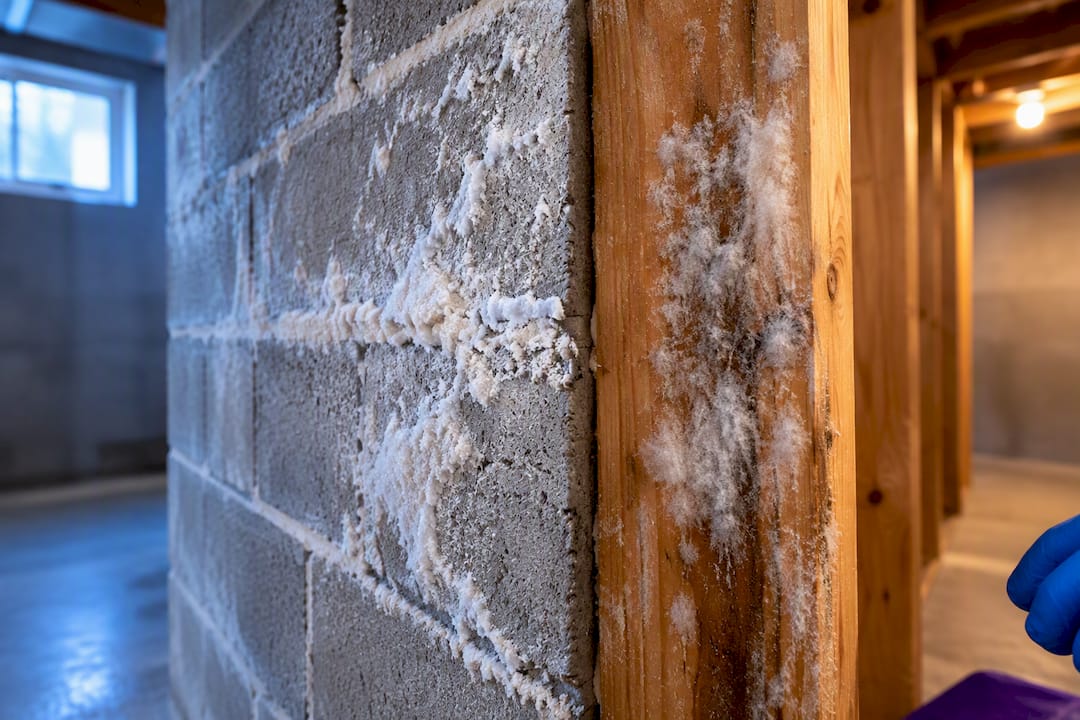
- Mold on drywall, insulation, carpet, or wood subfloor
- Any growth exceeding 10 square feet
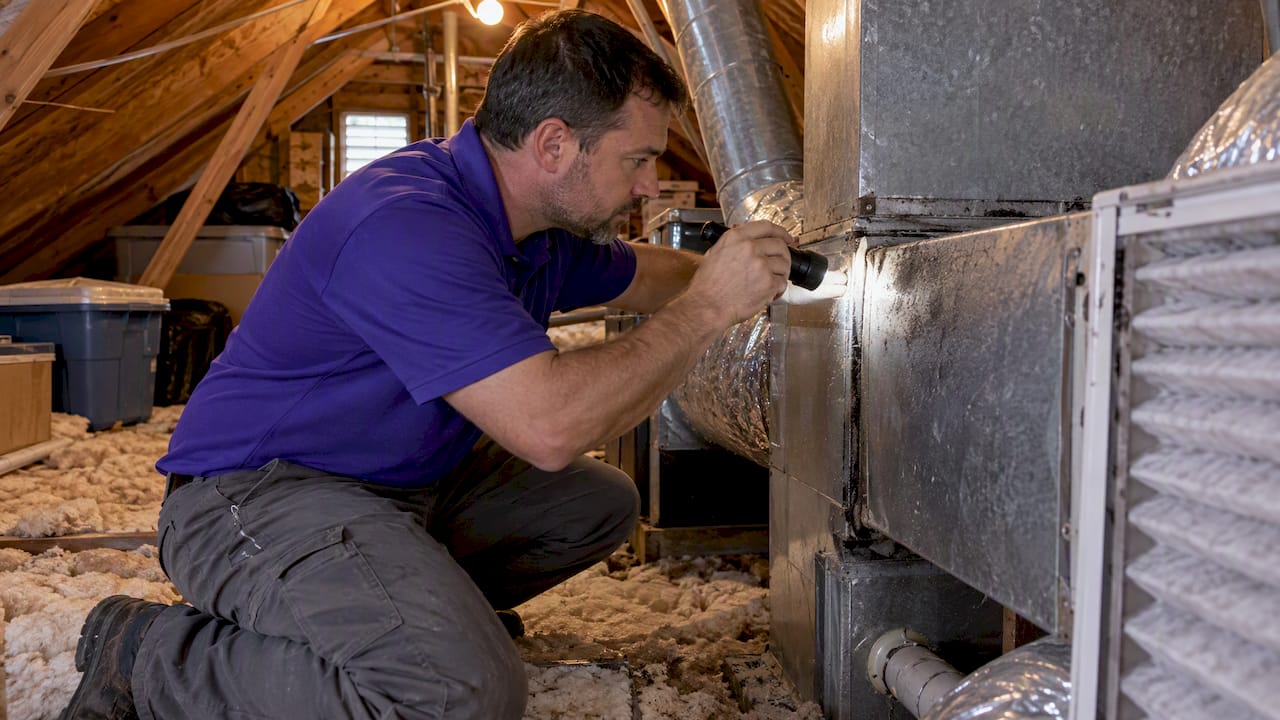
- Mold inside air ducts or near the HVAC system
- Mold discovered after a flood or sewage backup
- Visible mold with no identifiable moisture source
- Recurring mold in the same location after prior cleaning
What professionals actually do
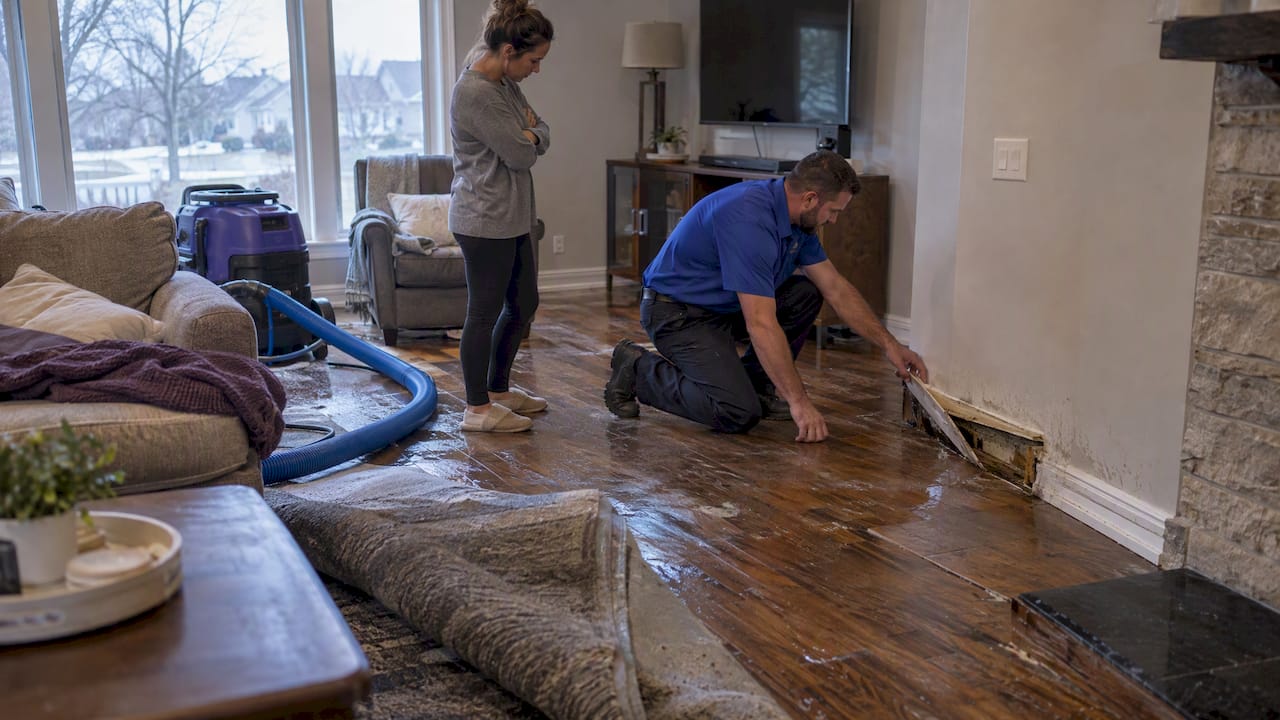
A certified remediation team starts with assessment, not cleaning. Moisture meters and thermal imaging locate hidden water intrusion behind walls and under floors that no homeowner can detect by sight. This step alone prevents the most common cause of mold recurrence: an unresolved moisture source.
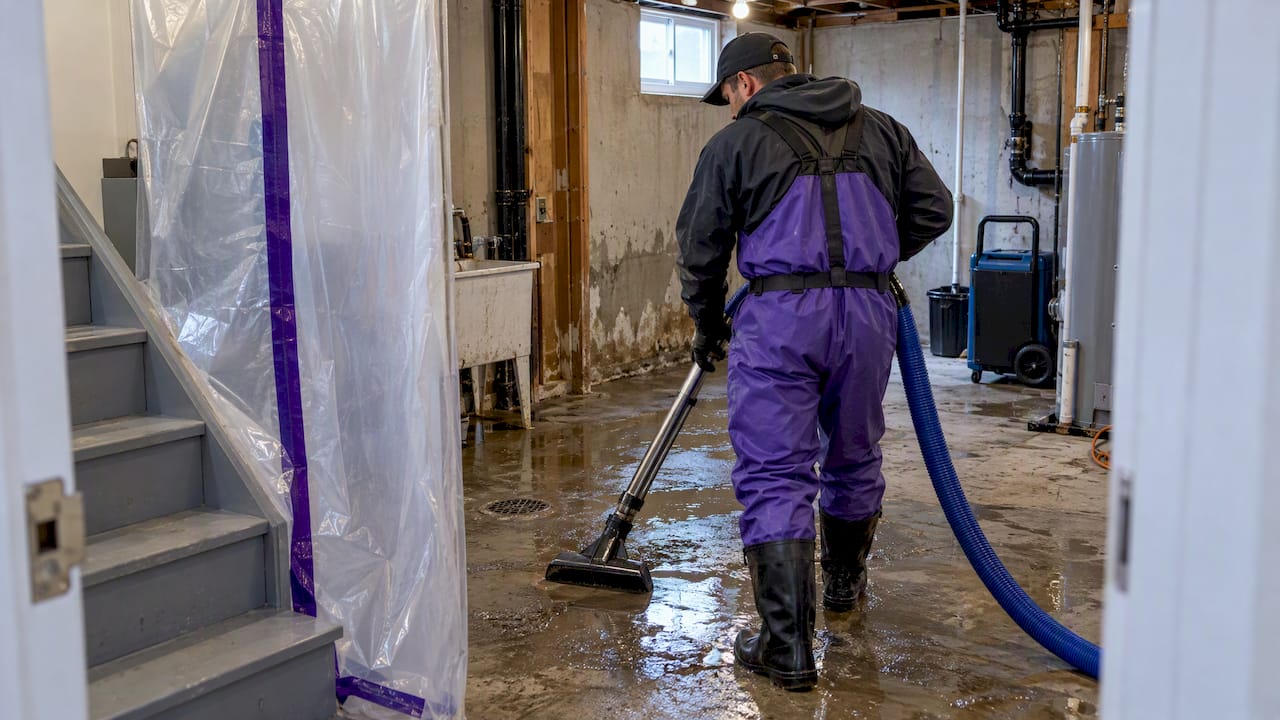
Containment comes next. Professionals use negative air pressure and physical barriers to isolate the work zone. This prevents spores from migrating to clean areas of your home during removal. DIY efforts have no equivalent to this step, which is why amateur attempts often spread contamination rather than eliminate it.
After containment, the team removes and disposes of all contaminated porous materials. HEPA vacuuming clears residual dust and spore debris from surfaces. Residual mold debris left after visible cleaning continues to degrade indoor air quality if not properly removed with HEPA equipment.
The final step is post-remediation testing. Certified clearance documentation gives homeowners concrete, written proof that indoor air quality meets safe standards. No DIY method produces this result.
Pro Tip: Ask any remediation company for their clearance report process before hiring. A company that does not offer post-remediation air quality testing is skipping the step that proves the job was done correctly.
Thecleangenius uses Pure Cloud dry-fog technology as part of its certified mold remediation process for Chicagoland homeowners, reaching areas that conventional cleaning methods cannot access.
How do the costs and risks compare?
The real cost comparison is not DIY supplies versus a professional invoice. The true comparison is professional now versus professional later, because failed DIY attempts on large or hidden infestations consistently raise the final bill. Mold that spreads during an improper cleanup requires more extensive removal, more material replacement, and longer remediation time.
| Factor | DIY removal | Professional remediation |
|---|---|---|
| Upfront cost | Low (supplies only) | Higher (labor and equipment) |
| Hidden costs | High if mold returns or spreads | Low with proper clearance |
| Health risk | Moderate to high without proper PPE | Low with containment protocols |
| Effectiveness | Reliable only on small, surface mold | Reliable across all mold types and sizes |
| Clearance documentation | None | Certified air quality report |
| Time to complete | Hours to days | Days, depending on scope |
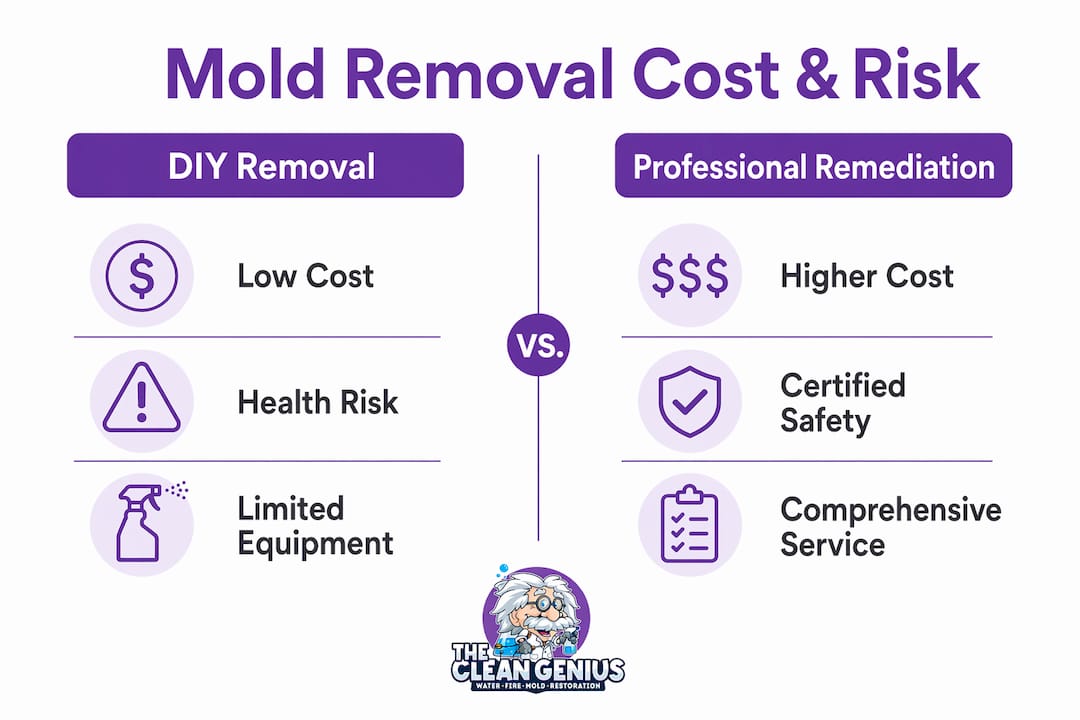
Health risk is the factor homeowners most often underestimate. Disturbing mold without containment spreads spores to unaffected rooms, turning a localized problem into a whole-home issue. Respiratory exposure during unprotected DIY cleanup causes symptoms ranging from nasal irritation to serious lung inflammation in sensitive individuals.
The intangible value of professional clearance documentation is also worth naming directly. A certified clearance report matters when you sell your home, file an insurance claim, or need to prove to a tenant that a rental unit is safe. No amount of DIY effort produces that paper.
What mistakes do DIYers most often make?
The most dangerous mistake in home mold removal is assuming mold color signals danger level. Mold color is not a reliable indicator of how hazardous a situation is. The size of the contamination and the type of material affected are what determine urgency, not whether the mold appears black, green, or white. Homeowners who focus on color waste time and miss the real assessment criteria.
Common DIY mold removal mistakes to avoid:
- Skipping moisture detection. Cleaning visible mold without finding the water source guarantees recurrence. Hidden moisture sources behind walls are the leading cause of repeat mold growth after DIY attempts.
- No containment. Scrubbing mold in an open room releases spores into your HVAC system and adjacent spaces.
- Relying on chemicals alone. Bleach kills surface mold but does not remove spore debris. Physical removal is required.
- Overusing bleach on porous surfaces. Bleach does not penetrate wood or drywall deeply enough to kill mold at the root. It discolors the surface while leaving the infestation intact.
- Inadequate drying after cleanup. Any remaining moisture restarts the mold growth cycle within 24–48 hours.
Pro Tip: After cleanup, run a dehumidifier in the treated area and check relative humidity with an inexpensive hygrometer. Mold grows readily above 60% relative humidity. Keeping indoor humidity below 50% is the most effective long-term prevention strategy.
Knowing when mold gets serious is a skill worth developing before you pick up a scrub brush. The line between a manageable surface problem and a structural contamination issue is not always visible to the untrained eye.
Review the mold removal safety best practices before starting any home mold cleanup to avoid the most common and costly errors.
Key takeaways
The single most reliable rule in mold removal is this: if the affected area exceeds 10 square feet or involves porous materials, professional remediation is the only method that eliminates the problem completely.
| Point | Details |
|---|---|
| EPA size threshold | DIY is safe only for mold under 10 square feet on non-porous surfaces. |
| Fix moisture first | No cleaning method works if the water source remains active. |
| Chemical limits | Bleach kills surface mold but does not remove spores. Physical removal is required. |
| Professional containment | Certified teams use negative air pressure to prevent spore spread during removal. |
| Clearance documentation | Only professional remediation produces a certified air quality report proving the job is complete. |
What I’ve learned after years of watching DIY mold jobs go wrong
The homeowners who call us after a failed DIY attempt almost always say the same thing: “It looked like a small spot.” That is the trap. Visible mold is rarely the full picture. What you see on the surface of drywall is often the edge of a much larger colony growing inside the wall cavity, fed by moisture you never found.
I have seen bathroom tile grout cleaned three times in a year because the homeowner kept treating the symptom without addressing the slow leak behind the shower wall. Each cleaning spread spores a little further. By the time we were called in, the contamination had reached the subfloor. The original repair cost would have been a fraction of what the full remediation required.
My honest advice: use the 10-square-foot rule as your hard limit, not a rough guideline. If you are anywhere near that boundary, or if you cannot identify exactly where the moisture is coming from, call a certified professional for an assessment. Most reputable companies, including Thecleangenius, offer evaluations that tell you clearly whether your situation is DIY-appropriate or not. That conversation costs you nothing and could save you thousands.
The other thing I want homeowners to understand is that clearance documentation is not a luxury. If you ever sell your home or file an insurance claim related to water damage, a certified clearance report is the difference between a smooth process and a disputed one. DIY cleanup leaves no paper trail. Professional remediation does.
— Jim
Thecleangenius is ready to help you handle mold the right way
Mold problems do not always announce themselves clearly. Sometimes you need an expert eye to tell you whether a spot on the ceiling is a surface issue or the sign of something deeper.

Thecleangenius serves Chicagoland homeowners with certified mold removal and remediation services, including Pure Cloud dry-fog technology that reaches mold in spaces conventional methods miss. Our team works 24/7, handles insurance coordination directly, and delivers post-remediation clearance reports so you have documented proof the job is done. Whether you need a professional assessment or a full remediation, contact Thecleangenius for a free estimate and get a clear answer fast.
FAQ
What is the EPA threshold for DIY mold removal?
The EPA recommends DIY mold removal only for areas smaller than 10 square feet on non-porous surfaces, with the moisture source already fixed.
Can bleach fully remove mold from drywall?
No. Bleach does not penetrate porous materials deeply enough to kill mold at the root, and dead spores left on the surface still cause allergic reactions.
How do professionals find mold I cannot see?
Certified remediation teams use moisture meters and thermal imaging cameras to locate hidden water intrusion behind walls and under floors, which is the most common cause of recurring mold after DIY attempts.
What is a mold clearance report?
A clearance report is a certified document issued after professional remediation that confirms indoor air quality meets safe standards. No DIY method produces an equivalent result.
When should I call a professional instead of cleaning mold myself?
Call a professional when mold covers more than 10 square feet, grows on drywall, wood, or insulation, appears in your HVAC system, or keeps returning after repeated cleanings.