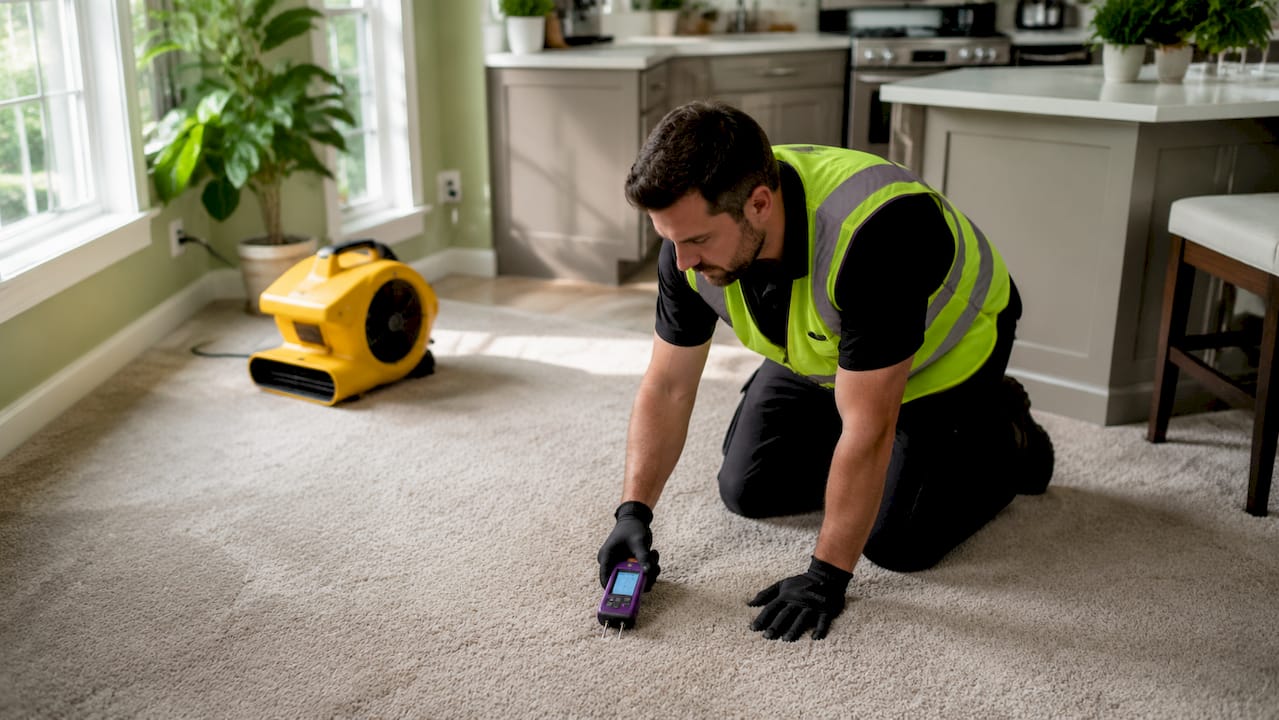

Drying validation is the process of measuring and documenting moisture levels in a water-damaged property to confirm it has reached safe, industry-standard dryness. Without it, water damage restoration is incomplete by definition. Why water restoration requires drying validation comes down to one fact: surfaces can look and feel dry while structural cavities still hold dangerous moisture levels. The IICRC S500 standard, the governing framework for professional water restoration, now makes documented drying validation mandatory. Skipping it puts your home at risk for mold growth, structural decay, and failed insurance claims.
Why does water restoration require drying validation?
The water damage restoration process does not end when the standing water is gone. Drying validation is the step that confirms moisture inside walls, subfloors, and framing has returned to safe levels. Think of it like a doctor ordering lab results instead of just asking how you feel. Your home can appear completely normal while wood framing holds moisture well above the safe threshold.
Drying goals are specific moisture targets set at the start of a restoration project, equal to or higher than pre-loss levels, to prevent microbial growth and protect building materials. They give technicians a firm, measurable finish line. Without those targets, there is no objective way to call a job complete.
Removing drying equipment too early before verified moisture equilibrium causes secondary microbial growth and structural damage. That is not a theoretical risk. It is one of the most common causes of mold problems that appear weeks after a restoration crew has packed up and left.
How is the drying validation process conducted?
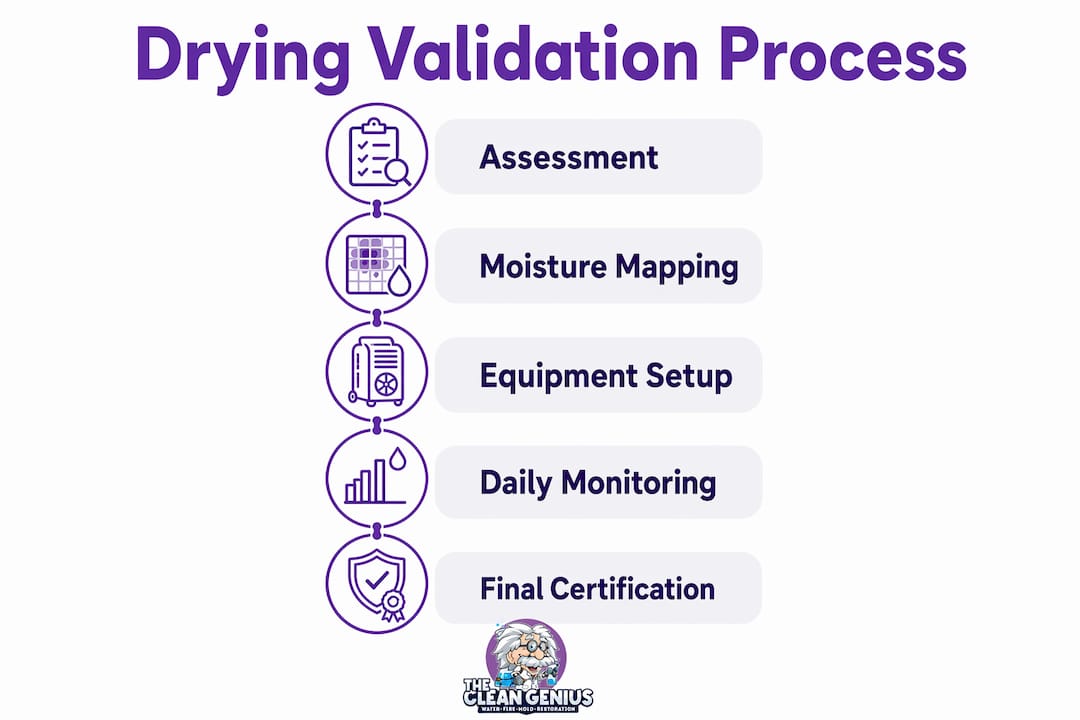
Professional drying validation follows a structured sequence. Each step builds on the last, and skipping any one of them creates gaps that can cost you thousands of dollars later.
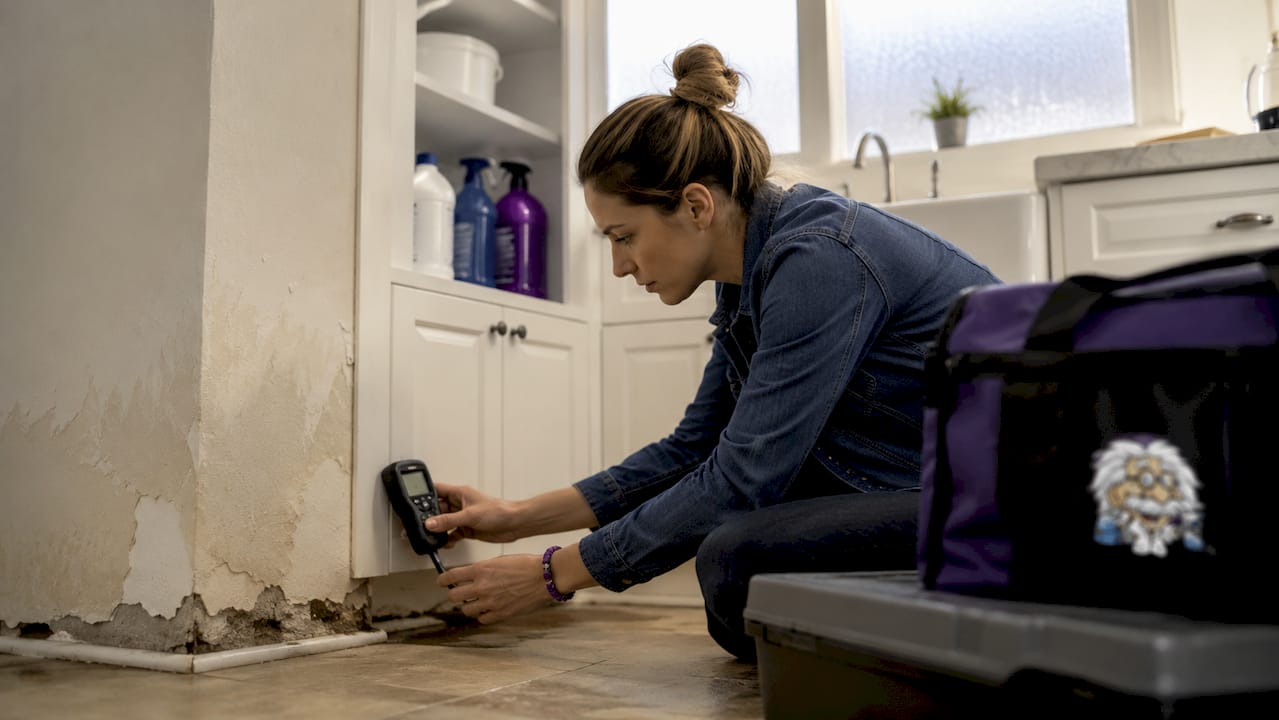
- Moisture mapping. Technicians take readings throughout the affected area using calibrated moisture meters. They record every measurement on a floor plan, creating a moisture map that shows exactly where water has penetrated.
- Reference area comparison. Readings from wet zones are compared against measurements taken in unaffected parts of your home. “Dry” is not binary; it means matching moisture levels in damaged materials to those in unaffected reference areas, accounting for your home’s specific environment.
- Daily monitoring. Technicians return each day to take new readings and log them. This creates a documented record of the drying curve, showing whether moisture is dropping at the expected rate.
- Psychrometric data collection. Tools that measure temperature, relative humidity, and dew point inside the drying space confirm that the air is actually capable of pulling moisture out of materials. You can learn more about how this works in Thecleangenius’s guide to psychrometrics in water restoration.
- Drying completion confirmation. Drying is complete only when all wet zone readings match acceptable tolerance with reference areas for two consecutive days with no equipment running. Typical drying takes 3–5 days depending on saturation levels.
Pro Tip: Ask your restoration contractor to show you the moisture map on day one. If they cannot produce one, that is a red flag before the job even starts.
Can you tell if your home is dry just by looking?
No. Visual and tactile inspection is insufficient to determine actual dryness, because hidden moisture inside structural cavities often persists undetected. Moisture meters and thermal imaging are required for accurate verification. This is one of the most important facts to understand as a homeowner.
Here is what sensory checks miss:
- Wall cavities. Water wicks up inside wall framing and insulation. The drywall surface dries first, masking wet wood behind it.
- Subfloor layers. Hardwood floors and tile can feel firm while the plywood or OSB subfloor underneath holds moisture above safe levels.
- Ceiling assemblies. Water from an upstairs leak travels along joists and pools in areas far from the original source.
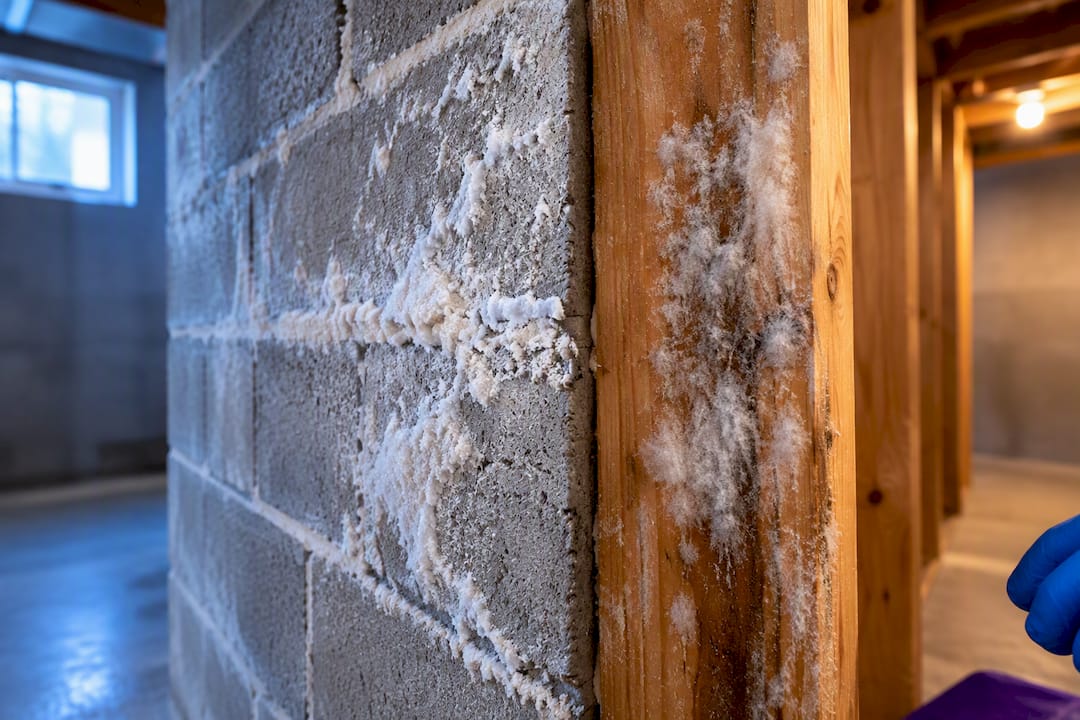
- Concrete and masonry. These materials absorb and release moisture slowly. They can feel dry to the touch while still releasing vapor that feeds mold growth.
Hidden moisture causes the majority of restoration failures. Homeowners who rely on feel or appearance are making a decision based on incomplete information. The only reliable method is measurement with calibrated instruments, logged and compared against a defined standard.
How have IICRC s500 standards changed drying validation?
The IICRC S500 is the industry’s primary standard for professional water damage restoration. Its 2026 revision significantly raised the bar for documentation requirements.
| Requirement | Pre-2026 Practice | 2026 Standard |
|---|---|---|
| Moisture maps | Recommended | Mandatory and documented |
| Daily moisture logs | Common but informal | Required with dated entries |
| Drying goals | Often set informally | Set at project start, formally recorded |
| Final verification | Visual plus some readings | Must reconcile back to initial drying goals |
| Drying certificate | Issued by some contractors | Expected as standard project close-out |
The 2026 IICRC S500 revision makes drying validation a mandatory, documented process including moisture maps, atmospheric readings, and material moisture readings. The standard requires drying goals set at the start and final verification reconciling back to those goals. This matters for you because it means any contractor following current standards will produce a paper trail you can use with your insurance company.
A drying certificate formally documents the entire drying process and confirms moisture levels returned to pre-loss conditions. Initial extraction starts within 24 hours, and drying is monitored daily with documented readings throughout. That certificate is your proof that the job was done correctly.
Pro Tip: Request a copy of the drying certificate before your restoration contractor removes any equipment. Once the dehumidifiers are gone, re-testing becomes significantly more complicated.
What are the real benefits of documented drying validation?
Documented drying validation protects you in ways that go well beyond the immediate restoration project. Here is what it actually delivers:
- Insurance claim support. Documentation of drying progression serves as proof of compliance with professional standards and protects against future liability in insurance loss reviews. Adjusters need records, not assurances.
- Mold prevention. Drying logs and moisture documentation prove that wood framing stayed below 19% moisture content, the threshold above which mold growth accelerates. Finish materials like drywall have even tighter limits.
- Protection against future disputes. If mold appears six months after restoration, your documentation shows whether the drying was completed correctly or whether a new moisture source is responsible.
- Verified home safety. You know with certainty that the air your family breathes is not being fed by hidden moisture. Proper drying also supports better indoor air quality long after the restoration is complete.
- Resale protection. A documented restoration with a drying certificate is a clean record. Undocumented work raises questions during home inspections that can delay or derail a sale.
How can you make sure your contractor validates drying properly?
You do not need to be a restoration technician to hold your contractor accountable. You need to ask the right questions before and during the job.
- Ask for the moisture map on day one. A legitimate contractor produces this automatically. If they cannot show you one, ask why.
- Request the drying goals in writing. These should be set at the project start and tied to specific moisture content targets for each material type in your home.
- Ask what standard they follow. The correct answer is the IICRC S500. Contractors certified by the IICRC are trained to follow its documentation requirements.
- Review daily logs. You are entitled to see the readings taken each day. A reputable contractor will walk you through them without hesitation.
- Get the drying certificate before sign-off. This document is your formal confirmation that the job is complete. Do not release final payment without it.
Thecleangenius’s restoration company selection checklist covers these criteria in detail and helps you compare contractors before you commit.
Key takeaways
Drying validation is not optional in professional water restoration. It is the documented, measurement-based process that separates a genuinely complete job from one that looks finished but leaves your home at risk.
| Point | Details |
|---|---|
| Validation requires measurement | Moisture meters and thermal imaging, not visual checks, confirm true dryness. |
| Drying goals set the finish line | Targets are defined at project start and must be met before equipment is removed. |
| Two consecutive dry readings confirm completion | All wet zone readings must match reference areas for two days with no equipment running. |
| Documentation protects homeowners | Moisture maps, daily logs, and a drying certificate support insurance claims and prevent disputes. |
| 2026 IICRC S500 mandates full records | Current standards require documented moisture maps, logs, and final goal reconciliation. |
What i’ve learned after 25 years of water damage calls
The jobs that come back to haunt homeowners are almost never the ones where the water damage was severe. They are the ones where the drying looked fine. A crew came in, ran equipment for a few days, packed up, and left. No moisture map. No daily logs. No certificate. Just a handshake and an invoice.
Six months later, the homeowner smells something in the wall. They call us, and we find mold growing on framing that never fully dried. The original contractor is long gone, and now the homeowner is facing a remediation bill that dwarfs what proper validation would have cost.
The uncomfortable truth is that documentation feels like paperwork until you need it. Then it becomes the most valuable thing in the file. I have seen insurance adjusters deny claims because a contractor could not produce a single moisture reading. I have also seen adjusters approve full remediation costs within days because the restoration file was airtight.
If your contractor cannot explain their drying goals or hand you a moisture map, that is not a minor gap in their process. It is a sign that their process does not actually include validation. Insist on it. The role of certified restorers in producing this documentation is exactly why IICRC certification matters when you are choosing who to trust with your home.
— Jim
Thecleangenius delivers verified drying, every time
When water damage hits your Chicagoland home, the last thing you need is a restoration crew that calls the job done before the numbers say so. Thecleangenius brings certified technicians, calibrated moisture meters, and full documentation to every water damage restoration project, from burst pipes in Naperville to basement floods in Schaumburg.

Every job includes moisture mapping, daily logged readings, and a formal drying certificate at close-out. Thecleangenius works directly with your insurance company and is available 24/7 for emergencies across the greater Chicagoland area. If you are dealing with water damage right now, do not wait. Review the emergency response steps and call Thecleangenius before hidden moisture becomes a mold problem.
FAQ
What is drying validation in water restoration?
Drying validation is the process of measuring and documenting moisture levels in water-damaged materials to confirm they have reached safe, pre-loss conditions. It uses moisture meters, thermal imaging, and daily logs rather than visual inspection.
How long does the drying process take?
Typical drying takes 3–5 days depending on saturation levels and material types. Drying is not complete until all wet zone readings match reference area readings for two consecutive days with no equipment running.
Why is visual inspection not enough to confirm dryness?
Hidden moisture inside wall cavities, subfloors, and ceiling assemblies persists long after surfaces feel dry. Only calibrated moisture meters and thermal imaging can detect moisture in structural materials accurately.
What is a drying certificate?
A drying certificate is a formal document that records the entire drying process, including moisture maps, daily readings, and final verification, confirming that moisture levels returned to pre-loss conditions.
What standard governs drying validation in 2026?
The IICRC S500 is the primary standard for professional water damage restoration. Its 2026 revision makes documented moisture maps, daily logs, drying goals, and final verification mandatory for all professional restoration projects.