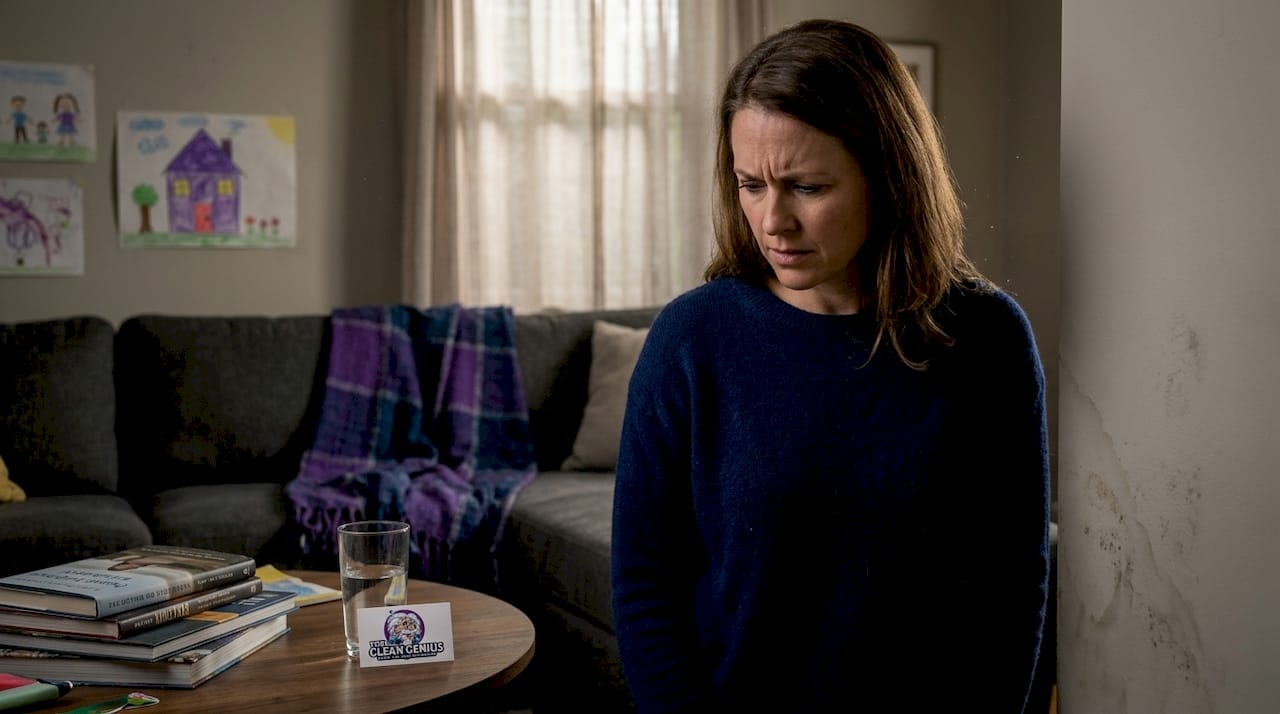

If you’ve just dealt with a flooded basement, a burst pipe, or a slow leak behind a wall, mold is probably on your mind. Understanding why mold grows after water damage is not just reassuring. It’s the first step toward stopping it before it takes over. Most homeowners expect to see mold appear immediately, or assume a quick dry-out means they’re safe. Neither is true. What actually drives mold growth is a specific combination of moisture, organic material, and time. Get ahead of that combination, and you protect your home.
Table of Contents
- Key takeaways
- Why mold grows after water damage
- How fast mold actually grows
- Factors that make mold growth worse
- How to prevent mold after water damage
- Why mold keeps coming back
- My honest take after years in the field
- Protect your home with professional help
- FAQ
Key takeaways
| Point | Details |
|---|---|
| Mold needs moisture to activate | Spores exist everywhere indoors but only colonize materials when sustained moisture is present. |
| The 24-48 hour window is critical | Drying wet materials within two days stops most mold growth before it can establish. |
| Hidden moisture is the biggest threat | Moisture inside walls and under floors drives mold growth even when surfaces appear dry. |
| Humidity alone can cause mold | Indoor relative humidity above 60% supports mold growth without any visible water source. |
| Fixing moisture stops recurrence | Removing mold without eliminating the moisture source leads to mold returning within weeks. |
Why mold grows after water damage
Mold is not an intruder that enters your home during a flood. It’s already there. Mold spores naturally occur indoors, floating invisibly through the air in every room of your house. On their own, they cause no harm. The problem starts the moment moisture gives them something to work with.
When water saturates building materials like drywall, wood framing, insulation, or carpet padding, two things happen at once. The moisture activates dormant spores sitting on those surfaces, and the organic material in the building components becomes a food source. Drywall paper, wood cellulose, and even the dust that accumulates inside wall cavities are all organic matter that mold can digest and colonize.
This is why water damage causes mold growth in ways that feel fast and surprising. It’s not that mold suddenly appears out of nowhere. It’s that water removes the only barrier that was keeping existing spores inactive.
- Moisture triggers germination. Spores that have sat dormant for months can activate within hours of sustained moisture contact.
- Organic building materials feed colonies. Drywall, wood studs, and subfloor materials provide exactly the nutrients mold needs to grow.
- Warmth accelerates the process. Mold grows fastest in temperatures between 60 and 80 degrees Fahrenheit, which is typical indoor climate year-round.
- Poor ventilation concentrates moisture. Closed-off spaces like wall cavities, crawl spaces, and attics trap humidity and accelerate colony formation.
The EPA’s guidance makes this plain: the key to mold control is moisture control. You cannot eliminate spores permanently. You can only control whether they have the conditions to grow.
Pro Tip: If you experience any water intrusion, run a dehumidifier in the affected area within the first few hours, even before you begin cleanup. Reducing ambient moisture slows spore activation while you address the source.
How fast mold actually grows
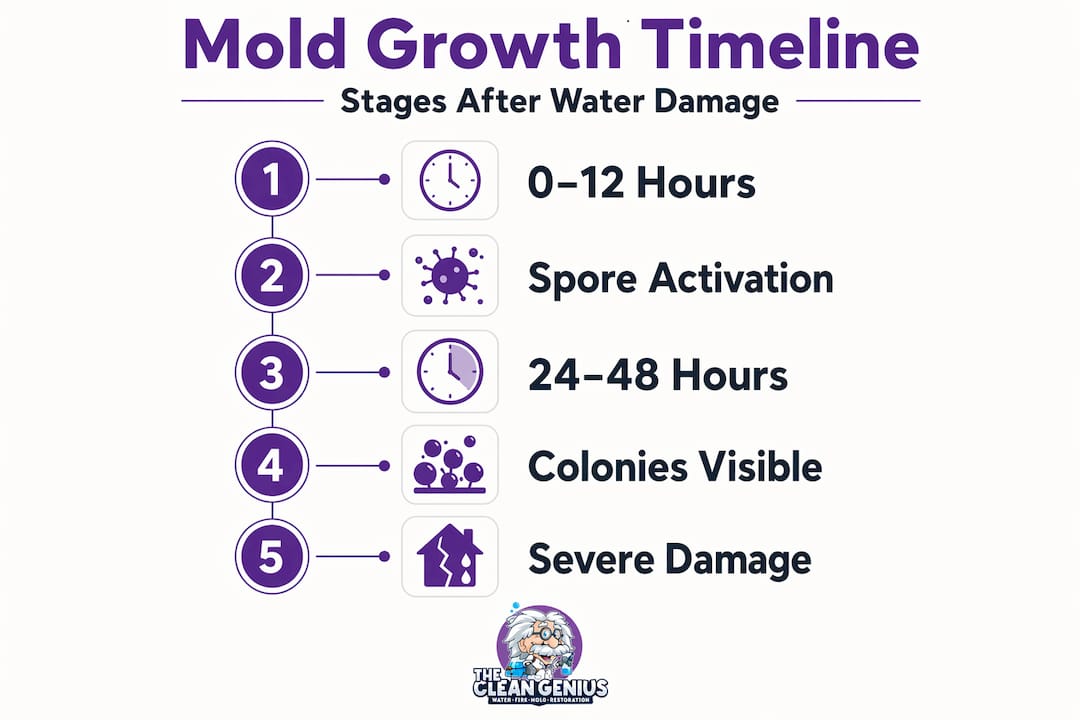
The timeline surprises most people. Many homeowners assume they have several days before mold becomes a real concern. In reality, spores begin germination within hours of contact with wet porous materials. By 24 to 48 hours, early colonies are establishing. Visible growth can appear in as little as two to three days.
Here’s how the progression typically unfolds:
- Hours 1 to 12. Water saturates porous materials. Spores on those surfaces absorb moisture and begin metabolic activity. There is no visible sign of mold at this stage.
- Hours 12 to 24. Germination accelerates. Spore cells begin producing hyphae, the root-like filaments that anchor mold into a material. Still not visible to the naked eye.
- Hours 24 to 48. Early colonizers like Penicillium and Aspergillus species establish surface colonies. These genera are among the fastest-growing and most common after water events. Slight discoloration or musty odor may begin.
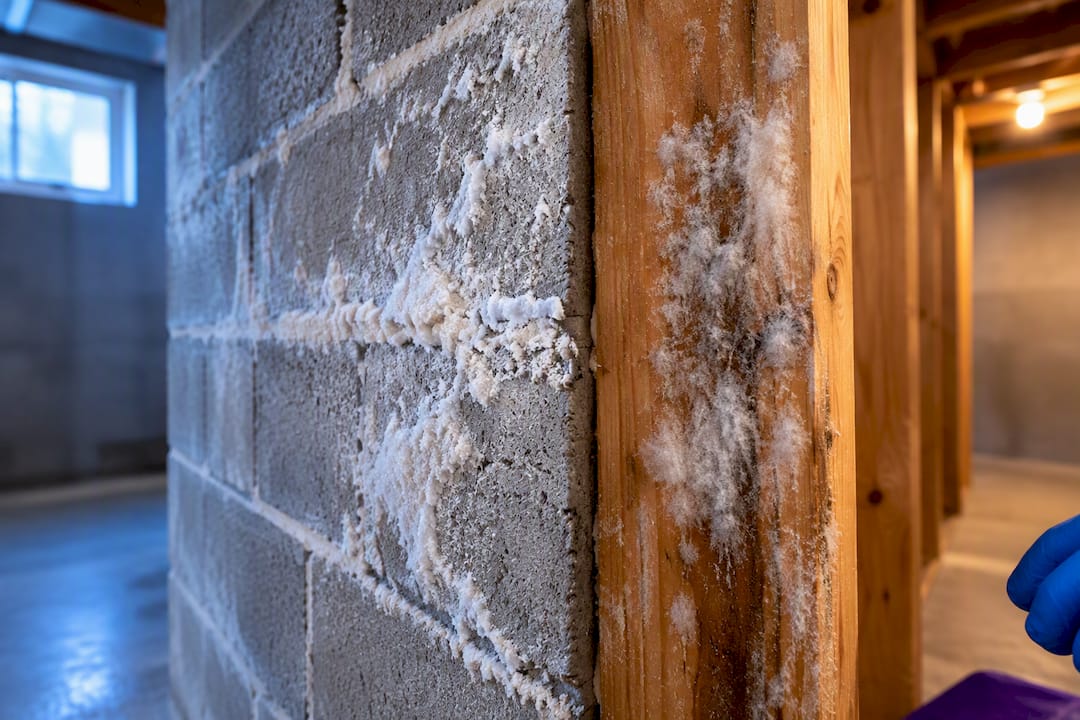
- Days 3 to 7. Visible mold growth appears as spots or patches. Colonies begin producing spores, spreading contamination to adjacent surfaces and through the air.
- Beyond one week. Without intervention, mold penetrates deeper into structural materials. Surface cleaning no longer resolves the problem. Affected materials typically require removal.
| Timeframe | What’s Happening | Action Required |
|---|---|---|
| 0 to 12 hours | Spore activation begins | Stop water source, start drying |
| 12 to 48 hours | Colony formation underway | Aggressive drying, dehumidification |
| 2 to 3 days | Visible mold possible | Professional assessment recommended |
| 1 to 2 weeks | Structural penetration likely | Professional remediation required |
The 24 to 48 hour drying window is not a rough guideline. It’s the difference between a manageable cleanup and a significant remediation project. Every hour beyond that window narrows your options and raises your costs.
Pro Tip: Don’t just dry the air. Push airflow directly across wet surfaces using box fans pointed at walls and floors. Moving air across the material surface speeds evaporation far more effectively than a dehumidifier working alone.
Factors that make mold growth worse
Not all water damage situations carry the same mold risk. Several factors determine how quickly and severely mold takes hold.
Material type matters more than you think
Porous materials absorb and retain moisture deep inside their structure, making them ideal for mold growth. Non-porous materials like tile, glass, and metal surfaces dry out faster and don’t provide the organic food source mold needs. Here’s the practical breakdown:
| Material Type | Examples | Mold Risk | Recovery Likelihood |
|---|---|---|---|
| Porous | Drywall, insulation, carpet, wood framing | High | Often requires removal |
| Semi-porous | Concrete block, brick, plywood | Moderate | Can be dried and treated |
| Non-porous | Tile, glass, metal, sealed concrete | Low | Usually salvageable |
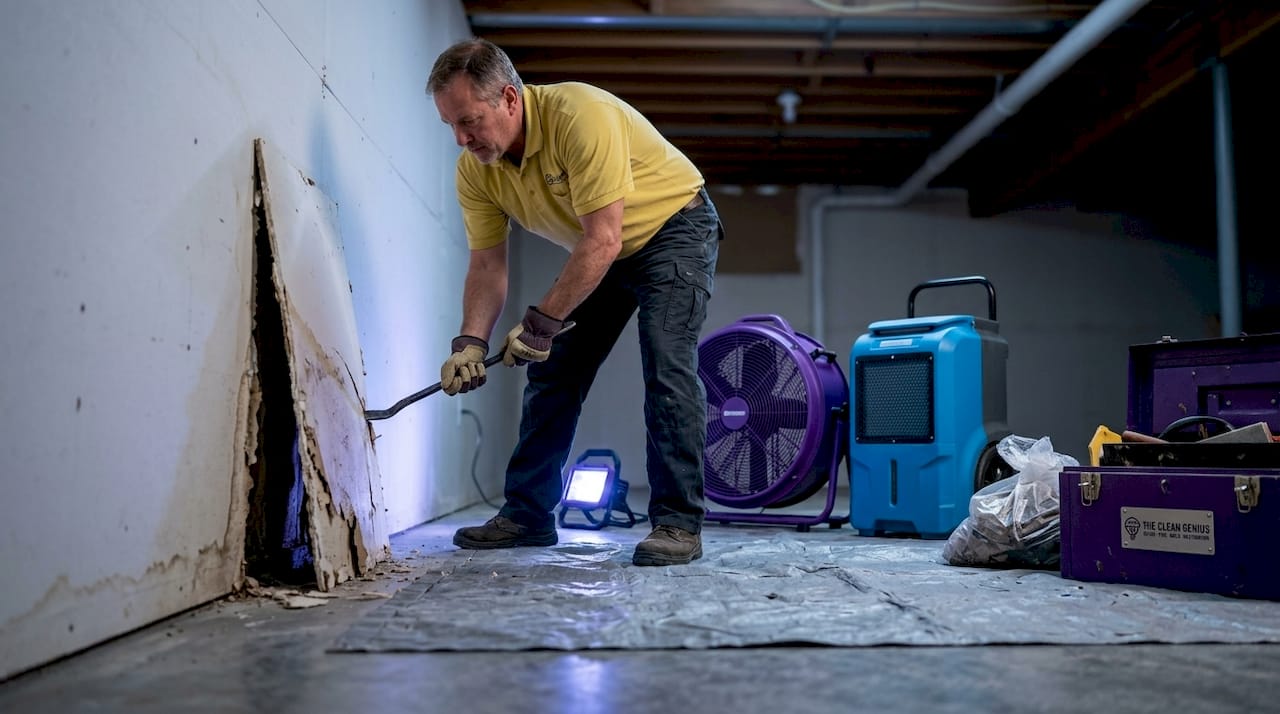
Waterlogged drywall almost always needs to go. Even if you dry the surface, moisture trapped inside the gypsum core and paper facing continues feeding mold long after the room feels dry.
Humidity is a hidden driver
Mold can form on surfaces at relative humidity levels between 70% and 90% without any direct water contact. Condensation on cold surfaces, poor ventilation after a flood event, or even high outdoor humidity pulling into a wet interior space can sustain mold growth long after the original water source is gone. The EPA recommends keeping indoor humidity below 60%, ideally between 30% and 50%.
Hidden moisture is the real enemy
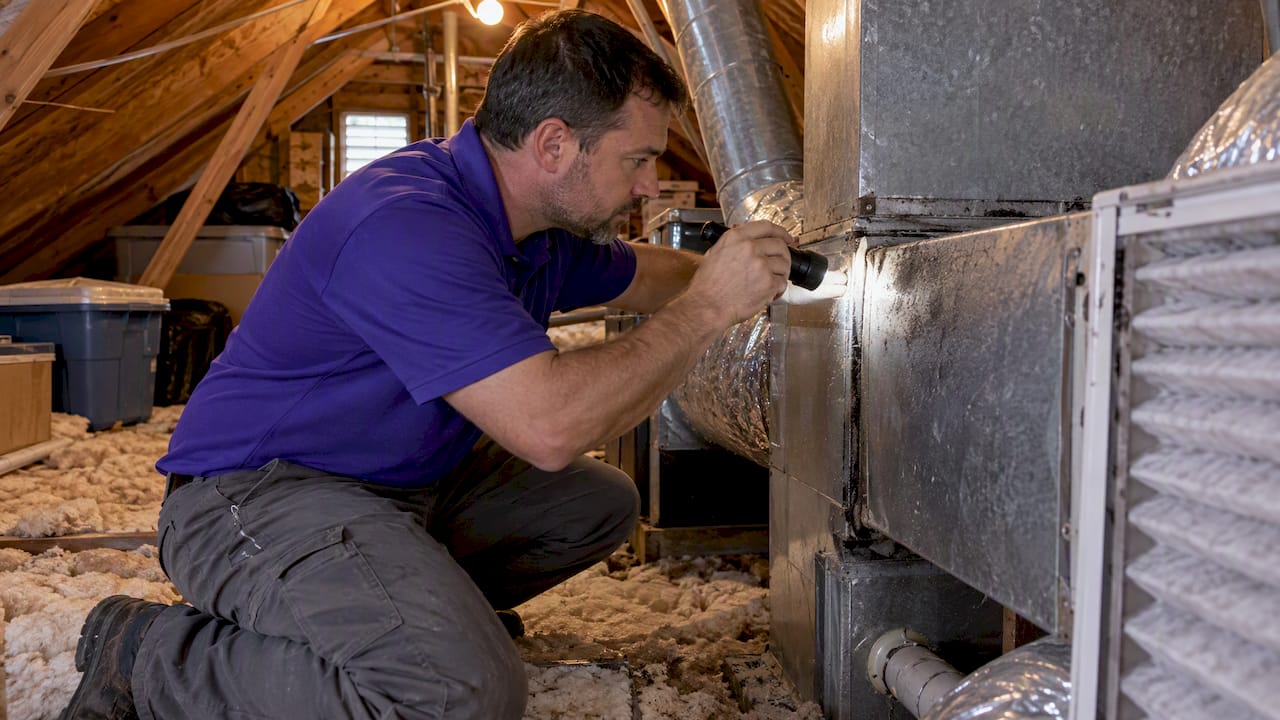
Surfaces can appear completely dry while moisture remains trapped inside wall cavities, under flooring, and within structural framing. This explains why mold after flooding so often reappears weeks after a homeowner believes the problem is solved. The surface was dry. The interior of the wall was not.
How to prevent mold after water damage
Acting fast is the single most effective thing you can do. Every step below is time-sensitive.
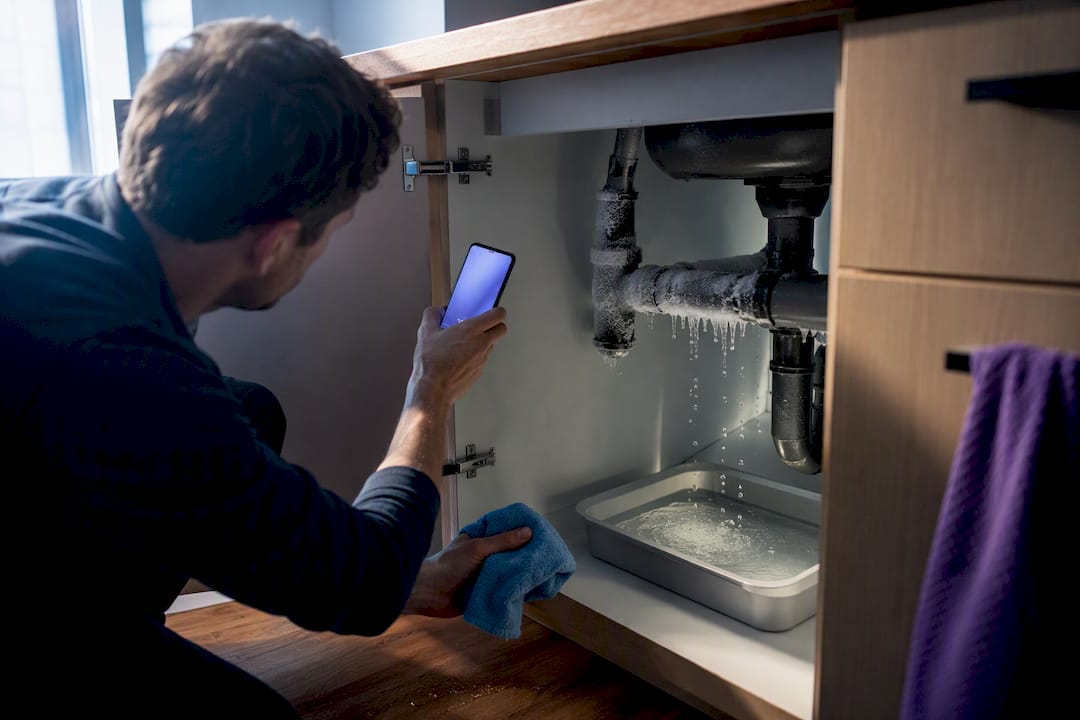
- Stop the water source first. Nothing else matters until the intrusion stops. Shut off the main water supply, contact your utility company, or call a restoration professional if the source is unclear.
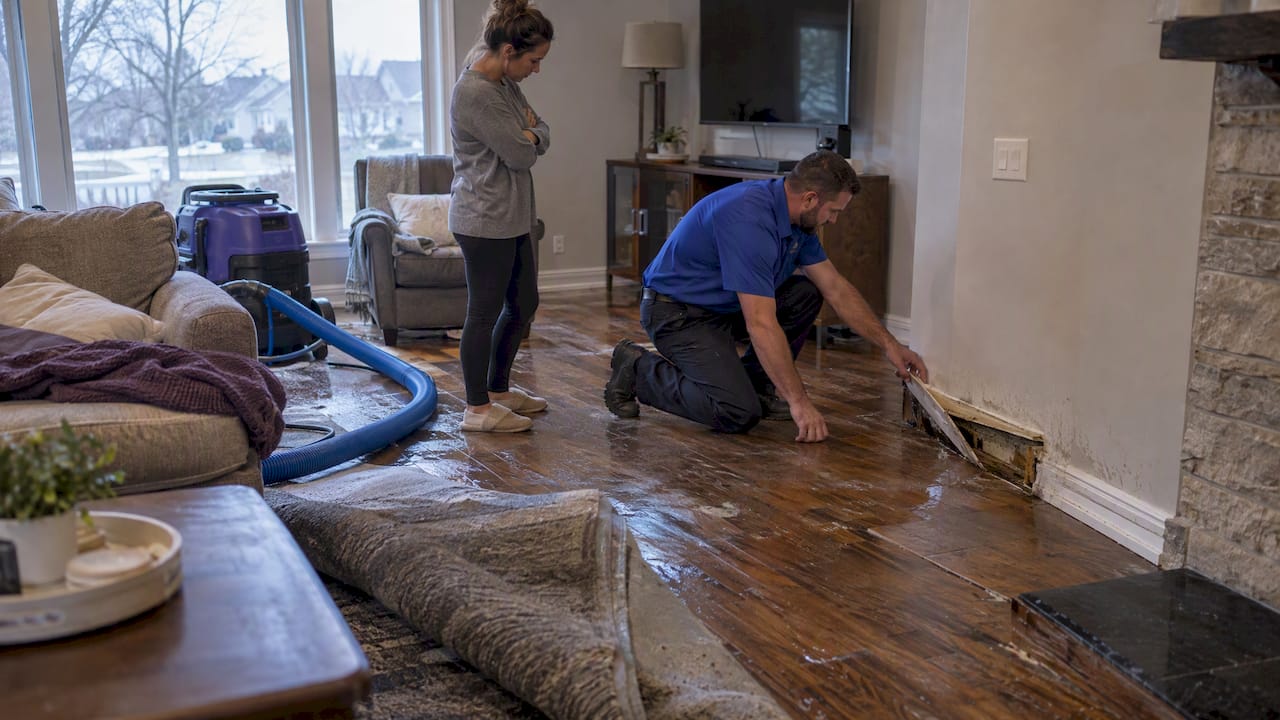
- Remove standing water immediately. Use a wet/dry vacuum, a sump pump, or buckets. Getting bulk water out of the space within the first few hours is critical.
- Start drying within 24 hours. Set up high-velocity fans and dehumidifiers. Open windows if outdoor humidity is lower than indoor levels. Direct airflow across all wet surfaces, not just the center of the room.
- Remove waterlogged porous materials. Wet carpet, padding, and saturated drywall panels should be pulled and discarded, not dried in place. Trying to dry them while installed almost always fails because moisture remains trapped.
- Monitor humidity with a meter. Inexpensive hygrometers are available at most hardware stores. Check readings daily until the space stays consistently below 50% for 48 hours straight.
- Inspect for hidden moisture. Use a moisture meter or consult a professional to check inside walls, under floors, and in ceiling cavities. Effective remediation requires structural drying, not just surface drying.
For a full checklist of what to do in the first hours after water intrusion, the emergency response steps for homeowners page walks through each action in order of priority.
Pro Tip: Bag and remove wet porous debris from the home entirely rather than piling it in the garage or a basement corner. Saturated materials sitting in an enclosed space will still generate mold spores that spread through your home’s air.
Why mold keeps coming back
This is the part most homeowners learn the hard way. Cleaning visible mold without fixing the moisture source means the mold will return. Every time. The mold you see on a surface is only the visible portion of a colony. The hyphae run deeper into the material, and as long as moisture remains, new growth resurfaces within weeks.
Common mistakes that cause mold to return:
- Wiping down visible mold with bleach and assuming the job is done. Bleach is not recommended for mold removal. The focus should remain on moisture elimination and proper cleaning with mild detergent.
- Skipping inspection of wall cavities after a pipe leak. The wall surface may look fine while mold grows inside for weeks.
- Relying on air drying alone in a humid season. Without active dehumidification, evaporation from wet materials raises room humidity, which feeds growth on adjacent surfaces.
- Painting over mold stains without treating or removing the affected material. Paint covers the visual problem for weeks at most.
If you’ve already dealt with mold once and it returned, the reason is almost always an unresolved moisture issue. Understanding why remediation fails to stick is the starting point for a permanent fix. And knowing when to call professionals makes the difference between a manageable situation and a structural problem.
Mold exposure also carries real health consequences. Mold releases mycotoxins and microbial volatile organic compounds linked to respiratory symptoms, neurological effects, and chronic illness. It’s not a cosmetic issue.
My honest take after years in the field
I’ve walked into hundreds of homes after water damage events, and the pattern is almost always the same. The homeowner did the right things at first. They cleaned up the visible water. They ran some fans. The room felt dry within a few days, so they moved on. Then three weeks later, they called us because there was black growth creeping up a wall or a persistent musty smell they couldn’t track down.
Waiting to see if mold develops before taking serious action is one of the riskiest approaches a homeowner can take. By the time you see it, the colony is already established and has likely spread beyond what you can see. That changes the scope of the job significantly.
What I’ve learned is this: the homes that come through water damage without a mold problem are the ones where the homeowner treated it like an emergency from hour one. Not just cleanup. Full structural drying. Moisture monitoring. Professional assessment if there was any doubt.
You cannot outrun mold with a shop vac and a fan. You can stop it cold if you move fast, dry thoroughly, and don’t let hidden moisture slide.
— Jim
Protect your home with professional help
When water damage hits your Chicagoland home, the clock starts immediately. Thecleangenius specializes in exactly the kind of fast, thorough response that keeps mold from ever gaining a foothold.

Our certified team handles everything from complete water damage restoration to full mold removal using advanced Pure Cloud dry-fog technology, which reaches inside wall cavities and structural materials where surface treatments fail. We work directly with your insurance, respond 24/7 to emergencies, and serve all of Chicagoland including Naperville, Schaumburg, Arlington Heights, Elgin, and dozens of surrounding communities.
If mold has already appeared or you’re not confident your home dried out completely, our mold removal and remediation team can assess the situation and eliminate it at the source. Call us before the problem grows. We’ve helped over 400 families get their homes back, and we’re ready to do the same for you.
FAQ
How fast does mold grow after water damage?
Mold spores begin germination within hours of contacting wet porous materials, and visible colonies can appear within 2 to 3 days. The critical prevention window is the first 24 to 48 hours.
Why does mold appear even after the water is gone?
Surfaces may look dry while moisture remains trapped inside walls, floors, and structural materials. Hidden dampness inside materials continues feeding mold growth long after visible water is removed.
Can high humidity alone cause mold without a leak?
Yes. Mold can grow at relative humidity levels between 70% and 90% through condensation alone, without any direct water intrusion. Keeping indoor humidity below 60% reduces this risk significantly.
Why does mold keep coming back after I clean it?
Cleaning mold without fixing the underlying moisture source leads directly to regrowth. The mold will most likely return unless you eliminate the moisture that’s feeding it, not just the visible growth.
When should I call a professional after water damage?
Call a professional if water affected porous materials like drywall or subfloor, if the damage covers more than a small area, or if you detect a musty odor after drying. Professionals use moisture meters and structural drying equipment to address moisture your senses can’t detect.