
Color alone doesn’t tell you whether a mold is dangerous. The CDC and EPA both recommend treating any visible indoor mold growth as a remediation issue, regardless of whether it’s black, green, white, or fuzzy gray. Species identification rarely changes what you should do next.
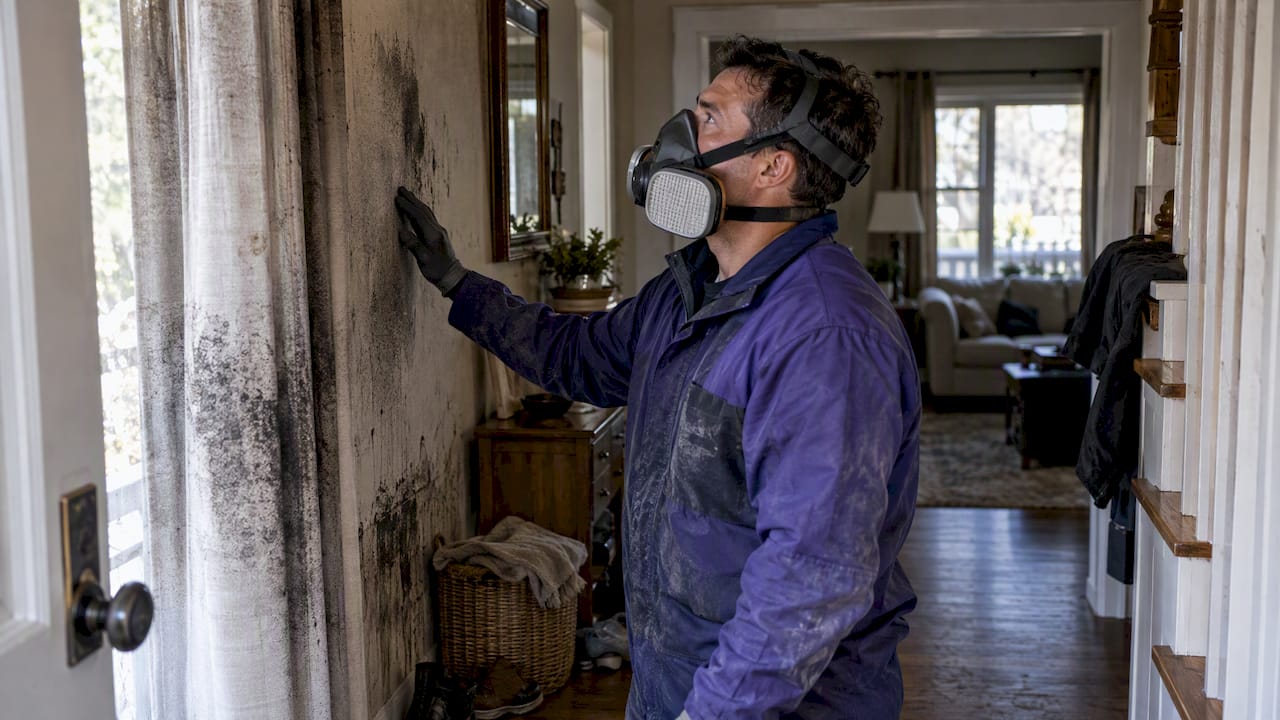
That single fact undercuts most of what people believe about “toxic black mold.” The color that scares homeowners the most, a dark greenish black tied to Stachybotrys chartarum, gets treated no differently by health authorities than the common green or white molds growing in a shower corner. If you see it or smell it, the response is the same: find the moisture source, remove the mold, and dry the area.
Here’s what to do the moment you spot suspicious growth:
- Don’t touch it yet. Scrubbing or vacuuming dry mold can send spores airborne and spread contamination to other rooms.
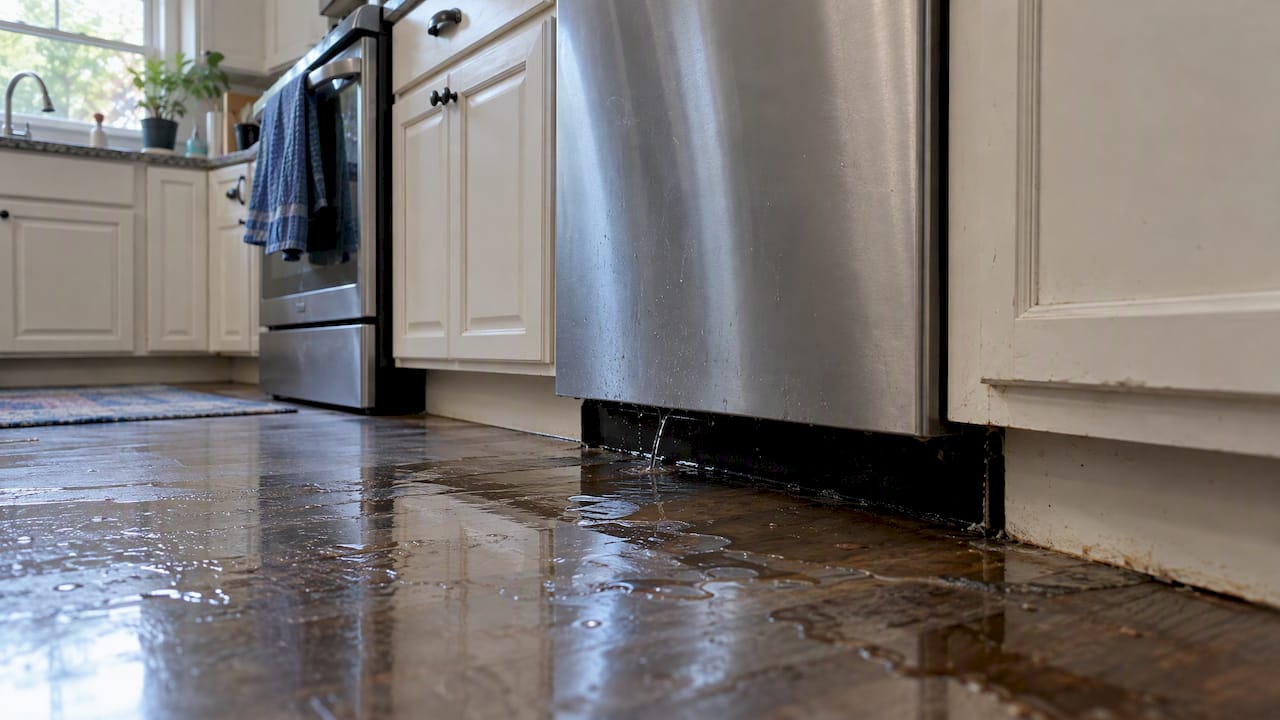
- Find and stop the water source. A leaking pipe, a roof gap, or chronic condensation is the actual problem. Mold is just the symptom.
- Decide DIY or professional based on size and material, not color. Small, hard-surface patches are usually manageable yourself. Anything larger, embedded in drywall, or tied to a flood calls for a professional.
Key Takeaways
Treating every indoor mold sighting the same way, based on moisture source and material affected rather than color, is the single most reliable approach homeowners can take.
| Point | Details |
|---|---|
| Color isn’t a danger signal | CDC and EPA guidance treats all indoor mold as a remediation issue regardless of species or shade. |
| Stachybotrys needs sustained moisture | This species requires roughly 10–12 days of constant wetness on cellulose-rich material to establish. |
| Size determines DIY vs. professional | Under 10 square feet on hard surfaces is generally DIY territory; larger or porous cases need a pro. |
| Testing rarely changes next steps | Skip routine sampling unless you’re facing an insurance dispute or unexplained health symptoms. |
| Call Thecleangenius for anything beyond small patches | Certified teams use dry-fog remediation and handle insurance claims for Chicagoland homeowners. |
Table of Contents
- What Is Black Mold vs. Regular Mold, Really?
- Stachybotrys Chartarum: The Species Behind the “Toxic Black Mold” Label
- What Are the Common Molds Found Indoors?
- How Do You Know If a Mold Patch Needs Urgent Action?
- What Health Effects Should You Actually Worry About?
- Should You Get Mold Tested Before Cleaning It Up?
- How Do You Safely Clean Up Mold Yourself?
- When Should You Call a Professional Mold Remediation Company?
- How Can You Prevent Mold From Coming Back?
- What Do Restoration Professionals Actually Prioritize First?
- How The Clean Genius Can Help With a Mold Problem
- Sources
What Is Black Mold vs. Regular Mold, Really?
Mold is a fungus. It reproduces through microscopic spores that are floating in the air around you right now, indoors and out, in nearly every building on earth. Give those spores moisture, a food source like wood, drywall, dust, or fabric, and a survivable temperature, and they’ll germinate into visible colonies within days.
There isn’t one species called “black mold.” Dozens of mold genera can appear black, dark green, or nearly charcoal gray depending on lighting, moisture level, and the surface they’re colonizing. Cladosporium often looks olive to black. Aspergillus niger is genuinely black. Even mildew, a related but distinct surface fungus, can darken enough to trigger a black mold scare on a bathroom ceiling.
This is why color is such a poor screening tool. A homeowner staring at a dark patch on drywall has no reliable way to know, just by looking, whether it’s the Stachybotrys species everyone worries about or a much more common and less concerning genus. The CDC doesn’t recommend routine air sampling or lab testing to identify mold types, mainly because no health-based standard exists for what counts as an acceptable indoor mold concentration. Visual removal and moisture correction are the guidance, full stop.
A few things every homeowner should know about mold biology before panicking over a color:
- Mold needs sustained moisture to establish itself, not just a one time splash.
- Different species colonize different materials at different speeds.
- Color shifts with age, lighting, and substrate, so the same species can look different in two rooms.
- No consumer-grade visual inspection can substitute for a moisture and material assessment.
Stachybotrys Chartarum: The Species Behind the “Toxic Black Mold” Label
Stachybotrys chartarum is the species most people mean when they say “black mold.” It’s a greenish black, slimy-looking fungus that got its fearsome reputation from a wave of 1990s media coverage linking it to serious illness in infants. That link was never conclusively established, but the label stuck, and it’s why any dark mold patch tends to trigger outsized anxiety today.
What actually makes Stachybotrys different isn’t toxicity you can see. It’s pickiness. This species is what mycologists call a tertiary colonizer, meaning it typically shows up after other, faster-growing molds have already broken down a surface. It needs cellulose-rich material, think water-damaged drywall paper, ceiling tiles, or cardboard, and it needs that material to stay consistently wet.
According to CDC data on Stachybotrys chartarum, the species generally requires around 10 to 12 days of continuous moisture and high water activity before it starts producing visible spores. Peer-reviewed research narrows that further, noting the fungus favors relative humidity commonly above 90% and water activity levels of roughly 0.9 to 0.95, conditions found in chronically wet building cavities more often than in a bathroom that dries out between showers, according to a review of Stachybotrys ecology.
| Factor | Stachybotrys chartarum | Faster-colonizing molds (e.g., Cladosporium) |
|---|---|---|
| Preferred material | Cellulose-rich (drywall paper, cardboard) | Dust, fabric, wood, painted surfaces |
| Moisture needed | Constant, roughly 10–12 days | Can establish within about 48 hours |
| Humidity/water activity | RH often above 90%, aw ≥ 0.9–0.95 | Lower thresholds tolerated |
| Colonization role | Tertiary (appears after other decay) | Often primary or early colonizer |
Pro Tip: If you find a slimy, greenish-black patch on drywall that’s been wet for over a week, that timeline alone is a stronger clue than the color. Chronic, unaddressed moisture is the real story, not the species.
Environmental health experts increasingly argue that fixating on whether a patch is Stachybotrys distracts homeowners from the one action that actually matters: locating and fixing the water intrusion.
What Are the Common Molds Found Indoors?
Most mold growing in American homes isn’t Stachybotrys at all. Three genera show up constantly in indoor air quality reports: Cladosporium, Penicillium, and Aspergillus.

Cladosporium is the workhorse of indoor mold. It grows on damp wood, carpet, and HVAC surfaces, often appearing as olive green to black speckling, and it tolerates a wider humidity range than Stachybotrys does. Penicillium tends to show up as blue or green fuzz on water-damaged wallpaper, insulation, and food, and it’s often the smell you notice before you see anything, that classic musty basement odor. Aspergillus is a large genus with dozens of species; some are black, some yellow green, and it commonly colonizes dust, HVAC systems, and damp building materials.
| Mold type | Typical growth surface | Relative humidity need |
|---|---|---|
| Cladosporium | Damp wood, carpet, HVAC coils | Moderate to high |
| Penicillium | Wallpaper, insulation, food | Moderate to high |
| Aspergillus | Dust, drywall, HVAC systems | Moderate to high |
| Stachybotrys chartarum | Cellulose-rich, chronically wet material | Very high (often 90%+) |
The practical difference is speed and location, not danger level. Common molds colonize new moisture within about 48 hours, according to EPA guidance on mold and moisture, which is why a spill you don’t dry within a day or two can already show fuzzy growth. Stachybotrys is the slow mover that shows up weeks into an unresolved leak. Both categories get treated the same way once you find them: remove and dry.
How Do You Know If a Mold Patch Needs Urgent Action?
Size, source, and who’s breathing the air matter far more than color when you’re deciding how urgently to respond. Run through this checklist before you decide whether to grab cleaning supplies or make a phone call.
- Area larger than about 10 square feet (roughly a 3 foot by 3 foot patch). Past that size, EPA and CDC guidance both point toward professional remediation rather than DIY cleanup.
- A persistent musty odor, even without visible growth, which often signals hidden mold behind walls or under flooring.
- An active or recent leak, or chronic condensation on windows, pipes, or exterior walls.
- Porous materials affected, such as drywall, insulation, carpet padding, or ceiling tile, which are harder to fully clean and often need to be discarded.
- Vulnerable occupants in the home, including infants, people with asthma, or anyone immunocompromised, which lowers the threshold for calling a professional even on smaller patches.
Disturbing mold incorrectly is one of the most common mistakes homeowners make. Dry-brushing, sanding, or running a shop vac over a moldy surface without containment can aerosolize spores and spread contamination into rooms that were previously clean, turning a contained problem into a house-wide one.
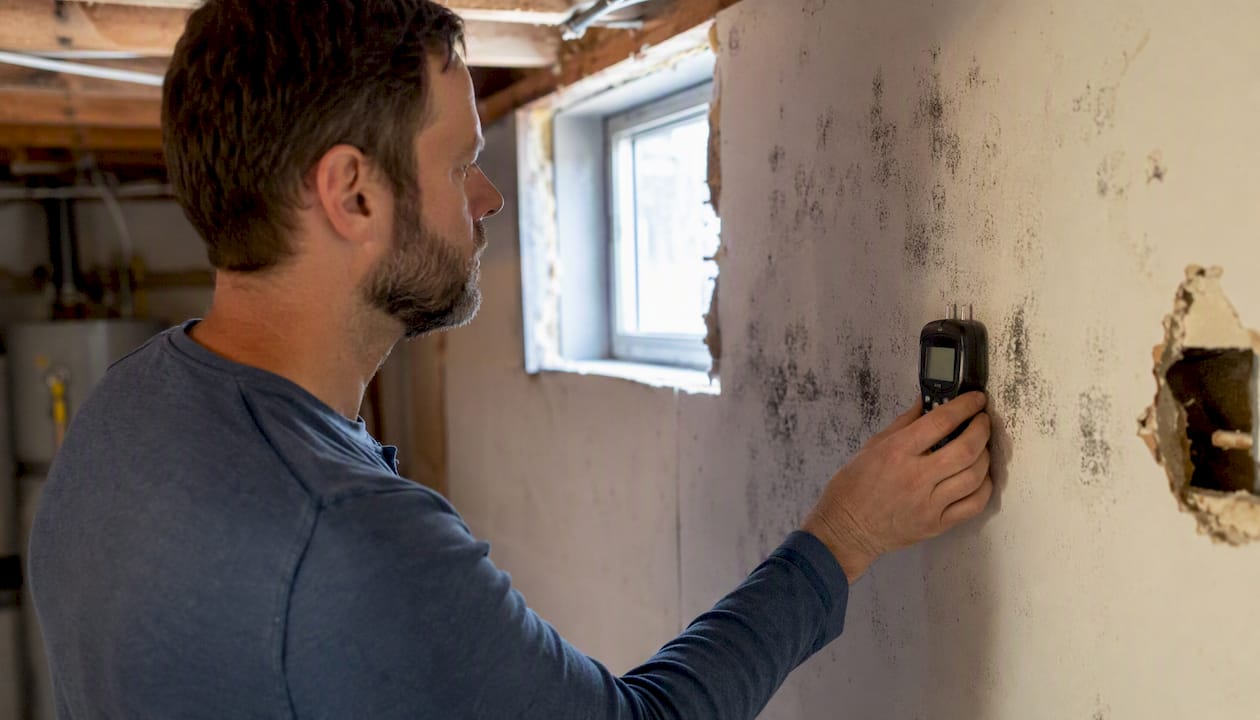
Pro Tip: A cheap pin-type moisture meter, available at any hardware store, will tell you more than a color inspection ever will. Press it against drywall near a suspected leak; readings that stay elevated day after day mean the material hasn’t dried and mold will keep coming back no matter how many times you clean the surface.
What Health Effects Should You Actually Worry About?
The health risks tied to indoor mold are real, but they’re broader and less exotic than the “toxic mold” narrative suggests. The EPA states plainly that all molds, black-colored ones included, can cause allergic reactions, trigger asthma attacks, and irritate the eyes, nose, and throat even in people without diagnosed allergies.
- Allergic symptoms: sneezing, runny nose, red or itchy eyes, skin irritation.
- Asthma exacerbation in people who already have the condition.
- Respiratory irritation in sensitive individuals, even without a formal allergy.
- Rare but more serious infections in severely immunocompromised patients, typically tied to Aspergillus rather than Stachybotrys.
Stachybotrys produces mycotoxins, chemical compounds including macrocyclic trichothecenes, and that’s part of why it earned the “toxic” nickname. But peer-reviewed ecological research on the species notes that clear links between household exposure and severe systemic poisoning remain uncommon and the evidence is mixed, even though the mycotoxins themselves are documented in laboratory settings. In practice, most people exposed to any indoor mold, Stachybotrys included, experience the same allergy and asthma symptoms you’d get from dust mites or pet dander, not acute poisoning.
Public health agencies frame this consistently: focus on moisture control and safe removal rather than chasing a species name to gauge how worried to be. Poor indoor air quality tied to mold growth, including in attics and crawlspaces, compounds these effects over time even when no single exposure feels dramatic.
Should You Get Mold Tested Before Cleaning It Up?
Usually, no. The CDC’s guidance on mold testing and remediation is direct on this point: routine sampling and species identification rarely change what you need to do, because mold spores are already present in virtually every indoor and outdoor environment, and no regulatory body has set an “acceptable” indoor concentration to test against.
Testing does earn its cost in a handful of specific situations:
- Insurance or legal disputes where documentation of contamination extent matters for a claim.
- Unexplained, persistent health symptoms in occupants when the mold source isn’t visually obvious.
- Large or concealed contamination, such as mold suspected inside wall cavities or HVAC ductwork, where visual inspection alone can’t confirm the scope.
If you’re weighing a DIY test kit against hiring a professional, know the tradeoffs going in.
- DIY kits are cheap and fast, but a positive result rarely tells you anything actionable since spores are everywhere anyway.
- Professional sampling from a certified indoor environmental consultant costs more but pairs lab results with a moisture assessment, which is the piece that actually drives remediation decisions.
- Neither option replaces fixing the water source, which is the step testing sometimes lets people postpone.
Pro Tip: If you do decide testing is worth it, hire an independent indoor environmental professional rather than a remediation company that also sells the cleanup service. That separation avoids a conflict of interest between finding a problem and selling you the fix.
How Do You Safely Clean Up Mold Yourself?
Small, contained mold problems on non-porous surfaces are reasonable DIY territory. That threshold generally means an area under 10 square feet, on hard surfaces like tile, glass, or sealed countertops, with no ongoing structural water issue. Anything beyond that, especially porous material like drywall or carpet, moves toward professional territory covered in our professional vs. DIY mold removal guide.
- Isolate the area. Close doors and cover vents to prevent spreading spores through your HVAC system.
- Ventilate. Open a window if possible and run a fan pointed outward, not into the rest of the house.
- Gear up. Wear gloves, an N95 respirator, and eye protection before disturbing any mold.
- Clean hard surfaces with a household detergent and water solution, scrubbing thoroughly rather than just wiping.
- Discard saturated porous materials. Wet drywall, carpet padding, or ceiling tile that’s been colonized usually can’t be fully cleaned and should be bagged and removed.
- Dry the area completely with fans or a dehumidifier before considering the job finished.
A quick safety checklist worth keeping on your fridge: PPE on before you start, vents covered, wet-clean rather than dry-brush to limit spore release, and bag contaminated debris before carrying it through the house. On the bleach question, plain detergent and water work as well as bleach on non-porous surfaces for visible mold, and bleach doesn’t penetrate porous materials any better, so it’s not the magic fix marketing sometimes implies. Our mold removal safety guide walks through the full PPE and containment process in more detail.
When Should You Call a Professional Mold Remediation Company?
Certain triggers should end the DIY conversation immediately: an affected area over 10 square feet, contamination from sewage or category 3 water, mold inside HVAC ductwork, vulnerable occupants in the home, or a DIY attempt that hasn’t stopped the growth from returning. Our guide on knowing when mold gets serious breaks these thresholds down further.
Professional remediation follows a more rigorous sequence than a homeowner can typically replicate:
- Inspection and moisture mapping using meters and thermal imaging to find hidden wet spots.
- Containment with plastic sheeting and negative air pressure to stop cross-contamination.
- Removal of contaminated porous materials.
- HEPA vacuuming and air scrubbing to capture airborne spores.
- Drying verification, confirming moisture levels have returned to normal before closing the job.
- Final clearance, both visual and moisture-based, before the space is considered safe.
Before hiring anyone, ask these questions:
- What certifications does your team hold, and can you provide references from similar jobs?
- Do you use negative air containment and HEPA filtration during removal?
- How do you verify drying is complete before you close out the job?
- Will you work directly with my insurance company on the claim?
This is exactly the process our certified mold remediation teams follow on every job, including attic-specific work covered in our attic mold removal walkthrough. Routine cleaning and certified remediation aren’t the same service, and understanding why remediation differs from cleaning helps set realistic expectations for cost and scope.
Pro Tip: Ask specifically how a contractor validates drying before they call the job done. A crew that removes visible mold but skips moisture confirmation is setting you up for a repeat call in six months.
How Can You Prevent Mold From Coming Back?
Every prevention strategy comes back to one variable: moisture. Fix that consistently and neither Stachybotrys nor the common household molds get the runway they need to establish themselves.
- Fix leaks the day you find them, not the week you get around to it.
- Dry any water intrusion within 24 to 48 hours, since that’s roughly the window before common molds begin colonizing wet material.
- Keep indoor relative humidity below 50% where possible, using a dehumidifier in basements and humid climates.
- Improve ventilation in bathrooms and kitchens with exhaust fans vented outside, not into the attic.
- Maintain gutters and roof flashing so water is directed away from the foundation and attic space.
- Inspect attics and crawlspaces at least seasonally for staining, condensation, or musty odors.
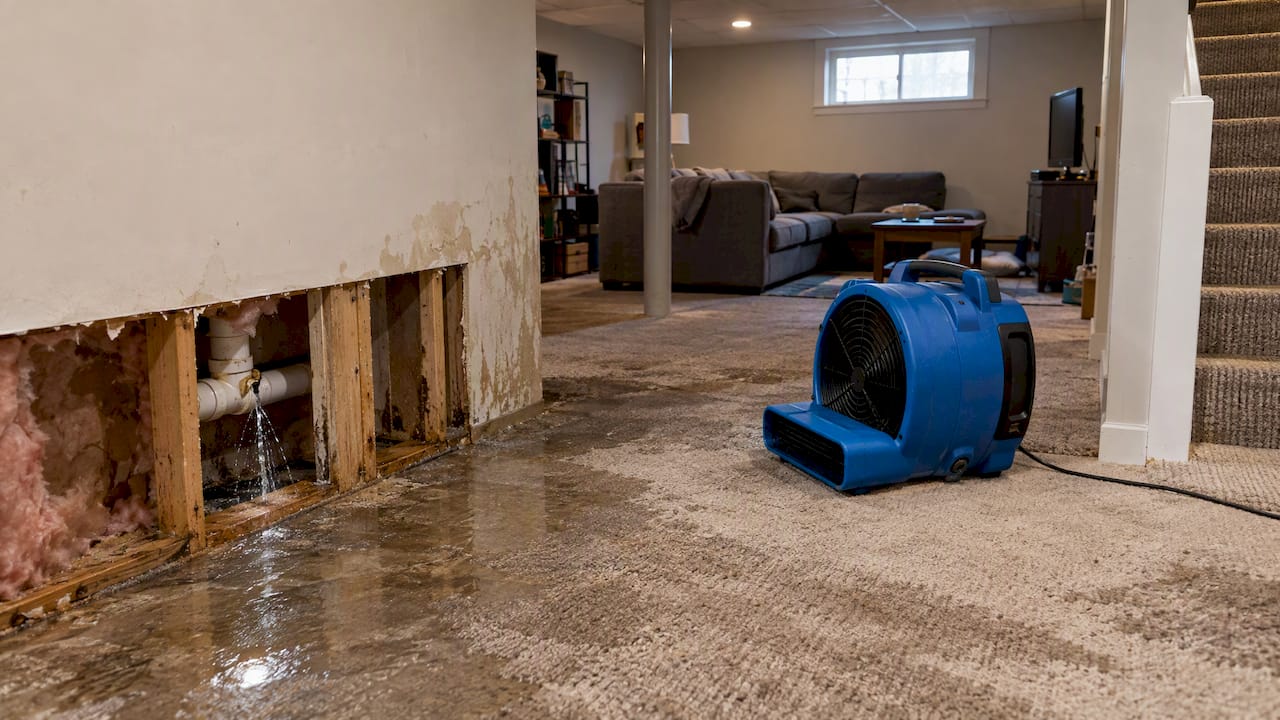
Drying validation matters most after major water events, floods, burst pipes, or extended roof leaks, where surface-dry doesn’t mean structurally dry. Materials like subfloor and wall cavities can hold moisture for weeks after a flood looks resolved, which is part of why our property dry-out guide treats drying as its own verified step rather than an assumption.
Pro Tip: Attics are a blind spot for most homeowners because condensation forms at thermal bridges, spots where insulation gaps let warm, moist indoor air meet cold roof decking, long before anyone smells a problem below. If your attic insulation looks compressed or discolored near the roofline, that’s often the earliest visible sign of a moisture problem building overhead, something we cover in more depth in our piece on attic moisture and mold. For broader condensation control strategies, this guide on mastering moisture and condensation is a solid companion resource.
What Do Restoration Professionals Actually Prioritize First?
When our teams walk into a property with mold concerns, the first question is never “what species is this.” It’s “where is the water coming from, and how long has it been here.” Color tells you almost nothing about urgency. A ten day old leak behind a bathroom vanity that’s produced a small patch of ordinary green mold is often more time-sensitive than a dramatic-looking black stain that’s been dry and dormant for months.

With more than 25 years of combined experience across our certified teams, we’ve learned that homeowners waste time and money chasing species identification when that energy would be better spent on a moisture meter and a flashlight in the crawlspace. Our approach leans on tools like Pure Cloud dry-fog technology precisely because it addresses the whole contaminated environment rather than just the visible patch that happens to look the scariest.
If there’s one thing worth internalizing from all of this: don’t let the color of a mold patch dictate your timeline. Let the moisture source, the material affected, and who lives in the house make that decision instead.
How The Clean Genius Can Help With a Mold Problem
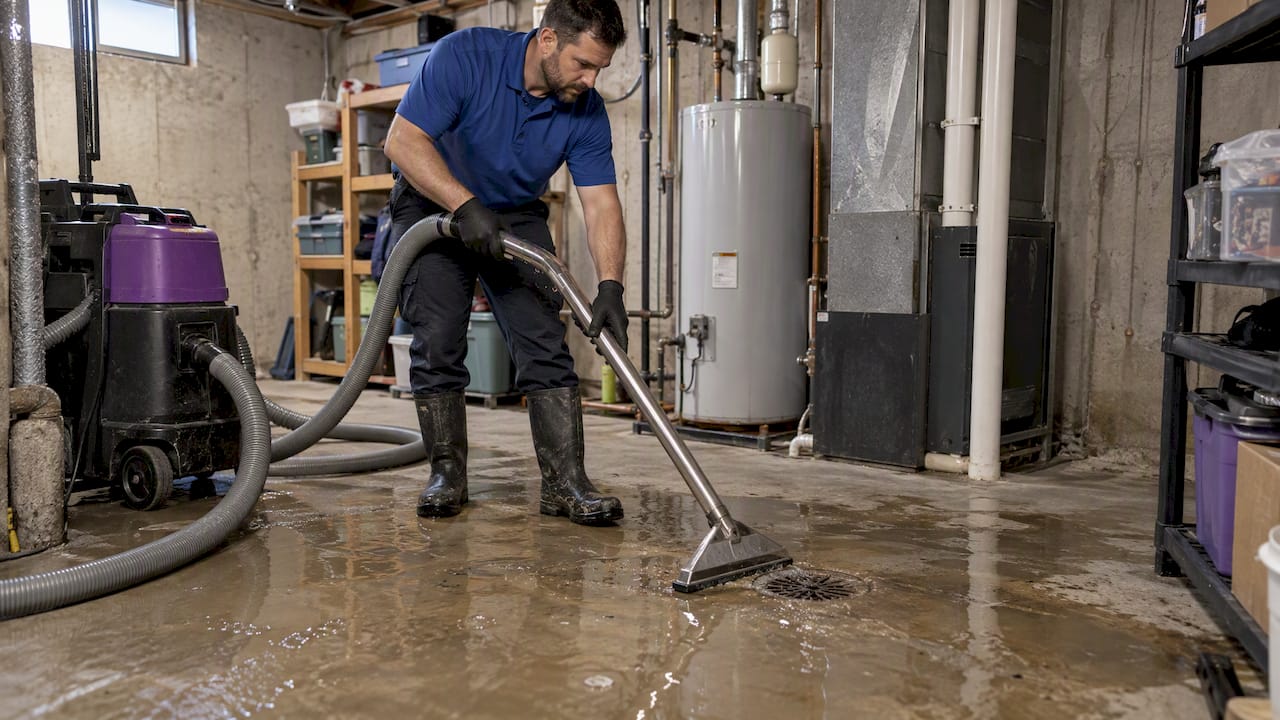
If you’ve found mold and you’re past the point of a quick DIY wipe-down, or the source is a leak you can’t fully trace yourself, that’s where a certified team earns its keep. Thecleangenius handles the two problems that actually cause indoor mold growth, water intrusion and unresolved moisture, under one roof instead of leaving you to coordinate a plumber, a drying company, and a mold contractor separately.

Our certified crews serve Chicagoland towns including Naperville, Schaumburg, Arlington Heights, and Elgin with 24/7 emergency response for the water damage that so often precedes a mold problem, whether that’s a burst pipe, a sewage backup, or a roof leak that’s been dripping into your attic for weeks. We use Pure Cloud dry-fog technology for mold removal because it reaches contaminated air and surfaces that surface wiping never touches, and we handle the insurance paperwork directly so you’re not fighting two battles at once.
If you’re staring at a suspicious patch right now and you’re not sure whether it’s a weekend project or a professional job, start with a water damage restoration assessment to trace the moisture source before it gets worse.
Sources
For readers who want to go deeper than this guide, these are the primary references behind the guidance above.
- Mold | Mold | CDC
- Can mold cause health problems? | US EPA
- Peer-reviewed review on Stachybotrys chartarum and its ecology (PMC)
This article is general information, not a substitute for advice from a qualified doctor. Consult a qualified healthcare professional about your own circumstances before acting on anything here.