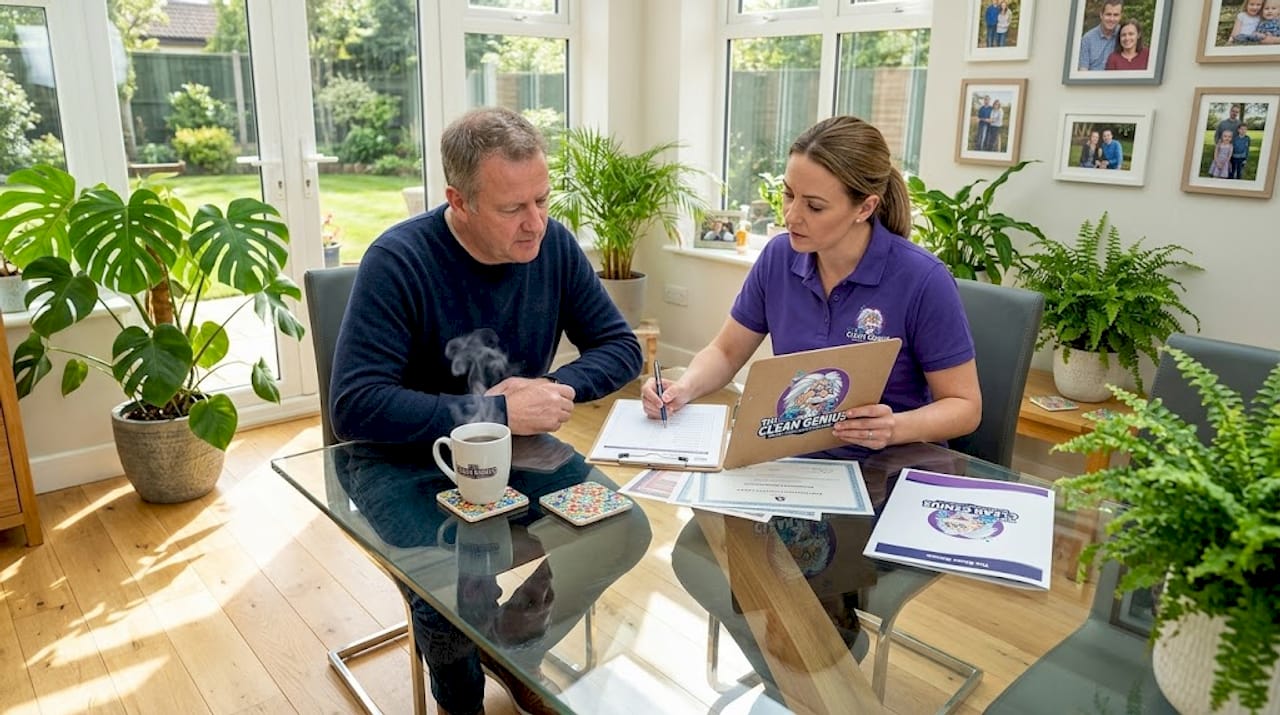

Water damage moves fast. What looks like a contained leak on Monday can become a mold problem by Wednesday and a structural issue by the following week. That urgency is exactly why using a solid water restoration company selection checklist matters before you call anyone. Most homeowners pick the first number they find online, and that decision can cost thousands in avoidable repairs. This guide walks you through every technical, operational, and insurance-related factor you need to evaluate, so you choose a company that actually protects your home instead of just showing up with fans.
Table of Contents
- Key takeaways
- 1. The water restoration company selection checklist: certifications and standards
- 2. Response time and equipment ownership
- 3. Insurance claim support and pricing transparency
- 4. Red flags that signal a company to avoid
- 5. Comparison table: what to check for in every restoration company
- 6. The role of documentation in protecting your outcome
- My take on what actually separates good restoration companies from the rest
- How Thecleangenius meets every point on this checklist
- FAQ
Key takeaways
| Point | Details |
|---|---|
| Certifications signal competence | Look for IICRC-certified firms and lead technicians with WRT credentials before hiring anyone. |
| Response time is a baseline standard | A reputable company arrives on-site within 60 to 90 minutes of your emergency call. |
| Documentation protects your claim | Daily moisture logs and detailed photo records are what stand between you and a disputed insurance claim. |
| Red flags are non-negotiable | Vague billing, pressure to hand over claim control, and no pollution insurance are reasons to walk away. |
| Transparency beats brand recognition | A local company with clear pricing and daily logs outperforms a national franchise that operates like a black box. |
1. The water restoration company selection checklist: certifications and standards
Not every company holding a mop is a restoration company. The single fastest way to filter out underqualified operators is to ask about certification before anything else.
IICRC-certified firms and lead technicians with a Water Damage Restoration Technician credential (WRT) follow the ANSI/IICRC S500 standard, which is the industry benchmark for how drying should actually be performed. That standard covers everything from moisture assessment to final clearance readings. Without it, you have no way of knowing whether a company is guessing or following a proven protocol.
Beyond credentials on paper, ask how the company categorizes water damage. Category 1 is clean water from a supply line. Category 2 is gray water with some contamination. Category 3 water involves sewage or heavily contaminated water and requires removal of porous materials under containment with HEPA filtration. A company that treats all three categories the same way is cutting corners that can harm your family.
- IICRC Certified Firm status and lead technician WRT certification are minimum requirements, not bonus qualifications
- S500 adherence means the company follows a nationally recognized drying standard rather than doing whatever feels right
- Water category classification tells you how safely and completely the company approaches your specific situation
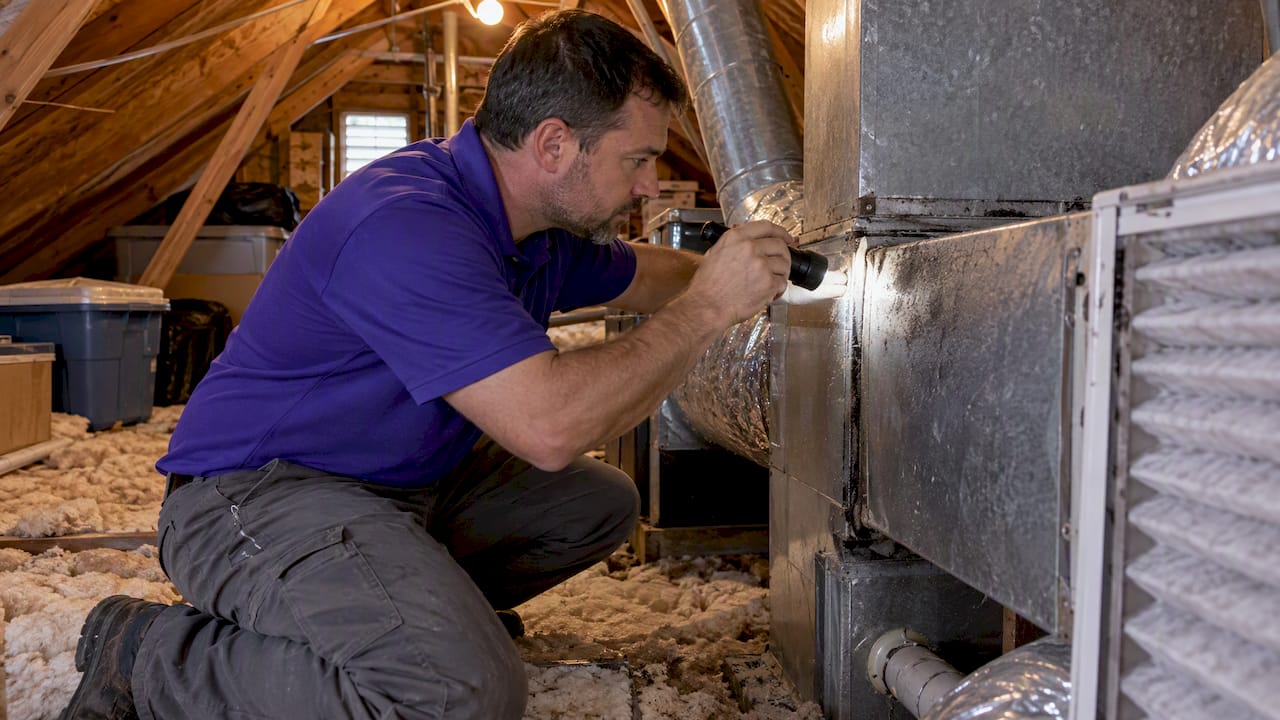
- Thermal imaging and penetrating moisture meters are tools a professional crew uses to find hidden moisture behind walls and under floors before it turns into mold
Pro Tip: Ask the company to show you the WRT certificate, not just claim it exists. Legitimate firms keep copies on file and will not hesitate to share them.
2. Response time and equipment ownership
When you have standing water in your basement, every hour matters. Industry standard response time is 60 to 90 minutes to be on-site after an emergency call. Any company that cannot commit to that window, or that hedges with vague language about “as soon as possible,” is telling you something important about how they operate.
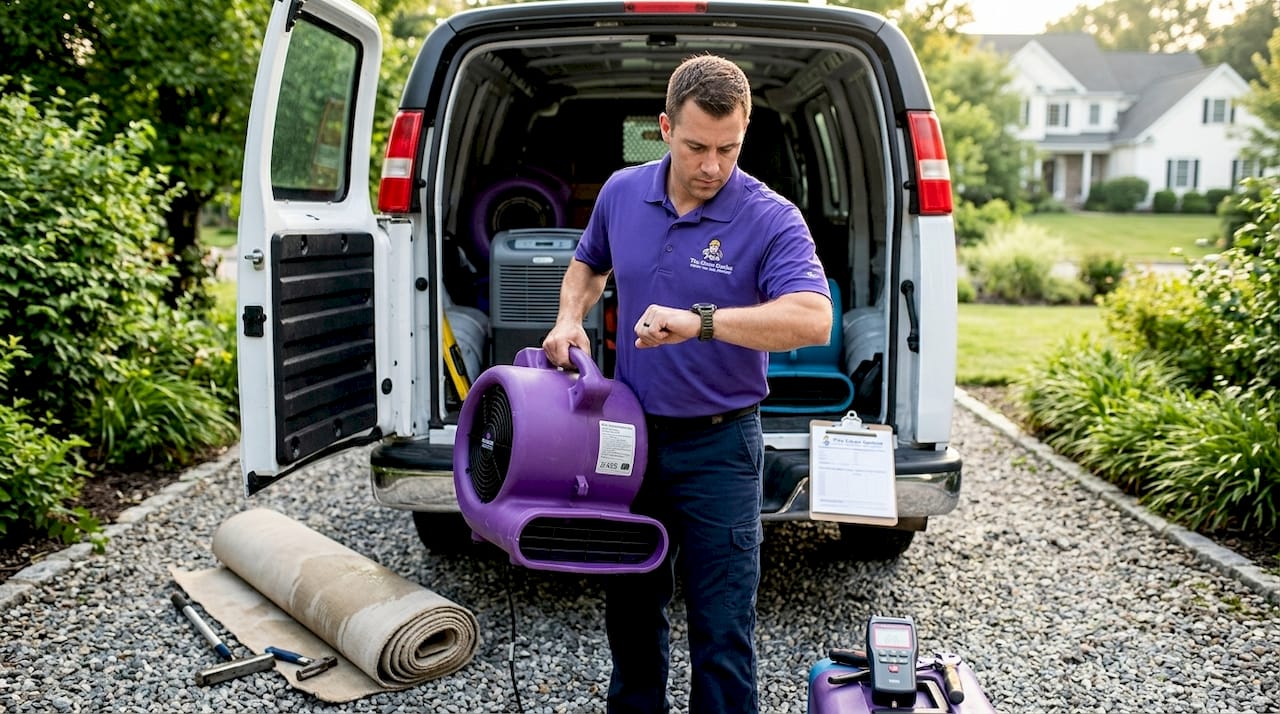
Equipment ownership is a less obvious but equally important factor. A company that rents drying equipment from a third party runs a real risk of coming up empty during large-scale events like regional flooding. When half of Chicagoland needs dehumidifiers at the same time, rental fleets disappear quickly. Companies that own their equipment show up with what you need regardless of what else is happening in the area.
The quality of documentation a company produces during the drying process is also where shortcuts become expensive. Detailed moisture maps with daily readings are not administrative busywork. They are the evidence your insurance adjuster needs to approve equipment costs and confirm that drying was actually completed to standard, not just declared finished.
- 60 to 90 minute on-site arrival is the benchmark. Confirm this commitment before signing anything.
- Owned equipment inventory guarantees availability when demand spikes and avoids delays that allow secondary damage to develop.
- Daily drying logs with moisture readings create a traceable record of progress from day one through final clearance.
- Platforms like Xactimate for estimating mean the company’s scope of work matches the format your insurance adjuster actually uses.
3. Insurance claim support and pricing transparency
This is the area where homeowners get hurt most often, and not always by bad actors. Sometimes it is simply a company that does not understand insurance processes well enough to support you through yours.
Using Xactimate software matters because it generates estimates in the exact line-item format that insurance adjusters work with. When a restoration company hands you a flat quote on a Word document, you have a translation problem. The adjuster may dispute items that were never properly itemized, slowing approval and potentially leaving costs uncovered.
Pricing structure for the drying phase is where billing gets murky fast. Vague lump sum charges for drying are a red flag because they hide how many units of equipment were actually deployed and for how long. The correct approach is billing by per-unit daily rates, which lets you and your adjuster verify that the charges match what was actually on-site.
One of the riskier practices some companies push is called “direction to pay,” where they ask you to hand over full control of your insurance claim before work even begins. You should retain final approval authority over the scope of work and payments at all times. Signing that control away before you understand the full scope is one of the fastest ways to end up in a billing dispute with no leverage.
Pro Tip: Before any work starts, ask the company to provide a written scope of work with per-unit daily drying rates. If they hesitate or offer only a total number, that is your cue to call another company.
- Xactimate-formatted estimates reduce back-and-forth with adjusters and speed up approvals
- Per-unit daily drying charges give you full transparency on what equipment was used and for how long
- Your signature controls the claim. Never sign away approval authority before seeing a detailed scope.
- Pollution and mold liability coverage in the company’s insurance policy protects you if contamination spreads during restoration
4. Red flags that signal a company to avoid
Speed and price pressure during emergencies is exactly when restoration companies with poor practices thrive. Knowing what to watch for keeps you from making a panicked decision you regret.
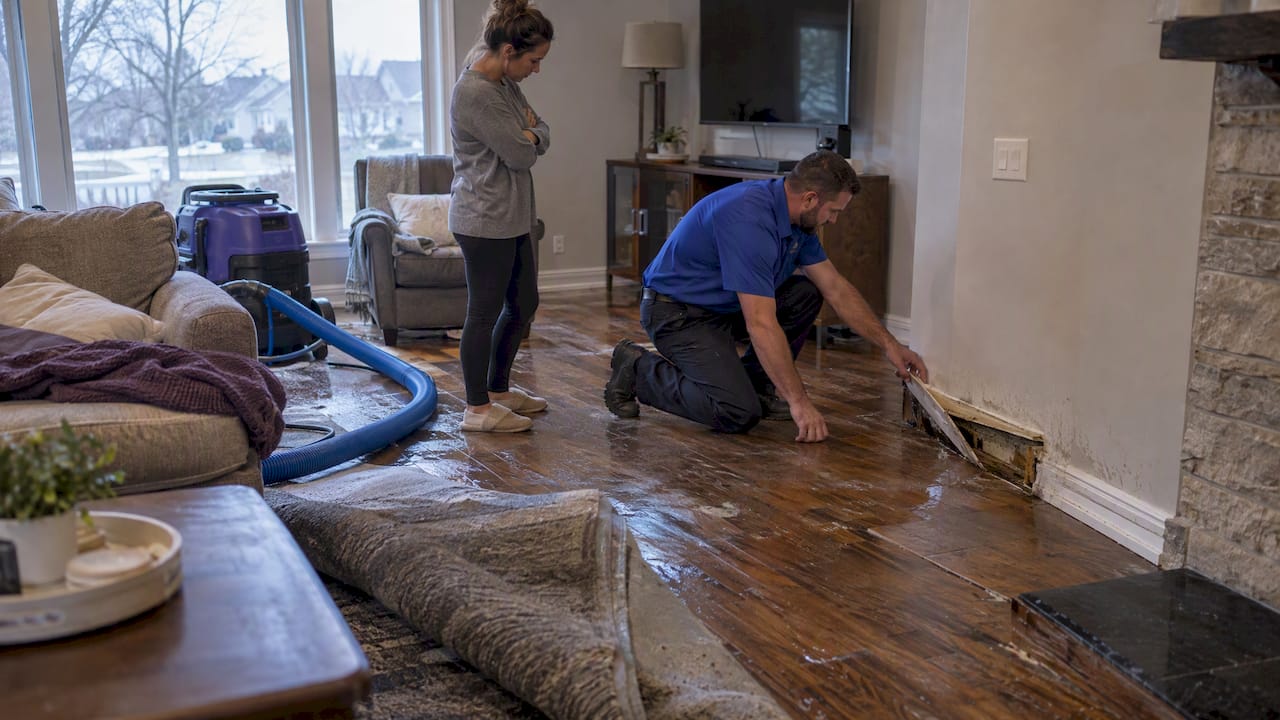
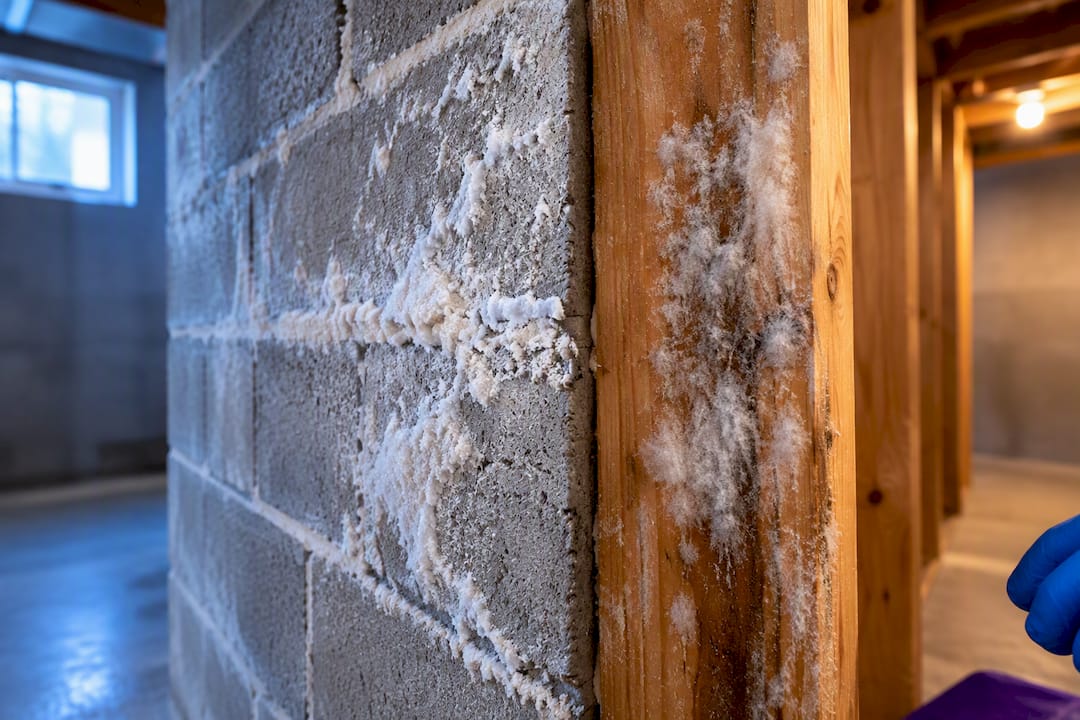
The biggest red flag is a company pushing you toward immediate rebuild work before the property has been properly dried and documented. Reconstruction on top of hidden moisture is a mold factory. Failing to map hidden moisture leads to mold growth and structural problems that surface long after the initial cleanup, often after your insurance window has closed.
- No moisture documentation before rebuild. If a company wants to start replacing drywall before showing you moisture readings at or below acceptable levels, stop.
- Lump sum drying charges with no breakdown by unit or day often mean equipment was under-deployed or billing was inflated.
- No pollution or mold liability insurance. If contamination spreads and they are not covered, the cost lands on you.
- Refusing to share daily logs or scope of work with you or your adjuster is a sign they have something to hide about how work was performed.
- Overpromising on contaminated materials. A company telling you they can clean and restore Category 3-affected carpet or drywall is telling you what you want to hear. Those materials need to come out, not be cleaned. You can learn more about why some materials cannot be salvaged after flooding before you take anyone’s word for it.
5. Comparison table: what to check for in every restoration company
Use this table as a side-by-side reference when you are evaluating multiple companies. The “must-have” column represents non-negotiable standards. The “worth asking about” column covers factors that separate good companies from great ones.
| Criteria | Must have | Worth asking about |
|---|---|---|
| Certification | IICRC Certified Firm, lead tech WRT | Additional certifications (ASD, AMRT) |
| Response time | On-site within 60 to 90 minutes | Crew size dispatched for your job type |
| Equipment | Owned inventory of drying equipment | Number of units available in peak season |
| Documentation | Daily moisture logs, moisture maps | Photo documentation protocol |
| Billing structure | Per-unit daily drying rates | Xactimate-formatted estimate provided |
| Insurance support | Insurer direct billing, you retain approval | Experience with your specific insurance carrier |
| Safety practices | Containment and HEPA filtration for Category 3 | Clear explanation of water category assessment |
| Liability coverage | Pollution and mold liability insurance | Certificate of insurance provided on request |
Pro Tip: Ask every company the same five questions in the same order: What is your response time guarantee? Are you IICRC-certified? How do you bill for drying equipment? Will you provide daily moisture logs? Do you carry pollution and mold liability insurance? The consistency of answers tells you a lot.
6. The role of documentation in protecting your outcome
Documentation within the first 24 hours shapes the entire recovery. Photo logs, moisture readings, and a written scope of work created at the start of your job are what your insurance adjuster reviews when deciding what to approve and what to dispute.
The best restoration companies treat documentation not as a formality but as protection for both parties. When a technician records moisture readings in every affected wall cavity, ceiling space, and subfloor section, they are building a case for why specific equipment was needed, how long drying took, and when the property reached safe moisture levels. That record is your defense if the insurer questions any line item.
It also prevents the scenario where a company declares a property dry before it actually is. Without a formal moisture map showing readings at or below reference levels in every affected area, “dry” is just a word. With it, you have a document that holds the company accountable and gives you grounds to push back if they want to close out a job that is not actually finished.
For a deeper look at what happens when moisture goes undetected, the Thecleangenius article on stopping mold recurrence explains why incomplete drying is the most common reason mold comes back after restoration.
My take on what actually separates good restoration companies from the rest
I have seen the full range of what restoration companies deliver, and the gap between the best and the worst is not about equipment. It is about whether the company operates like a partner or a contractor trying to close a job fast and move on.
The homeowners who end up with the worst outcomes are almost always the ones who chose based on price or speed alone. They skipped the certification question, did not ask about daily logs, and accepted a lump sum quote because they were scared and needed someone to say yes. That is understandable. Water damage is stressful, and the pressure to act quickly is real. But the right company moves just as fast while still doing the documentation work correctly.
What I find most telling is how a company talks about your insurance adjuster. A good restoration firm treats the adjuster as someone they need to communicate clearly with. A poor one treats the adjuster as an obstacle, which tells you they expect disputes and are used to operating in that friction. You want a company that has never needed to fight with an insurer because their documentation was solid from the start.
Local, family-owned operations with real tenure in a community tend to outperform national brands here precisely because their reputation is on the line with every single job. A franchise can absorb a bad review in one market. A local company cannot afford to cut corners without it catching up to them fast.
— Jim
How Thecleangenius meets every point on this checklist
Thecleangenius was built around the exact standards this checklist describes. The team dispatches to emergencies 24 hours a day, 7 days a week, and they carry their own drying equipment so your job never gets delayed because of someone else’s disaster. They are IICRC-certified and work directly with insurance carriers using industry-standard estimating, so you are not left translating between your contractor and your adjuster.
Every job includes moisture mapping, daily logs, and photo documentation from day one. They carry full pollution and mold liability coverage, and they never ask you to hand over control of your claim. If you are in the greater Chicagoland area and dealing with water damage right now, their water damage restoration page gives you everything you need to get a crew moving fast, including options for emergency water extraction when every minute counts.
FAQ
What certifications should a water restoration company have?
At minimum, the company should hold IICRC Certified Firm status and employ lead technicians with a Water Damage Restoration Technician (WRT) credential, which indicates adherence to the ANSI/IICRC S500 drying standard.
How fast should a restoration company arrive after I call?
The industry standard is on-site arrival within 60 to 90 minutes of an emergency call. Any company that cannot commit to this window may cause additional damage through delayed response.
What is the risk of signing a “direction to pay” form?
Signing a direction to pay before work begins transfers control of your insurance claim to the restoration company. You lose approval authority over scope and payments, which can lead to billing disputes you have limited ability to resolve.
Why does billing by per-unit daily rates matter?
Per-unit daily drying charges give you a transparent record of exactly what equipment was deployed and for how long. Lump sum drying charges often hide whether adequate equipment was actually used or whether billing was inflated.
Can contaminated water damage be cleaned rather than removed?
No. Category 3 water involving sewage or heavy contamination requires removal of affected porous materials, including drywall and carpet, under containment with HEPA filtration. Cleaning those materials instead of removing them leaves health risks in place.