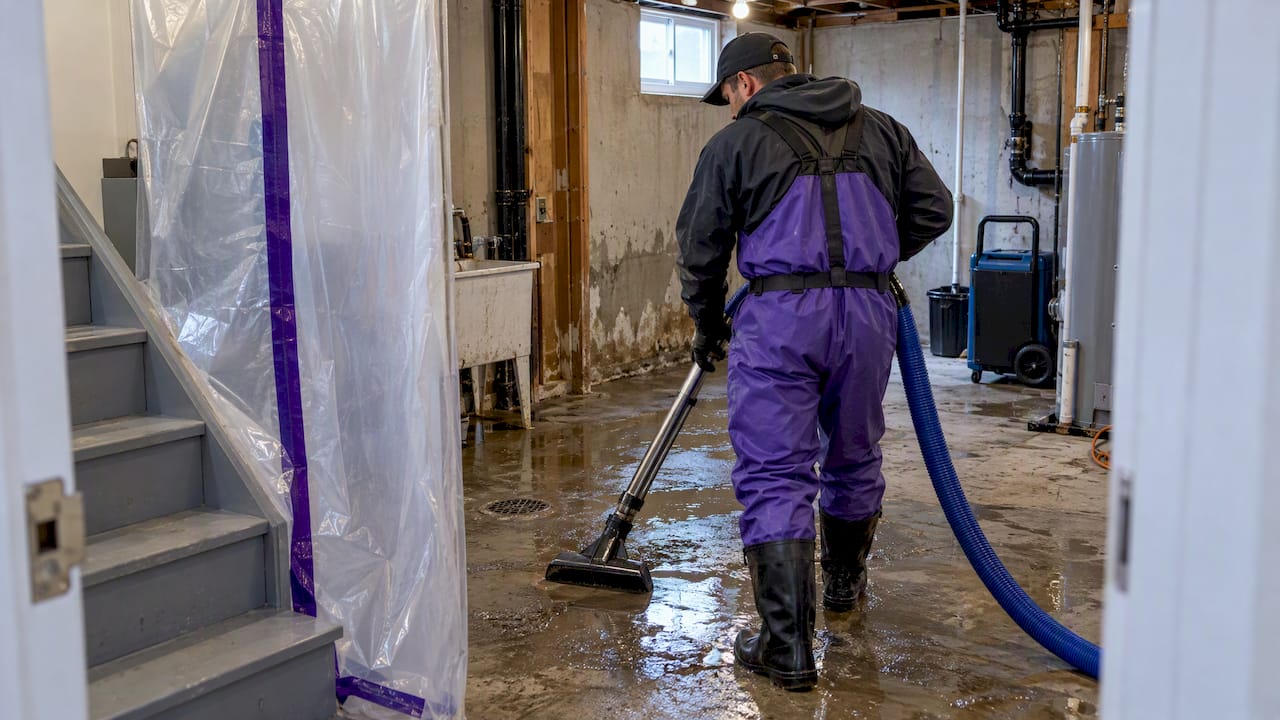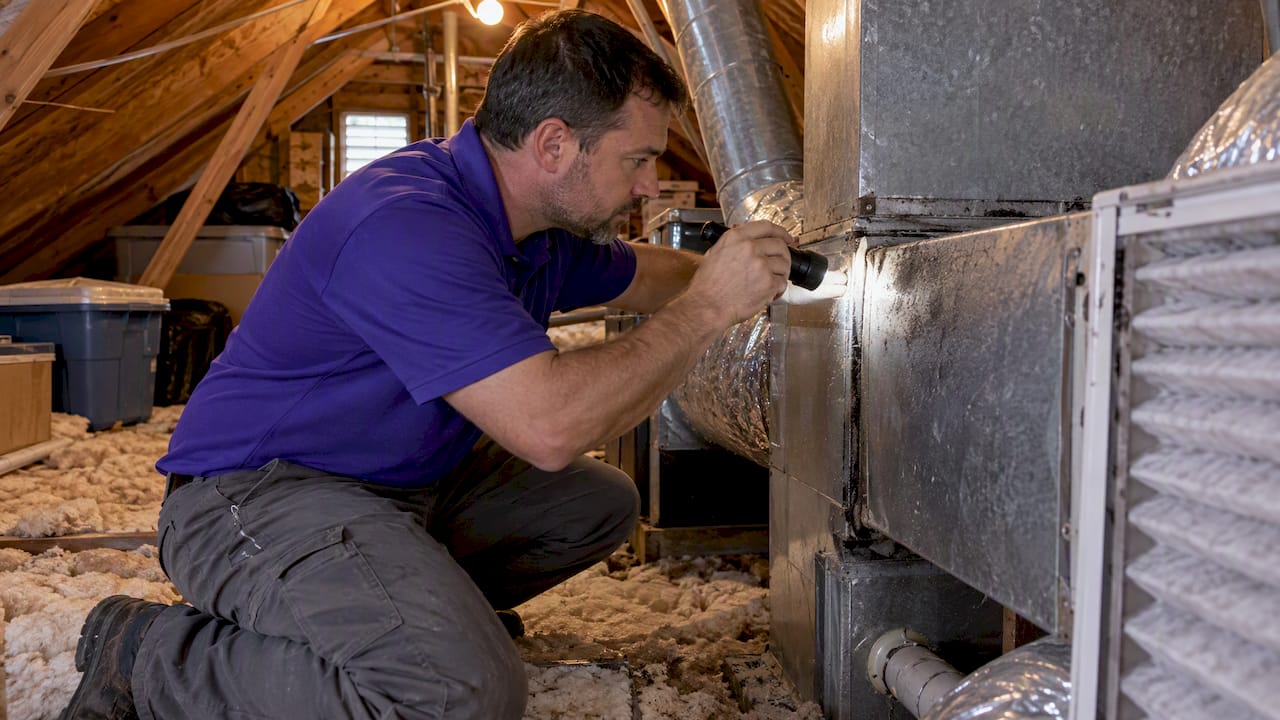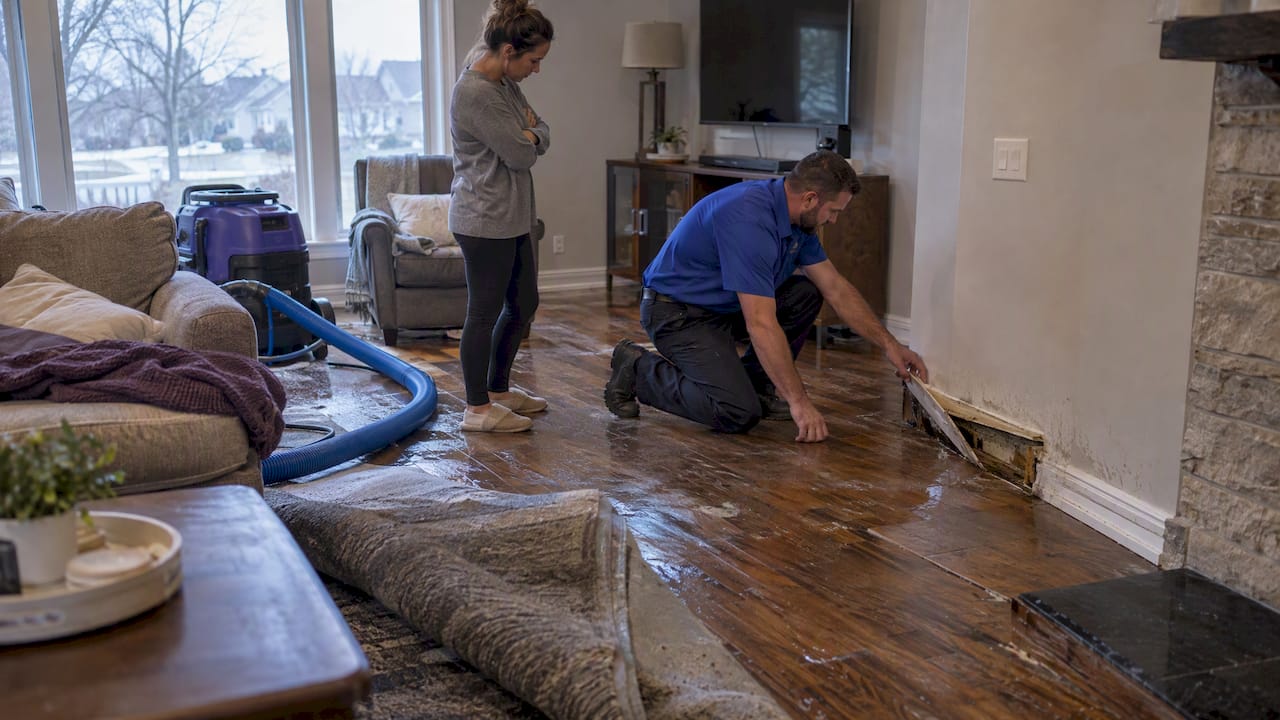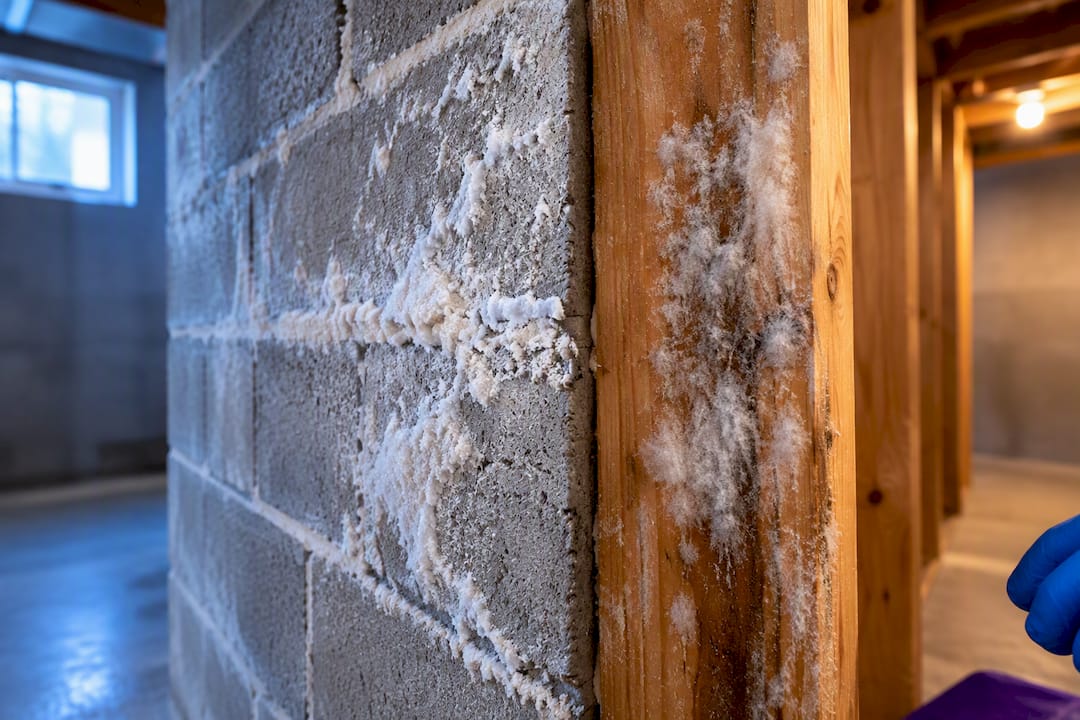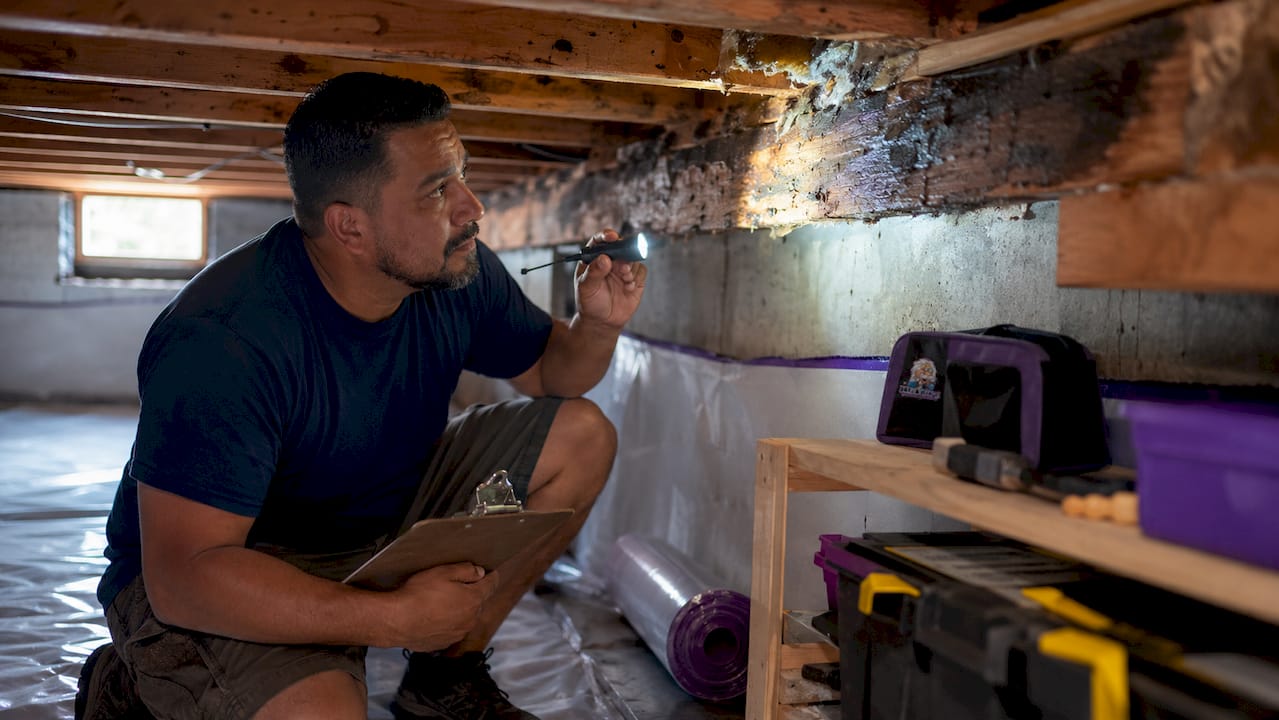

Mold encapsulation treatment is defined as a barrier method that seals cleaned, mold-affected surfaces to contain residual spores and prevent regrowth. The role of encapsulation mold treatment is to act as a finishing step after professional mold removal, not a replacement for it. Industry standard ANSI/IICRC S520-2024 is explicit: physical removal of contaminated materials must happen first. Skipping that step and applying encapsulants directly over active mold violates professional protocols and creates a hidden hazard. Homeowners who understand this distinction make better decisions and avoid costly mistakes.
What is the role of encapsulation in effective mold treatment?
Encapsulation is a containment step, not a remediation step. It comes after mold removal and thorough drying, sealing any residual spores that physical cleaning could not fully eliminate. Think of it as a protective coat applied to a surface that has already been cleaned, not a coat applied to hide a problem.
Encapsulants create a polymer shield that locks in residual spores on surfaces like wood framing, masonry, and concrete. That barrier prevents spores from becoming airborne and circulating through your home’s air supply. Without this step, even a well-cleaned surface can release spores during normal air movement.
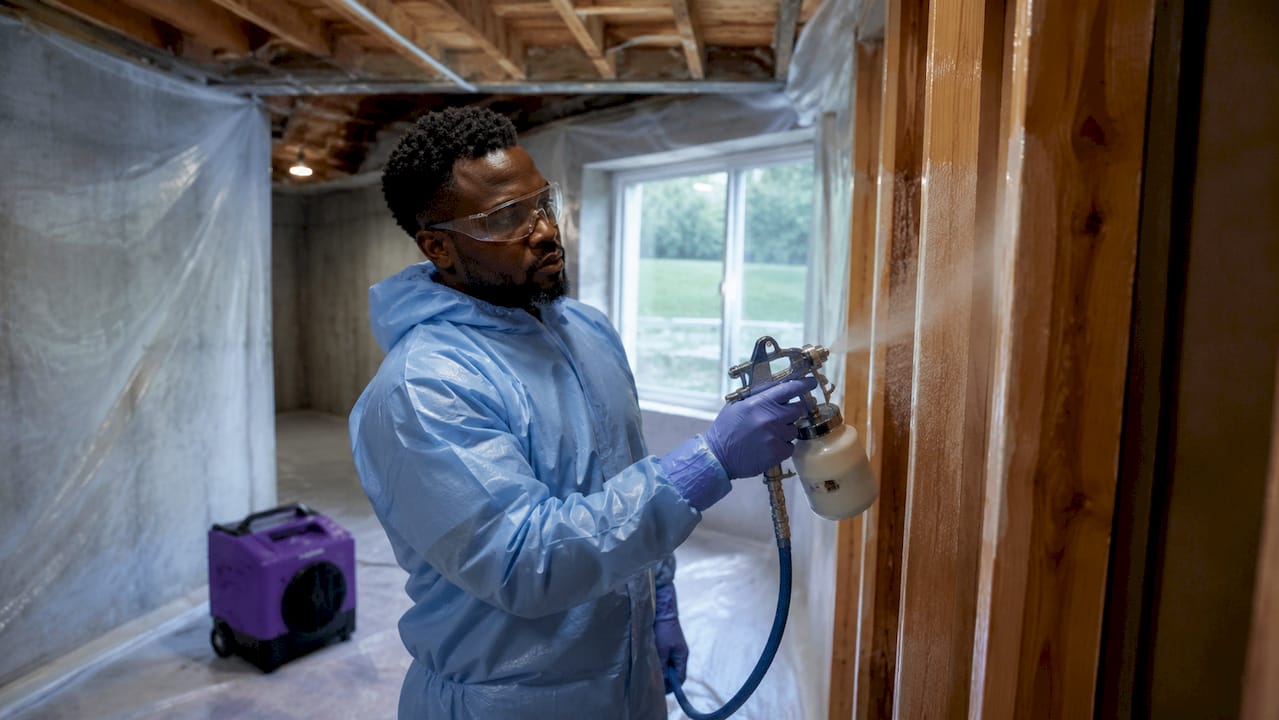
The ANSI/IICRC S520-2024 standard is the governing document for professional mold remediation in the United States. It requires physical removal of mold-contaminated materials before any encapsulant is applied. Spraying a sealant over active mold does not meet this standard. It also creates a false sense of security that can delay proper treatment.
Encapsulation fits into the remediation sequence like this:
- Physical mold removal: Scrubbing, sanding, or removing contaminated materials entirely
- Drying and verification: Confirming surfaces are dry and free of active mold colonies
- Antimicrobial treatment: Applying primers or antimicrobial agents where moisture risk remains
- Encapsulation: Sealing cleaned, dry surfaces with a polymer coating to contain residual spores
- Post-remediation testing: Confirming air quality and surface conditions meet clearance standards
Pro Tip: Ask any contractor you hire to show you their clearance testing results. A professional following ANSI/IICRC S520-2024 will always verify conditions before and after encapsulation.
What are the benefits and limitations of mold encapsulation treatments?
Encapsulation delivers real benefits when applied correctly. It creates a long-lasting barrier on surfaces that are difficult to clean completely, such as rough-sawn lumber in attics or porous concrete in basements. It also improves indoor air quality by preventing residual spores from becoming airborne. In areas like crawl spaces, sealing soil vapor and maintaining low humidity reduces mold risk across the entire home.
The limitations are equally real and often misunderstood. Encapsulation does not kill mold. It does not remove mold. Applying it over active or uncleaned mold traps contamination beneath the seal and can cause toxic mycotoxin buildup. That situation is worse than leaving the mold exposed because it hides the problem from future inspections.
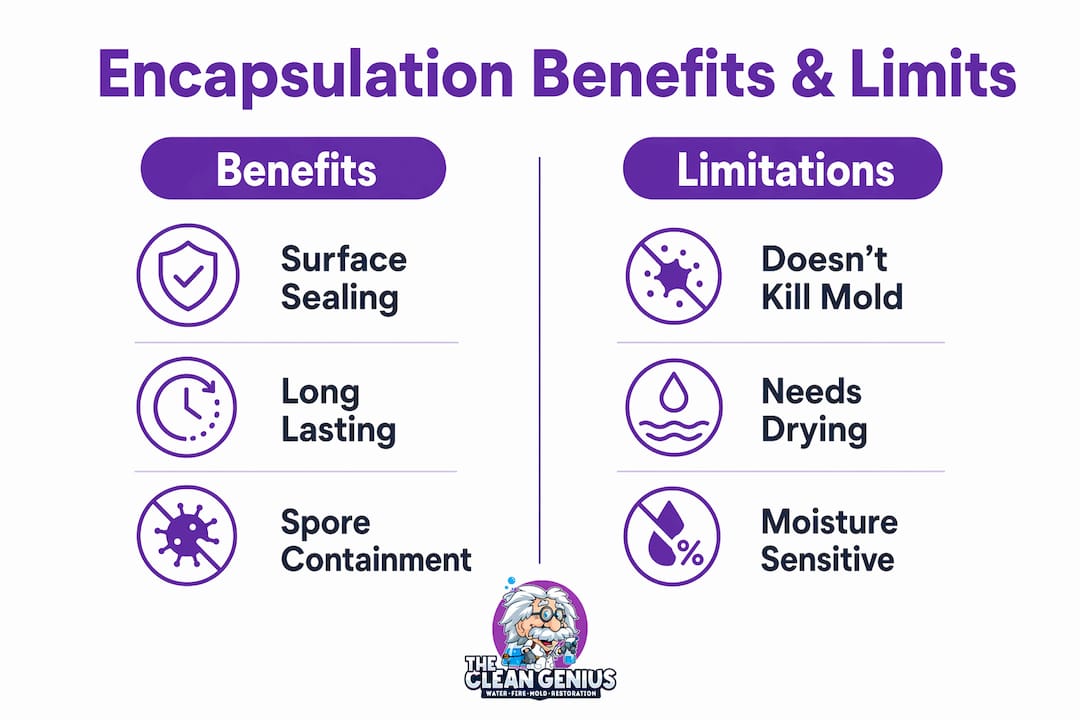
Moisture control is the single biggest factor in whether encapsulation succeeds or fails. If root moisture issues remain, even the highest-grade encapsulants fail over time. Mold needs moisture to grow. A polymer barrier cannot stop that process if water keeps entering the space.
| Factor | Benefit | Limitation |
|---|---|---|
| Surface sealing | Locks in residual spores on cleaned surfaces | Fails completely if applied over active mold |
| Air quality | Reduces airborne spore counts after remediation | Does not address mold already in HVAC systems |
| Hard-to-clean areas | Protects rough wood, masonry, and concrete | Cannot replace physical removal of colonized material |
| Moisture management | Supports low-humidity environments in crawl spaces | Offers zero protection if moisture source is unresolved |
| Long-term durability | Polymer coatings last years when properly applied | Requires regular inspection for cracks or deterioration |
Pro Tip: Before any encapsulation work begins, fix the water source. A leaking pipe, poor drainage, or inadequate ventilation will defeat any encapsulant product on the market.
How is encapsulation mold treatment applied correctly in homes?
Correct application follows a strict sequence. Cutting corners at any stage compromises the entire treatment. Here is how certified professionals approach it:
-
Complete physical mold removal. All visibly contaminated materials are scrubbed, sanded, or removed entirely. Porous materials like drywall or insulation with deep mold colonization are discarded, not encapsulated. This step is non-negotiable under ANSI/IICRC S520-2024.
-
Dry the affected area completely. Surfaces must reach acceptable moisture content before any coating is applied. Professionals use moisture meters to verify this. Applying encapsulant to a damp surface traps moisture and creates ideal conditions for mold to return beneath the coating.
-
Select the right encapsulant product. Vapor-permeable coatings allow the substrate to breathe, making them the right choice for wood framing and masonry. Impermeable coatings suit concrete floors where vapor drive is less of a concern. Matching the product to the surface and environment is critical.
-
Apply antimicrobial primer where needed. In high-moisture-risk areas, primer under finish coats enhances mold inhibition when moisture is controlled. This is common in crawl spaces, basement framing, and attic sheathing.
-
Apply encapsulant at the correct thickness. Too thin a coating compromises the barrier. Too thick causes cracking or slow curing. Manufacturers specify coverage rates for a reason, and certified applicators follow them precisely.
-
Allow full curing before closing the space. Encapsulants need adequate time and airflow to cure properly. Sealing a crawl space or attic hatch before the coating cures can trap off-gassing and slow the process.
-
Conduct post-remediation verification. Air and surface testing confirm that spore counts meet clearance standards. This step protects you as a homeowner and documents that the work was done correctly.
Common application areas include crawl space floor joists and rim joists, attic sheathing and rafters, basement concrete block walls, and wood framing in water-damaged areas. Each location has specific substrate and moisture considerations that affect product selection. You can learn more about how attic moisture drives mold growth and why encapsulation in that space requires extra attention to ventilation.
How to integrate encapsulation with mold removal methods and moisture management?
Encapsulation works only as part of a larger system. The industry’s core message is clear: remove the source, do not cover it up. Encapsulation is containment, not remediation. Treating it as a standalone fix is the most common and costly mistake homeowners make.
Successful mold prevention requires three coordinated actions:
- Physical removal first. Per ANSI/IICRC S520-2024, all mold-contaminated materials must be physically removed or cleaned before encapsulation. There is no shortcut here.
- Moisture source correction. Fix leaks, improve drainage, add dehumidification, and address ventilation gaps. Mold prevention is primarily a moisture management problem. Understanding why moisture causes mold in your home gives you a clearer picture of what needs to change structurally.
- Encapsulation as a finishing layer. Once surfaces are clean and dry, encapsulation seals the treated area and provides a durable barrier against residual spore activity.
Routine inspection after encapsulation is not optional. Signs of treatment failure include musty odors returning, visible mold reappearing at edges or seams, and coating deterioration like cracking or peeling. Catching these signs early prevents a small maintenance issue from becoming a full remediation project.
Encapsulation alone is insufficient when mold colonization is deep, when structural materials are saturated, or when the moisture source has not been corrected. In those cases, physical removal and drying must happen before any coating is considered. Homeowners should have realistic expectations: encapsulation extends the life of a properly remediated surface. It does not fix a remediation that was done poorly or skipped entirely. For a full picture of what professional remediation involves, the certified mold remediation process for Chicagoland homes outlines each stage in detail.
Key Takeaways
Mold encapsulation treatment is a containment method that works only after physical mold removal, complete drying, and correction of the moisture source.
| Point | Details |
|---|---|
| Encapsulation is not removal | Sealing over active mold violates ANSI/IICRC S520-2024 and traps contamination. |
| Moisture control comes first | Encapsulants fail long-term if the root moisture source is not corrected. |
| Surface prep determines success | Surfaces must be clean, dry, and verified before any coating is applied. |
| Product selection matters | Vapor-permeable coatings suit wood and masonry; match the product to the substrate. |
| Ongoing inspection is required | Musty odors, visible recurrence, or coating cracks signal treatment failure. |
What I’ve learned after years of mold calls in Chicagoland
The homeowners I talk to most often have already tried something before calling us. They bought a spray product at a hardware store, applied it to a dark patch in their crawl space, and assumed the problem was solved. Six months later, the smell is back and the patch is bigger.
Encapsulation products are not the problem. The sequence is. Every failure I’ve seen traces back to one of two mistakes: applying a coating over mold that was never removed, or fixing the surface without fixing the moisture. Both mistakes feel like solutions in the moment. Neither one is.
The other myth worth addressing directly is that encapsulation is a permanent fix. It is not. Polymer coatings degrade. Seams crack. Moisture finds new paths. A properly encapsulated surface still needs annual inspection, especially in crawl spaces and attics where conditions change with the seasons. Homeowners who treat encapsulation as a one-time event end up back in the same situation within a few years.
Hire certified professionals who follow ANSI/IICRC S520-2024. Ask them to show you the post-remediation clearance test results. And fix the water problem before anyone applies a single drop of encapsulant. That sequence is not optional. It is the only way this works.
— Jim
Thecleangenius provides certified mold remediation for Chicagoland homeowners
Mold problems in Chicagoland homes require more than a coating. They require a certified process that removes contamination, controls moisture, and applies encapsulation correctly as a finishing step.

Thecleangenius is a family-owned restoration company with over 25 years of combined experience serving Arlington Heights, Schaumburg, Naperville, Wheaton, and surrounding communities. Our certified teams use advanced Pure Cloud dry-fog technology for full mold removal and follow ANSI/IICRC S520-2024 at every stage. We handle the entire process from inspection through clearance testing. Visit our mold removal and remediation service page to schedule a free inspection and get expert guidance on the right treatment for your home.
FAQ
What is the role of encapsulation in mold treatment?
Encapsulation seals cleaned, dry surfaces after mold removal to contain residual spores and prevent them from becoming airborne. It is a containment step, not a substitute for physical mold removal.
Can encapsulation be applied directly over mold?
No. Applying encapsulant over active or uncleaned mold violates ANSI/IICRC S520-2024 and traps contamination beneath the coating. Physical removal and drying must happen first.
How long does mold encapsulation last?
Encapsulation coatings can last for years when applied correctly on clean, dry surfaces with moisture issues resolved. Regular inspections are required because signs of failure include musty odors, visible mold recurrence, and coating deterioration.
Does encapsulation kill mold?
Encapsulation does not kill or remove mold. It creates a polymer barrier over cleaned surfaces to contain residual spores and inhibit regrowth when moisture is controlled.
When is encapsulation not enough?
Encapsulation is insufficient when mold colonization is deep, structural materials are saturated, or the moisture source has not been corrected. In those cases, full professional mold remediation is required before any encapsulant is applied.