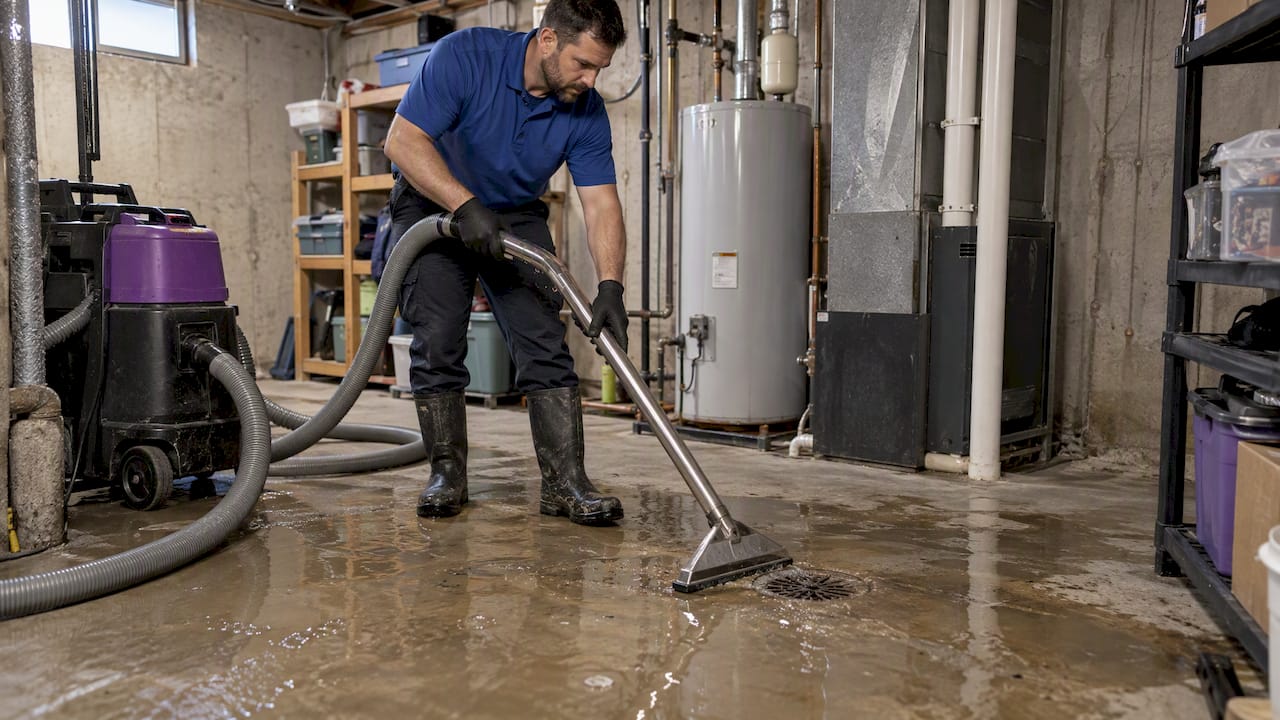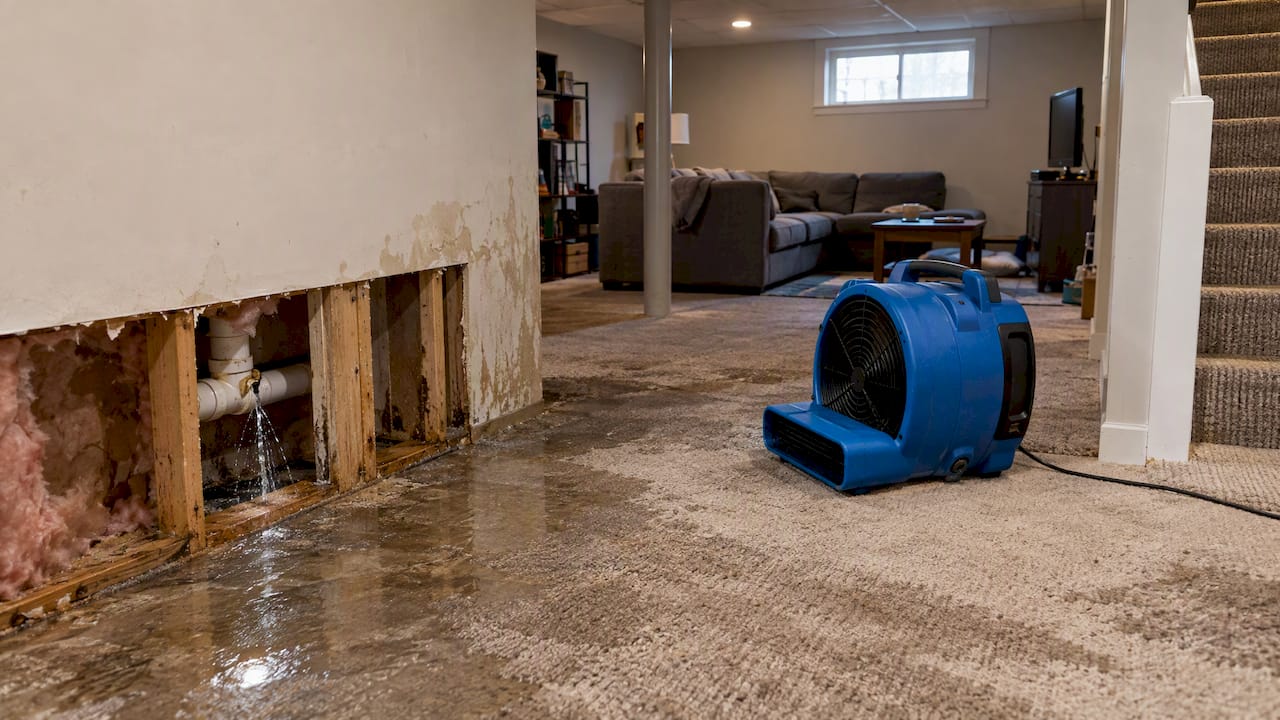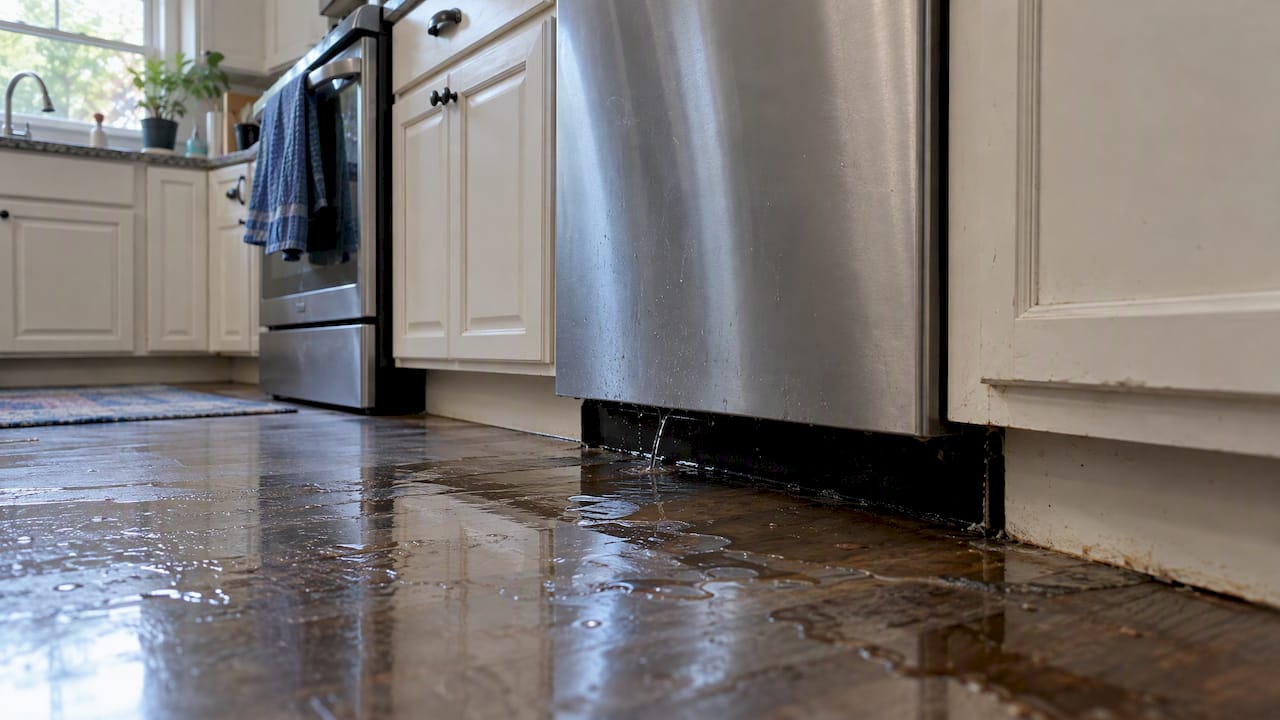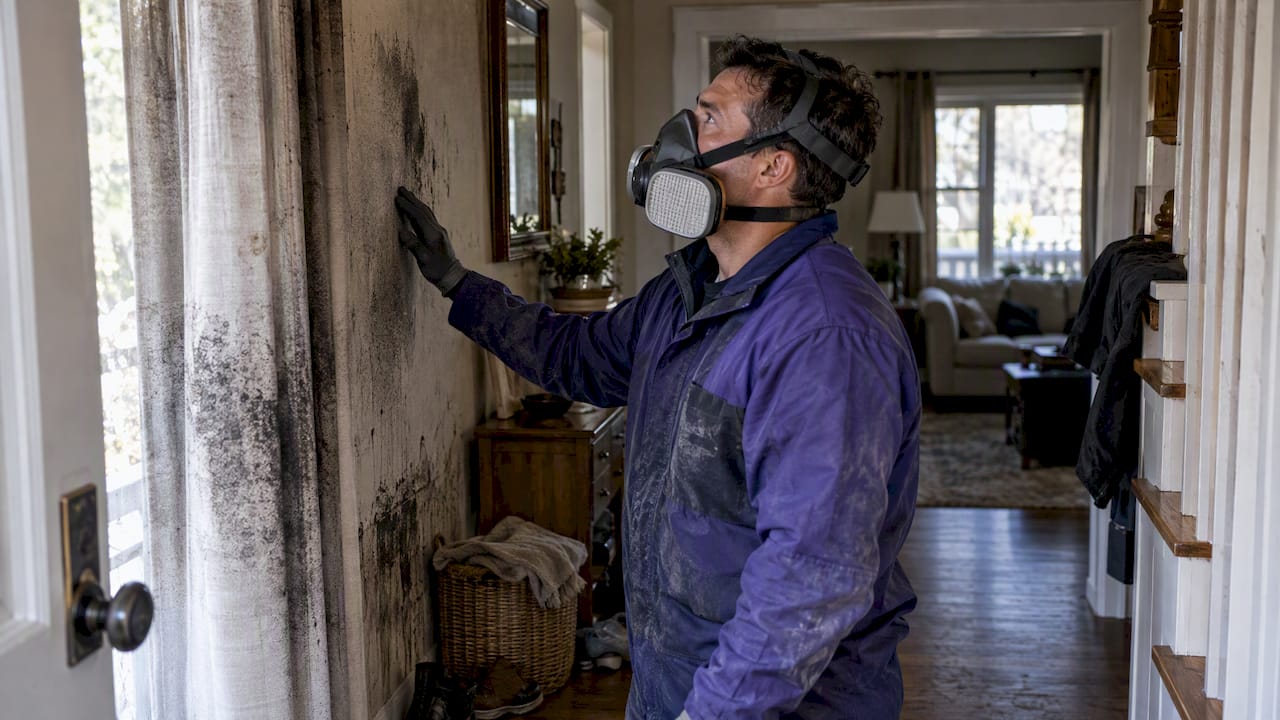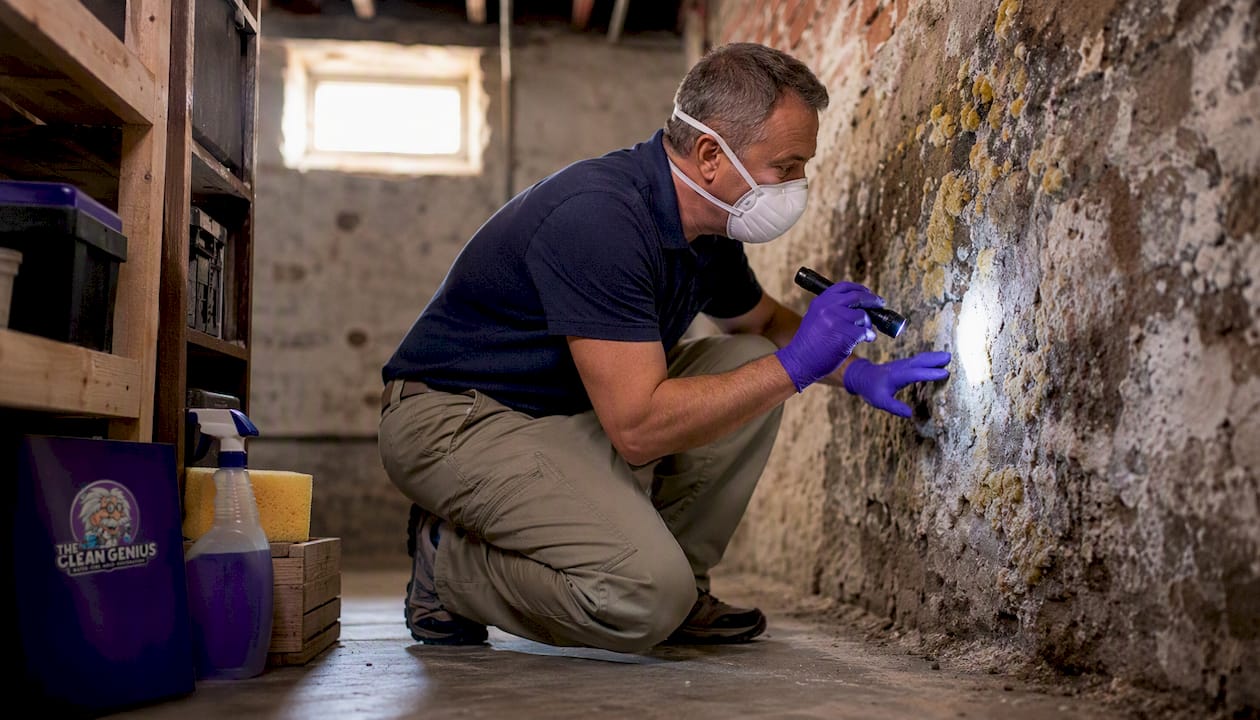

If you see or smell mold in your cellar, the first move is simple: remove it and fix the moisture source. Per U.S. EPA guidance, homeowners can handle the cleanup themselves when the affected area is about 10 square feet or less — roughly a 3 ft. by 3 ft. patch, per U.S. EPA guidance. Anything larger, anything involving sewage or contaminated water, or any situation where a vulnerable person lives in the home means you call a certified professional before touching anything.
Here is your immediate action checklist:
- Isolate the area and keep everyone out, especially children, elderly residents, and anyone with asthma or a weakened immune system.
- Do not disturb the patch or run fans near it — that spreads spores.
- Locate the visible water source (pipe, wall seam, floor drain, sump pump area).
- Measure the affected area. If it exceeds 10 square feet, stop and call a pro.
- Turn off your HVAC system if the air intake is anywhere near the affected space.
- If the water came from sewage or a contaminated source, do not attempt DIY cleanup under any circumstances.
Table of Contents
- Who should not attempt DIY cellar mold cleanup?
- How do you spot mold in a cellar?
- How to remove mold in a basement yourself (small areas only)
- When should you hire a certified mold remediation professional?
- How do you stop cellar mold from coming back?
- Is mold testing in your cellar actually necessary?
- Why remediation sometimes fails: on-the-ground insights from Thecleangenius
- Key Takeaways
- The moisture fix is the only fix that lasts
- Thecleangenius: certified cellar mold remediation for Chicagoland homeowners
- Useful sources
Who should not attempt DIY cellar mold cleanup?
Mold exposure in an enclosed cellar is not a minor irritant for everyone. The CDC is explicit: people with asthma, allergies, chronic lung disease, or immune suppression should not be present during cleanup, period. That includes cancer patients on chemotherapy, organ transplant recipients, and anyone with HIV. For these individuals, even brief exposure to disturbed spores can trigger serious respiratory reactions.
For everyone else doing a small-scale cleanup, the minimum PPE is:
- An N95 respirator or better (not a dust mask)
- Nitrile or rubber gloves
- Safety goggles or eye protection
- Disposable coveralls or clothes you can immediately bag and wash
One thing contractors see homeowners get wrong constantly: running a box fan to “air out” the cellar before or during cleanup. EPA course guidance is clear that premature fan use disperses spores throughout the home. Get containment in place first.
Pro Tip: If anyone in the household is high-risk, have them leave the home entirely during cleanup, not just the room. Spores travel through shared HVAC systems and gaps in interior walls. Thecleangenius handles high-risk situations where evacuation and professional containment are the only safe options — look for contractors with IICRC or ACAC credentials when vetting anyone for the job.
How do you spot mold in a cellar?
The obvious signs are colored spots: black, green, white, or gray fuzzy growth on walls, floor joists, or stored items. But the smell often comes first. A persistent musty or earthy odor, even when you cannot see anything, is a reliable indicator of hidden growth somewhere in the space.
Common hiding places worth checking during a sweep:
- Behind drywall or wood paneling, especially near exterior foundation walls
- Under carpet and the padding beneath it
- Along floor-to-wall junctions and foundation seams
- Behind or beneath stored cardboard boxes (cardboard is a favorite food source)
- Around sump pumps, floor drains, and condensation-prone pipes
- Inside or directly around the HVAC air handler if it sits in the cellar
Two signs that suggest a larger or hidden infestation: extensive water staining that covers more surface area than the visible mold, and growth that keeps coming back within days of wiping it away. That second one almost always means an unresolved moisture source.
You do not need to identify the species. CDC guidance is consistent on this point: health effects vary widely across individuals and do not reliably track with species. If you see it or smell it, removal and moisture control are the priorities, not a lab report.
How to remove mold in a basement yourself (small areas only)
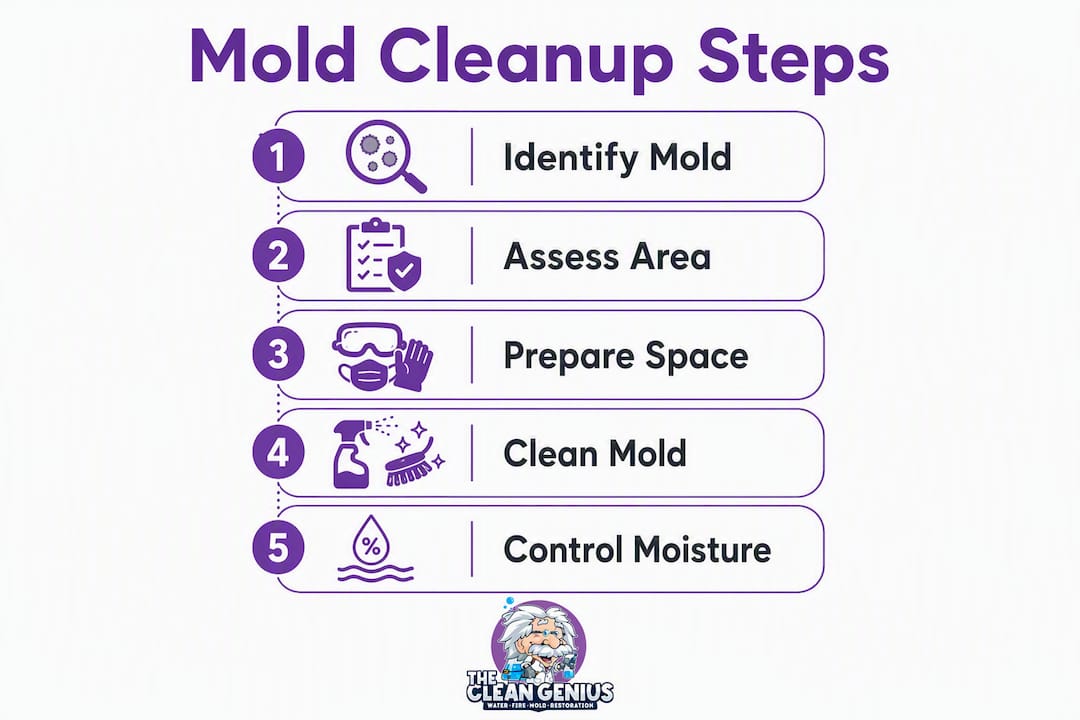
This protocol applies only when the affected area is under the EPA’s 10 sq ft threshold and the water source is clean and controllable. If either condition is not met, skip to the professional section below.
Equipment you will need: N95 respirator, gloves, goggles, disposable coveralls, stiff scrub brush, detergent, buckets, heavy-duty plastic bags (for disposal), a hygrometer, a dehumidifier, and a HEPA vacuum for final cleanup.
- Stop the moisture source first. Fix the leak, redirect drainage, or repair the pipe before anything else. Cleaning mold without fixing moisture is temporary at best.
- Isolate the area and shut off HVAC. Close off the cellar from the rest of the home. Turn off any forced-air system with an intake near the work area.
- Put on all PPE before entering the space. Do not cut corners here.
- Remove porous materials that are heavily contaminated. Drywall, insulation, carpet, and carpet padding that have significant mold growth need to come out. Double-bag everything in heavy plastic before moving it through the home.
- Clean hard surfaces with detergent and water. Scrub thoroughly. An EPA-registered cleaner is appropriate for non-porous surfaces like concrete block or tile. Do not mix bleach with ammonia. If you use a bleach solution, ventilate the space and follow label dilution instructions.
- HEPA-vacuum all surfaces after cleaning. A standard shop vac recirculates spores — only a HEPA-filtered vacuum captures them.
- Dry completely. Run a dehumidifier and monitor with a hygrometer until the space holds below 50% relative humidity. This typically takes 24–48 hours for a small area, though concrete and masonry can hold moisture longer.
- Dispose of contaminated materials and gear. Bag and seal everything. Launder or discard clothing worn during cleanup immediately.
Safety checklist before you start:
- Never mix bleach and ammonia
- Ventilate when using any disinfectant (open a window or use exhaust, not a recirculating fan)
- Do not run fans until containment is in place and removal is complete
- Confirm the water source is clean (not sewage or floodwater)
When should you hire a certified mold remediation professional?
Some situations are not judgment calls. Call a professional when:
- The mold-affected area exceeds 10 square feet
- The water source was sewage, a backed-up drain, or contaminated floodwater
- Mold has spread into HVAC ductwork or the air handler
- Growth is diffuse or appears on multiple surfaces across the cellar
- Any occupant is immunocompromised, has asthma, or has a chronic lung condition
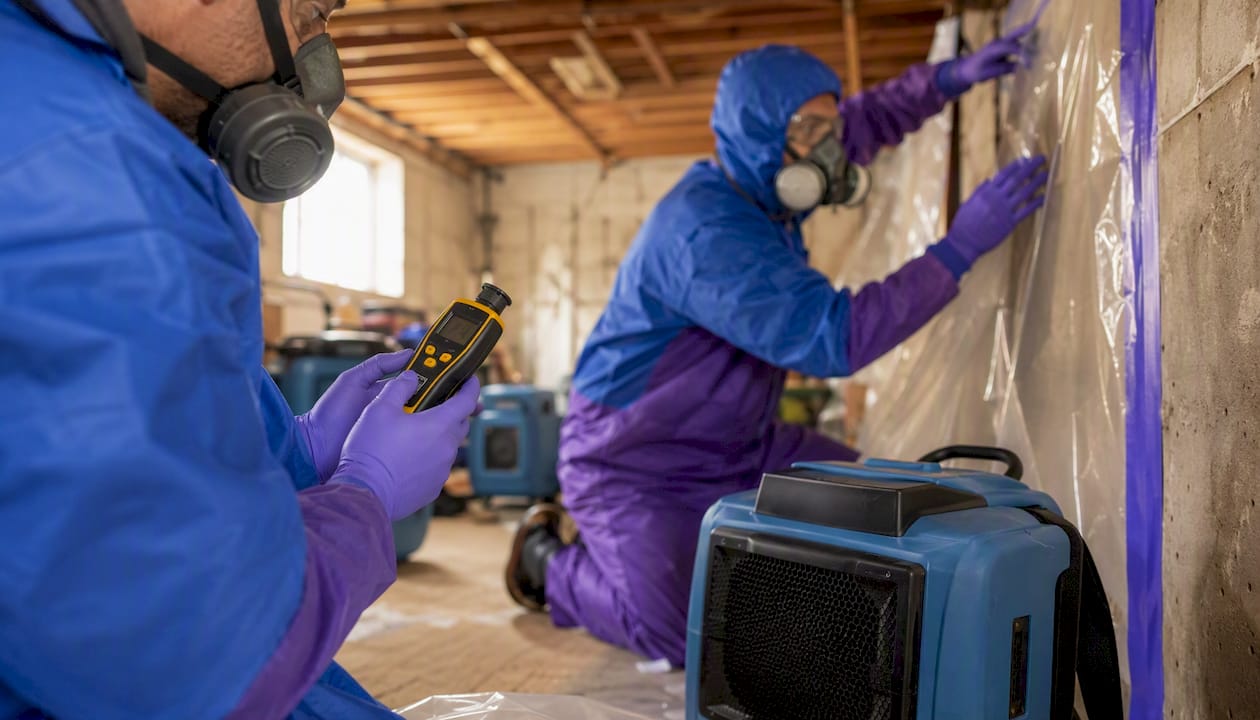
What a certified remediation team actually does goes well beyond scrubbing. Pros perform moisture mapping with instruments, establish containment using 6-mil polyethylene sheeting and negative pressure to prevent cross-contamination, remove affected materials, run HEPA air filtration throughout the job, and validate dryness with moisture meters before closing anything up. Some contractors also use dry-fog treatments for persistent odors or contamination in hard-to-reach cavities.
Questions to ask any contractor before signing:
- Do you hold IICRC or ACAC certification?
- Will you provide a written scope of work and containment plan?
- How do you validate dryness — what instruments do you use?
- What are your disposal procedures for contaminated materials?
- Can you provide proof of insurance and references from similar jobs?
Cost varies significantly based on scope, accessibility, how much material needs replacement, and drying time required. Get at least two written estimates and compare the scope of work, not just the price.
How do you stop cellar mold from coming back?
Moisture is the only variable you can actually control. Mold spores exist everywhere; they only become a problem when they find a damp surface. EPA and CDC guidance sets the target clearly: keep indoor relative humidity between 30–50%, and never above 60%.
Maintenance checklist for long-term cellar mold prevention:
- Run a properly sized dehumidifier and empty or drain it consistently
- Monitor humidity with a hygrometer (inexpensive and worth every dollar)
- Inspect plumbing and your sump pump at least once a year
- Remove cardboard boxes from floor level and use raised shelving instead
- Insulate cold water pipes to prevent condensation
- Check that exterior grading slopes away from the foundation
- Keep floor drains clear and functional
For product types: a correctly sized dehumidifier is the single most effective tool for moisture control for cellars. Pair it with a condensate pump if the unit does not drain by gravity. Exhaust fans that vent outside (not into the attic or crawlspace) help in cellars with poor natural airflow. For unfinished cellars or crawlspaces, a vapor barrier on the floor and lower walls cuts ground moisture significantly. Use moisture-resistant finishes on perimeter walls rather than standard drywall.
| Metric | Target / Guideline |
|---|---|
| Indoor relative humidity | 30–50% (max 60%) |
| Drying window after water event | Within 24–48 hours |
| Dehumidifier check frequency | Monthly during humid months |
| Plumbing and sump pump inspection | Annually |
For a full post-mold prevention checklist, Thecleangenius has a detailed homeowner guide covering maintenance steps after remediation.
Is mold testing in your cellar actually necessary?
Rarely. The EPA is direct on this: there are no federal standards for acceptable indoor mold levels, which means a lab result cannot tell you whether your home is “safe.” Sampling is expensive and almost never changes the recommended action, which is always the same: remove visible growth and fix the moisture source.
A few common misconceptions worth addressing directly:
- “Bleach kills mold permanently.” It kills surface growth on non-porous materials, but dead spores still trigger allergic reactions. Physical removal of contaminated porous materials is what actually resolves the problem.
- “I can paint over it.” Painting or caulking over moldy porous material does not stop growth. EPA guidance is clear: mold infiltrates porous materials and continues growing beneath surface coatings.
- “If I can’t see it, it’s not a problem.” Hidden mold behind drywall or under flooring is common, especially after a slow leak. A musty smell with no visible growth is reason enough to investigate.
When testing does make sense: complex insurance or legal disputes, large commercial jobs where a remediation contractor needs a documented baseline, or situations where a professional suspects hidden contamination and needs to map its extent before scoping the work. For a routine homeowner cleanup, skip the lab and spend that money on a dehumidifier.
Why remediation sometimes fails: on-the-ground insights from Thecleangenius
The most common reason cellar mold comes back is not that the wrong cleaner was used. It is that the moisture source was never fully resolved, or that the drying phase was cut short.
Specific failure patterns Thecleangenius’s certified teams encounter repeatedly:
- Contaminated insulation left in place. Fiberglass and foam insulation absorb moisture and harbor mold invisibly. Homeowners and inexperienced contractors often leave it because it looks intact from the surface.
- Painted-over stained drywall. A coat of primer hides the stain for a few months. The mold beneath keeps growing and the smell returns.
- Dehumidification stopped too early. Concrete and masonry hold moisture for days after a water event. Stopping the dehumidifier when the air feels dry is not the same as validating dryness with a moisture meter.
- Improper containment that spreads contamination. Without negative pressure and sealed barriers, disturbing mold during removal pushes spores into adjacent rooms through gaps and shared air systems.
Pro Tip: Before signing off on any remediation job, ask the contractor to show you moisture readings from a calibrated meter at multiple points in the affected area. A number on paper is the only real proof the space is dry. Thecleangenius uses instrument-based drying validation on every job and provides a written post-remediation walkthrough.
Thecleangenius is available 24/7 for emergency response across Chicagoland, including Naperville, Schaumburg, Elgin, Arlington Heights, and surrounding communities. For complex contamination, persistent odors, or situations where standard cleaning has already failed, the team’s Pure Cloud dry-fog technology reaches cavities and surfaces that manual scrubbing cannot.
Key Takeaways
Mold in a cellar requires two actions above all else: remove the growth and eliminate the moisture source, because neither fix works without the other.
| Point | Details |
|---|---|
| EPA 10 sq ft rule | DIY cleanup is appropriate only for areas 10 square feet or smaller with a clean water source. |
| Dry within 24–48 hours | Wet materials dried within 24–48 hours after a water event will generally not develop mold growth. |
| Keep humidity below 50% | A dehumidifier and hygrometer are the most practical tools for long-term cellar mold prevention. |
| Skip the mold test | No federal safe-level standard exists; removal and moisture control are always the right action regardless of species. |
| Thecleangenius | Certified Chicagoland remediation team available 24/7 for jobs exceeding DIY thresholds, with instrument-based drying validation and dry-fog technology. |
The moisture fix is the only fix that lasts
Most homeowners who call us after a failed DIY attempt made the same mistake: they cleaned the surface and stopped there. The mold came back in six weeks because the slow seep behind the wall, the undersized dehumidifier, or the negative-graded soil against the foundation was never addressed. Cleaning without drying validation is just a temporary cosmetic fix.
The remediations that hold are the ones that start with a moisture map, not a scrub brush. Every job our team does begins with identifying exactly where water is entering or accumulating, and ends with instrument-confirmed dryness before anything gets closed up. That sequence is not optional. For homeowners in Chicagoland dealing with a situation that is beyond the EPA’s 10 square feet threshold, or where vulnerable occupants are involved, please call us rather than guessing. The 24/7 line exists for exactly that reason.
Thecleangenius: certified cellar mold remediation for Chicagoland homeowners
When the affected area is too large for DIY, or the water source was sewage, or you have already tried cleaning it twice and it keeps coming back, the right move is a certified remediation team with the equipment to do the job completely.

Thecleangenius serves the greater Chicagoland area, including Naperville, Schaumburg, Arlington Heights, Elgin, Wheaton, and dozens of surrounding communities, with 24/7 emergency response and more than 400 five-star reviews. The team handles the full scope: emergency water damage restoration, mold removal and remediation using Pure Cloud dry-fog technology, structural drying with instrument-based validation, and attic and crawlspace services. Working directly with your insurance company is standard practice, not an add-on.
For a certified mold remediation assessment, have your approximate square footage, photos of the affected area, and the likely water source ready when you call. The team can schedule an on-site estimate and walk you through the full scope before any work begins.
Useful sources
- Mold Cleanup in Your Home | U.S. EPA: the primary source for the 10 sq ft DIY threshold, containment standards, and guidance on when professionals are required.
- A Brief Guide to Mold, Moisture, and Your Home | U.S. EPA: covers moisture control fundamentals, the 24–48 hour drying window, and recommended humidity targets.
- Mold | CDC: explains health risks, identifies vulnerable populations who should avoid exposure, and reinforces removal over testing.
- Clinical Guidance for Asthma and Mold Allergy | CDC: clinical-level guidance on which patients must avoid mold-affected buildings entirely.
- Mold Course Chapter 4 | U.S. EPA: explains containment, HEPA filtration, and the risks of premature fan use during remediation.
- IICRC and ACAC: the two primary credentialing organizations for mold remediation contractors; use these to verify contractor certifications before hiring.