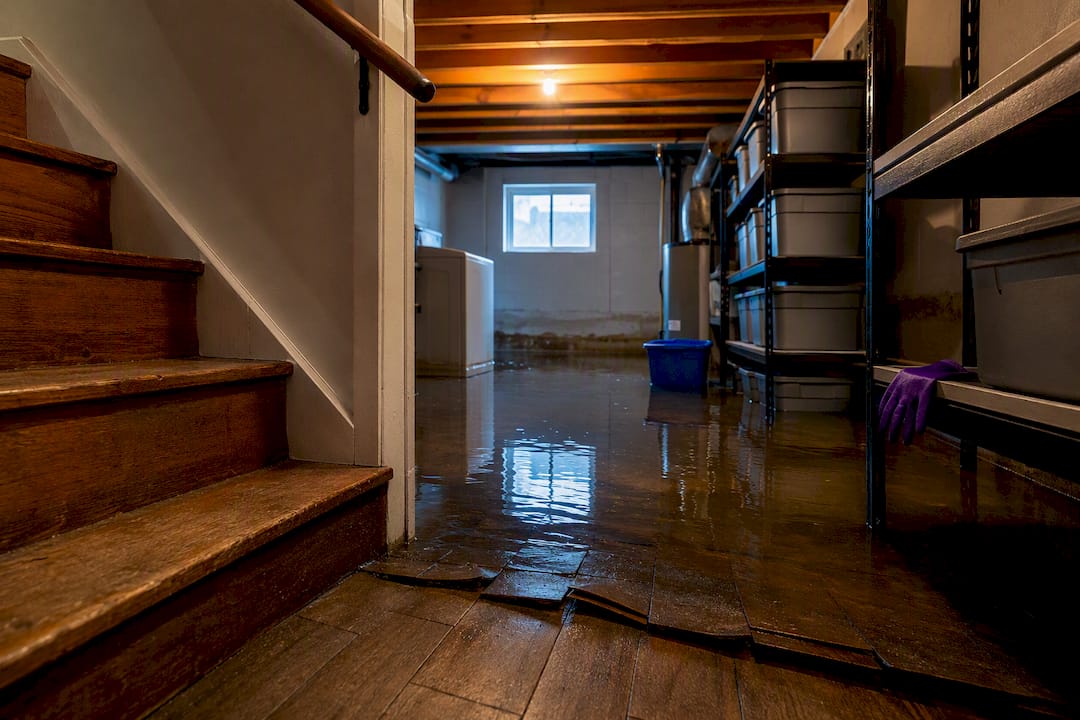

Whether a flooded basement is covered depends entirely on where the water came from. Homeowners insurance pays for sudden internal failures like a burst pipe, while flooding from outside your home requires a separate flood policy through the National Flood Insurance Program or a private insurer, and sewer or sump pump backups need a specific endorsement most people never bought. NFIP itself pays out far less in a basement than homeowners expect. Before you call anyone, photograph everything and notify your insurer the same day.
TL;DR:
- Homeowners insurance covers basement flooding caused by internal failures like burst pipes but excludes water from outside sources such as storms or groundwater seepage.
- Flood policies through NFIP or private insurers generally pay only for specific structural items in a basement and do not cover finished spaces or personal belongings stored below ground.
- Sewer backup and sump pump failure are not covered by standard policies and require a separate endorsement, which is inexpensive and often overlooked.
- Document damage thoroughly with photos, serial numbers, and receipts within the first 24 hours to ensure a smoother insurance claim process.
- Preventive measures like maintaining sump pumps, proper yard grading, and storage of maintenance logs significantly reduce damage risk and support insurance claims.
Table of Contents
- Does Homeowners Insurance Cover Flooded Basement Damage?
- What Does NFIP Actually Pay for in a Flooded Basement?
- Sewer Backup and Sump Pump Failure: The Coverage Everyone Skips
- How Do You Document and File a Flooded Basement Claim?
- Reducing Your Risk Before the Next Storm
- What We See in the Field After a Basement Floods
- What This Article’s Research Actually Tells You to Prioritize
- What The Clean Genius Does When Your Basement Floods
- Sources
- FAQ
Does Homeowners Insurance Cover Flooded Basement Damage?
The short answer: it depends on what put the water in your basement in the first place. Insurers draw a hard line between water that comes from inside your plumbing system and water that comes from outside your home, and that line determines which policy, if any, responds.
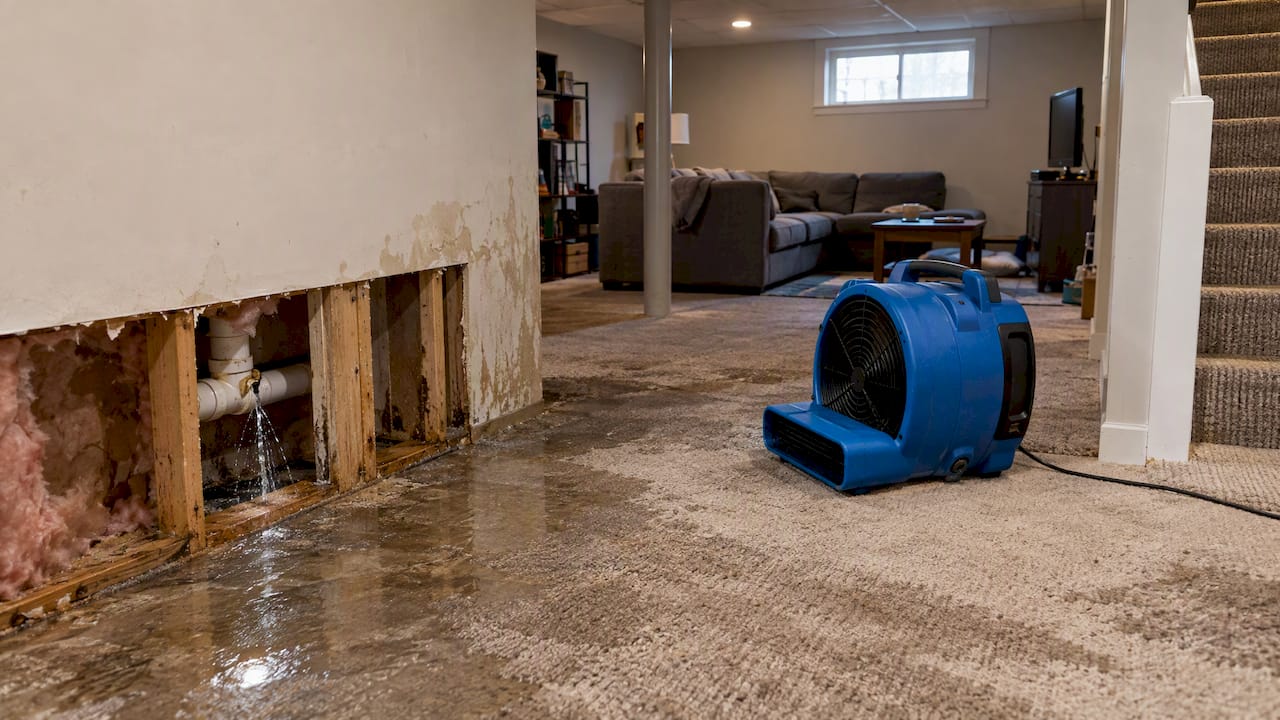
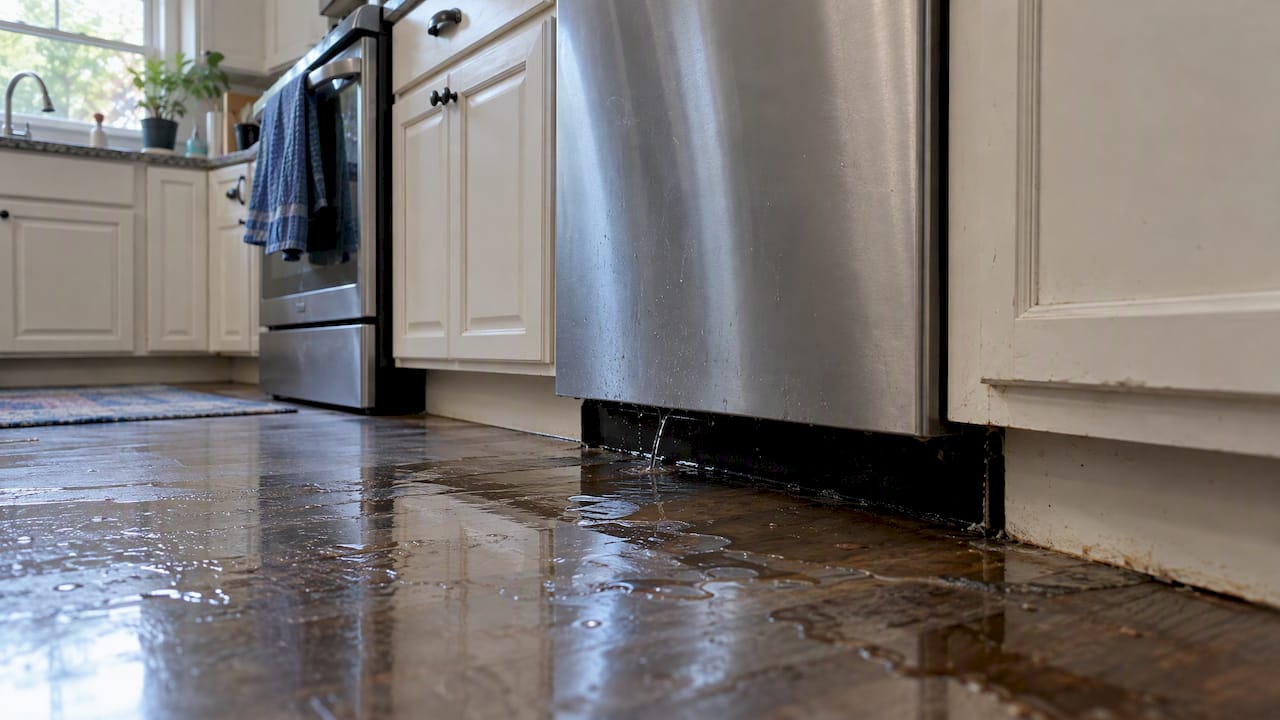
A standard HO-3 homeowners policy covers sudden, accidental internal events. A washing machine hose that bursts, a water heater that fails, a pipe that splits during a cold snap: these are covered because the peril originated inside the structure and happened without warning. What homeowners insurance does not cover is water that enters from the ground up or from a storm outside. Progressive’s coverage guidance confirms this pattern: burst pipes and appliance overflows are typically paid claims, while seepage and gradual water intrusion are typically denied.
Flood insurance, whether through NFIP or a private carrier, exists specifically for the water your homeowners policy won’t touch: surface water runoff, storm surge, river or lake overflow, and heavy rain that pools around your foundation and pushes in. But flood policies come with their own basement blind spot, which the next section covers in detail.
Then there’s the coverage gap almost nobody buys until after their first backup: sewer and sump pump failure. Both your homeowners policy and your flood policy typically exclude this peril by default, according to FEMA’s guidance on basement coverage limitations. You need a distinct endorsement to close that gap.
Here’s how the three main water sources typically sort out:
- Burst pipe or appliance leak: Usually covered by homeowners insurance.
- Storm surge, river overflow, or heavy rain pooling outside: Requires a flood policy (NFIP or private).
- Sewer backup or sump pump failure: Requires a specific endorsement, regardless of which base policy you hold.
- Slow groundwater seepage through basement walls: Generally excluded from all three, and best handled through prevention rather than insurance.
What Does NFIP Actually Pay for in a Flooded Basement?
This is where most homeowners get an unpleasant surprise. NFIP defines a basement as any area of your home with a floor below ground level on all sides, and that classification triggers a much narrower set of payouts than people assume they’re buying when they purchase flood insurance.
Under the NFIP basement fact sheet, coverage in a basement is limited to a defined list of 17 building items:
- Furnaces and water heaters
- Sump pumps and well water tanks
- Electrical junction boxes and circuit breaker panels
- Central air conditioners
- Furnace ductwork and cisterns
- Foundation elements and support systems
- Nonflammable insulation
- Drywall for walls and ceilings (unfinished)
- Staircases and elevators
- Utility connections
The gap here is bigger than most policyholders realize: finished basement improvements, most personal property stored below grade, and non installed appliances are excluded outright. NFIP is designed to restore essential function to the structure, not to replace a finished rec room, a home office, or the boxes of belongings sitting on the floor.
Cleanup coverage extends to pumping out water and structural drying, but not to hauling away materials the policy never covered in the first place. And because basement classification decisions have been appealed and upheld in ways that surprise homeowners, it pays to know exactly how your specific space is classified before a claim, not after.
Sewer Backup and Sump Pump Failure: The Coverage Everyone Skips
Sewer backup and sump pump failure sit outside both homeowners and flood policies by default. You buy protection against them through a separate endorsement, sometimes called a water backup rider, and most agents will tell you it’s one of the most overlooked additions on a policy.
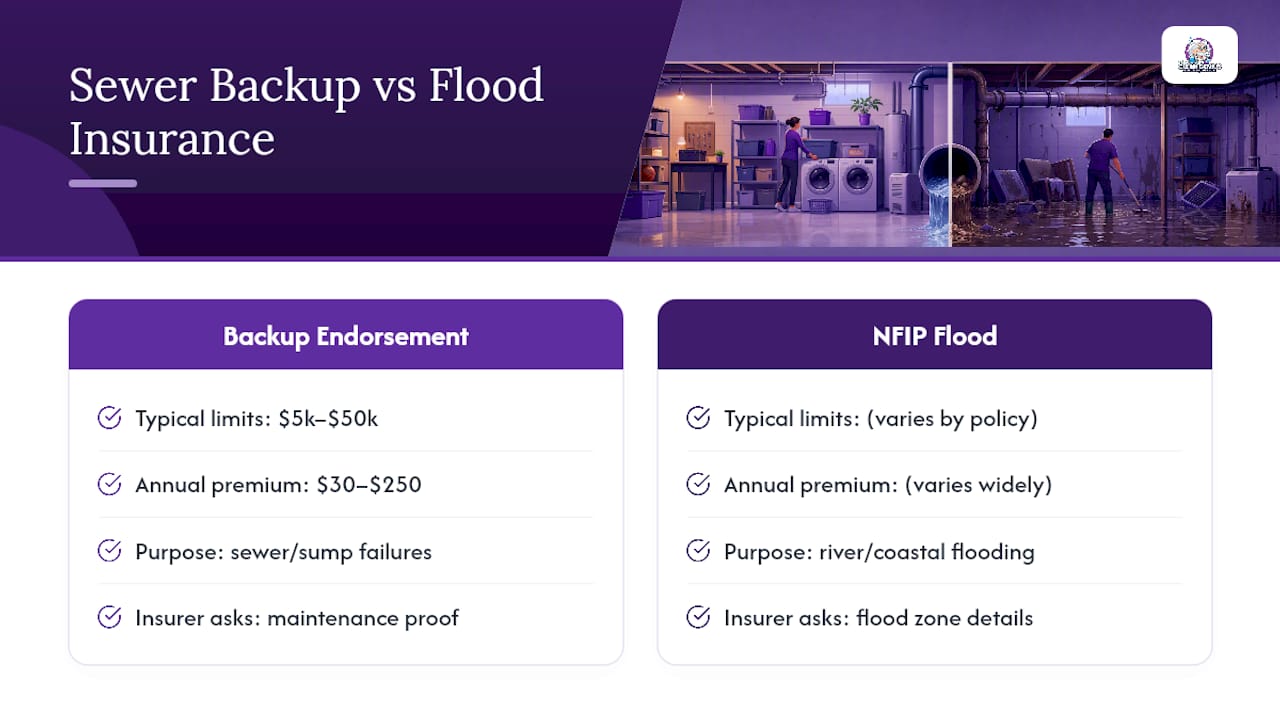
Typical limits run from $5,000 to $50,000, and annual premiums for the endorsement commonly fall between $30 and $250 depending on your carrier and the limit you choose. That’s a genuinely small price against a cleanup bill that can run into the tens of thousands once flooring, drywall, and mechanical systems are involved.
Insurers don’t hand this coverage over without expectations. Many require proof of sump pump maintenance, and some ask about battery backup systems before honoring a claim tied to pump failure. A sump pump that failed because it was never serviced looks very different to an adjuster than one that failed during a power outage despite a documented maintenance history.
Keep in mind this endorsement is not a substitute for flood insurance, and vice versa. A homeowner in a floodplain who only carries sewer backup coverage is still exposed to the exact scenario NFIP was built for. The two frequently need to coexist on the same property.
Pro Tip: Ask your agent to put the endorsement’s exact trigger conditions and documentation requirements in writing. Verbal assurances about what’s covered mean nothing when an adjuster is standing in your flooded basement.
How Do You Document and File a Flooded Basement Claim?
The steps you take in the first 24 hours often determine whether your claim gets paid in full, gets partially denied, or drags on for months. Here’s the order that actually protects you:
- Stop the immediate risk. Shut off power to the affected area if there’s any chance of contact between water and electrical systems, and don’t wade into standing water near outlets or panels.
- Photograph and video everything before you touch anything. Wide shots of the room, close-ups of damaged items, and water lines on the walls all matter.
- Record manufacturer, model, and serial numbers on any damaged mechanical equipment. NFIP adjusters specifically require this information for covered building items, and its absence slows every claim.
- Notify your insurer the same day, even if you haven’t finished documenting. Most policies have reporting windows, and delay itself can become grounds for a reduced payout.
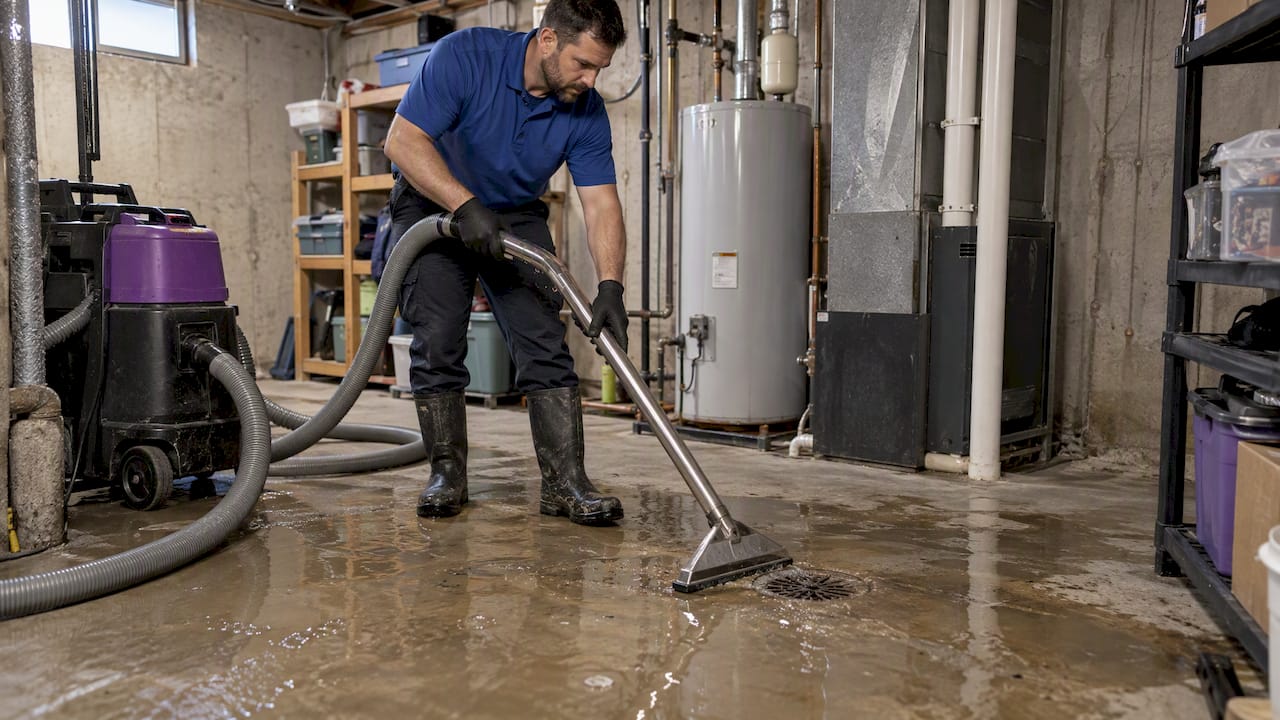
- Begin mitigation once documentation is complete. Restoration guidance from AAA recommends starting extraction and drying quickly, since standing water and trapped moisture compound damage by the hour.
- Keep every receipt tied to emergency repairs, temporary lodging, or professional mitigation. Insurers reimburse documented expenses, not estimates.
A detailed claims checklist can help you keep this process organized when you’re dealing with an adjuster on a deadline. For anything beyond a few inches of clean water, calling a restoration professional rather than renting a wet vac from the hardware store tends to save money in the long run, mainly because DIY drying rarely reaches the moisture trapped inside wall cavities.
Reducing Your Risk Before the Next Storm
Prevention is cheaper than any claim, and it also makes the claims you do file easier to win. Start outside: grading that slopes away from your foundation, clean gutters and extended downspouts, and a French drain in chronically wet yards all reduce the surface water that reaches your basement walls in the first place.
Inside, a well maintained sump pump with a battery backup is the single biggest lever against sump failure claims getting denied. Check window well seals annually, since a failed seal is a common, quiet source of the seepage that no policy will cover.
- Photograph your basement’s baseline condition every season, before any incident occurs.
- Keep receipts and maintenance logs for your sump pump and water heater on file, not just in memory.
- Ask your insurer whether your community participates in FEMA’s Community Rating System, which can lower NFIP premiums for towns with strong floodplain management.
- Get an elevation certificate if you’re in a mapped flood zone. It can materially change your premium and your eligibility for certain coverage tiers.
Pro Tip: Store your maintenance logs and equipment receipts digitally, not in a basement filing cabinet. A flood that destroys your sump pump often destroys the paperwork proving you maintained it.
What We See in the Field After a Basement Floods
After 25-plus years of combined experience across our team and more than 400 five-star reviews from Chicagoland homeowners, a few patterns show up in nearly every flooded basement claim we’re called to.
The most common pitfall isn’t fraud or bad luck. It’s a mismatch between what actually caused the water and what the homeowner assumes their policy covers. A homeowner convinced their flood policy will handle a sewer backup, when it won’t, loses precious days before they discover the truth. Incomplete documentation and delayed mitigation come in close behind.
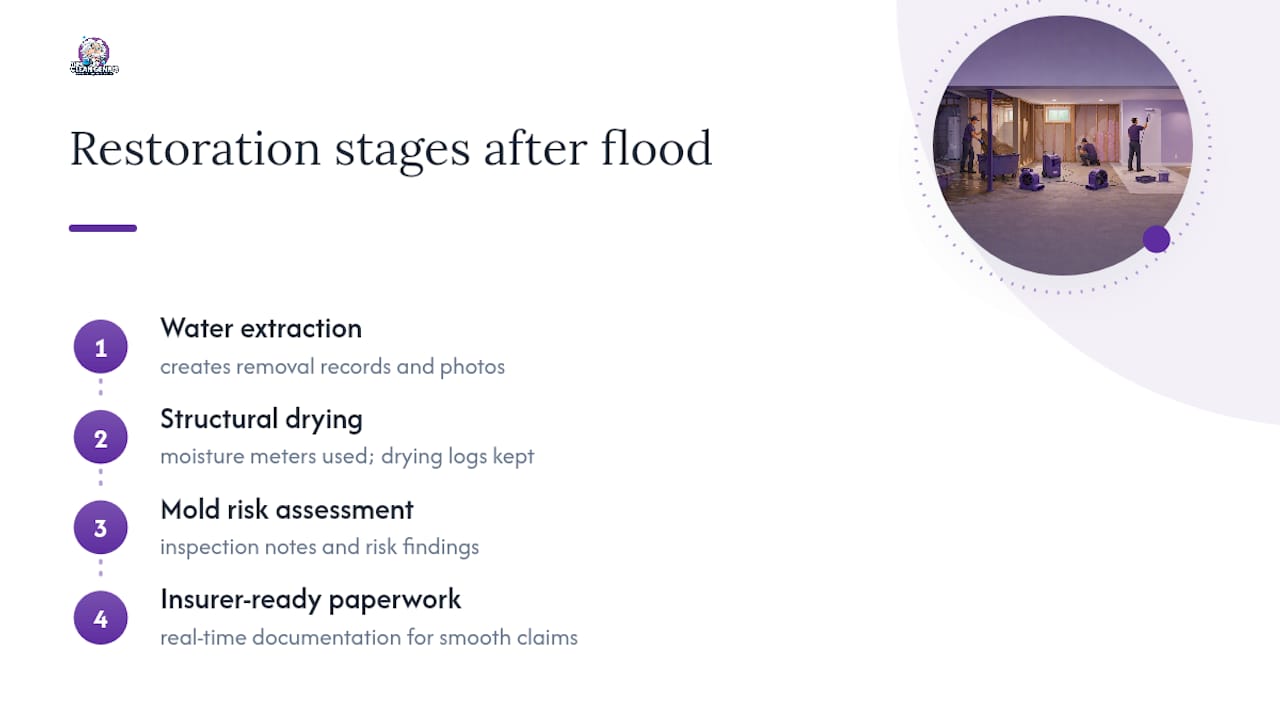
Our restoration process moves through extraction, structural drying with moisture meters and documented drying logs, then mold risk assessment, and every phase generates paperwork insurers specifically ask for. That documentation, built in real time rather than reconstructed later, is often the difference between a smooth settlement and a contested one.
What This Article’s Research Actually Tells You to Prioritize
The conventional advice on basement flooding treats “get flood insurance” as the whole answer. It isn’t. NFIP’s basement limits mean a policy can be fully in force and still leave you covering the cost of drywall, flooring, and every box of belongings that got ruined. That’s the gap nobody explains at the point of sale.
If I had to rank priorities for a homeowner with a basement, the sewer backup and sump pump endorsement comes first, not flood insurance, simply because it’s the peril most policies exclude by default and the one most basements actually experience. Flood insurance matters most if you’re near mapped water or in a floodplain, and even then, go in knowing NFIP replaces mechanical function, not your finished space.
The single biggest lever homeowners underuse is documentation done before anything happens: photos, serial numbers, maintenance logs. That paperwork costs nothing and turns a contested claim into a routine one.
— Jim
What The Clean Genius Does When Your Basement Floods
Once water is in your basement, speed and documentation matter more than almost anything else, and that’s exactly where a professional restoration team earns its cost back through a smoother insurance settlement.

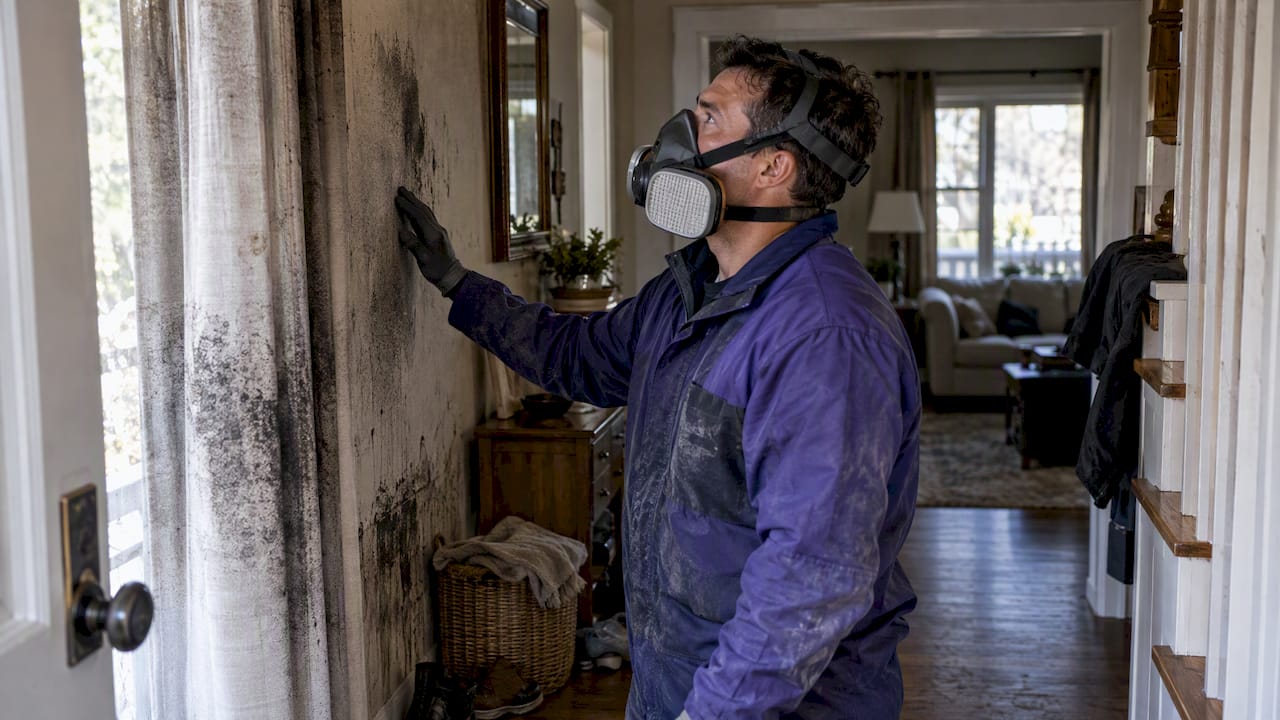
Professional restoration teams can respond quickly across many Chicagoland towns and handle extraction, structural drying, and moisture documentation from the first hour on site. The restoration process typically includes building drying logs and moisture meter readings used by adjusters when evaluating claims, with coordination done with your insurance company. If standing water has been sitting long enough to raise mold concerns, certified teams may handle mold remediation using technologies designed to address contamination without spreading it further through the home.
Calling early preserves evidence that disappears within days: moisture levels, contamination extent, and the exact scope of what needs replacing. If your basement has flooded, start with our water damage restoration page to request emergency service and get a technician on site.
Sources
- FEMA / NFIP — What does flood insurance cover in a basement? (fact sheet)
- FEMA — Flood insurance general information
- Progressive — Does home insurance cover basement floods?
FAQ
Does Homeowners Insurance Cover a Flooded Basement?
Only if the water came from a sudden internal source like a burst pipe. External flooding requires a separate NFIP or private flood policy, and sewer or sump backups need a specific endorsement.
Does NFIP Pay for Personal Property in a Flooded Basement?
Generally no. NFIP covers a defined list of 17 building items like furnaces and sump pumps, but excludes most personal belongings and finished basement materials.
How Long Is the Waiting Period for Flood Insurance?
NFIP policies typically carry a standard 30-day waiting period before coverage takes effect, so buying a policy during an active storm won’t help with that event.
What Does a Sewer Backup Endorsement Typically Cost?
Annual premiums commonly run between $30 and $250, with coverage limits between $5,000 and $50,000 depending on the carrier.
Should I Call a Restoration Company Before Filing My Claim?
Document the damage first with photos and serial numbers, then notify your insurer and call a restoration professional like Thecleangenius, since early mitigation and proper drying logs both support a stronger claim.