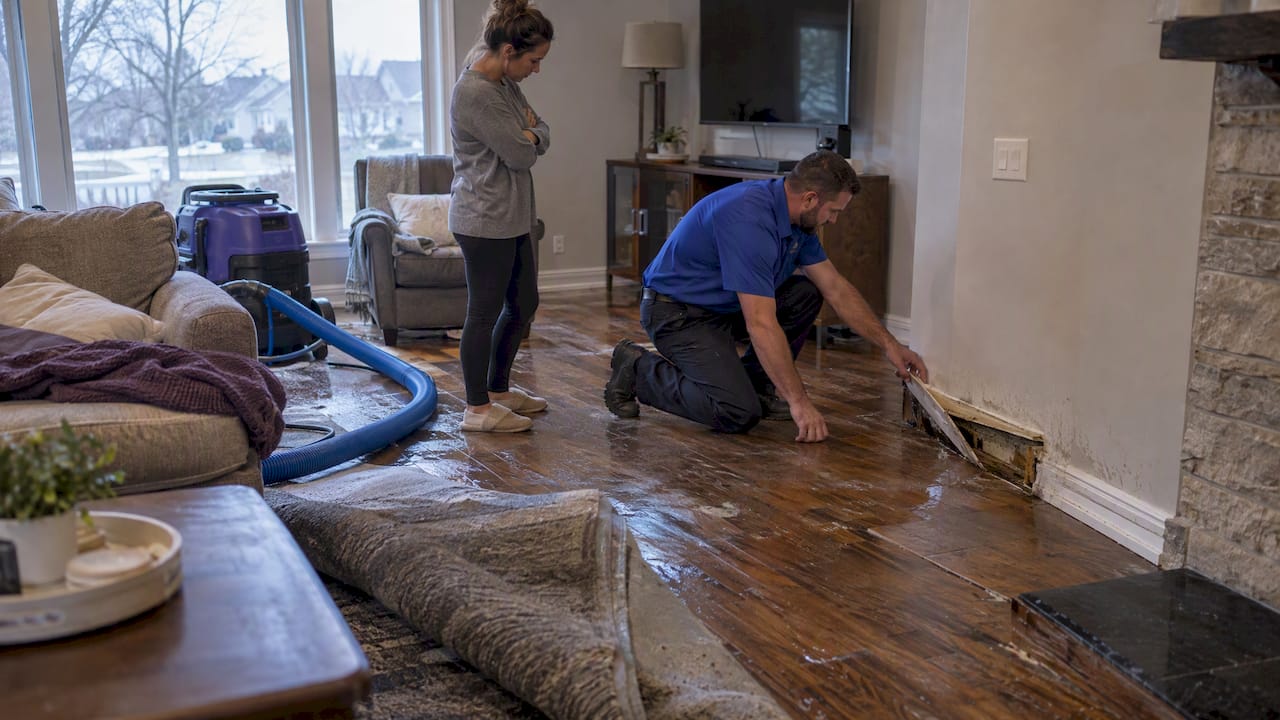

Emergency water removal for most residential jobs usually costs thousands of dollars, with major reconstruction cases costing significantly more. Exact pricing depends on how contaminated the water is, how much square footage flooded, and how long it sat before anyone intervened. If water is actively spreading in your home right now, call a qualified restoration company immediately and start photographing the damage for insurance before you clean anything up.
TL;DR:
- The cost of water removal typically starts in the low thousands for small jobs and can exceed $20,000 for extensive reconstruction, depending on contamination and damage class.
- Response time significantly impacts costs, as water sitting longer increases moisture migration, mold risk, and the need for extensive demolition or repairs.
- Water category and damage class, classified by industry standards, directly influence pricing because contaminated water and deep saturation require more costly remediation and disposal.
- Homeowners insurance usually covers sudden, accidental damage but excludes gradual seepage or outside flooding, making documentation and prompt response critical for claims.
- DIY actions are effective only for small, clean water spills caught quickly; professional equipment and quick intervention are essential for contaminated or long-standing water damage.
Table of Contents
- 1. Typical U.S. cost ranges for water removal and restoration
- 2. How water category and damage class change the price
- 3. What drives the bill up the most
- 4. Will your homeowners policy actually pay for this?
- 5. Reading a professional estimate without getting surprised
- 6. What you can do yourself, and where DIY stops
- 7. What we’ve learned from emergency water jobs
- Get immediate help with emergency water removal
- FAQ
- Sources
1. Typical U.S. cost ranges for water removal and restoration
Most homeowners facing a sudden pipe burst or appliance leak pay a restoration job cost that typically ranges in the low thousands, increasing substantially for larger or more contaminated losses involving reconstruction. The spread is wide because “water removal” covers everything from a small bathroom leak to a basement full of sewage.
Emergency extraction alone, the first visit where a crew pulls standing water and sets up drying equipment, usually carries its own minimum charge regardless of square footage. That minimum covers truck mounting, initial labor, and the first day of equipment rental. Jobs cross into higher pricing tiers quickly once contamination, square footage, or drying time increase.
A few labeled examples help homeowners map their own situation:
- A small bathroom overflow (clean water, under 100 square feet, caught within hours) often lands at the lower end of the range, sometimes just the emergency extraction minimum.
- An average basement flood from a sump pump failure or burst pipe, covering several hundred square feet with saturated carpet and drywall, typically falls in the middle of the national range.
- A whole-house flood or sewage backup involving multiple rooms, contaminated water, and material replacement usually pushes toward the higher end or beyond it.
- Major reconstruction cases, where flooring, drywall, and framing need full replacement after extended water exposure, are the ones that exceed $10,000 to $20,000.
One of the clearest patterns in restoration pricing is that speed controls cost more than square footage does. A 500 square foot basement caught within hours can cost less than a 200 square foot bathroom that sat wet for a week, because drying time and secondary damage, not just area, drive the bill. Homeowners dealing with roof or storm-related intrusion can get a sense of scope from our roof leak water damage restoration overview, and anyone comparing crew responses might find it useful to read about fast fixes with emergency tree services from a professional team.
2. How water category and damage class change the price
Restoration companies do not price water damage by square footage alone. They follow the ANSI/IICRC S500 standard, the industry framework for classifying water losses, which sorts water into three categories and damage into four classes. The IICRC’s 2026 position statement on weather-related water damage makes clear that categorization is not automatic. A storm-driven flood is not assumed to be the most contaminated category just because it came from outside; a technician has to inspect the water on-site and classify it based on its actual source and condition.
The three categories affect price directly:
- Category 1 is clean water from a supply line or appliance, the cheapest to remediate since no sanitizing chemicals or extensive disposal are needed.
- Category 2 is “gray water” containing some contaminants, such as washing machine discharge, requiring antimicrobial treatment and more careful material assessment.
- Category 3 is grossly contaminated water, including sewage backups and most floodwater, requiring full disposal of porous materials, personal protective equipment, and often an Indoor Environmental Professional for health-risk situations.
Damage classes 1 through 4 describe how much moisture has been absorbed into materials, from Class 1 (minimal absorption, limited to one area) to Class 4 (deep saturation into hardwood, concrete, or plaster requiring specialized low-grain-refrigerant drying equipment). Per-square-foot pricing rises with both category and class, and once materials are saturated past the point of safe drying, the job shifts from remediation to demolition and replacement, which adds carpentry, flooring, and drywall costs on top of extraction.
3. What drives the bill up the most
Several factors matter more than square footage when a restoration company builds an estimate. Response time tops the list: EPA guidance on mold cleanup notes that mold colonization can begin within 24 to 48 hours of water intrusion, so every hour water sits increases both the drying time required and the odds of a secondary mold remediation job being added to the bill.
- Time water sat before extraction drives mold risk and how deep moisture migrates into subfloors and framing.
- Materials affected matter a great deal. Carpet padding, hardwood flooring, insulation, and HVAC ductwork all absorb water differently, and padding and insulation are usually replaced rather than dried.
- Access and contents handling add labor. A finished basement full of furniture costs more to clear and pack out than an empty utility room.
- Contamination level determines whether crews need hazardous material protocols, which adds disposal fees and protective equipment costs.
- Scope escalation happens when wet drywall, trim, or flooring can’t be saved, turning a drying job into a reconstruction job with its own line items.
Pro Tip: Ask your contractor to flag, in writing, which materials they expect to dry versus replace before work starts. It’s the single clearest way to see where your estimate might grow.
4. Will your homeowners policy actually pay for this?
Standard homeowners insurance generally covers sudden, accidental water damage, like a burst pipe or a failed water heater, but it typically excludes damage from gradual seepage, neglect, or flooding from outside sources. Flooding is covered separately, through the National Flood Insurance Program rather than a standard homeowners policy.
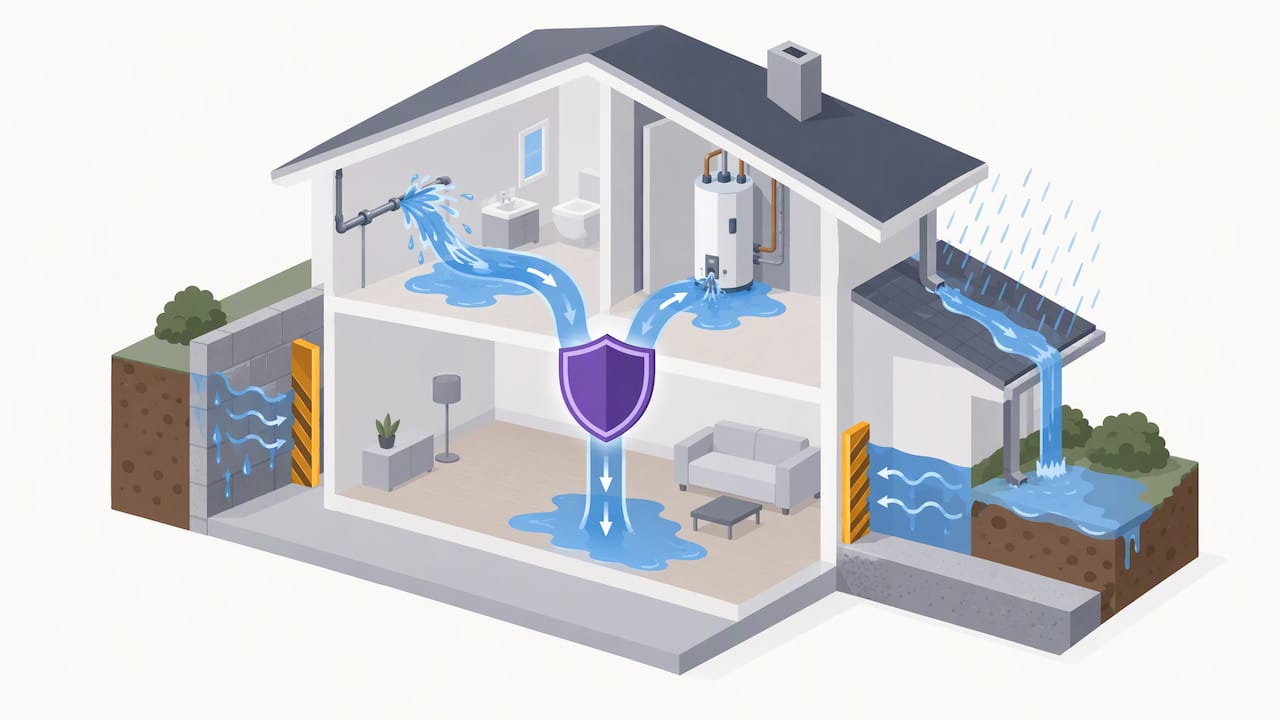
FEMA’s flood insurance guidance confirms that NFIP coverage is distinct from homeowners insurance and carries a standard 30-day waiting period before new policies or endorsements take effect, meaning flood coverage purchased after a storm warning will not help with that storm’s damage. Federal regulations also outline specific allowances, including debris removal and property-removed-to-safety provisions, along with limited “Increased Cost of Compliance” funds tied to floodplain rebuilding requirements.
Practical steps that protect your claim regardless of policy type:
- Photograph everything before any cleanup begins, including standing water levels and damaged belongings.
- Keep a written timeline of when the damage occurred and when you contacted your insurer.
- Separate flood claims from water-damage claims early, since they often go through different adjusters or programs entirely.
- Review your declarations page for sewer backup riders, which are often sold as a low-cost add-on but excluded by default.
Our water damage insurance claim checklist walks through documentation in more detail, and general coverage patterns are summarized by the Insurance Information Institute’s homeowners data.
5. Reading a professional estimate without getting surprised
A complete emergency estimate should itemize more than just “water extraction.” Expect separate lines for equipment hours (dehumidifiers and air movers often run for days, not hours), moisture mapping, antimicrobial treatment, contents pack-out if furniture needs to move offsite, and any demolition required to access saturated cavities.
- Emergency extraction and initial labor cover the first visit and immediate water removal.
- Equipment monitoring charges reflect daily visits to check drying progress with moisture meters, not just the equipment itself.
- Moisture mapping and photo documentation give you and your insurer objective proof of how far damage spread, which the EPA’s mold course materials note helps prevent disputes over claim scope later.
- Demolition and rebuild line items should specify exactly which materials are being removed and why they can’t be dried instead.
Ask any contractor for licensing and insurance proof before signing, and treat a verbal-only estimate with no written scope as a red flag. Our company selection checklist covers the specific questions worth asking before you commit.
6. What you can do yourself, and where DIY stops
A few immediate actions cost nothing and limit how bad the damage gets before help arrives.
- Shut off the water source at the main or the fixture if you can locate it safely.
- Move furniture and valuables out of standing water immediately.
- Photograph the damage before touching anything, from multiple angles and distances.
DIY drying is reasonable for small, clean-water spills caught within an hour or two, think a dishwasher overflow on tile. Anything involving sewage, gray water, or carpet and drywall that’s been wet for more than a day needs professional extraction and drying equipment that homeowners don’t own.
Pro Tip: Get two to three written estimates for anything beyond a minor spill. Insurers often want multiple bids on file anyway, so it costs you nothing but time.
7. What we’ve learned from emergency water jobs
The most common mistake we see is homeowners waiting a day or two “to see if it dries out” before calling anyone, which almost always increases both the drying time and the final bill. We’ve found that a same-day assessment, even when the damage looks minor, almost always costs less than a delayed one.
— Jim
Get immediate help with emergency water removal
When water is actively damaging your home, the fastest path to a lower bill is a same-day assessment, not a guessing game about whether the damage looks “bad enough” to call someone. We handle water damage restoration, including burst pipes, storm intrusion, and sewage backups, and we coordinate directly with your insurance company so you’re not managing paperwork while your basement is still wet.

Before you call, have your policy number, a rough idea of when the water started, and photos of the affected area ready. We’re available 24/7 across Chicagoland, and we handle the extraction, drying, and insurer communication as one coordinated job rather than separate headaches. If mold has already started from an older leak, our mold removal and remediation team can address that in the same visit. Reach out through our water damage restoration page to request an estimate today.
FAQ
Will insurance cover basement water damage?
It depends on the cause: a burst pipe or appliance failure is typically covered under standard homeowners insurance, while flooding from outside sources requires separate NFIP flood insurance. Gradual seepage from an old crack usually isn’t covered under either policy type, so check your declarations page for sewer backup coverage specifically.
How to tell if water damage is permanent?
Materials that have been saturated more than 24 to 48 hours, especially hardwood, insulation, and particleboard, often can’t be safely dried and need replacement. A technician using a moisture meter can tell you whether a material is drying normally or has crossed into permanent damage.
Can you do water remediation yourself?
DIY drying works for small, clean-water spills caught quickly, like a minor appliance overflow on hard flooring. Anything involving contaminated water, standing water over 24 hours old, or saturated carpet and drywall needs professional extraction equipment and, per EPA mold guidance, fast professional drying to avoid mold colonization.
How much does water damage devalue a house?
There’s no fixed percentage, since the impact depends on whether the damage is fully remediated and documented or left as a disclosed issue at sale. A home with professionally completed restoration and clear documentation typically retains value far better than one with unresolved moisture history, which buyers and inspectors tend to flag during a sale.
Sources
- FEMA – Flood Insurance
- 44 CFR Pt. 61 App A(1) — NFIP regulations (extracts)
- EPA — Mold cleanup in your home
- IICRC — Weather-related water damage position statement (March 2026)
- Insurance Information Institute — Homeowners and renters insurance facts & statistics