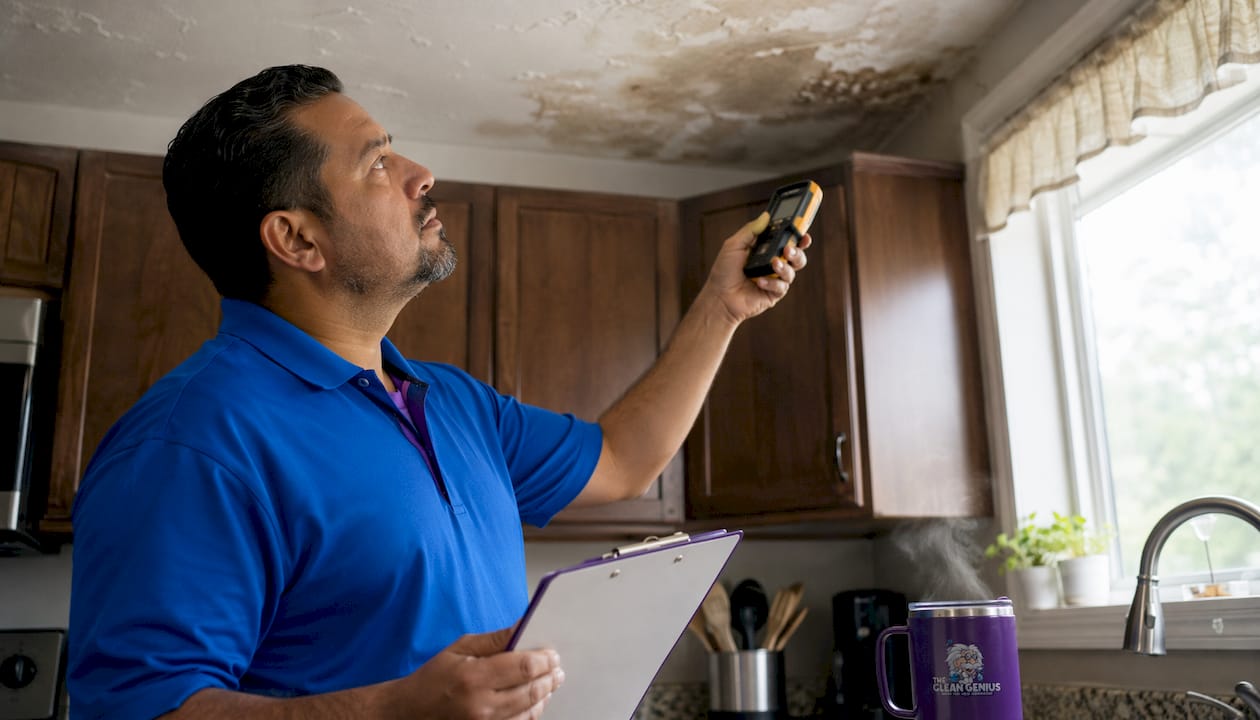

Most water damage myths cost homeowners real money, real health risks, and time they don’t have. The core truth: water damage is almost never a “wait and see” situation, and the gap between what homeowners believe and what IICRC standards actually require is where the worst outcomes happen.
Your first 24 hours matter most. Here’s what to do right now:
- Shut off the water source if it’s safe to do so.
- Document everything with photos and video before touching anything.
- Call a certified restoration professional if you see standing water, contaminated water, water in walls or ceilings, or any sign of mold.
NFIP flood coverage and standard homeowners policies are not the same thing. Thecleangenius works directly with your insurance, but the clock starts the moment water enters your home.
Table of Contents
- The most common misconceptions about water damage repair, debunked
- What professional water damage restoration actually involves
- How insurance really handles water damage
- When should you call a restoration company right now?
- What a pro’s timeline and tools actually look like
- Key Takeaways
- The myth that costs homeowners the most
- Thecleangenius is ready when water damage hits Chicagoland
- Authoritative sources and further reading
The most common misconceptions about water damage repair, debunked
1. “It’s just a small leak — it’ll dry on its own”

Small leaks are responsible for some of the most expensive repairs homeowners face. By the time you notice a stain or soft spot, moisture has already absorbed into drywall, insulation, and structural framing. Mold can begin growing within 24–48 hours of water exposure.
What to do instead: Treat any leak as urgent. Call a pro if the source isn’t immediately obvious or if water has been sitting for more than a few hours.
2. “Household fans and a dehumidifier will handle it”
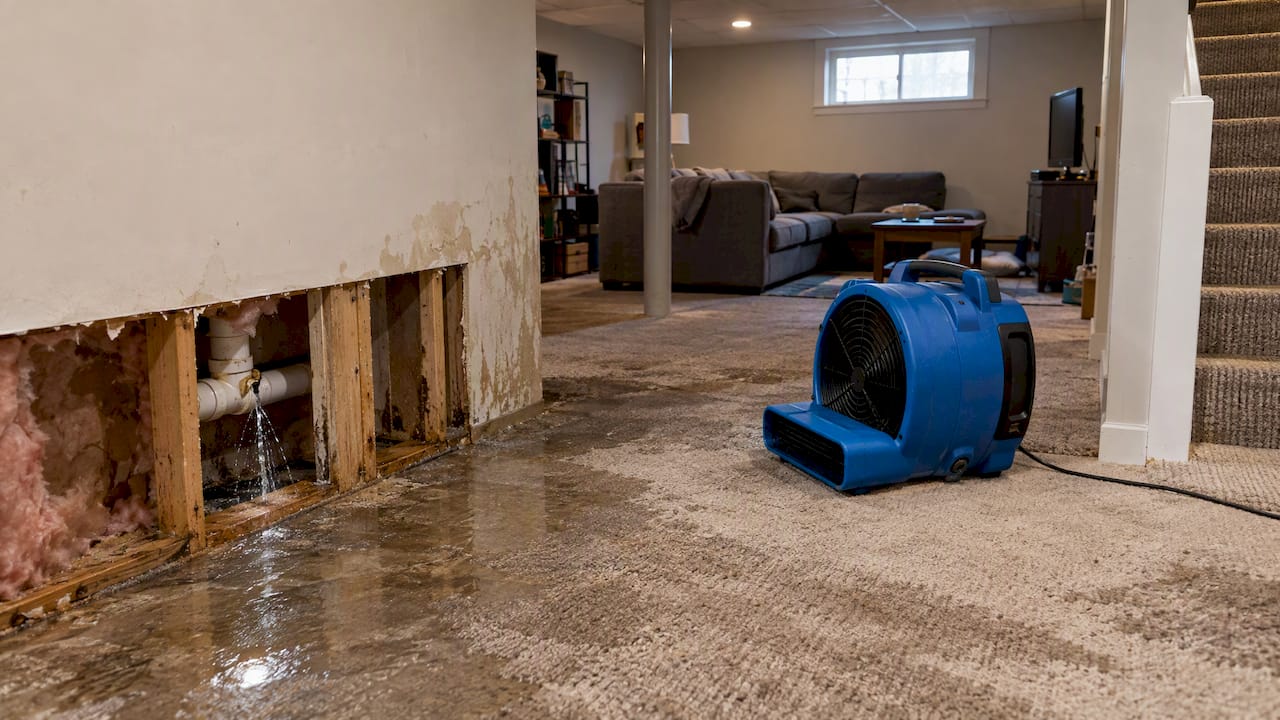
This is one of the most persistent water damage repair myths. Home fans circulate moist air and can actually trap humidity behind surfaces, creating ideal conditions for hidden mold inside walls and under floors. Professionals use industrial LGR dehumidifiers and air movers calibrated to pull moisture from building materials, not just the air in the room.
What to do instead: Use fans only to ventilate while waiting for a pro. Don’t assume surface dryness means structural dryness.
3. “If I can’t see water, there’s no damage”
Thermal imaging and moisture meters routinely find water behind walls and under flooring that looks perfectly dry to the eye, making non-invasive hidden leak detection a crucial first step. Water travels unpredictably through framing, insulation, and flooring layers. A leak upstairs can show up as ceiling damage two rooms away.
What to do instead: Request moisture mapping as part of any professional inspection. Visible dryness is not drying validation.
4. “Clean water isn’t dangerous”
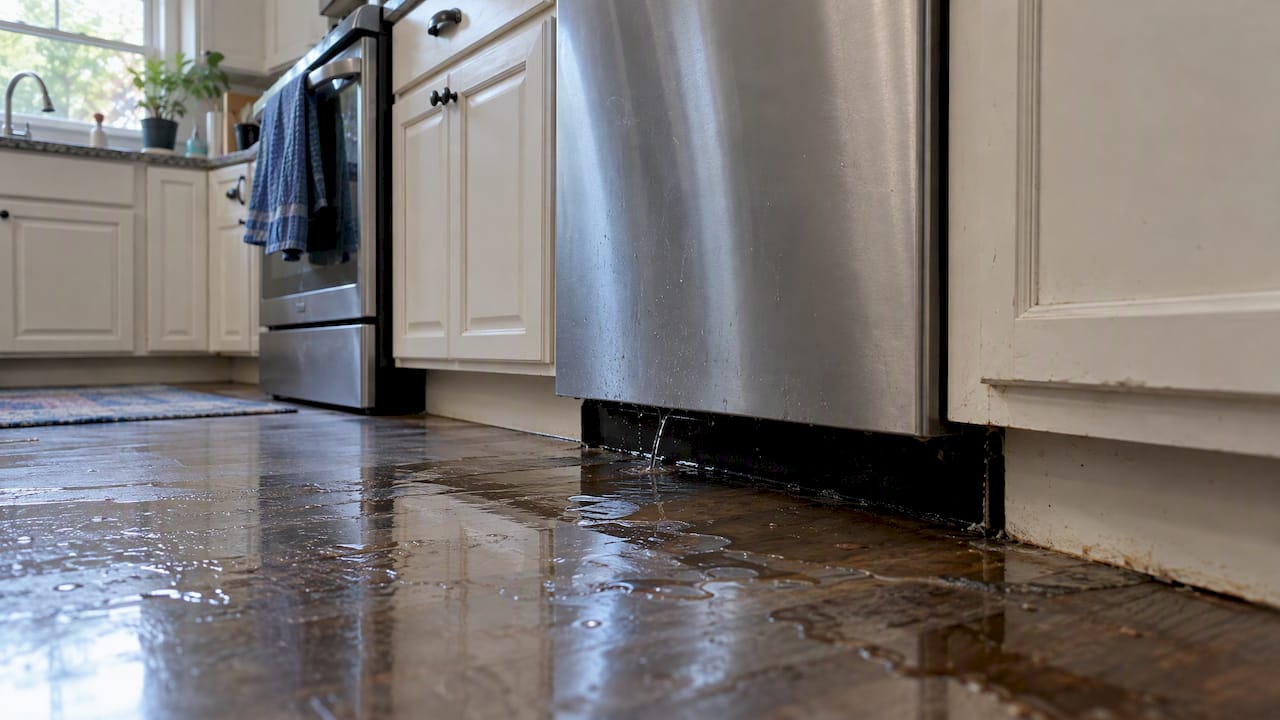
Category 1 (clean) water from a supply line can degrade into Category 2 or 3 after contact with building materials or if it sits more than 24 hours. Once it picks up contaminants, the remediation protocol and cost both increase significantly. Waiting is a decision that changes the category of water you’re dealing with.
What to do instead: Understand water damage severity by category. Act before clean water becomes a health hazard.
5. “Restoration is just cleaning up the water”
Water damage restoration under IICRC S500 involves inspection and moisture mapping, water extraction, structural drying, cleaning and disinfection, and reconstruction where needed. Drying is one phase, not the whole job. Skipping validation means you can’t prove the structure is actually dry, which matters for both health and insurance.
What to do instead: Ask any contractor for a written scope that covers all phases, not just extraction.
6. “Bleach kills mold on wet surfaces”
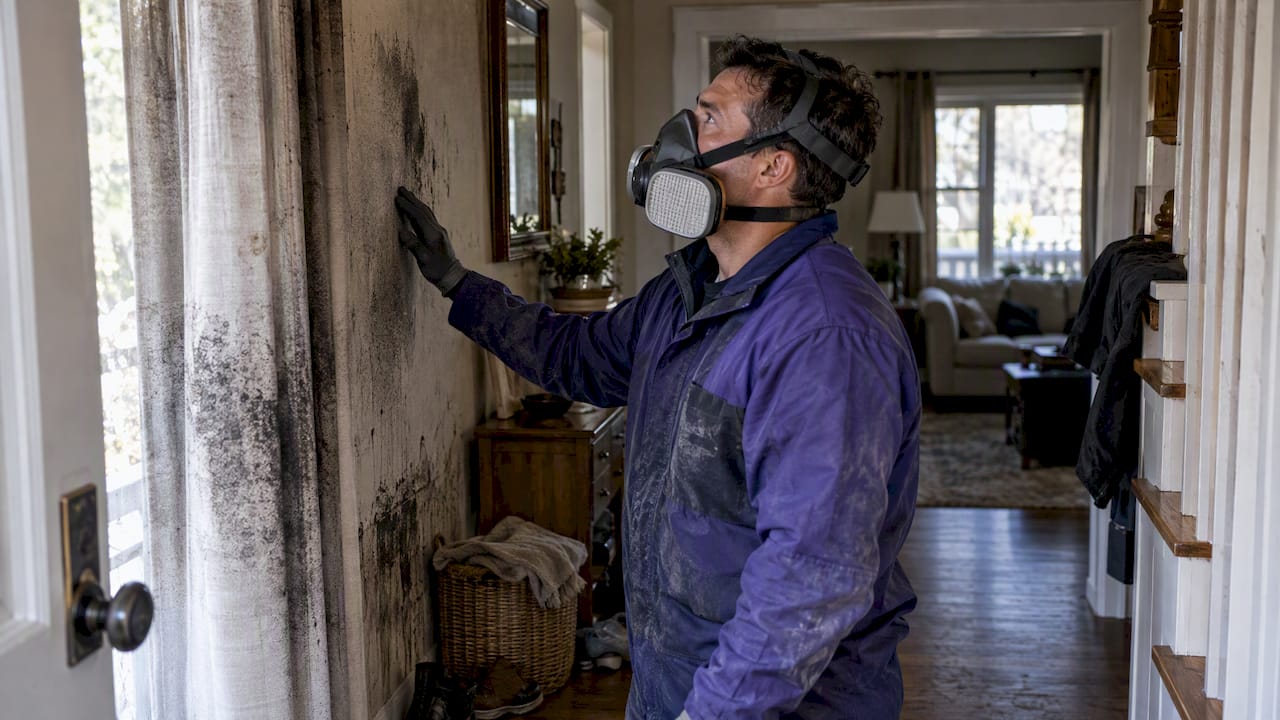
Bleach is ineffective on porous materials like drywall and wood. The chlorine evaporates, leaving water behind that feeds mold deeper into the substrate. You may change the color of the surface while the root infestation continues to grow. This is one of the most dangerous DIY mistakes in water restoration.
What to do instead: Leave mold treatment to certified professionals. For porous materials, removal and remediation under IICRC S520 is the standard.
7. “My homeowners insurance covers all water damage”
Standard policies generally cover sudden, accidental events like a burst pipe. They typically exclude flooding, groundwater seepage, and gradual leaks caused by neglect. Flood damage requires a separate NFIP or private flood policy. Many homeowners discover this distinction only after filing a claim.
What to do instead: Review your policy now. Check for water-backup endorsements, mold sublimits, and whether you need separate flood vs. water damage coverage.
8. “Insurance will make me whole again”
An insurance check covers repair costs. It doesn’t replace heirlooms, cover the stress of displacement, or account for the health risks of a poorly remediated home. Average water damage claims for larger homes can run two to three months from start to finish. The non-monetary losses are real.
What to do instead: Document everything thoroughly. Keep a log of displacement costs, damaged personal items, and all contractor communications.
9. “Delaying restoration saves money”
Every hour water sits, the scope of work grows. Structural materials absorb more moisture, mold risk increases, and what started as a mitigation job can become a full remediation. Insurers may also deny or limit claims when damage results from neglect or deferred action. Repeated claims increase the chance of non-renewal.
What to do instead: Call a restoration company immediately. Fast response is the single most effective cost-control measure available to you.
10. “Any restoration company will do the same job”
Certification, equipment, and documentation practices vary widely. A contractor without IICRC credentials may extract visible water and call the job done, leaving hidden moisture that causes mold weeks later. Documented drying validation, with before-and-after moisture readings, is what separates a properly closed job from one that leaves you exposed to future disputes.
What to do instead: Use a contractor selection checklist and ask specifically for drying logs and moisture documentation before signing off.
| Approach | Hidden moisture detection | Mold risk | Drying validation | Likely insurance outcome |
|---|---|---|---|---|
| DIY (fans/bleach) | None | High | None | Claim may be denied or reduced |
| Ignoring the problem | None | Very high | None | Denial likely; scope grows |
| Certified professional | Full moisture mapping | Low when done promptly | Written logs, before/after readings | Supports claim; documentation on file |
What professional water damage restoration actually involves
Professional restoration follows a defined sequence, not just a cleanup.
- Inspection and moisture mapping: Technicians use moisture meters and thermal imaging to locate water migration beyond the visible damage area.
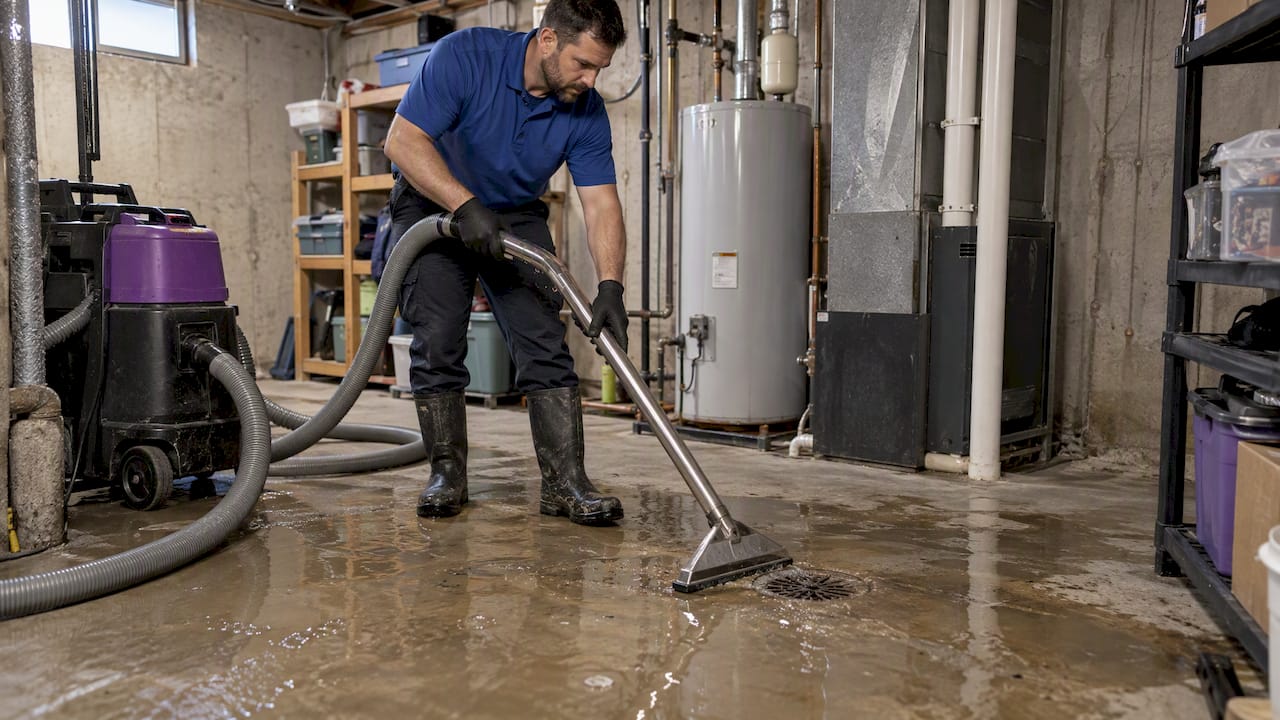
- Water extraction: Industrial truck-mounted or portable extractors remove standing and absorbed water from floors, walls, and cavities.
- Structural drying: LGR dehumidifiers and calibrated air movers pull moisture from building materials. This phase can take several days depending on materials and saturation level.
- Cleaning and disinfection: Affected surfaces are treated based on water category. Category 3 (sewage or floodwater) requires full containment and antimicrobial treatment.
- Reconstruction: Damaged drywall, flooring, and framing are repaired or replaced after drying is confirmed.
Drying validation is what closes the loop. Per IICRC S500, technicians record moisture readings at the start and end of each drying cycle. A job isn’t complete until readings return to acceptable levels for the material type. Documented drying validation also protects you if a mold dispute arises months later. You can learn more about the full restoration equipment professionals use and why each tool matters.
How insurance really handles water damage
The coverage distinction that trips up most homeowners: sudden and accidental damage is usually covered; gradual damage, flooding, and neglect usually are not.
- Covered (typically): Burst pipes, appliance failures, roof damage from a storm that lets rain in.
- Excluded (typically): Flooding from outside, groundwater seepage, slow leaks from deferred maintenance, sewer backup (unless you added an endorsement).
The Oregon Division of Financial Regulation lists flood, below-ground water, and sewer backup as standard exclusions under most homeowners policies. Flood coverage requires a separate NFIP or private policy.
Practical claim tips:
- Photograph and video the damage before any work begins.
- File promptly. Delayed reporting can complicate or void a claim.
- Keep your contractor’s moisture logs. Insurers want documentation that mitigation was done correctly.
- Ask your insurer about mold sublimits and water-backup endorsements before you need them.
Pro Tip: Repeated water damage claims can trigger non-renewal. Installing whole-house leak detection sensors can catch leaks early and demonstrate proactive maintenance to your insurer.
When should you call a restoration company right now?
Call immediately if any of these are true:
- Standing water is present anywhere in the home.
- The water source is sewage, floodwater, or unknown (Category 2 or 3).
- Water has been sitting for more than 24 hours.
- You see or smell mold.
- Water has reached walls, ceilings, or the HVAC system.
- You have a crawl space or basement involved.
Homeowner triage steps:
- Confirm the area is electrically safe before entering.
- Shut off the water source.
- Document with photos and video.
- Move valuables and irreplaceable items out of the affected area.
- Call a certified restoration company. Don’t wait for the damage to “settle.”
When vetting a contractor, ask: Are you IICRC-certified? What equipment do you use for structural drying? Will you provide written moisture logs? Do you coordinate directly with insurance? What’s your typical response time?
What a pro’s timeline and tools actually look like
0–24 hours: Inspection, moisture mapping, water extraction. Technicians identify the water category, map migration with thermal imaging, and begin extraction. Air movers and LGR dehumidifiers are placed.
24–72 hours: Active structural drying. Moisture readings are logged daily. Dehumidifier settings are adjusted based on psychrometric data (temperature, humidity, and dew point).
72 hours to job close: Monitoring continues until all readings return to baseline for the material type. Final documentation is completed.
Tools used and why:
- Moisture meters: Measure moisture content inside drywall, wood, and concrete, not just surface readings.
- Thermal imaging cameras: Reveal hidden moisture migration behind walls and under floors.
- LGR dehumidifiers: Low-grain refrigerant units pull moisture from building materials far more effectively than consumer units.
- Air movers: Directed airflow accelerates evaporation from structural surfaces.
- Hygrometers: Track ambient humidity to confirm the drying environment is working.
Thecleangenius technicians document every phase with moisture logs and before-and-after readings, following IICRC S500 protocols on every job.
Key Takeaways
Water damage myths consistently lead homeowners to delay action, underestimate scope, and misread their insurance coverage — all of which increase cost and health risk.
| Point | Details |
|---|---|
| Act within 24–48 hours | Mold can begin growing within 24–48 hours; fast response is the single most effective cost-control measure. |
| DIY drying is insufficient | Household fans trap humidity behind surfaces; structural drying requires industrial LGR dehumidifiers and moisture validation. |
| Insurance has real limits | Standard policies exclude flooding, gradual leaks, and groundwater; NFIP or private flood coverage is separate. |
| Demand drying documentation | Written moisture logs and before-and-after readings are required under IICRC S500 and protect you from future mold disputes. |
| Thecleangenius | Certified Chicagoland restoration team available 24/7, with direct insurance coordination and documented drying validation on every job. |
The myth that costs homeowners the most
The single most damaging belief in water damage repair isn’t about mold timelines or insurance fine print. It’s the assumption that a problem you can’t see isn’t a problem yet.
Hidden moisture is where the real damage accumulates. A homeowner who dries the visible surface and moves on is essentially sealing moisture inside the wall cavity and waiting for mold to announce itself weeks later. By then, the remediation scope is larger, the insurance documentation is weaker, and the health exposure has already happened.
The other underrated issue: not all restoration work is equal, and the difference isn’t always visible at job close. A contractor who skips drying validation leaves you with no proof the structure is actually dry. That matters when a mold dispute surfaces months later and you have no moisture logs to show.
The practical takeaway is simple. Ask for documentation. Ask for IICRC certification. And treat the first 24 hours after water damage as the window where most of the outcome is decided.
Pro Tip: Don’t use bleach on any porous surface after water damage. It changes the color but leaves water behind, which feeds mold deeper into the material. Certified remediation under IICRC S520 is the only reliable approach for porous substrates.
Thecleangenius is ready when water damage hits Chicagoland
When water damage happens, the difference between a contained repair and a months-long ordeal usually comes down to response time and documentation.

Thecleangenius is a family-owned, IICRC-certified restoration company serving the greater Chicagoland area, including Naperville, Schaumburg, Arlington Heights, Wheaton, and dozens of surrounding communities. With over 25 years of combined experience and more than 400 five-star reviews, the team handles water damage restoration 24/7, from burst pipes and sewage backups to full structural dry-outs. Every job includes direct insurance coordination, written moisture logs, and drying validation. If mold is involved, the team also provides full mold removal and remediation using advanced dry-fog technology. Call or request a same-day assessment now.
Authoritative sources and further reading
- IICRC S500 / S520 standards — The governing protocols for water mitigation and mold remediation. Reference these when evaluating contractor scope and documentation.
- EPA mold guidance — Explains mold biology, health risks, and when professional remediation is warranted.
- CDC mold FAQs — Plain-language health guidance on mold exposure after water damage.
- American Lung Association: floods and water damage — Covers respiratory risks from water-damaged buildings and contaminated air.
- Oregon Division of Financial Regulation: home insurance myths — Authoritative breakdown of standard policy exclusions including flood, sewer backup, and groundwater.
- Insurance Information Institute — Industry statistics on homeowners insurance claims, coverage trends, and water damage frequency.
- FEMA / NFIP flood insurance — Official source for flood policy options, coverage limits, and how to purchase separate flood coverage.
- Thecleangenius water damage restoration — Local 24/7 emergency service for Chicagoland homeowners; direct insurance coordination and IICRC-certified teams.