
A bathroom fan should never vent into the attic. The model code says exhaust air must go outdoors, and federal home-energy guidance says the same. In a Chicagoland winter, that warm, wet air meets freezing rafters and roof sheathing, condenses, and feeds rot and mold. If your fan duct ends in the attic, the fix is to run it to a roof cap or soffit outlet, insulate it and seal it.
TL;DR
- The 2024 International Residential Code bars exhausting a mechanical exhaust system into an attic, soffit, ridge vent or crawl space.
- Moisture from the duct condenses on cold framing and sheathing, which can damage wood and encourage mold.
- The fix is a short, straight, insulated, air-sealed duct that ends at a dampered roof cap or an exterior wall or soffit outlet.
- Wet insulation, stained or dark sheathing and bubbling paint at the eaves are warning signs worth having inspected.
- Local codes in Illinois can add their own wording, so confirm with your village or county building department.
Table of Contents
- What the code says about venting a bathroom fan into the attic
- Why venting into the attic causes damage
- Signs your fan may be venting into the attic
- How to vent a bathroom fan correctly
- What about the damage already done?
- When to call a professional
- Need help with attic moisture or mold in Chicagoland?
- FAQ
- Sources
What the code says about venting a bathroom fan into the attic
The 2024 International Residential Code says air removed by every mechanical exhaust system must be discharged outdoors. It specifically says the air must not be exhausted into an attic, soffit, ridge vent or crawl space.
Other authorities agree:
- Energy.gov’s Consumer Guide to Home Ventilation says kitchen and bathroom vents should lead directly outside and never into the attic.
- The Building America Solution Center says bathroom fans must vent outdoors, not into an attic, crawlspace or space between floors.
- Inspectors at InterNACHI report the same rule when they check bathroom fans.
That covers the common shortcuts too. A duct that simply lies on the attic floor, ends near a gable vent, or points at a ridge or soffit vent is still venting into the attic space. Moisture that reaches a soffit vent does not leave the building. It drifts back into the attic.
What about Illinois and your town?
The model code is a starting point. Towns and counties adopt it and amend it. Will County’s building code, for example, requires that every bathroom with a shower be ventilated mechanically directly to the outside and that the exhaust terminate in an approved fitting at the exterior of the building. Illinois also publishes a 2021 Illinois Mechanical Code with ventilation provisions.
The details differ from Naperville to Arlington Heights to Crystal Lake. Before you change a duct or hire someone to, call your village or county building department and ask which edition applies and whether a permit is needed. Either way, the answer on the attic question is the same: outdoors.
Why venting into the attic causes damage
A shower puts a lot of water vapor into the air. A fan is supposed to carry it out of the house. When the duct ends in the attic, you have moved the humidity from a room designed to handle it to a space that is not.
The Building America guidance explains the process. Warm, moist air from the duct condenses on cold rafters, trusses and sheathing. The water droplets can damage wood and encourage mold growth. GreenBuildingAdvisor adds that this is a significant winter problem, because attic surfaces are cold and water vapor condenses on cold surfaces.

Energy.gov’s Consumer Guide to Durable Attics calls exhaust fans vented into the attic a major source of moisture that can lead to mold, and notes it may violate local building codes.
InterNACHI also points to a second cost: the same condensation can reduce how well attic insulation works and can create health problems for sensitive occupants.
Why Chicagoland attics are especially exposed
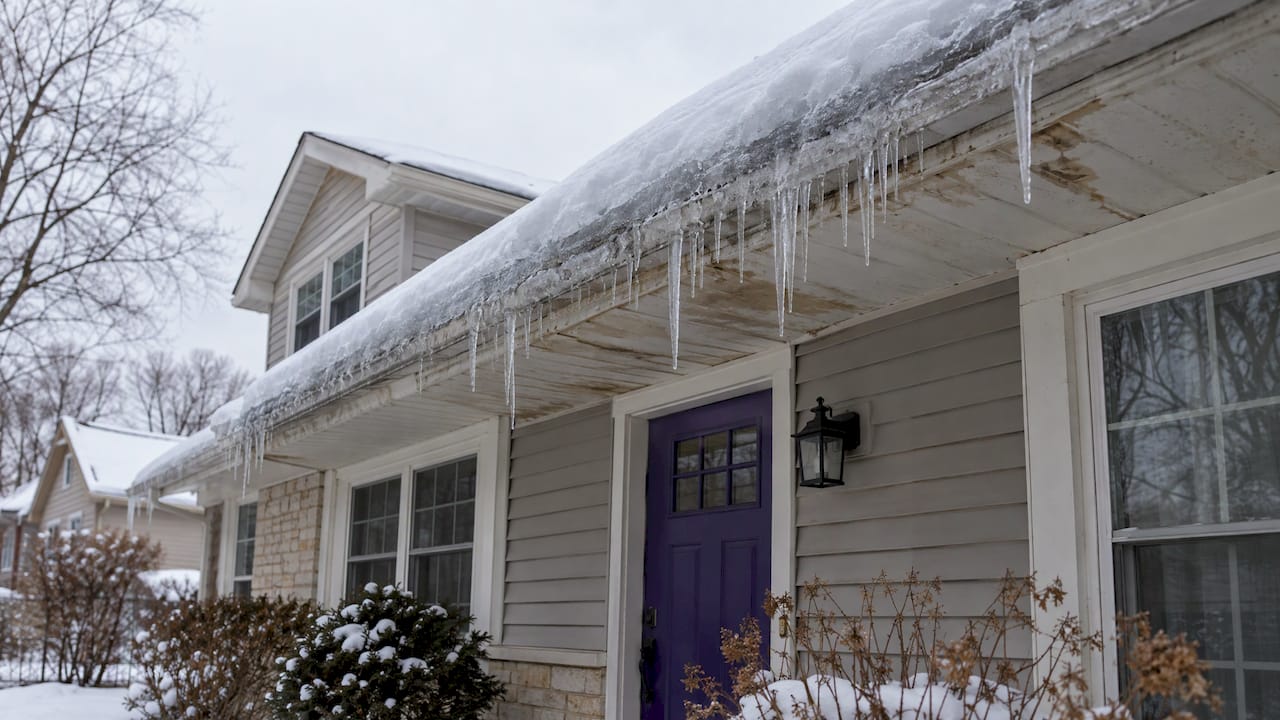
Our winters keep roof decks well below freezing for weeks. Every hot shower during that stretch sends a burst of vapor into the coldest surface in the house. The damage rarely announces itself. It builds quietly over several seasons on the underside of the roof deck, where you never look.
If you want the bigger picture of how this works, our guide on why attic moisture causes mold in your home walks through it.
Signs your fan may be venting into the attic
A fan can seem to work perfectly from inside the bathroom. InterNACHI notes that improper termination defects may appear to work from the bathroom, so the only reliable check is the duct itself.
Check the duct
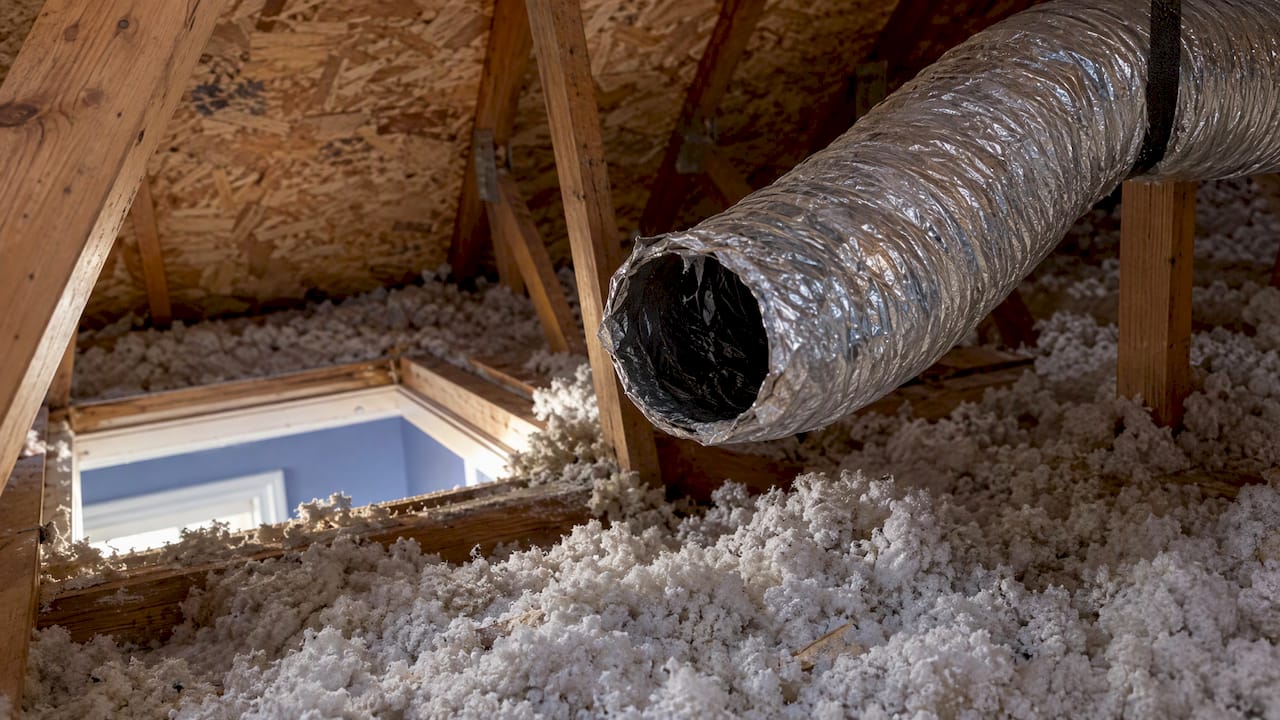
The Building America guidance says to look in the attic to confirm the exhaust fans are venting outside rather than into the attic. Follow the duct from the fan housing. It should lead to a roof cap, a soffit or gable outlet or an exterior wall cap. If it ends loose, in open air or under insulation, it is venting into the attic.
If you do go up there, take care. Walk only on framing, wear a respirator-style mask if you see dark growth, and consider the guidance in this piece on attic safety and what to check before you start moving stored items around a duct.
Check for damage
Energy.gov lists possible signs that moisture is entering the attic:
- warped or rotted soffit or fascia wood
- bubbled paint at fascia boards or soffits
- worn or warped shingles at the roof edge
- wet attic insulation
- mold or mildew on attic surfaces
- warped or rotting attic wood
In the bathroom itself, InterNACHI lists these indicators of insufficient ventilation: moisture stains on walls or ceilings, corrosion, visible mold, peeling paint or wallpaper, frost on windows and high humidity.
If you see several of these, have the attic looked at. Our pages on signs of poor attic insulation and roof leak mold in the attic help you tell a duct problem from a roof problem. Energy.gov recommends scheduling a home performance contractor to determine whether moisture is entering the attic.
How to vent a bathroom fan correctly
There are two common routes: through the roof or out the soffit or an exterior wall. Building America says attic ducts should run directly from the fan box to the eaves or through the roof, ending at a dampered roof cap or a vented soffit or side-wall opening, with the connection to the vent air-sealed.

Details that make the install last
The Building America checklist covers the points a good installer will follow:
- Short and straight. Route the duct directly, with as few bends as possible, and no bends for the first three feet from the fan.
- Sealed. Seal duct seams and connections with mastic or UL 181 tape.
- Sealed at the openings. Seal interior ceiling, wall or roof penetrations and flash exterior surfaces.
- Damper. The outlet should have a damper that closes when the fan is off.
- Placement. The outside opening should be at least 10 feet from any air inlet and should not blow onto a walkway.
- Fan housing. In a vented attic, cover the housing with an airtight box of rigid foam or another solid material, air-seal it to the ceiling drywall, and cover the box and duct with attic insulation.
Energy.gov’s installation guidance for bath-fan flex duct adds that ducts running through unconditioned spaces must be insulated, and that flex duct runs should be as short, straight and smooth as possible, with adequate support.
A county code summary from Knox County shows how the clearance rules read in an IRC-based code: not less than 3 feet from property lines and from operable windows and doors, and not less than 10 feet from mechanical air intakes. Your local code may differ, so check it.
Fan size
The Building America resource guide notes that to meet ASHRAE 62.2 (2010) and IRC 2021 M1507 airflow requirements, fans should move at least 50 cfm for intermittent operation or 20 cfm for continuous operation. If your old fan is weak, replace it while the duct is being redone.
Through the roof or through the soffit?
| Route | What it needs | Watch for |
|---|---|---|
| Roof cap | Dampered cap, flashing, short insulated duct | A sound roof penetration and sealed flashing |
| Soffit or side wall | Outlet cap with damper, air-sealed connection | Outlet away from intakes, and not aimed at a walkway |
Do not terminate into an existing soffit vent or ridge vent. The code language rules those out. Use a dedicated outlet.
What about the damage already done?
If the duct has been venting into the attic for years, fixing the duct is step one. Step two is finding out what the moisture did.
Building America says that when ducts do not go outside, or have excessive length or bends or no insulation, you should call in a contractor to install the proper termination vent. Then check the surfaces around the duct:
- Insulation: wet or matted insulation near the duct end loses performance and may need replacing. Our guide to attic insulation types covers the options, and attic insulation replacement cost explains what drives the price.
- Sheathing and framing: dark staining, fuzzy growth or soft spots around the duct end are worth a closer look. See when attic sheathing mold is a DIY job for the sizing rule we use.
- Ventilation: once the moisture source is gone, a balanced attic helps keep things dry. Here is how soffit and ridge vent ventilation works.
To keep it from coming back, our attic mold prevention guide lays out the habits and fixes that matter.
Perspective
In Chicagoland attics, we see the same pattern again and again: the bathroom fan is not the problem, the duct end is. A fan that dumps into the attic can look harmless for a few winters. Then the underside of the roof deck darkens, the insulation near the duct end gets heavy and the homeowner calls us about a smell or a stain.
Our approach is to fix the cause and the damage together. We trace where the moisture is coming from, dry out what got wet, and remove mold with our Pure Cloud dry-fog technology, a non-toxic method. We also handle attic insulation removal and replacement, so you do not need to hire one crew to clean and another to rebuild.
If you are not sure what is in your attic, an on-site look is the quickest way to find out. We are family-owned, certified and insured, and we work directly with your insurance when a water loss is involved.
Jim
When to call a professional
A new duct run through a roof involves flashing, so a leak at the penetration is the main risk. Cutting into the roof, working in a cold attic and sealing around a ceiling fan housing are jobs for an experienced contractor. If the attic already shows wet insulation, staining or mold, you want someone who can deal with both the moisture and the growth.
Call for help promptly if you see:
- standing water, dripping or ice at the duct end in winter
- visible mold spreading across sheathing or rafters
- a musty smell in the bathroom or upper rooms
- ceiling stains below the fan
If you are weighing a hands-on fix against hiring out, our comparison of professional vs DIY mold removal and the mold removal safety practices page explain what the work involves.
Need help with attic moisture or mold in Chicagoland?
The Clean Genius serves Arlington Heights, Naperville, Palatine, Elgin, Schaumburg, Wheaton and many other Chicagoland communities, with 24/7 emergency response. Our mold removal and remediation service includes attic mold removal, and our teams also handle attic insulation work.

If the moisture has led to a leak or water loss, see our water damage restoration page, or contact us for an on-site estimate. Pricing is set after that visit, because every attic is different.
FAQ
Can a bathroom fan just vent into the attic?
No. The 2024 IRC says exhaust air must be discharged outdoors and not into an attic, soffit, ridge vent or crawl space. Energy.gov guidance also says bathroom vents should go directly outside. The reason is condensation on cold attic surfaces.
How do you vent a bathroom fan through the roof?
Run a short, straight, insulated duct from the fan to a roof cap with a damper. Seal the seams with mastic or UL 181 tape, seal the ceiling and roof penetrations and flash the exterior. Because it involves the roof, most homeowners hire a contractor.
How do you insulate a bathroom exhaust fan duct?
Ducts that run through an unconditioned attic must be insulated, according to Energy.gov’s installation guidance. Building America also says to cover the fan housing with an airtight box of rigid foam, air-seal it to the ceiling, and cover the box and duct with attic insulation.
Is it okay to vent a bathroom fan through an attic window or gable vent?
Not as a way to meet the rule. A gable or soffit vent is part of the attic, so the moisture can still circulate there. Building America lists ducts that end near a ridge, gable or soffit vent as a cause of condensation problems. Use a dedicated outlet instead.
Sources
- IRC 2024 Chapter 15 Exhaust Systems
- Energy.gov Consumer Guide to Home Ventilation
- Building America: Bathroom Exhaust Fan checklist
- InterNACHI: Inspecting the Bathroom Exhaust Fan
- InterNACHI: Bathroom Ventilation Ducts and Fans
- Will County, IL Building Code, HVAC requirements
- Illinois Mechanical Code 2021, Chapter 4
- Building America: Look at Exhaust Fans for Venting to Outside
- GreenBuildingAdvisor: Venting Bathroom Exhaust Air
- Energy.gov Consumer Guide to Durable Attics
- Energy.gov: Install Exhaust Fan Flex Duct
- Knox County mechanical ventilation code summary
- Building America: Bathroom Exhaust Fans resource guide
- Attic safety: what to check, store and avoid