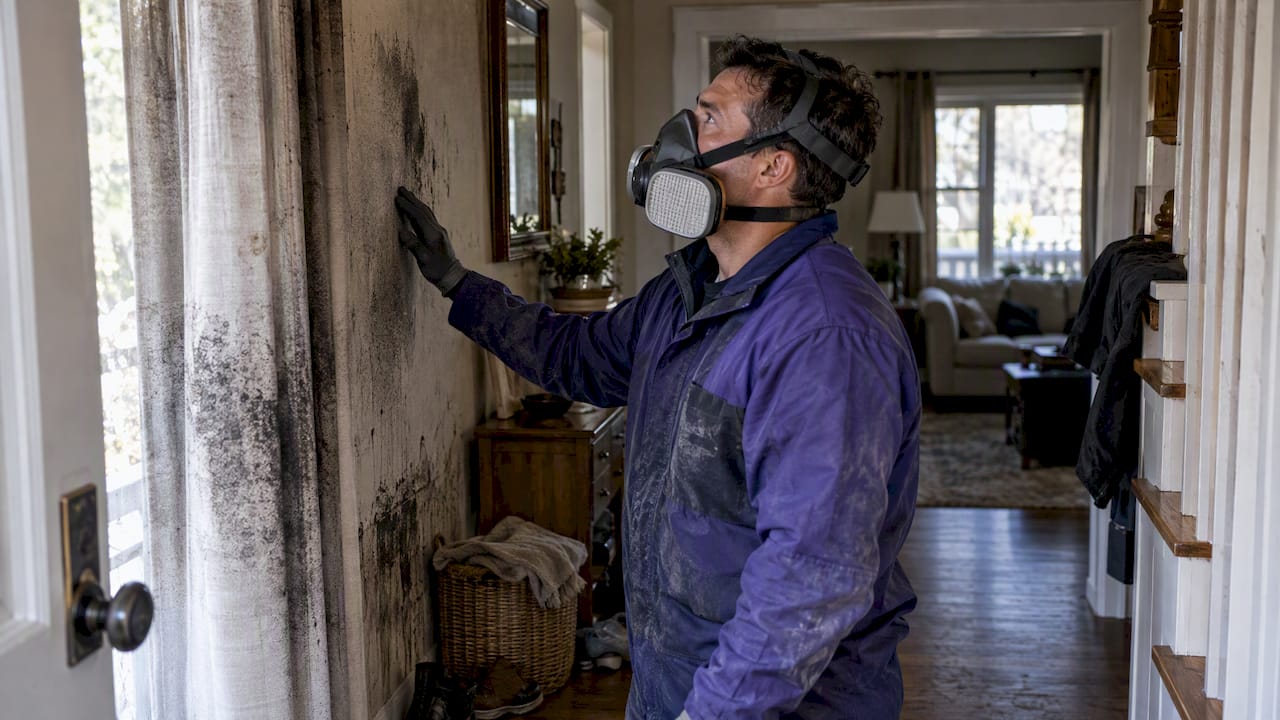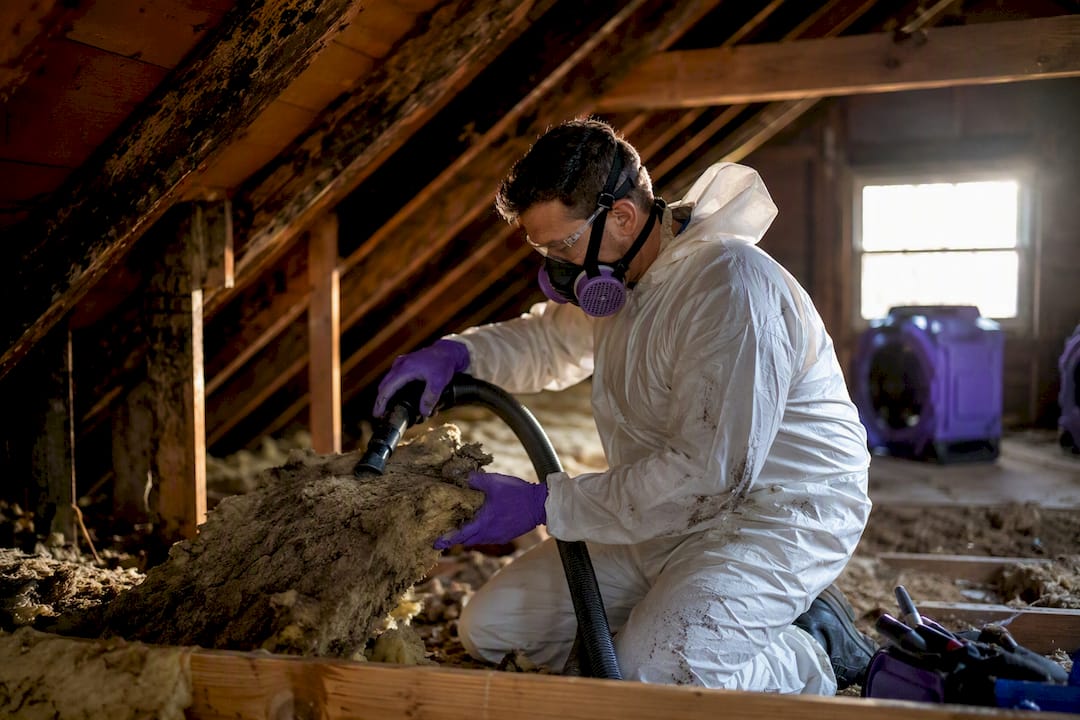

Many homeowners pay several thousand dollars for attic mold remediation, with small, accessible patches costing less and severe infestations involving insulation replacement or roof repairs costing significantly more, according to Fixr’s cost data. The broader mold remediation market averages $1,223 to $3,753 per project, but attics carry their own math because of tight crawl space, insulation saturation, and roof-related moisture sources that don’t show up in a basement or bathroom job.
Here’s the fast version:
- Small surface patch (under 10 sq ft): $500 to $1,500
- Moderate job (100 to 500 sq ft with some insulation loss): $1,500 to $4,000
- Major infestation (800+ sq ft, structural or widespread insulation damage): $4,000 to $9,000+
If mold followed a sudden event, like a roof leak from a storm or an ice dam, you may have an insurance claim worth pursuing. If it built up gradually from years of poor ventilation, you’re likely paying out of pocket. Either way, the EPA recommends calling a professional once contamination exceeds about 10 square feet or touches your HVAC system. Thecleangenius provides on-site attic inspections across Chicagoland if you want a firm number rather than a guess.
TL;DR:
- Small attic mold patches typically cost between 500 and 1,500 dollars, with larger infestations exceeding 6,000 dollars when structural or insulation work is involved.
- Contractors may price mold removal at 10 to 30 dollars per square foot, depending on accessibility and complexity, with insulation replacement being the biggest cost driver.
- Insurance usually covers sudden damage like storm or pipe leaks but excludes gradual buildup from poor ventilation, often leaving homeowners to pay out of pocket.
- Proper diagnosis of moisture sources and addressing ventilation issues are critical to prevent mold recurrence and significantly increase the project’s overall cost if neglected.
- An on-site inspection and itemized estimate from a licensed, experienced contractor provide the most accurate cost projection and improve insurance claim approval chances.
Table of Contents
- How Contractors Price Attic Mold Removal
- What Drives an Attic Mold Quote Higher or Lower
- Does Homeowners Insurance Cover Attic Mold Remediation?
- What Happens During Professional Attic Mold Remediation
- Should You Try DIY Attic Mold Removal First?
- Getting Comparable Estimates From Attic Mold Contractors
- How Thecleangenius Approaches Attic Mold Remediation
- What Post-Remediation Attic Repairs Typically Cost
- Why Most Attic Mold Quotes Miss the Real Problem
- Get a Local Attic Mold Estimate From Thecleangenius
- Key Takeaways
- Sources
How Contractors Price Attic Mold Removal
Contractors typically quote attic work one of two ways: a flat per-square-foot rate or a tiered estimate based on total job complexity. Knowing which model you’re looking at helps you spot a lowball bid before it turns into change orders.
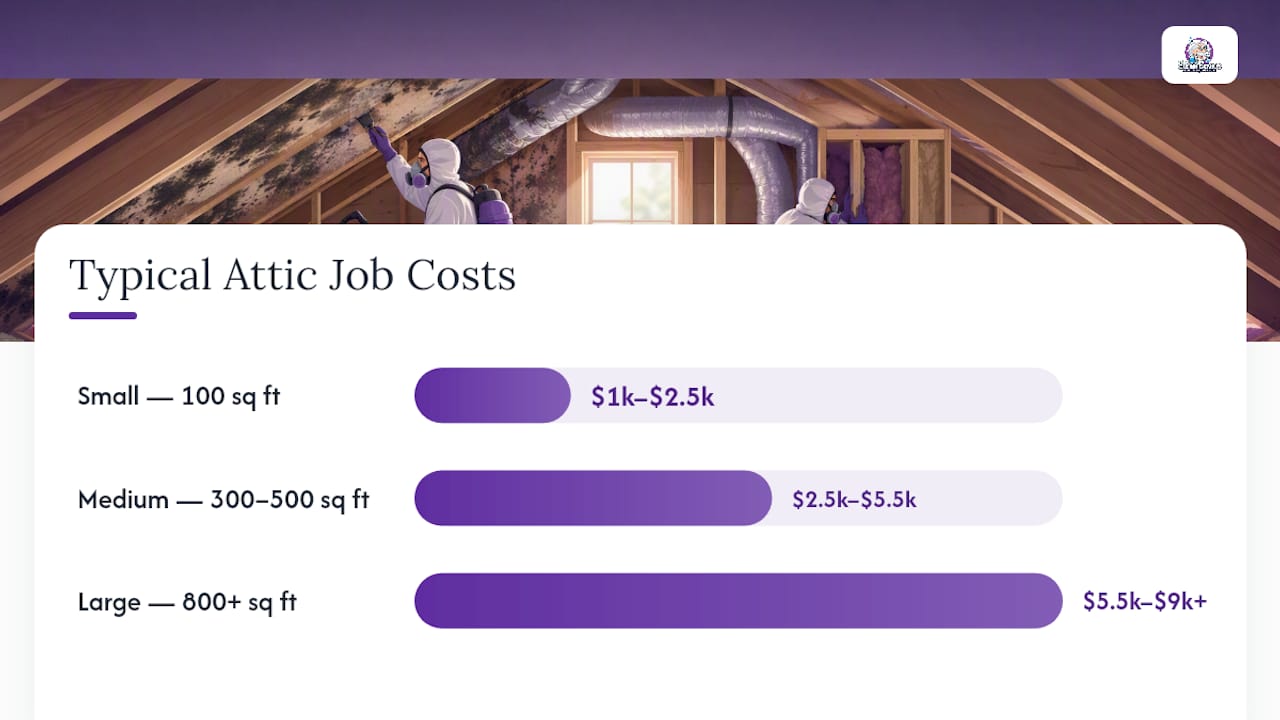
Per-square-foot pricing runs $10 to $25 per square foot for accessible remediation and $15 to $30 per square foot for hidden or hard-to-reach spaces like attics and wall cavities, according to UseCalcPro’s 2026 pricing breakdown. That premium exists for a real reason: attic mold removal pricing has to account for technicians working in cramped, poorly ventilated spaces where a normal eight-hour job stretches into rotating shifts, especially during Illinois summers when attic temperatures can exceed 130 degrees.
Here’s how that translates into real numbers for three common attic sizes:
- 100 square feet (small attic or isolated corner): Expect $1,000 to $2,500. This usually covers spot removal, minor insulation swap-out, and a single containment zone.
- 300 to 500 square feet (typical ranch or split-level attic): Budget $2,500 to $5,500. Jobs at this size often require full insulation removal in the affected zone plus HEPA filtration for the duration of the work.
- 800+ square feet (large attic, whole-roofline contamination): $5,500 to $9,000 or more. These jobs frequently overlap with roof repair, full insulation replacement, and multi-day containment.
The number that moves the most within any tier is insulation. Pulling and replacing contaminated fiberglass or cellulose insulation is one of the biggest line items in Fixr’s attic-specific cost data, and it’s the difference between a $2,000 quote and a $6,000 one for attics of similar square footage. Structural repair, like replacing mold-softened decking or rafters, adds another layer entirely, since carpentry work gets priced separately from remediation labor.
Regional labor rates matter too. Contractors in the Chicago metro area typically price attic jobs at the higher end of national ranges compared to rural markets, mostly because of higher liability insurance costs and stricter local disposal requirements for contaminated materials.
What Drives an Attic Mold Quote Higher or Lower
Two attics with identical square footage can generate wildly different quotes. The gap almost always comes down to six variables contractors weigh before they write a number.
- Accessibility. A walk-up attic with standing headroom takes a fraction of the labor time of a cramped, low-clearance space accessed through a scuttle hole. Crews working on their knees or bellies move slower and need more frequent breaks, which shows up directly in labor cost.
- Severity and location of contamination. Surface mold on drywall backing is cheaper to treat than mold that’s colonized framing members or saturated insulation, since the latter often means removal and rebuild rather than cleaning.
- Testing and lab work. A visual-only scope keeps costs down, but if you want lab confirmation of mold species (relevant for insurance claims or health concerns), add $200 to $600 for air or surface sampling.
- Moisture-source repairs. Mold keeps coming back if nobody fixes the roof leak, failed bath fan vent, or blocked soffit causing it. Roof repairs alone can range from a few hundred dollars for a patch to several thousand for full reroofing.
- Containment, PPE, and disposal. Negative air machines, plastic sheeting barriers, respirators, and hazardous material disposal fees typically add $300 to $800 to a mid-size job, regardless of the square footage being treated.
- Insulation removal and replacement. As mentioned above, this single line item can double a quote when contamination has soaked into batts or blown-in cellulose.
Pro Tip: Ask every contractor to break out insulation replacement as a separate line item on the estimate. Bundled quotes make it nearly impossible to tell whether you’re paying for remediation or for a full insulation job you might not actually need.
Ventilation problems deserve special attention here, since poor airflow is the root cause behind a large share of attic mold cases. If your attic lacks proper soffit and ridge ventilation, fixing that gap now is cheaper than paying for the same remediation job again in three years.
Does Homeowners Insurance Cover Attic Mold Remediation?
Insurance usually covers attic mold only when it results from a sudden, covered peril, like a burst pipe, a storm-caused roof leak, or an ice dam, not from years of poor ventilation or a slow, unnoticed leak. MoneyGeek’s coverage guidance confirms this is standard across most policies: gradual damage from neglect or maintenance issues gets excluded almost universally.
Even when a claim qualifies, many standard policies cap mold-related payouts with a sublimit, sometimes as low as $1,000 to $10,000, regardless of your overall dwelling coverage. CNBC’s reporting on mold coverage notes that insurers like USAA and Nationwide offer these limited endorsements rather than full coverage, so a $6,000 remediation bill tied to a $2,500 sublimit still leaves you owing the difference.
Before filing, do this:
- Collect two to three written estimates from licensed remediation contractors.
- Photograph the damage and the presumed cause (the leaking pipe, the damaged shingles) before any cleanup begins.
- Note the date you discovered the problem and, if possible, when the covered event occurred.
- Confirm your deductible applies once across both the remediation and any related repairs, not separately to each.
Filing isn’t automatically the right move. If your estimate falls close to your deductible, or if you’re worried about a rate increase following the claim, it may cost you less over time to pay out of pocket. A documented, insurer-savvy contractor can speed up adjuster approval considerably, since insurers respond faster to estimates that already match their internal cost expectations.
What Happens During Professional Attic Mold Remediation
A typical attic remediation project follows a consistent sequence, and knowing it helps you verify that a contractor’s estimate actually covers the whole job rather than a partial fix.
- Inspection and scoping. Technicians check moisture levels with a meter, visually assess contamination extent, and decide whether lab testing is warranted.
- Containment setup. Plastic sheeting seals off the attic access point, and negative air machines with HEPA filtration keep spores from migrating into living spaces during the work.
- Cleaning or removal. Depending on severity, this means HEPA vacuuming and manual scrubbing for surface mold, or dry-ice or soda blasting for framing members with embedded growth.
- Insulation removal, if needed. Contaminated insulation gets bagged and disposed of per local hazardous waste rules, then replaced once the space tests clean.
- Moisture-source repair. Roof leaks, failed flashing, or blocked vents get addressed so mold doesn’t return within a season.
- Clearance verification. A final inspection, sometimes with follow-up air sampling, confirms the space meets acceptable mold spore levels before the job closes out.
Timeline varies with scope. A small, surface-only job wraps in a single day. Moderate jobs involving insulation removal typically run two to four days. Large jobs that overlap with roof repair or structural carpentry can stretch to one or two weeks, mostly waiting on materials and coordinating trades. You can walk through the full attic mold removal process in more detail if you want to know exactly what each visit involves.
Should You Try DIY Attic Mold Removal First?
DIY cleanup is realistic only for very small, surface-level patches, generally under 10 square feet on a nonporous surface, per EPA guidance. Anything larger, anything touching insulation or framing, or anything near ductwork belongs to a professional crew.
The risk isn’t just wasted effort. Disturbing mold without proper containment sends spores through your attic access point and into your HVAC system, potentially contaminating the air throughout your entire home. Attics also trap heat and offer poor ventilation for the fumes from many household mold-killing products, which raises real safety concerns for anyone working solo up there.
- DIY scrubbing without addressing the moisture source almost guarantees recurrence within a year.
- Professional HEPA filtration and negative air setups cost money precisely because they prevent the cross-contamination DIY methods can’t control.
- Homeowners who skip a moisture inspection often pay for the same remediation twice.
If you’re unsure where your project falls, our DIY vs. professional mold removal guide walks through the decision point in more detail.
Getting Comparable Estimates From Attic Mold Contractors
A written estimate should break out containment, disposal, insulation replacement, structural repair, and testing as separate line items, not one lump sum. Bundled quotes make it impossible to know what you’re actually paying for, and they make comparing three contractors nearly pointless.
Ask every contractor these five questions before signing anything:
- Are you licensed and insured for mold remediation work in this state?
- How many attic-specific jobs have you completed in the past year?
- What containment method will you use, and does it include negative air and HEPA filtration?
- Will you repair or coordinate the moisture source, or is that a separate contractor?
- Do you offer clearance testing, and is a workmanship warranty included?
Pro Tip: *A quote with no written scope, a vague completion date, or no proof of insurance is a red flag regardless of how competitive the price looks.
How Thecleangenius Approaches Attic Mold Remediation
Thecleangenius has handled water and mold restoration across Chicagoland for over 25 years of combined team experience, backed by more than 400 five-star reviews from homeowners in towns like Naperville, Schaumburg, and Arlington Heights.
Our certified crews use Pure Cloud dry-fog technology, which distributes an antimicrobial treatment through the entire attic space without the demolition a manual scrub-down often requires. That said, dry fog isn’t a universal fix. Attics with mold embedded deep in insulation or softened framing still need physical removal and repair first, and we’ll tell you that upfront rather than oversell a shortcut.
- Direct insurance coordination to speed up adjuster approval on qualifying claims
- 24/7 emergency response for active leaks driving new mold growth
- Moisture-source correction, including ventilation and roof repair coordination, built into every quote so the problem doesn’t resurface
What Post-Remediation Attic Repairs Typically Cost
Remediation and repair are two separate line items, and homeowners often underestimate the second one. Once mold is gone, you’re usually looking at reinsulating the treated area, patching or replacing drywall the crew had to cut for access, and fixing whatever caused the moisture in the first place.
Reinsulating a mid-size attic runs roughly $1,000 to $2,500 depending on the material (fiberglass batts versus blown-in cellulose) and square footage. If a soffit or ridge vent needs to be added or repaired to fix underlying ventilation, budget another $300 to $1,200. Roof repairs tied to the original moisture source vary the most, from a few hundred dollars for flashing repair to several thousand for a full reroofing job if shingles are compromised.
Preventive measures cost far less than round two of remediation. A dehumidifier for a persistently damp attic runs $150 to $400. Adding a vapor barrier during insulation replacement adds a modest premium but meaningfully cuts future moisture buildup. Homeowners who skip these steps because “the mold is gone” are, in most cases, buying themselves a second remediation bill within a few years. Our attic mold prevention guide covers the specific fixes worth prioritizing based on your attic’s ventilation setup.
Why Most Attic Mold Quotes Miss the Real Problem
The conventional advice on this topic treats attic mold remediation cost like a single number you shop around for, three quotes, pick the middle one, done. That’s backward. The remediation itself is often the cheapest part of the whole project. The moisture source, the insulation replacement, and the ventilation fix are where the real money goes, and they’re exactly what a bargain quote tends to leave out.
I’d push homeowners to stop asking “what’s the cheapest remediation quote” and start asking “what’s the total cost to make sure this doesn’t come back.” A $1,500 remediation-only quote that ignores a failed roof vent is worse value than a $3,000 quote that fixes ventilation alongside the cleanup, because you’ll pay for round two eventually. Attic moisture doesn’t resolve itself once the visible mold is gone.
Prioritize the moisture diagnosis first. Everything else in the estimate should build outward from that answer.
— Jim
Get a Local Attic Mold Estimate From Thecleangenius
If you’ve read this far, you already know that a phone quote for attic mold remediation cost is close to useless. Thecleangenius sends certified technicians to your attic for an on-site inspection that accounts for your specific access points, insulation type, and moisture source, then hands you a written, itemized estimate instead of a ballpark guess.

Before your visit, jot down when you first noticed signs of mold, whether you’ve had any recent roof leaks or plumbing issues, and whether you’re planning to file an insurance claim. Our team handles direct insurance coordination on qualifying claims and works 24/7 for active leaks that are actively feeding new growth. A typical on-site visit covers moisture readings, a full visual inspection, and a same-day scope of work covering containment, dry-fog treatment or removal, and any insulation or ventilation repairs your attic needs.
Reach out through our mold removal and remediation page to schedule an inspection, or start with our water damage restoration services if the mold traces back to an active leak that needs emergency attention first.
Key Takeaways
Attic mold remediation cost in the U.S. typically runs $1,000 to $6,000, driven mainly by insulation replacement, containment needs, and moisture-source repairs rather than the cleaning itself.
| Point | Details |
|---|---|
| Typical cost range | Most attic jobs run $1,000 to $6,000, with severe cases exceeding $9,000 when insulation and structural repair are involved. |
| Per-square-foot pricing | Expect $15 to $30 per square foot for attic work, plus about 25% more for black mold or demolition. |
| Insurance covers sudden events only | File a claim for burst pipes or storm damage, not gradual moisture buildup from poor ventilation. |
| Fix the moisture source | Remediation without repairing the roof leak or ventilation problem usually leads to recurrence within a year. |
| Get a local inspection | Thecleangenius offers on-site attic inspections across Chicagoland with itemized, insurance-ready estimates. |
Sources
- Mold cleanup and remediation | US EPA
- How Much Does Mold Remediation Service Cost? | Angi
- Professional Mold Removal Cost in 2026: Real Prices by Room, Type & State | UseCalcPro
- Mold Remediation Cost | Fixr
- Does home insurance cover mold? | MoneyGeek