If anyone is at risk, or you smell sewage or suspect an electrical hazard, evacuate and call a professional. Otherwise, your job in the first hour is simple: check for danger, document everything, then remove standing water if it’s safe to do so.
Before you touch anything, ask two questions. Is anyone hurt or trapped? Is there any chance water has reached an outlet, breaker panel, or gas appliance? If you’re unsure, treat the basement as unsafe until an electrician or emergency water damage response team clears it.
Once it’s safe to enter:
- Photograph every damaged item and surface, including water lines on walls, before you move or discard anything.
- Remove standing water only if the power is confirmed safe, using a wet/dry vac or pump.
- Note the time the flooding started. It matters for insurance and for the mold clock ticking in the background.
Key Takeaways
Basement flood cleanup succeeds when homeowners confirm electrical safety first, remove water fast, and verify dryness with a moisture meter before rebuilding anything.
| Point | Details |
|---|---|
| Safety comes before cleanup | Confirm power is safe with an electrician before using any powered water-removal tools. |
| Document before you discard | Photograph every damaged item and surface with timestamps before disposal, for insurance. |
| Race the mold clock | Mold can colonize wet materials within 24 to 48 hours, so speed matters more than convenience. |
| Verify dryness, don’t guess | Use a moisture meter on wood and a plastic-sheet test on concrete before rebuilding. |
| Know when to call a pro | Thecleangenius handles deep water, sewage, and finished-basement jobs with documented moisture logs for insurance claims. |
Table of Contents
- Basement Flood Cleanup Safety Checklist and Insurance Documentation
- How Do You Remove Standing Water From a Basement?
- What Should You Throw Away After a Basement Flood?
- How Long Does It Take to Dry Out a Basement?
- Is It Safe to Clean Up Sewage or Black Water Yourself?
- When Should You Hire a Professional for Flood Cleanup?
- How Can You Prevent Future Basement Flooding?
- Getting Rid of the Basement Smell for Good
- What to Do With Furniture and Electronics After a Flood
- What Restoration Crews Wish Homeowners Knew Sooner
- Need Help With Your Basement Flood Right Now?
- Sources
Basement Flood Cleanup Safety Checklist and Insurance Documentation
Never flip a breaker or plug in a shop vac until an electrician confirms the circuits are dry and safe. Water and live wiring is one of the most common ways basement cleanup turns into a hospital visit.
Follow these steps in order:
- Shut off power at the main breaker only if you can reach it without stepping in water; otherwise wait for an electrician.
- Put on an N95 mask, rubber boots, goggles, and gloves before entering standing water, per CDC guidance on reentering a flooded home.
- Photograph damage room by room with a timestamp visible, then walk through and log a short written inventory of ruined items.
- Call your insurer the same day, request a claim number, and keep a copy of every photo and note tied to that claim.
A claims checklist built specifically for water damage helps you avoid the most common mistake homeowners make: throwing out ruined items before they’re documented.
How Do You Remove Standing Water From a Basement?
Once an electrician or your own inspection confirms the power is safe, water removal starts with matching the tool to the depth. Shallow puddles, an inch or two, come up fine with a wet/dry shop vac. Anything deeper than that calls for a submersible pump running through a hose to a safe drain point, ideally a sump pit, floor drain, or the yard well away from the foundation.
If the power situation is unclear or confirmed unsafe, skip the powered tools entirely. Bail water by hand with buckets and call a restoration crew. It’s slower, but it’s the only safe option until wiring is checked.
- Shallow water (under 2 inches): wet/dry shop vac, emptied frequently.
- Deeper water: submersible pump discharging away from the house, not toward the foundation.
- Final puddles and residue: floor squeegee pushed toward a drain, followed by a mop.
Watch the pace if the ground outside is still saturated. Pumping the basement dry too fast while groundwater pressure outside stays high can create a pressure imbalance that bows walls or cracks the slab.
Pro Tip: If the yard is still soaked, pump out roughly a third of the standing water per day instead of draining it all at once. It gives the soil time to release pressure evenly.
What Should You Throw Away After a Basement Flood?
Sorting fast saves money and prevents hidden mold later. The rule of thumb: porous materials hold water and contamination deep inside their structure, while nonporous ones can usually be cleaned.
- Carpet, carpet padding, and particleboard: discard if wet more than 48 hours or exposed to sewage; they rarely dry clean.
- Drywall and insulation: cut out and remove anything soaked, typically 12 to 18 inches above the visible water line.
- Metal, glass, and hard plastics: wash with detergent, then disinfect per EPA cleanup guidance.
- Photos, documents, and keepsakes: separate immediately, air-dry or freeze to stop further damage, following Smithsonian conservation guidance for irreplaceable items.
When in doubt about a specific material, our guide on mold removal after a basement flood walks through gray-area cases like finished-basement drywall and subfloor.
How Long Does It Take to Dry Out a Basement?
Drying is where most DIY cleanups quietly fail. Pulling out standing water gets you maybe halfway there. What’s left in the wood framing, subfloor, and drywall core needs mechanical drying, not just an open window and a box fan.
Run a dehumidifier and air movers together, not one or the other. Air movers push moisture out of materials into the air; the dehumidifier pulls it out of the air before it resettles. A standard home dehumidifier can handle a small, clean-water spill. Anything beyond a few hundred square feet of wet flooring calls for commercial-grade units, the same class of equipment restoration crews run.
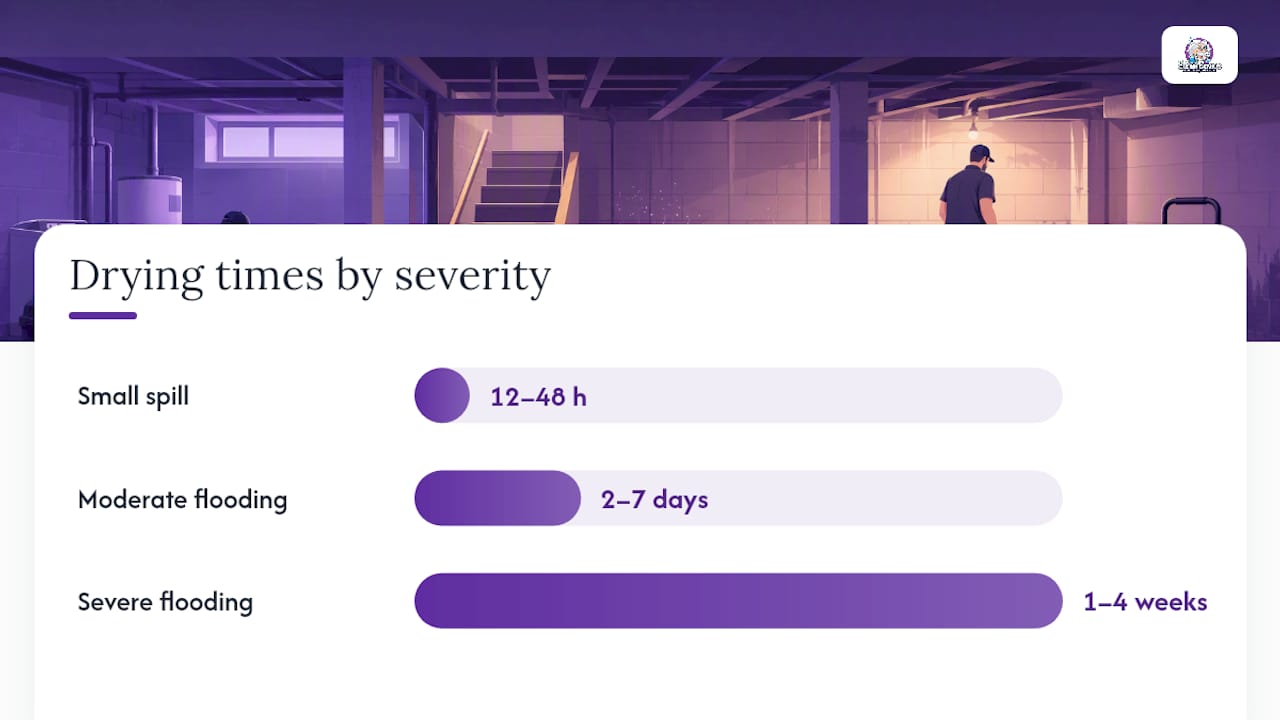
Timelines vary a lot by severity:
| Situation | Typical drying time |
|---|---|
| Small spill, clean water, caught early | 12 to 48 hours |
| Moderate flooding, some drywall/carpet wet | 2 to 7 days |
| Severe flooding, framing and structure soaked | 1 to 4 weeks with professional equipment |
Mold can begin colonizing wet materials within 24 to 48 hours, which is the real reason speed matters more than convenience here.
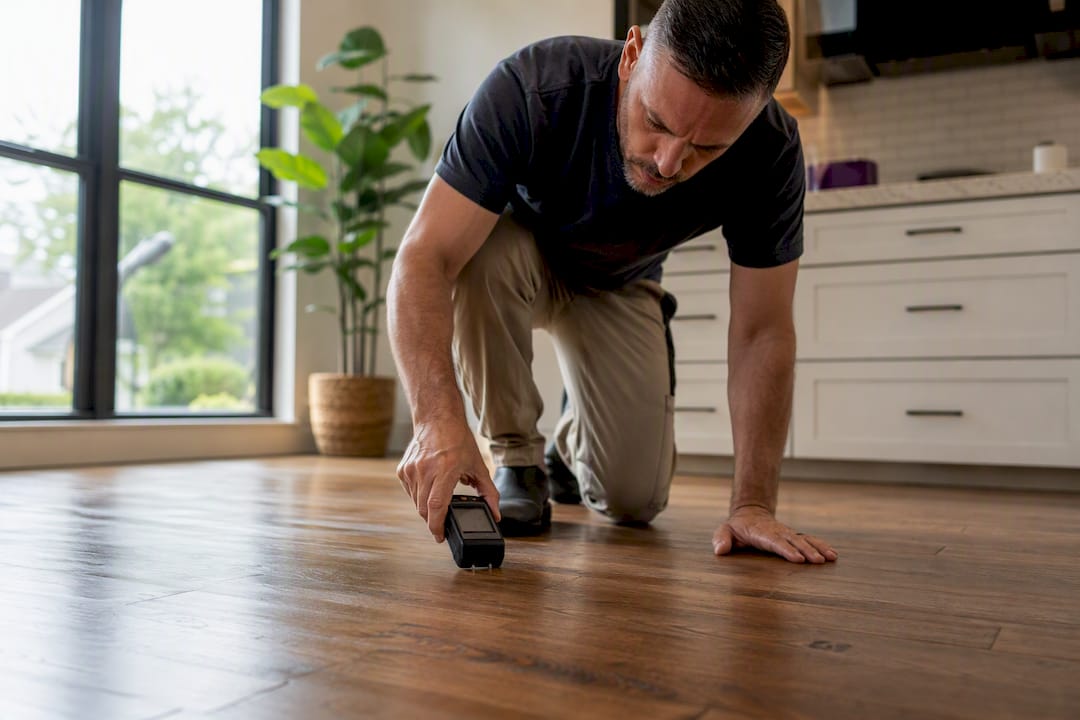
Don’t guess when it’s dry. Use a pin-type moisture meter on wood framing and subfloor, and run a plastic-sheet test on concrete: tape a sheet of plastic to the slab overnight, and condensation underneath means it’s still releasing moisture. Once visible water is gone, keep dehumidifiers running for at least three more days, and up to one to two weeks if drywall or framing took a soaking.
Is It Safe to Clean Up Sewage or Black Water Yourself?
Sewage backup, or what restoration pros call Category 3 “black water,” is not a DIY job. It carries bacteria and pathogens that pose real health risks, and the EPA and CDC both point homeowners toward professional remediation whenever contamination is suspected.
If you’re dealing with clean water and small-scale cleanup, disinfection still matters:
- Clean surfaces with a standard detergent first; disinfectant applied over grime doesn’t work.
- Disinfect nonporous surfaces afterward per EPA disaster cleanup guidance, following label dilution and dwell times.
- Never mix bleach with ammonia or other cleaners; the fumes are dangerous in an enclosed basement.
- Ventilate the space, and wear gloves and eye protection while handling any disinfectant.
If anyone in the home has asthma, a compromised immune system, or chronic lung issues, sit this one out and bring in a certified crew instead.
When Should You Hire a Professional for Flood Cleanup?
Some situations are worth the call, full stop. Deep standing water, any sewage involvement, a finished basement with drywall and flooring, or visible structural or electrical damage all push past what a wet/dry vac and a rented dehumidifier can safely fix.
- Call a professional if water is more than a few inches deep, contains sewage, or has been sitting more than 48 hours.
- Ask for moisture-mapping reports and drying logs. A legitimate crew documents readings, not just “looks dry.”
- Check for IICRC or ACAC-certified technicians before signing anything.
- Get at least two quotes and confirm what your policy covers before work starts.
Costs vary widely by size and contamination level, but homeowners commonly see totals between $1,500 and $15,000, with $4,000 as a frequently cited average. Category 1 clean water sits at the low end; Category 3 black water pushes costs toward the top.
How Can You Prevent Future Basement Flooding?
Cleanup fixes the damage. Prevention fixes the reason you’re cleaning up in the first place. Most repeat flooding traces back to the same handful of causes: a failed or undersized sump pump, foundation cracks, poor grading, or downspouts dumping water right next to the house.
- Test your sump pump seasonally and add a battery backup so a power outage during a storm doesn’t undo everything.
- Seal visible foundation cracks before they widen into active leak points.
- Regrade soil near the foundation so it slopes away from the house, and extend downspouts at least 6 feet out.
- For heavier storms, gutter and downspout extension work reduces surface water pooling against the foundation wall.
If flooding is imminent and you don’t have time for permanent fixes, sandbags at entry points and redirecting surface flow with a temporary berm can buy you hours. If cracks or grading issues caused this flood, schedule a proper waterproofing or foundation evaluation before the next storm season, not after the next flood.
Getting Rid of the Basement Smell for Good
That musty smell lingering after cleanup isn’t just unpleasant. It’s usually a sign moisture or mold is still active somewhere you can’t see, often behind baseboards or under flooring that looks dry on the surface.
Start by confirming the space is actually dry, not just odor-masked. Spraying air freshener over a damp basement only hides a problem that’s getting worse underneath. Run dehumidifiers until your moisture meter readings hold steady for several days, then reassess the smell.
For lingering odor in materials you’re keeping, a mix of baking soda placed in open containers and activated charcoal works over several days to absorb residual moisture-related odors. Odor-neutralizing sprays formulated for flood cleanup, not general air fresheners, break down odor molecules rather than covering them. HVAC filters should be swapped, since they often trap airborne particles and moisture from the flood event.
Ventilation matters more than most homeowners expect. Running an air purifier with a HEPA filter for a week or two after cleanup pulls fine particles and spores out of circulation while the space finishes drying. If the basement has any HVAC returns, keep them closed off during active drying so odors and moisture don’t spread into the rest of the house.
If the smell persists after everything looks and tests dry, that’s usually a sign of hidden moisture in wall cavities or subfloor, which means it’s time for a professional inspection rather than another round of odor spray.
What to Do With Furniture and Electronics After a Flood
Furniture and electronics need different triage rules than building materials, and treating them the same way ruins things that could have been saved.
For furniture, wood pieces that were only briefly wet can often be saved if dried slowly, away from direct heat or sun, which can warp or crack the wood. Upholstered furniture is a tougher call. Fabric and foam cushions soak up contaminated water like a sponge, and if the flood involved any sewage or sat for more than a day or two, upholstered pieces usually aren’t worth saving. Wipe down and disinfect any wood, metal, or plastic furniture with the same detergent-then-disinfect approach used on hard surfaces.
Electronics are simpler in one sense: if a device was submerged or even splashed while powered on, don’t try to power it back up to “test” it. Unplug everything at the source, not just the device, and don’t touch outlets or cords until an electrician confirms the circuits are safe. Once power is confirmed off and safe, remove batteries where possible and let devices air-dry completely, ideally for several days, before anyone attempts to power them on. Water-damaged electronics that powered major appliances, like a furnace control board or sump pump switch, should get a professional electrical inspection rather than a guess.
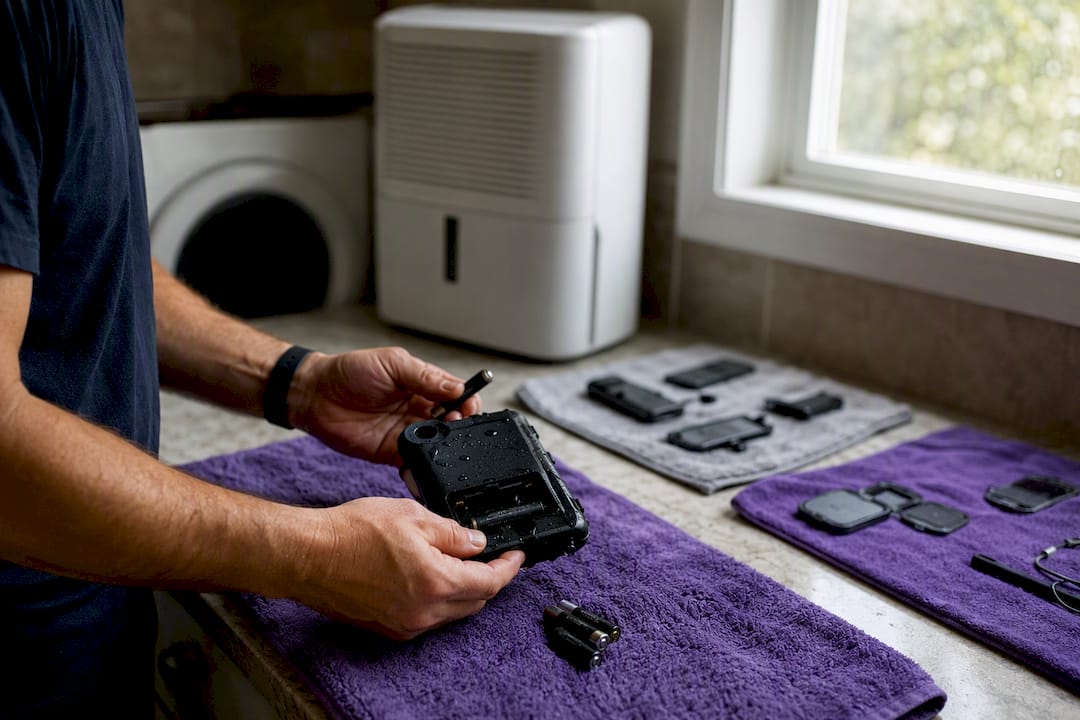
When in doubt on either category, photograph the item before you decide, since insurance adjusters often want proof of pre-cleanup condition.
What Restoration Crews Wish Homeowners Knew Sooner
The mistake we see most is homeowners waiting a day or two “to see if it dries on its own” before pulling wet carpet padding or insulation. That delay is usually what turns a same-day job into a demolition. With over 25 years of combined experience and 400-plus five-star reviews across Chicagoland, we’ve learned that speed in the first 24 hours saves more walls than any equipment does.
For small, clean-water spills caught fast, the DIY steps above are genuinely enough. Once you’re dealing with depth, contamination, or a finished basement, that’s when calling in a certified crew stops being optional.
Need Help With Your Basement Flood Right Now?
Thecleangenius handles the part of basement flood cleanup that trips up most homeowners: getting a basement fully dry, verified, and documented for insurance before mold has a chance to take hold. Our crews run 24/7 across Chicagoland for water damage restoration, mold remediation, and sewage backup cleanup, and we work directly with your insurance company on the paperwork.

When you call, expect a same-day assessment with moisture readings, a clear scope of work, and a straight answer on whether your situation needs professional drying equipment or is safe to finish yourself. If you’re standing in a wet basement right now unsure which path applies to you, request an estimate for water damage restoration and get a crew moving before the 48-hour mold window closes.
Sources
- Safety guidelines: reentering your flooded home (CDC)
- Homeowner’s and renter’s guide to mold cleanup after disasters (EPA)
- Thebasement
- How much does it cost to clean a flooded basement? (HomeAdvisor)