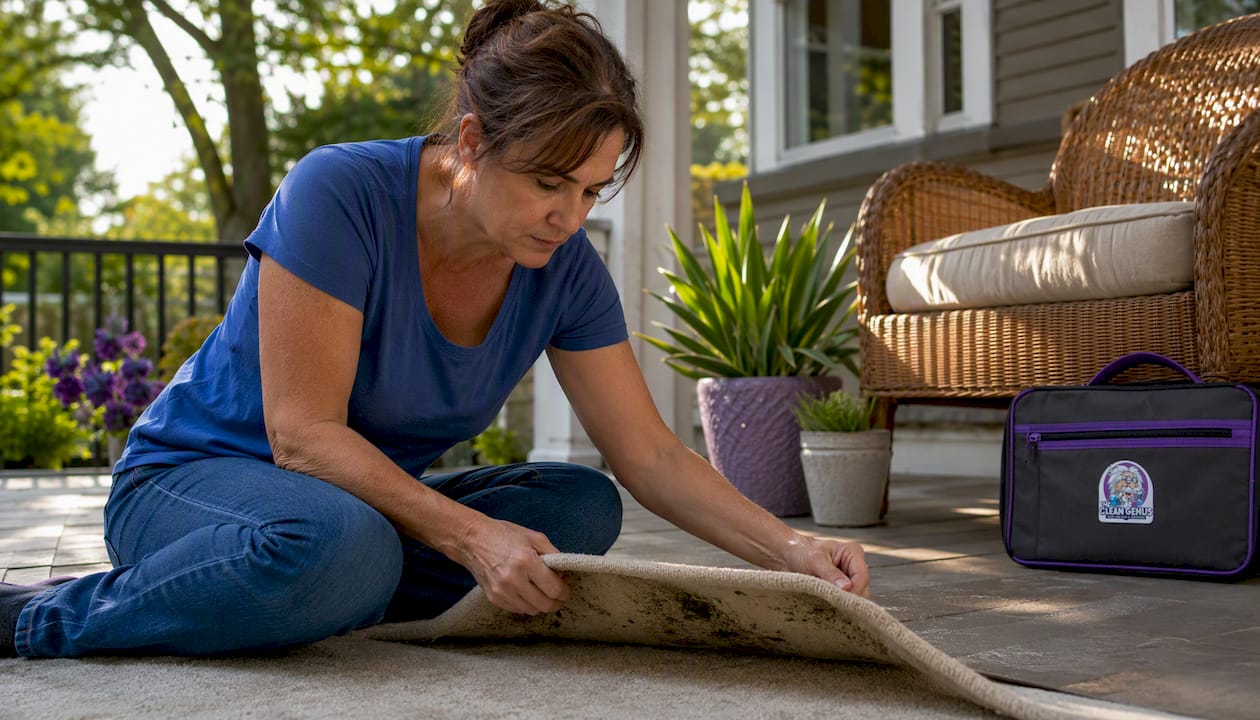

Yes, mold can grow under carpet, and it can start within 24–48 hours of moisture exposure. If your carpet got wet and you didn’t fully dry it within that window, the CDC and EPA both recommend assuming mold growth has already begun. The single most important thing you can do right now: stop the water source and start drying immediately. If the event involved sewage, flooding, or the carpet has been wet for more than two days, skip the DIY and call a professional.
- Yes, mold grows under carpet when moisture, organic material (fibers, backing, padding), and oxygen combine.
- The 24–48 hour rule: mold colonization begins within this window; after 48 hours, assume it’s there.
- Immediate action: Stop the water source, remove standing water, and begin drying or call a pro.
- Sewage or flood exposure: Always call a certified restoration team. No exceptions.
Pro Tip: Before pulling up large sections of carpet, do a quick smell-and-pressure test. Walk slowly across the damp area and crouch down. A musty odor that intensifies when you press down on the carpet strongly suggests moisture trapped in the padding or subfloor below.
Table of Contents
- How mold colonizes carpeted floors
- How to tell if mold is growing under your carpet
- Health risks from mold under carpet
- Can you clean mold under carpet yourself?
- Step-by-step actions when your carpet gets wet
- When you need to replace carpet and padding
- How to prevent mold under carpet
- What to expect when you call a remediation team
- Key Takeaways
- The part most homeowners get wrong
- Thecleangenius is ready when you need professional help
- Useful sources and further reading
How mold colonizes carpeted floors
Mold needs three things: moisture, a food source, and oxygen. Carpet gives it all three in abundance. The fibers, backing, padding, and even the wood or concrete subfloor beneath all contain organic material that mold can digest.
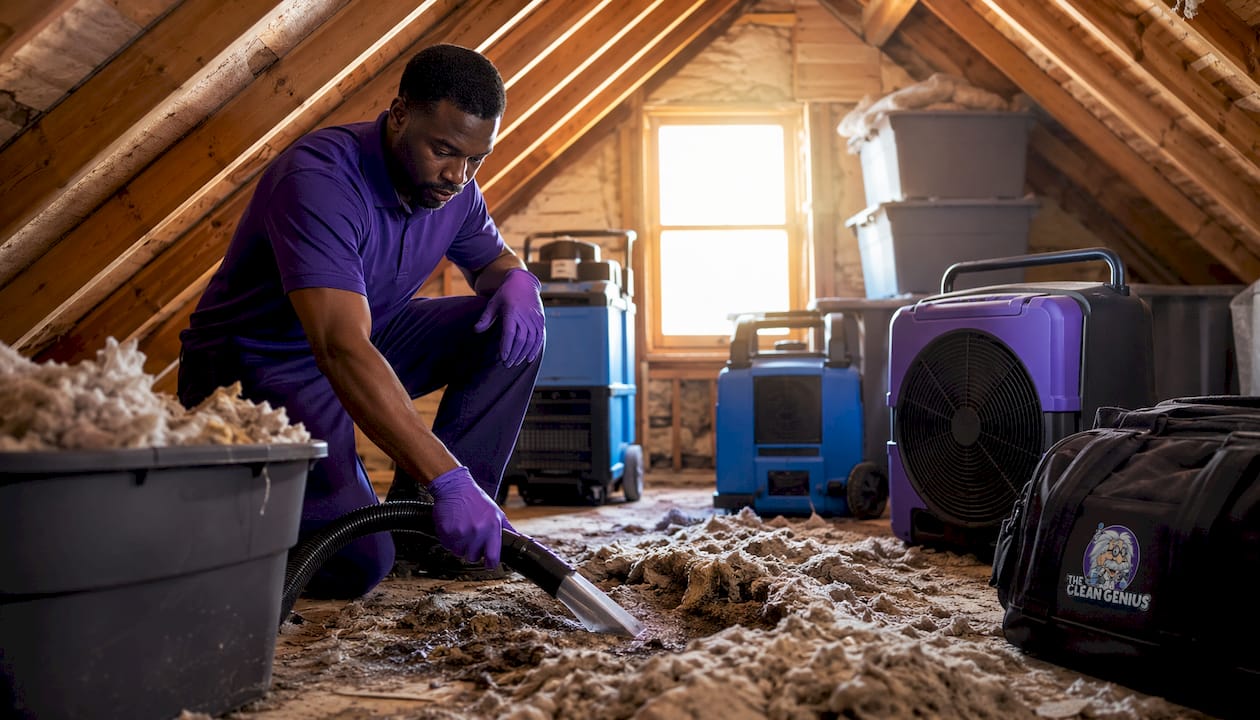
The layer model matters here. Surface fibers are what you see and vacuum. Below that sits the carpet backing, a dense woven or synthetic layer that traps moisture like a sponge. Beneath the backing is the padding, which is even more absorbent and often remains damp after a significant spill or flood. At the bottom is the subfloor, which can be wood or concrete. Both are vulnerable once moisture penetrates that far.
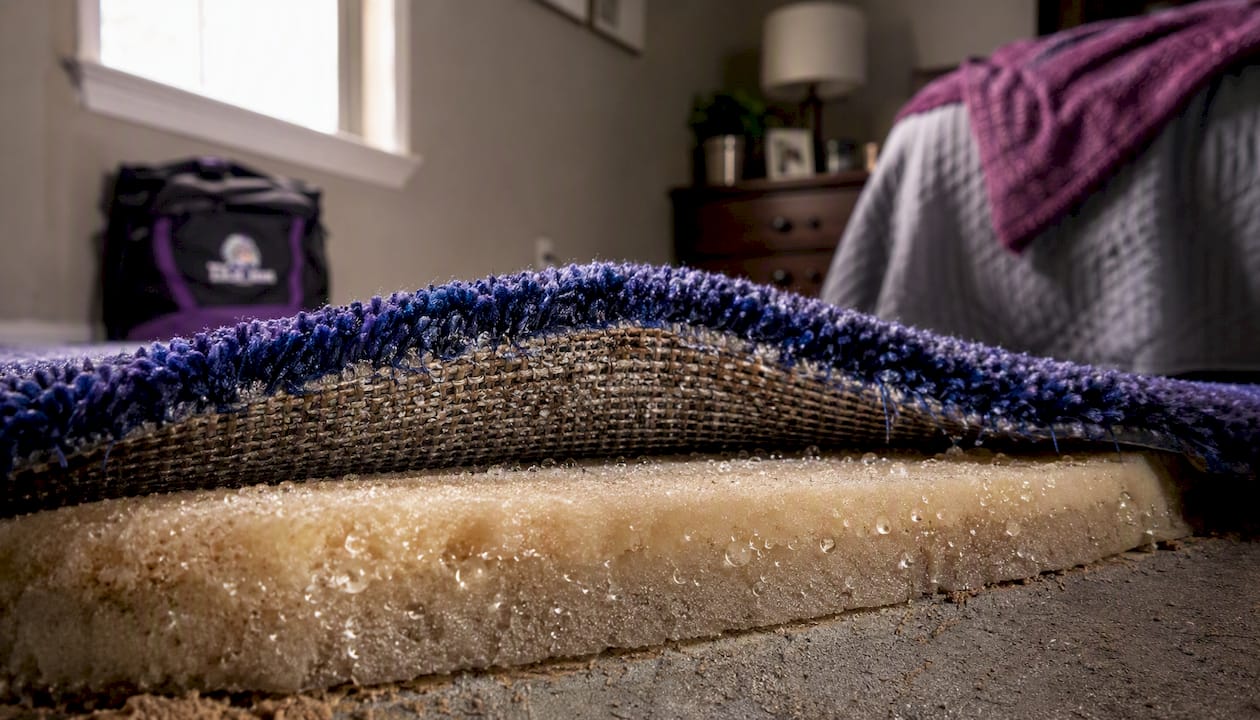
Here’s what makes carpet particularly dangerous: mold typically colonizes the backing first, not the surface. By the time you see spots on top, the backing and padding underneath are often already heavily contaminated. The underside of carpets and pads is one of the most common hidden mold sites in a home.
Capillary action pulls moisture downward and outward through padding, spreading the wet zone well beyond the original spill. In crawl spaces, soil wicks moisture upward through the same mechanism, which is why crawl spaces with bare floors and high relative humidity are prime mold sites even without a visible leak.
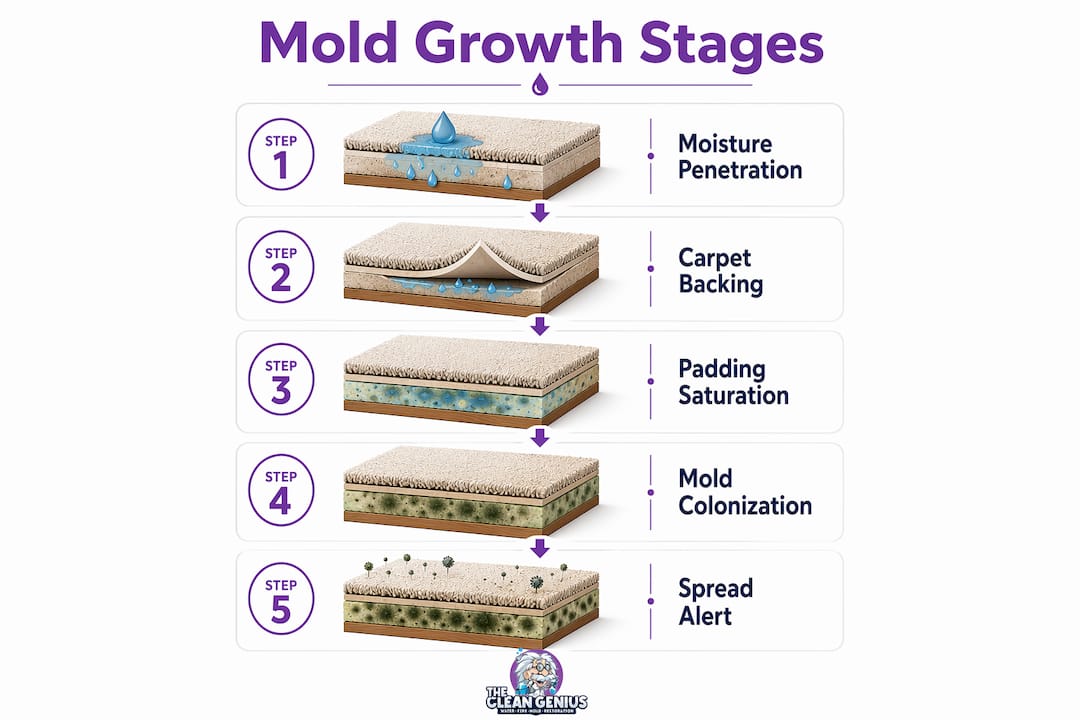
| Stage | Timeframe | What’s Happening |
|---|---|---|
| Initial wetting | — | Moisture penetrates surface fibers and reaches backing |
| Spore activation | 6–24 hours | Dormant spores on backing and padding begin to germinate |
| Active colonization | 24–48 hours | Mold actively growing; EPA/CDC recommend assuming growth after this point |
| Visible/odor stage | 48+ hours | Musty odor detectable; surface staining may appear at seams or edges |
| Subfloor involvement | 48+ hours | Moisture reaches subfloor; professional extraction equipment typically required |
The EPA’s remediation guidance recommends extraction vacuums, dehumidifiers, and fans to accelerate drying within that first 24–48 hour window. Consumer fans alone are often not enough after a major event, and running fans after mold has already started can spread spores.
How to tell if mold is growing under your carpet
The tricky part about mold under carpet is that it’s usually invisible until it’s extensive. You’re looking for indirect signals before you ever lift a corner.
Sensory signs:
- A persistent musty or earthy smell that gets stronger when you walk across the area. That odor comes from microbial volatile organic compounds (mVOCs) produced by active mold colonies.
- Damp or cold spots underfoot that don’t dry out after a day or two.
- Allergy or respiratory symptoms (sneezing, runny nose, itchy eyes) that improve noticeably when you leave the house.
Visual signs:
- Discoloration or staining at carpet seams, edges, or tack strips.
- Visible fuzzy growth on baseboards near the carpet line.
- Warping or bubbling of the subfloor visible at doorways or transitions.
Safe inspection steps:
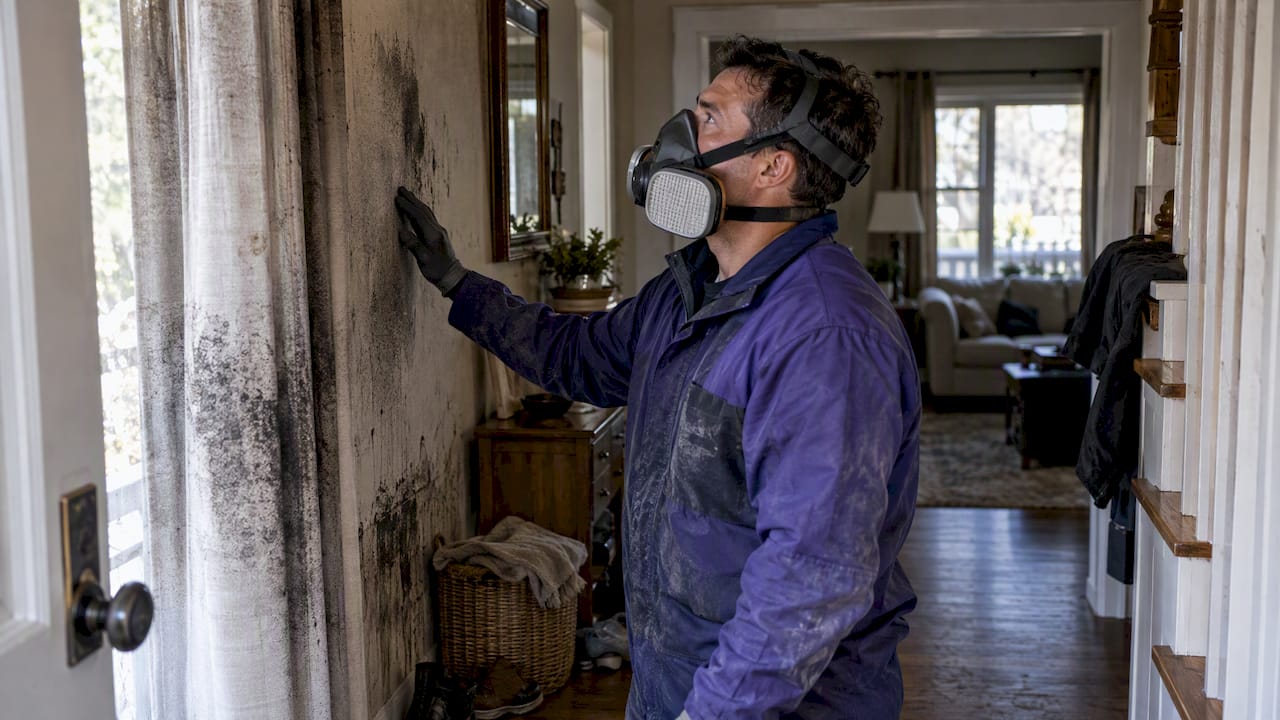
- Put on gloves, an N95 respirator, and eye protection before you touch anything.
- Lift a corner of the carpet at a seam or near a wall. Look at the backing: black, green, or white fuzzy patches are obvious signs. A gray or brown discoloration with a damp feel is also a red flag.
- Check the padding if you can see it. Crumbling, compacted, or discolored padding almost always means contamination.
- Use a moisture meter on the subfloor if you have one. Readings above 16–17% in wood indicate moisture levels that support mold growth.
Do not run your HVAC system or turn on ceiling fans during this inspection. Airflow can aerosolize spores and spread contamination to other rooms. If you suspect heavy growth, stop the inspection and call a professional rather than disturbing a large area.
A persistent musty odor after cleaning is one of the strongest signals that hidden mold remains. If you cleaned the area and the smell came back within days, the source is almost certainly in the backing or padding, not the surface fibers.
Health risks from mold under carpet
Mold is not just a structural problem. The EPA confirms that molds produce allergens, irritants, and in some cases potentially toxic substances called mycotoxins. You don’t have to touch mold to be affected. Inhaling spores or mVOCs is enough to trigger reactions in sensitive people.
Common symptoms linked to indoor mold exposure include sneezing, runny nose, red eyes, skin rash, coughing, and throat irritation. People with asthma can experience significantly worsened attacks when exposed to mold allergens indoors.
The EPA states: “Molds have the potential to cause health problems. Molds produce allergens, irritants, and in some cases, potentially toxic substances (mycotoxins). Inhaling or touching mold or mold spores may cause allergic reactions in sensitive individuals… Molds can also cause asthma attacks in people with asthma who are allergic to mold.”
Highest-risk groups who need to limit exposure immediately:
- People with asthma or chronic respiratory conditions
- Infants and young children
- Adults over 65
- Anyone who is immunocompromised (chemotherapy patients, organ transplant recipients, people with HIV/AIDS)
If anyone in your household falls into these categories, they should stay out of the affected area entirely while remediation is underway. Seek medical attention if symptoms are severe or worsening. This article provides general information, not medical advice. Consult a physician or your local health department for guidance specific to your situation.
Can you clean mold under carpet yourself?
The honest answer: sometimes, but less often than most people think. The decision comes down to five factors.
DIY may be reasonable when:
- The affected area is small (roughly less than 10 square feet).
- The water source was clean (a spill, not sewage or floodwater).
- The carpet was wet for fewer than 48 hours.
- You can confirm the padding is dry or replace it yourself.
- No vulnerable occupants (asthma, infants, elderly) are in the home.
Call a professional when:
- The carpet was wet for more than 48 hours, or you’re unsure how long.
- The water came from sewage backup, a backed-up drain, or outdoor flooding.
- Mold is visible on the backing, padding, or subfloor.
- The musty smell persists after surface cleaning.
- The affected area is large or spans multiple rooms.
The practical limit of DIY is this: you can clean surface fibers, but you almost certainly cannot fully dry padding once it’s saturated. The CDC warns that standard vacuuming can spread spores rather than remove them, and that padding that was wet often cannot be dried completely and should be replaced. Surface cleaning without replacing contaminated padding is like painting over rust.
Safety rules if you do attempt DIY:
- Wear an N95 respirator, nitrile gloves, and eye protection.
- Use a HEPA-filter vacuum, not a standard shop vac.
- Clean with water and detergent. Never mix bleach and ammonia, which creates toxic vapors.
- Ventilate the space, but don’t run HVAC fans if mold is already present.
- Bag and seal all removed material before carrying it through the house.
For anything beyond a minor, recent spill, professional vs DIY mold removal comes down to equipment. Certified restoration teams use industrial extraction vacuums, moisture-mapping tools, and containment barriers that consumer gear simply can’t replicate.
Step-by-step actions when your carpet gets wet
Speed is everything. Every hour past the initial wetting increases the likelihood of mold colonization. Here’s the sequence to follow.
| Step | Action | Timing |
|---|---|---|
| 1 | Stop the water source (shut off supply valve, fix the leak, call a plumber) | Immediately |
| 2 | Cut power to the affected area if water is near outlets or electrical panels | Before entering |
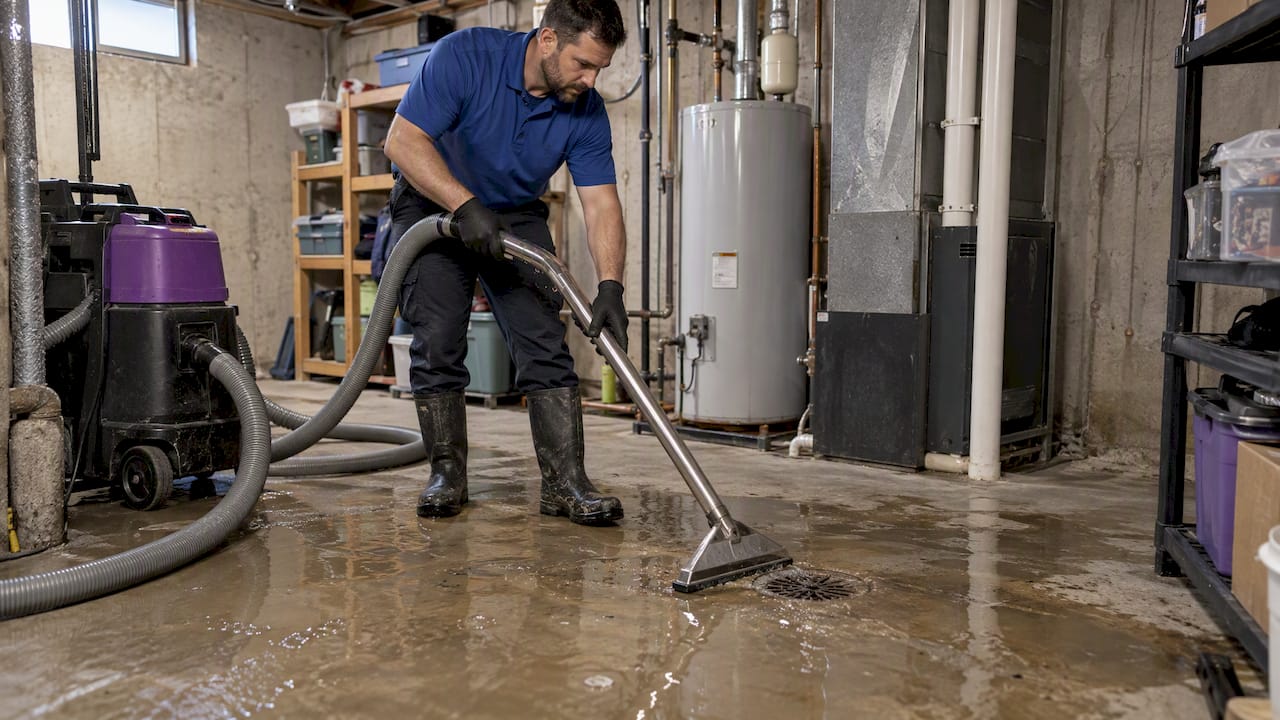
| 3 | Remove standing water with a wet vacuum or extraction vacuum | Within 1–2 hours |
| 4 | Lift furniture off the wet carpet; place aluminum foil or wood blocks under legs | Within 2–4 hours |
| 5 | Lift carpet corners to inspect backing and padding; document with photos | Within 4–6 hours |
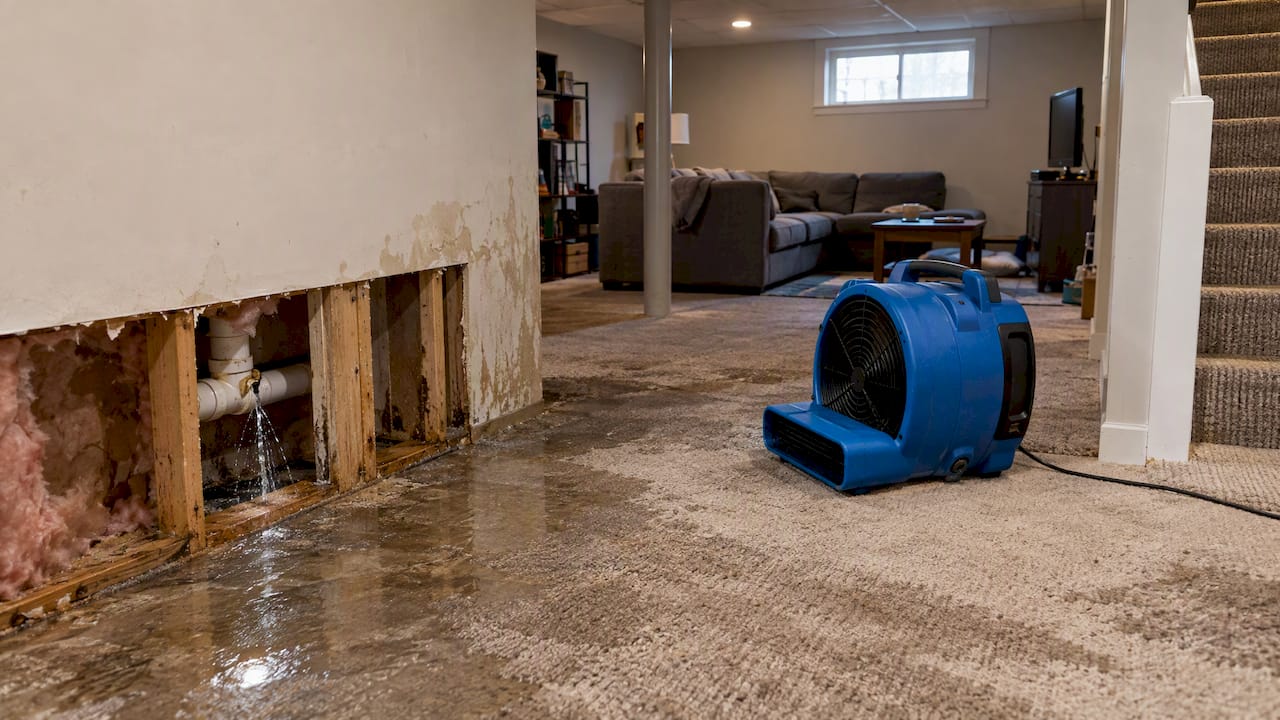
| 6 | Run dehumidifiers and open windows if outdoor humidity is lower than indoor | Within 24–48 hours |
| 7 | Check moisture readings every few hours; target subfloor below 16% | Ongoing for 24–48 hours |
| 8 | If not fully dry within 24–48 hours, call a certified restoration team | At the 48-hour mark |
Insurance tip: Document everything before you move or remove anything. Photograph the water source, the affected carpet, the padding, and any visible damage. Note the date and time. Keep receipts for any equipment you rent or materials you buy. A thorough water damage insurance claim checklist can protect your claim and speed up reimbursement.
Do not turn on ceiling fans or your HVAC system if you suspect mold has already started. The EPA’s remediation tables specifically recommend fans for drying only within the first 24–48 hours, before mold growth begins.
When you need to replace carpet and padding
Cleaning has limits. There are situations where replacement is the only responsible choice, and the EPA is direct about it: porous materials like carpet and padding may need to be discarded if they become moldy because mold fills crevices that cannot be cleaned completely.
Replace carpet and padding when:
- Visible mold is present on the backing, padding, or subfloor.
- The carpet was exposed to sewage or category 3 (grossly contaminated) floodwater.
- The musty odor persists after thorough cleaning and drying.
- The padding is compacted, crumbling, or discolored.
- The carpet was wet for more than 48 hours without professional drying.
| Condition | Carpet | Padding |
|---|---|---|
| Clean water spill, dried within 24 hours | May be salvageable | May be salvageable with extraction |
| Clean water, wet 24–48 hours | Borderline; inspect backing | Usually replace |
| Wet more than 48 hours | Assume mold; likely replace | Replace |
| Sewage or flood exposure | Replace | Replace |
| Visible mold on backing | Replace | Replace |
Safe removal and disposal:
- Wear full PPE: N95, gloves, eye protection, disposable coveralls if possible.
- Cut carpet into manageable sections (about 6 feet) before rolling.
- Double-bag sections in heavy-duty plastic and seal with tape before moving through the house.
- Check your local municipality’s rules for disposal. Some areas require special handling for mold-contaminated materials.
- For large areas or sewage exposure, let a certified team handle removal. They use containment barriers to prevent cross-contamination. For context on what professional carpet removal and disposal involves, a junk removal service can handle the hauling once materials are bagged and ready.
Document everything before removal: photos of the mold, the padding condition, and the subfloor. This documentation supports your insurance claim and gives a remediation contractor a baseline. Learn more about why carpet must be replaced after flooding and what that process looks like in practice.
How to prevent mold under carpet
Prevention is mostly about moisture control. Keep moisture out of the carpet system and mold has nothing to work with.
Core prevention habits:
- Keep indoor relative humidity between 30–50%. A basic hygrometer costs under $20 and tells you exactly where you stand. Anything above 60% RH consistently creates conditions where mold can grow on almost any surface.
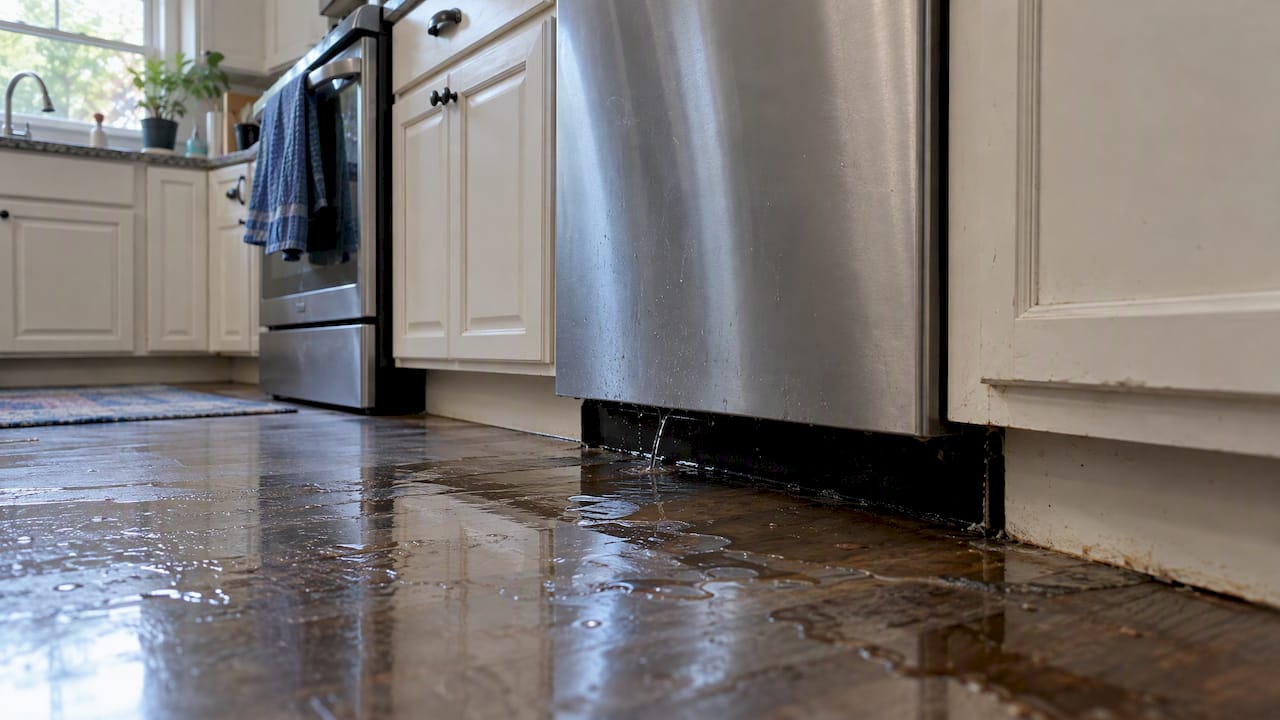
- Fix leaks immediately. A slow drip under a sink or a weeping pipe fitting can wet carpet padding for weeks before you notice it on the surface.
- Use exhaust fans in bathrooms and kitchens. Steam and cooking moisture add up over time, especially in homes with carpet near those areas.
- After cleaning carpet, dry it within 24 hours. Wet cleaning methods (steam cleaning, shampooing) leave moisture in the padding if not extracted properly.
- Inspect after every significant rain event. Check basement carpet edges, areas near exterior walls, and spots below windows.
Structural and layout choices that reduce risk:
- Avoid carpet in basements, especially those with a history of moisture intrusion or high groundwater. Hard flooring with area rugs is a much safer choice.
- If you use carpet in a basement, choose low-pile options with moisture-resistant backing and a closed-cell foam pad rather than standard fiber padding.
- Maintain crawlspace vapor barriers and ventilation. Moisture from a crawlspace can wick upward through a subfloor and into carpet above.
- Keep gutters clear and ensure downspouts direct water at least 6 feet from the foundation.
Pro Tip: Install a smart humidity monitor (like the Govee or Inkbird models) in your basement or any carpeted area prone to dampness. Many connect to your phone and alert you when RH climbs above your set threshold, giving you time to run a dehumidifier before conditions become favorable for mold.
What to expect when you call a remediation team
Calling a certified restoration company is not just about cleaning up what’s visible. It’s about confirming that the problem is actually gone.
A professional remediation visit typically follows this sequence: a visual inspection and moisture mapping of the affected area, containment setup to prevent spores from spreading to other rooms, HEPA-filtered air scrubbing, extraction and drying of carpet and subfloor, removal and disposal of contaminated porous materials, and finally clearance testing to confirm the area is clean before reconstruction begins.
Industry best practice: Absence of visible mold is not proof of absence. Moisture readings, odor checks, and post-remediation inspection are the standard clearance criteria. A reputable contractor will not declare a job complete based on appearance alone.
Questions to ask before you hire anyone:
- Are your technicians certified (IICRC Water Damage Restoration Technician or Applied Microbial Remediation Technician)?
- Do you carry liability insurance and workers’ compensation?
- Will you work directly with my insurance company?
- What equipment do you use for moisture mapping and drying?
- What does your clearance process look like, and will you provide documentation?
- Do you offer a warranty on your remediation work?
What sets a strong provider apart: certified technicians, documented moisture readings before and after, containment protocols, HEPA filtration throughout, and a clear written scope of work. Thecleangenius brings over 25 years of combined experience to every job, uses advanced Pure Cloud dry-fog technology for odor and spore elimination, and handles insurance documentation directly. The certified mold remediation process they follow is designed to meet clearance standards, not just make things look clean. Industrial drying equipment and moisture-mapping tools used by restoration pros are frequently necessary to fully dry subfloors and confirm remediation success. Consumer fans and dehumidifiers help, but they’re often not enough after a major water event.
Key Takeaways
Mold can grow under carpet within 24–48 hours of moisture exposure, and once padding is contaminated, replacement is usually the only reliable fix.
| Point | Details |
|---|---|
| Mold starts fast | Colonization begins within 24–48 hours; assume growth if carpet was wet longer than that. |
| Padding rarely survives | Saturated padding almost never dries fully and usually must be replaced, per EPA guidance. |
| DIY has real limits | Surface cleaning spreads spores without HEPA filtration; sewage and flood events require pros. |
| Document everything | Photograph damage before moving anything to protect your insurance claim. |
| Thecleangenius | Certified Chicagoland restoration team available 24/7 for water damage, mold removal, and insurance coordination. |
The part most homeowners get wrong
The most common mistake we see isn’t ignoring a flood. It’s treating a small wet spot like a minor inconvenience, blotting it dry on the surface, and moving on. Two weeks later, the family notices a smell they can’t place. A month after that, someone’s allergies won’t quit. By the time they call us, the backing is black, the padding is crumbling, and the subfloor has started to show moisture damage.
The thing about carpet is that it’s designed to hide what’s underneath it. That’s actually a feature in normal use. In a water event, it becomes the problem. The surface can feel dry to the touch while the padding below holds enough moisture to sustain active mold growth for weeks.
What works: acting within the first 24 hours, pulling up a corner to check the backing honestly, and replacing the padding without hesitation when it’s wet. Padding is cheap. Remediation after weeks of hidden growth is not. The homeowners who fare best are the ones who treat any carpet wetting as a potential mold event until they can confirm otherwise, not the ones who wait to see if a smell develops.
Thecleangenius is ready when you need professional help
When carpet wetting involves a flood, sewage backup, or anything that’s been wet for more than 48 hours, the fastest path to a clean, safe home is a certified restoration team with the right equipment.

Thecleangenius serves the greater Chicagoland area, including Naperville, Schaumburg, Arlington Heights, Wheaton, and dozens of surrounding communities, with 24/7 emergency response for water damage, mold removal, and complete property dry-out. The team uses Pure Cloud dry-fog technology for thorough mold elimination, handles moisture mapping and HEPA filtration throughout the process, and works directly with your insurance company to document and file your claim. Whether you’re dealing with a burst pipe, a basement flood, or a persistent musty smell you can’t trace, Thecleangenius provides the water damage restoration and mold removal services to get your home back to safe. Call or visit the website to schedule an emergency assessment today.
Useful sources and further reading
- CDC — Homeowner’s and Renter’s Guide to Mold Cleanup After Disasters: The primary CDC guidance document on mold cleanup timelines, PPE, and when to call professionals.
- EPA — Can Mold Cause Health Problems?: EPA overview of allergens, irritants, and mycotoxins produced by indoor mold.
- EPA — A Brief Guide to Mold, Moisture and Your Home: Practical homeowner guidance on moisture control, hidden mold locations, and remediation basics.
- EPA — Mold Remediation in Schools and Commercial Buildings Guide, Chapter 4: Detailed remediation action tables including carpet extraction, drying protocols, and subfloor guidance.
- EPA — Mold Course Chapter 2: Covers where mold grows, including the underside of carpets and pads, and how moisture moves through building materials.
- Thecleangenius — Mold Removal and Remediation: Service overview for certified mold remediation in Chicagoland, including dry-fog technology and insurance coordination.
- Thecleangenius — Mold Growth Signs After Flooding: Act Within 48 Hours: Practical homeowner guide reinforcing the 24–48 hour action window with signs to watch for.