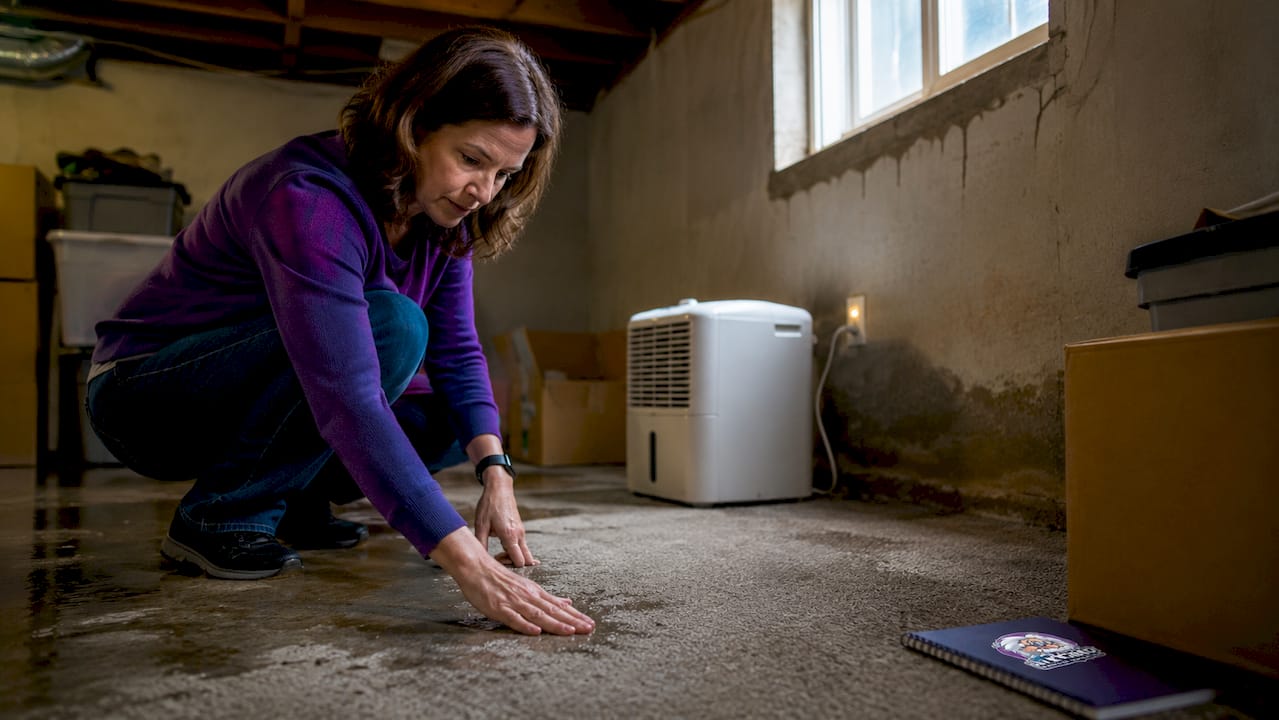

Water damage class levels are defined by the IICRC S500 Standard as a four-tier system that measures how deeply moisture has saturated building materials and how difficult drying will be. Knowing what is water damage class levels means understanding that the class drives the entire restoration plan, from equipment selection to drying time. A small puddle in a concrete basement can be harder to dry than a flooded carpet, because the material matters as much as the water volume. Thecleangenius uses this classification system on every job to build an accurate, efficient restoration plan for Chicagoland homeowners.
What are the four water damage class levels?
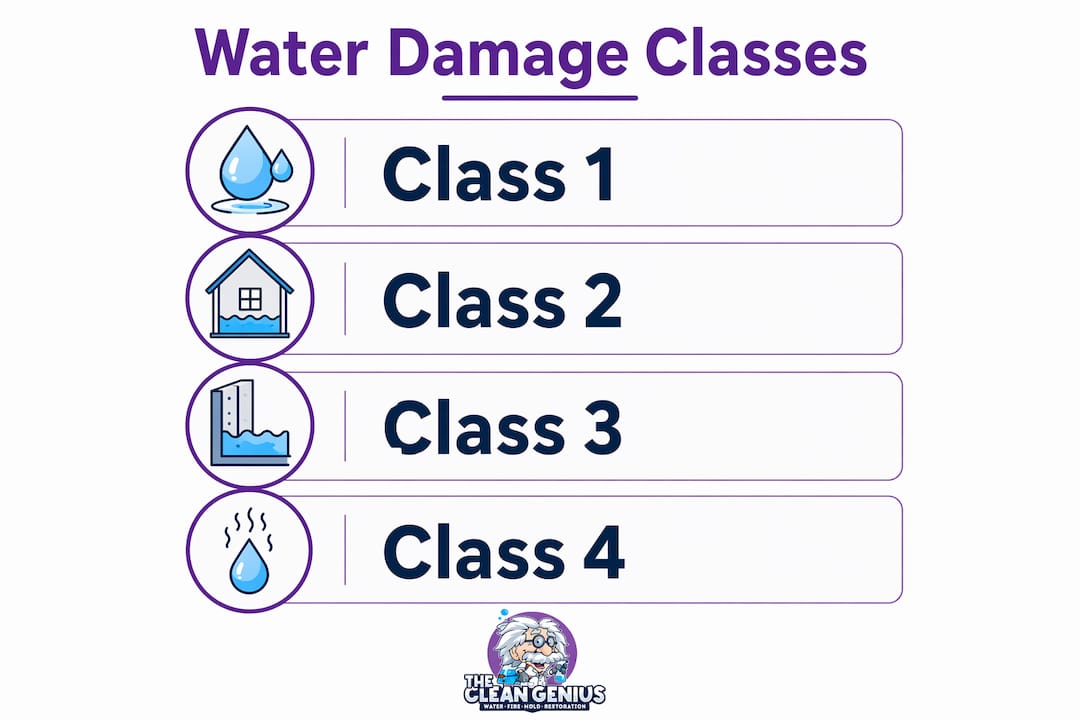
The IICRC S500 classifies water damage into four classes based on saturation extent and drying difficulty, not on how much water you can see. Each class calls for a different level of equipment, time, and professional expertise.
-
Class 1 covers minimal saturation, with less than 5% of the total floor, wall, and ceiling surface area affected. Materials involved typically have low absorption rates, such as vinyl flooring or sealed concrete. A small toilet overflow contained to one corner of a bathroom is a classic Class 1 scenario. Basic air movers and a single dehumidifier are usually enough to complete the dry-out.
-
Class 2 involves significant saturation across 5–40% of surfaces in a room. Think of a washing machine hose that burst and soaked the laundry room floor and lower wall cavity. Carpet, drywall, and insulation all absorb moisture quickly, which means drying takes longer and requires more equipment spread across the space.
-
Class 3 is the most demanding standard class. Water saturates over 40% of surfaces, including floors, walls, and ceilings, typically because water came from overhead, such as a burst pipe in the ceiling or a roof leak during a heavy storm. This class is the most common for significant residential water losses and requires the most drying equipment of any standard class.
-
Class 4 is a specialty category that does not follow the same saturation percentage rules. It applies when water has deeply penetrated low-porosity materials like hardwood floors, plaster walls, concrete slabs, or multilayer subfloors. Standard air movers cannot dry these materials effectively. Specialty equipment and extended drying times are required.
Pro Tip: If your hardwood floors are cupping or your concrete slab feels damp days after a water event, you are likely dealing with Class 4 conditions. Do not assume the problem is resolved just because the surface looks dry.
How do water damage classes shape drying methods and equipment?
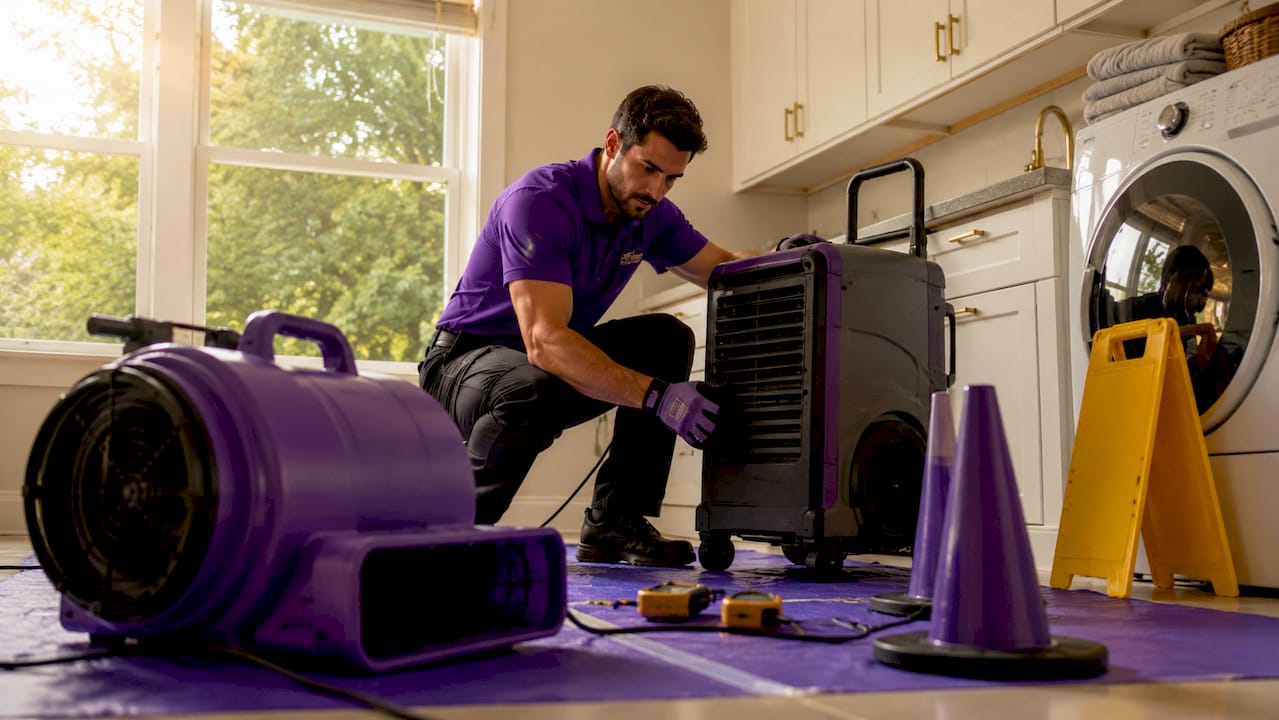
The class level is the single biggest factor in determining what equipment goes into your home and how long it stays there. Class level directly determines equipment placement and anticipated drying time, with higher classes requiring more extensive processes.
-
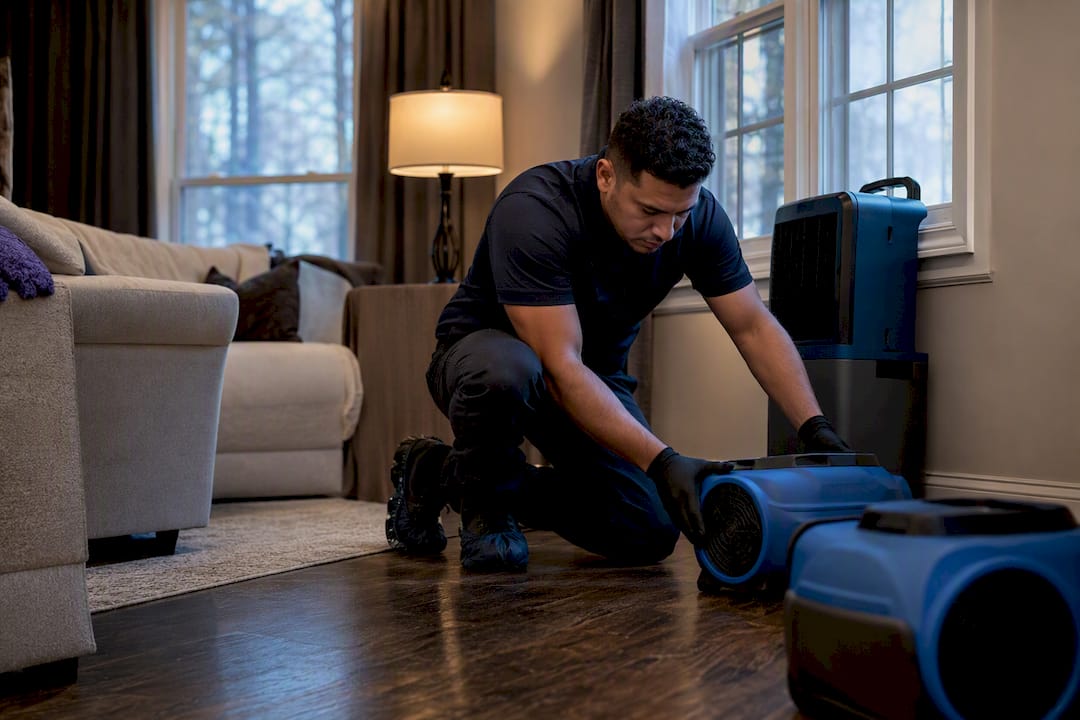
Class 1 response. Technicians typically place one or two air movers and a single dehumidifier in the affected area. Drying is usually complete within two to three days. Moisture readings confirm when materials have returned to normal levels.
-
Class 2 response. More air movers are needed to create aggressive airflow across wet surfaces. Dehumidifier capacity increases to handle the larger volume of evaporated moisture. Wall cavities may need to be opened to allow airflow behind drywall.
-
Class 3 response. This class demands the most equipment of any standard scenario. Multiple large-capacity dehumidifiers, dozens of air movers, and sometimes ceiling drying systems are deployed. Drying time extends to five days or more depending on the materials involved.
-
Class 4 response. Specialty drying tools like desiccant dehumidifiers and deep-cavity drying systems replace standard air movers. Desiccant units pull moisture from the air at much lower humidity levels than refrigerant dehumidifiers, which is necessary to draw moisture out of dense materials. Drying time can stretch to two weeks or longer.
The science behind this is vapor pressure. Drying is a process of managing vapor pressure, where moisture moves from areas of high concentration inside materials to lower concentration in the surrounding air. Professionals calculate moisture penetration depth to determine exactly where to place equipment, not just how much to use. This is why a professional assessment is not optional for anything above Class 1.
Pro Tip: Ask your restoration contractor for daily moisture readings in writing. These readings confirm that drying is progressing and protect you if an insurance dispute arises later.
How do water damage classes relate to contamination categories?
Water damage classification has two separate but connected systems: class and category. Class describes saturation extent and drying complexity; category describes the contamination level of the water source. Confusing the two leads to bad decisions.
- Category 1 is clean water from a supply line, rain, or a clean appliance. It poses no immediate health risk.
- Category 2 is gray water containing contaminants, such as dishwasher overflow or sump pump failure.
- Category 3 is black water, which is grossly contaminated and includes sewage, floodwater, or water that has been standing for an extended period.
The critical point is that category and class are independent. A Category 1 event can be Class 3 or 4, meaning the water is clean but the saturation is severe and drying will be complex and costly. A burst supply line that soaks through your hardwood floors and concrete subfloor is clean water but a Class 4 drying challenge.
The other risk homeowners miss is escalation. Clean water left standing for more than 48 hours can become gray or black water as bacteria multiply and contaminants from surrounding materials dissolve into it. That escalation raises both the health risk and the cost of remediation significantly. Speed of response is not just about saving materials. It is about keeping a manageable Category 1 situation from becoming a hazardous Category 3 problem.
Musty odors that develop after water events are a sign that contamination or mold growth has already begun. Persistent odors in building materials after drying can indicate a deeper problem, and resources on mystery musty odor causes explain how moisture trapped in low-porosity materials creates long-term air quality issues.
What should homeowners do based on their water damage class?
Knowing your class level shapes every decision you make after a water event. Here is how to respond at each level.
-
Assess the scope visually first. Count the surfaces affected: floor only, floor and walls, or floor, walls, and ceiling. If more than one room is involved or the ceiling is wet, you are likely at Class 3 or higher. Check for signs of water damage levels such as bubbling paint, soft drywall, and discoloration.
-
Call a professional for anything above Class 1. Class 2 and above involve wall cavities, insulation, and structural materials that require moisture meters and thermal imaging to assess accurately. Visual inspection alone misses hidden saturation.
-
Understand how class affects your insurance claim. Professional classification guides insurance claims by documenting what was affected, what equipment was used, and why. A written assessment from a certified technician is your strongest evidence. Learn how to document water damage properly before the adjuster visits.
-
Do not confuse water volume with restoration cost. Class 4 can be more expensive than Class 3 despite less visible water, because specialty equipment and extended drying time drive costs up. A small wet spot on a hardwood floor over a concrete slab can cost more to dry than a soaked carpet in a bedroom.
-
Communicate class level clearly with your contractor. Ask them to explain which class they assigned and why. A reputable restoration company will walk you through their moisture readings and equipment plan. If they cannot explain the classification, that is a red flag.
Pro Tip: Take photos and video of every affected surface before any equipment is moved or materials are removed. This documentation supports your insurance claim and gives your contractor a baseline for tracking drying progress.
Understanding restoration cost factors in Illinois helps homeowners budget realistically once a class level is confirmed.
Key Takeaways
Water damage class levels, defined by the IICRC S500 Standard, determine drying complexity and equipment needs far more than visible water volume does.
| Point | Details |
|---|---|
| Four classes, not four sizes | Classes 1–4 measure saturation depth and material type, not the amount of visible water. |
| Class 4 is the costliest | Low-porosity materials like hardwood and concrete require specialty drying tools and extended timelines. |
| Category and class are separate | Clean water (Category 1) can still be a Class 3 or 4 drying challenge requiring major equipment. |
| Speed prevents escalation | Clean water left over 48 hours can become contaminated gray or black water, raising health risks and costs. |
| Professional assessment is required | Accurate classification drives insurance claims, equipment placement, and what materials can be saved. |
What I’ve learned after years of water damage calls
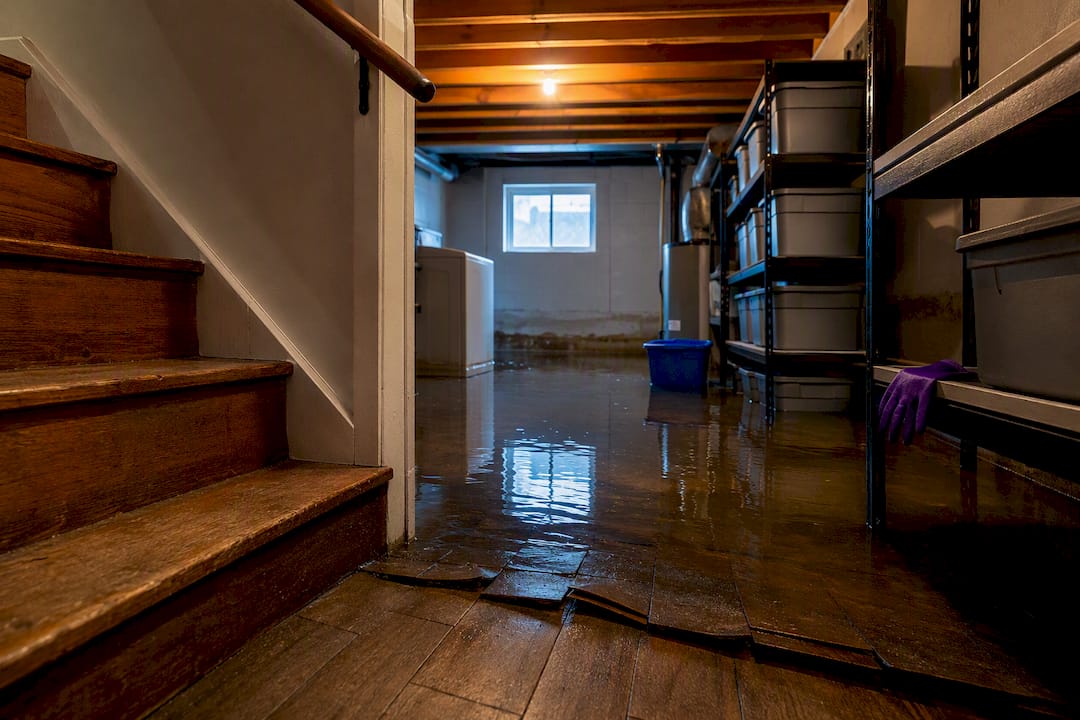
The homeowners I talk to most often make the same mistake: they measure the severity of water damage by how much water they can see. A flooded basement with two inches of standing water looks dramatic. A small dark stain on a hardwood floor looks minor. But that stain over a concrete slab can represent a Class 4 situation that takes two weeks and specialized equipment to resolve properly.
The other thing I see constantly is delayed response. Homeowners wait a day or two to call because the visible water is gone. What they do not realize is that moisture has already migrated into wall cavities, subfloors, and insulation. By the time we arrive, what started as a Class 2 situation has become Class 3, and the contamination category may have escalated too. Every hour matters more than most people think.
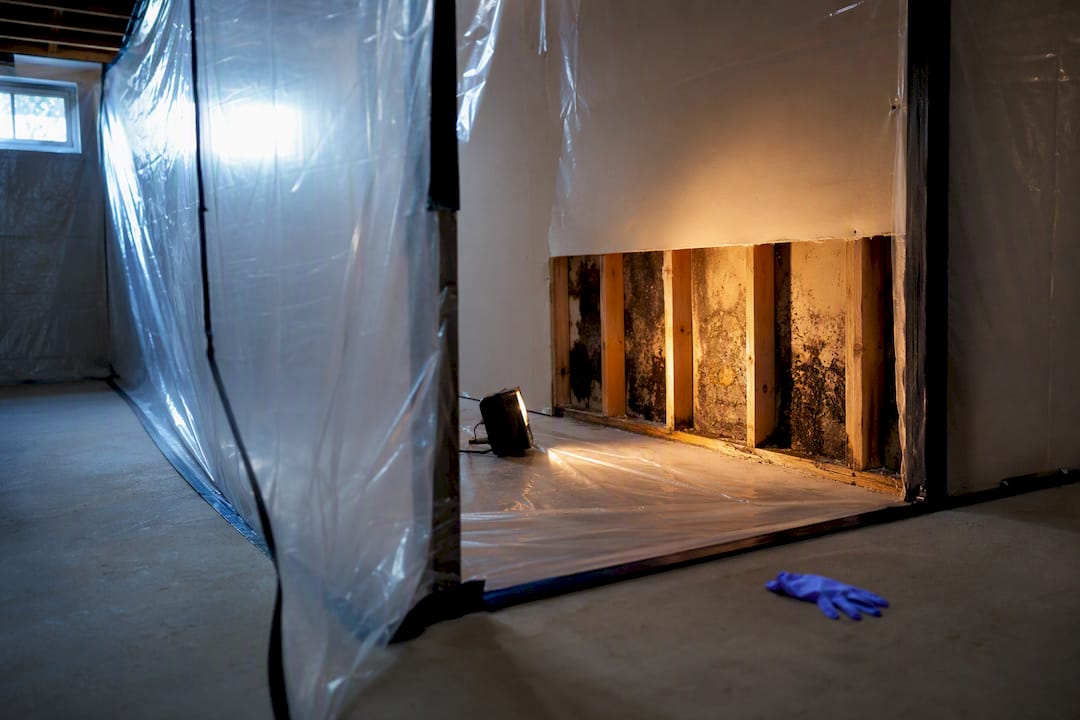
My honest advice: do not try to assess the class yourself beyond the basic visual check. Moisture meters and thermal cameras reveal saturation that eyes cannot. A professional assessment takes less than an hour and gives you a documented baseline that protects you with your insurance company. The cost of that assessment is nothing compared to the cost of secondary damage from incomplete drying, including mold growth that shows up three weeks later.
The class system exists to protect homeowners, not to complicate billing. When a contractor explains why they are placing twelve air movers in your living room, the class level is the answer. Understanding it puts you in control of the conversation.
— Jim
Thecleangenius is ready when water damage hits
Thecleangenius provides 24/7 emergency water damage restoration across Chicagoland, from Arlington Heights to Naperville and everywhere in between. Our certified technicians assess water damage class levels on arrival, deploy the right equipment for your specific situation, and document everything for your insurance claim.

Whether you are dealing with a burst pipe, a flooded basement, or a slow leak that has soaked into your subfloor, our team handles the full dry-out and works directly with your insurer. We also provide a water damage insurance claim checklist to help you stay organized from the first call to final settlement. Call us now for a same-day assessment.
FAQ
What are the four water damage class levels?
The IICRC S500 Standard defines Class 1 as minimal saturation under 5% of surfaces, Class 2 as moderate saturation across 5–40% of surfaces, Class 3 as severe saturation over 40% of surfaces including ceilings, and Class 4 as specialty drying situations involving low-porosity materials like concrete or hardwood.
Does more water always mean a higher class level?
No. Class level is determined by saturation depth and material type, not water volume. A small amount of water absorbed into hardwood floors over a concrete slab qualifies as Class 4, which is more complex and costly to dry than a larger water event on vinyl flooring.
What is the difference between water damage class and category?
Class describes how much material is wet and how difficult drying will be. Category describes the contamination level of the water source. A clean water event (Category 1) can still be a Class 3 or 4 drying challenge, meaning low health risk but high restoration complexity.
How long does drying take for each class?
Class 1 typically dries in two to three days with basic equipment. Class 2 takes three to five days. Class 3 often requires five or more days with heavy equipment deployment. Class 4 can take two weeks or longer due to the density of affected materials.
Can clean water become contaminated if left untreated?
Yes. Clean water left standing for more than 48 hours can escalate to gray or black water as bacteria multiply and surrounding materials leach contaminants into it. This escalation raises both health risks and restoration costs significantly.