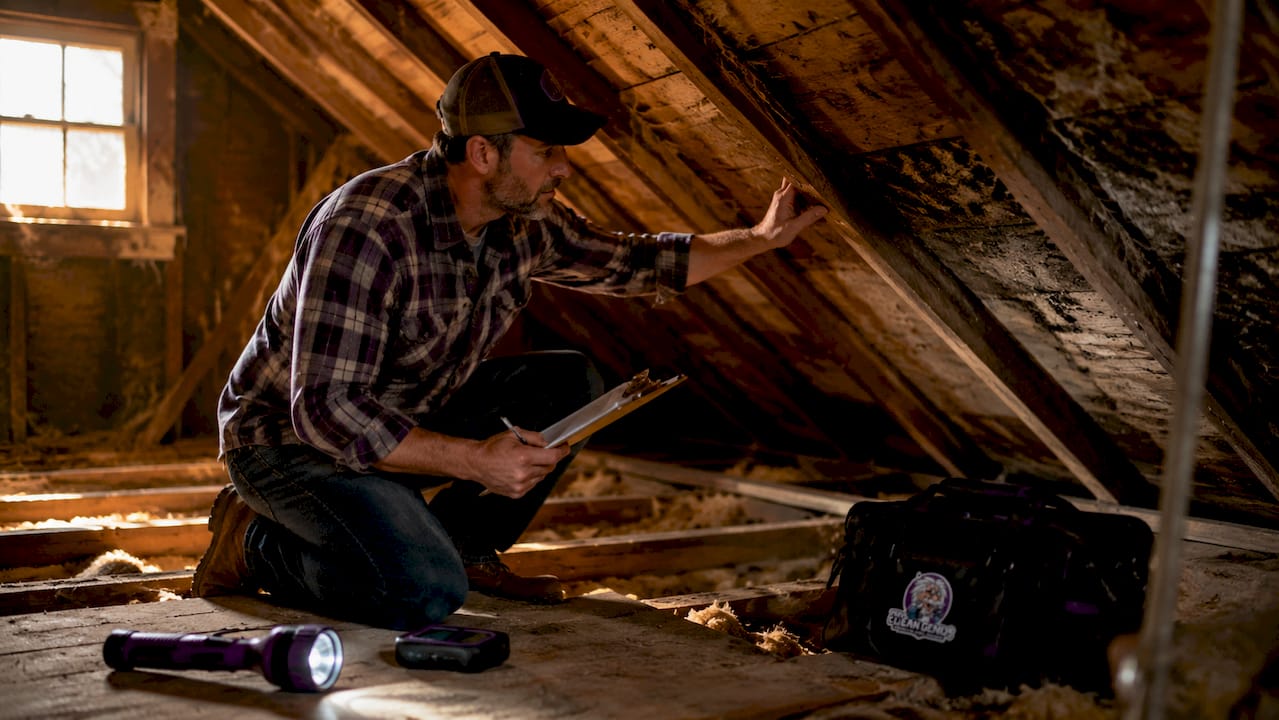

Attic mold is defined as fungal growth on roof sheathing, rafters, and insulation that releases microscopic spores directly into your home’s air supply. This is why attic mold affects indoor air quality far beyond the attic itself. A single mold colony can release thousands of spores daily, and those spores travel through HVAC ducts, ceiling gaps, and recessed lighting into every room you live in. For Chicagoland homeowners, where cold winters and humid summers create ideal mold conditions, understanding how attic air moves through your home is the first step toward protecting your family’s health.
Why attic mold affects indoor air quality: the core mechanics
Attic mold spreads into living spaces through two primary pathways: the stack effect and HVAC duct leakage. Both are invisible to the naked eye, which is exactly what makes them dangerous.
The stack effect is a pressure-driven process. Warm air inside your home rises and escapes through the upper levels, creating negative pressure that pulls replacement air in from below and above. In winter, this means your attic air, loaded with mold spores, gets drawn down into your living spaces through every gap it can find. The stack effect pressure gradient pushes contaminated attic air back through ceiling penetrations, attic hatches, and recessed light fixtures. Most homeowners never connect a persistent cough in January to air movement physics, but the link is direct.
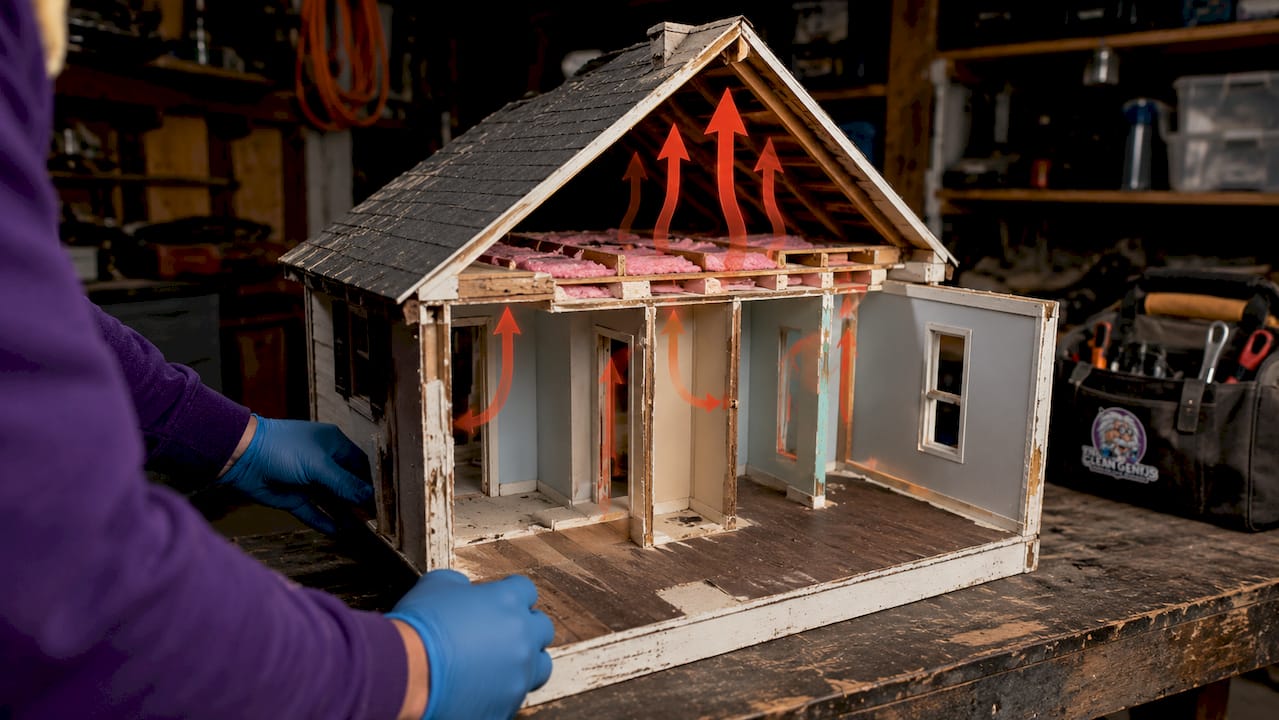
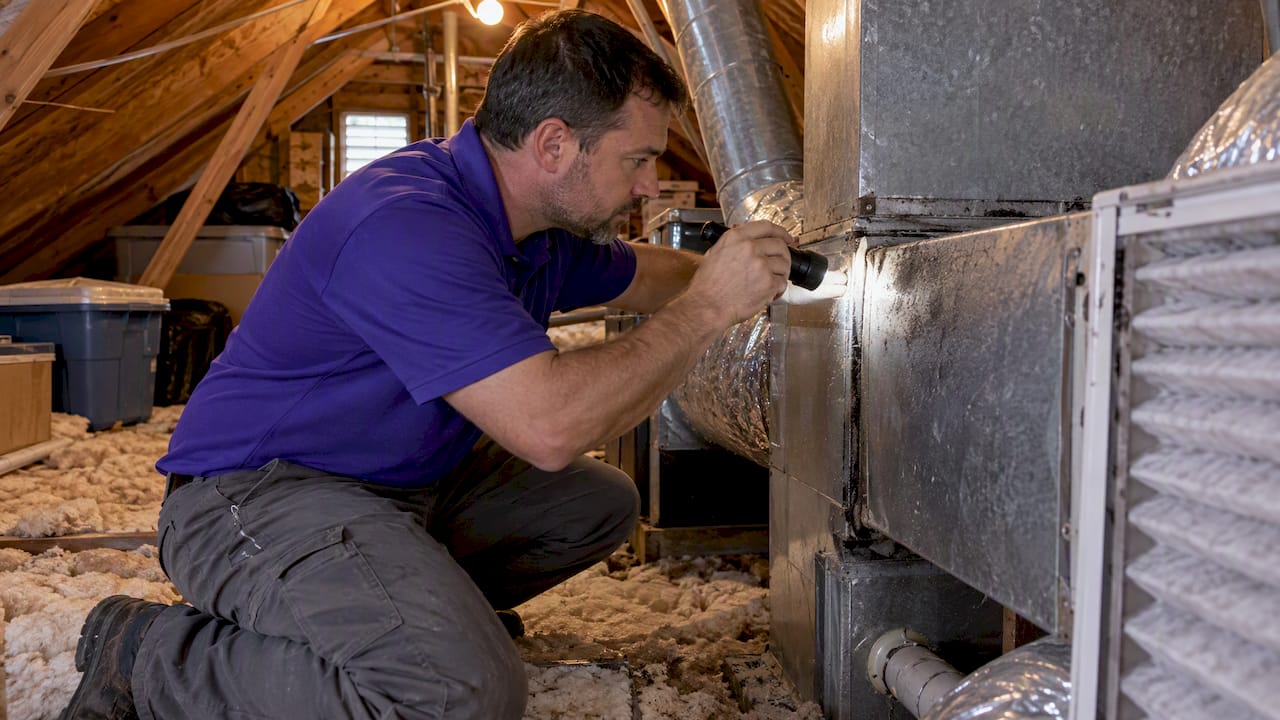
HVAC duct leakage is the second major pathway. Many homes have return ducts or supply ducts routed through unconditioned attic spaces. When those ducts develop leaks, they pull attic air, spores included, directly into the conditioned air your family breathes. Return duct leaks in attics are one of the most underdiagnosed spore distribution pathways in residential buildings. A leaky return duct in a moldy attic is essentially a spore delivery system running 24 hours a day.
Common air leakage points that serve as spore pathways include:
- Recessed lighting canisters that penetrate the ceiling drywall
- Attic hatch covers with poor weatherstripping
- Gaps around plumbing and electrical penetrations
- Unsealed top plates where interior walls meet the attic floor
- Pull-down attic stair frames with no insulation or air seal
Pro Tip: Tape a piece of tissue near your attic hatch on a cold day. If it flutters, you have active air movement pulling attic air into your living space. That movement carries spores.
How does moisture create the mold that harms your air?
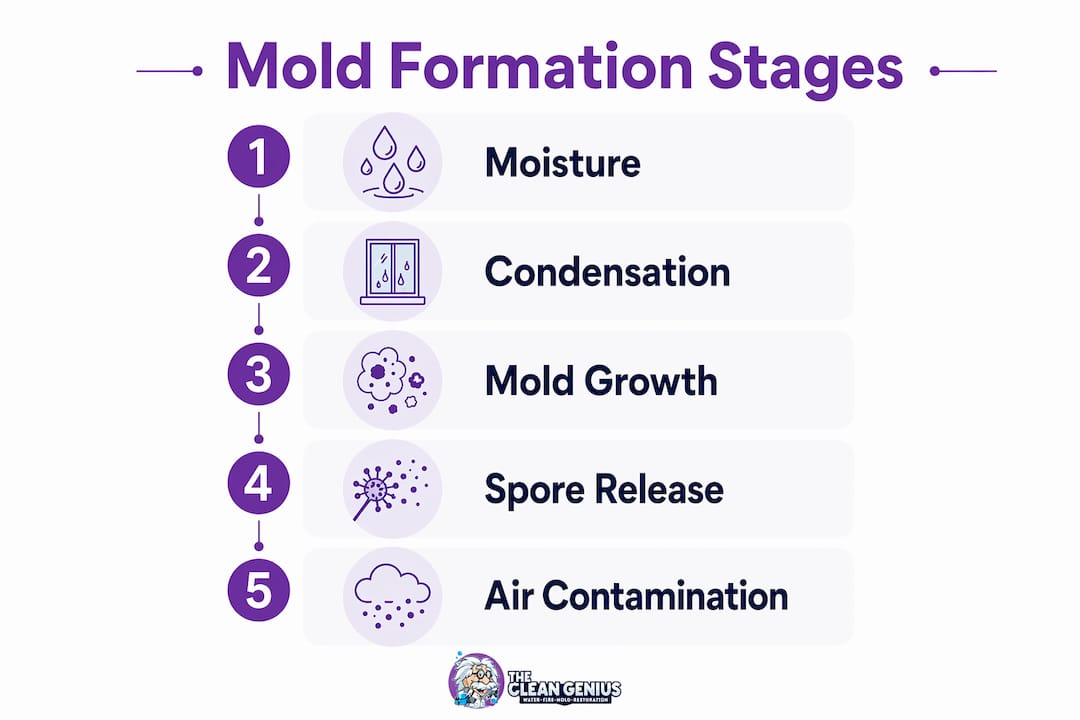
Moisture is the single condition that separates a clean attic from a contaminated one. Remove moisture, and mold cannot grow. Allow it to accumulate, and mold colonies establish within 24–48 hours on wood surfaces.
The most common moisture sources in attics are:
- Roof leaks. Even a slow drip saturates insulation and roof sheathing over weeks before you notice staining on your ceiling.
- Bathroom and dryer exhaust vented into the attic. Warm, moist exhaust air condenses on cold roof sheathing, feeding mold colonies even when the roof itself is intact. This is one of the most overlooked causes homeowners miss entirely.
- Condensation from poor ventilation. When warm interior air leaks into a cold attic in winter, it hits the cold roof deck and deposits moisture. Repeat this cycle daily for a season, and you have a mold problem.
- Inadequate soffit and ridge ventilation. Without proper airflow moving from soffit vents at the eaves to ridge vents at the peak, humid air stagnates and temperatures fluctuate, creating ideal mold conditions.
Poor ventilation compounds every moisture source. Humid air that cannot escape stays in contact with wood surfaces longer. Damp insulation loses its thermal value and becomes a growth medium for mold. Wood decay from moisture also weakens structural members, turning an air quality problem into a structural one. The EPA’s 2026 guidance confirms that moisture control strategies like fixing leaks and venting appliances outside the attic are the primary defense against mold. Air purifiers and filters are secondary tools at best.
Pro Tip: Check your bathroom exhaust fan duct every spring. It should terminate outside the roof or soffit, not into the attic. A duct that ends in the attic space is a direct mold factory.
What health risks do attic mold spores cause?
Mold spores from attic colonies trigger allergic reactions and worsen asthma in sensitive individuals, with children and elderly residents facing the highest risk. Spore inhalation irritates the mucous membranes, causes chronic nasal congestion, and in people with asthma, can provoke attacks that require medical attention.
The health picture gets more complicated when you factor in what you cannot see. A 2026 study found that airborne fungal bioaerosols at clinical risk levels can exist in homes with no visible mold at all. That finding means a clean-looking ceiling tells you nothing definitive about the spore count in your air. Homes function as active fungal ecosystems, with diverse mold communities shifting across seasons.
No federal or state regulation currently defines a safe level of indoor airborne fungal exposure. That regulatory gap means there is no official threshold that tells you your home’s air is “safe enough.” For families with young children, elderly members, or anyone with respiratory conditions, the only defensible standard is zero visible mold and no active moisture sources.
Long-term exposure to elevated spore counts has been linked to chronic fatigue, persistent headaches, and worsening respiratory function over time. The absence of a dramatic acute reaction does not mean exposure is harmless. Low-level chronic exposure is harder to connect to a source, which is exactly why attic mold goes unaddressed in so many homes for years.
How can you detect and limit attic mold’s impact?
Detection starts with your nose and your eyes, not expensive lab equipment. Musty odors in your home are a reliable early indicator of mold contamination and the volatile organic compounds mold colonies produce. If a smell hits you when you walk through the front door, or when the HVAC kicks on, treat it as a signal worth investigating.
Signs that warrant an attic inspection
- Persistent musty smell that worsens in winter or when heat runs
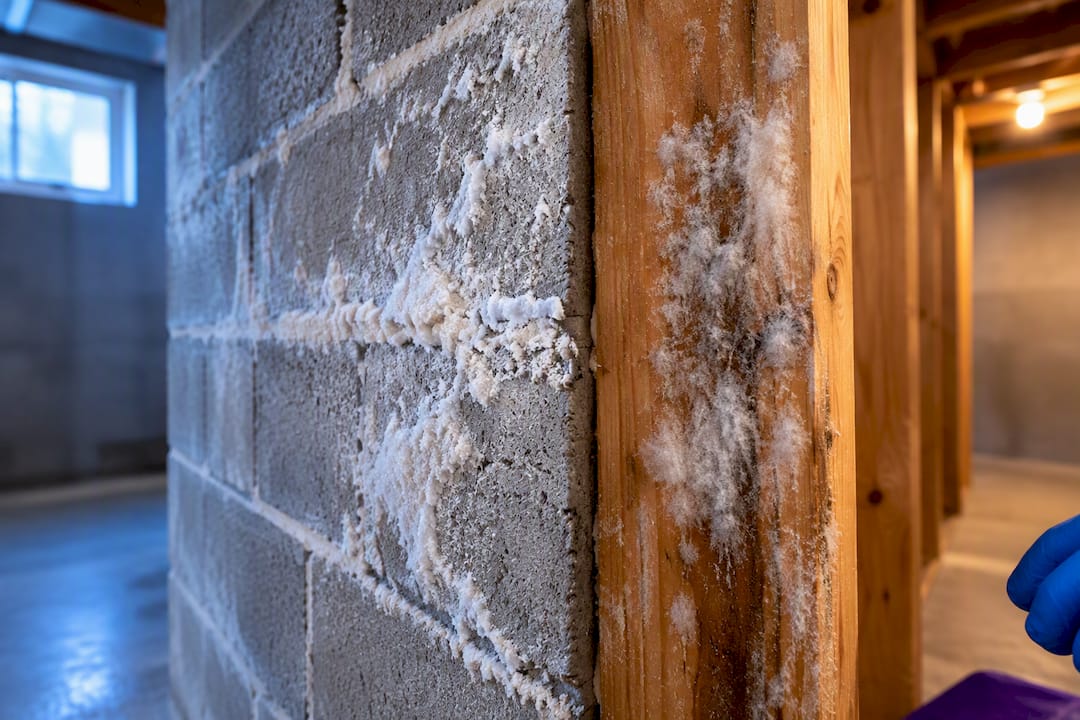
- Dark staining on roof sheathing or rafters visible from the attic hatch
- Frost or condensation on the underside of the roof deck in cold months
- Unexplained allergy or asthma flare-ups in household members
- Peeling paint or moisture stains on upper-floor ceilings
DIY steps vs. professional remediation
| Action | DIY Appropriate | Requires Professional |
|---|---|---|
| Visual attic inspection | Yes | No |
| Checking exhaust vent termination | Yes | No |
| Sealing attic hatch with weatherstripping | Yes | No |
| Fixing bathroom duct routing | Sometimes | Often |
| Mold removal on roof sheathing | No | Yes |
| HVAC duct sealing and testing | No | Yes |
| Full mold remediation with containment | No | Yes |
The Georgia Department of Public Health confirms that visual inspection combined with moisture source identification resolves most indoor air quality issues more effectively than costly air testing alone. Fix the source, and the air quality follows. Sealing air leaks between the attic and living spaces, correcting exhaust duct routing, and improving soffit-to-ridge ventilation are the three actions that deliver the most impact per dollar spent.
For attic mold prevention beyond basic fixes, the standard is to address both the mold colony and the moisture condition that created it. Treating mold without fixing moisture guarantees regrowth within one season.
Key takeaways
Attic mold degrades indoor air quality by releasing spores that travel through the stack effect and leaky HVAC ducts into every room of your home, and the only lasting fix is eliminating the moisture source that feeds the mold.
| Point | Details |
|---|---|
| Spores travel through air pathways | The stack effect and HVAC duct leaks carry attic spores directly into your living spaces. |
| Moisture is the root cause | Bathroom exhaust vented into the attic and roof leaks are the most common hidden moisture sources. |
| No safe spore threshold exists | Federal regulations set no safe indoor fungal exposure level, making prevention the only reliable standard. |
| Visible mold absence means nothing | Clinical-level fungal bioaerosols can exist in homes with no visible mold growth anywhere. |
| Fix the source, not just the symptom | Moisture control and air sealing outperform air purifiers for reducing spore counts long-term. |
What 25 years of attic work taught me about mold and air
The misconception I see most often is that attic mold is an attic problem. Homeowners think of it as something contained up there, behind the hatch, separate from where they live. That framing is wrong, and it costs families months or years of unnecessary exposure.
Every attic I have inspected in the Chicagoland area that had visible mold also had at least one active moisture source the homeowner did not know about. Usually it was a bathroom fan dumping humid air into the attic instead of outside. Sometimes it was a ridge vent blocked by insulation pushed too far toward the eaves. The mold was the symptom. The ventilation failure was the disease.
I also want to push back on the instinct to buy an air purifier and call it solved. HEPA filters catch spores that are already airborne in your living space. They do nothing about the colony releasing new spores in the attic every day. You are treating the output while ignoring the source. Moisture control and physical air sealing are the interventions that actually change the spore load in your home’s air.
My honest advice: if you smell something musty and cannot find the source in your living space, go into the attic with a flashlight before you do anything else. Look at the underside of the roof deck. Dark staining, fuzzy growth, or frost in winter tells you everything you need to know. Act on what you find before the next heating season begins. The longer a colony grows, the more spores it releases, and the more expensive the mold removal process becomes.
— Jim
Get your attic inspected by certified mold specialists
If you have found signs of attic mold or you are dealing with unexplained indoor air quality issues in your Chicagoland home, Thecleangenius is ready to help. Our certified team uses advanced Pure Cloud dry-fog technology to treat mold at the source, not just the surface. We inspect for moisture origins, seal air pathways, and remove mold colonies completely so your air stays clean season after season.

Thecleangenius has served families across Arlington Heights, Schaumburg, Naperville, Palatine, and dozens of other Chicagoland communities for over 25 years. We work directly with your insurance and respond 24/7 to emergencies. Whether you need a full mold remediation service or want to understand your mold removal safety options, our team gives you straight answers and a clear plan. Call us before the problem grows.
FAQ
How do attic mold spores get into my living space?
Attic mold spores enter living spaces through the stack effect, which pulls attic air through ceiling gaps, and through leaky HVAC ducts that run through unconditioned attic spaces. Both pathways operate continuously whenever there is a temperature difference between the attic and the floors below.
Can attic mold affect my health even if i never go up there?
Yes. Spores released by attic mold colonies travel through air pathways into the rooms you occupy daily, triggering allergic reactions, asthma flare-ups, and respiratory irritation without any direct contact with the mold itself.
What is the most effective way to prevent attic mold?
Moisture control is the most effective prevention method, according to EPA 2026 guidance. Fix roof leaks promptly, route bathroom and dryer exhaust outside the home, and maintain proper soffit-to-ridge ventilation to keep attic humidity below the level where mold can grow.
Does a musty smell always mean i have attic mold?
A persistent musty smell strongly indicates mold contamination and the volatile organic compounds mold produces. If the odor worsens when your HVAC runs or during cold weather, the source is likely in the attic or ductwork.
When should i call a professional instead of handling attic mold myself?
Call a professional when mold covers more than a small isolated area, when the source of moisture has not been identified, or when mold appears on structural wood like roof sheathing or rafters. DIY cleaning without containment spreads spores further and rarely addresses the root cause.