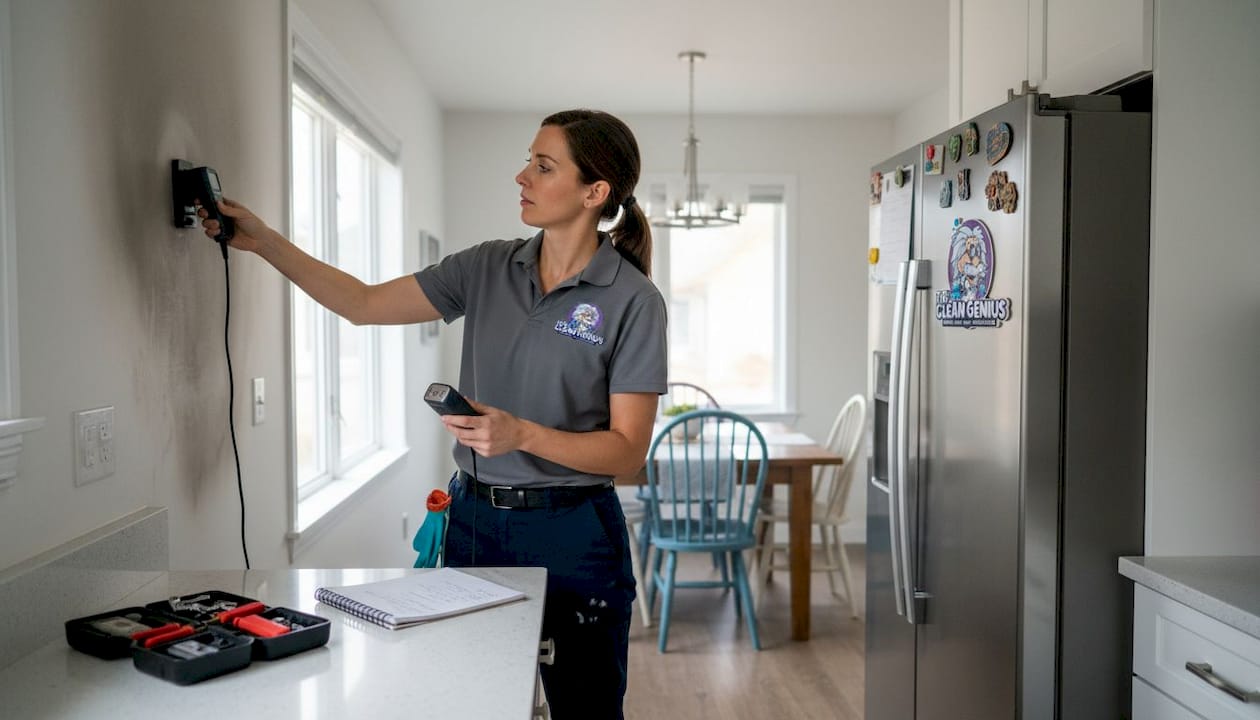

When the flames go out, most homeowners breathe a sigh of relief. But fire damage doesn’t stop when the fire does. The smoke, soot, and toxic residue left behind can silently corrode, stain, and contaminate your home for months, causing damage that rivals the fire itself. According to Evaluating a Structure Fire, smoke residue is the chemical and particulate contamination caused by acidic gases, volatile organic compounds (VOCs), and soot that penetrate deep into walls, furniture, and air systems. This guide explains exactly what you’re dealing with and what to do about it.
Table of Contents
- What is smoke residue damage?
- Types of smoke residue and their effects on your property
- How to assess smoke residue damage in your home
- DIY vs professional smoke residue cleanup: What homeowners should know
- A restoration expert’s perspective: What most guides overlook about smoke residue damage
- Trusted smoke damage restoration in Chicagoland
- Frequently asked questions
Key Takeaways
| Point | Details |
|---|---|
| Hidden dangers after fire | Smoke residue can persist and harm your home long after the flames are gone. |
| Different residues, different risks | Soot, ash, and acidic vapors each damage surfaces and air quality in unique ways. |
| Early action is essential | Immediate assessment and cleanup prevent further staining, odors, and corrosion. |
| DIY is not always enough | Heavy smoke residue and persistent odors require professional expertise for safe restoration. |
What is smoke residue damage?
Now that you know the problem doesn’t end with the fire, let’s clarify exactly what smoke residue damage means for your home.
Smoke residue damage is not just the black stuff you can wipe off your walls. It’s a complex mix of soot, ash, and char combined with acidic gases and VOCs that bond to virtually every surface in the affected area. These particles are microscopic. Many are invisible to the naked eye, which is exactly what makes them so dangerous.
When something burns, it releases a chemical cocktail into the air. That cocktail doesn’t just float away. It settles. It seeps into drywall, soaks into wood fibers, clings to fabric, and travels through your HVAC system into rooms the fire never touched. The acidic nature of smoke residue means it doesn’t just sit there, it actively eats away at surfaces over time.
The health effects of smoke are also a serious concern. Soot particles at or below 2.5 microns can enter deep into the lungs, triggering respiratory problems, headaches, and long-term health complications. Families with children, elderly members, or anyone with asthma are at heightened risk from prolonged exposure to residue, even after the fire is out.
“The contamination left behind after a fire includes soot and ash particulates along with acidic gases and VOCs that settle onto and penetrate building materials, going far beyond what is visible at first glance.” — American Industrial Hygiene Association
Here’s a quick breakdown of what smoke residue actually contains and how it damages your home:
| Contaminant | Source | Effect on home |
|---|---|---|
| Soot particles | Incomplete combustion | Stains walls, fabrics, ceilings; irritates lungs |
| Ash | Burned organic material | Surface coating; can embed in porous materials |
| Acidic gases | Chemical combustion byproducts | Corrodes metals, etches glass, degrades drywall |
| VOCs | Burned plastics, synthetics | Persistent odors; possible long-term off-gassing |
| Char residue | Heavily burned material | Structural surface damage; deep staining |
Understanding fire damage restoration starts with recognizing that residue contamination is a multi-layer problem requiring a multi-layer solution.
Types of smoke residue and their effects on your property
With the foundation laid, let’s break down the unique residues fires create and why each matters for your home’s recovery.
Not all smoke residue is the same. The type of fire, what burned, and how hot it burned all determine the kind of residue left behind. According to the AIHA, smoke-related particulates are categorized as char, ash, or soot, with corrosion resulting from the interaction of acidic gases and soot with metal surfaces. Each category behaves differently and threatens your home in different ways.
Soot is the most visible and most talked about residue type. It forms when organic materials burn without enough oxygen. Soot is oily, acidic, and extremely fine. It coats surfaces fast and, if left untreated, permanently stains walls, ceilings, and personal belongings within days.
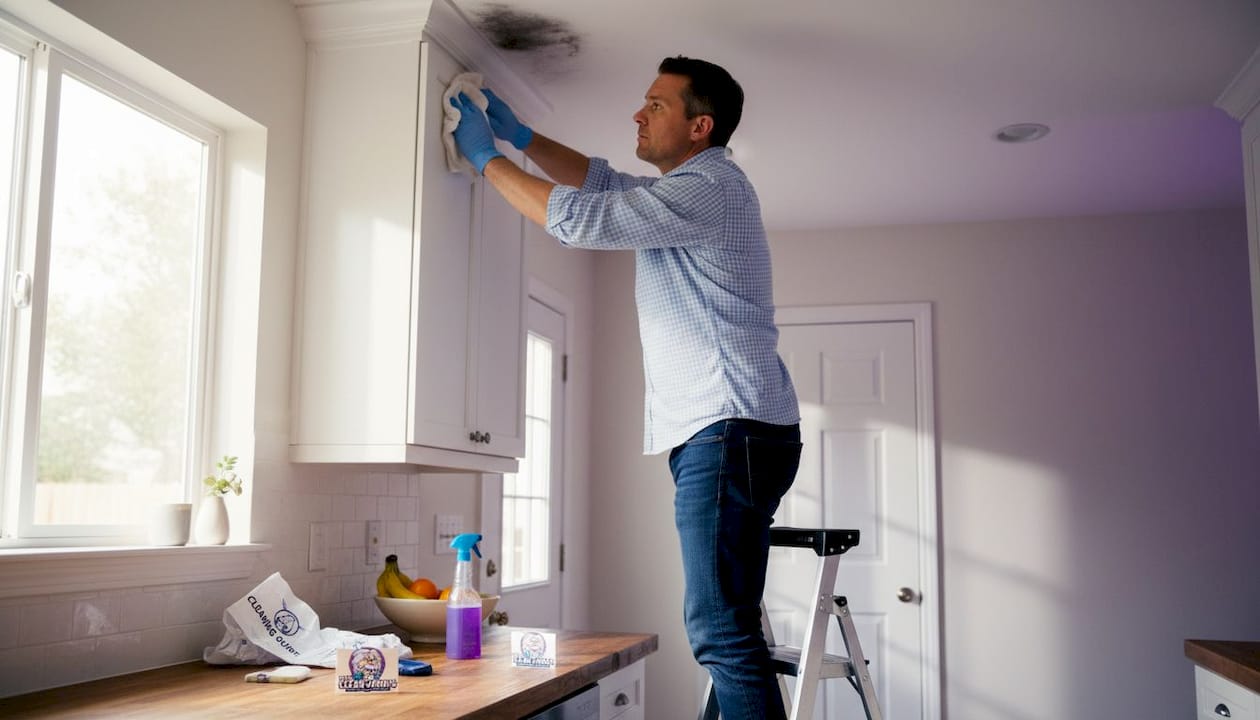
Ash is the powdery gray or white residue left after complete combustion. It looks harmless but is highly alkaline and abrasive. When ash gets wet (from sprinkler systems or firefighting efforts), it becomes a corrosive paste that accelerates surface damage.
Char results from extreme heat exposure on organic material. It’s deeply embedded in the surface it forms on and often signals structural damage. Char can’t simply be wiped away.
Acidic vapors are invisible but arguably the most destructive long-term threat. They rise, settle, and react with metals, electronics, and painted surfaces. Copper wiring, steel fixtures, and aluminum framing can all begin corroding within hours of a fire, long before anyone realizes it’s happening.
FEMA’s research confirms that smoke residue drives ongoing damage after the fire is out, including staining, odor persistence, and corrosion that can worsen significantly if left unaddressed.
Here’s what you may notice in your home, both the obvious and the not-so-obvious:
- Dark staining or discoloration on walls, ceilings, and trim
- A persistent smoky or acrid odor that doesn’t go away with airing out
- Yellowing or browning of previously white or light-colored surfaces
- Tarnishing or pitting on metal fixtures, door handles, or light fittings
- Warping or brittleness in wood surfaces near the source of the fire
- Unexplained health symptoms (coughing, eye irritation) in occupants
For belongings and contents, the picture is just as serious. Think about restoring belongings after fire: clothing, upholstered furniture, electronics, and sentimental items all absorb smoke chemistry quickly. Without professional intervention, many of these items become total losses.
| Residue type | Common source | Surface most affected | Risk if untreated |
|---|---|---|---|
| Soot | Wood, paper, fabric | Walls, ceilings, textiles | Permanent staining, odor |
| Ash | Organic materials | Floors, horizontal surfaces | Corrosion when wet |
| Char | Structural materials | Wood framing, subflooring | Structural weakening |
| Acidic vapors | Plastics, synthetics | Metals, electronics, glass | Corrosion, equipment failure |
How to assess smoke residue damage in your home
Knowing what to look for is the first defense against lasting smoke damage. Here’s how to spot and respond to the warning signs.
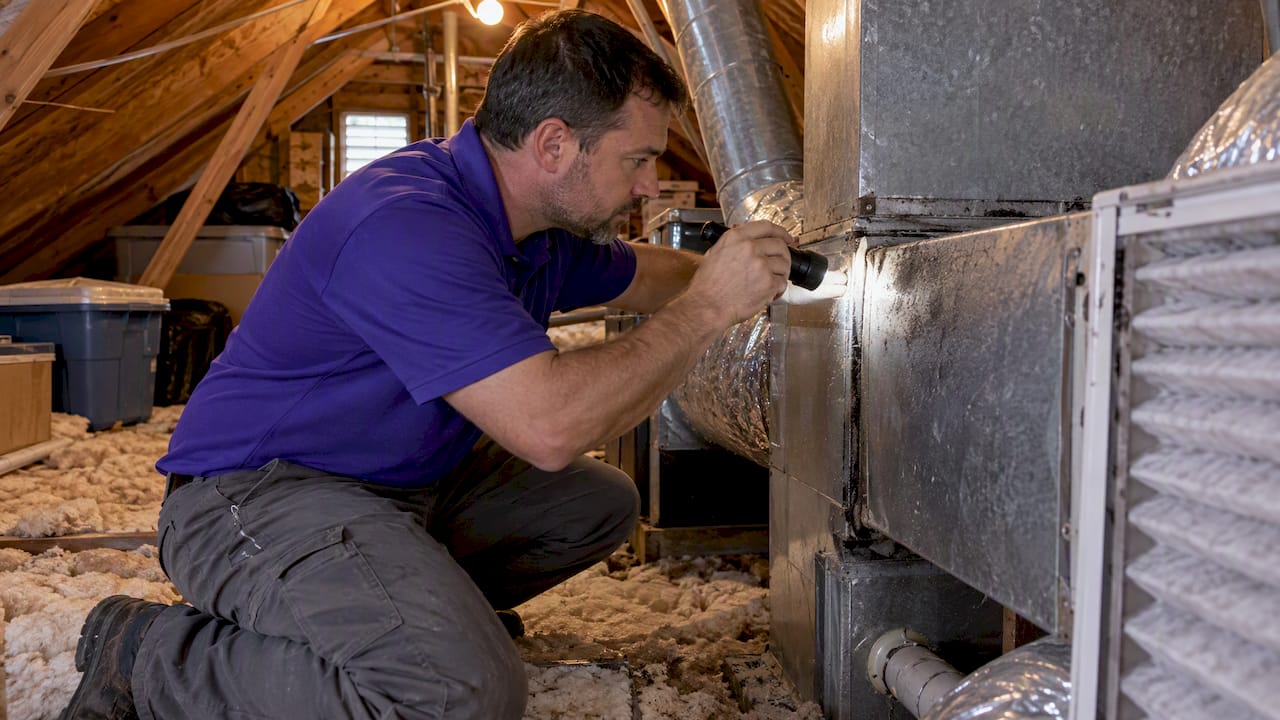
Assessing smoke residue damage on your own is a reasonable starting point, but it has real limits. Many of the most damaging effects are hidden inside walls, under flooring, or inside your HVAC system. Still, a structured visual inspection gives you a baseline for understanding the scope of damage and knowing when to escalate.
Step 1: Ventilate safely before entering. Open windows and doors, and wear an N95 mask, gloves, and eye protection. Never enter a fire-damaged area without checking that the structure is stable and cleared by fire officials.
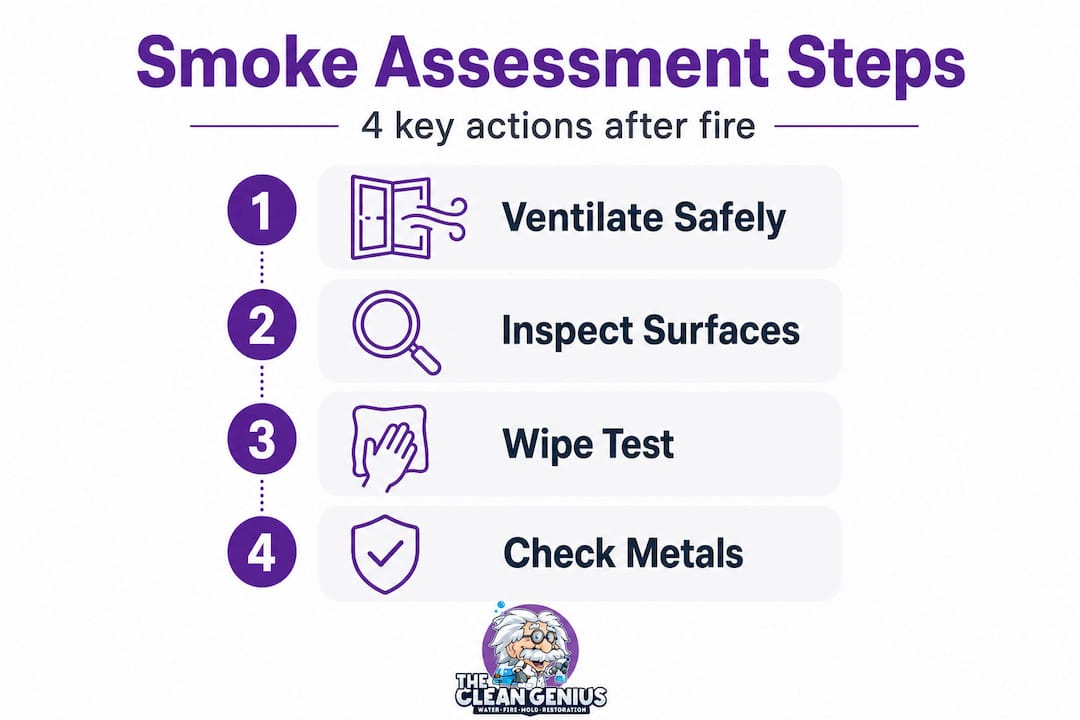
Step 2: Look at light-colored surfaces first. Ceilings, light switch plates, windowsills, and the tops of doorframes show residue early. Run a clean white cloth over a surface: if it comes back gray, yellow, or black, you have active residue.
Step 3: Use FEMA’s wipe test as a guide. FEMA’s homeowners guide recommends using a wipe test and assessing smoke, soot, ash presence, and odor intensity to categorize damage as light, moderate, or heavy. Light damage shows minimal residue and faint odor. Heavy damage means visible thick soot, strong persistent odors, and possible corrosion on metals.
Step 4: Check metal surfaces for corrosion. Look at door hinges, switch plates, copper pipes, and any exposed wiring. Pitting, tarnishing, or rust-like discoloration signals acidic residue is already active.
Step 5: Smell every room, including those far from the fire. Smoke travels through shared air systems. A room that looks clean can still carry significant odor and invisible particulates.
Step 6: Monitor over several weeks. According to AIHA guidance, if corrosion is absent months later, the likelihood of future corrosion is minimal. But that window requires active monitoring, not a one-time walkthrough.
“Earlier professional work reduces the chance that residue or odor worsens over time, making prompt action one of the most important factors in successful recovery.” — FEMA Homeowners Guide
Pro Tip: Even if damage looks minor, schedule a professional assessment within the first 48 to 72 hours after the fire. Restoration teams have moisture meters, air quality sensors, and thermal imaging tools that reveal damage invisible to the naked eye. Catching hidden issues early can save you thousands in repairs down the road. You can view recent fire damage projects to see what a professional assessment and cleanup actually looks like in real Chicagoland homes.
DIY vs professional smoke residue cleanup: What homeowners should know
Whether you tackle smoke cleanup yourself or not depends on the scope. Let’s clarify where the line is drawn.
The honest answer: DIY cleanup is appropriate for a very narrow slice of smoke residue situations. If a small item burned briefly, left minimal visible residue on a single surface, and there’s no persistent odor, a careful wipe-down with appropriate cleaners may be enough. But that scenario is far less common than most homeowners expect.
FEMA’s guidance clearly states that heavy or ongoing residue and odor call for professional restoration services. The reason is straightforward: improper cleaning can spread residue, push soot deeper into porous materials, and void your insurance claim if documented incorrectly.
Common DIY mistakes that make things worse:
- Using water on dry soot, which smears and embeds it further into the surface
- Scrubbing walls without first dry-vacuuming loose particulates
- Using the wrong cleaning products (bleach does not neutralize smoke odor)
- Skipping safety equipment and exposing yourself to hazardous residue
- Cleaning surfaces without addressing contaminated HVAC systems, which just recirculates particles
- Ignoring odor, assuming it will fade on its own (it usually does not without ozone treatment or similar technology)
For anything beyond light, surface-level residue, the risks of DIY cleanup outweigh the savings. Spreading contamination, causing secondary damage, and failing to document properly for insurance can create costs that dwarf what professional cleanup would have run.
Research on removing smoke odor shows that smoke compounds bond to surfaces at a molecular level, requiring either chemical neutralization or mechanical removal at a depth that household cleaners simply cannot reach.
Pro Tip: Before touching anything in a fire-damaged space, contact your insurance company and a professional restoration team. Document everything with photos and video first. A restoration professional can provide a written scope of damage that protects your claim and ensures you get the full remediation you’re entitled to.
A restoration expert’s perspective: What most guides overlook about smoke residue damage
Most homeowners who call us after a fire share the same story. They thought the hard part was the fire. They did not expect to still be dealing with it six weeks later.
Standard guides tell you what smoke residue is. What they rarely explain is how fast it moves and how much it changes your home’s chemistry. Within minutes of a fire being extinguished, acidic vapors are already reacting with metal surfaces. Within hours, soot has penetrated porous drywall and begun the staining process that no household cleaner will fully reverse. This is not an exaggeration. It’s physics and chemistry working against you.
Here in Chicagoland, we see an added layer of complexity that out-of-state guides overlook entirely. Our region’s humidity and older building stock create conditions where smoke residue absorbs into materials faster and holds odor longer. Brick bungalows, century-old plaster walls, and older HVAC systems all behave differently from newer construction after a fire. What might be a clean-up job in a newer suburban home can become a full remediation project in an older Wheaton or Elgin property.
The second thing most guides get wrong is the timeline. People assume if their home “looks clean” after a basic wipe-down, they’re fine. In reality, wildfire and structure fire cleanup insights consistently show that surface-level cleaning leaves behind embedded particles that continue to off-gas VOCs and cause long-term air quality problems.
We’ve seen Chicagoland homeowners spend money on repainting walls only to have smoke odor bleed through fresh paint within weeks, because the residue was never fully neutralized. That’s a costly mistake that a professional assessment upfront would have prevented. Real fire restoration stories from our own projects tell the same pattern: early, thorough professional cleanup produces the best outcomes every time.
The uncomfortable truth is that smoke residue damage is one of the most underestimated restoration challenges homeowners face. Treating it like a cleaning project rather than a remediation project almost always leads to more problems and more cost.
Trusted smoke damage restoration in Chicagoland
If a fire has affected your home, you don’t have to figure this out on your own.

At The Clean Genius, we’ve spent over 25 years helping Chicagoland homeowners recover from fire and smoke damage, from soot-covered kitchens in Schaumburg to heavily contaminated attic spaces in Barrington. Our certified restoration teams handle everything: full soot and odor elimination, content pack-out and restoration, air quality treatment, and complete documentation for your insurance claim. We work directly with your insurer so you’re not left managing paperwork while trying to get your home back. Our fire damage restoration experts are available 24/7 for emergency response throughout Chicagoland. And if post-fire moisture has created conditions for mold, our mold remediation services address that risk head-on using advanced Pure Cloud dry-fog technology. Reach out today for a free assessment.
Frequently asked questions
What does smoke residue damage look like?
It often appears as dark stains, black soot, or a gray film on walls and ceilings, but residue can also be invisible and affect surfaces deep inside your home. The AIHA notes that smoke contamination includes chemical penetration that goes far beyond what you can see.
Can smoke residue cause long-term damage?
Yes, and it can start within hours of the fire being put out. FEMA confirms that ongoing smoke residue leads to staining, persistent odors, and corrosion of metals and electronics if not properly treated.
Is it safe to clean smoke residue myself?
DIY cleaning can work for very light, surface-level residue, but FEMA is clear that heavy or persistent residue and odor require a professional restoration service to avoid spreading contamination or worsening the damage.
How soon should I act after a fire?
As soon as the structure is cleared as safe, start the process. FEMA’s guidance stresses that early professional mitigation significantly improves outcomes and reduces the chance of residue and odor worsening over time.
Can smoke residue damage things months after a fire?
If no corrosion or contamination is detected in the months following a fire, the AIHA notes that future corrosion risk is generally considered minimal. However, materials should still be monitored, particularly metals and porous surfaces in humid environments like those common in Chicagoland.