
Smoke odor after a kitchen fire lasts because the smell is not in the air. It is in a thin film of grease and fine particles on your walls, cabinets and fabrics, and in hidden spaces like wall cavities and ductwork. Airing out the house helps in the first hours, but the odor only goes away when the residue that makes it is removed. For a small, contained fire you can do the first rounds yourself. When the smell survives that cleaning, our team at The Clean Genius handles soot and odor elimination and works directly with your insurance company, 24/7, across Chicagoland.
What are the key steps to remove smoke odor after a kitchen fire?
- Kitchen fire odor comes from residue and gases that settle into porous materials, so masking sprays and candles only cover it briefly.
- Ventilate first, wear gloves and an N95 mask, then clean top to bottom: ceiling, walls, cabinets, counters, floors.
- Soft items need their own treatment: vacuum soot gently, wash in detergent, steam clean carpets, replace pillows.
- Check the HVAC system and filters before running it, because it can carry smoke residue to every room.
- Call a professional if the smell remains after about 48 hours of airing and cleaning, if soot reached walls or ductwork, or if odor keeps coming back.
Table of Contents
- Why the smell stays after the smoke clears
- What to do in the first hours
- Clean hard surfaces top to bottom
- Treat fabrics, carpet and soft items separately
- Check the HVAC system before you turn it on
- What not to rely on: air fresheners and candles
- When the smell means it is time for a professional
- Why we say: do not wait on the smell
- Getting help from The Clean Genius
- FAQ
- Sources
Why the smell stays after the smoke clears
Fire odor is a mix of particles, gases and residues. According to a restoration industry magazine, these include volatile organic compounds (VOCs, chemicals that evaporate easily), acids and resins. Particles smaller than 4 microns can work deep into porous materials such as insulation, drywall and textiles. That is why a home can still smell of smoke weeks after the visible soot is wiped away.
University of Colorado researchers at CIRES explain the mechanism: when hot smoke enters a home, VOCs condense on interior surfaces and slowly off-gas, so the odor fades only gradually. They also note that ventilation and extra filtration lower your exposure over time.
Why kitchen fires are the hardest
Not every fire smells the same. The same trade magazine points out that protein fires, the kind that start with burned meat, eggs or beans, leave little visible residue but the most stubborn odor. A grease or protein fire can leave a pale, nearly clear film on cabinet faces, paint and light fixtures that you will not see until you wipe it and the cloth comes away yellow or tacky.
Smoke also travels. Convection pulls it into wall cavities, the attic and the HVAC system, so the source of the smell may be nowhere near the stove.
Why it comes back in summer
Lingering odor often returns with the weather. Porous surfaces release trapped residue faster when air is warm and humid. In the Chicago suburbs, that means a kitchen that seemed fine in February can smell burned again during the first muggy week of June. If this happens to you, the residue is still in the house.
What to do in the first hours
Speed matters, but safety comes first. Do not go back into the house until the fire department says it is safe.
- Ventilate. FEMA’s homeowner’s guide to smoke damage says to open windows and doors, except when heavy smoke is still outside. In a Chicagoland winter this will chill the house, so shut off the thermostat for those rooms and plan to do it in stretches rather than leaving the house open for a day.
- Protect yourself. Los Angeles County Public Health advises gloves, long sleeves and an N95 mask while you remove burned debris and clean.
- Deal with water. If the fire was put out with water, the same agency recommends running dehumidifiers so the damp does not become a second problem. Wet drywall and cabinet bases can grow mold within days, and that is a separate job from smoke cleanup.
- Hold off on the furnace. If smoke is still in the air, turn off forced-air heating or central air so the system does not pull it through the house.
Clean hard surfaces top to bottom
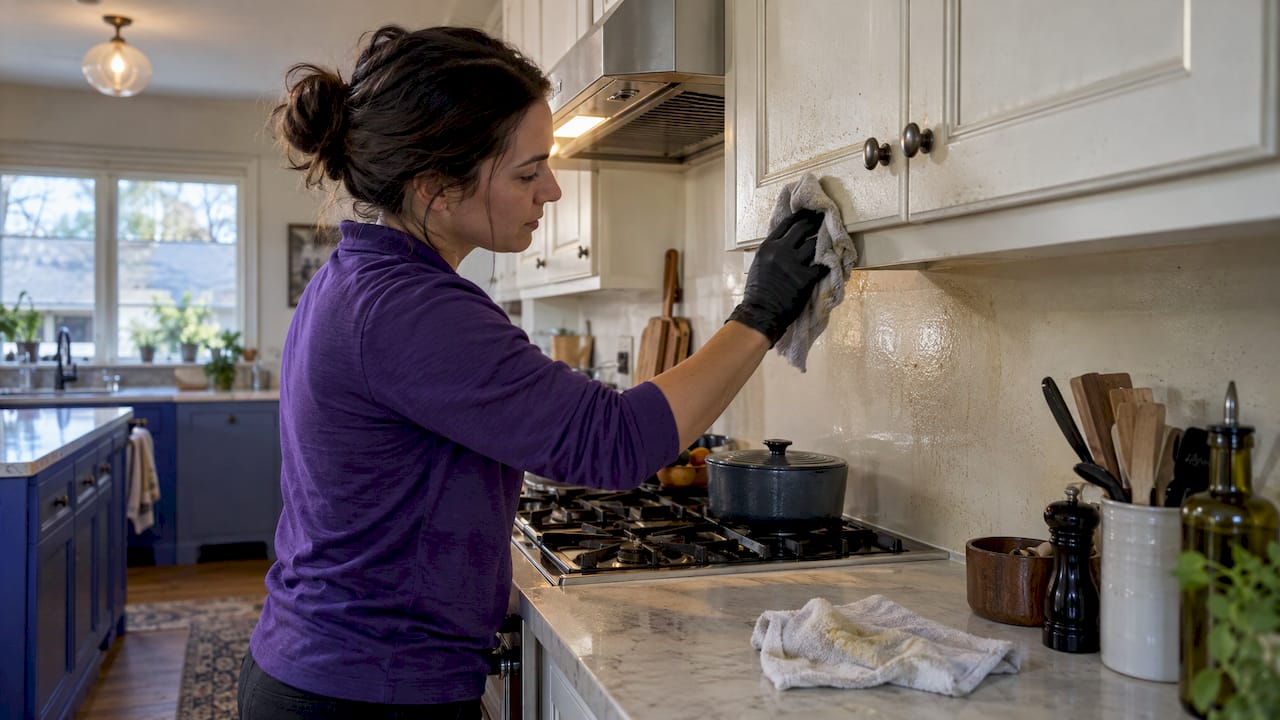
Work from the ceiling down so you are not dripping soot onto surfaces you have already cleaned. A sensible order is ceiling, walls, cabinet faces, cabinet interiors, counters, then floors.
Start with a dry method
LA County Public Health recommends dry chemical sponges first on porous surfaces. A wet rag pressed onto soot can drive it deeper and leave a permanent stain. Dry sponges lift the loose soot before you introduce water.
Then wash
For the wash, the same guidance gives two options: mild soap or detergent, or a stronger mix of 4 to 6 tablespoons of trisodium phosphate (TSP, a heavy-duty cleaner sold at hardware stores) plus 1 cup of household cleaner or bleach per gallon of warm water. The City of San José’s post-fire cleaning page says to wash painted walls one small area at a time, rinse right away and thoroughly, and consider a smoke sealer before repainting.
Two cautions. TSP and bleach are harsh, so wear gloves and eye protection, keep the room ventilated, and never mix products. And do not skip the rinse: leftover cleaner leaves its own film.
Do not forget the inside of the cabinets
Kitchen fires need especially thorough cleaning because residue may not be visible. LA County Public Health says cabinet and drawer contents usually have to be removed so hidden areas can be reached. Dishes and food that were stored in open cabinets during the fire need washing or discarding, and that is one place homeowners often cut corners and then wonder why the smell persists.
Where DIY usually goes wrong
| Mistake | What happens |
|---|---|
| Wiping soot with a wet cloth first | Soot smears and sets into paint or wood grain |
| Cleaning only visible surfaces | Greasy film on light fixtures, blinds and cabinet interiors keeps releasing odor |
| Painting over smoked walls with ordinary paint | Odor bleeds back through; stubborn areas need a sealer first |
| Using fragrance products | The scent fades and the burned smell returns |
Treat fabrics, carpet and soft items separately
Porous belongings hold odor longer than walls do. The LA County guidance and San José’s page give a clear routine:
- Curtains and upholstery: lift soot with a powerful vacuum held slightly above the surface, never with a brush or beater-bar attachment, then cover cleaned items with clean sheets.
- Clothes and bedding: soak overnight in detergent before washing normally. San José adds that vinegar and baking soda in the wash can help and that several cycles may be needed.
- Carpet: steam clean, shampoo, then steam clean again.
- Non-washable fabrics: sprinkle with baking soda for at least a day, then vacuum.
- Pillows: replace smoke-damaged ones, since feathers and foam hold odors.
If the items are valuable or sentimental, or the volume is large, this is where professional contents cleaning saves time. Our guide to recovering belongings after a fire explains what that involves.
Check the HVAC system before you turn it on
Your furnace and ducts can undo your cleaning. FEMA’s guide says to wipe all register covers, tape cheesecloth over registers before starting the air handler, and install a filter rated MERV 11 or higher (a filter grade that traps fine particles) once most soot is removed. Run the unit on constant fan mode, and have all ducts and the furnace professionally cleaned. Oklahoma State University Extension adds that filters should be changed when you first return and at least monthly for the first year.
Don’t forget the range hood. Replace a disposable hood filter, or wash a metal mesh one in hot soapy water.
If you can see soot on or near return vents, smoke has entered the ductwork. Running the system then spreads it to every room. Our article on inspecting the HVAC, attic and ducts first walks through why the smell so often returns when these are missed.
What not to rely on: air fresheners and candles
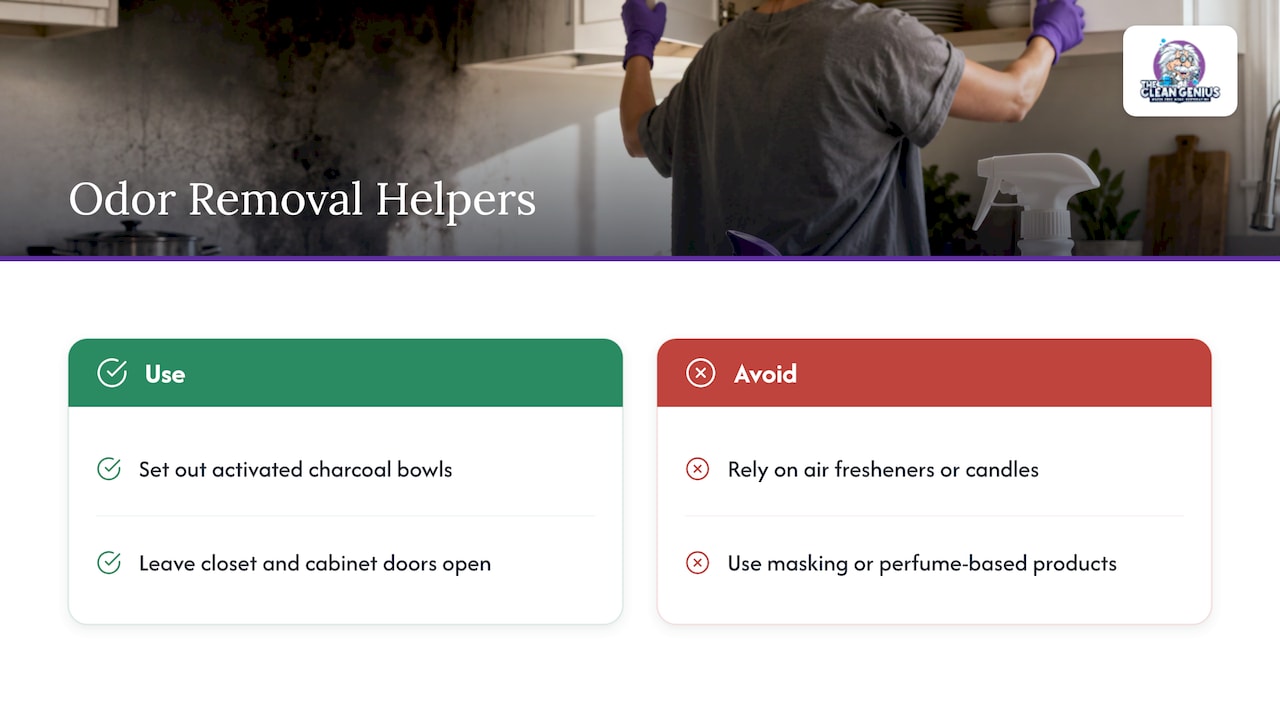
FEMA’s guide recommends activated charcoal to absorb odors, and it warns that masking products and perfume-based counteractants are not effective and may create new odors that are hard to identify. Oklahoma State’s extension specialist says removing the smell is not as simple as spraying air freshener or lighting a candle, because these only cover it for a short while.
Set bowls of activated charcoal around the house for several days and leave closet and cabinet doors open, as the extension suggests. Think of this as a helper after cleaning, never a substitute for it.
When the smell means it is time for a professional
A small, contained fire with no soot beyond the kitchen and no smoke in the HVAC system is the kind of job a careful homeowner can handle. These signs mean the odor source is beyond what wiping and airing can reach:
- Soot on walls, ceilings or insulation, or discoloration on drywall or wood.
- Odor that persists after about 48 hours of ventilation and cleaning.
- Smoke that reached several rooms or floors.
- The HVAC system running during or after the fire.
- Charring or burn marks on structural material.
- Odor that returns shortly after you cleaned.
FEMA’s guide says that if odor remains after the basic steps, deeper cleaning will most likely be required, and that it should be coordinated with the insurance company. CIRES researchers add a reason for care beyond comfort: the nose is a sensitive instrument, but some harmful chemicals have odors and others do not, so using professionals or following cleanup guidance before moving back in is the safer course. If anyone in your household has asthma or another breathing condition, ask your doctor before you reoccupy the kitchen area.
Heavy residue can also call for mechanical methods. LA County Public Health lists low-pressure blasting, steam power washing and chemical agitation among the options, which are not household tools.
Why we say: do not wait on the smell
Homeowners often tell us the fire was small, so they assumed the smell would fade. We hear that a lot, and it makes sense: nothing looks wrong. But a kitchen fire is the one that fools people, because grease and protein smoke leave almost nothing to see and plenty to smell.
Our view is simple. The longer residue sits on paint, cabinet faces and insulation, the more it bonds, and the more of the house you end up cleaning. That is why we start with the source of the odor rather than with anything that covers it. Our certified, insured technicians do soot removal and odor elimination, and we work directly with your insurance company so you are not managing a claim while you are living with a smoky house.
If you cleaned carefully and the smell is still there, or the HVAC system may have pulled smoke through the house, call us. A family-owned team with more than 25 years of combined experience can walk through your rooms and tell you what the odor is coming from. We are available 24/7 for emergencies across Chicagoland.
Jim
Getting help from The Clean Genius
If your kitchen fire left a smell that cleaning has not fixed, our fire damage restoration services cover soot and odor elimination for homeowners across Chicagoland, including Arlington Heights, Naperville, Elgin, Palatine, Schaumburg and the surrounding towns. We work directly with your insurance company, and our team is available around the clock.

To see what the work looks like from start to finish, read how the fire odor removal process works and our fire damage restoration process steps. If water from firefighting also soaked the kitchen, our water damage restoration team handles the dry-out, and mold removal and remediation is available if moisture has already caused growth.
FAQ
How long does smoke smell last after a kitchen fire?
It depends on the fire and on what was cleaned. Odor fades slowly as residue off-gasses, and CIRES notes that it diminishes over time. If the smell persists after about 48 hours of ventilation and careful cleaning, residue is likely still in walls, soft materials or the HVAC system, and it needs a deeper clean.
Does baking soda or vinegar remove smoke odor?
They can help on fabrics. San José’s guidance suggests baking soda on non-washable fabrics for at least a day before vacuuming, and vinegar and baking soda in laundry. They do not remove greasy residue from walls and cabinets, which need washing, and they will not reach odor inside walls or ducts.
Is it safe to stay in the house with a lingering smoke smell?
Ask the fire department whether the home is safe to occupy first. After that, remember that smoke contains fine particles and VOCs, and CIRES says some harmful chemicals have no odor. Ventilate, filter the air and have the house cleaned before everyday use. If someone has asthma or another lung condition, ask their doctor first.
Will insurance cover smoke odor removal?
Many homeowners policies cover smoke damage from a covered fire, but terms vary by policy, so read yours or ask your agent. FEMA’s guide says deeper cleaning should be coordinated with the insurance company. We work directly with your insurer on restoration jobs.
Should I paint over smoke-stained walls?
Not until they are cleaned and rinsed. San José suggests considering a smoke sealer before repainting, because ordinary paint over residue lets the odor come through. Painting is the last step, after cleaning and drying.
Sources
- Homeowner’s Guide to Risk Reduction and Remediation of Residential Smoke Damage, FEMA
- How to Clean Up Smoke and Soot from a Fire, LA County Public Health
- After a Fire: Cleaning Your Property, City of San José
- After the fire: Frequently asked questions, CIRES
- Removing Smoke Odor Following a Fire, Oklahoma State University Extension
- Winning the Battle Against Smoke Odors, Restoration & Remediation Magazine