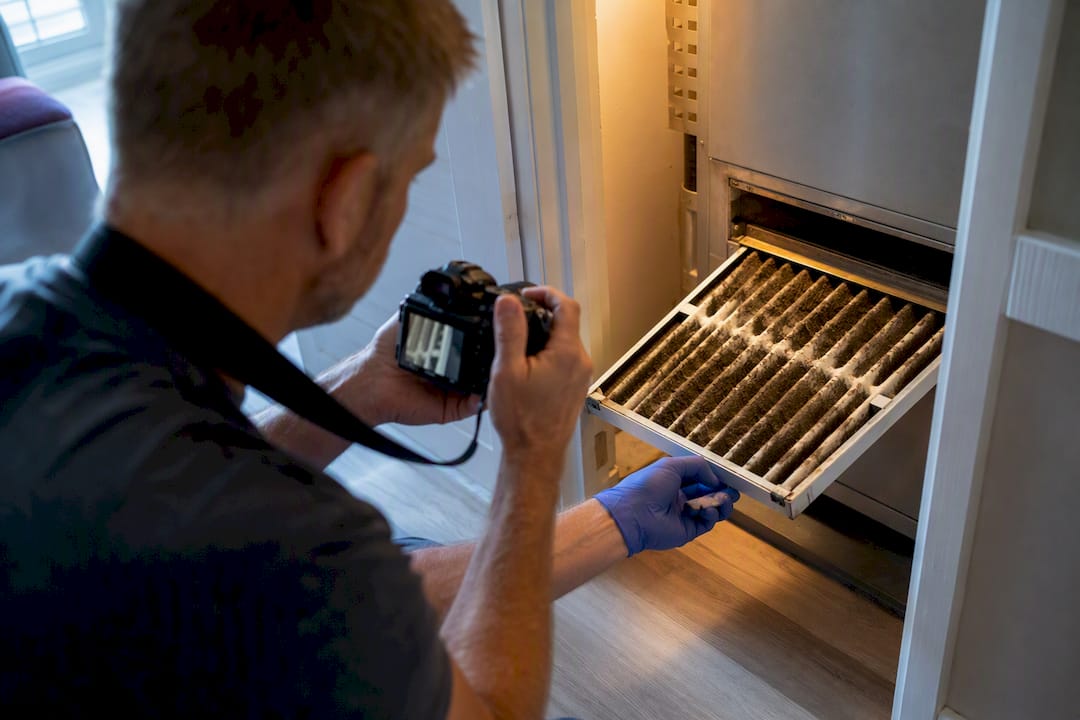

Most standard homeowners and commercial policies cover sudden smoke damage from fires, wildfires, and furnace malfunctions, but the payout depends entirely on documentation. Notify your insurer promptly and photograph everything before you clean or run air scrubbers. Skip either step and you hand the adjuster an easy reason to shrink your smoke damage insurance claim.
TL;DR:
- Proper documentation within the first three days, including photos, HVAC filter samples, and receipts, significantly strengthens your smoke damage insurance claim.
- Insurers may deny claims if they cannot see visible damage, but lab results and pre-clean evidence can prove the presence of soot and odor residue.
- Building a four-layer evidence file, including incident data, pre-clean photos, professional sampling, and a thorough paper trail, is crucial for dispute prevention.
- Wildfire-specific policies often carry higher deductibles and stricter exclusions, so reviewing your policy and endorsements early can prevent surprises.
- Engaging certified hygienists, restoration specialists, or public adjusters can improve claim outcomes when facing disputes or lowball offers.
Table of Contents
- What Smoke Damage Insurance Actually Covers
- Filing a Smoke Damage Insurance Claim: The First 72 Hours
- Building the Evidence File That Insurers Can’t Easily Dispute
- Common Denial Reasons and How to Fight Back
- What You’ll Pay Versus What the Insurer Covers
- Bringing in a Public Adjuster, Hygienist, or Attorney
- Field Notes: How The Clean Genius Documents a Smoke Claim
- The Gap Between Policy Language and Real Payouts
- Get Your Smoke Damage Assessed by Local Restoration Experts
- Where to Go for Official Guidance
- Sources
What Smoke Damage Insurance Actually Covers
Homeowners insurance splits a smoke claim into three buckets, and each one has its own rules. Dwelling coverage pays to repair walls, ceilings, ductwork, and built-in cabinetry. Personal property coverage handles furniture, electronics, and clothing that absorbed odor or soot. Additional Living Expenses (ALE) reimburses hotel stays, meals, and pet boarding while your home is unlivable.
The trigger language in most policies is “direct physical loss or damage.” Courts have spent years arguing over what that phrase actually means when the damage is invisible soot residue rather than charred wood, and objective evidence like lab results and documented persistent odors tends to decide those disputes in the policyholder’s favor. If your adjuster can’t see damage, that doesn’t mean coverage disappears. It means you need better evidence.
A few coverage variables catch homeowners off guard:
- Wildfire-specific endorsements in some states carry separate, higher deductibles than standard fire coverage.
- Maintenance exclusions can bar claims tied to chimney neglect or known appliance defects.
- Some policies cap ALE duration or dollar amount, which matters if remediation stretches past 30 days.
- Commercial property policies often separate business interruption coverage from the physical smoke damage claim entirely.
Read your declarations page before you assume anything. The percentage difference between a policy with a wildfire rider and one without can run into thousands of dollars on the same loss.
Filing a Smoke Damage Insurance Claim: The First 72 Hours
The claims process rewards speed and documentation in roughly equal measure. What you do in the first three days often determines whether you’re negotiating from strength or defending yourself later.
Start with safety. If air quality inside the home feels heavy, or if the fire department hasn’t cleared the structure, stay out and document from a doorway or through photos taken by inspectors. Once it’s safe to enter:
- Call your insurer immediately. Report the date, cause, and rooms affected. Ask specifically for a full smoke-damage inspection that covers the attic, crawl space, HVAC system, and insulation, not just visibly charred rooms.
- Photograph and video everything before touching anything. Wide shots of each room, close-ups of soot on walls and vents, and interior shots of closets and drawers.
- Pull your HVAC filters and bag them. A blackened filter is some of the strongest physical proof that smoke circulated through the entire duct system, not just the room where the fire started.
- Save every receipt tied to temporary housing, meals, and emergency board-up or taping work.
- Track your proof-of-loss deadline. Many carriers expect an initial proof-of-loss form and preliminary estimate within roughly 60 days of the loss, though some policies allow extensions on request.
Pro Tip: Do not run the HVAC system or air purifiers before the inspector arrives. It feels productive, but it disperses the soot particles that prove how far the contamination traveled.
Early, thorough documentation makes a denial much harder to justify later, because the insurer’s own investigators have less room to argue the damage was minor or unrelated to the event.
Building the Evidence File That Insurers Can’t Easily Dispute
Smoke damage claims live or die on documentation quality, and the strongest files follow a four-layer structure that claims specialists and restoration professionals consistently recommend.
Layer one: incident data. Screenshot the AirNow Air Quality Index reading for your zip code on the day of the event, and save any official fire perimeter maps if a wildfire was involved. This ties your specific address to a documented event.
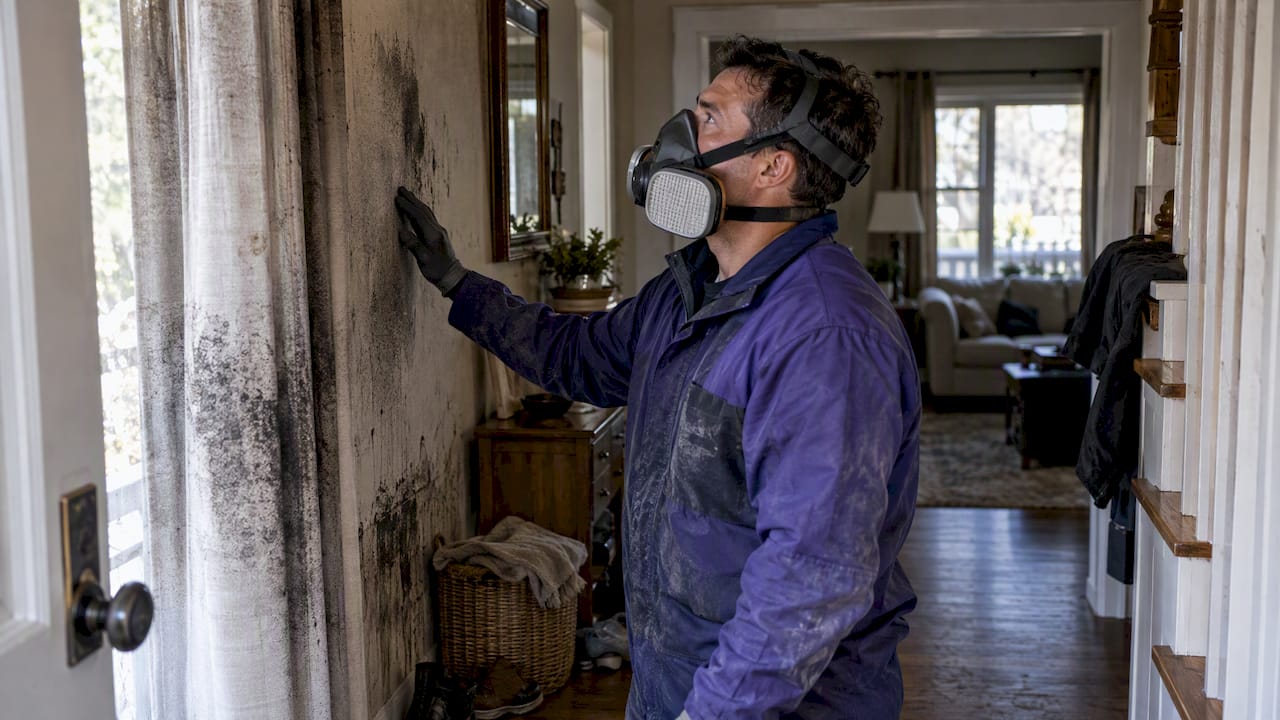
Layer two: pre-clean physical evidence. Photograph soot deposits on walls, HVAC filters, and inside cabinets before any cleaning occurs. Once you scrub a wall or replace a filter, that evidence is gone permanently.
Layer three: professional inspection and lab sampling. A Certified Industrial Hygienist (CIH) or licensed industrial hygienist (LIH) can run soot microscopy, identify particle signatures, and test for volatile organic compounds left behind by combustion. Chain-of-custody protocols on those samples matter because a lab result without documented handling can be challenged in a dispute.
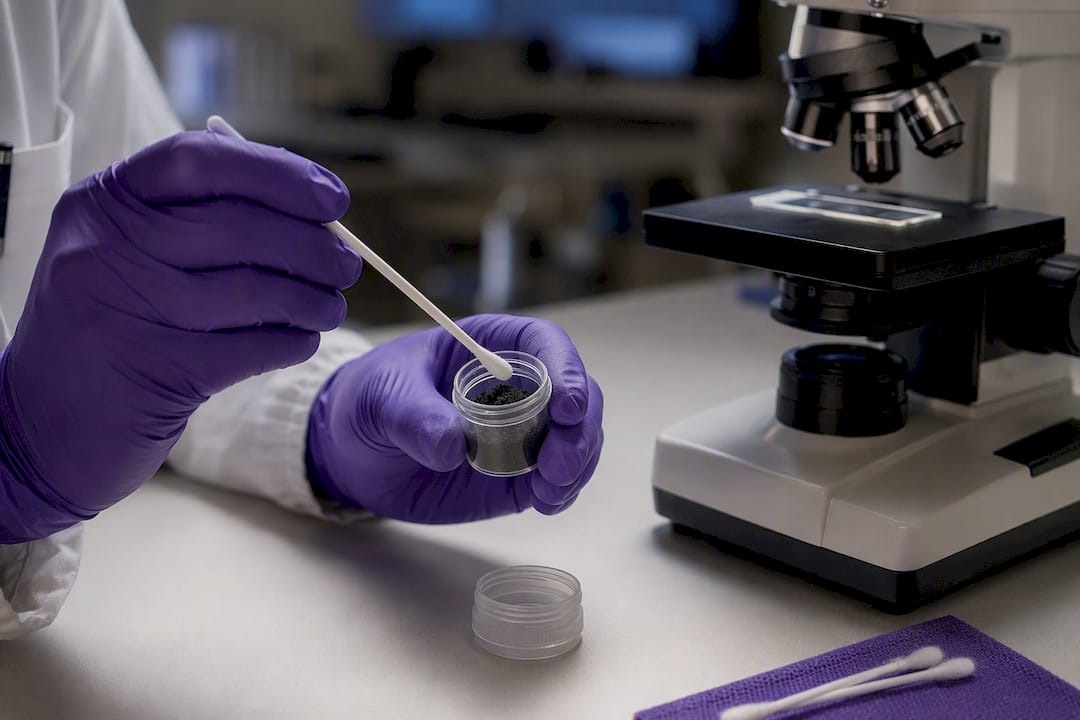
Layer four: paper trail. Every email, phone call summary, invoice, and adjuster report, filed in one place.
Here’s the detail most homeowners miss: California’s Department of Insurance issued guidance in 2025 stating insurers must adopt reasonable standards for investigating smoke claims, and where professional testing is warranted, the insurer should be paying for it, not you. That single bulletin gives homeowners leverage they often don’t know they have. If your carrier resists paying for a hygienist inspection on a legitimate smoke event, that resistance may run counter to state guidance on fair claims handling.
Common Denial Reasons and How to Fight Back
Adjusters reach for a handful of standard denial arguments, and each one has a documented rebuttal.
- “There’s no visible damage.” Counter with lab sampling results, close-up photos of blackened MERV filters, and pre-cleaning documentation showing soot on interior surfaces the naked eye tends to skip.
- “This looks like pre-existing wear, not new damage.” Counter with the incident timeline, official fire perimeter maps, and AirNow AQI screenshots that place the damage squarely within the event window.
- “Something else caused this, not the fire.” Counter with a hygienist’s pattern analysis and particle-signature testing, plus background sampling from an unaffected room for comparison. Insurers evaluate these claims by weighing residue patterns, odor persistence, and HVAC contamination against the documentation you provide, so a thin file gives them room to argue any of these three positions.
If the denial or lowball offer stands after you’ve submitted this evidence, request a formal reinspection in writing. Cite the specific documentation you’re submitting and ask for a written response with a timeline. If the insurer still won’t budge, most states let you file a complaint directly with your state insurance department, which can prompt a review of whether the carrier followed fair claims-handling standards.
What You’ll Pay Versus What the Insurer Covers
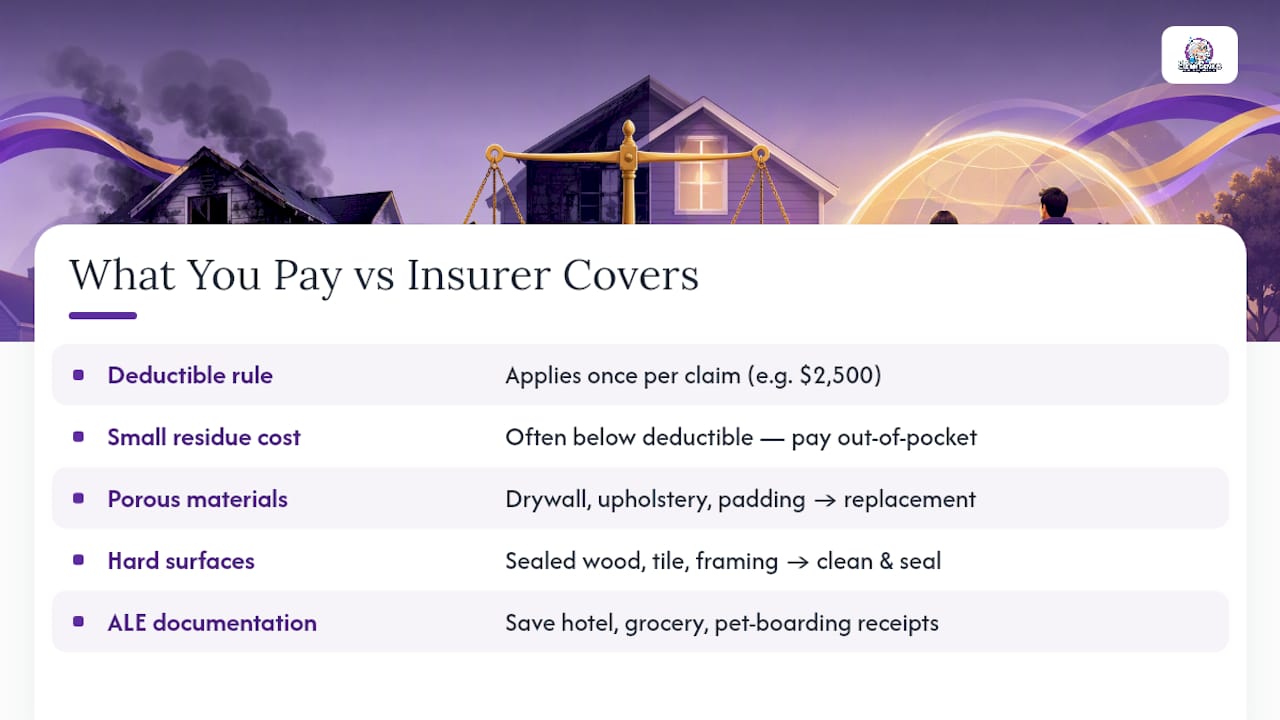
Your deductible applies once per claim, not per room or per item, so a $2,500 deductible on a whole-house smoke event still caps your out-of-pocket cost at that number regardless of how many rooms are affected. Minor smoke residue on a few surfaces sometimes costs less to clean than the deductible, which means paying out-of-pocket makes more financial sense than filing at all.
Restoration versus replacement comes down to material porosity. Drywall, upholstery, and carpet padding absorb smoke odor at a molecular level that ozone treatment and deep cleaning can’t always fully reverse, so insurers often authorize replacement for those items. Hard surfaces like sealed wood trim, tile, and most structural framing usually get cleaned and sealed rather than torn out.
ALE claims need the same documentation rigor as the physical damage claim. Save hotel folios, grocery receipts if your kitchen is unusable, and any pet boarding invoices. If smoke odor resurfaces weeks after the initial cleaning, document it and request reinspection rather than assuming the claim is closed. Progressive odor issues are common with smoke damage, and most policies allow supplemental claims when new damage surfaces during restoration.
Bringing in a Public Adjuster, Hygienist, or Attorney
Not every smoke claim needs outside help, but certain situations call for a specific kind of professional.
- Certified Industrial Hygienist (CIH) or LIH: brought in for testing protocols and lab sampling when the insurer disputes scope or contamination extent.
- Restoration contractor: develops the remediation scope of work and handles mitigation, often working alongside the hygienist’s findings.
- Public adjuster: negotiates directly with the insurer on your behalf, typically paid a percentage of the settlement, and useful when you’re facing a lowball offer or a scope dispute you can’t resolve alone.
- Attorney: necessary when you suspect bad faith, such as unreasonable delays or repeated denial without proper investigation, especially in cases where the definition of “direct physical loss” itself is being contested.
Pro Tip: A written hygienist protocol, referencing IICRC S700 standards for fire and smoke restoration, gives an adjuster a documented professional basis for scope that’s far harder to argue down than a verbal estimate.
Field Notes: How The Clean Genius Documents a Smoke Claim
On every smoke and fire call, Thecleangenius runs the same inspection sequence: attic and crawl space check, HVAC system inspection, insulation assessment, and a full contents walkthrough. Filters get bagged and preserved before any equipment runs, not after.
The documentation packet handed to your insurer typically includes:
- Time-stamped photos of every affected room and hidden space
- A written scope of work outlining restoration versus replacement recommendations
- Clearance testing results once remediation is complete
- Direct coordination with your adjuster to reduce back-and-forth delays
Thecleangenius’s certified crews work insurance claims regularly across the greater Chicagoland area, which means the paperwork speaks the adjuster’s language instead of forcing you to translate it yourself.
The Gap Between Policy Language and Real Payouts
Most advice on smoke damage claims focuses on what your policy says. That’s necessary but insufficient. The real leverage point is proving what the policy language doesn’t spell out: whether smoke caused a “direct physical loss” when there’s no charring, just residue and odor.
Insurers know most homeowners won’t invest in a hygienist inspection or push back on a first denial. That’s not because the claim lacks merit. It’s because the burden of proof sits on the policyholder, and gathering that proof takes effort most people don’t know they need to make until it’s too late.
If there’s one thing worth prioritizing above all else, it’s the four-layer evidence file before you clean anything. State bulletins like California’s 2025 guidance exist precisely because insurers have historically leaned on “no visible damage” denials that don’t hold up against lab sampling. Build the file first. Negotiate second.
— Jim
Get Your Smoke Damage Assessed by Local Restoration Experts
Thecleangenius gives Chicagoland homeowners a direct path through smoke and fire restoration without the guesswork of managing contractors and insurance paperwork separately. Our certified crews handle inspection, soot and odor elimination, contents cleaning, and insurer coordination as one connected process, so your claim file and your restoration timeline move together instead of fighting each other.

When you call, we schedule an onsite estimate covering the attic, HVAC system, and every affected room, then document findings in the format your adjuster needs to process the claim without delays. If you’re already mid-claim and need a fire damage restoration process that works directly with your insurer, request your estimate today and get a documented scope of work in hand before your proof-of-loss deadline arrives.
Where to Go for Official Guidance
- Office of the Insurance Commissioner for consumer smoke-damage guidance
- California DOI Bulletin 2025-7 on insurer investigation standards
- CDC and EPA resources on wildfire smoke exposure
- IICRC fire and smoke restoration standards
File a complaint with your state insurance department if your insurer denies a claim without a documented investigation.
This article is general information, not a substitute for advice from a qualified financial advisor. Consult a qualified financial professional about your own circumstances before acting on anything here.
Sources
- Smoke damage and your homeowner or renter insurance | Office of the Insurance Commissioner
- Bulletin 2025-7 Insurance Coverage for Smoke Damage and Guidance for Proper Handling of Smoke Damage Claims (California Department of Insurance)
- Where there’s smoke, is there coverage? | Hunton Andrews Kurth LLP
- Wildfires and your health | CDC