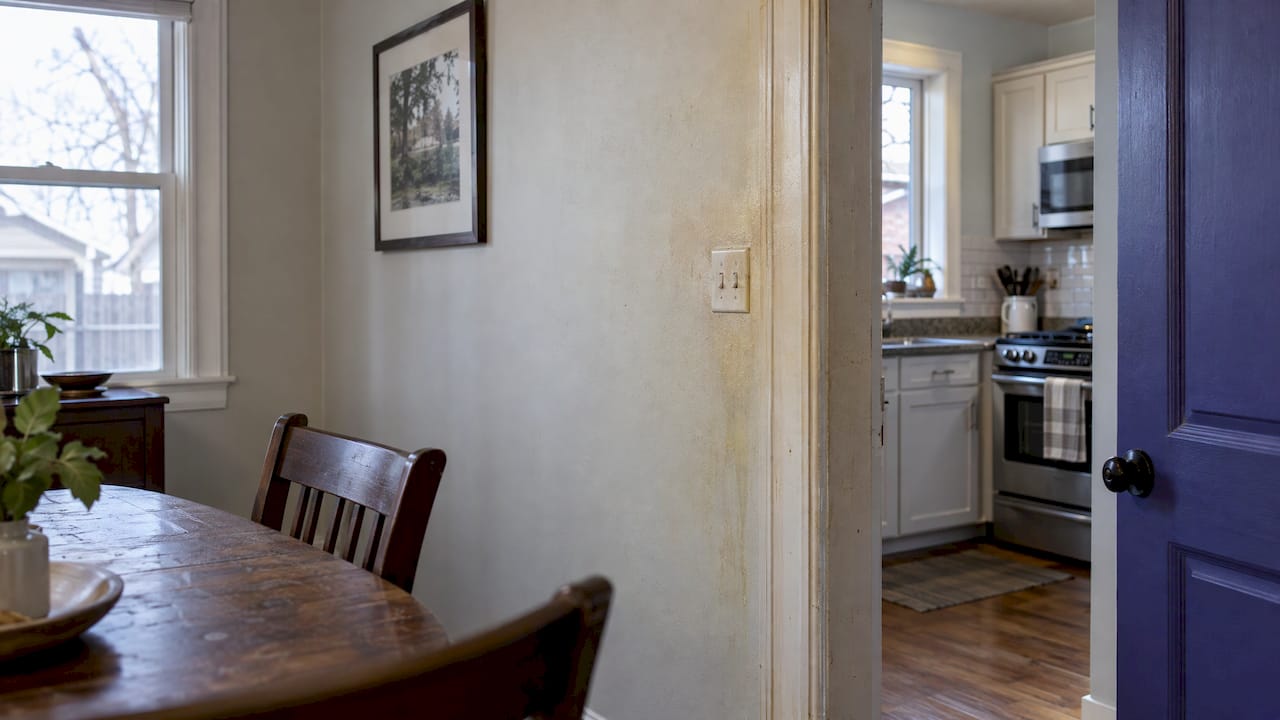

A protein fire is a cooking fire: burned meat, grease, oil or food left on a hot stove or in an oven. It often leaves almost no black soot, but it leaves a thin, sticky film and a strong odor that travel well beyond the kitchen. Cleanup works when that film is found everywhere it went and removed with the right chemistry, in the right order. That is why we send a certified crew to a kitchen fire instead of leaving you with a bucket and a sponge. The Clean Genius handles fire damage restoration for Chicagoland homeowners, around the clock.
What are the key takeaways for protein fire residue cleanup?
- Protein residue is a greasy, often yellowish film that can reach cabinets, walls, ducts and hidden cavities even when you see no black soot.
- Smoke and ash are hazardous. Wear a NIOSH-approved N95 or P100 respirator, gloves and goggles, and keep children and pets out.
- Work dry first (HEPA vacuum, dry sponge), then wet-clean with a degreaser. An all-purpose cleaner smears the film.
- Masking sprays only delay the smell. Odor leaves when the residue source, surfaces and HVAC are cleaned.
- Heavy kitchen fires, HVAC involvement or lingering odor are jobs for a restoration crew.
Table of Contents
- What protein fire residue is and why it hides
- Is the residue harmful?
- Before any cleaning starts
- Cleaning protein residue step by step
- Which jobs belong to a restoration crew
- Why a local crew is the better route
- Our perspective
- Get help after a kitchen fire
- FAQ
- Sources
What protein fire residue is and why it hides
The industry uses the term protein fire for a cooking event involving proteins, fats, oils and grease. These fires tend to burn at low temperature, with heavy smoke and odor but little open flame. The residue can look yellowish or sticky, and airflow carries it to vertical surfaces, cabinets, duct pathways, carpets and hidden cavities. If you look only for black soot, you can miss a large share of the contamination.
That is why a kitchen that looks fine can still smell terrible a week later. The same source notes that experts judge these jobs by sight, smell and touch, and that the biggest mistake is assuming a kitchen fire stays in the kitchen.
How can you quickly check for protein fire residue?
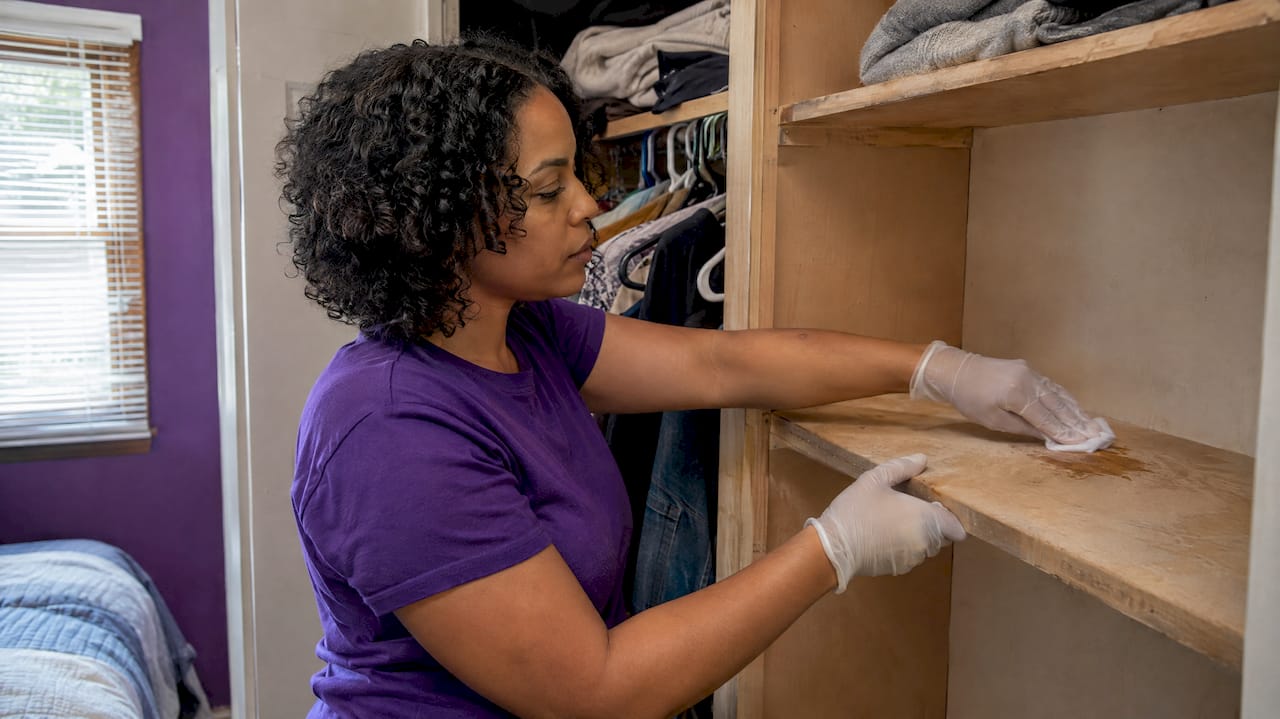
FEMA’s homeowner’s guide to smoke damage suggests following your nose for smoke, then wiping an unfinished horizontal surface with a prepackaged alcohol wipe while wearing clean gloves. Check the wipe for residue. Do this in rooms away from the stove too: a wipe that comes back discolored in the hallway or bedroom tells you the film traveled.
Is the residue harmful?
Yes. The Washington State Department of Health says ash, debris and smoke from any fire are hazardous and can cause immediate symptoms or raise later disease risk. Colorado’s health department adds that smoke deposits particulates and volatile organic compounds such as benzene on furniture, walls and floors, and that chemicals keep releasing into the air for weeks, then fade.
Time also matters for the house. FEMA warns that fire residue left on surfaces can permanently etch metal because of its extreme alkalinity or acidity, and that soot and ash can make porous items like upholstery and clothing nearly impossible to clean. San Mateo County notes that smoke residue can corrode metals and yellow plastics, fiberglass tubs and cultured marble.
Our guide on smoke damage health effects lists six situations where you should hand the job to professionals.
Who should not clean
The EPA says people with heart or lung disease, older adults and pregnant women should not take part in ash cleanup. If that describes anyone in your household, let a restoration crew do the work while you stay elsewhere.
Before any cleaning starts
- Check safety. Look for structural or water damage and live electrical hazards. Do not use ceiling fixtures if the ceiling is wet or electrical appliances that were near the fire.
- Protect yourself. Washington DOH recommends a NIOSH-approved P100, N100 or N95 respirator, disposable gloves, goggles and a hooded coverall. FEMA adds long sleeves, long pants and closed-toe shoes.
- Keep children and pets away. Both Washington DOH and LA County Public Health advise this.
- Limit foot traffic. FEMA notes that soot on hard floors means it is already in the carpet, so walk through the home as little as possible.
- Leave the HVAC off. Do not run the air handler until bulk soot is removed, or it re-contaminates cleaned surfaces.
- Ventilate. LA County Public Health puts ventilating the space and removing debris first.
If you have homeowner’s insurance, photograph everything before touching it. We work directly with your insurance on restoration jobs.
Cleaning protein residue step by step
Step 1: Work dry first
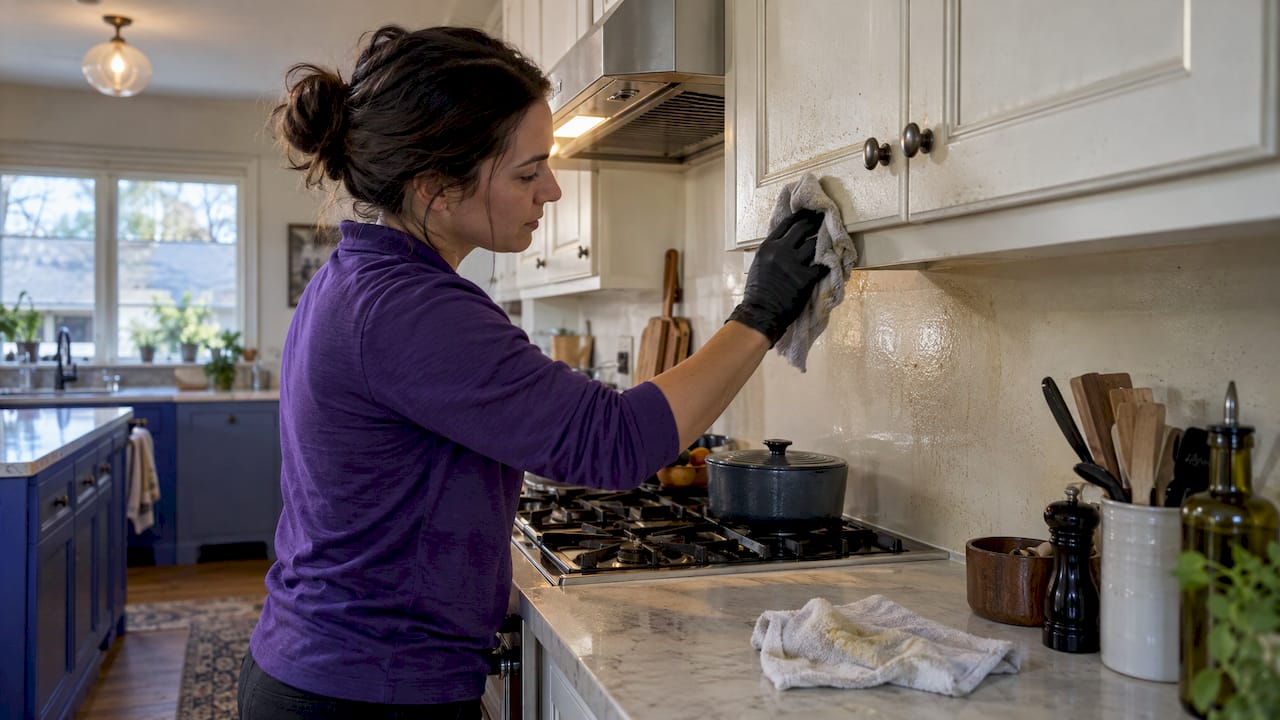
Remove loose soot and residue with a HEPA vacuum and a dry chemical sponge, working from the top down, so you do not drag residue onto surfaces you already cleaned. Per LA County Public Health, never use an upright vacuum or any brush or beater-bar attachment on soot-affected fabrics, since it forces soot deeper.
Where it goes wrong: wet wiping before dry removal turns loose particles into a smear. Our crews use this dry-then-wet order on soot removal jobs and it is the main reason surfaces come out clean rather than streaked.
Step 2: Wet-clean with the right chemistry
Protein and greasy smoke call for a degreaser, because a standard all-purpose cleaner skates over the film. Follow the manufacturer’s dilution and dwell time, and test an out-of-sight spot first, since an aggressive degreaser can strip natural stone, unsealed wood or delicate finishes.
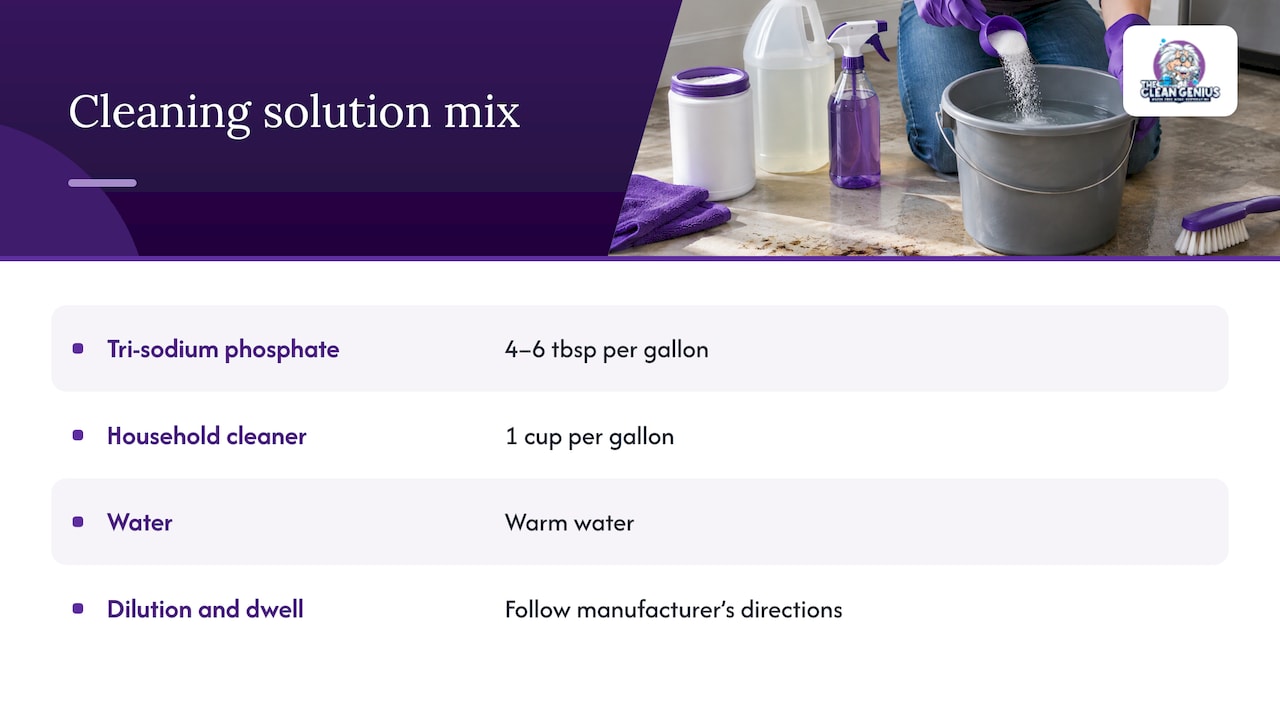
For walls, furniture and floors, LA County Public Health suggests mild soap or detergent, or a mix of 4 to 6 tablespoons of tri-sodium phosphate with 1 cup of household cleaner per gallon of warm water. Wear gloves and goggles, wash a small area at a time, rinse with clear warm water and dry thoroughly. Do not use gasoline for cleaning, as the Bryan, Texas fire department warns. Avoid fragranced products, which mask odor rather than remove it.
Washington DOH also advises wiping walls and other indoor surfaces with a damp cloth and mild detergent, mopping hard floors instead of sweeping, and discarding heavily contaminated porous items that cannot be cleaned, such as upholstered furniture or stuffed animals.
Step 3: Clean what you cannot see
Cabinet interiors, tops of cabinets, light fixtures, vents and the ceiling above the range all collect film. This is where do-it-yourself jobs fail: the visible surfaces look clean, the odor comes back on the next warm day, and the film gets worse as surfaces warm. Hidden cavities and ductwork are exactly where a professional crew’s equipment and training matter. Our guide on why smoke smell returns after cleaning explains why the HVAC, attic and ducts should be inspected first.
Step 4: Treat odor last
The order is source first, then cleaning, then residual odor treatment. Remove unsalvageable burned material, clean everything that stays, decontaminate the HVAC, and only then run deodorization. FEMA recommends activated charcoal in bags or containers around the home and warns against perfume-based counteractants. If odor persists after the basic steps, FEMA says deeper cleaning will most likely be needed. For a full walkthrough, read how to remove smoke odor after a kitchen fire.
After visible ash is gone, Washington DOH recommends running a portable HEPA plus carbon air cleaner on its highest setting, then replacing the filters.
Which jobs belong to a restoration crew
A small stovetop flare-up that stayed in the pan, with a faint smell and clean walls, is different from a fire that sent smoke through the house. Call a restoration company when:
- smoke or grease reached rooms beyond the kitchen;
- the HVAC was running during the fire;
- cabinets, insulation or other porous materials absorbed the smoke;
- the odor returns after you cleaned;
- someone in the household is in a sensitive group.
Success on these jobs is judged by whether anyone still detects odor and whether surfaces are clean to an acceptable standard, not by a single lab number, according to the protein fire experts. That is a job for people who inspect every surface, not just the ones you can see.
Why a local crew is the better route
Protein residue punishes shortcuts. It hides, it spreads through airflow, and it needs a degreasing chemistry matched to the surface. The Clean Genius is family-owned, with over 25 years of combined experience and more than 400 combined five-star reviews. Our certified teams handle fire and smoke damage restoration including soot and odor elimination, and we are available 24/7 for emergencies across Chicagoland, including Arlington Heights, Palatine, Schaumburg, Naperville and Wheaton.
If water from firefighting is also an issue, our water damage restoration team handles dry-out, and if you want to know what to expect afterward, see our fire damage cleanup timeline.
Our perspective
Most homeowners judge a kitchen fire by what they can see. With protein fires, what you see is the smallest part. The film is thin, it moves with air, and it settles where nobody looks: inside cabinets, above the range hood, in the ducts.
Our approach is to treat the whole house as the job, not just the kitchen. We clean what stays, remove what cannot be saved, and deal with the HVAC before we talk about odor. That order is why the smell does not come back with the first warm afternoon.
We are a family-owned team, and we work directly with your insurance so you are not managing two problems at once. Call us early. The sooner residue comes off, the more of your home we can save.
Jim
Get help after a kitchen fire
If your kitchen fire left a film, a smell or smoke in other rooms, our crews can assess and clean it. We serve homeowners across Chicagoland and take emergency calls 24/7. Start with our fire damage restoration page.

We also offer contents restoration after fire for the belongings you want back.
FAQ
What is the best way to clean smoke damage from a grease fire?
Work dry first with a HEPA vacuum and dry chemical sponge, top down. Then wet-clean with a degreaser matched to the surface, rinse and dry. Clean hidden areas and the HVAC before treating odor.
Are soot stains permanent?
Not if residue is removed promptly. FEMA warns that fire residue left on surfaces can etch metal permanently and can make porous materials like upholstery and clothing nearly impossible to clean. Acting quickly protects the most.
Is the smell of smoke after a fire harmful?
Yes. San Mateo County warns that residual smoke odors can be very toxic even when no smoke is visible. Ventilate, wear a respirator when inside, and have the residue removed rather than covered with fragrance.
Can I use bleach or an all-purpose cleaner?
A standard all-purpose cleaner tends to smear greasy protein film. LA County Public Health lists mild detergent or a tri-sodium phosphate mixture for walls and floors, and warns against fragranced products. Follow dilution directions and wear gloves and goggles.
Sources
- Understanding Protein Fires: Why Sight, Smell, and Feel Still Matter in Restoration
- FEMA Homeowner’s Guide to Risk Reduction and Remediation of Residential Smoke Damage
- Washington State Department of Health: Post-Fire Cleanup Guidance
- Colorado Department of Public Health and Environment: Indoor air quality after a fire
- County of San Mateo: Smoke & Water Damage
- US EPA: Protect Yourself from Ash
- Bryan Fire Department cleanup guidance