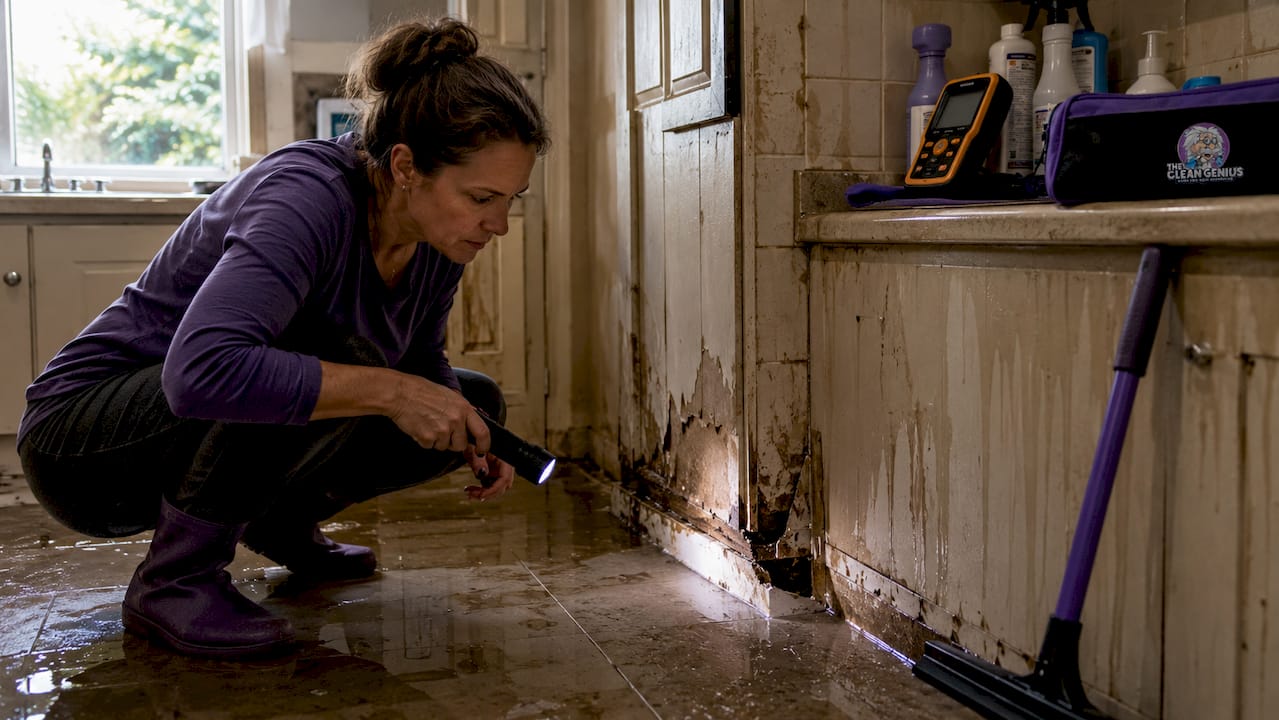

Mold growth signs after flooding appear faster than most homeowners expect. Mold spores germinate within 24–48 hours after water exposure, and visible colonies can form in as little as three days if moisture persists. The EPA and IICRC both recognize moisture control as the foundation of any effective mold prevention strategy. Knowing what to look for, and where to look, is the difference between a quick cleanup and a costly remediation project. This guide gives you the specific signs, timelines, and inspection steps you need to act before mold takes hold.
What are the earliest mold growth signs after flooding?
The first sign of mold after flooding is almost always a smell, not a stain. A persistent musty or earthy odor, similar to wet soil or rotting wood, signals active microbial growth even when surfaces look dry. That smell comes from microbial volatile organic compounds (MVOCs) that mold releases as it colonizes damp materials. If you walk into a room and the air smells stale or damp days after the water is gone, treat it as a confirmed indicator.
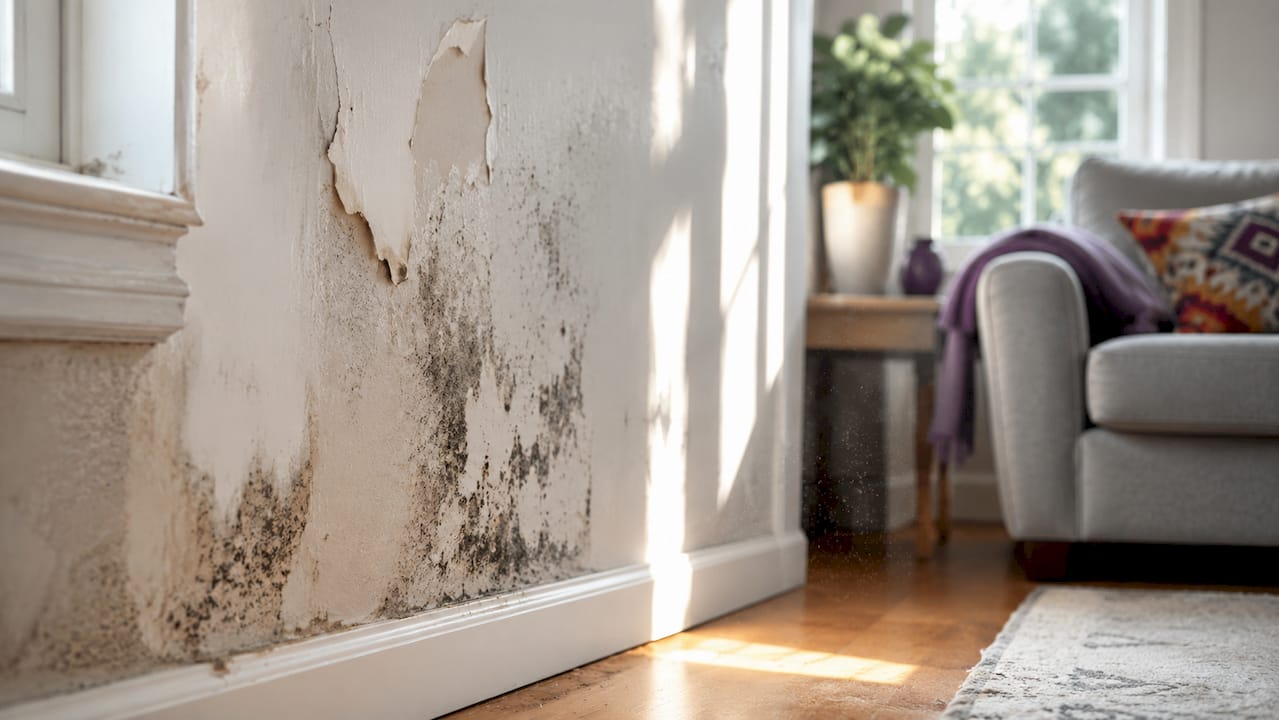
Visual signs follow the odor, typically within three to twelve days. Five primary non-instrumental signs include persistent musty odor, discolored patches, water stains, surface degradation, and allergy-like symptoms indoors. Color is a useful clue for identifying mold types after water damage:
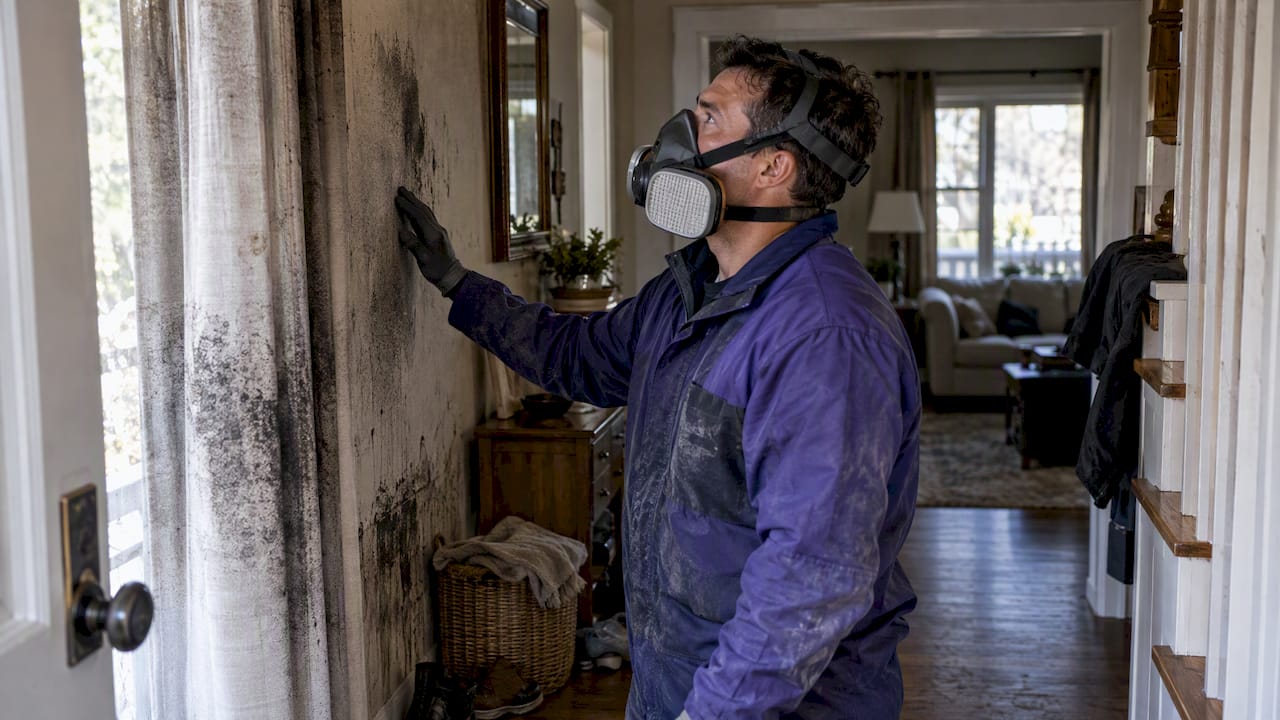
- Black or dark green patches: often Stachybotrys (black mold), found on drywall and wood with prolonged moisture
- White or yellow fuzzy growth: commonly Aspergillus, appearing on insulation, cardboard, and ceiling tiles
- Pink or orange streaks: frequently Fusarium, seen on flooring, fabric, and wallboard
- Gray or brown discoloration: often Cladosporium, common on painted walls and window frames
Physical damage to surfaces is another reliable indicator. Peeling or bubbling paint, warped drywall, and wallpaper that lifts at the edges all signal moisture trapped beneath the surface. That trapped moisture is exactly where mold colonies establish themselves first.
Indoor allergy symptoms that worsen at home and improve when you leave are a strong signal. Sneezing, itchy eyes, a runny nose, and throat irritation that track with time spent indoors point to airborne mold spores. Children and people with asthma are especially sensitive to these early exposures.
Pro Tip: Open interior doors and closets after flooding. Mold grows fastest in enclosed, dark spaces with poor airflow. A quick smell test inside closets and cabinets often reveals hidden growth before any visible sign appears.
How does mold growth progress over time after flood exposure?
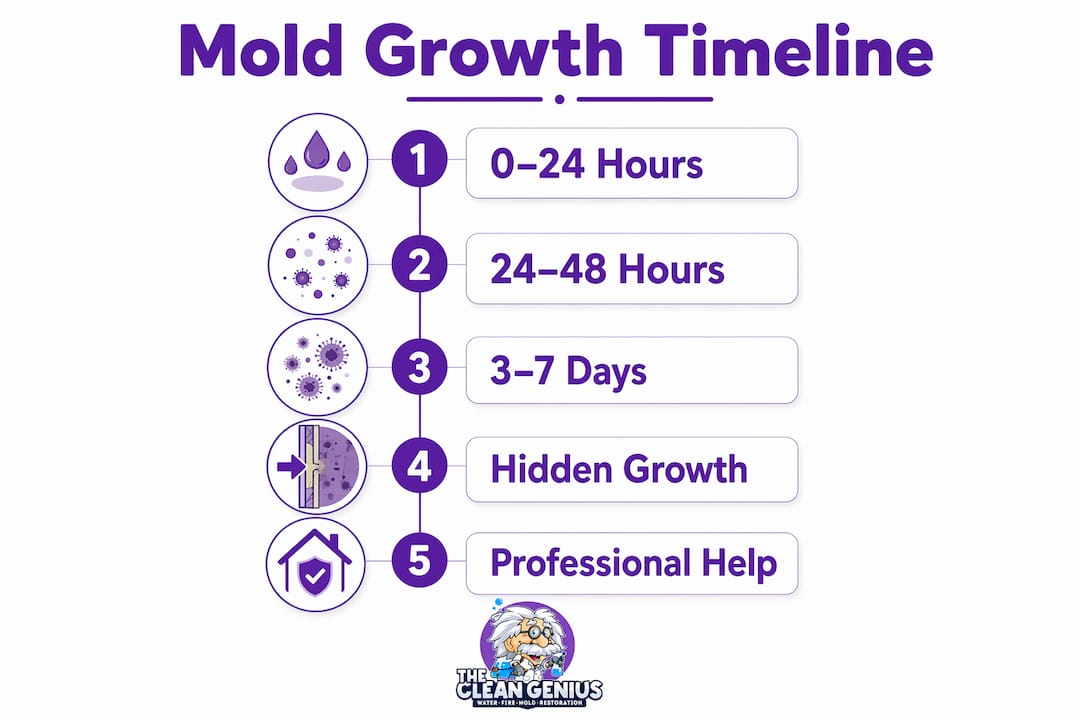
Mold colonization follows a predictable timeline, and understanding it helps you know when to act and when you may already be behind.
| Time after flooding | What is happening |
|---|---|
| 0–24 hours | Building materials absorb moisture; spores on surfaces activate |
| 24–48 hours | Spore germination begins; early colonies start forming in wet cavities |
| 48–72 hours | Colonies establish on drywall, wood framing, and insulation |
| 3–12 days | Visible growth appears on surfaces if moisture persists |
| Beyond 14 days | Mold penetrates structural materials; remediation becomes significantly more complex |
The 24–48 hour window is the most critical. Drying materials within that window prevents germination from progressing to colonization. Once colonies establish inside wall cavities or under flooring, surface drying no longer stops the process.
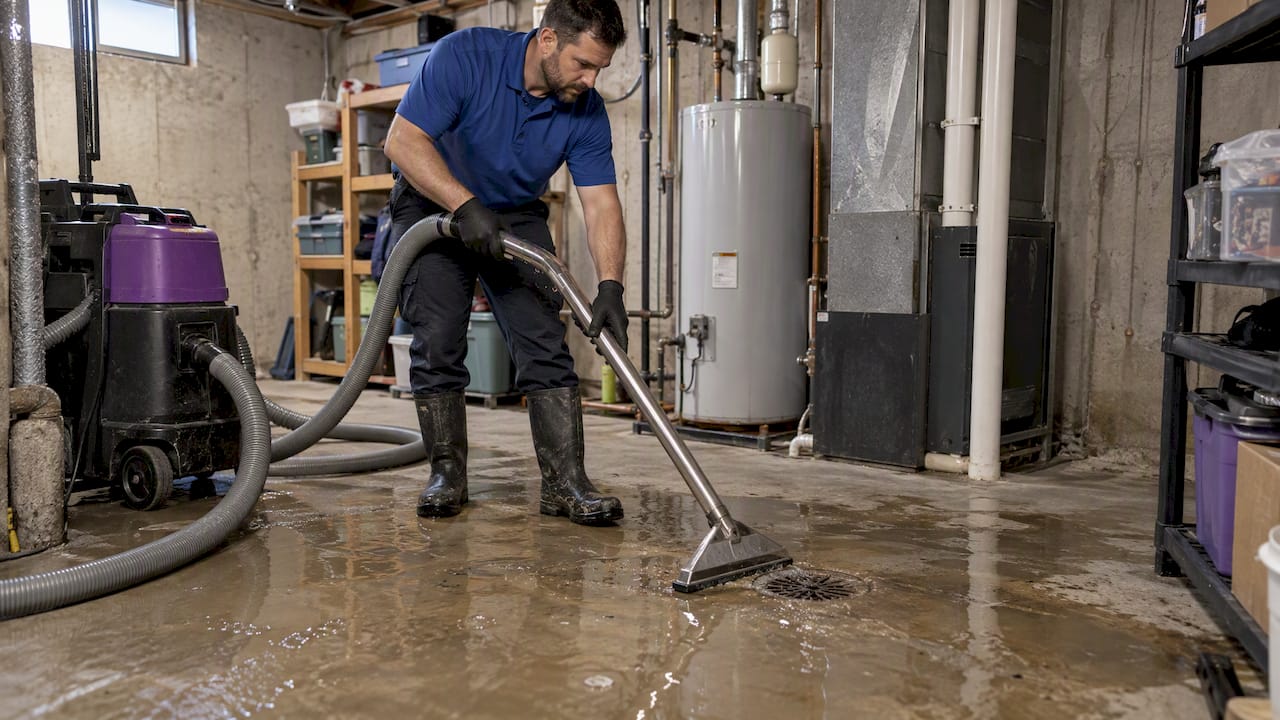
Floodwater makes the timeline even shorter. Contaminated Category 3 water, which includes sewage backups and groundwater, carries organic matter that feeds mold directly. That accelerates microbial colonization well beyond the standard 48-hour window. A basement flooded by a sewage backup can show active mold growth in wall cavities within 36 hours.
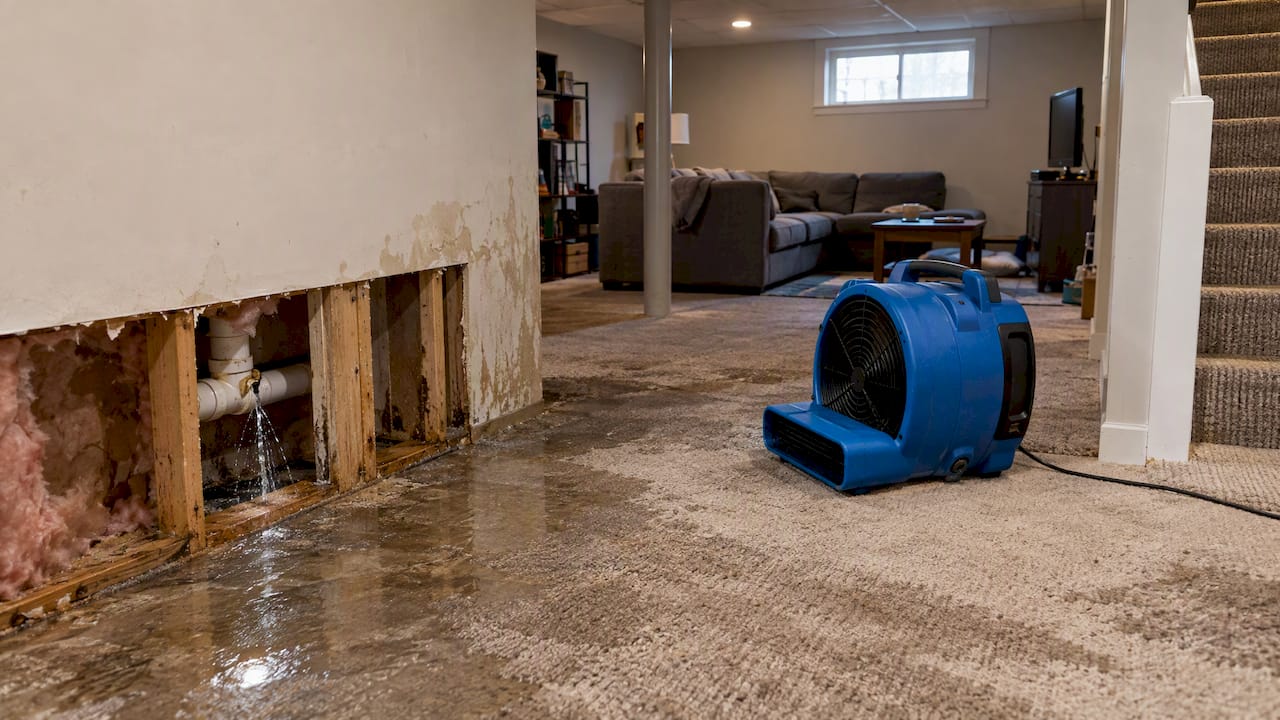
Hidden growth is the most dangerous outcome of delayed action. Mold grows behind drywall, insulation, and framing for weeks without any surface sign. HVAC systems spread spores through ductwork to unaffected rooms. Crawlspaces and subfloor cavities hold moisture far longer than finished surfaces, creating persistent growth zones that a visual inspection will completely miss.
Pro Tip: Run your hand along the base of drywall near the flood line. Soft, spongy, or crumbling material means moisture has penetrated the gypsum core. That wall section almost certainly has active growth on the back face.
How to effectively inspect your home for mold after flooding
A thorough post-flood mold inspection follows a specific sequence. Skipping steps leads to missed growth and false confidence.
- Start with your nose. Walk each room slowly and breathe through your nose. Musty or earthy odors in any enclosed space, including closets, cabinets, and the area under stairs, confirm active microbial growth nearby.
- Do a visual sweep of high-risk surfaces. Check the base of walls, ceiling corners, window frames, and any surface that was submerged or splashed. Look for discoloration, fuzzy texture, or water staining.
- Check behind and under furniture. Sofas, bookshelves, and cabinets pushed against walls trap moisture and block airflow. Pull them away from walls and inspect both the furniture base and the wall behind it.
- Inspect basements and crawlspaces directly. These areas hold moisture longest. Bring a flashlight and look at floor joists, concrete block walls, and any exposed insulation.
- Test suspicious spots with a bleach swab. A 1:16 bleach-to-water solution applied to a discolored spot will lighten or erase biological mold within minutes. A spot that stays unchanged is likely dirt, soot, or an inorganic stain.
- Use a moisture meter on walls and floors. A reading above 16% moisture content in wood or above 1% in concrete signals conditions that support active mold growth. Moisture meters cost $20–$60 at most hardware stores and give you real data rather than guesswork.
- Check your HVAC system. Remove and inspect air filters. Look inside return air vents with a flashlight. A musty smell when the system runs means spores are circulating through the ductwork.
The table below shows when a DIY inspection is sufficient and when you need a professional post-flood mold inspection.
| Situation | Recommended approach |
|---|---|
| Visible mold under 10 sq. ft., surface only | DIY cleanup with proper protective gear |
| Musty odor but no visible mold | Professional moisture mapping recommended |
| Mold suspected inside walls or HVAC | Professional inspection required |
| Contaminated floodwater (sewage) involved | Professional inspection and remediation required |
| Occupant has asthma or immune condition | Professional inspection regardless of visible signs |
The EPA confirms that testing for mold is not required when visible growth or a musty odor already exists. The priority is moisture control, not lab confirmation. Spending money on mold test kits before addressing moisture is a common and costly mistake.
Hygrometers and moisture meters outperform most commercial DIY mold kits because they measure the conditions that cause mold rather than detecting spores after the fact. A hygrometer reading above 60% relative humidity indoors means mold growth is actively occurring or imminent somewhere in the space.
Common mistakes in mold detection after flooding
The most dangerous mistake homeowners make is trusting dry-looking surfaces. Hidden moisture inside wall cavities persists long after surface drying, and mold thrives in those concealed spaces for weeks without any visible sign. A wall that feels dry to the touch can have 30% moisture content inside the framing.
Other frequent errors include:
- Ignoring mild musty odors. A faint smell is not a minor problem. It signals active colonization, even if you cannot see any growth yet.
- Mistaking dirt or soot for mold. Dark staining after a flood can be sediment, soot, or mold. The bleach swab test described above takes two minutes and removes all doubt.
- Over-relying on DIY mold test kits. Petri dish kits sold at hardware stores collect airborne spores passively and cannot tell you where growth is located or how severe it is. Moisture monitoring tools give you far more useful information.
- Cleaning surfaces without fixing moisture. Mold remediation is fundamentally moisture control. Scrubbing visible mold off a wall while the cavity behind it stays wet guarantees regrowth within days.
- Skipping the HVAC system. Homeowners focus on visible wet areas and forget that the air handler and ductwork spread spores throughout the entire house. A contaminated HVAC system reseeds every room it serves.
Understanding why mold grows after water damage helps you avoid these traps. The biology is straightforward: mold needs moisture, organic material, and warmth. Remove the moisture, and you remove the growth condition. Leave the moisture, and no amount of cleaning stops it.
Proper moisture control in building cavities is a recognized building science standard precisely because surface-level interventions consistently fail without it.
Key Takeaways
Identifying flood damage mold symptoms within the first 48 hours is the single most effective action a homeowner can take to prevent structural damage and health risks.
| Point | Details |
|---|---|
| Mold starts fast | Spores germinate within 24–48 hours; visible growth appears in 3–12 days if moisture persists. |
| Smell comes first | A musty or earthy odor is the earliest and most reliable indicator of active mold growth. |
| Hidden growth is the real risk | Mold thrives inside wall cavities and under flooring long after surfaces appear dry. |
| Moisture control beats cleaning | Scrubbing visible mold without eliminating moisture guarantees regrowth within days. |
| Know when to call a pro | Musty odor without visible mold, sewage contamination, or HVAC involvement all require professional inspection. |
What 25 years of flood calls taught me about mold detection
Most homeowners I talk to after a flood are focused on what they can see. They pull up wet carpet, wipe down walls, and run fans for a few days. Then they call us three weeks later because the smell came back and the drywall is soft.
The uncomfortable truth is that surface cleaning after a flood is almost always theater. The real problem is invisible. Moisture sits inside wall assemblies, under subfloors, and in insulation batts where no fan can reach it. By the time you smell mold again, the colony is already established deep in the structure.
What I tell every homeowner is this: trust your nose more than your eyes, and trust a moisture meter more than both. If a room smells musty and your moisture meter reads above 16% in the wall framing, you have a mold problem regardless of what the surface looks like. That reading is your action trigger, not the appearance of visible growth.
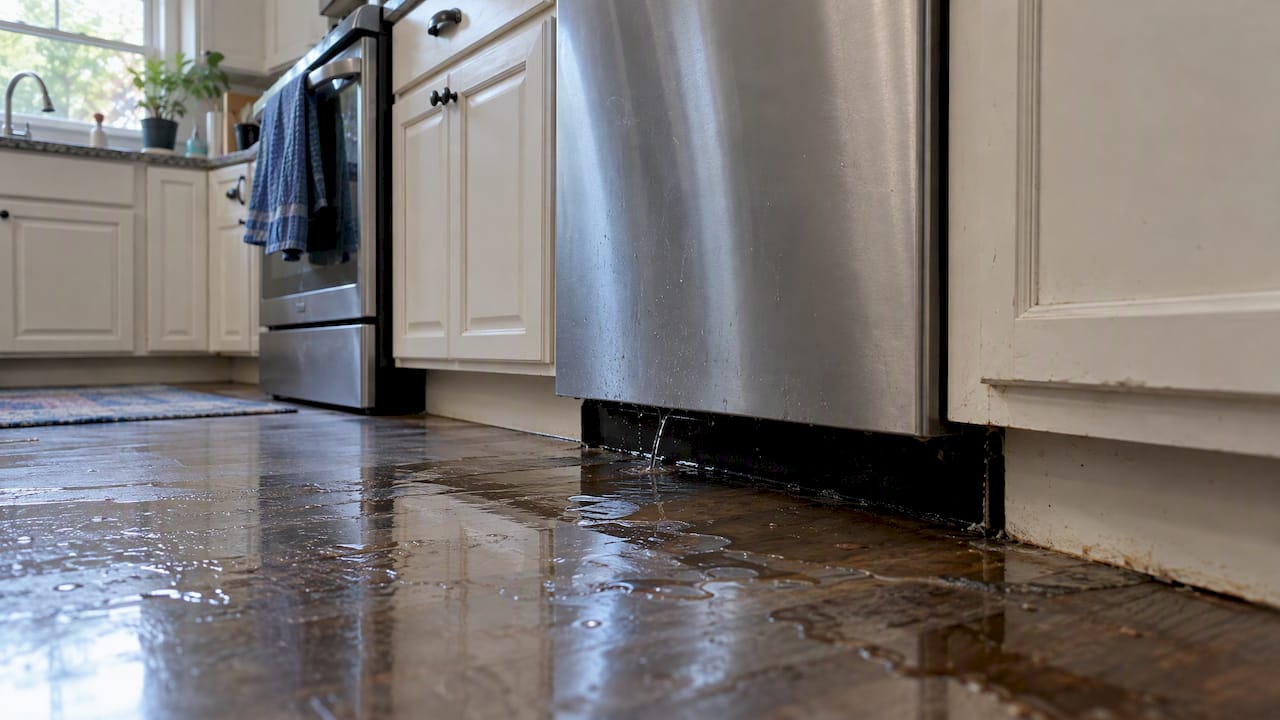
The other thing that surprises people is how much the type of floodwater matters. Clean water from a burst pipe gives you a genuine 48-hour window to dry materials and prevent colonization. Sewage backup or groundwater flood? That window shrinks dramatically. The organic load in contaminated water feeds mold directly, and I have seen active growth in wall cavities within 36 hours of a sewage event.
My honest advice: if your home flooded with anything other than clean tap water, skip the DIY assessment and call a certified restoration team immediately. The cost of a professional post-flood mold inspection is a fraction of what structural remediation costs when hidden growth goes undetected for weeks.
— Jim
Thecleangenius is ready when flooding hits your home
Flood damage moves fast, and so does mold. Thecleangenius serves Chicagoland homeowners 24/7 with certified water damage restoration and professional mold remediation backed by over 25 years of combined experience and more than 400 five-star reviews.

Our certified teams use advanced Pure Cloud dry-fog technology to reach mold in cavities, ductwork, and structural spaces that surface treatments miss entirely. We handle the full process from emergency water extraction and drying validation to complete mold removal and remediation, working directly with your insurance carrier throughout. If you are dealing with flood damage right now, the 24/7 emergency water damage response team at Thecleangenius is one call away.
FAQ
How quickly can mold grow after a flood?
Mold spores begin germinating within 24–48 hours of water exposure. Visible colonies typically appear within 3–12 days if moisture is not eliminated.
What does mold smell like after flooding?
Active mold produces a persistent musty or earthy odor, similar to wet soil or rotting wood. That smell is detectable before any visible growth appears and confirms microbial activity.
Can mold grow inside walls after flooding?
Mold grows readily inside wall cavities, behind insulation, and in framing lumber where moisture persists after surface drying. A moisture meter reading above 16% in wall framing confirms hidden growth conditions.
Is a DIY mold test kit reliable after a flood?
DIY petri dish kits are not reliable for post-flood mold detection. Hygrometers and moisture meters provide more useful data by measuring the conditions that cause mold rather than detecting spores after colonization has already occurred.
When should I call a professional instead of handling mold myself?
Call a professional when the musty odor exists without visible mold, when sewage or groundwater was involved, when mold covers more than 10 square feet, or when an occupant has asthma or a compromised immune system.