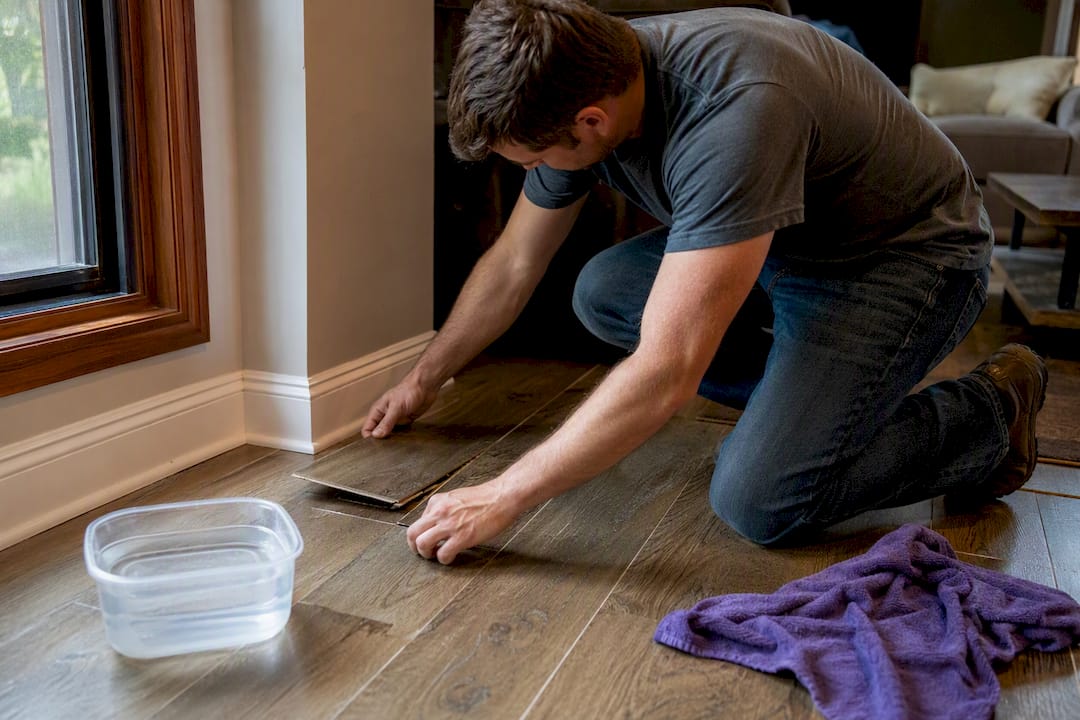

Most laminate flooring is water-resistant, not waterproof, so a small, recently spilled puddle is often salvageable if you act fast. Standing water left over 24 hours, sewage contamination, or visible swelling usually means replacement, not repair. Your single highest priority: stop the water source and start measuring moisture and forced drying within the first 24 hours.
TL;DR:
- Moisture can penetrate the core layer within 2 to 4 hours, with 80% of cupping deformation occurring within three days if untreated.
- Continuous drying efforts should last at least 72 hours with consistent equipment operation and moisture monitoring before reinstallation.
- Signs of damage include bubbling, peaking, discoloration, and a musty smell, but surface dryness can be misleading without proper moisture measurements.
- Subfloor assessment with moisture meters is crucial, as surface dryness does not guarantee the underlying material is fully dry.
- Call a professional if the water is contaminated, the area exceeds 100 square feet, or moisture levels do not stabilize after consistent drying.
Table of Contents
- What To Do in the First 24 Hours After Laminate Floor Water Damage
- How Do You Know If Laminate Flooring Is Ruined?
- What Are the Right Drying Methods and Moisture Thresholds?
- How Do You Repair Water-Damaged Laminate Flooring?
- How Do You Prevent Future Laminate Floor Water Damage?
- When Should You Call a Professional Water Damage Restoration Company?
- What Homeowners Consistently Get Wrong About Laminate Water Damage
- Get Fast, Professional Help for Water-Damaged Laminate Flooring
- Sources
What To Do in the First 24 Hours After Laminate Floor Water Damage
Speed decides whether you’re wiping up a spill or replacing a room. Laminate’s core layer, high-density fiberboard, starts absorbing moisture almost as soon as it’s exposed, and once it swells, that swelling is largely permanent. Work through these steps in order.
- Kill the source. Shut off the supply valve, unplug or power down the leaking appliance, and if water is anywhere near outlets or a panel, cut electricity to that area before you do anything else.
- Pull the standing water. A wet/dry shop vacuum handles anything beyond a light puddle; towels and a mop work for small spills.
- Set up forced drying immediately. Pop the baseboards, aim air movers low across the floor and into the expansion gaps, and run a high-capacity dehumidifier nonstop.
- Check for contamination first. If the water came from a sewage backup or outside flooding, stop the DIY cleanup and call a restoration crew instead. Contaminated water carries health risks bleach and a mop won’t fully solve.
- Document everything. Photograph the damage with timestamps, note when the leak started, and log every hour your equipment runs. Insurance adjusters lean heavily on this kind of record.
Pro Tip: Write your equipment start times directly on a piece of masking tape stuck to the dehumidifier. It sounds low-tech, but it’s the fastest way to prove continuous drying if you end up filing a claim.
How Do You Know If Laminate Flooring Is Ruined?
Bubbling or blistering along the surface, raised seams (called peaking), and crowned or cupped boards are the clearest signs the core has already absorbed water. Discoloration, a hollow sound when you tap the plank, and a musty smell point the same direction, and homeowner guidance from BobVila lists these same symptoms alongside the reality that structurally compromised flooring has to come out.
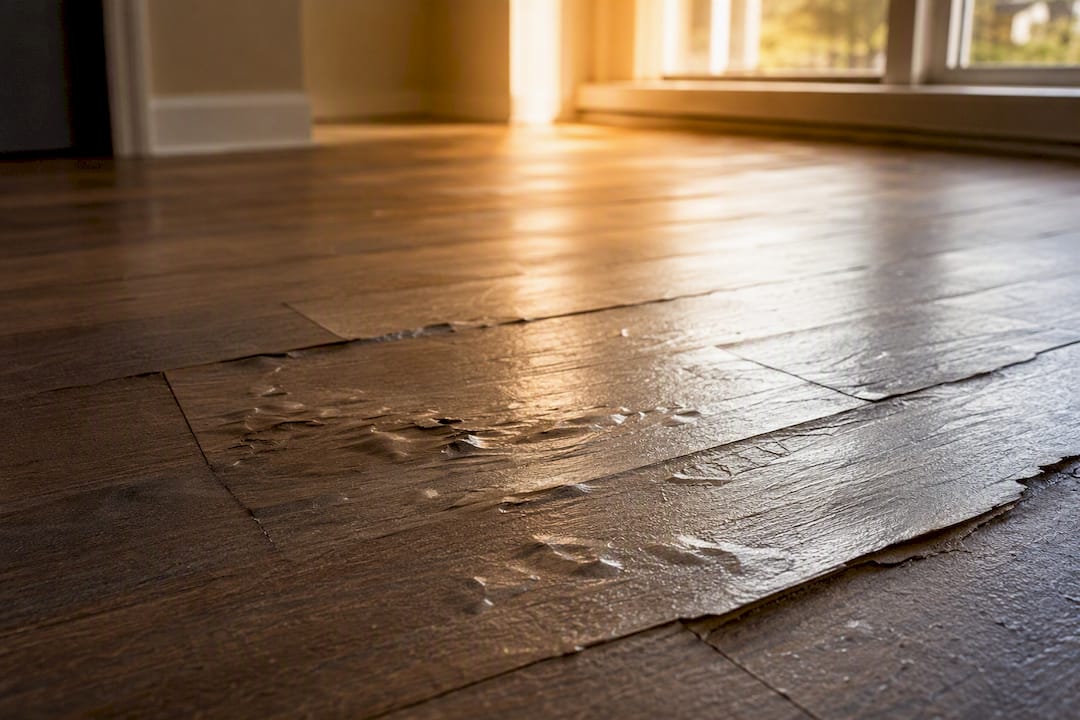
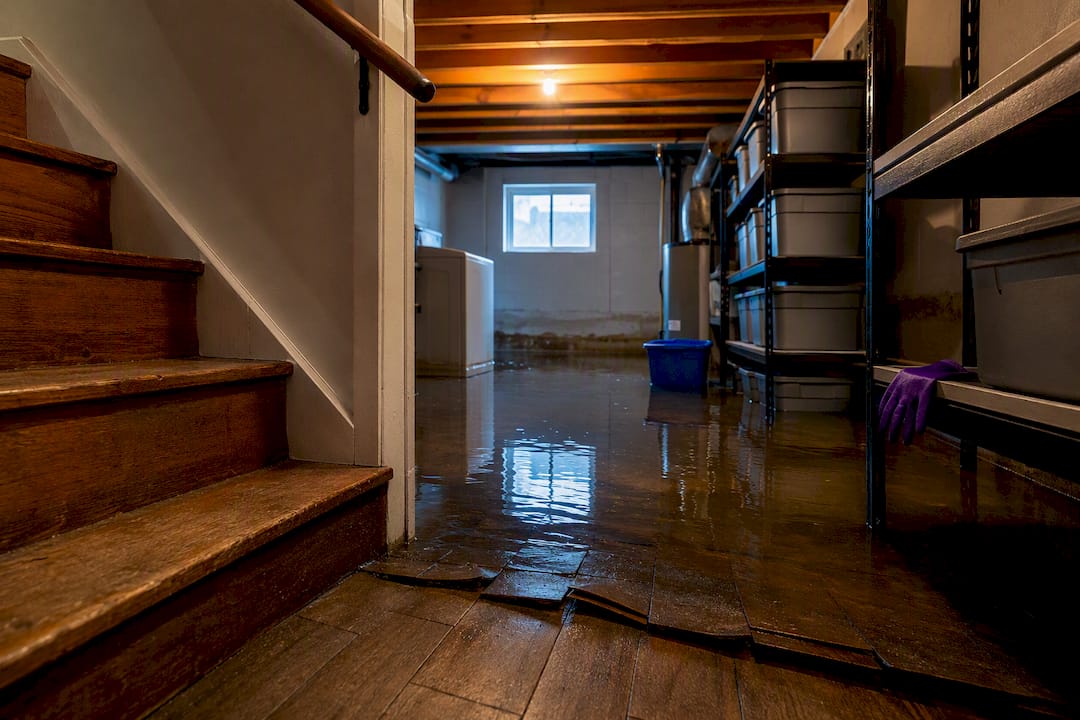
Timing matters more than most homeowners assume. Liquid can start migrating into seams within 2 to 4 hours, the 24-hour mark is where damage risk climbs sharply, and anything past 48 hours pushes the odds toward irreversible swelling. A finite-element study on layered wood composite flooring found that roughly 80% of the total cupping deformation in affected planks happened within just three days.
A few quick checks tell you more than staring at the floor:
- Pull a section of baseboard and feel the subfloor underneath for dampness.
- Press firmly along seams; give or sponginess means moisture is trapped below.
- Use a pinless moisture meter across the surface, or hire someone with a pin meter for a more precise reading.
Here’s the part that trips people up: the surface can feel bone dry while the core and subfloor underneath are still soaked. Visual inspection alone is not reliable, which is exactly why a meter reading, not a fingertip test, should be the thing that tells you the floor is actually dry.
What Are the Right Drying Methods and Moisture Thresholds?
Four tools do almost all the work here: a wet/dry vacuum for extraction, a high-capacity dehumidifier to pull humidity out of the air, structural air movers positioned at floor level, and a moisture meter to tell you when to stop. Skip any one of them and you’re guessing.
- Remove the baseboards and quarter-round trim to expose the expansion gap and let air reach under the planks.
- Position air movers in opposing corners of the room to create genuine cross-flow, not just a fan blowing at one wall.
- Run the dehumidifier continuously, not on a schedule, until your meter readings hit target.
- Once you hit that target, keep drying for another 24 hours as a safety margin before you reinstall anything, since a meter can look good right at the surface while the subfloor lags behind.
- Test both the laminate and the subfloor. Wood subfloors generally need to read within a normal range for your region’s baseline moisture before you trust them; concrete slabs need similar confirmation since trapped moisture under a vapor barrier will just resurface later.
In-place drying tends to fail once the affected area gets large, once meter readings still read high after 72 hours of continuous forced drying, or once you can see cupping or peaking with your own eyes. At that point, pull the planks instead of hoping another day of dehumidifying fixes it. Realistic timelines: a small spill on concrete often dries in 24 to 48 hours, a moderate leak needs 72 to 96 hours of continuous equipment, and water that got trapped under planks or spread through several rooms can mean days to weeks of drying once you factor in subfloor remediation.
How Do You Repair Water-Damaged Laminate Flooring?
Which repair path makes sense depends on how far the water traveled and how long it sat. A technical repair guide from Floorcasa breaks the process into isolating the source, testing moisture, removing the affected planks, drying the subfloor to target levels, then replacing the boards.
- Board replacement: Works for isolated damage. You’ll need an oscillating tool to cut old adhesive or fasteners, a pull bar and tapping block for the new planks, and a replacement batch that matches thickness and locking profile exactly, since laminate lots vary slightly between production runs.
- Lift-and-dry: When water traveled under several rows without visibly ruining every plank, pulling up that section to dry the subfloor and the boards flat, rather than in place, protects the structure underneath and often saves more flooring than in-place drying would.
- Full replacement triggers: Widespread swelling, a rotted or contaminated subfloor, sewage exposure, or a section that’s failed to dry properly more than once all point to tearing out the whole floor rather than patching around the edges.
- Subfloor remediation: A subfloor with light surface staining can often be cleaned and treated, but rot or visible mold growth calls for professional mold remediation and, in ambiguous cases, air or surface testing before you close the floor back up.
How Do You Prevent Future Laminate Floor Water Damage?
Most of the repeat calls we see trace back to the same handful of gaps. Fixing them upfront is cheaper than any repair.
- Lay a 6-mil polyethylene vapor barrier under laminate installed over concrete, and test subfloor moisture before installation rather than assuming it’s dry.
- Put leak detectors under the dishwasher, washing machine, and water heater, and behind bathroom and kitchen sinks. Check supply line hoses yearly and swap out anything older than 10 years.
- Wipe up spills the moment they happen, mop with a damp mop rather than a wet one, and keep indoor humidity between roughly 35% and 55%.
- In basements, laundry rooms, or anywhere near a dishwasher, consider a waterproof core product like SPC or LVP instead of standard laminate if moisture exposure is a recurring risk.
Pro Tip: Set a phone reminder to check under every major appliance every six months. Small drips under a fridge or washer often run for weeks before anyone notices the flooring change.
When Should You Call a Professional Water Damage Restoration Company?
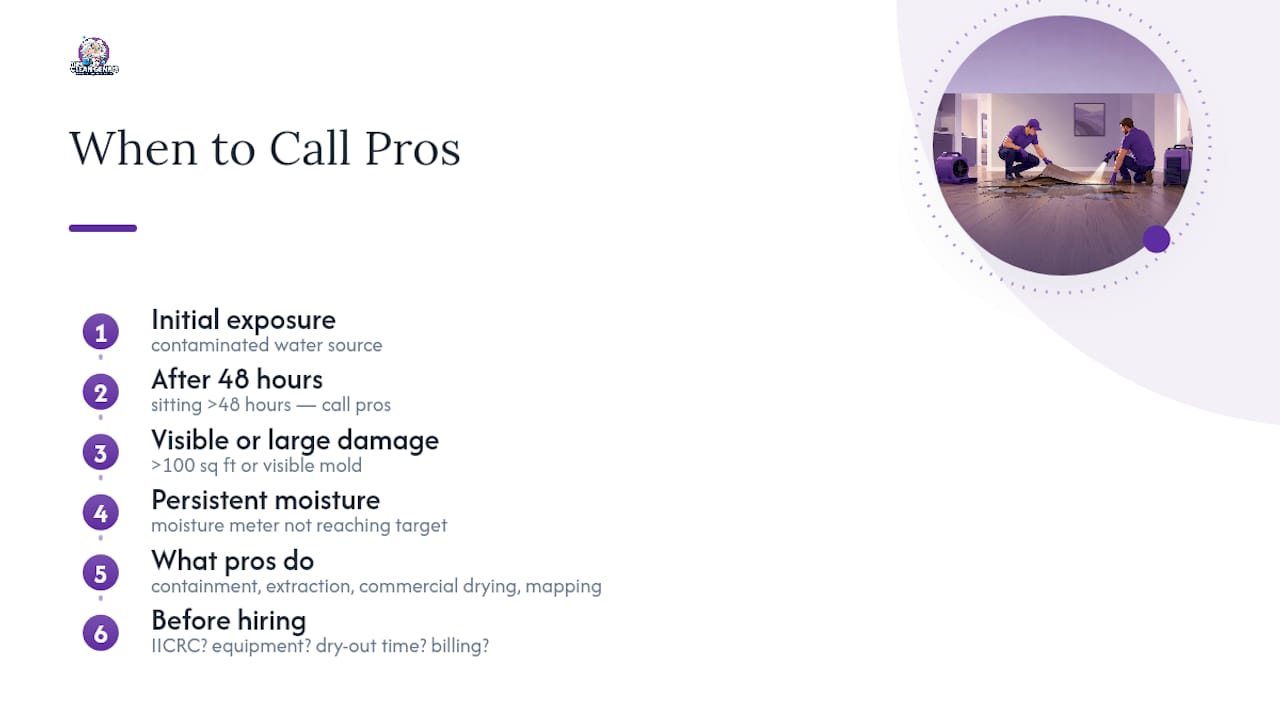
Call a restoration company when any of these apply: the water is contaminated (sewage or floodwater), it’s been sitting more than 48 hours, you see visible mold, the affected area is larger than roughly 100 square feet, or your moisture meter still won’t hit target after real forced drying effort.
A professional crew arriving on-site typically sets up containment, extracts remaining water, brings in commercial-grade drying equipment, maps moisture levels room by room, treats the subfloor, and handles mold remediation if testing calls for it. Many also coordinate directly with your insurer.
Insurers commonly treat a burst pipe differently than a slow leak from long-term humidity, and the paperwork you save, timestamped photos, moisture meter logs, and mitigation receipts, often decides how smoothly that claim moves.
Before hiring anyone, ask a few pointed questions: Are they IICRC certified? What equipment will they bring, and how long do they estimate the dry-out will take? Will they hand you a written moisture report? And do they bill your insurance company directly or leave that step to you? A water damage insurance claim checklist can help you gather what you need before that first call.
What Homeowners Consistently Get Wrong About Laminate Water Damage
The Clean Genius has spent over 25 years handling water damage across Chicagoland, and the same three mistakes show up again and again. People wait too long before calling anyone, assuming a floor that feels dry to the touch must be fine. They skip actual moisture testing and trust their eyes instead. And they treat “the surface looks okay” as the finish line, when the subfloor underneath is where the real damage decision gets made.
Here’s what actually holds up: getting professional-grade drying equipment on the floor within the first day often saves the subfloor and the structure even when individual planks still need replacing later. Saving every board is a nice outcome. Saving the structure underneath it is the job that actually matters.
— Jim
Get Fast, Professional Help for Water-Damaged Laminate Flooring
When a floor’s already swelling or the water source turned out to be bigger than you thought, waiting on DIY drying costs you time you don’t have. The Clean Genius runs emergency extraction and structural drying crews across Chicagoland, backed by 24/7 emergency restoration response, so a burst pipe at 2 a.m. gets the same fast response as one at noon.

Beyond water extraction, our certified teams handle mold remediation with Pure Cloud dry-fog technology when moisture has sat long enough to create a mold risk, plus attic insulation removal and replacement for homes dealing with related moisture issues. When you call, have your photos, a rough timeline of when the water hit, and any moisture meter readings ready. That information lets our crew give you a faster, more accurate estimate on-site. We also work directly with your insurance company to keep the claims process moving. Request a water damage restoration estimate today and get a crew out before another 24 hours passes.
Sources
- WFS: Finite element model of hygromechanical cupping in layered wood composite flooring
- BobVila — Signs of water damage under a floor
- How To Repair Water Damaged Laminate Floor | Technical Guide – Floorcasa