
After a house fire, the fire department leaves and the job of securing the property becomes yours. Firefighters open walls, roofs and windows to put the fire out, and those openings let in rain, animals and thieves within hours. A fast emergency board-up closes them, and doing it quickly protects both the house and your insurance claim. Our fire damage restoration is available 24/7 for emergencies across Chicagoland, and we work directly with your insurance company, so one call starts the restoration side while you handle the rest of that first day.
What are the key takeaways about emergency board-up after a fire?
- The key takeaways about emergency board-up after a fire are: Do not enter or board up anything until the fire department tells you the structure is safe to approach. Once firefighters leave, securing the property is the homeowner’s responsibility, and most policies require it. Board-up covers every opening: broken windows, damaged doors, holes in walls and roof openings, not only the obvious window. Call your insurer promptly, photograph everything before and after, and keep every receipt, including the board-up invoice. Board-up is temporary, buying time for the restoration and rebuild that follow.
What topics are covered in this emergency fire board-up guide?
- This emergency fire board-up guide covers: What an emergency board-up is, who is responsible and when, when it is safe to board up, what gets secured, why board-up protects your insurance claim, a realistic timeline for the first 48 hours, why waiting costs more, how to choose someone for the board-up, our view on board-up after a fire, where The Clean Genius fits in, FAQs, and sources.
What an emergency board-up is
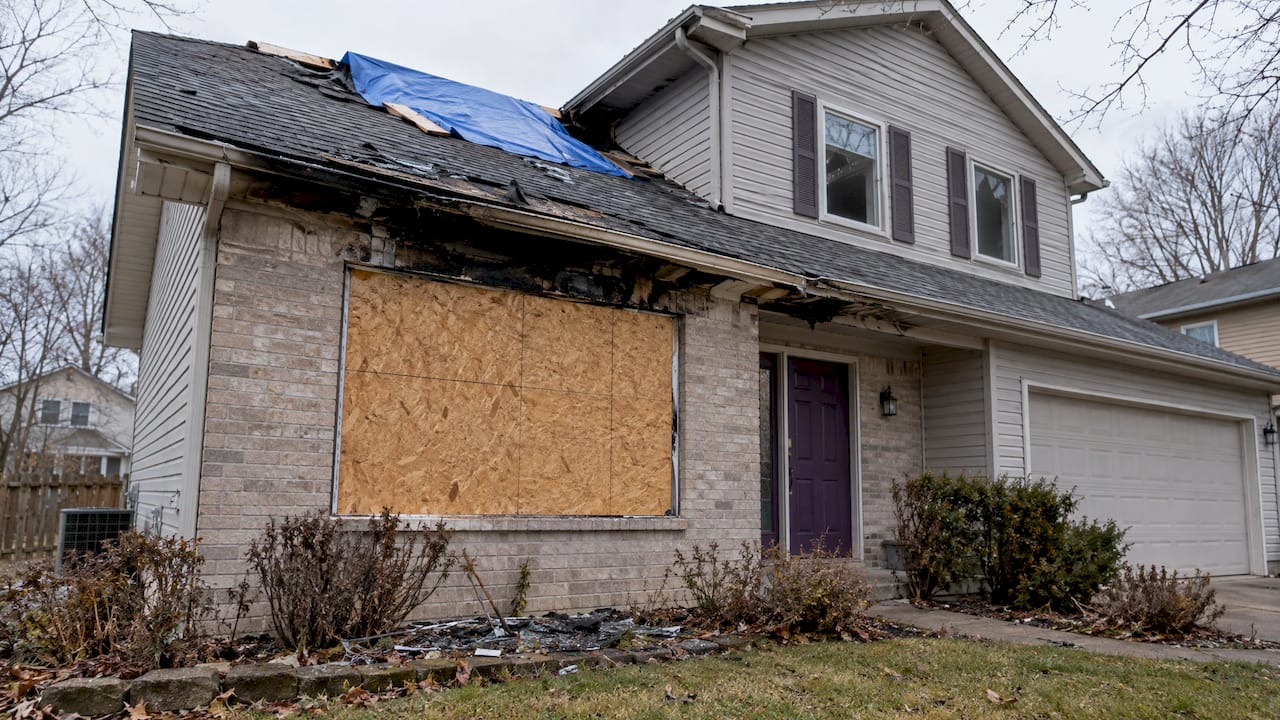
An emergency board-up is a temporary seal over openings the fire or the firefighting created. In practice that means plywood or heavy plastic tarps fastened over windows, doors and roof or wall holes so weather and people stay out.
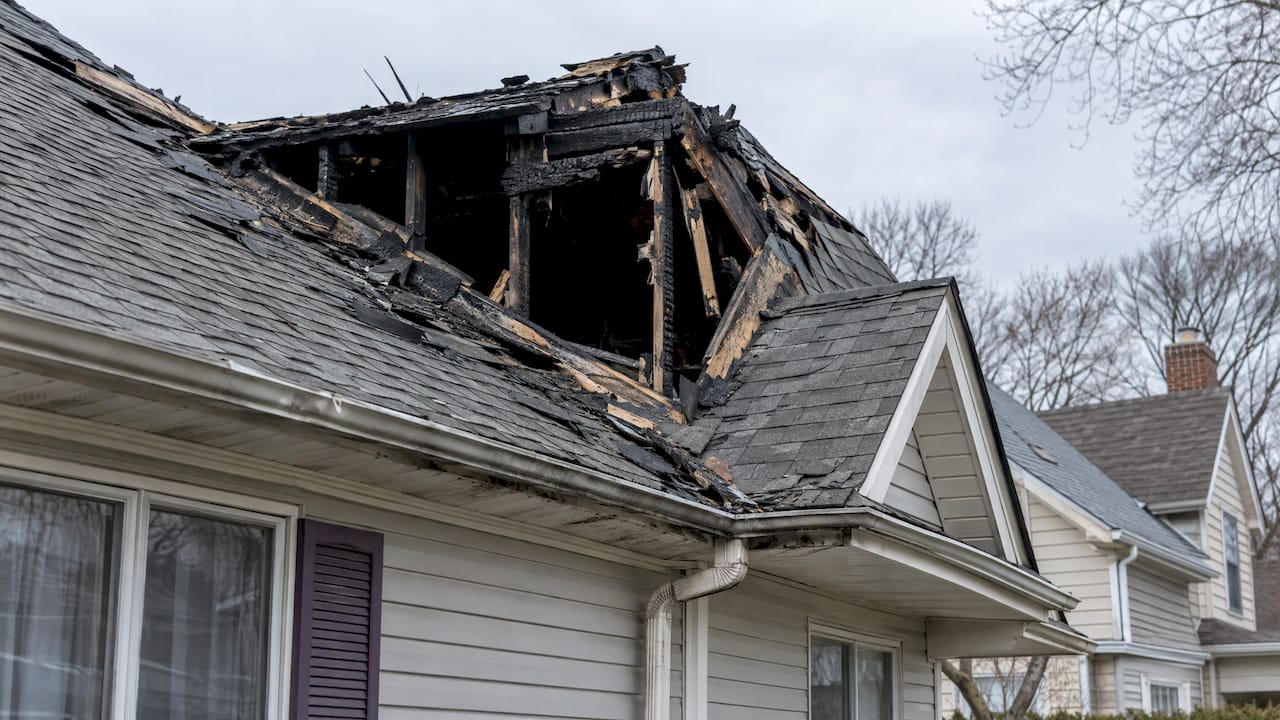
The openings are often larger than the fire damage itself. Crews break windows to vent heat and smoke, cut through roofs to release it, and force doors to reach rooms. A kitchen fire in a Palatine ranch can leave a vented roof section, two broken windows and a kicked-in back door. None of that is the fire’s fault in a strict sense, but all of it is now an open house.
Board-up protects against three things:
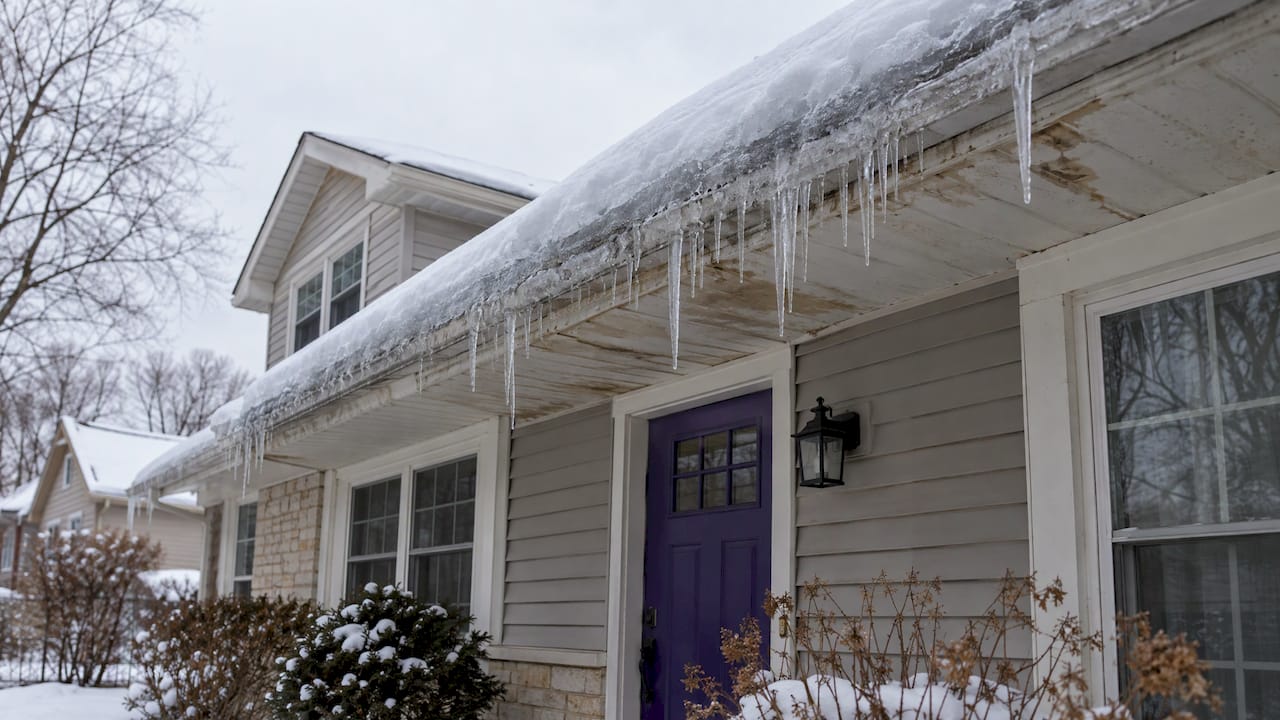
- Weather. Rain, snow and wind soak insulation, drywall and framing that the fire never touched. Chicagoland weather turns a dry-looking shell into a water damage job within a day or two.
- Theft and vandalism. A house with broken windows and a known fire is an easy target. The North Carolina Department of Insurance tells owners that protecting the home from weather, theft and vandalism is their responsibility.
- Claim problems. More on this below, but the short version is that an insurer can argue that avoidable later damage was your failure to protect the property.
Who is responsible, and when
The fire department is responsible for the scene while it is working. After that, the property is yours again. The Wheeling, Illinois Fire Department’s recovery guide says responsibility for securing the property returns to the homeowner after firefighters leave. Seattle’s guidance says the same thing from another angle: firefighters will secure doors and windows if possible, but the final responsibility lies with the owner.
That gap matters. A crew may pull a door shut or lay a tarp, but a fire department is not a boarding contractor, and its temporary measures are not a finished seal. Assume the job is yours to finish the moment the trucks pull away. If you live somewhere like Mount Prospect or Naperville and the fire occurred late at night, the realistic window is hours, not days.
When it is safe to board up
Securing a house is urgent, but safety comes first. Three checkpoints apply.
The fire department releases the scene
The fire department has to make sure the scene is safe and complete its investigation before it hands the property back. Miami-Dade Fire Rescue’s booklet describes exactly this order, and the process is the same in principle in Illinois. In Burnsville, Minnesota, for example, the scene passes to a fire investigations team that determines the cause and origin and whether the property is safe to enter. Only then may the owner go in and secure doors, windows and other areas.
If the fire is under investigation, ask the officer on scene who has to approve your return and when. Walking into a cordoned structure can disturb evidence that matters to your claim.
Utilities are dealt with
The U.S. Fire Administration’s After the Fire publication tells homeowners not to enter a damaged home unless the fire department says it is safe. It also says to verify that water, electricity and gas are safe to use, because utilities may be shut off before crews leave, and homeowners should not try to restore them on their own. Do not flip a breaker or relight a pilot to “check things.” Wet wiring in a burned house is a shock and fire risk.
The structure is sound
The Red Cross’s home fire recovery guide notes that you should not re-enter if a building inspector judges the building unsafe. If a roof, floor or wall looks compromised, stay out and tell the fire officer. A board-up crew working from outside, on a roof opening or a window frame, is a different situation from a family walking through a charred hallway, but both depend on the structure being declared stable.
What gets secured
People picture one sheet of plywood over a window. A proper board-up covers every way in:
- Broken or vented windows, including upper-floor and basement windows.
- Damaged or forced doors, including garage entry doors and sliding doors.
- Holes in walls, such as areas opened by firefighters to check for hidden fire.
- Roof openings, usually closed with tarps or boards where crews cut ventilation holes or fire burned through.
The Red Cross guide lists the same targets: broken windows and smashed doors, plus holes in the walls and roof. New York City’s council guide for apartment fires says building management should send workers the same day to board up broken windows, roof holes and other access points. Same-day is the right benchmark for a single-family home too.
Roof openings need extra care
A roof hole is the opening that most often turns a fire loss into a water loss. Water pours through it onto an attic and ceilings that are already weak. If you want a sense of how the weather-prevention side of a roof is assessed, this roof damage assessment workflow walks through documenting damage before temporary protection goes on. Roof work after a fire is not a job to climb up and attempt yourself: the decking may be weakened, and a fall is a worse outcome than a wet attic. Our roof leak water damage restoration page covers what happens when water gets in anyway.
Why board-up protects your insurance claim
This is the part many homeowners miss in the first chaotic hours. The Wheeling guide states that most insurance policies require the homeowner to secure the property after a loss, and that failing to do so can lead to the claim settlement being reduced or denied. In plain terms, if rain ruins your living room because the roof stayed open for three days, the insurer can say that part of the loss was preventable.
The same guide gives a short claim routine worth following:
- Call your insurer promptly. Wheeling’s guide says to contact the insurer as soon as possible, or within 24 hours if immediate notice is not possible. Tell them you need to secure the property.
- Photograph the damage first. Take pictures of every opening before anything is covered, then again after the board-up.
- Keep every receipt. The guide lists board-up service, a locksmith, temporary housing, replacement clothing and food among the expenses to document. Insurers require receipts to verify the loss, and some of these costs may support itemized tax deductions.
- Get the claim number and adjuster’s name. Write them down on the first call.
- Read before you sign. Carefully review documents before signing anything, including contractor paperwork.
Miami-Dade Fire Rescue’s booklet also advises notifying your agent promptly about the need to secure the property. In other words, the insurer expects a call about board-up, not a surprise invoice a month later.
If you want a fuller claim routine, our water damage insurance claim checklist follows the same documentation logic, which applies when firefighting water has soaked the house too.
A realistic timeline for the first 48 hours
No two fires unfold the same way, but the order of events rarely changes.
Hour 0 to a few hours. Firefighters extinguish the fire, check for hidden fire, and cut or break openings. The fire department or investigators decide when the scene can be released. You get your people and pets safe, find temporary shelter and call your insurer.
First day. Once you are allowed back, the openings get sealed. Photographs come first, then board-up. Valuables, documents and medications you can safely retrieve come out. Do not move through the house more than necessary: Seattle’s guidance advises limiting movement to prevent soot and fire debris from working into upholstery, carpets and curtains.
Day two. With the building closed up, you can plan the restoration: smoke and soot cleanup, drying where water was used, odor control and an estimate of what rebuilding involves. Our guide to the fire damage restoration process walks through these stages, and the fire damage cleanup timeline for Chicagoland explains how long each tends to take.
Why waiting costs more
Board-up looks like a small expense next to a rebuild, and it is. A few common ways delay compounds the loss:
- Water reaches rooms the fire never touched. Firefighting hoses already add water. Rain or snow through an open roof adds more, and soaked insulation and drywall can grow mold within days if left damp. Our mold removal and remediation service exists for exactly that second-stage problem.
- Soot and smoke spread with air movement. Open windows and doors move smoke residue through the house.
- Contents are exposed. Furniture, clothing and keepsakes that survived the fire can be lost to weather or theft. See our page on contents restoration after a fire for what can often be saved.
- The claim gets harder. An insurer reading “roof open three days” sees a failure to protect the property.
How to choose someone for the board-up
The North Carolina Department of Insurance notes that a general contractor, a fire damage restoration firm or a fire service firm can help with boarding up. Whoever you call, run through these points:
- Availability at night. Fires rarely respect business hours. Ask whether the company answers around the clock.
- Whether they work with your insurer. Direct coordination saves you phone calls at the worst possible time.
- Whether the same company can handle what follows. Board-up is the first step. A single point of contact for cleanup, odor and rebuild coordination means fewer handoffs.
- Written paperwork. Insist on an itemized invoice you can send to the adjuster.
- Be careful with pressure. Wheeling’s guide warns that contractors or public adjusters may seek 10 to 15 percent of a settlement. Know any percentage arrangement before you sign.
- Permits. The Wheeling guide says demolition or repairs require a building permit from the village. Chicago’s rules for repair of existing buildings sit in its Building Rehabilitation Code, Title 14R. Suburban towns from Arlington Heights to Downers Grove have their own building departments, so ask yours what needs a permit before work begins.
Our view on board-up after a fire
Homeowners tend to treat the first day after a fire as a blur and the board-up as a detail. It is not a detail. It is the moment the loss either stops growing or starts to.
We are a family-owned restoration company with more than 25 years of combined experience serving Chicagoland, and our teams are certified and insured. What we want homeowners to understand is that fire, water and mold are one chain. Firefighting water, an open roof and a cold week turn a fire loss into a water loss and then a mold loss. That is why we handle fire and smoke restoration, water damage, mold removal and attic work under one roof, and why we are available 24/7 for emergencies.
We also work directly with your insurance. After a fire you should not have to be the go-between for adjusters, vendors and invoices. Take your photographs, keep your receipts, call us and let us carry the restoration forward.
Jim
Where The Clean Genius fits in
If your home has had a fire anywhere in our service area, from Elgin and Schaumburg to Naperville, Wheaton and Crystal Lake, our fire damage restoration services cover the work that follows the emergency: fire and smoke damage repair including soot and odor elimination, plus water damage from firefighting. Our certified, insured teams are available around the clock, and we work directly with your insurance company.

If water got in as well, our water damage restoration team handles the dry-out. Call us once the fire department has released the scene, and tell us what openings you see.
Frequently Asked Questions about Emergency Fire Board-Up
How soon after a fire should I board up my house?
As soon as the fire department says the property is safe to approach, ideally the same day. Weather and theft risks start the moment firefighters leave, and most policies expect you to protect the property. Call your insurer right away to tell them you are arranging it.
Does insurance pay for emergency board-up?
Often it does, but terms differ by policy. Keep the invoice and receipts, because Wheeling’s recovery guide lists board-up among the expenses to document. Tell your insurer you are securing the property, and ask your adjuster how the cost will be handled in your claim.
Can I board up the house myself?
Only after the fire department confirms it is safe, and only where the structure is sound. Windows at ground level are one thing, but roof openings and damaged framing are hazards. The Red Cross says owners can board up broken windows and doors or call a fire and water restoration contractor, and for roof or wall damage the contractor route is the safer one.
Who is responsible for securing the property after firefighters leave?
You are. Fire departments such as Wheeling’s and Seattle’s say that responsibility returns to the owner once they leave, even if crews did some temporary securing. That is why the first calls should be to your insurer and a restoration company.
Is board-up a permanent repair?
No. It is a temporary seal that holds until restoration and rebuilding can begin. The next steps are cleaning soot, controlling odor, drying anything that got wet, and permitted repairs where needed.
What are the sources for this emergency fire board-up guide?
- Wheeling Fire Department Fire Recovery Guide
- North Carolina Department of Insurance: After the Fire
- U.S. Fire Administration: After the Fire
- Miami-Dade Fire Rescue: After the Fire
- City of Seattle: After the Fire
- Burnsville, MN: After the Fire
- NYC Residential Fire Emergency Response Guide
- Red Cross: Home Fire Recovery guide
- City of Chicago Title 14R Building Rehabilitation Code
- Roof damage assessment workflow