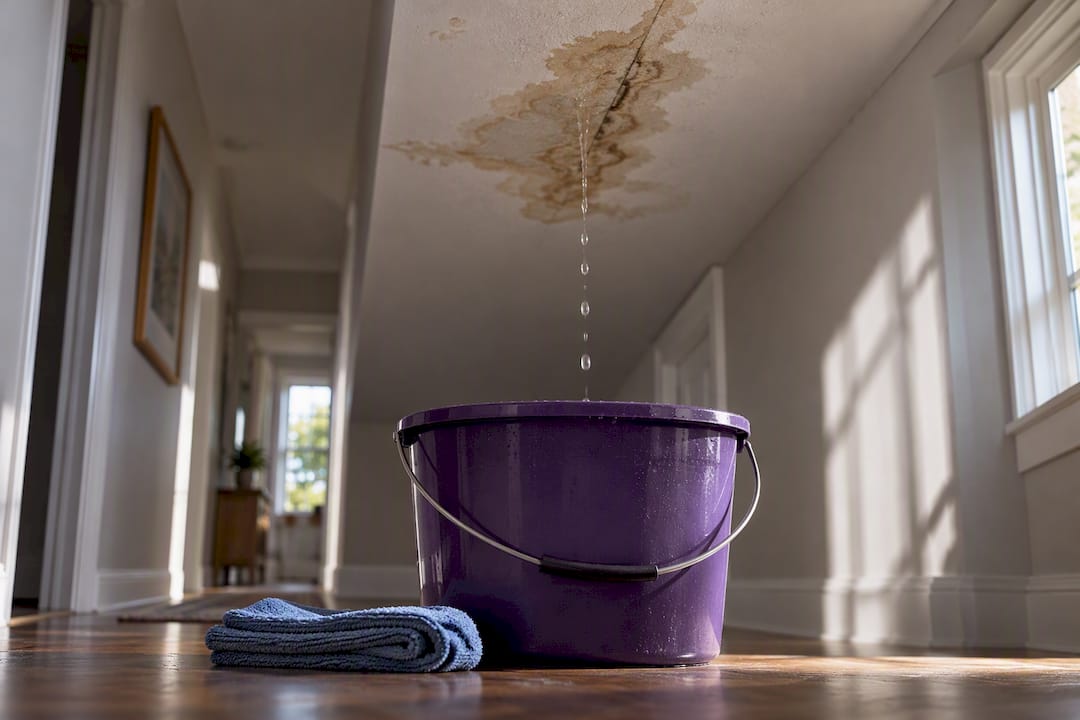

If your ceiling is leaking, safety comes first: cut power to any circuit near the wet area, stop the water at its source, and only then think about the mess. Document everything with your phone before you touch a towel. Mold can take hold within 24 to 48 hours, so speed matters as much as caution.
TL;DR:
- Ceiling leaks caused by storms are usually from roof damage, while leaks during dry weather are more likely plumbing or HVAC issues.
- Mold can begin developing within 24 to 48 hours after water intrusion, making swift action critical.
- If the ceiling is sagging or bulging, it’s essential to evacuate the room and carefully relieve pressure with a controlled puncture only after power is shut off.
- Document all damages and measurements before cleaning or drying to support insurance claims and ensure thorough remediation.
- Homeowners should prioritize stopping the water source, removing electrical hazards, and then drying materials to prevent mold and structural deterioration.
Table of Contents
- Signs of Ceiling Water Damage and How Serious They Are
- What to Do the Moment You Spot a Leak
- How to Trace a Ceiling Leak Back to Its Source
- Ceiling Water Damage Repair Options and What They Cost
- How Drying Works and Why Mold Risk Doesn’t Wait
- When to Call a Restoration Professional
- Insurance Documentation for a Ceiling Leak Claim
- Preventing the Next Ceiling Leak
- What Twenty Five Years of Restoration Calls Teaches You
- Get Help From a Local Restoration Team That Answers at 2 AM
- Sources
- FAQ
Signs of Ceiling Water Damage and How Serious They Are
A yellow ring on drywall usually means the leak has been going on longer than you think, since water spreads sideways before it ever shows through paint. Bubbling or peeling paint means moisture is trapped behind the surface, and a sagging or bulging patch means the drywall itself is saturated and close to failing.
Watch for these signs, some obvious and some easy to miss:
- Water rings or brownish stains that reappear after drying
- Bubbling, cracking, or peeling paint
- Sagging, bulging, or soft-feeling drywall
- A musty or earthy smell with no visible source
- Rising indoor humidity or condensation on windows near the ceiling
- Flickering lights, tripped breakers, or a burning smell near the leak
Mold can begin forming in as little as 24 to 48 hours after water intrusion, and by the time you can smell it, colonies are usually already established inside the insulation or framing you can’t see. A stain that keeps coming back after you’ve cleaned and repainted almost always means the source was never actually fixed.
What to Do the Moment You Spot a Leak
Move fast, but move in order. Panic leads people to grab a mop before they’ve dealt with the actual hazards overhead and behind the walls.
- Clear the room. If the ceiling is sagging or bulging, get people and pets out. A waterlogged section of drywall can weigh far more than it looks, and water itself runs about 8.5 pounds per gallon, so a saturated patch can collapse without warning.
- Cut the power. If water is anywhere near light fixtures, outlets, or wiring, shut off the breaker for that area before doing anything else. The CDC is blunt about this: water and live electricity is a fatal combination, not just an inconvenience.
- Stop the source. Shut off the main water supply or the local valve if you suspect plumbing. If it’s roof-related, that has to wait for the rain to stop or for a roofer.
- Contain and document. Set buckets under drips, lay down towels or plastic, and take timestamped photos and video of the stain, the drip, and any damaged belongings before you clean anything up.
- Start drying, carefully. Point fans at the area, but never near standing water or exposed wiring, and log when you started so you can track progress.
Pro Tip: If a ceiling is visibly bulging with trapped water, a controlled puncture at the lowest point can relieve pressure and reduce collapse risk, but only do this after the power is off and the room is cleared. If you’re not confident doing it safely, wait for a professional instead.
How to Trace a Ceiling Leak Back to Its Source
Timing is your first clue. A leak that shows up during or right after a storm almost always points to the roof, gutters, or flashing. A leak on a dry, clear day is a much stronger sign of plumbing, a water heater, or an HVAC condensation line.
Water color and consistency narrow it down further. Roof leaks often carry a tan or brown tint from tannins in wood and shingles, while plumbing leaks tend to run clear, and a soapy or gray tint usually means a drain or appliance line.
Work through this checklist before calling anyone:
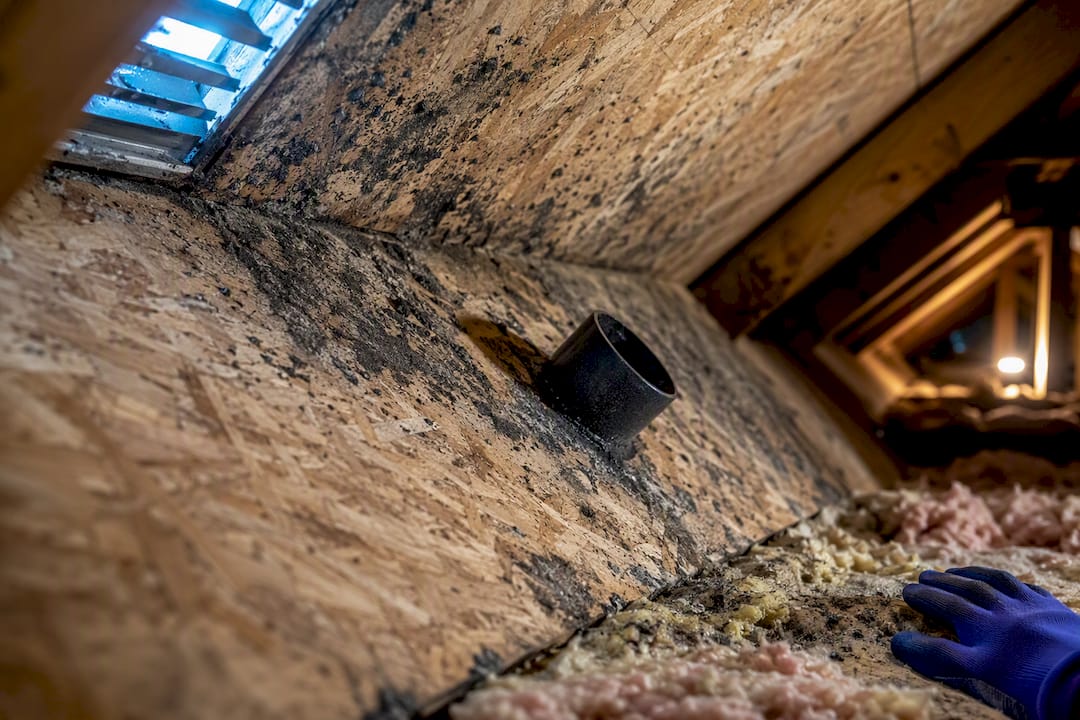
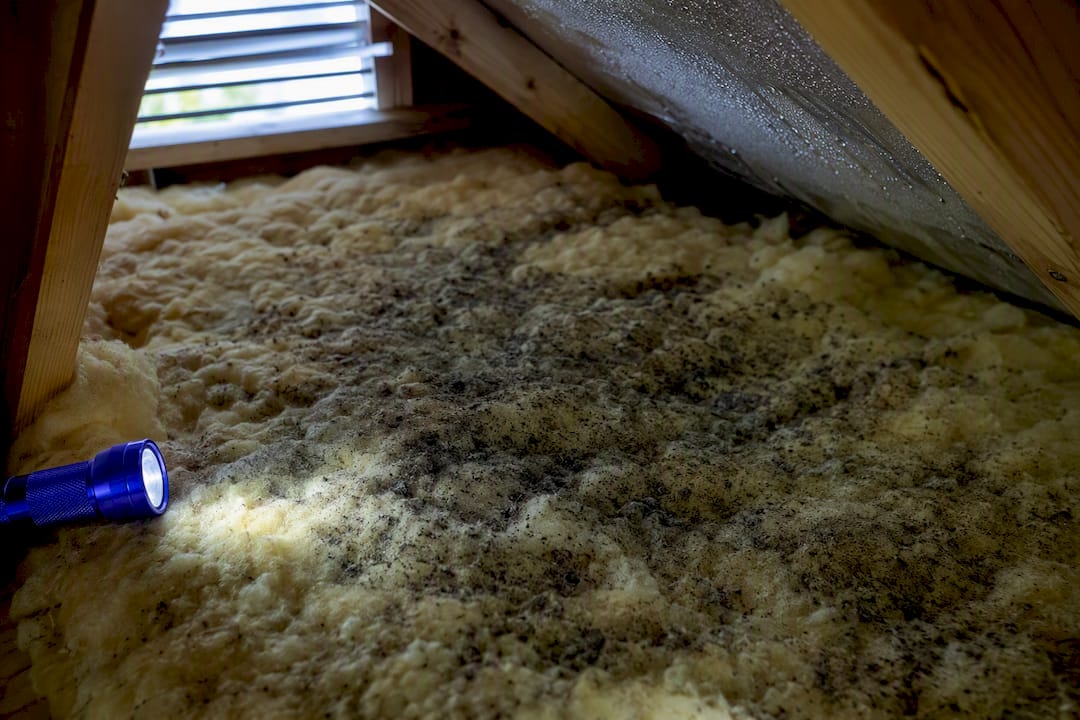
- Check the attic directly above the stain for wet insulation or rafters
- Run every upstairs fixture (tub, sink, toilet) one at a time to isolate plumbing
- Inspect gutters and roof flashing for debris, gaps, or worn seals
- Rule out condensation from ductwork or a poorly vented bathroom fan
- Consider whether a neighboring unit’s plumbing could be the real source in condos or apartments
Homeowners routinely misjudge how far water has traveled, because it follows the path of least resistance along joists and subfloor rather than dripping straight down, according to FEMA and HUD’s guidance on resilient rebuilding. A moisture meter or infrared scan will show you the true wet footprint when the visible stain tells only part of the story.
Ceiling Water Damage Repair Options and What They Cost
Not every leak needs a full drywall replacement, but pretending a soaked ceiling is “just cosmetic” is how small leaks turn into expensive ones.
- Minor damage (small stain, dry to the touch, paint intact) often just needs the source fixed, the area dried, a stain-blocking primer, and a fresh coat of paint.
- Moderate damage (soft drywall, bubbling paint, wet insulation) usually means cutting out and replacing a section of drywall, pulling and replacing saturated insulation, and repainting once everything reads dry.
- Major damage (sagging framing, rotted joists, repeated flooding) requires structural repair. That means replacing framing members, possibly re-roofing a section, and coordinating drywall, insulation, and paint work after the structure itself is sound.
Cost depends heavily on square footage, ceiling height, whether insulation and framing are involved, and your local labor rates, so any number you see online is a rough cue rather than a quote. A patch-and-paint job sits at the low end; a full ceiling tear-out with framing repair sits much higher, especially if mold remediation gets added to the scope.
Until repairs start, a tarp over a roof leak or a temporary drain pan under a plumbing drip can limit damage. Never paint or replaster over an area until you’ve confirmed it’s fully dry. Sealing in moisture just hides a problem that keeps growing behind the new paint.
How Drying Works and Why Mold Risk Doesn’t Wait
Drying isn’t about the ceiling looking dry to the touch. Surface moisture evaporates fast, but insulation and framing behind it can stay wet for days, which is exactly where mold gets started.
Professionals verify dryness rather than guess at it:
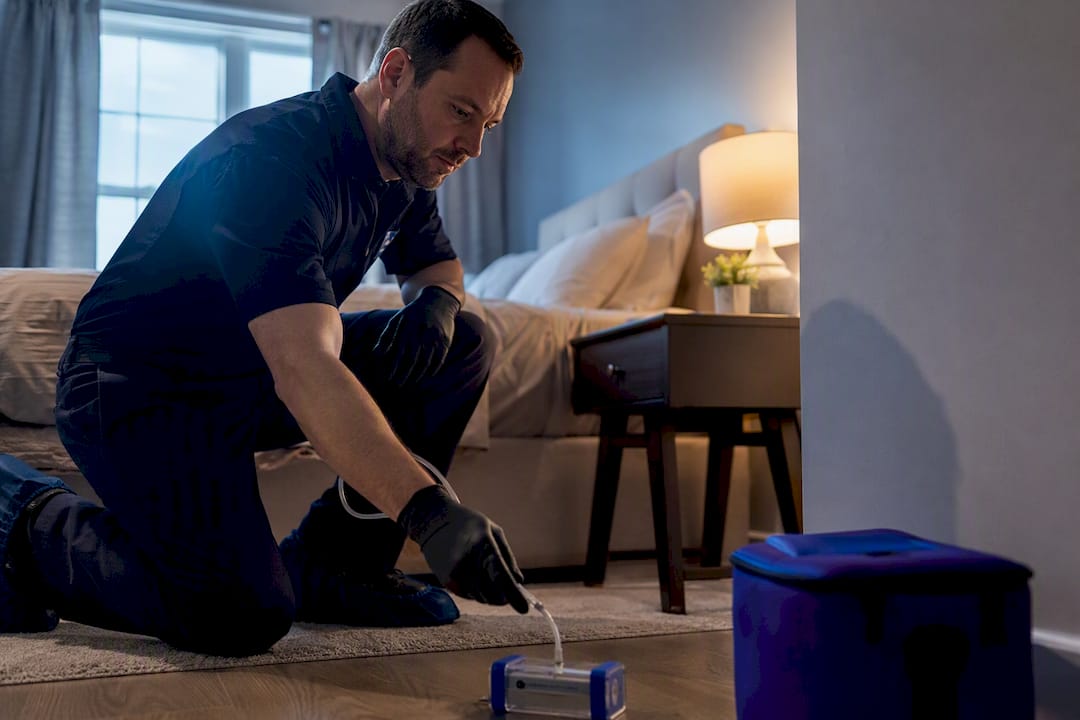
- Moisture meters check the actual water content inside drywall and wood, not just the surface
- Thermal imaging spots cooler, wet zones hidden behind paint that look completely dry
- Industrial dehumidifiers and air movers pull moisture out of the whole assembly, not just the visible spot
- Drying logs track moisture readings over days to confirm the material has actually returned to normal
The 24 to 48 hour mold window is the reason speed matters more than thoroughness in the first few hours, and thoroughness matters more than speed in the days after. If you see mold, smell sewage, or the water source was contaminated, that’s no longer a drying job. It’s a remediation job.
When to Call a Restoration Professional
Some situations are beyond a bucket and a fan, no matter how motivated you are with a mop.
Call a professional if any of these apply:
- The ceiling is sagging or bulging and you’re not sure it’s structurally safe
- The leak keeps recurring even after you thought you fixed the source
- Water is or was near electrical wiring or fixtures
- You can see or smell mold
- The water came from a sewage backup or other contaminated source
- You can’t pinpoint the source after checking the obvious spots
A restoration company brings tools most homeowners don’t own: moisture meters, thermal cameras, and industrial-grade dryers that pull moisture out of framing far faster than box fans ever could, as outlined by restoration specialists who deal with these cases daily. Local restoration companies have handled this exact scenario across Chicagoland for many years, with emergency response teams who document moisture readings from the first visit through the last.
Pro Tip: When you call a contractor, ask specifically about their containment methods, their certification, and whether they coordinate directly with your insurance adjuster. A vague answer to any of those three questions is worth a second phone call.
Insurance Documentation for a Ceiling Leak Claim
Most homeowners policies cover sudden, accidental water damage, like a burst pipe or a surprise roof failure, but they typically exclude damage from long-term neglect, like a slow leak you ignored for months. That distinction is usually where claims get denied.
Build your file before you clean anything up:
- Timestamped photos and video of the stain, the drip, and any damaged belongings
- A written report from the plumber or roofer who identified the source
- Moisture meter readings and drying logs, if a restoration company was involved
- Receipts for any emergency mitigation, like tarps, fans, or a plumber’s visit
Call your insurer as soon as it’s safe to do so, and ask specifically about trace-and-access coverage, which can cover the cost of opening a wall or ceiling to find a hidden leak. Keep every receipt tied to mitigation. Adjusters expect to see that you acted to limit the damage, not that you waited it out.
Preventing the Next Ceiling Leak
Most ceiling leaks trace back to maintenance that got pushed off one season too long.
- Clean gutters twice a year and confirm they slope toward the downspouts, not toward your fascia
- Have flashing around chimneys, vents, and skylights inspected every couple of years
- Check supply lines, hoses, and your water heater for corrosion or bulging before they fail
- Keep attic insulation and ventilation in good shape to control condensation, and watch indoor humidity levels year round
Pro Tip: Walk your attic once a season with a flashlight. Wet insulation or dark spots on the underside of the roof deck show up long before a stain ever reaches your ceiling below.
What Twenty Five Years of Restoration Calls Teaches You
The panic instinct is always to grab a mop first. It should be the last thing you do. Cut the power, stop the source, document everything, dry it fully, then repair.
Homeowners who move in that order spend less, wait less, and rarely deal with a surprise mold problem three weeks later. The ones who skip a step almost always pay for it twice.
— Jim
Get Help From a Local Restoration Team That Answers at 2 AM
Thecleangenius is the option for Chicagoland homeowners who don’t want to guess whether a ceiling stain is safe to paint over or a sign of something worse behind the drywall. As a family-owned company with extensive experience and positive customer reviews, restoration crews respond 24/7 with moisture meters and thermal imaging in hand, not just towels and a shop vac.

Call us the moment you spot a leak, and we’ll walk you through what to check before we even arrive. Once on-site, the team maps the moisture, explains the likely source, scopes the repair, and coordinates directly with the insurance adjuster so clients are not stuck translating restoration jargon into a claims form. Start with our water damage restoration page to see how the first visit works, or reach out now if water is actively coming through your ceiling. If your leak traces back to a roof issue, our roof leak water damage team handles that scenario specifically, and if you’re already seeing mold, our mold removal and remediation services pick up right where drying leaves off.
Sources
FAQ
Does Homeowners Insurance Cover a Ceiling Water Leak?
Most policies cover sudden, accidental damage like a burst pipe or storm-driven roof failure, but they typically exclude damage caused by long-term neglect or a leak you knew about and ignored. Document the source and timeline clearly, since that distinction is usually what determines whether a claim gets approved.
What Do I Do If Water Is Leaking Through My Ceiling Right Now?
Cut power to any circuit near the wet area, place buckets or towels to contain the drip, and shut off the water supply if you suspect plumbing. Take photos and video before cleanup, then start drying with fans once the area is safe.
How Much Does It Cost to Repair a Ceiling Leak?
Cost depends on the extent of the damage, ranging from a simple patch and repaint for minor staining to full drywall, insulation, and framing replacement for structural damage. Actual quotes vary by region and scope, so a local inspection from a company like Thecleangenius gives the most accurate number for your specific situation.
How Serious Is a Ceiling Leak?
A ceiling leak can range from a minor cosmetic issue to a genuine safety hazard, depending on how much water has accumulated and whether it’s near electrical wiring. Mold can start forming within 24 to 48 hours, so even a small stain deserves a same-day look rather than a “watch and wait” approach.