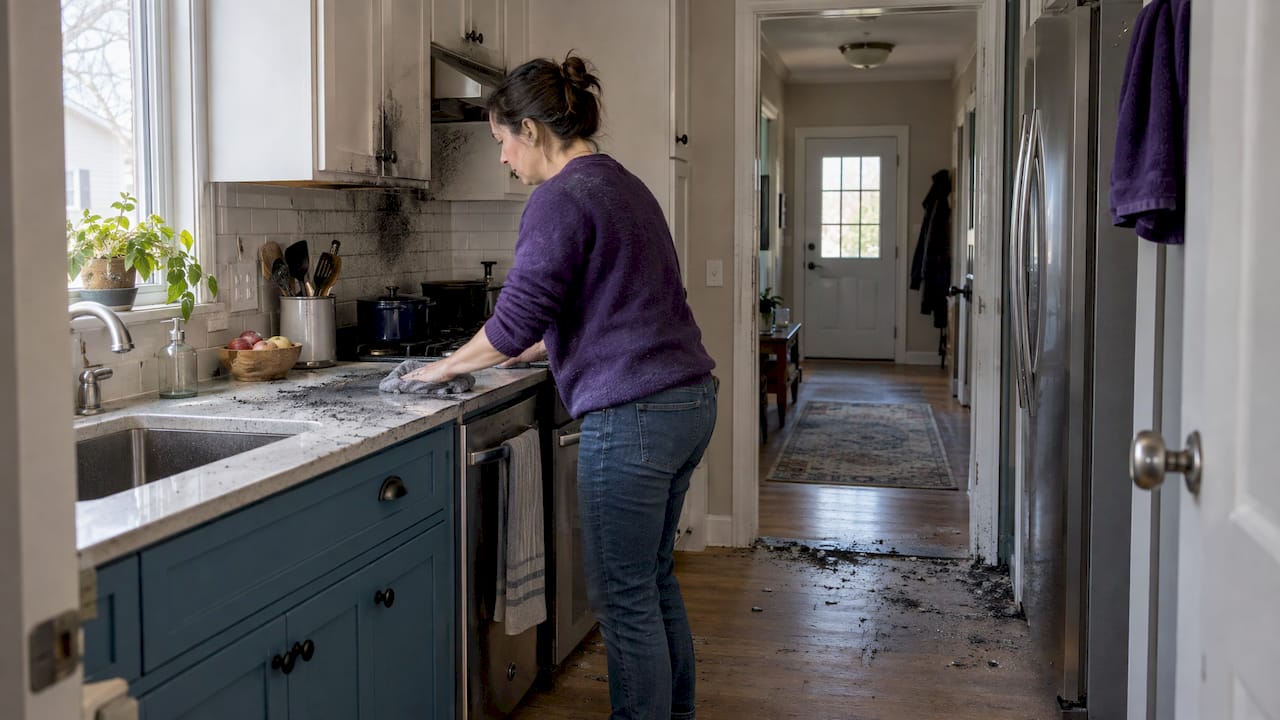

After a fire, the air inside your home is rarely safe just because the flames are out. Smoke leaves fine particles and chemical residues on walls, floors and furniture, and those residues keep releasing into the air for weeks. The safest path is to limit your time in the home, clean surfaces the right way, filter the air, and have a professional assess the house when damage is more than light. Below is how that works, step by step, for Chicagoland homeowners.
What are the key takeaways about air quality after a fire?
- Smoke leaves fine particles and chemicals on surfaces, and they keep releasing into the air for weeks, fading over time.
- Fine particles (PM2.5) are the biggest health threat from smoke. Children, older adults, pregnant women and people with heart or lung disease are most at risk.
- Cleaning with an N95 respirator, damp wiping, a HEPA vacuum and a HEPA-plus-carbon air cleaner does the most for indoor air. Skip ozone generators in an occupied home.
- A cheap air monitor can miss ash. If you can see ash or soot, treat the air as affected.
- Heavy ash, soot in the HVAC system or smoke odor that will not fade are signs to call a restoration professional.
Table of Contents
- What a fire leaves in your home’s air
- Can the air after a fire make you sick?
- How long do fire pollutants stay in the air?
- How to check air quality after a fire
- What to do right now: a safe cleanup sequence
- Don’t forget the water side of a fire
- When to call a professional
- What it looks like when we help
- Keeping the air clean in the weeks after
- FAQ
- Sources
What a fire leaves in your home’s air
Smoke is a mixture of gases and tiny solid particles. According to FEMA’s guide on residential smoke damage, the gases can be absorbed into the air and porous materials, while the particles settle as soot and ash. That is why a fire in the kitchen can leave a smell in a bedroom down the hall.
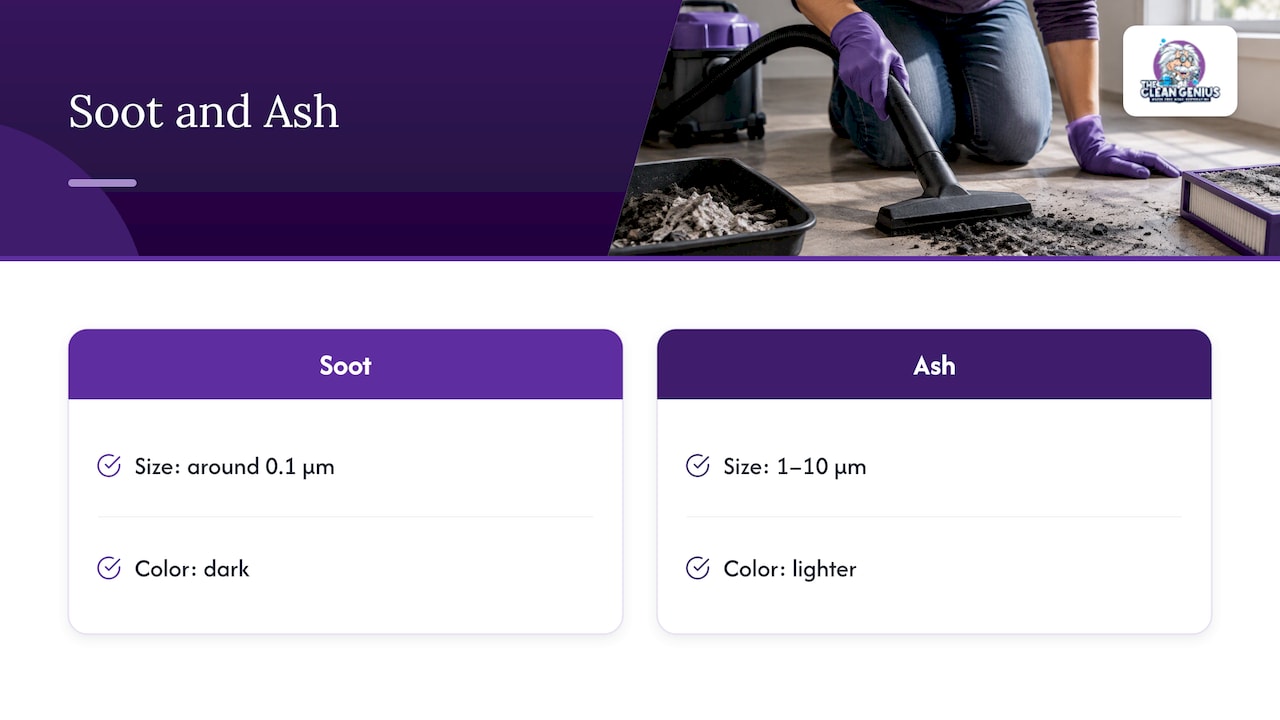
The same guide describes the difference between the two particle types. Soot is small, dark and the product of incomplete burning, typically around 0.1 micrometers across. Ash is lighter in color and larger, between 1 and 10 micrometers. Both are small enough to hang in the air, get stirred up by walking and cleaning, and settle again.
Colorado’s public health department adds that smoke, ash and soot can deposit particulate matter and volatile organic compounds such as benzene on furniture, walls and floors. So the air problem is not only what floats in the room today. It is also what the surfaces hold and give back.
Why it matters beyond the smell
Residue does physical damage too. FEMA notes that smoke, soot and ash can cause odors, corrosion of metals, deterioration of plastics and staining, and that fire residue can permanently etch metal surfaces if it is not removed in time. Early cleanup protects both your lungs and your belongings. For more on how smoke affects materials, see our guide to how fire smoke damages home materials.
Can the air after a fire make you sick?
Yes. The EPA lists headaches, eye irritation, coughing, wheezing, difficulty breathing and chest tightness among the effects of smoke exposure, and says it can also lead to respiratory and cardiovascular problems. The agency identifies PM2.5, fine particulate matter, as the biggest threat, and short-term exposure can aggravate asthma and other lung diseases.
Some people need extra care:
- Children. Their lungs are still growing and they breathe more air per pound of body weight than adults, so the EPA considers them at greater risk.
- Older adults, pregnant women, and people with heart or lung disease, including asthma, are also in the higher-risk group the EPA describes.
- People in poor-quality housing. The EPA notes that leaky or poorly maintained homes can have higher indoor smoke concentrations.
If anyone in your household has asthma, COPD or a heart condition and develops breathing trouble, call their doctor. For severe symptoms such as chest pain or serious shortness of breath, call 911. The EPA also advises that children, older adults and people with heart or lung disease should not take part in cleanup work. Arrange for another family member, or a professional, to do it.
We cover this in more depth in smoke damage health effects and six times to call pros.
How long do fire pollutants stay in the air?
There is no single number, because it depends on how large the fire was, what burned, how porous your materials are and how well the house is ventilated and cleaned. What official guidance does say: chemicals deposited on furniture, walls and floors continue to be released over the weeks following a fire, and they reduce over time.
Odor follows the same curve. The City of Pasadena’s cleaning guidance says smoke odors fade over weeks or months through off-gassing, and that cleaning, fresh-air ventilation and an air purifier can speed that up.
This is why a smell that returns days after a “deep clean” usually means residue is still sitting somewhere, often in the HVAC system, attic or ductwork. Our article on where to inspect when smoke smell returns walks through those hidden spots.
How to check air quality after a fire
How can you use your senses and eyes to detect air quality issues after a fire?
Visible soot on walls, ash on window sills, a burnt or chemical smell, and irritated eyes or throat when you enter a room are all signs the air is affected. Do not wait for a number to confirm what you can see.
What are the limits of consumer air quality monitors after a fire?
Low-cost air sensors are useful for trends, but they have a blind spot. The Washington State Department of Health warns that they may not measure ash in the air, and advises that if a nearby sensor shows good air quality while ash is visible, you should keep windows closed. A green reading on an app is not a clearance.
When formal testing makes sense
FEMA’s guide recommends environmental testing after cleanup to confirm that contaminants are at safe levels for long-term occupancy. In practice, the order matters:
- Remove the source residue first: soot, ash, and any heavily affected materials.
- Clean the surfaces and air-handling system.
- Test afterward, so the result tells you whether the cleanup worked.
Testing before cleanup mostly confirms what you already know. Testing after tells you whether it is time to move back in. A qualified indoor air professional can explain what to sample and how to read the results for your home.
What to do right now: a safe cleanup sequence
The EPA’s guidance gives a clear set of habits for reducing exposure while you clean. Here is the order we would follow.
1. Protect yourself first
Wear an N95 respirator, along with gloves and eye protection, during cleanup. A paper dust mask or cloth mask does not filter fine particles the same way. Keep children, older adults and anyone with heart or lung disease out of the work area.
2. Control the dust
The EPA recommends misting ash before sweeping hard surfaces, wet mopping, and using a HEPA-type vacuum if you vacuum. Dry sweeping and ordinary vacuums throw fine particles back into the air. Washington’s health department recommends wiping indoor surfaces with a damp cloth and mild detergent, and using a HEPA-type vacuum on furniture, drapes and carpets.
Soot on walls and ceilings is a different job from ordinary dust. Smearing it can push it into the surface. Our soot removal best practices explain why technique matters.
3. Filter the air
The EPA suggests a high-efficiency HVAC filter, such as MERV 13 if your system can safely use it, plus a portable air cleaner. Washington’s guidance goes a step further for lingering odor: choose portable air cleaners with both HEPA and carbon filters, which can help capture particles and VOCs that remain after a fire. Check your furnace’s specifications before installing a thicker filter, since restricting airflow can strain the system.
4. Ventilate when it is safe
Open windows when outdoor air quality has improved, not while neighborhood smoke or ash is still in the air. For a room-by-room approach, see our ventilation plan for smoky rooms.
5. Skip ozone generators in an occupied home
Colorado’s health department advises against them, because ozone is toxic to breathe and high levels can damage plants and materials. If you are weighing odor treatments, read what ozone treatment actually does before agreeing to anything.
Why is it important to address water damage after a fire?
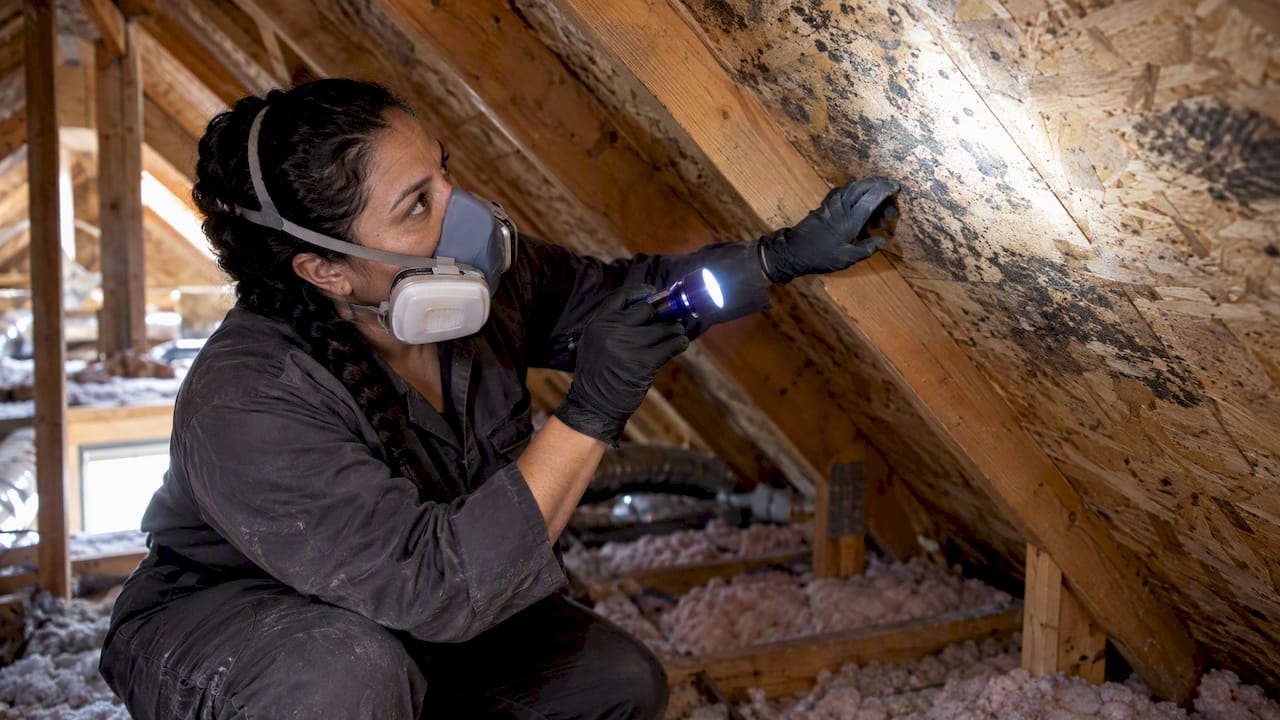
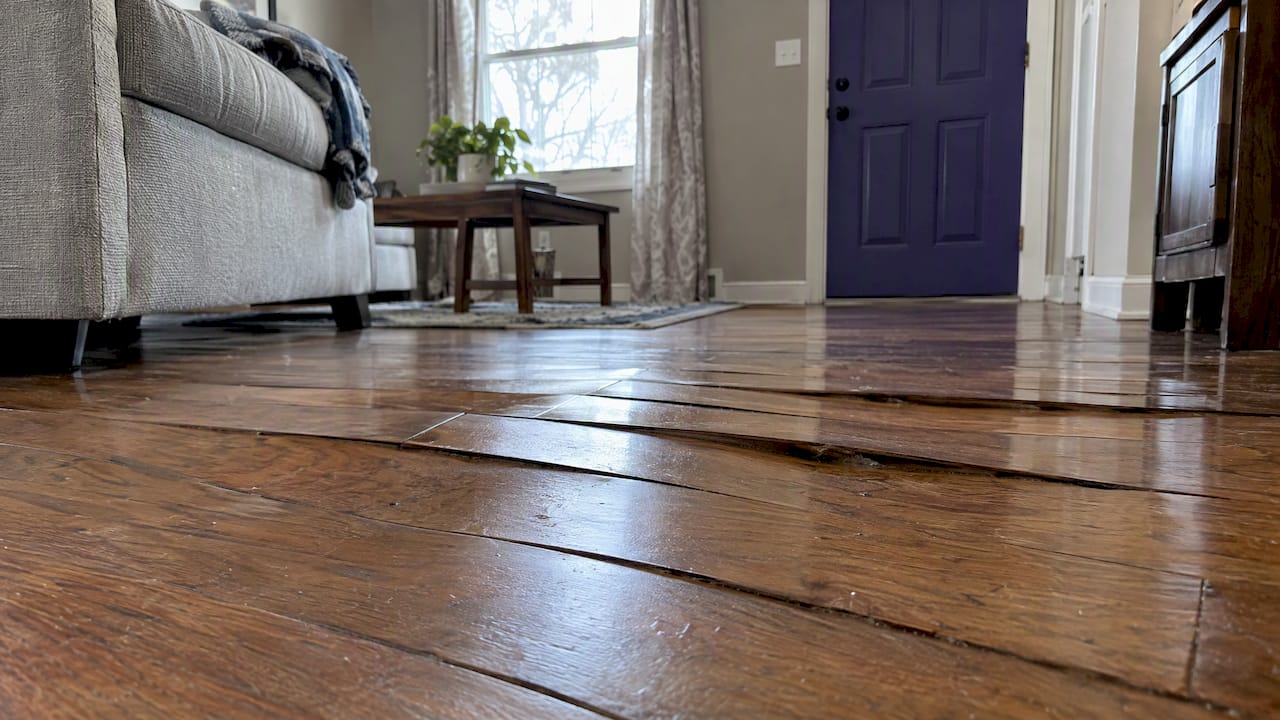
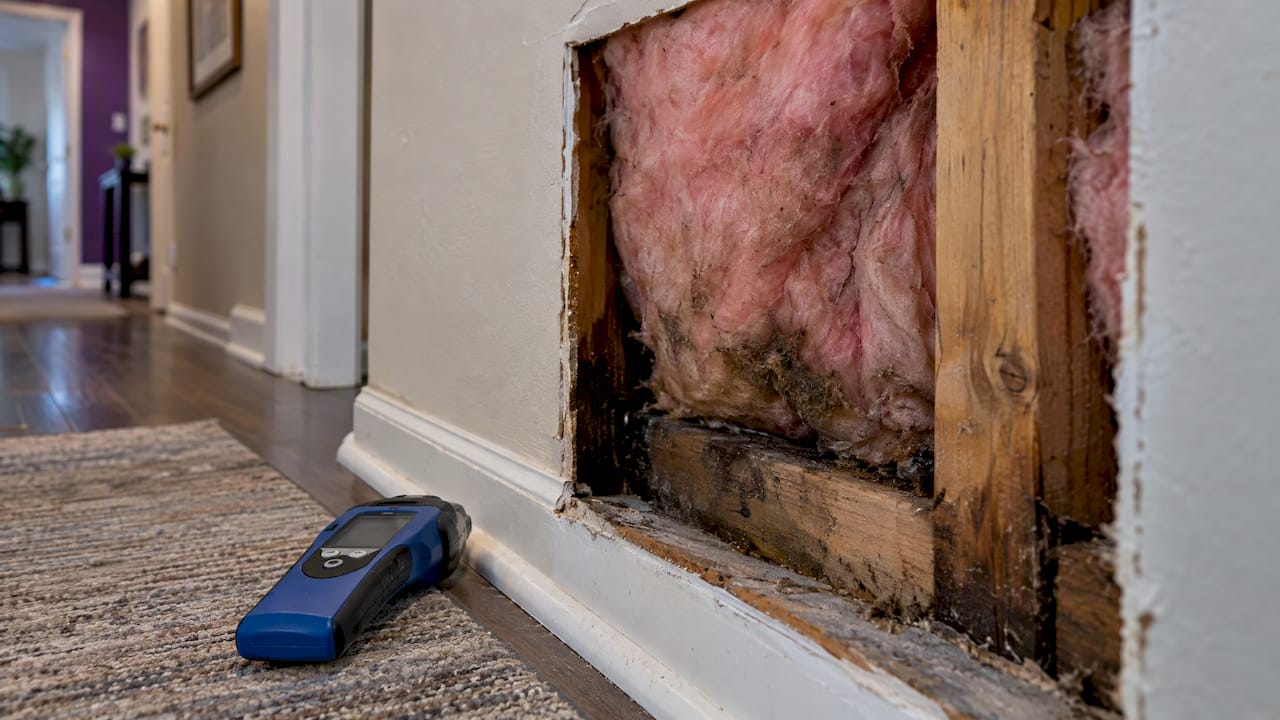
Fire departments use a lot of water, and wet drywall, insulation and flooring can turn into a second problem within a day or two. Moisture that stays trapped behind walls or in the attic encourages mold, which adds its own air-quality issue on top of smoke. Wood floors in particular need quick attention, and triage steps for water-damaged hardwood show how short the window can be.
If your home took on water during the fire response, start drying right away. Our emergency water damage response steps cover what to do first, and our water damage restoration team can handle dry-out.
When to call a professional
Some fires are small enough to clean yourself with the precautions above. Many are not. Consider professional help when:
- Visible ash or soot covers large areas. The City of Pasadena advises that if substantial visible ash exists in the home, you should consider hiring a professional contractor to manage the cleanup.
- Smoke odor returns after cleaning, or is strongest near vents.
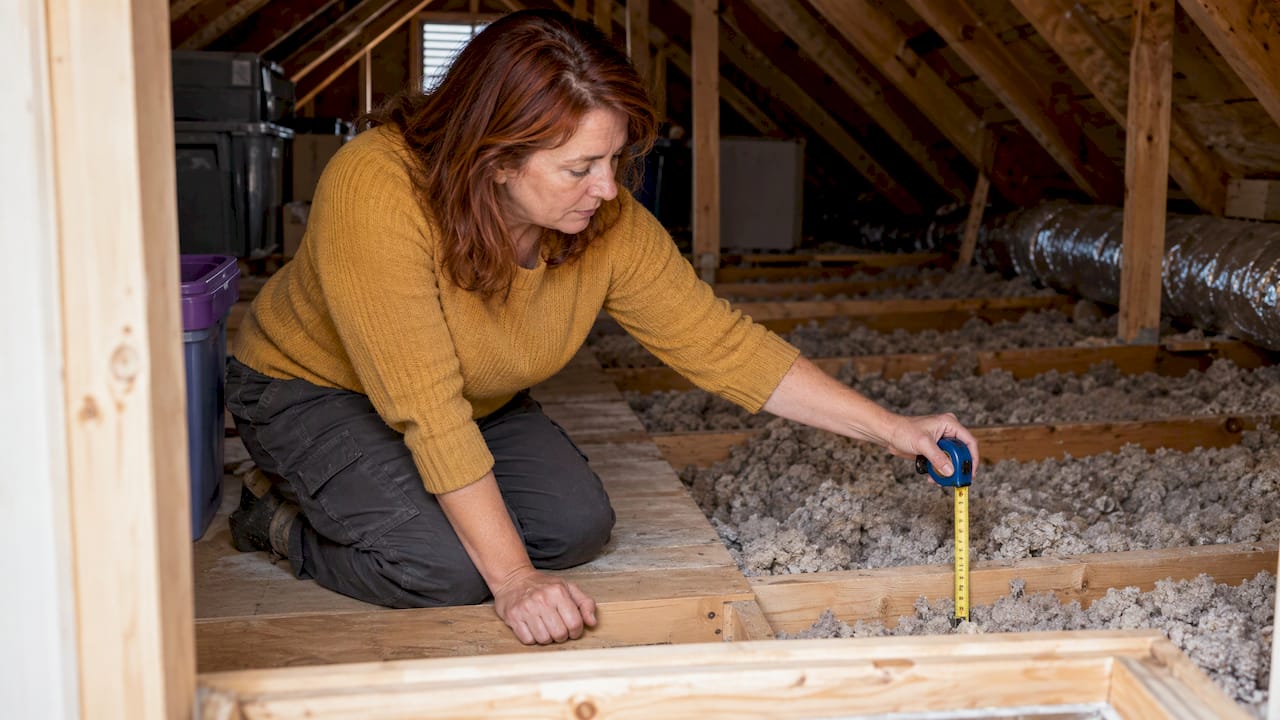
- Smoke or soot reached the HVAC system, attic or insulation.
- Anyone in the home has asthma, heart disease or other conditions that make cleanup exposure risky.
- The fire involved plastics, electronics or other synthetic materials, and residue feels greasy or smears.
- Your insurer needs documentation of the damage and the cleanup scope.
Duct cleaning deserves a note. The EPA says duct cleaning should be done only as needed, not automatically. A professional inspection tells you whether your system actually carries residue.
Perspective
After a fire, most homeowners ask us about the smell first. We tell them to think about the air first. Odor is the signal, but the real question is what is still sitting on the walls, in the attic insulation and inside the ductwork, slowly coming back into the rooms where your family sleeps.
That is why our fire and smoke work covers more than wiping surfaces. We approach soot removal, odor elimination and dry-out as one job, because water from firefighting and smoke residue feed each other’s problems. If damp materials are left behind, mold can follow, and our mold teams use Pure Cloud dry-fog technology for that.
We are a family-owned company serving Chicagoland, and we work directly with your insurance so you are not juggling paperwork while living through a fire. Our view is simple: get the source residue out, dry the structure, clean what the smoke touched, and only then ask whether the air is ready for your family.
Jim
What it looks like when we help
If your home has been through a fire, The Clean Genius provides fire and smoke damage restoration, including soot and odor elimination, and we are available 24/7 for emergencies across Chicagoland, from Arlington Heights and Schaumburg to Naperville and Wheaton. We also handle the water damage that firefighting leaves behind, and we coordinate directly with your insurance company.

See how we approach it on our fire damage restoration page, or read through the fire damage restoration process steps to know what to expect. If you are budgeting, our smoke damage cleaning cost guide explains what drives the price, and our fire damage cleanup timeline shows how long each stage usually takes.
Keeping the air clean in the weeks after
Once the main cleanup is done, a few habits keep air quality improving:
- Run your portable air cleaner continuously in the rooms you use most, especially bedrooms.
- Keep changing HVAC filters on schedule, since they load up faster after a fire.
- Wipe horizontal surfaces with a damp cloth weekly until no residue shows on the cloth.
- Wash or professionally clean soft goods such as drapes and bedding. Our guide to contents restoration after fire covers what can be saved.
- Watch for musty smells, which can point to moisture and mold rather than smoke. If you see or smell mold, our mold removal and remediation team can assess it.
Expect gradual improvement, not an overnight switch. If the smell is still strong after several weeks of cleaning and filtering, the residue is usually in a place you have not reached yet.
FAQ
How long do toxins stay in the air after a fire?
It varies with the size of the fire and your home’s materials. Colorado’s health department says chemicals on surfaces keep being released over the following weeks and decrease over time. Cleaning, filtration and fresh-air ventilation shorten that period.
Can bad air quality from a fire make you sick?
Yes. The EPA links smoke exposure to coughing, wheezing, eye irritation, headaches and chest tightness, and says fine particles can aggravate asthma and other lung disease. Children, older adults, pregnant women and people with heart or lung disease are most vulnerable, so they should avoid cleanup and see their doctor if symptoms appear.
How do you test air quality after a fire?
Start by cleaning the soot and ash, then have a qualified indoor air professional test afterward to confirm the home is safe to occupy. Home monitors can help track trends but may miss ash, so do not rely on them alone when you can see residue.
Is a lingering fire smoke smell harmful?
A faint smell that is fading is part of normal off-gassing, which can last weeks or months. A strong smell, or one that keeps returning, means residue is still present and deserves a closer look. If it triggers symptoms, leave the space and talk to your doctor.
Sources
- Indoor air quality after a fire, Colorado Department of Public Health and Environment
- Wildfire Smoke and Health, US EPA
- Who is at Increased Risk of Health Effects from Wildfire Smoke Exposure, US EPA
- Wildfires and Indoor Air Quality (IAQ), US EPA
- Post-Fire Cleanup Guidance, Washington State Department of Health
- Homeowner’s Guide to Risk Reduction and Remediation of Residential Smoke Damage, FEMA
- Cleaning Guidance for Ash, Soot, and Smoke After a Wildfire, City of Pasadena
- Water-damaged hardwood repair triage