
If your oil furnace just puffed black soot through the house, shut the burner down, close the fuel supply, open a few windows and leave the soot alone. Wiping it makes it worse. Photograph everything, call your insurer, then bring in a burner technician and a restoration crew that can clean the rooms, your belongings and the ductwork together. This guide walks you through each step in order, so you know what is safe to do yourself and what is not.
TL;DR
- Turn off the burner and the oil supply, ventilate, and do not keep pressing the reset button.
- Do not wipe, scrub or vacuum the soot with a household vacuum. Oily soot smears and sets into surfaces.
- Photograph every room, including closed ones, before anything is touched, then call your insurer promptly.
- The ducts carried the soot and can carry it again, so the burner must be repaired and the HVAC system cleaned before the heat comes back on.
- Standard homeowners policies commonly cover puffback damage, so ask about your dwelling and contents coverage.
Table of Contents
- What a puffback is and why the soot goes everywhere
- How to recognize puffback soot damage
- The first 24 hours: what to do, in order
- What not to touch or clean yourself
- How professionals clean soot from rooms, belongings and ducts
- Puffback damage and your homeowners insurance
- Reducing the risk of another puffback
- Our perspective
- Get your home cleaned and the heat back on safely
- FAQ
- Sources
What a puffback is and why the soot goes everywhere
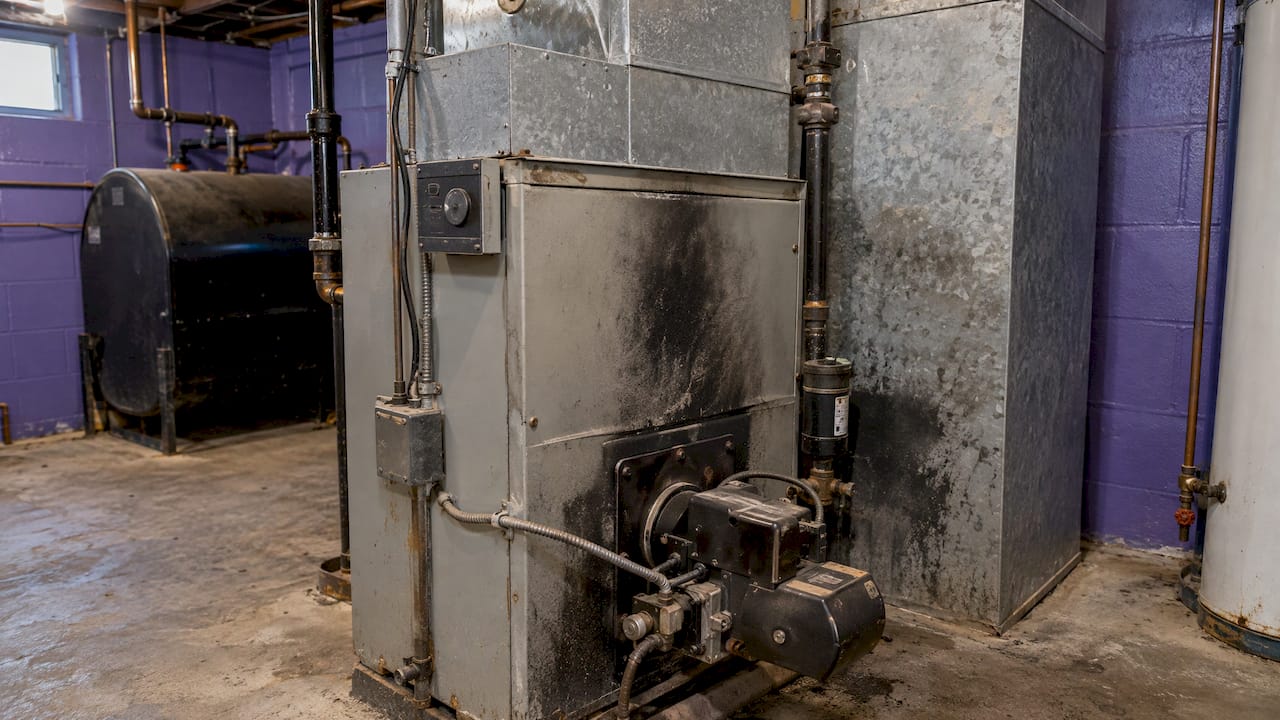
A puffback happens when an oil-burning furnace or boiler fails to ignite right away. Fuel builds up in the combustion chamber, then ignites all at once. The small explosion pushes soot and smoke back out of the unit and into the house.
The soot travels because your heating system is built to move air. The blower pulls air through the furnace area and pushes it into every duct and register. When a puffback happens with the blower running, the system becomes a distribution network for fine, oily particles. That is why a problem that starts in the basement utility room can leave a gray or black film on a second-floor ceiling, on curtains and inside closets.
Common causes include a clogged fuel nozzle, a leak in the oil line, an improper shutdown sequence and plain lack of maintenance. Technicians often trace oil equipment problems back to dirt: oil and dirt do not mix, and that is why a yearly service is sometimes called a cleaning.
Puffbacks cluster in the fall. The first cold snap sends homeowners to the thermostat, and equipment that sat idle all summer runs for the first time. Trade coverage of homeowners policies notes that puffbacks are messy and common in the fall when the heat is turned on for the first time. For Chicagoland homes, that means October and November are the months to watch.
How to recognize puffback soot damage
Sometimes a puffback is dramatic: a thump, a puff of black smoke, a smell like burnt oil. Other times it is quiet and you discover it later. Look for these signs:
- A fine black or gray film on horizontal surfaces such as shelves, window sills, countertops and the tops of appliances.
- Streaks and smudges around registers and vents. Soot often outlines supply registers on ceilings and walls.
- Greasy residue. Oil soot feels sticky or slick rather than dry and powdery like wood smoke ash.
- A strong, acrid oil odor that lingers near the furnace and in rooms served by the ductwork.
- Dark marks on fabrics: curtains, upholstered furniture, bedding and clothing in closets.
- Soot inside the furnace room around the burner, the draft hood or the flue connection.
Check closed rooms and closets too. Air moves through ducts even when a door is shut, so a bedroom you have not entered may be coated. If you see soot anywhere beyond the furnace room, assume the ducts are involved.
The first 24 hours: what to do, in order
The order matters. Each step protects your health, your equipment or your claim.
- Shut down the burner and close the fuel supply. Use the emergency switch or breaker, then close the oil valve. Industry guidance on puffback cleanup order is clear that you should not keep pressing the reset button, and that the heating system should stay off.
- Ventilate. Open windows and doors where you can do so safely. If you smell fuel strongly, feel ill, or see flames, leave the home and call 911.
- Call a burner service technician. Ask for a written finding on what failed. You will want that document for your claim, and the burner has to be repaired and signed off before anyone restarts it.
- Photograph and video everything. Capture every room, closed rooms included, before anybody wipes anything. Shoot wide, then close. Include the furnace, the registers and the soot on contents.
- Notify your insurer promptly. Early notice starts the claim and lets the adjuster see the damage in its original state.
- Throw out exposed food. Open food and anything stored in a place soot reached should not be eaten. Photograph it before you discard it.
- Call a restoration company. The sooner trained crews start, the less time oily residue has to set.
If anyone in the house has asthma, a heart condition or other breathing trouble, have them stay in a clean part of the home or go elsewhere, and talk to their doctor if symptoms appear. Our guide on smoke damage health effects explains when exposure is a reason to stop DIY work altogether.
What not to touch or clean yourself
The pages that rank for this topic agree on one point: cleaning soot yourself can make matters worse. We say the same from the job site, and here is why.
Puffback soot is oily. Rubbing it with a dry cloth or paper towel drives the film deeper into paint, wallpaper, grout and fabric. A household vacuum can blow the finest particles back into the air and into the vacuum’s motor. Water-based cleaners on a soot-coated wall can leave a permanent gray cast.
Avoid these:
- Wiping walls or ceilings with a dry or damp rag.
- Running a household vacuum over soot.
- Washing soot-stained clothes, curtains or bedding before they are assessed. Heat and agitation can set stains.
- Turning the furnace or air handler back on “just to test it.”
- Using the HVAC blower to clear the air.
- Spraying air fresheners over the odor. They mix with it and do not remove it.
One chore you can do is swap the air filter, and only after the burner is repaired. Even a new filter can clog fast while residue remains in the system, so plan on changing it again after the cleanup.
How professionals clean soot from rooms, belongings and ducts
A proper puffback cleanup follows a sequence. The current fire damage restoration standard, ANSI/IICRC S700, covers assessment, HVAC, contents and documentation, and the order below reflects that approach as summarized for puffbacks.
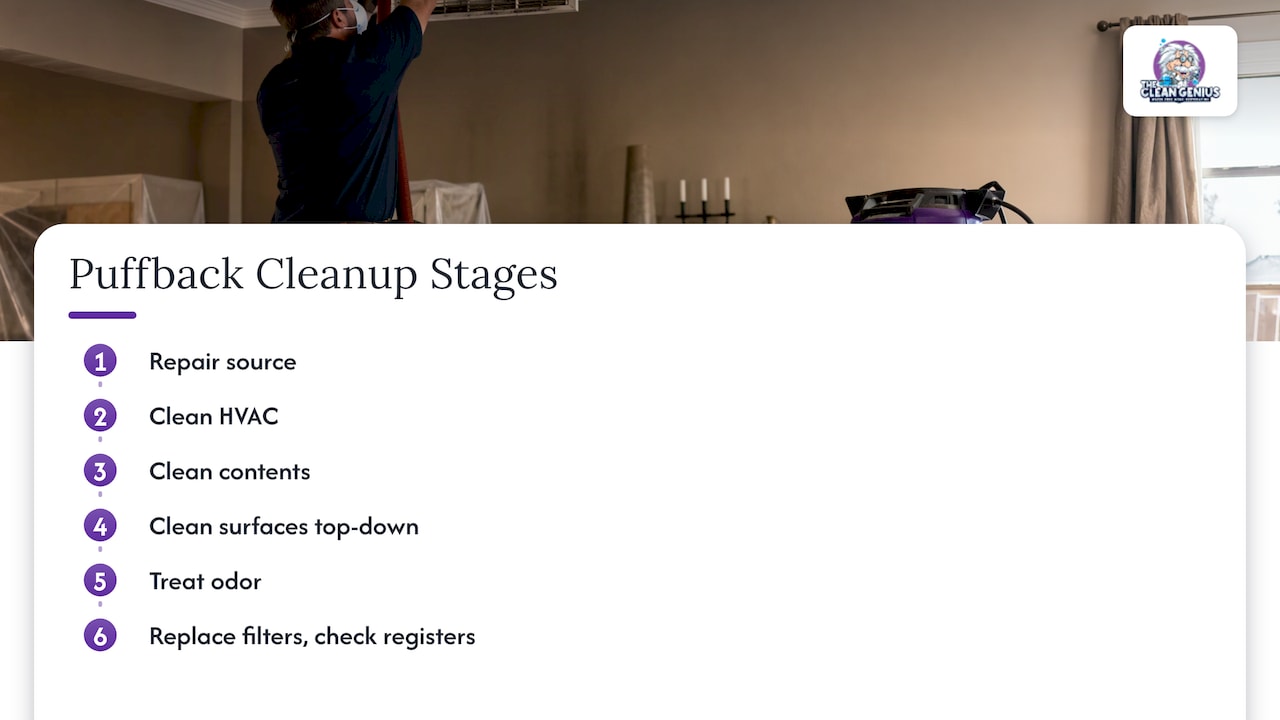
1. Repair the source
The duct system delivered the soot and can deliver it again. Nothing gets restarted until the burner has been repaired and signed off by a qualified technician.
2. Clean the HVAC system
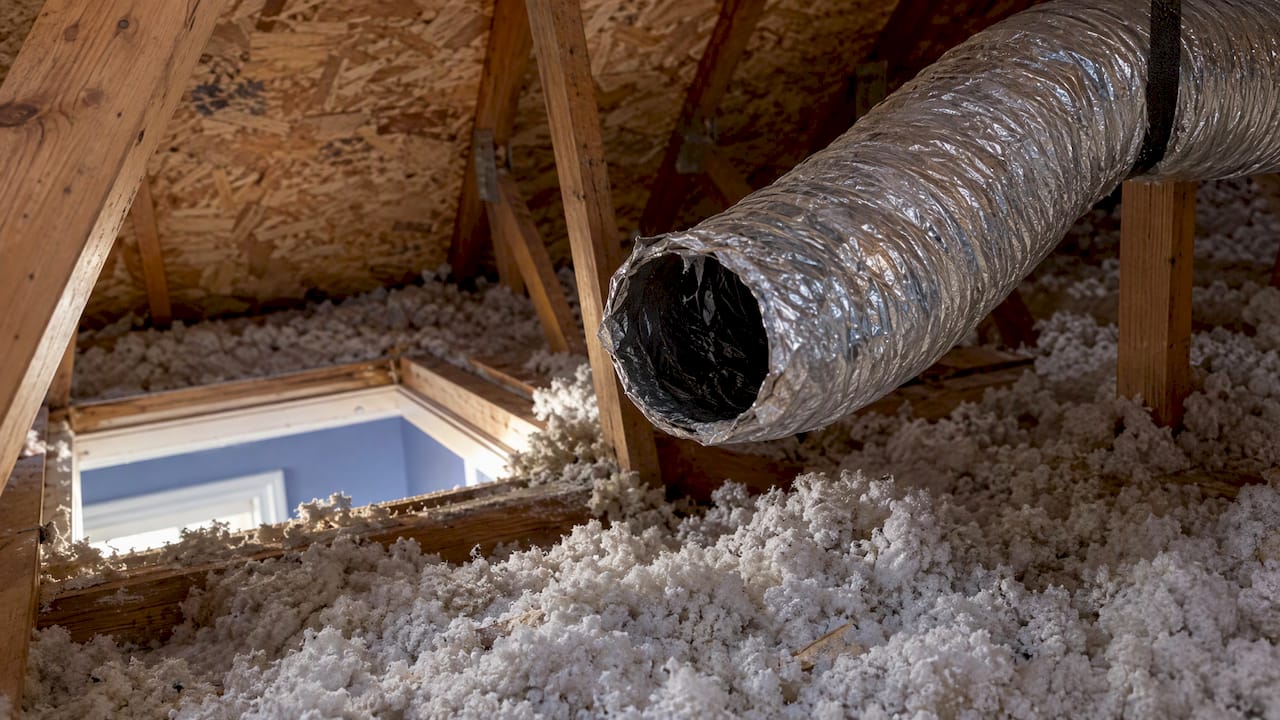
The furnace, plenum, ducts, registers and returns come next. Crews use HEPA-filtered or outside-exhausting vacuums, which keeps loosened soot from going back into the living space. The EPA publishes guidance on when and how duct cleaning is done, including what to expect from a reputable contractor. Homeowners looking at the topic in general can read more on professional air duct cleaning to see what the service includes.
3. Pack out and clean contents
Furniture, clothing, electronics, books and décor are inventoried, then cleaned on site or moved out for specialty cleaning. An inventory helps your contents claim. See our overview of contents restoration after a fire for how this works.
4. Clean surfaces top-down
Ceilings first, then walls, then floors. Working from the top prevents dirty residue from falling onto surfaces already cleaned. Technicians use dry sponges and specialty cleaners matched to the surface, and some finishes need repainting once the soot is out.
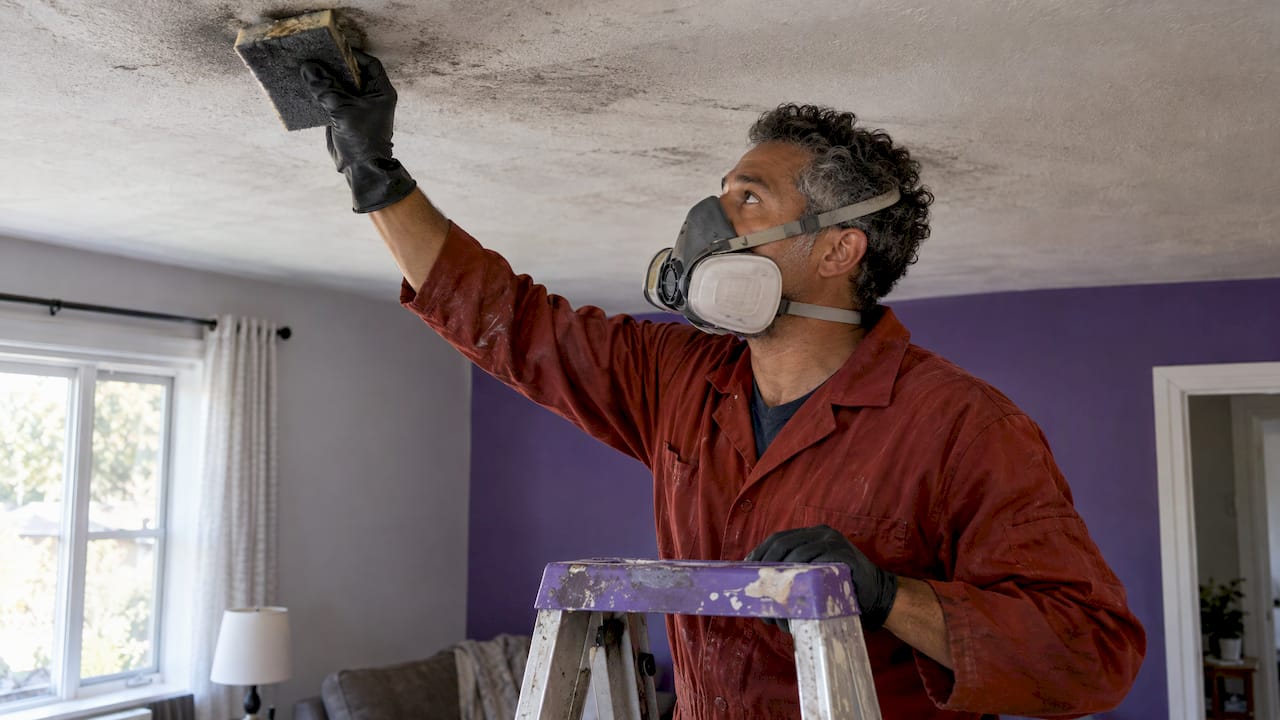
5. Treat the odor
Oil soot odor lives in porous materials, insulation and ducts. Surface cleaning alone will not clear it. If a smell comes back after cleanup, the usual culprit is the HVAC system or the attic, which we cover in why smoke smell returns after cleaning. Our page on how fire odor removal works explains the methods.
6. Replace filters and check registers before restart
Only then does the heat come back on, with new filters in place and registers confirmed clean.
For a deeper look at the techniques crews use on residue like this, read our soot removal best practices and the fire damage restoration process.
Puffback damage and your homeowners insurance
Most Chicagoland homeowners carry an HO-3 policy, the standard form. It matters here because the personal property section lists smoke as a covered cause of loss and names puffbacks specifically. The ISO form describes the smoke peril as sudden and accidental damage from smoke, including the emission or puffback of smoke, soot, fumes or vapors from a boiler, furnace or related equipment. The 2022 revision of the form keeps the same puffback wording under Coverage C.
Structure and belongings are treated differently. On the HO 00 03 05 11 form, damage to the dwelling is open perils and damage to personal property is named perils, so an HO-3 holder has coverage for both from smoke, including puffback. Your own policy is what controls, so read its declarations and any endorsements.
What to document
- Dated photos and video of every room before cleanup.
- The technician’s written finding on the cause.
- An inventory of damaged contents with approximate age and value.
- Receipts for hotel stays, food replacement and emergency services.
- Every claim number, adjuster name and call date.
What to ask your insurer
- Is the cause of loss covered under my policy, and what is my deductible?
- Does coverage include duct cleaning, odor treatment and contents cleaning?
- Do I have additional living expense coverage if I cannot stay home?
- Does the repair to the furnace itself fall outside coverage? Wear-related equipment failures are often treated differently from the soot damage they cause, so get the answer in writing.
We work directly with your insurance company, which means we can share documentation and estimates with your adjuster so you are not relaying messages between two parties.
Reducing the risk of another puffback
A puffback is almost always a maintenance story. These habits lower the odds.
- Service the burner every year. Oil heating needs annual maintenance, since soot and carbon deposits reduce efficiency by 10 to 15 percent and add safety hazards, puffback among them. Technicians often suggest spring, when schedules are less hectic.
- Ask for combustion testing. A thorough inspection can include combustion analysis with a digital analyzer that measures oxygen, carbon monoxide and flame temperature, plus cleaning of burners and flame rods. Carbon buildup can cause delayed ignition.
- Have the chimney cleaned too. NFPA 211 calls for annual chimney inspection and cleaning if needed. Oil soot collects at the base of the chimney and restricts flue gas flow, so a CSIA certified sweep is the right professional. A local chimney inspection shows what a Level 1 to 3 visit covers.
- Replace the oil filter and nozzle on schedule. A clogged nozzle is one of the most common causes.
- Do not ignore warning signs. Rumbling at start-up, delayed ignition, soot around the burner or a rising oil smell are reasons to call your technician before the next cold night.
- Install carbon monoxide alarms on every level and near sleeping areas, and test them each fall.
Our perspective
In our experience, a puffback is the most underestimated loss a homeowner can have. It looks like a bad mess in one room. In reality, it is a whole-house event, because the heating system carried the soot everywhere before anyone noticed.
That is why we push back on the idea that you can wipe it down over the weekend. Oily soot needs the right sequence, the right equipment and a clean HVAC system, or the smell and film come back with the first cold night. We treat the ducts, the contents and the rooms as one job.
Our certified, insured technicians respond 24/7, and we coordinate directly with your insurance company so you can focus on your family. Call us early. The sooner we start, the more of your home and belongings we can bring back.
Jim
Get your home cleaned and the heat back on safely
The Clean Genius is a family-owned restoration company serving Chicagoland, from Arlington Heights and Palatine to Naperville and Wheaton. We handle soot and odor elimination as part of our fire and smoke damage restoration, and we are available around the clock for emergencies.

If soot has spread through your home, start with our fire damage restoration services page, or reach us through thecleangenius.com to schedule an on-site estimate. Prices depend on the size of the loss and what the inspection finds, so we price after we see your home.
FAQ
Can I clean furnace puffback soot myself?
We advise against it. Oil soot is sticky, and rubbing or using a household vacuum can smear it deeper and spread it. The one task most homeowners can handle is replacing the air filter after the burner is repaired. Leave the walls, contents and ductwork to a restoration crew.
Is puffback soot dangerous to breathe?
Soot particles are fine and can irritate the lungs, eyes and throat. People with asthma or heart or lung conditions should stay out of affected rooms and speak with their doctor. Ventilate, keep the furnace off and avoid disturbing the soot while you wait for professional help.
Does homeowners insurance cover puffback damage?
Often, yes. The standard ISO HO-3 form names the puffback of smoke, soot, fumes or vapors from a furnace or boiler within its smoke peril. Your policy wording, deductible and endorsements decide what is paid, so call your insurer promptly and ask what it covers.
Can I turn the heat back on after a puffback?
Not until a burner technician has repaired the cause and signed off, and the HVAC system has been cleaned. Restarting earlier can push residue through the house again. New filters and checked registers should be in place first.
How long does puffback cleanup take?
It depends on how far the soot traveled, how much contents cleaning is needed and how much of the ductwork is affected. A crew can give you a realistic timeline after inspecting each room and the HVAC system. Our fire damage cleanup timeline outlines what Chicagoland homeowners typically see.
Sources
- What Causes Furnace Puff Back? (Hunker)
- Puffback: Oil Burner Soot, Cleanup Order and HO-3 Coverage
- Homeowners HO 00 03 03 22 Revisions, Section I Coverage C (PropertyCasualty360)
- Smoke Damage Coverage (PropertyCasualty360)
- Should You Have the Air Ducts in Your Home Cleaned? (EPA)
- Furnace Safety Information (New York State Chimney Sweep Guild)
- Furnace Maintenance Checklist
- Oil heating annual service
- Puffback and oil to gas conversion
- Air duct cleaning
- Chimney inspection