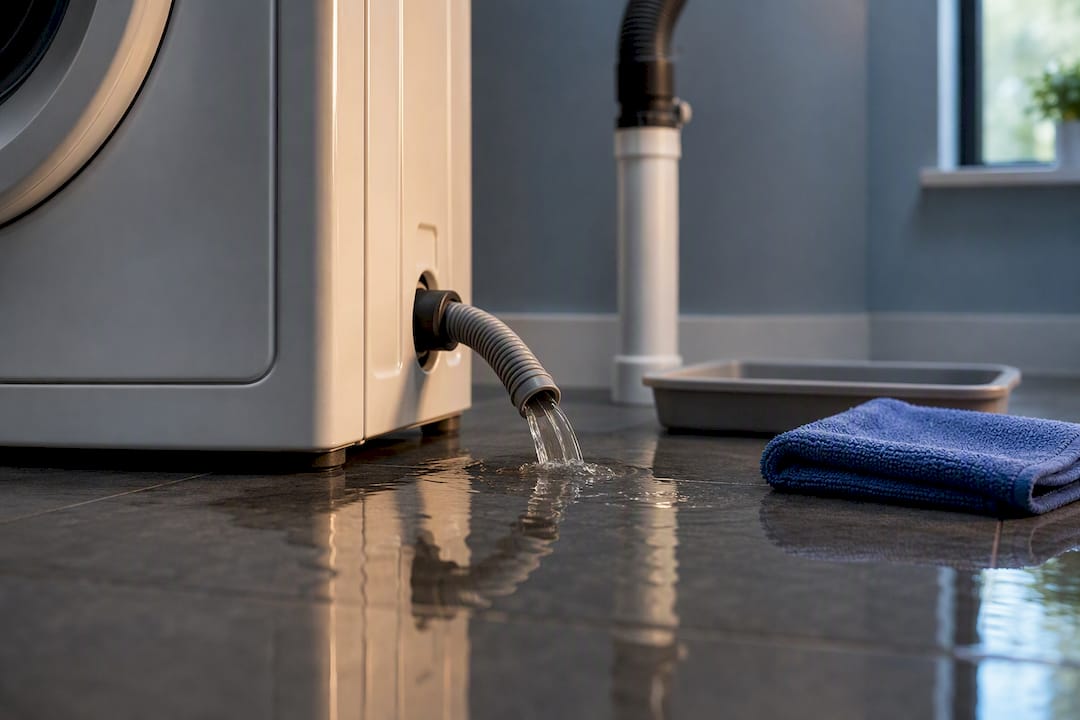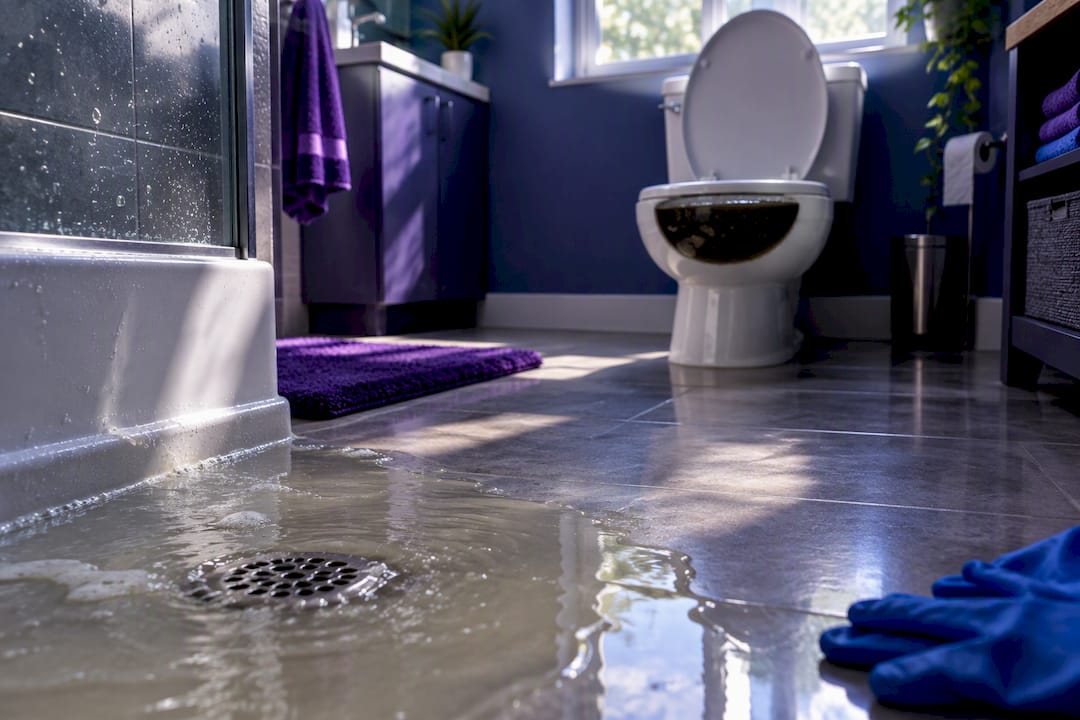

Graywater comes from showers, laundry, and bathroom sinks and can sometimes be reused after proper treatment. Blackwater carries toilet waste and sewage, and it’s the bigger health threat by far. If you’re staring at standing water and don’t know which category it falls into, treat it as blackwater until you’re certain otherwise, and follow CDC guidance for anything tied to sewage backups.
TL;DR:
- Treat all suspected sewage-affected water as blackwater until proven otherwise, and follow CDC guidelines for cleanup and exposure control.
- Blackwater carries high pathogen loads, including fecal bacteria and viruses, which pose serious health risks, especially through ingestion, skin contact, and aerosols.
- Graywater from showers, sinks, or laundry can be reused for irrigation or flushing if it has been properly treated to meet pathogen removal standards.
- Hidden sewage leaks or backups often smell worse than they look and require professional assessment and containment to prevent health hazards.
- Local regulations vary, so always verify with health authorities before setting up graywater reuse systems or handling contaminated water.
Table of Contents
- Graywater vs. Black Water at a Glance
- What Counts as Graywater and Black Water, and Where It Gets Blurry
- The Health Risks Hiding in Contaminated Water
- Cleanup Steps: What to Do Before and After Calling a Pro
- When Graywater Reuse Is Actually Safe
- How Restoration Professionals Assess Contaminated Water Damage
- The One Rule That Cuts Through the Confusion
- Get Professional Help After a Sewage or Water Backup
- Where This Guidance Comes From
- Sources
- FAQ
Graywater vs. Black Water at a Glance
The fastest way to understand a water problem is to consider its source and likely contaminants.
| Factor | Graywater | Blackwater |
|---|---|---|
| Typical sources | Showers, bathtubs, bathroom sinks, washing machines | Toilets, sewage lines, septic backups |
| Contamination/pathogen risk | Low to moderate (soap, grease, some bacteria) | High (fecal bacteria, viruses, protozoa) |
| Reuse potential | Possible for irrigation or toilet flushing with treatment | Not reusable without full sewage treatment |
| Disposal/handling | Can often be handled with basic precautions | Requires PPE, isolation, and often professional cleanup |
| Common contexts | Household plumbing, RV gray tanks | Sewage backups, flooded septic systems, RV black tanks |
The takeaway in each row is the same: graywater tolerates some flexibility, blackwater does not.
What Counts as Graywater and Black Water, and Where It Gets Blurry
Graywater generally means wastewater from showers, bathtubs, bathroom sinks, and washing machines. It’s not sterile, but it lacks the concentrated fecal load that makes sewage dangerous. Kitchen sink water sits in a gray zone of its own. Food residue and grease raise the contaminant load enough that many states exclude kitchen drains from graywater reuse programs entirely, according to a summary of state graywater laws.
Blackwater is toilet waste and any water that has mixed with sewage. It carries human waste and pathogens tied to diarrheal disease, which is why the CDC classifies it as a health hazard requiring extra caution.
Two situations blur the line further:
- Floodwater that mixes yard runoff with sewer overflow becomes blackwater the moment sewage enters it, even if it looks like ordinary rainwater.
- Sewage backups from a failed septic system or clogged main line turn everything they touch, carpet, drywall, subfloor, into contaminated material.
Appearance is not a reliable test. Water can look perfectly clean and still carry detergents, grease, or bacteria, so classify by source and exposure, not by how the water looks.
The Health Risks Hiding in Contaminated Water
Blackwater’s danger comes down to what it carries: enteric viruses, bacteria like E. coli and Salmonella, and protozoa such as Giardia. These organisms cause everything from mild stomach upset to serious gastrointestinal illness, and they don’t need much of an entry point to make someone sick.
Exposure happens three ways: ingestion, skin contact, and inhaling aerosols kicked up during cleanup. That last route catches people off guard. Running a wet vacuum or scrubbing a contaminated floor can aerosolize droplets small enough to breathe in, which is why the CDC recommends specific protective gear for anyone doing the work.
Kids, older adults, pregnant people, and anyone with a compromised immune system face higher risk from even brief contact. Open cuts are another weak point; sewage-contaminated water introduces bacteria directly into the bloodstream through broken skin.
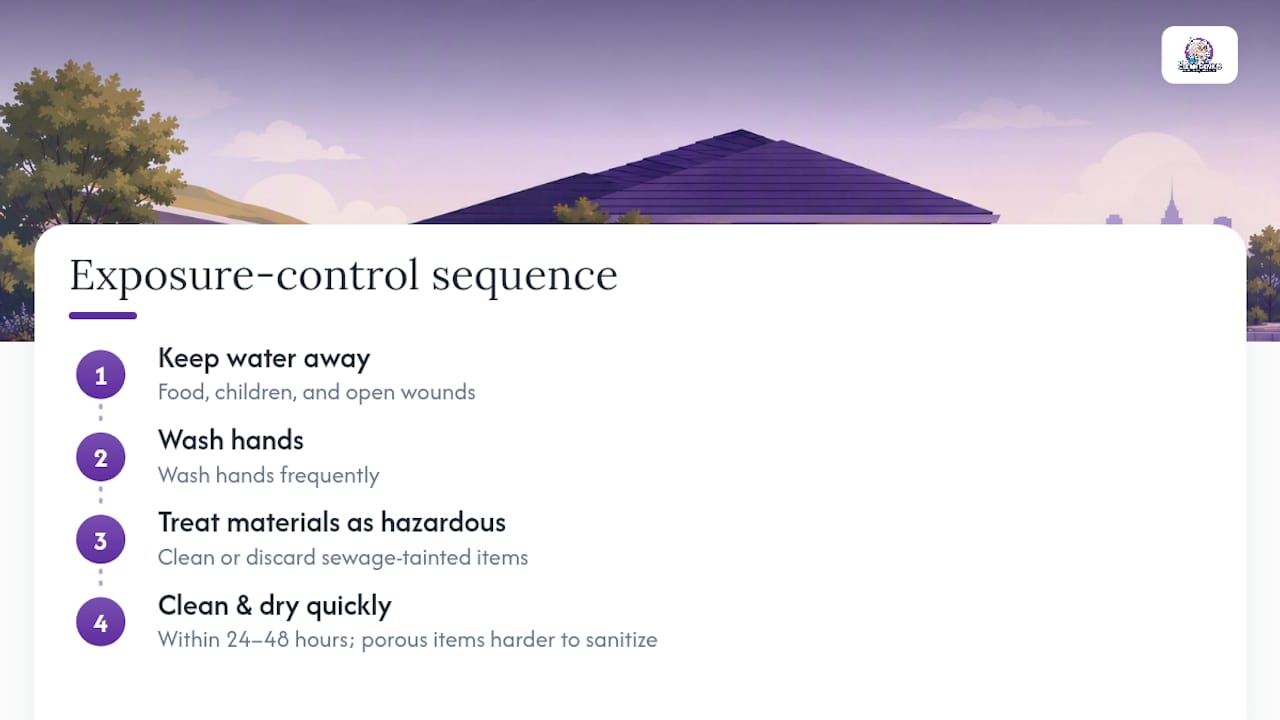
The CDC’s guidance boils down to exposure control rather than exhaustive pathogen testing: keep contaminated water away from food, children, and open wounds, wash hands frequently, and treat any sewage-tainted material as hazardous until it’s been properly cleaned or discarded. The agency also recommends cleaning and drying affected areas within 24 to 48 hours whenever possible, since porous materials that stay wet longer than that become much harder to fully sanitize.
Cleanup Steps: What to Do Before and After Calling a Pro
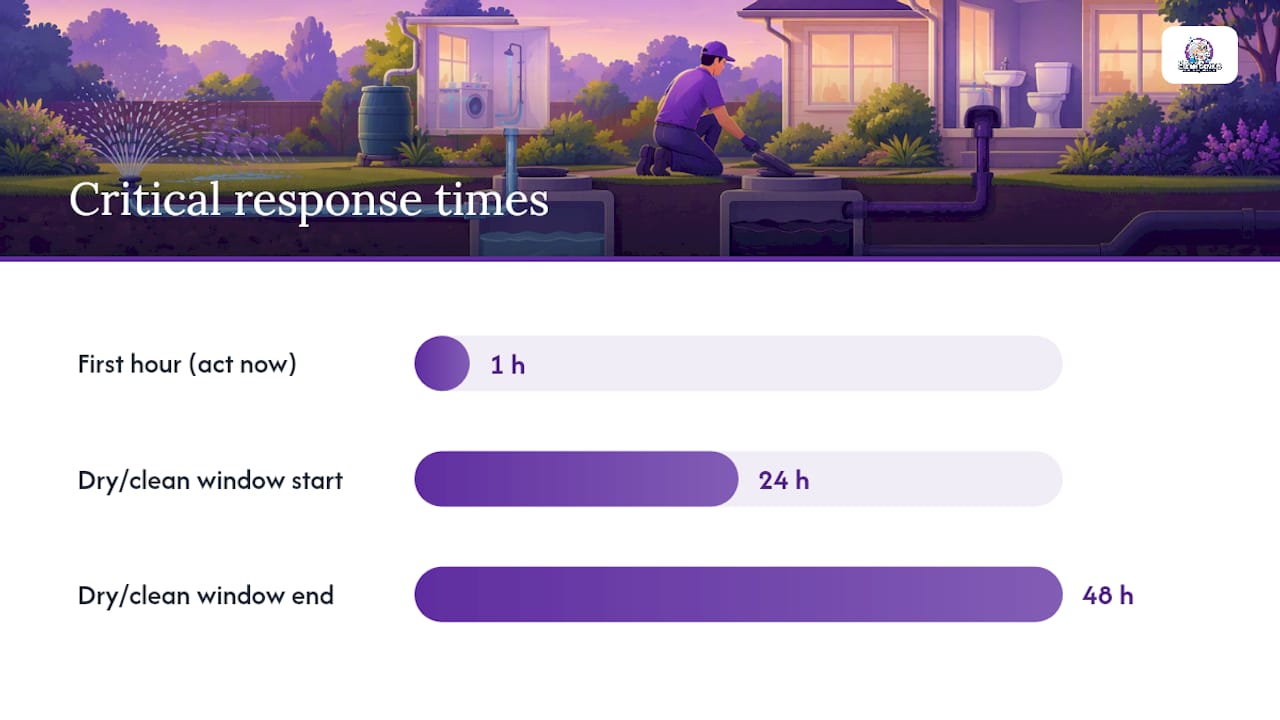
Sewage backups don’t wait for a convenient time, and the first hour matters more than most homeowners realize.
- Stop using affected plumbing immediately. If you suspect a septic or sewer failure, shut off water to toilets and drains feeding that line.
- Keep people and pets out of the area. Block off the space rather than trying to clean around family members still moving through it.
- Put on protective gear before touching anything. Rubber boots, rubber gloves, and goggles are the CDC’s minimum recommendation for sewage contact.
- Wash hands thoroughly after any contact, even with gloves on, and avoid touching your face during cleanup.
- Discard porous items that got wet, carpet, upholstered furniture, drywall, insulation, if they can’t be cleaned and fully dried within that 24 to 48 hour window. Drying alone doesn’t remove the risk once sewage has soaked in.
- Bag contaminated debris separately and follow your local disposal guidance rather than mixing it with regular household trash.
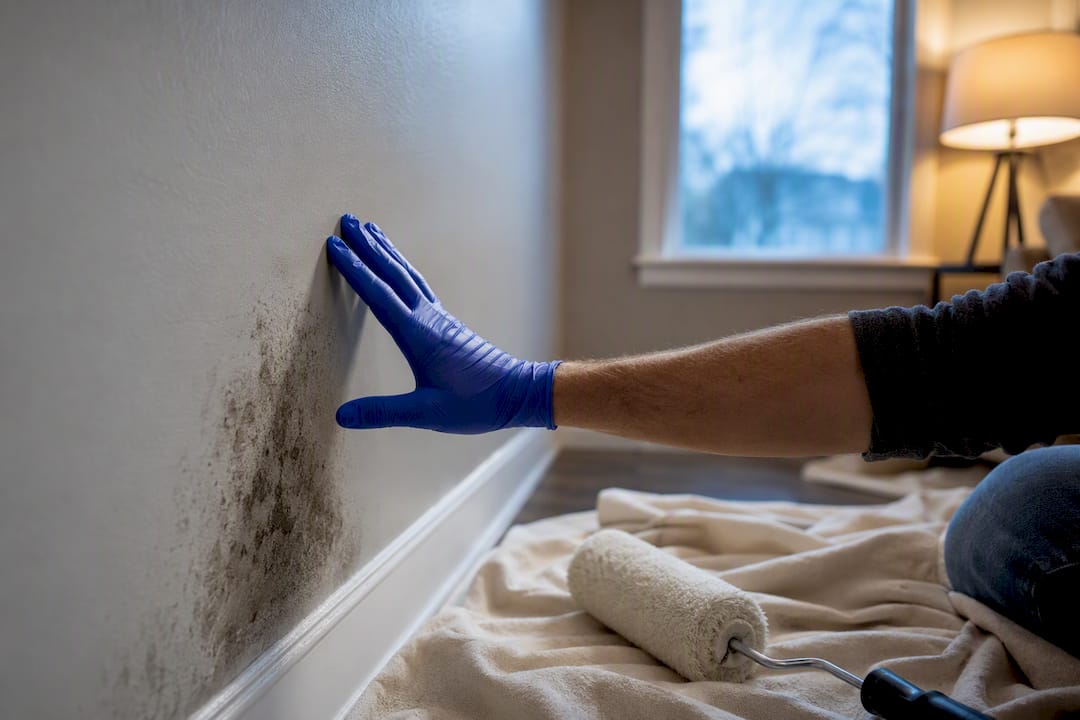
Pro Tip: If you can smell sewage but can’t see standing water, don’t assume the problem is minor. Hidden leaks behind walls or under subfloors often smell worse than they look, and that odor usually means moisture has already reached materials you can’t inspect yourself.
Call a restoration professional when the source is a sewer backup, when water has been sitting more than a day, or when it’s touched wallboard, insulation, or subflooring. A quick basement flood cleanup checklist can help in the first hour, but sewage involvement changes the math fast.
When Graywater Reuse Is Actually Safe
Reusing graywater for toilet flushing or irrigation is legal and practical in many places, but “it looks clean” is not the standard anyone should be working from. The EPA’s risk-based framework sets specific pathogen-removal targets that engineered treatment systems have to hit before reuse is considered safe, replacing older, simpler fecal-indicator tests that didn’t account for actual health risk.
That risk-based approach corrects a common misconception: “gray” doesn’t mean harmless. The real questions are the water’s source, what contaminants are plausible, how people might be exposed, and what treatment barriers stand between the water and that exposure.
Rules vary sharply by state. North Carolina permits treated graywater for certain onsite non-potable uses, but it requires permits and, in many cases, ongoing sampling or monitoring. What’s allowed untreated in one state may require full engineered treatment in another.
- Check with your local health or water authority before setting up any graywater reuse system.
- Never assume rainwater qualifies as graywater. The EPA treats stormwater as a separate category, and collected rainwater should be handled as non-potable unless it’s been permitted and treated.
- Treat “no visible odor” as irrelevant to safety. Treatment specifications matter more than sensory impression.
How Restoration Professionals Assess Contaminated Water Damage
Professionals don’t start with a mop. They start by verifying the source of the water, confirming whether sewage is involved, and checking for contamination indicators like odor, discoloration, or proximity to a failed septic line. From there, they decide what’s salvageable and what has to go.
- Source verification determines whether the job is a graywater cleanup or a full sewage remediation, which changes everything about the scope of work.
- Material assessment separates items that can be sanitized from porous materials that need to be removed and replaced.
- Extraction and drying follow documented severity categories that guide how aggressive the drying and disinfection process needs to be.
- Mold prevention becomes part of the plan whenever materials stayed wet past that 24 to 48 hour window, since mold growth after a flood often follows close behind sewage exposure.
Homeowners hiring a professional should expect containment of the affected area, photo documentation for insurance, a clear timeline, and a plan that limits secondary damage like structural rot or mold colonization.
The One Rule That Cuts Through the Confusion
If you’re not sure what you’re looking at, assume the worse category until proven otherwise. Blackwater assumptions cost you a little extra caution; graywater assumptions made about sewage-tainted water cost you your health. Isolate the area, protect yourself, and bring in a professional the moment sewage is even a possibility. That single habit prevents more damage than any cleaning product ever will.
— Jim
Get Professional Help After a Sewage or Water Backup
Sewage backups don’t leave much room for guesswork, and that’s exactly where Thecleangenius earns its keep: a team experienced in handling water emergencies in the Chicagoland area, available 24/7 for urgent backups.

Our certified technicians verify the contamination source, extract standing water, and dry the structure using professional-grade equipment, then bring in mold remediation if materials stayed wet too long. We also coordinate directly with your insurance carrier, so you’re not stuck untangling claims paperwork while your basement dries out. With many positive reviews from homeowners across Chicagoland, this team has experience handling a wide range of sewage and flood scenarios described in this guide.
If you’re dealing with a suspected sewage backup or contaminated flooding right now, visit our water damage restoration page to reach our emergency team.
Where This Guidance Comes From
The recommendations in this guide are drawn from federal and state sources built specifically for sewage and water reuse safety.
- CDC guidelines on septic and onsite wastewater systems inform blackwater hazard warnings.
- CDC natural disaster safety guidance supports PPE recommendations and the 24 to 48 hour cleanup window.
- EPA’s risk-based treatment framework backs graywater reuse and treatment-target claims.
- EPA’s North Carolina reuse summary illustrates state-level variation in permitting.
Always confirm specifics with your local health department, since permit and treatment requirements shift from state to state.
This article is general information, not a substitute for advice from a qualified doctor. Consult a qualified healthcare professional about your own circumstances before acting on anything here.
Sources
- Guidelines for septic and onsite wastewater systems | CDC
- Natural disasters and severe weather safety | CDC
- Risk-Based Framework for Developing Microbial Treatment Targets for Water Reuse | EPA
- Summary of North Carolina’s water reuse guideline or regulation for onsite non-potable water reuse | EPA
FAQ
Do You Dump Graywater or Blackwater First?
When managing RV or portable systems, it’s generally recommended to dump blackwater before graywater to help rinse hoses and reduce odor buildup, though specific practices may vary.
Is RV Shower Water Gray or Black Water?
RV shower and sink water is graywater, separate from the toilet’s blackwater tank. Most RVs are built with two separate tanks specifically because shower and sink water carries far less pathogen risk than toilet waste.
What Are the Disadvantages of Graywater?
Graywater still contains grease, soap residue, and some bacteria, so it needs proper filtration or treatment before reuse for irrigation or flushing. Untreated graywater can also clog irrigation lines over time and, per the EPA’s risk framework, still poses exposure risk if reused without meeting pathogen-removal targets.
Is Rainwater Classified as Graywater?
No. Rainwater and stormwater are treated as their own separate category from graywater, and collected rainwater should be handled as non-potable unless it has been properly permitted and treated for a specific use.