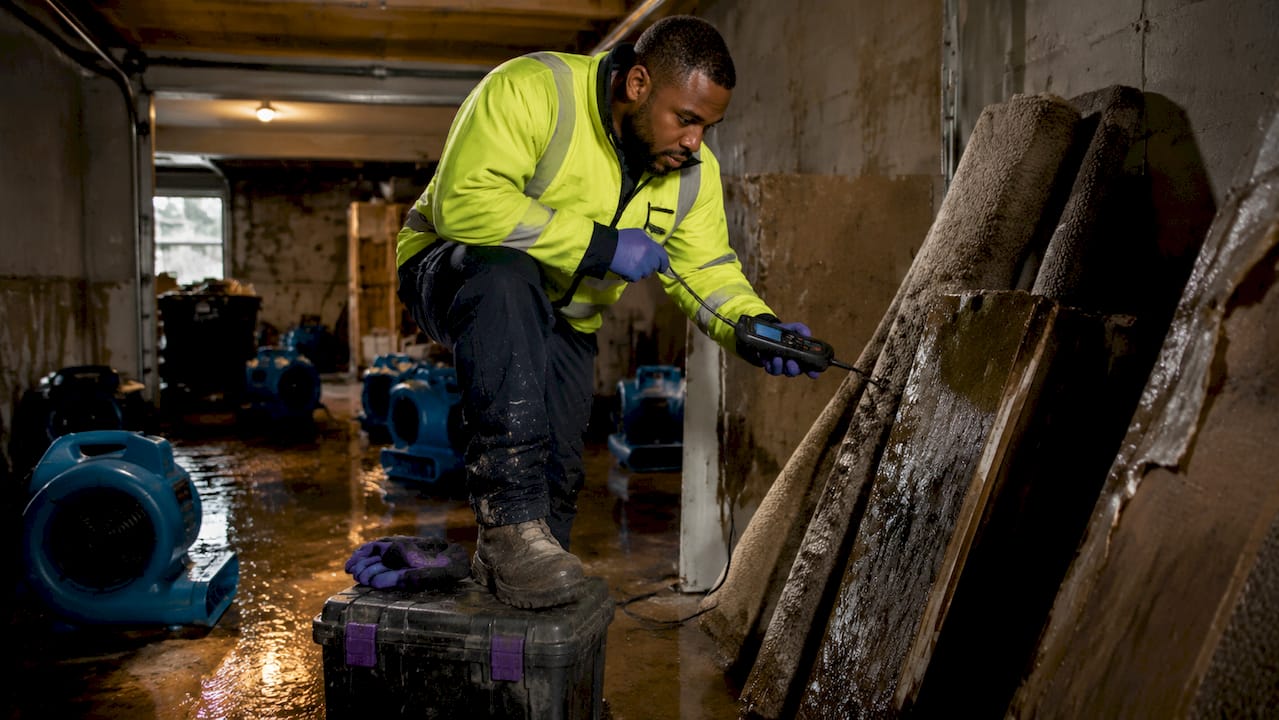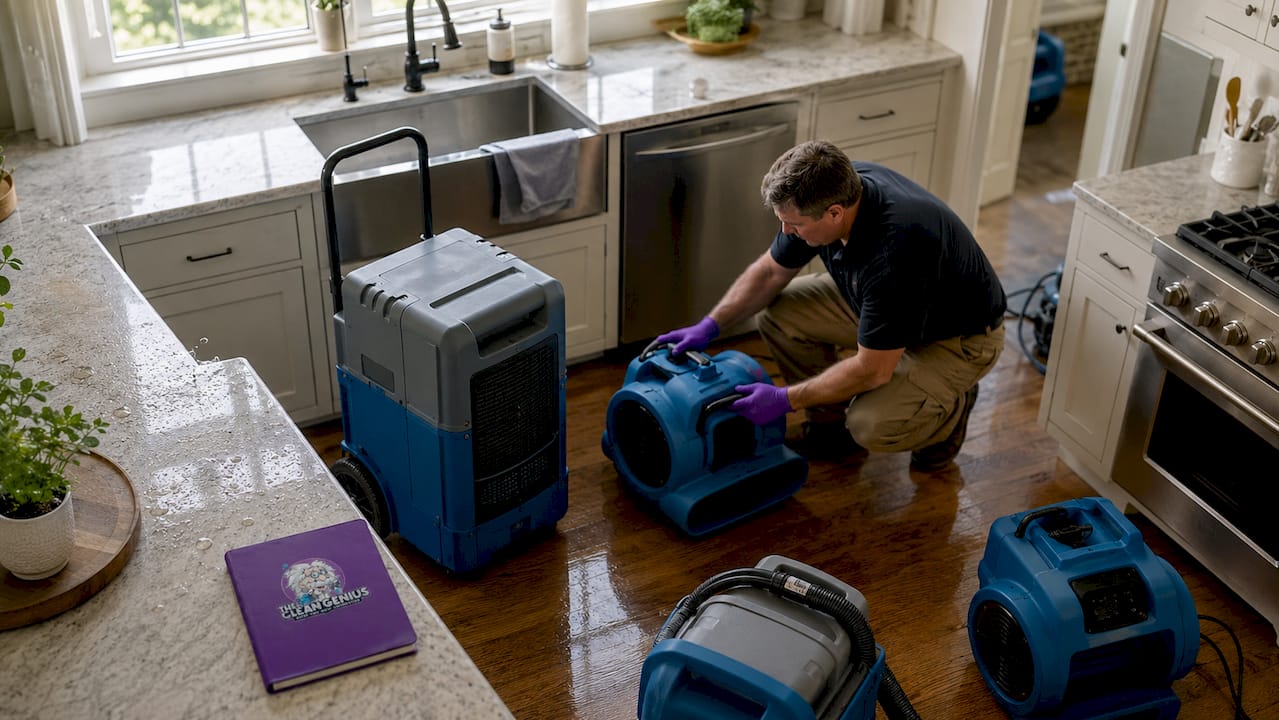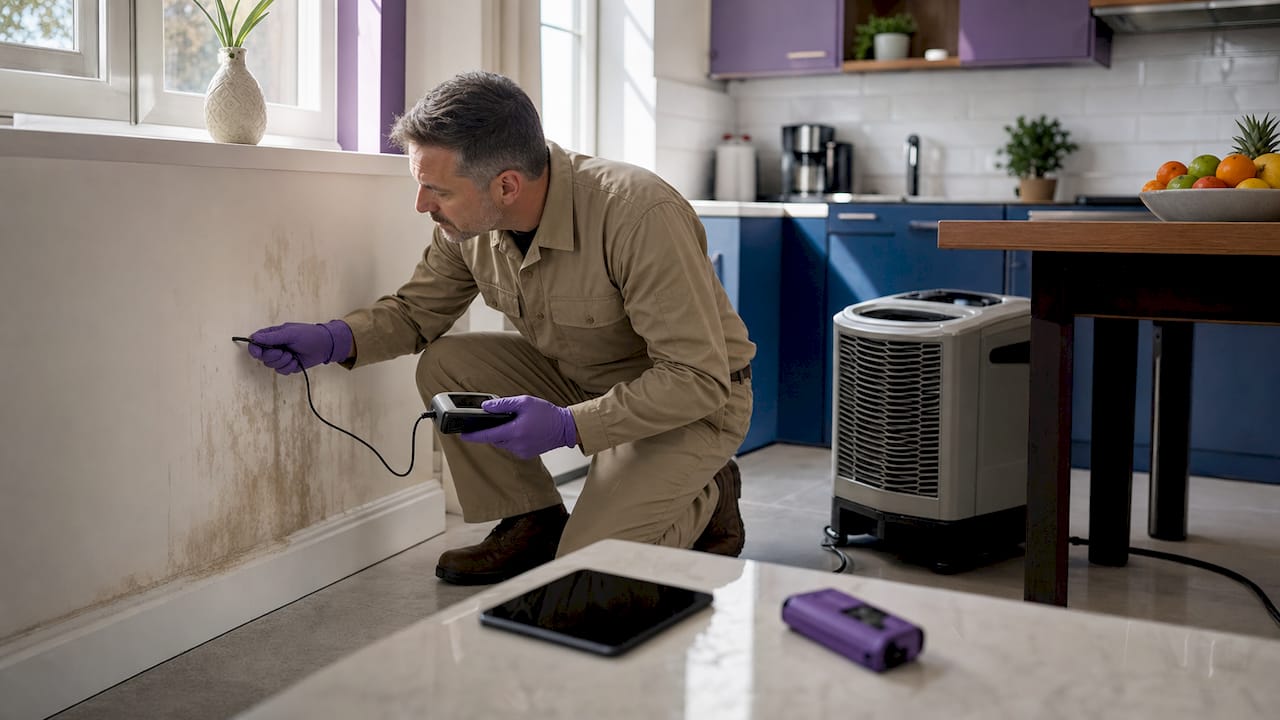

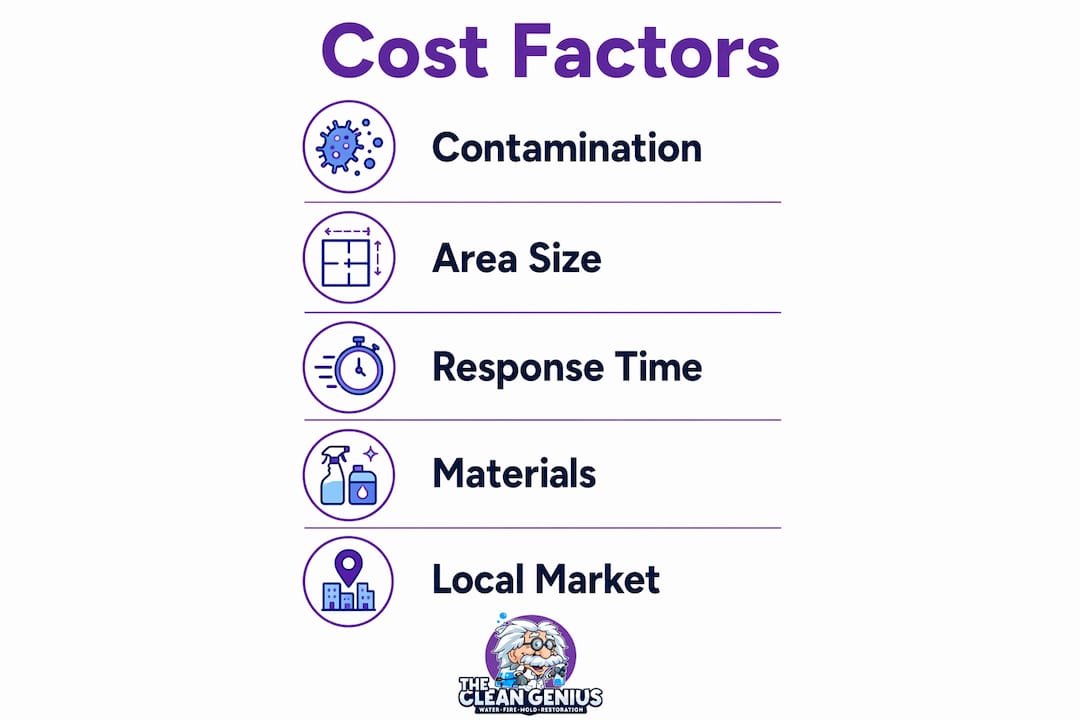
Water damage restoration cost factors are defined by five primary variables: water contamination category, size of the affected area, response timing, material types, and local labor rates. For Illinois homeowners, these factors combine to produce a wide cost range. A minor clean water leak in a single room costs far less than a basement sewage backup left untreated for days. Knowing what drives the price before you call a contractor puts you in a stronger position to evaluate quotes, file an insurance claim, and avoid surprises mid-project.
What is water damage restoration cost factors: contamination category explained
The single biggest driver of water damage restoration pricing is the category of water involved. The industry follows a three-tier classification system based on IICRC S500 standards, and each tier carries a distinct cost range.
| Category | Source examples | Cost per sq ft | Key requirement |
|---|---|---|---|
| Category 1 (clean water) | Broken supply line, overflowing sink | $3–$4 | Basic extraction and drying |
| Category 2 (gray water) | Washing machine overflow, dishwasher leak | $4–$6.50 | Disinfection plus drying |
| Category 3 (black water) | Sewage backup, floodwater | $7–$15 | PPE, hazardous disposal, full containment |
Clean water damage costs $3–$4 per square foot because it requires only extraction and drying. Gray water adds disinfection to the process, pushing costs to $4–$6.50 per square foot. Black water is the most expensive category at $7–$15 per square foot because it requires personal protective equipment, hazardous waste handling, and strict regulatory disposal protocols.
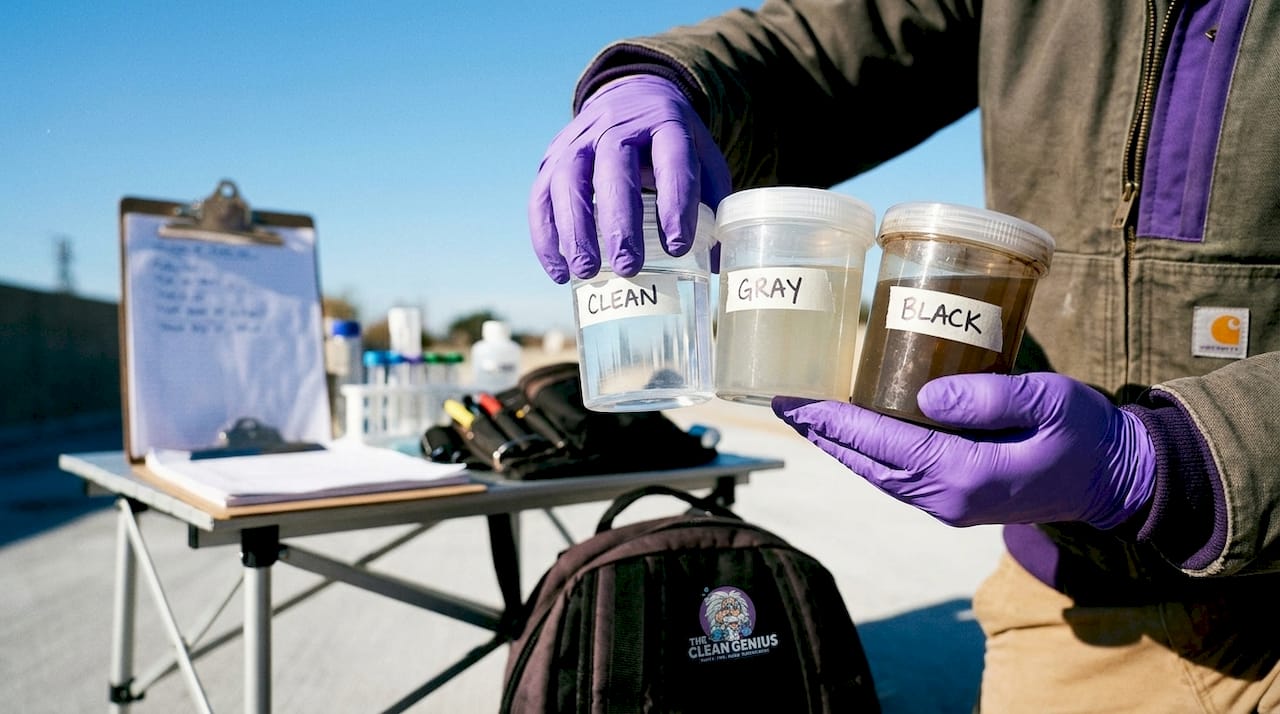
Costs compound dramatically with black water due to full containment requirements and extended labor hours. A basement sewage backup in Schaumburg or Naperville can easily double or triple the cost of an equivalent-sized clean water event. The contamination level also determines whether your contractor needs special permits and disposal documentation, which adds both time and expense.
Pro Tip: Ask your restoration contractor to identify the water category in writing before work begins. This classification directly affects your insurance claim and the scope of work required.
What size and location factors affect water damage restoration pricing?
Affected area size is the second major cost driver. Larger areas require more equipment, more labor hours, and more replacement materials. A 200-square-foot bedroom with water damage costs significantly less than a 1,000-square-foot finished basement.
Location within the home adds another layer of pricing complexity:
- Basements: Basements with sewage backup up to two feet deep cost a minimum of $2,800 to restore. Illinois basements face elevated mold risk due to the region’s humid climate, making thorough drying non-negotiable.
- Crawl spaces: Working in areas under 36 inches triggers OSHA confined space regulations. Access constraints in crawl spaces increase costs non-linearly because contractors need special permits and equipment beyond standard rates.
- Ceilings and upper floors: Water migrating downward through ceiling joists and subfloors requires opening walls and ceilings to dry structural cavities, adding demolition and rebuild costs.
- Multiple rooms: When water travels across several rooms, each affected space is assessed separately. Total costs stack quickly when hallways, adjacent bedrooms, and living areas are all involved.
For Illinois homes in areas like Elgin or Crystal Lake, where older housing stock is common, water often travels through gaps in aging subfloors and wall cavities. This hidden migration expands the affected area beyond what is visible at first inspection.
Pro Tip: Before your contractor arrives, photograph every wet surface and measure the affected rooms yourself. Accurate square footage documentation supports your insurance claim and gives you a baseline to verify the contractor’s assessment.
How does response timing affect the total cost of water damage repair?
Speed is money in water damage restoration. Acting within 24–48 hours keeps restoration costs in the $1,500–$3,000 range for basic extraction and drying. Waiting longer invites mold growth, which adds $1,500–$6,000 to the final bill.
Here is how the cost timeline typically unfolds:
- Hours 1–24: Water extraction and initial drying equipment placement. Costs are lowest at this stage. Structural materials are still salvageable in most cases.
- Hours 24–48: Moisture penetrates deeper into drywall, insulation, and subfloors. Drying equipment must run longer, increasing equipment rental and labor costs.
- Days 3–7: Mold begins colonizing wet organic materials. Remediation becomes necessary, adding a separate scope of work on top of drying costs.
- Week 2 and beyond: Structural rot, warped hardwood floors, and compromised drywall require demolition and full rebuild. Restoration timelines typically run 1–2 days for extraction, 3–5 days for drying, and 1–3 weeks for repairs. Delays push every phase later and more expensive.
Illinois homeowners should treat water damage as a 24-hour emergency, not a next-business-day problem. Why water damage requires fast response is straightforward: every hour of delay expands the affected area and raises the probability of mold. Mold remediation is a separate, regulated process that requires its own equipment, containment, and disposal procedures.
What role do materials and restoration scope play in determining costs?
The types of materials water contacts determine whether restoration means drying or demolition. Porous materials absorb water quickly and release it slowly. Non-porous materials like tile and sealed concrete dry faster and rarely need replacement.
| Material | Typical restoration approach | Relative cost impact |
|---|---|---|
| Drywall (soaked over 48 hrs) | Removal and replacement | High |
| Hardwood flooring | Drying attempt, often replacement | Very high |
| Carpet and pad | Removal and disposal | Moderate |
| Insulation (fiberglass batt) | Removal and replacement | Moderate |
| Concrete subfloor | Drying and sealing | Low to moderate |
| Structural studs and joists | Drying or sistering, sometimes replacement | High |
Drywall soaked for more than 48 hours almost always requires removal rather than drying. This shifts the project scope from mitigation to demolition and rebuild, which is a significant cost jump. Hardwood floors are particularly expensive because the wood swells, cups, and warps. Replacement costs for hardwood run well above carpet or vinyl alternatives.
Initial mitigation costs often underestimate total restoration expenses because reconstruction dominates the final bill. Extraction and drying are just the first phase. Replacing drywall, refinishing floors, repainting, and restoring trim are separate line items that accumulate fast. Illinois homeowners should ask contractors to separate mitigation costs from reconstruction costs in every written estimate.
How do local market conditions and Illinois-specific factors influence restoration pricing?
Labor rates, equipment availability, and company overhead all vary by region. Illinois, particularly the Chicagoland area, carries higher labor costs than rural Midwest markets. Contractors in Naperville, Schaumburg, or Arlington Heights price their services to reflect local wages, insurance, and operating costs.
Key factors that cause price variation between restoration companies include:
- Certifications and training: Companies certified by the IICRC invest in ongoing training and equipment. That investment shows up in their pricing but also in the quality and completeness of the work.
- Equipment capacity: Price variation between companies depends on overhead and equipment investment. A company with industrial-grade desiccant dehumidifiers and thermal imaging cameras costs more per day but dries structures faster and more completely.
- Insurance coordination experience: Companies that work directly with insurers know how to document damage properly, which maximizes your claim payout. Contractors without this experience may leave money on the table or create documentation gaps that delay claims.
- Company size and overhead: Larger companies carry higher overhead but offer 24/7 availability and multiple crews. Smaller operators may quote lower prices but lack the equipment or staffing for large or complex jobs.
Choosing a contractor based on the lowest quote alone is a common and costly mistake. Incomplete drying leads to hidden mold growth, which creates a second remediation project weeks or months later. Selecting a reputable restoration company using a structured checklist protects you from that outcome. For Illinois homeowners navigating insurance, working with a company that handles direct billing removes one more stressor from an already difficult situation.
If your project involves major reconstruction after water damage, home remodeling financing is worth exploring as a way to cover costs that exceed your insurance payout.
Key Takeaways
Water damage restoration costs are determined primarily by contamination category, affected area size, response speed, material types, and local labor rates. Homeowners who act within 24–48 hours and choose certified contractors consistently pay less and avoid secondary damage.
| Point | Details |
|---|---|
| Contamination category drives base cost | Black water restoration costs up to five times more per square foot than clean water damage. |
| Response time within 24–48 hours is critical | Delays beyond 48 hours add $1,500–$6,000 in mold remediation costs on top of drying expenses. |
| Material porosity determines scope | Drywall and hardwood soaked over 48 hours almost always require removal, not just drying. |
| Location adds non-linear cost multipliers | Crawl spaces and confined areas trigger OSHA permitting requirements that raise labor costs significantly. |
| Budget a 20–30% contingency | Hidden damage discovered during restoration routinely pushes final costs above initial estimates. |
What I have learned after years of Illinois water damage jobs
After working through hundreds of water damage projects across Chicagoland, the pattern I see most often is this: homeowners underestimate the gap between the mitigation quote and the final reconstruction bill. Extraction and drying are just the beginning. The real cost shows up when walls come open and you find wet insulation, rotted studs, or mold colonies that were invisible from the surface.
The 20–30% contingency recommendation is not a contractor upsell. It reflects what actually happens on the job. Discovery phase findings change scope on nearly every project I have seen. Homeowners who budget for this from the start avoid the shock of a revised estimate mid-project.
The other misconception I run into constantly is that a cheap initial quote saves money. It rarely does. A contractor who skips thermal imaging or pulls equipment too early leaves moisture in wall cavities. That moisture becomes mold. That mold becomes a second project, often not covered by insurance because the original work was incomplete. Paying for certified, well-equipped professionals the first time is almost always cheaper than fixing the consequences of cutting corners.
Illinois basements deserve special attention. The combination of clay-heavy soil, aging sewer infrastructure in older suburbs, and humid summers creates conditions where mold can establish itself faster than in drier climates. If your basement flooded, do not assume it is dry because the standing water is gone. Moisture in concrete block walls and wood framing can persist for weeks without professional drying equipment.
— Jim
Thecleangenius is ready to help Illinois homeowners right now
Water damage does not wait for business hours, and neither does Thecleangenius. Serving Chicagoland communities including Naperville, Schaumburg, Arlington Heights, and Wheaton, Thecleangenius provides 24/7 emergency response with certified crews, industrial drying equipment, and direct insurance coordination.

Every job starts with a thorough assessment so you understand the full scope and cost before work begins. Thecleangenius handles everything from initial water extraction through complete reconstruction, and works directly with your insurer to document damage properly and maximize your claim. For professional water damage restoration in Chicagoland, Thecleangenius brings over 25 years of combined experience and more than 400 five-star reviews to every project. Call any time, day or night.
FAQ
What is the average cost of water damage restoration?
Water damage restoration costs range from $1,500 for minor clean water drying to well over $15,000 for large-scale black water or sewage events requiring demolition and rebuild. The final cost depends on contamination category, affected area size, and materials involved.
How does mold affect water damage repair costs?
Mold remediation adds $1,500–$6,000 to restoration costs on top of drying and repair expenses. Mold growth begins within 24–48 hours of water exposure, so fast response is the most effective way to prevent this additional expense.
Does homeowners insurance cover water damage restoration in Illinois?
Most standard homeowners insurance policies cover sudden and accidental water damage, such as burst pipes, but exclude flooding from external sources. Working with a restoration company experienced in insurance coordination helps you document damage correctly and maximize your covered claim.
Why do restoration estimates vary so much between companies?
Estimate variation reflects differences in equipment investment, company overhead, certification level, and insurance experience. A lower quote often means less equipment or less thorough drying, which can lead to mold problems and higher costs later.
How long does water damage restoration take in Illinois?
A typical restoration project runs 1–2 days for extraction, 3–5 days for structural drying, and 1–3 weeks for repairs and reconstruction. Severity of damage, material types, and access constraints all affect the total timeline and final cost.