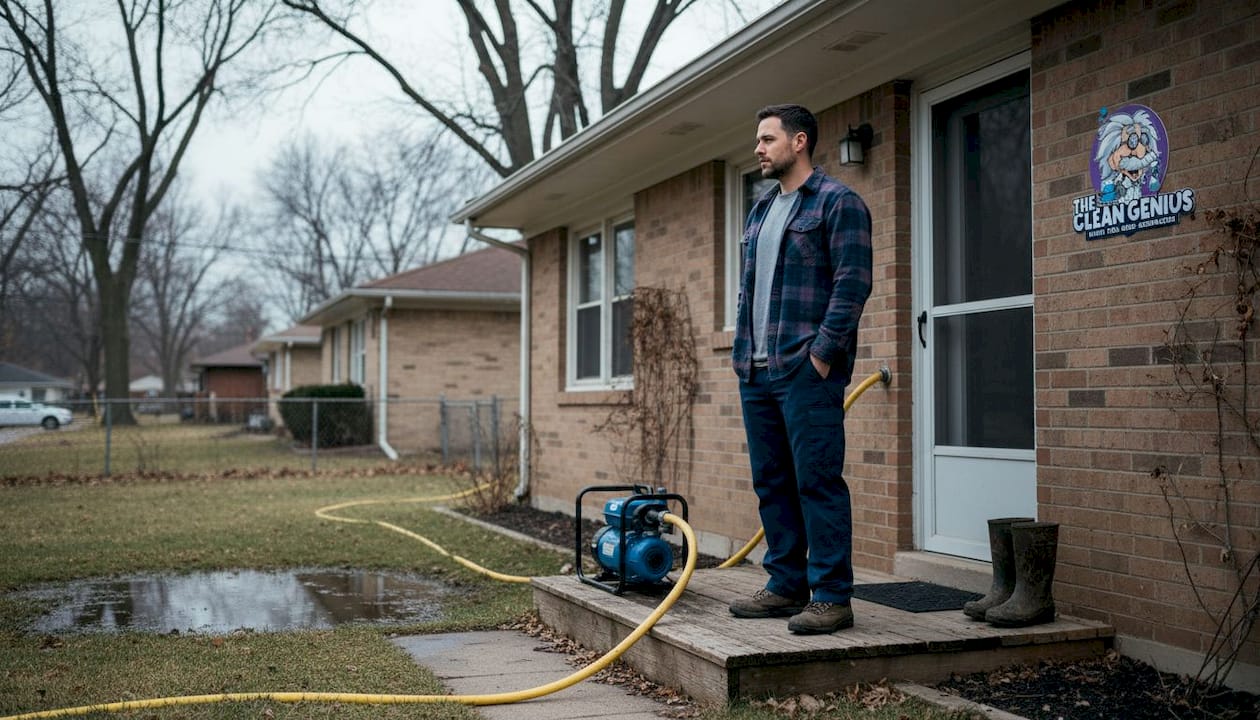

When your basement floods or a burst pipe soaks your drywall, picking the wrong types of flood damage restoration services can cost you thousands in repeat repairs or overlooked mold. Most homeowners in Chicagoland make decisions under pressure, without knowing that the right service depends almost entirely on two things: how contaminated the water is and how deeply it has absorbed into your home’s materials. Get those two factors right, and every other decision falls into place.
Table of Contents
- Key criteria for categorizing flood damage restoration services
- Category 1 restoration: clean water damage services
- Category 2 restoration: gray water damage services with antimicrobial treatment
- Category 3 restoration: black water damage and hazmat protocols
- Water damage classes: restoring by absorption and saturation levels
- Flood damage restoration process and cost considerations
- Mold remediation and moisture mapping: tackling hidden damage
- Comparing flood damage restoration services: choosing what’s right for your home
- A Chicagoland homeowner’s guide: what professionals wish you knew about flood restoration
- Expert flood damage restoration services in Chicagoland — trusted by homeowners
- Frequently asked questions
Key Takeaways
| Point | Details |
|---|---|
| Classification matters | Flood restoration services vary depending on the water contamination category and absorption class. |
| Prompt response | Emergency water extraction within hours is crucial to limit damage and mold growth. |
| Mold risk high | Porous materials saturated over 48 hours usually require removal to prevent mold. |
| Professional monitoring | Certified moisture mapping ensures hidden water is detected and drying is complete. |
| Cost varies | Restoration costs range widely based on damage extent, typically averaging about $3,490. |
Key criteria for categorizing flood damage restoration services
Before any technician touches a pump or sets up a dehumidifier, they need to classify the damage. The industry standard for this is the IICRC S500, which organizes flood events by water category (contamination level) and water class (saturation depth). These two criteria directly determine the safety protocols, equipment, and scope of work required.
Water categories at a glance:
- Category 1 (clean water): Originates from a sanitary source, such as a supply line break, rainwater intrusion, or a malfunctioning appliance. Minimal contamination risk.
- Category 2 (gray water): Contains some contaminants. Sources include washing machine overflow, dishwasher discharge, and toilet tank water.
- Category 3 (black water): Grossly contaminated. This includes sewage backups, floodwaters from rivers or storm drains, and any water that has sat long enough to grow bacteria.
Water classes by saturation level:
- Class 1: Small area affected, low-porosity materials, minimal moisture absorbed.
- Class 2: Entire room affected, carpets and lower portions of walls saturated.
- Class 3: Ceilings, walls, and subfloors saturated from above or throughout.
- Class 4: Dense materials like hardwood, concrete, or plaster requiring specialty drying techniques.
Understanding these categories and classes is the foundation behind all water damage restoration standards that certified professionals follow. With these classification criteria established, let’s explore each type of flood damage restoration service in detail.
Category 1 restoration: clean water damage services
Category 1 is the best-case scenario, but it still demands speed. Clean water comes from sanitary sources, which means the contamination risk is low, but the clock starts the moment water contacts your floors, walls, and subfloor. Category 1 restoration typically involves water extraction, structural drying with air movers and dehumidifiers, and moisture monitoring, usually completed within 3 to 5 days.
Services included in Category 1 restoration:
- Emergency water extraction using truck-mounted or portable extraction units to remove standing water fast
- Structural drying with industrial air movers and low-grain refrigerant dehumidifiers targeting equilibrium moisture content (EMC)
- Moisture monitoring using pin-type and pinless meters to track drying progress daily
- Content manipulation to move furniture and belongings out of wet zones
- Antimicrobial application as a precaution even with clean water, since organic materials grow mold quickly
Most porous materials like drywall and carpet can be dried in place during Category 1 events if work begins quickly. Delay that response by even 24 hours and you risk elevating the job to a Category 2 concern.
Pro Tip: If your supply line breaks while you’re at work and water sits for several hours, do not assume it’s still a clean water event. Still water in a warm environment begins supporting biological growth fast, and a certified technician should assess contamination before assuming in-place drying is appropriate.
The single most important action in any Category 1 event is emergency water extraction within the first few hours.
Category 2 restoration: gray water damage services with antimicrobial treatment
Gray water is a step up in complexity. It contains contaminants that irritate skin and mucous membranes and can cause illness if handled improperly. Category 2 restoration involves antimicrobial treatment, removal of carpet padding, possible drywall removal below the waterline, and enhanced technician protective gear.
What Category 2 services typically involve:
- Full PPE for technicians including gloves, eye protection, and N95 respirators minimum
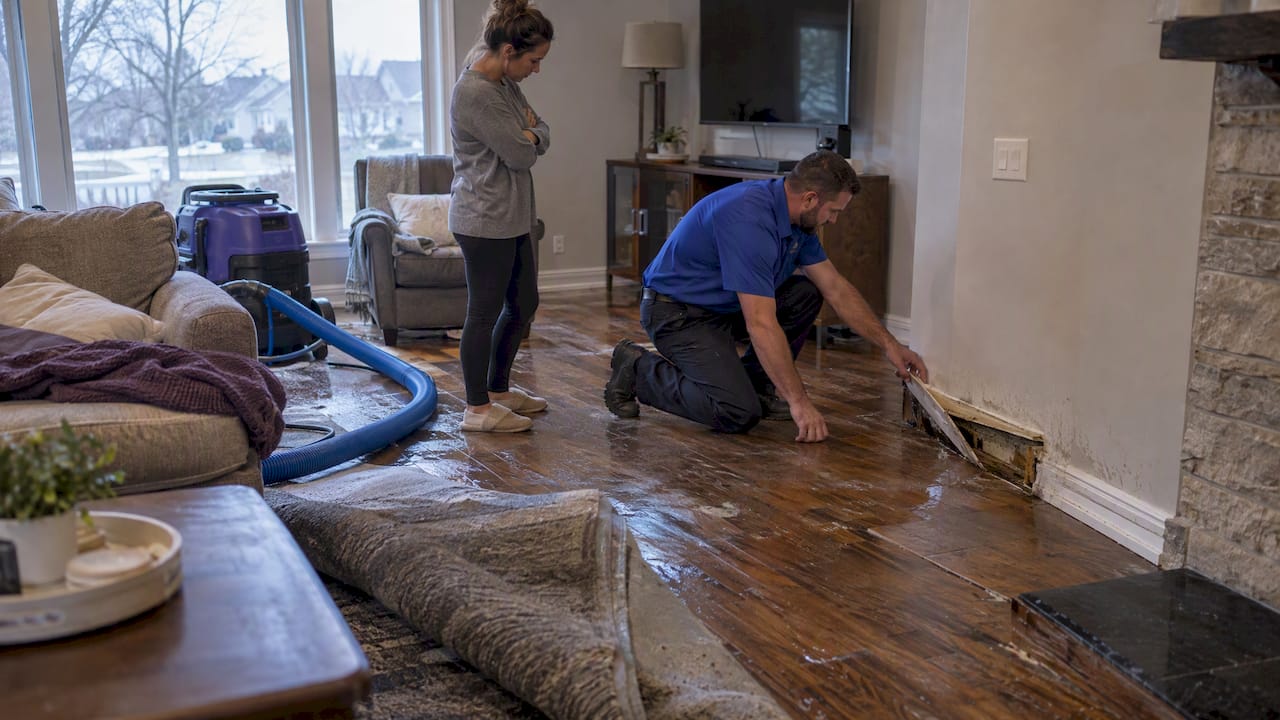
- Carpet padding removal since padding holds contaminated water and cannot be effectively dried or sanitized
- Selective drywall removal below the waterline when walls have been saturated
- EPA-registered antimicrobial treatment on all exposed structural surfaces
- Structural drying following the same air mover and dehumidifier approach as Category 1, but with additional monitoring
Cost is a real factor here. Category 2 jobs typically run 1.5 to 2 times the price of a comparable Category 1 event due to the added material removal, antimicrobial products, and extra labor. If you skip proper antimicrobial treatment to save money, you almost guarantee a mold removal and remediation job a few weeks later, which costs far more.
Pro Tip: Never let a contractor dry gray water in place without antimicrobial treatment. The contamination absorbs into the porous core of drywall and insulation, where it feeds mold colonies you will not see until the problem is severe.
Category 3 restoration: black water damage and hazmat protocols
Category 3 is the most serious classification and the one Chicagoland homeowners encounter more often than they expect, particularly after heavy storm flooding when municipal drains back up into basements. Black water restoration requires full hazmat protocols including removal of all porous contaminated materials, EPA-registered antimicrobial treatment, respirators and full PPE, and clearance testing after remediation.
Step-by-step Category 3 restoration:
- Establish containment zones to prevent cross-contamination to unaffected areas
- Equip all technicians with full hazmat PPE including Tyvek suits and N95 or P100 respirators
- Remove all porous materials: carpet, carpet padding, drywall to at least 12 inches above the waterline, insulation
- Apply EPA-registered antimicrobial treatment to all exposed framing, concrete, and structural surfaces
- Conduct structural drying with continuous monitoring
- Post-remediation clearance testing before any reconstruction begins
“Drying alone is insufficient to address pathogens and mold risks in Category 3 events.” The EPA confirms that antimicrobial treatment is required, not optional.
Porous materials that must be discarded in Category 3:
- Carpet and carpet padding
- Drywall and gypsum board
- Fiberglass batt insulation
- Ceiling tiles
- Fabric upholstery in contact with floodwater
Skipping any of these removal steps and attempting to dry in place is a health hazard. Pathogens and mold persist in saturated materials regardless of how thoroughly they are dried. Your contractor should understand mold remediation basics well enough to explain why clearance testing is a mandatory final step, not an upsell.
Water damage classes: restoring by absorption and saturation levels
While categories tell you about contamination, classes tell you about how far the water has traveled into your home’s structure. Classes 1 through 4 range from minimal absorption with low-porosity materials to specialty drying needs for dense materials like concrete and hardwoods.
| Class | Area affected | Materials involved | Drying approach | Typical timeline |
|---|---|---|---|---|
| Class 1 | Small portion of one room | Low-porosity surfaces | Few air movers, one dehumidifier | 2 to 3 days |
| Class 2 | Entire room | Carpet, lower walls | Multiple air movers, dehumidifiers | 3 to 5 days |
| Class 3 | Walls, ceilings, subfloor | High-porosity throughout | Heavy equipment deployment | 5 to 7 days |
| Class 4 | Dense materials | Hardwood, concrete, plaster | Specialty drying with desiccants | 7 to 14 days |
Key facts about water damage classes:
- Class 4 jobs are expensive because desiccant dehumidifiers and heat drying systems cost more to operate and require longer runtimes
- Class 3 and 4 jobs in older Chicagoland homes often involve dense plaster walls, which hold moisture far longer than modern drywall
- Misidentifying a Class 3 event as Class 2 leads to under-drying, which means hidden moisture and mold later
The class directly determines how much water damage restoration equipment your contractor deploys, how many technicians are needed, and how many days you should expect work to continue.
Flood damage restoration process and cost considerations
Understanding the individual service types is one thing. Knowing how they connect as a complete process helps you evaluate any contractor’s scope of work.
The complete restoration sequence:
- Emergency water extraction to remove standing water
- Moisture mapping to establish baseline moisture readings in all affected materials
- Structural drying with daily monitoring
- Antimicrobial treatment matched to the water category
- Material removal for items that cannot be dried or sanitized
- Mold remediation if growth is detected or suspected
- Structural and finish repairs to restore the home
Typical restoration steps follow this sequence whether the event is a burst pipe or a flooded basement. The variables are scope and contamination level.
Typical cost ranges for Chicagoland homeowners:
| Damage scenario | Estimated cost range |
|---|---|
| Minor clean water leak | $500 to $1,500 |
| Moderate Category 1 or 2 event | $2,000 to $6,000 |
| Extensive Category 2 with material removal | $6,000 to $12,000 |
| Category 3 with full remediation and rebuild | $10,000 to $19,000 |
Average restoration costs run about $3,490, but that number is highly misleading without context. A finished basement with tile, drywall, and carpet that floods with gray water will land well above that average.
Pro Tip: Get a written scope of work that identifies the category and class before signing anything. If a contractor cannot name those classifications, they are not using industry-standard protocols, and your insurance company may reject the claim documentation.
Mold remediation and moisture mapping: tackling hidden damage
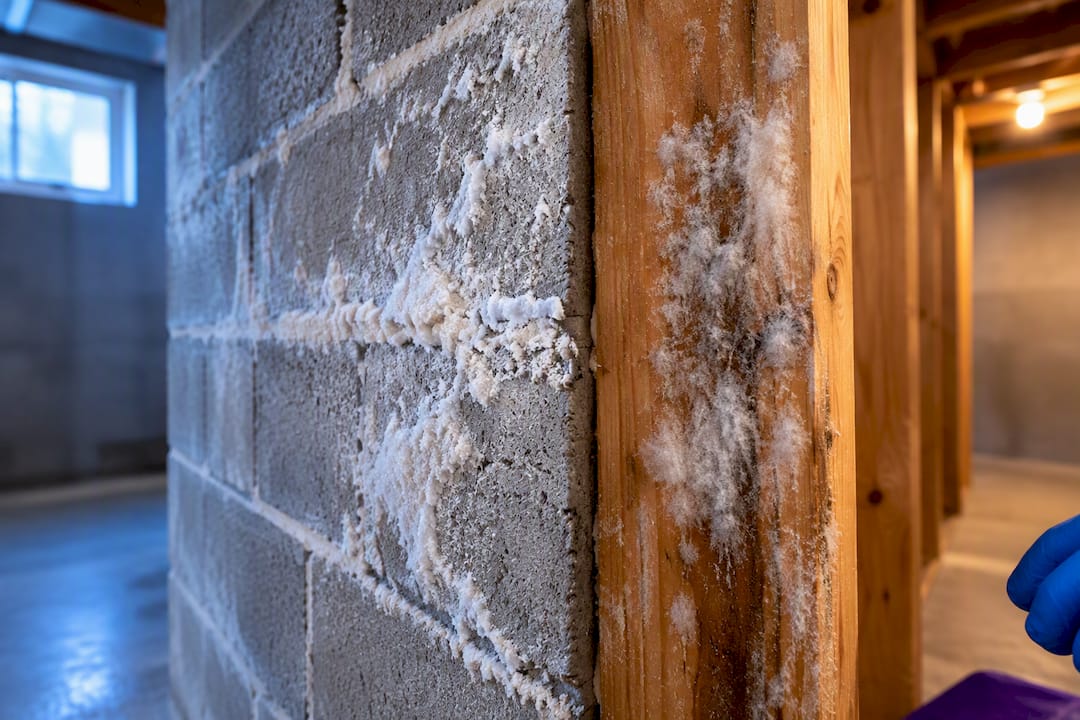
Flooding does not just damage what you can see. It saturates wall cavities, soaks subfloor sheathing, and hides inside insulation bays where nobody looks until the smell starts. Mold begins growing within 24 to 48 hours of flooding, and porous materials exposed longer than 48 hours typically must be discarded.
What moisture mapping involves:
- Baseline readings taken immediately after extraction to document starting moisture levels
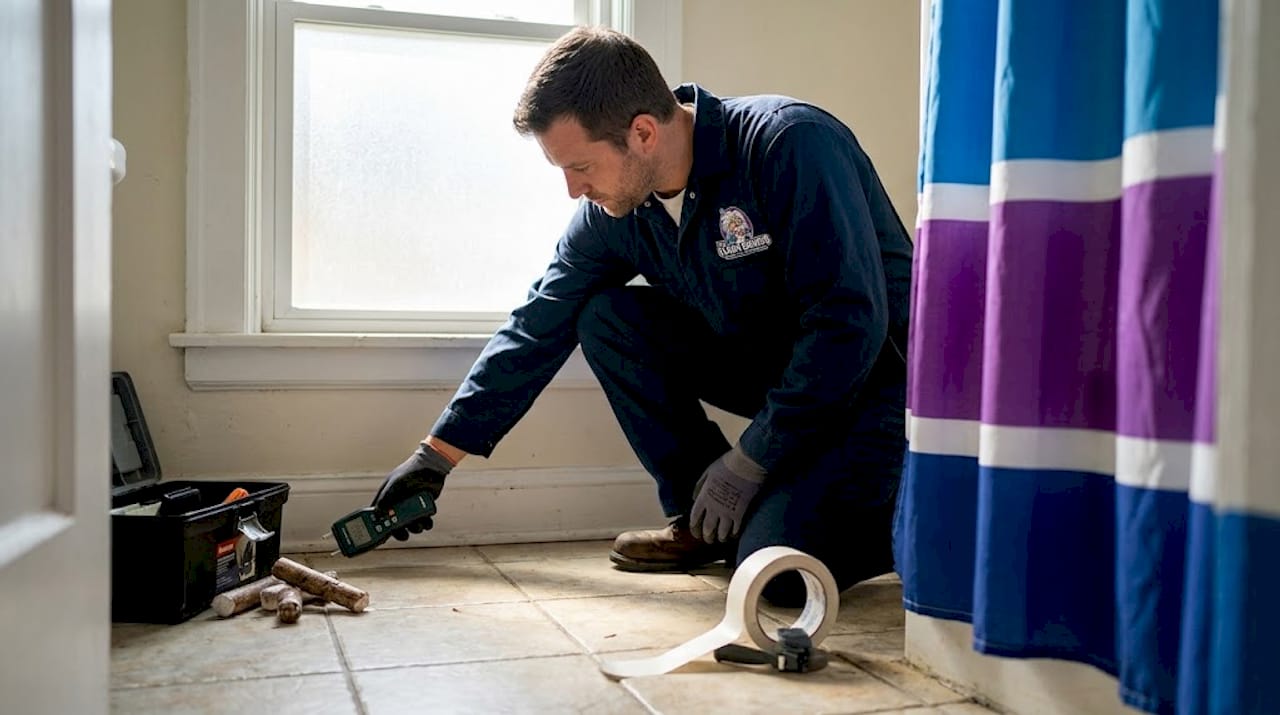
- Pin-type meters that measure moisture in wood framing and subfloor directly
- Pinless meters that scan drywall and concrete without surface damage
- Thermal imaging cameras to detect temperature differentials that reveal hidden wet zones
- Daily log entries documenting moisture levels in every affected material
- Closeout verification confirming all materials have reached EMC before equipment is removed
Moisture mapping documentation is essential for complete restoration and insurance claims, particularly when hidden moisture would otherwise go undetected.
Achieving EMC matching nearby dry reference materials is the accepted quality standard. A contractor who removes equipment based on “it feels dry” rather than documented meter readings is cutting corners in a way that will cost you later.
Pro Tip: Ask your contractor to share the daily moisture log with you. Any company doing the job correctly already produces this documentation as a matter of course. If they resist sharing it, that tells you something important about their process.
For homes where water intrusion has been delayed or where visible mold is already present, mold testing after water damage is a necessary step before any reconstruction begins. If you have had a previous remediation that did not hold, understanding why mold remediation fails can save you from making the same mistake twice.
Comparing flood damage restoration services: choosing what’s right for your home
Armed with the category and class framework, you can now evaluate any restoration scenario more clearly. The combination of category and class determines the restoration complexity, cost, and safety protocols required.
| Scenario | Category | Class | Complexity | Relative cost |
|---|---|---|---|---|
| Supply line break, one room | 1 | 2 | Low | $ |
| Washer overflow, finished basement | 2 | 2 | Moderate | $$ |
| Sewage backup, partial basement | 3 | 2 | High | $$$ |
| Storm flood, full basement with dense finishes | 3 | 3 or 4 | Very high | $$$$ |
What this means for your decision:
- Category 1/Class 1 or 2 events are manageable, cost-effective, and low risk if addressed quickly
- Category 2 events require a contractor who stocks antimicrobial products and does not cut corners on padding and drywall removal
- Category 3 events are non-negotiable. This is not a DIY situation, and hiring an uncertified contractor puts your family’s health at risk
- Insurance adjusters use these exact classifications to scope claims, so a contractor who documents properly protects your coverage
When choosing restoration services, the right question is not “who is cheapest” but “who can document this correctly from start to finish.”
A Chicagoland homeowner’s guide: what professionals wish you knew about flood restoration
After working through hundreds of water damage events across Chicagoland, here is what we consistently see homeowners get wrong and what changes everything when they get it right.
Hidden moisture is the number one cause of restoration failures. Not incomplete drying, not skipped antimicrobial treatment. Hidden moisture. Moisture mapping reveals water beyond what homeowners see, and without daily logs and final closeout verification, there is no proof the job was done correctly. We have walked into homes where a previous contractor declared the job finished but thermal imaging showed wet wall cavities throughout the basement.
Chicagoland’s storm patterns create a specific problem. Heavy rain events overwhelm municipal sewer systems, causing sanitary sewer water to back up through floor drains. That is not gray water. That is Category 3 black water by definition, and Category 3 flooding demands full PPE and antimicrobial treatment. We see this misclassified as gray water more often than it should be, sometimes by contractors who want to offer a lower bid.
The homeowners who fare best in these situations are the ones who ask the right questions before work begins: What category and class is this? What materials are you removing and why? Can I see the daily moisture logs? What does clearance testing look like at the end? Certified professionals answer these questions without hesitation because the protocols are built into how they work. If a contractor gets defensive about these questions, treat that as a serious red flag.
One more thing homeowners rarely consider: psychrometric data. Your contractor should be recording temperature, relative humidity, and dew point throughout the drying process, not just moisture readings in materials. This data proves that the drying environment itself was managed correctly. Without it, there is no scientific basis for declaring the job complete.
Expert flood damage restoration services in Chicagoland — trusted by homeowners
When flooding hits your home in Chicagoland, whether it’s a burst pipe in Schaumburg or a storm-backed sewer in Naperville, the response time and technical accuracy of your restoration team determine what your home looks like six months from now.

At The Clean Genius, our certified teams handle every category and class of water damage, 24 hours a day. From emergency extraction and full structural drying to mold removal using our advanced dry-fog technology, we document every step with moisture logs, psychrometric data, and post-remediation clearance testing. We work directly with your insurance company so you are not navigating that process alone. If you are in Mount Prospect or the surrounding area, our team offers local water damage repair services with the response times your situation demands.
Frequently asked questions
What types of flood water require professional restoration services?
Flood water falls into three categories: clean (Category 1), gray (Category 2), and black water (Category 3). Gray and black water require professional restoration because contamination levels pose real health risks that DIY methods cannot adequately address.
How soon should flood water restoration begin after damage occurs?
Restoration should start within the first few hours. Emergency water extraction within that initial window is critical to preventing secondary damage like mold growth and structural deterioration.
Why is moisture mapping important in flood damage restoration?
Moisture mapping detects water hidden inside wall cavities, subfloors, and insulation that visual inspection misses. Documented moisture levels throughout the drying process confirm the job is truly complete and protect your insurance claim.
What materials often need removal during flood damage restoration?
Porous materials like drywall, fiberglass insulation, and carpet padding that have been wet for over 48 hours generally must be removed because they cannot be fully dried or sanitized and will harbor mold.
How much does flood damage restoration typically cost for homeowners?
Costs vary considerably based on damage scope and water category. The average restoration cost runs around $3,490, but major Category 3 events with structural repairs can reach $19,000 or more.