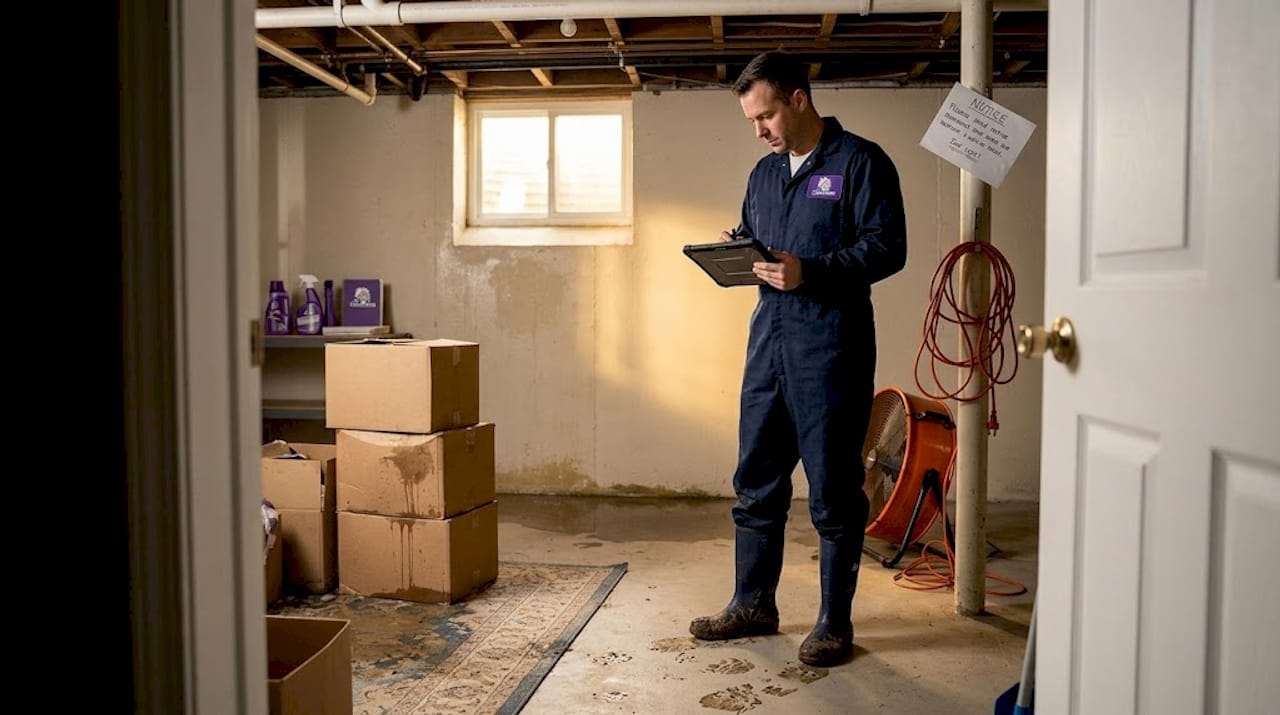

A pipe bursts at 2 a.m. Basement flooding creeps under your drywall. Sewage backs up into your finished lower level. Whatever triggered it, water damage in Chicagoland hits hard and fast, and within minutes your mind turns to one overwhelming question: how much is this going to cost me? Knowing the actual numbers, what drives them up or down, and how insurance fits into the picture can mean the difference between a manageable repair and a financial nightmare. This guide walks you through realistic cost ranges, the factors that move your bill, and exactly how to work your insurance claim like a pro.
Table of Contents
- Understanding water damage restoration costs in Chicagoland
- Detailed breakdown: By repair type and incident severity
- What factors affect your restoration cost most?
- Insurance and cost-saving for water damage restoration
- Why quick decisions save more than just money in Chicagoland
- Chicagoland’s trusted restoration starts here
- Frequently asked questions
Key Takeaways
| Point | Details |
|---|---|
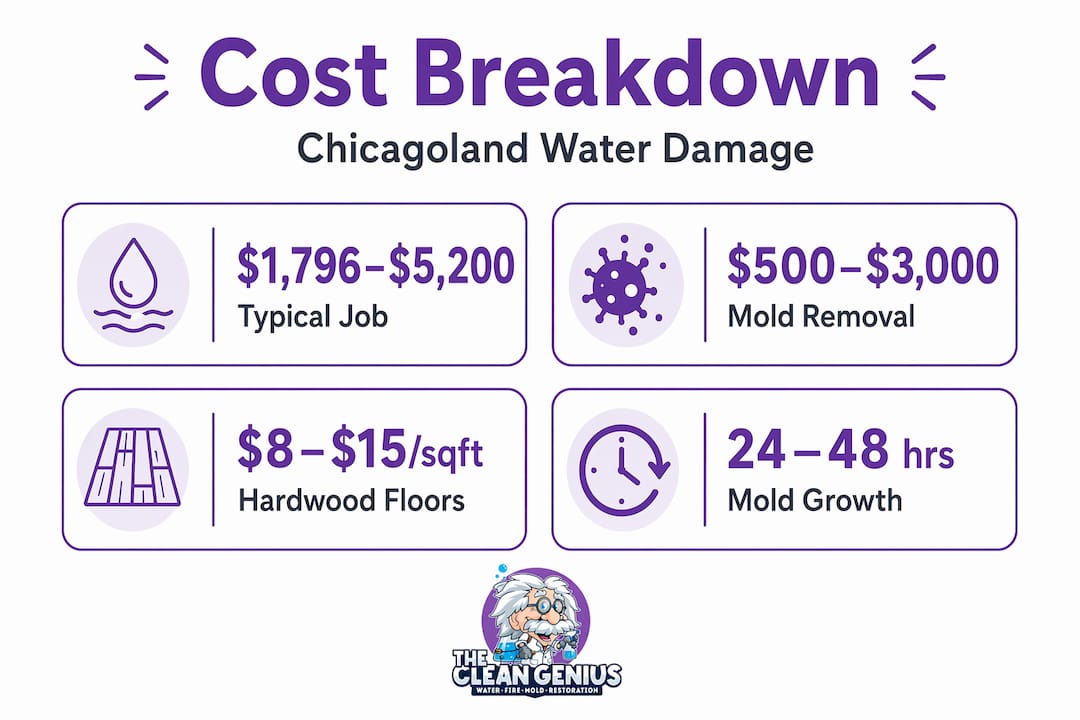
| Typical Chicagoland costs | Most restoration jobs in Chicago cost between $1,796 and $5,200 with an average of $3,394. |
| Repair type matters | Mold removal, basement cleanup, and pipe repairs each have different price ranges and requirements. |
| Severity drives price | The type of water and speed of response significantly affect your final bill. |
| Insurance can offset costs | Promptly documenting damage and following insurer steps increases your chances of coverage. |
| Act fast to save | Immediate action curbs both direct expenses and long-term damage to your home. |
Understanding water damage restoration costs in Chicagoland
Restoration in Chicagoland rarely comes with a single price tag because the damage itself is rarely the same twice. That said, you can absolutely set a realistic baseline before you ever pick up the phone.
For Chicago homeowners, Angi estimates restoration totals typically in the $1,796 to $5,200 range, with most homeowners landing around $3,394. That middle number is a useful anchor point. A straightforward clean water leak caught early might land at the lower end. A longer event involving contaminated water, structural materials, or large square footage pushes comfortably past $5,000.
Here is how the cost picture breaks down across common scenarios:
| Scenario | Low end | Average | High end |
|---|---|---|---|
| Small clean water leak (bathroom) | $1,796 | $2,400 | $3,000 |
| Mid-size water intrusion (kitchen) | $2,500 | $3,394 | $4,500 |
| Basement flooding | $3,500 | $5,200 | $8,000+ |
| Sewage backup or black water | $5,000 | $7,500 | $12,000+ |
Cost per square foot typically runs $3.75 to $7.00 for standard water extraction and drying. Add structural repairs, and that figure climbs to $10 or more per square foot for serious cases.
So what does a “typical” restoration actually cover? Most jobs include:
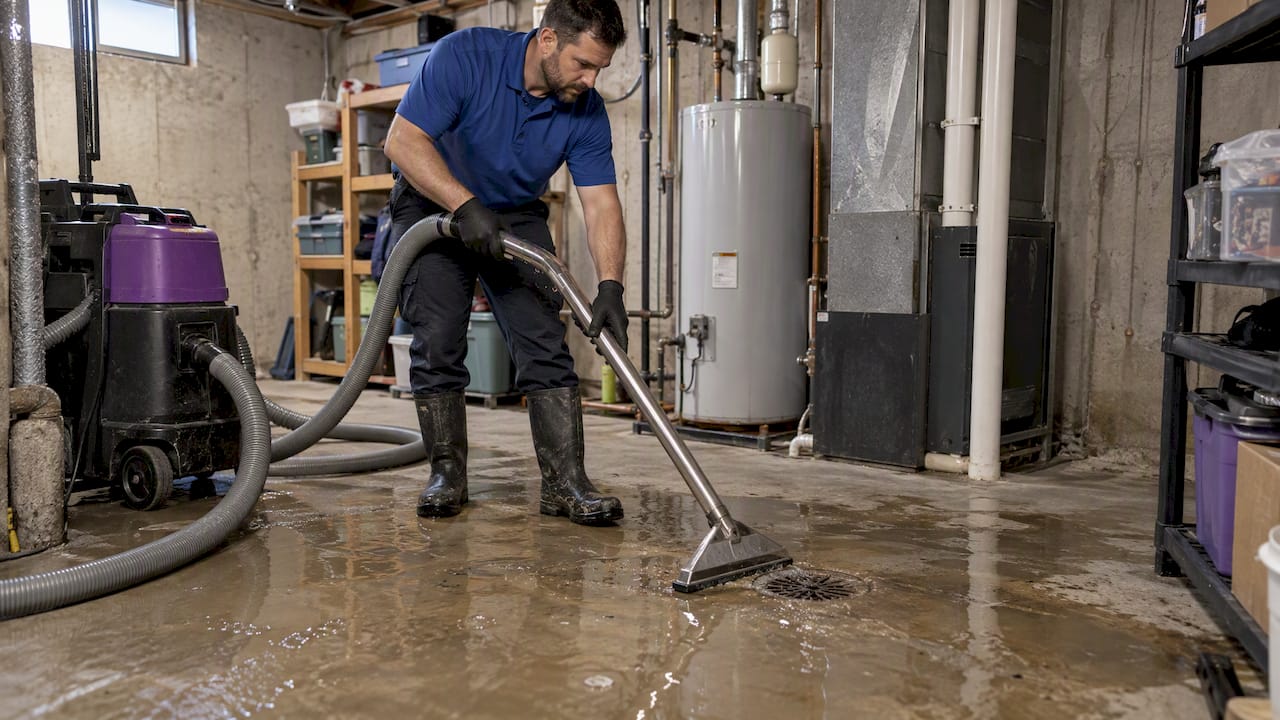
- Emergency water extraction using industrial pumps and wet vacuums
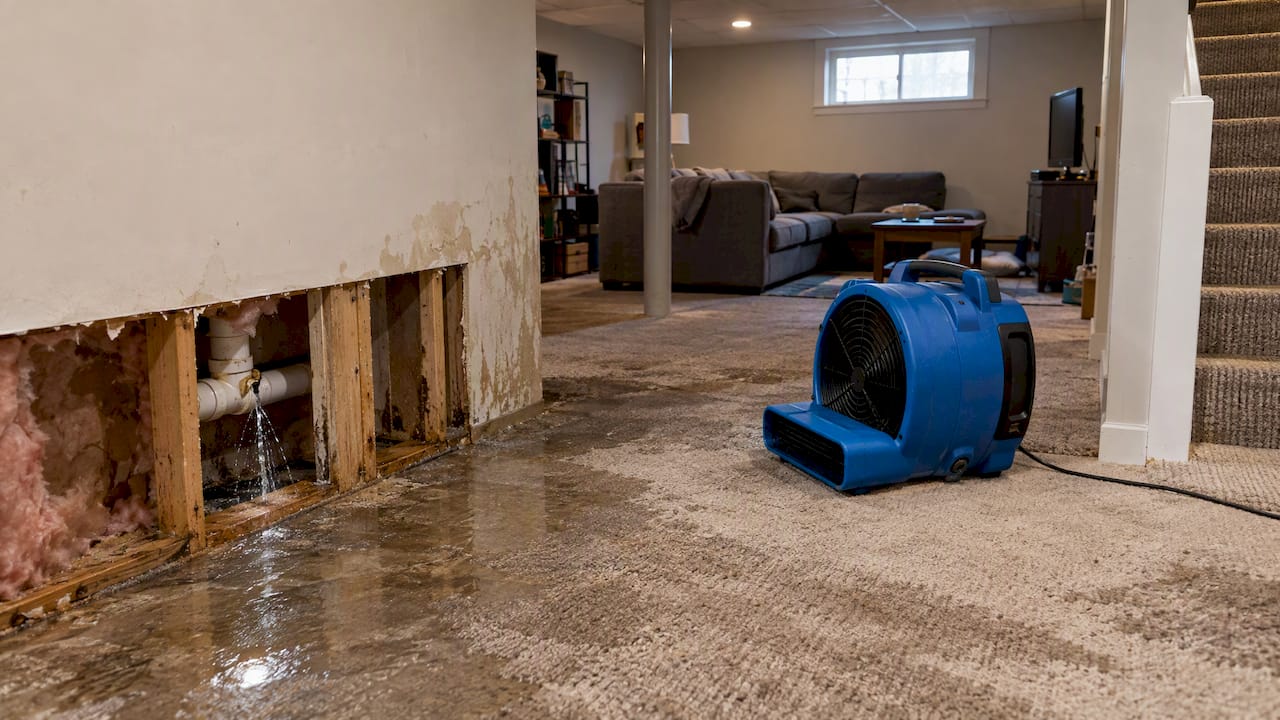
- Structural drying with professional dehumidifiers and air movers run for multiple days
- Moisture mapping to locate hidden saturation inside walls and under floors
- Antimicrobial treatment to prevent mold from taking hold during the drying phase
- Material removal and disposal of unsalvageable drywall, insulation, or flooring
Water and mold removal handled together during the restoration process is almost always more cost effective than treating them as separate events weeks apart.
Detailed breakdown: By repair type and incident severity
Knowing the overall ranges, let’s get granular: what do specific repairs and severity levels actually cost?
The Angi cost breakdown by repair type shows that mold removal, drywall repair, basement cleanup, and pipe repairs each carry distinct price brackets. Understanding these individually helps you anticipate where your money goes.
By repair category:
| Repair type | Typical cost range |
|---|---|
| Mold removal (localized) | $500 to $3,000 |
| Mold removal (whole room/structural) | $3,000 to $10,000+ |
| Drywall repair and replacement | $300 to $2,500 |
| Basement water cleanup | $2,000 to $10,000 |
| Leaky pipe repair and surrounding damage | $1,000 to $4,000 |
By water contamination class:
This is where costs can spike fast. Water damage professionals classify water into three types:
- Clean water (Category 1): From supply lines, rainfall, or clean fixtures. Least expensive to remediate, typically $3.75 to $4.50 per square foot.
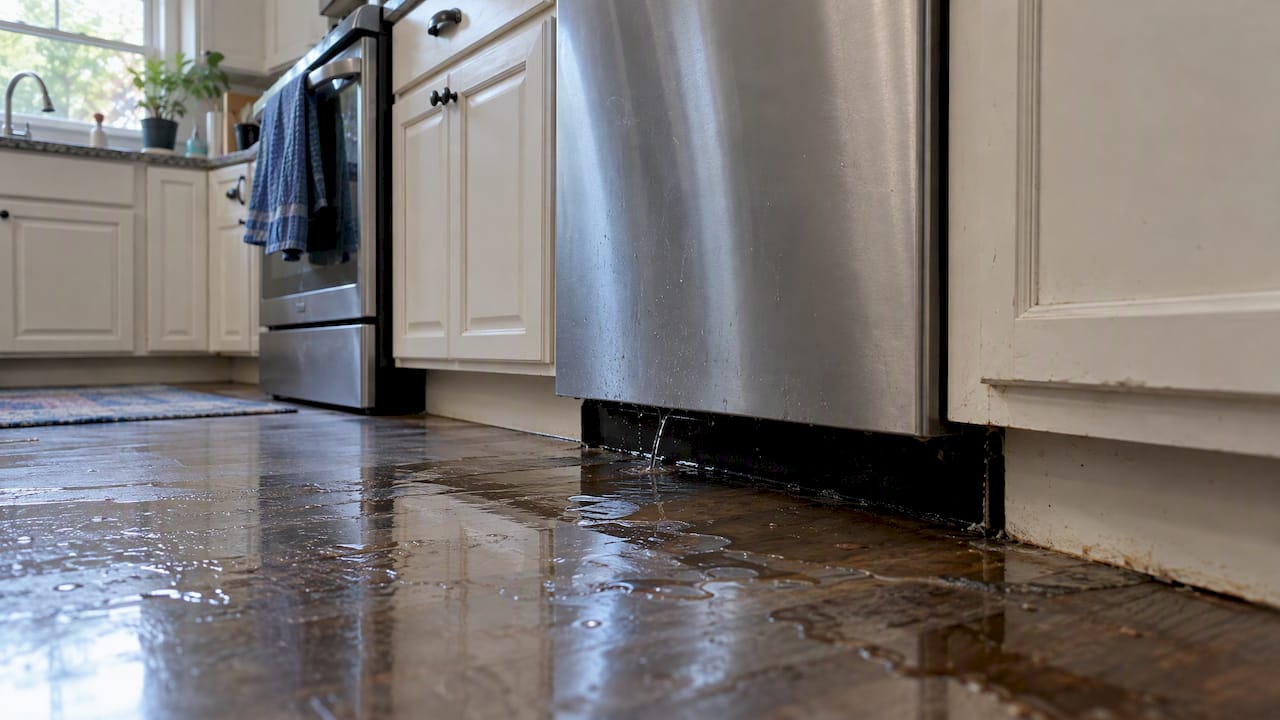
- Gray water (Category 2): From appliances, dishwashers, or sump pump failures. Contains mild contaminants. Costs run $4.50 to $6.50 per square foot.
- Black water (Category 3): From sewage backups, floodwater, or long-standing gray water. Highly contaminated. Remediation costs $7.00 to $12.00+ per square foot because full protective gear, specialized disposal, and antimicrobial treatment are all mandatory.
The steps involved in a typical restoration follow a clear sequence, and each one carries a cost bracket:
- Emergency call and site assessment ($0 to $300 depending on provider)
- Water extraction ($500 to $2,000 depending on volume)
- Structural drying over 3 to 5 days ($1,000 to $3,000)
- Mold prevention treatment ($300 to $800)
- Damaged material removal and disposal ($500 to $2,500)
- Structural repairs including drywall and flooring ($500 to $5,000+)
- Final cleaning and deodorization ($200 to $600)
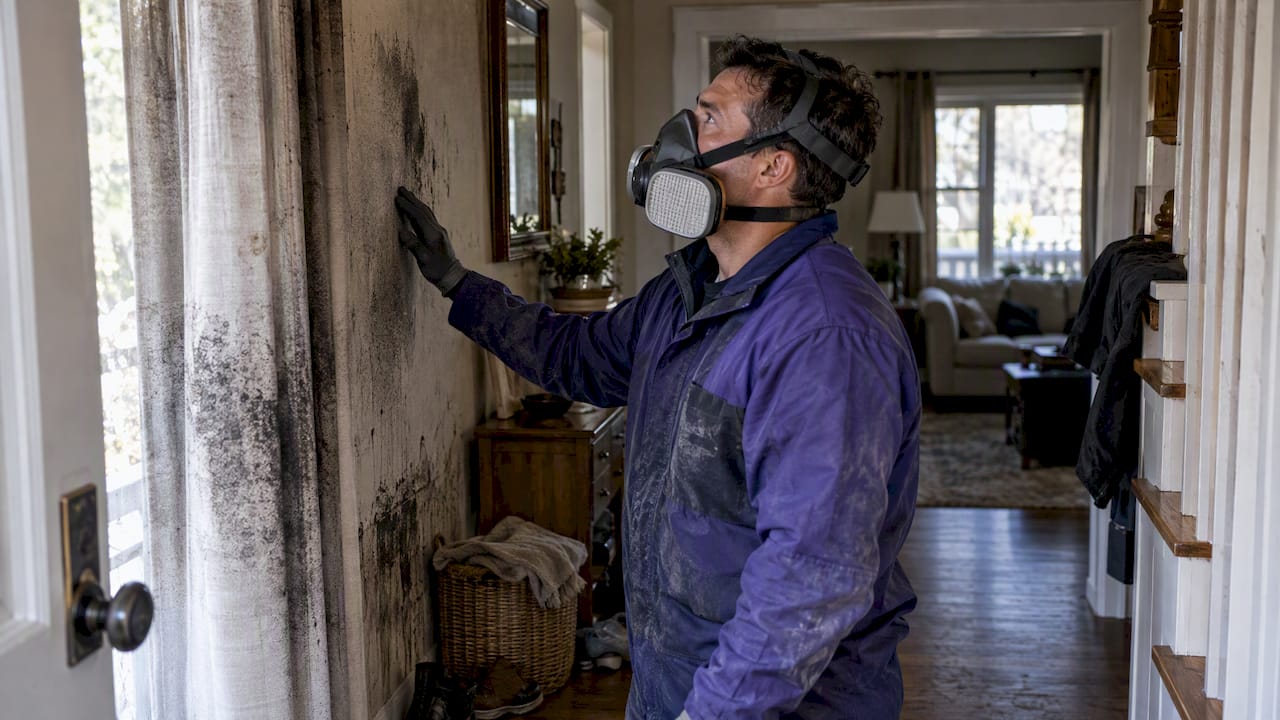
Understanding the mold remediation process is important because mold can begin growing within 24 to 48 hours of water exposure. If you are unsure whether mold is already present, reviewing mold testing advice before calling a remediation company can save you from redundant testing fees.
Pro Tip: For black water incidents, do not wait to see if the smell goes away or the water dries on its own. Contaminated water escalates both health risk and labor cost with every hour of delay. Call immediately and keep people and pets out of the affected area.
What factors affect your restoration cost most?
Beyond the type of repair, several core factors can swing your final bill higher or lower. Knowing them puts you in a stronger position, whether you are negotiating with a contractor or reviewing an insurance estimate.
Square footage of the affected area is the single biggest driver. A 100-square-foot bathroom leak and a 1,200-square-foot flooded basement are in completely different cost universes. Labor, equipment days on site, and material replacement all scale with size.
Materials that got wet matter enormously. Hardwood floors absorb water quickly and often cannot be saved, running $8 to $15 per square foot to replace. Carpet is often fully removed and discarded. Standard drywall is less expensive to replace than tile board or specialty finishes. The Angi per-square-foot breakdown reflects how dramatically material type shifts the final number.
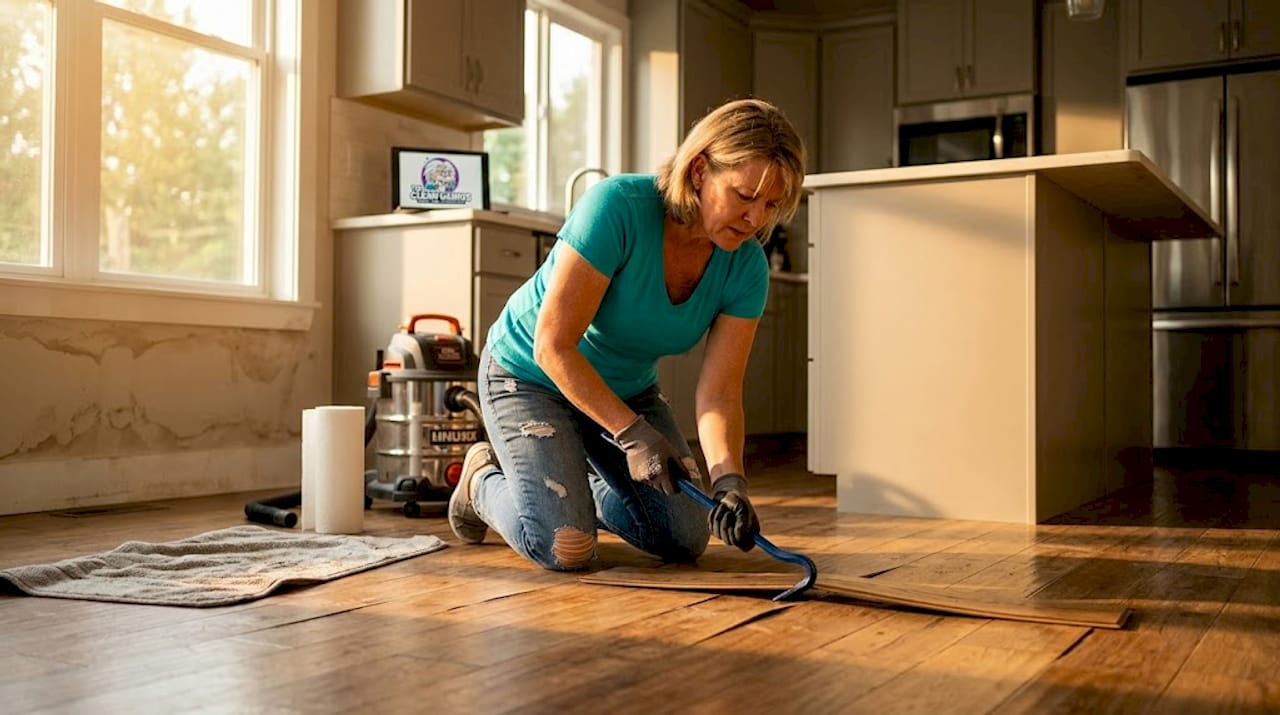
Speed of response is perhaps the most controllable factor. Acting within the first hour versus waiting overnight can cut mold risk, reduce total drying time by a day or more, and prevent saturation from spreading into adjacent rooms, walls, or subfloor. That kind of spread can easily add $1,500 to $3,000 to a job that could have been contained.
Labor rates in Chicagoland vary by geography. Jobs in dense suburban areas like Schaumburg or Naperville may differ from more rural service calls. Access to the site, whether it requires equipment through tight basement stairs or long runs of hose, also adds to labor time.
“Unrepaired water damage doesn’t just cost more to fix later. It actively reduces your home’s value, makes the property harder to sell or refinance, and can affect insurability over time.”
Here are the most actionable steps you can take right now to manage total cost:
- Shut off the water source immediately if the leak is from a supply line or appliance
- Move valuables, furniture, and electronics out of the water’s path
- Open windows where safe to improve airflow and slow moisture buildup
- Call a restoration company before calling your insurance company so you have documentation
- Avoid using fans pointed at visibly moldy areas, since this spreads spores
Homeowners in areas like Palatine and Lake Zurich sometimes see higher job complexity due to older housing stock or finished basements, both of which add labor and material costs.
Pro Tip: Take photos and video of every inch of damage before cleanup begins. Shoot from multiple angles. Capture standing water depth if possible. This documentation is critical for insurance claims and can prevent disputes about the scope of damage.
Insurance and cost-saving for water damage restoration
Once you have estimated and begun repairs, insurance can play a crucial role in reducing your costs. But it works best when you understand what it actually covers and where it falls short.
Standard homeowners insurance policies typically cover sudden and accidental water damage. Think: a pipe that suddenly bursts, a washing machine that unexpectedly fails, or a dishwasher hose that gives way. These events are generally covered under your dwelling coverage and personal property coverage.
What insurance almost never covers includes:
- Flooding from outside sources (that requires separate flood insurance)
- Gradual water damage from a slow drip you ignored for months
- Damage caused by poor maintenance or deferred repairs
- Sewer backup unless you added a specific endorsement to your policy
With restoration costs averaging around $3,394 for Chicagoland homeowners, the financial stakes of a rejected claim are real. Here is the process that gives you the best shot at full reimbursement:
- Document everything before touching it. Photos, video, written notes with timestamps.
- Call your insurance company within 24 hours to open a claim and get a claim number.
- Request a licensed adjuster visit rather than settling for a phone or remote assessment.
- Get at least two written contractor estimates before agreeing to any scope of work.
- Save all receipts, including temporary accommodations, equipment rentals, and emergency supplies.
- Follow up in writing after every conversation with your adjuster. Confirm what was agreed.
Additional cost-saving moves that Chicagoland homeowners often overlook:
- Ask your restoration company whether they work directly with your insurance carrier. Companies that have established relationships often reduce claim friction significantly.
- Focus professional labor on high-stakes tasks like structural drying and mold prevention. Simple debris removal and surface cleaning may be something you handle yourself.
- Do not throw anything away before the adjuster visits. Even destroyed items may be covered under personal property claims.
Review emergency restoration steps to make sure you are not skipping critical actions in the first hours after damage. Missing one step early can affect both your outcome and your claim.
Why quick decisions save more than just money in Chicagoland
After more than 25 years of combined experience working water damage jobs across Chicagoland, we have seen one pattern repeat itself more than any other: the homeowner who hesitates pays more. Every time.
There is a natural human instinct to hope the damage is minor, to wait and see, to avoid making calls at 3 a.m. or on a Sunday. We get it. But water does not wait. It moves sideways through insulation, drops through subfloor gaps, and creates the dark and damp conditions that mold needs within just 24 to 48 hours. By the time a homeowner convinces themselves to call on Monday morning after discovering flooding Friday night, the job may have tripled in scope.
The financial logic is straightforward: faster extraction means shorter drying cycles, which means fewer equipment days on site, less material replacement, and a lower final invoice. But there is something beyond the dollars. A home that gets properly dried and treated holds its structural integrity, maintains its indoor air quality, and does not become a health risk for your family.
We have also watched homeowners navigate insurance claims and come out either whole or short based almost entirely on documentation and timing. The homeowners who called us first, got the damage documented professionally, and then contacted their insurance carrier almost always had stronger outcomes. The ones who tried to manage the insurance process first, without a professional on site to assess and document, often faced pushback on scope and pricing.
Decisiveness is not recklessness. It means calling a trusted, 24/7 restoration response team, getting a professional assessment, and letting experienced people guide the next steps. The cost of acting fast is almost always far lower than the cost of waiting.
Chicagoland’s trusted restoration starts here
When water damage hits your home in Schaumburg, Naperville, Elgin, or anywhere across the greater Chicagoland area, every hour counts. The Clean Genius provides 24/7 emergency response from certified teams who specialize in fast, complete restoration, and we work directly with your insurance to reduce the paperwork burden on you.

Our local restoration specialists handle everything from initial water extraction to full structural drying, mold prevention, and final repairs. Whether you are dealing with a burst pipe in Mount Prospect, a flooded basement in Palatine, or a sewage backup anywhere in the area, our team is ready. We also offer full mold remediation services using our advanced Pure Cloud dry-fog technology, ensuring that mold does not become the next chapter in your damage story. Reach out today for a no-pressure assessment, and let us walk you through your options, your insurance coverage, and your fastest path back to a dry, safe home. Our team serving Mount Prospect and neighboring communities is ready around the clock.
Frequently asked questions
How much should I expect to pay for water damage restoration in Chicago?
Most homeowners pay between $1,796 and $5,200, with a typical cost around $3,394, according to Angi’s Chicago estimates. Your final cost depends on the size of the affected area, the type of water, and how quickly restoration begins.
Does insurance cover all water damage restoration expenses?
Homeowners insurance usually covers sudden accidental water damage, but not gradual leaks, deferred maintenance, or flooding from outside your home without a separate flood insurance policy.
What affects the cost-per-square-foot of restoration?
Severity of water contamination, the type of affected materials, and speed of response are the biggest factors, as reflected in the Angi per-square-foot ranges for different repair types and water categories.
Is mold removal always included in water damage restoration?
Mold removal is often a separate line item, especially when damage has been present for more than 24 to 48 hours or when contaminated water is involved. Always ask your contractor to assess mold risk as part of the initial inspection.
How quickly should water damage remediation begin?
Start within 24 hours. Every hour of delay increases moisture migration into adjacent materials, raises the risk of mold growth, and adds to the total labor and replacement costs you will face.